🚨 OF Announcement 🚨
This account is dedicated to only fans of ancient history and art.
Here, I post my own photos, and guarantee zero AI slop and opportunistic political ragebait. I hope you enjoy this journey as much as I do!
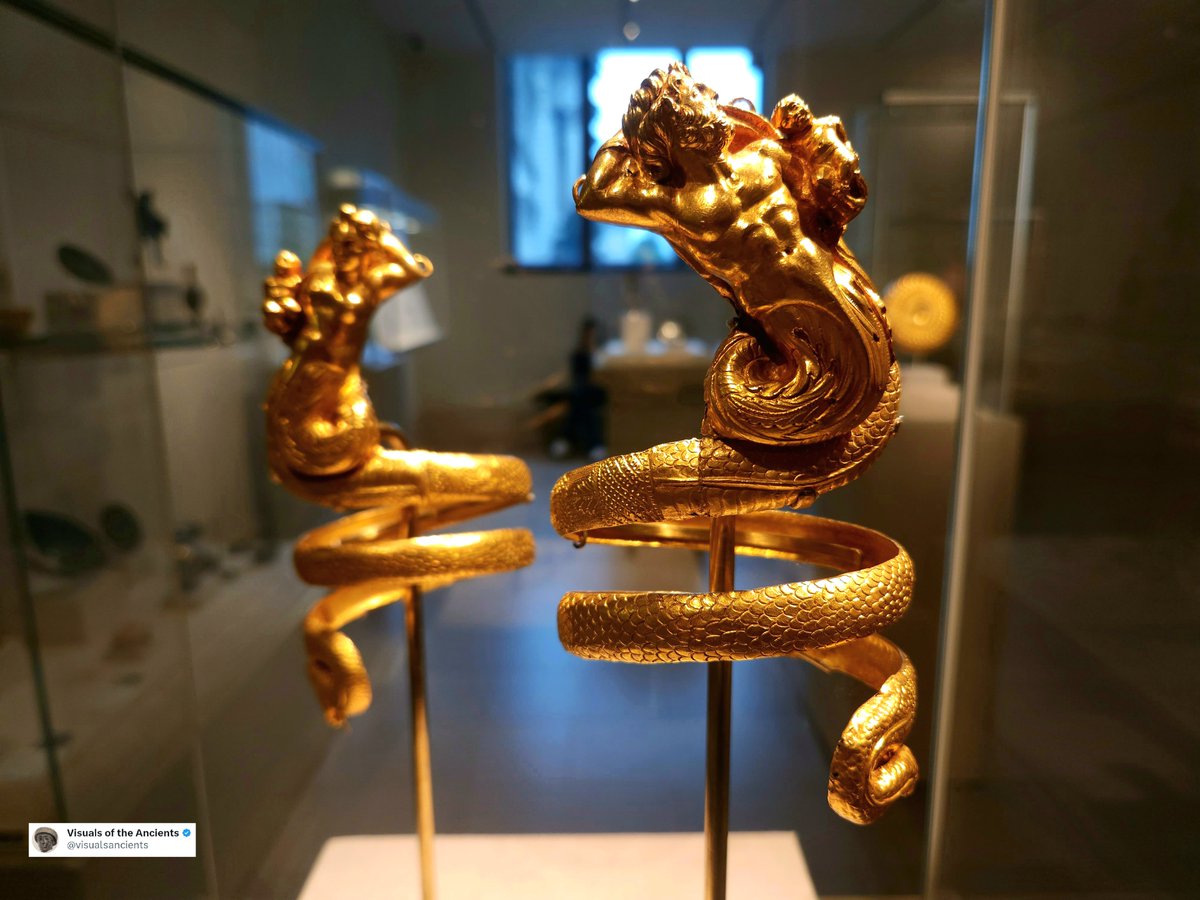
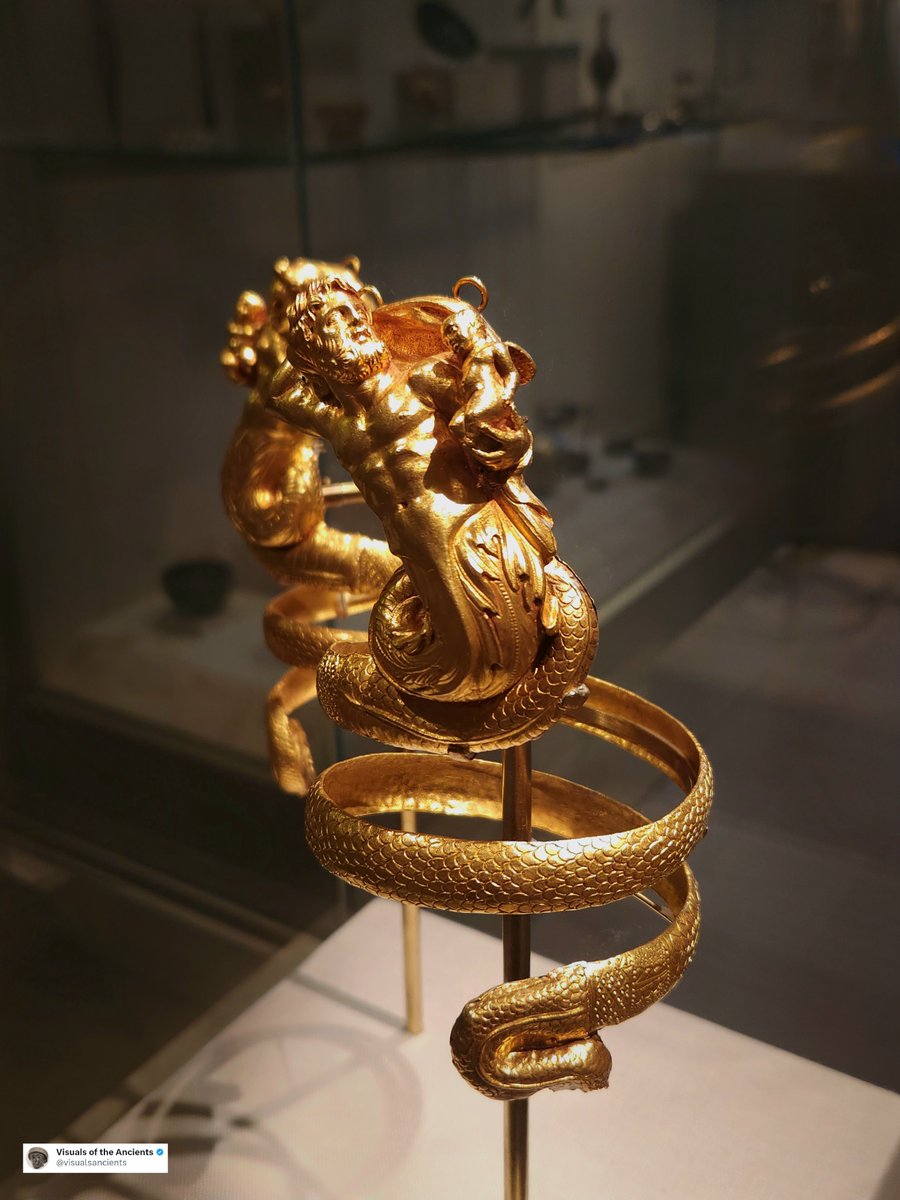
1/2 Two serpentine armbands with a male and female Triton holding a winged Eros. Each piece is made of gold and weighs over 6.5 ounces. They are so heavy that the hoops behind their backs were to attach them to the clothing's sleeves.
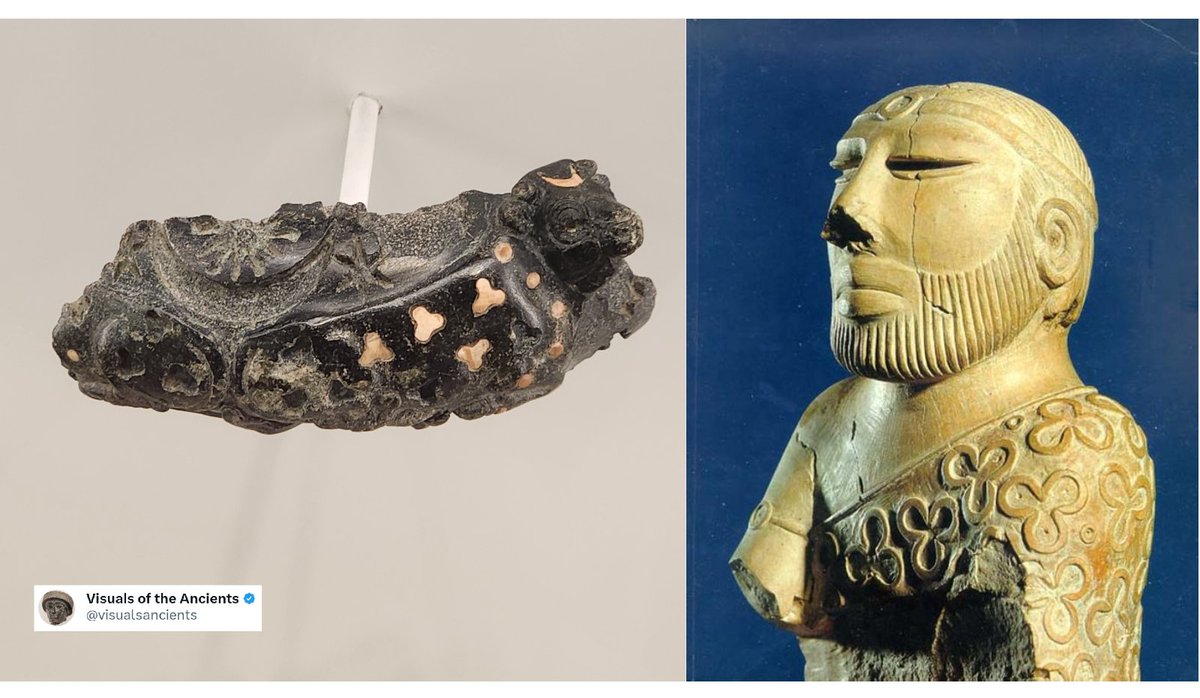
To the left is a Sumerian bowl fragment made of diorite from the Third Dynasty of Ur, c. 2050 BC. Look at the decoration of inlaid trefoils. It is currently on display at the Penn Museum. 📸 by me.
To the right is the famous Priest-King figure found in the excavations of Mohenjo-daro. It dates back to 2000 - 1900 BC. A replica is currently at the National Museum of Pakistan, where the original is kept in a vault. Pic from Wikipedia. The trefoil decoration always caught my attention.
Although the Sumerian bowl is a small fragment, I loved seeing it back in 2023 because I immediately thought of the Priest-King figure. Trefoils are a universal decoration shape that date as back as the Near Eastern Ubaid Period (c. 5500 – 4000 BC), and it was frequently used later in medieval times, for example. However, I wonder to what extent these two artifacts share the same trefoil ornament as a testimony of the trade network of their time.
From their cuneiform texts and archaeological evidence, we know that the Sumerians traded directly with regions as far as Meluhha (the Indus Valley). Harappa, Dholavira, Lothal, Mohenjo-Daro (where our Priest-King figure was found), and many other cities were part of the Indus Valley civilization (which had terrific urban planning and hydraulic works, btw).
When I saw this small bowl at the Penn Museum, my first thought was how, 4,000 years ago, the world was more connected than we usually think.
🚨 I hope you liked this post. If so, please Share and Follow, it always helps me grow this account. Cheers.
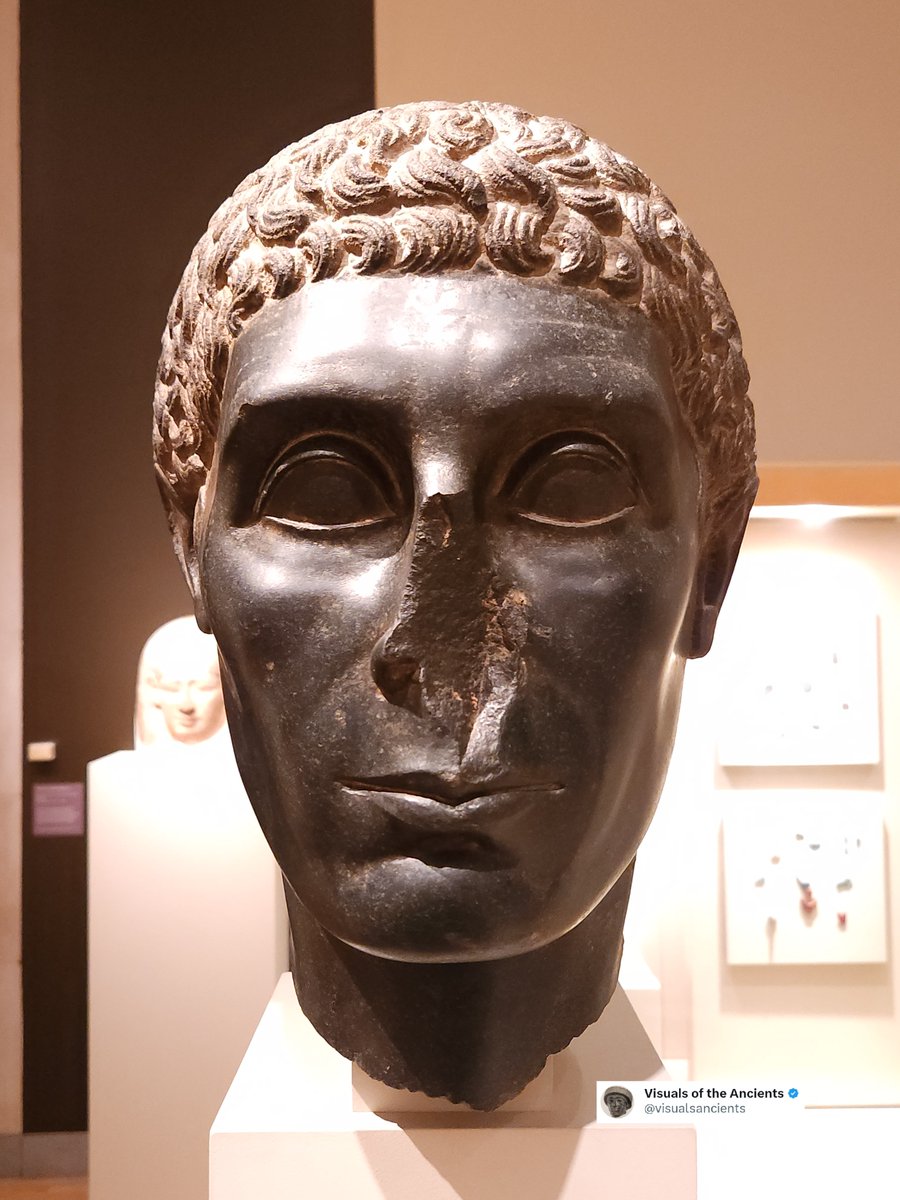
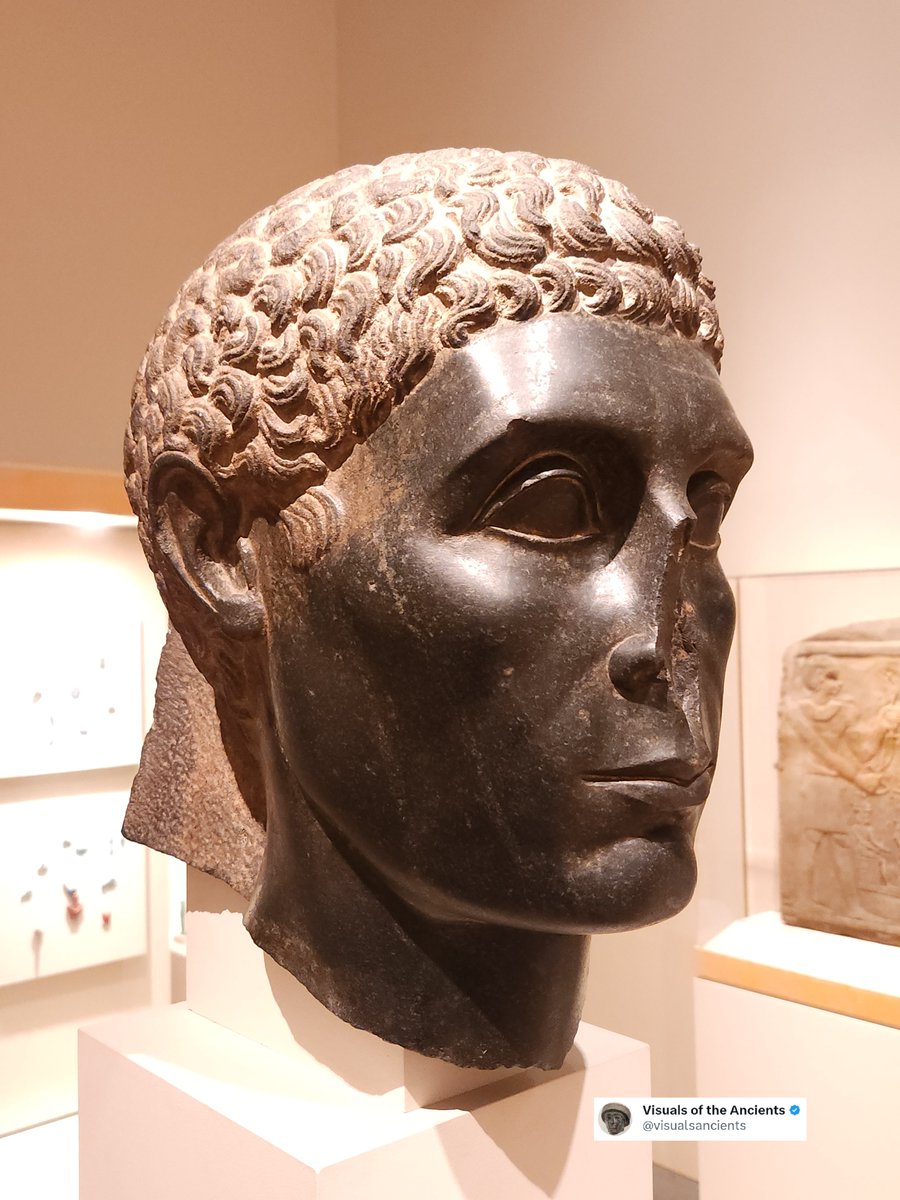
Whoever this man was, he probably witnessed a pivotal moment in ancient history.
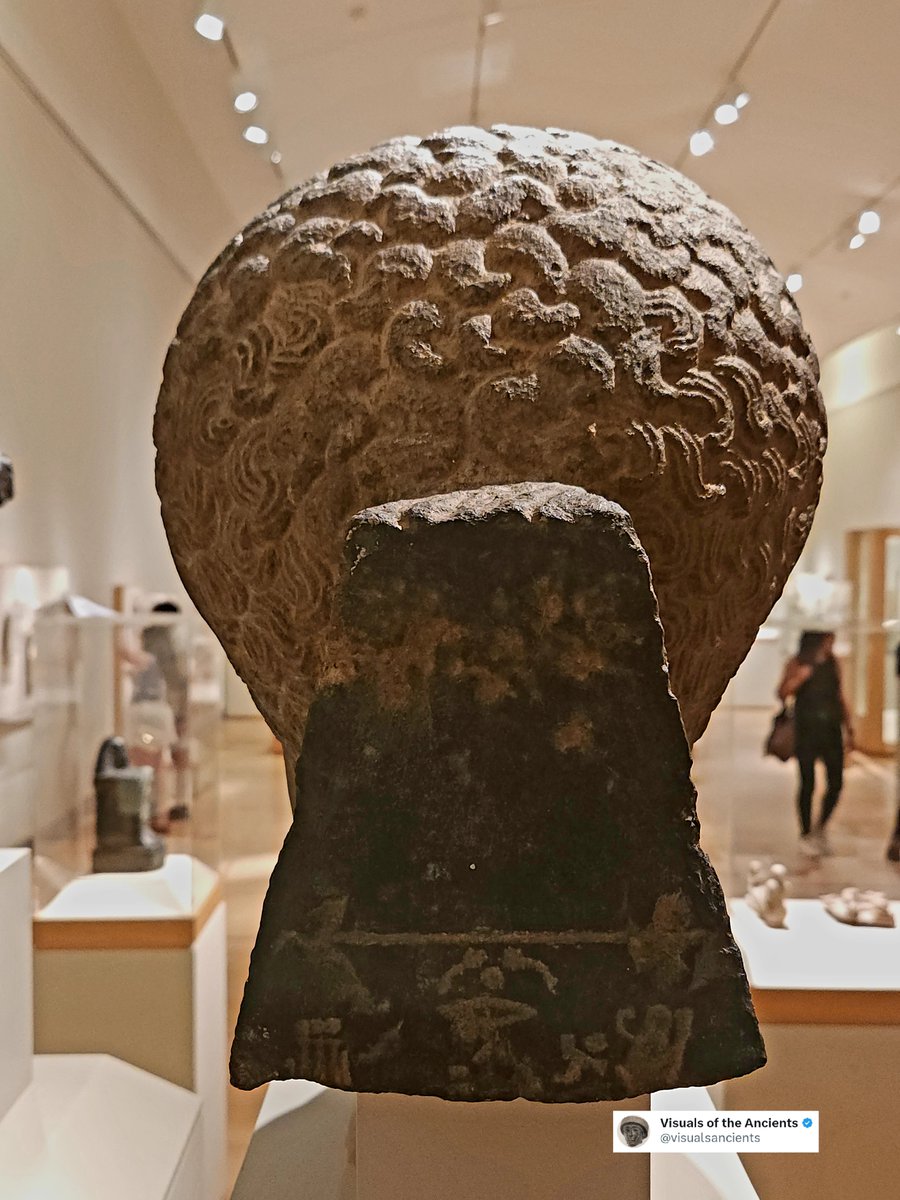
Made of diorite, this head may represent an Egyptian government official or a priest, and its curly hair reflects Hellenistic influence. The Brooklyn Museum, where it's on display, dates it to the Ptolemaic Period, c. 50 BC.
In 51 BC, Cleopatra VII and her young brother started ruling Egypt as co-regents. Almost two decades later, when Cleopatra VII committed suicide, Rome took control of the land of the Nile, and the Eastern Mediterranean changed forever.
📸 By me.
1/4 On display at the Smithsonian Asian Art Museum in Washington DC, this rare little piece reveals more than it seems. Made of rock crystal between the AD 800s and 900s, this Egyptian flask contained aromatic oils and waters used by elites as part of their garments. Usually, the content of such flasks was also added to meals to improve flavor and prevent decomposition.
During the Abbasid (750-1248) and Fatimid (909-1171) caliphates, because of its natural beauty and presumed curative/magical qualities, rock crystal was regarded as more valuable than silver and gold. Muslim scholars of the Islamic Golden Age, such as al-Biruni (c. 973 – c. 1050), believed rock crystal was frozen water forever solidified. It was a belief shared by earlier Greeks and Romans as well.
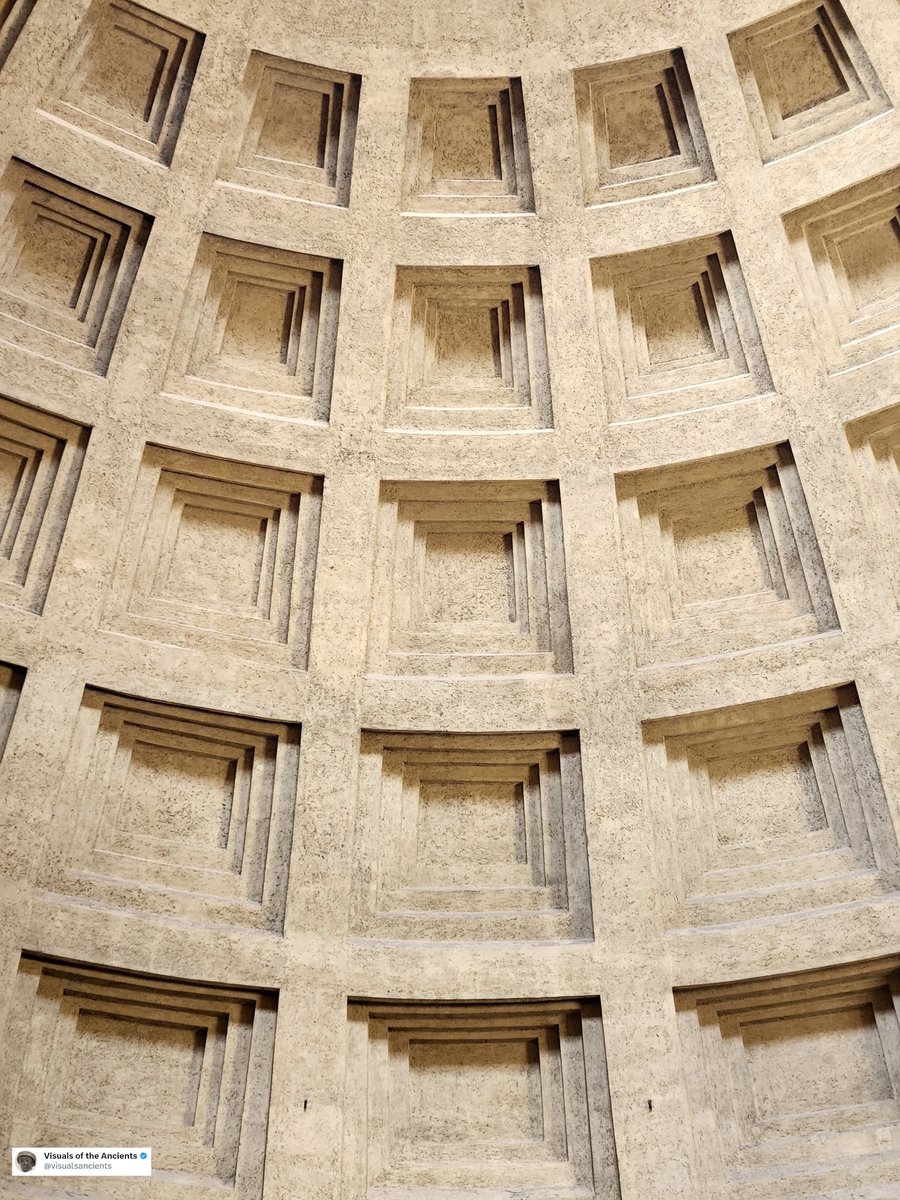
Five rings of 140 square coffers known as caissons (boxes), or lacunaria (spaces), reduce the weight of the Pantheon's dome. It's suggested that, when built under Emperor Hadrian (AD 117 - 138), they were decorated with gilded bronze stars or rosettes and painted blue. 📸 by me.
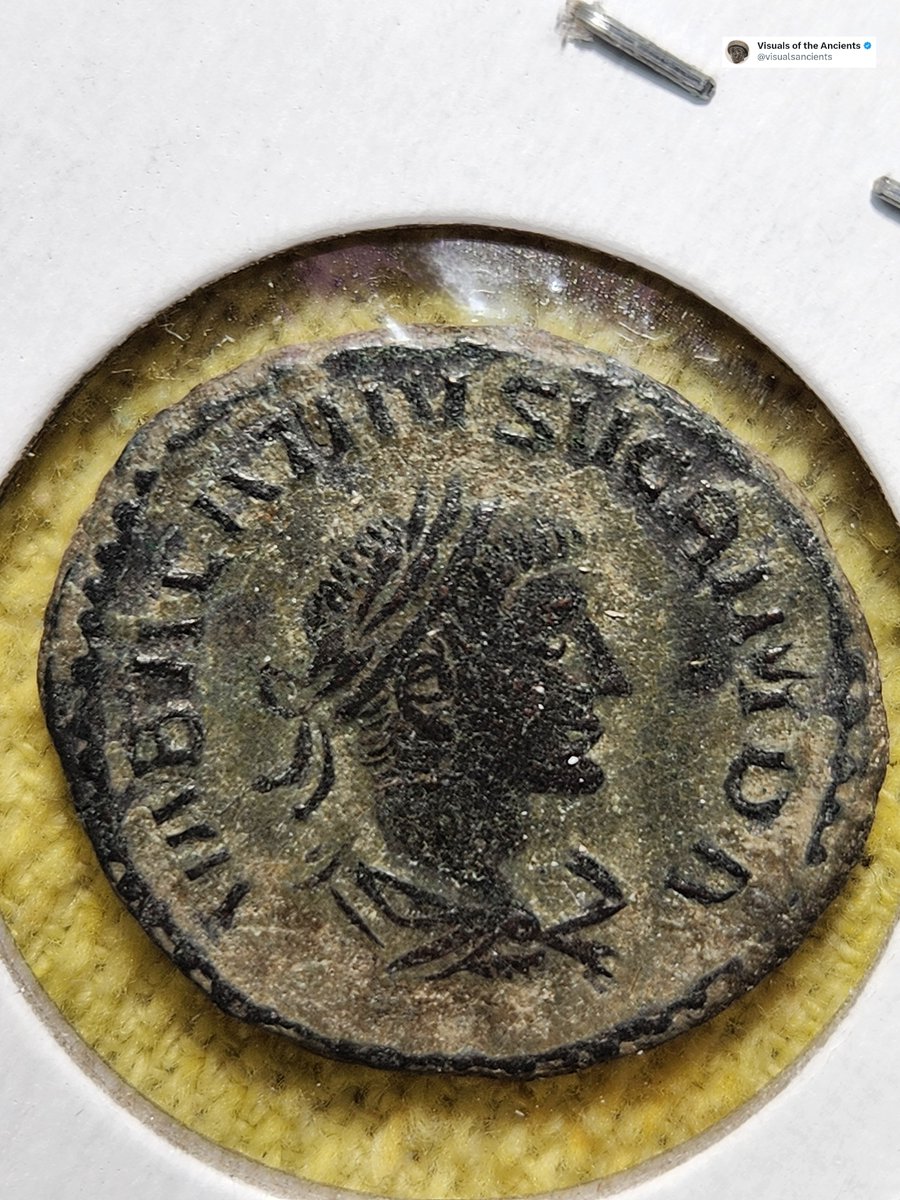
For Mother's Day, let's talk about this coin and Zenobia (AD 240 – 274), who, snatching entire eastern Roman provinces, built the Palmyrene Empire. Ruling from the city of Palmyra, in modern Syria, she was Queen of a superpower of her time.
The rise to power of Zenobia and her husband Odaenathus* is linked to the Crisis of the Third Century, when the Roman Empire nearly collapsed under the weight of catastrophic internal warfare, foreign invasions, inflation, and plague.
Odaenathus, the most powerful man in the Levant, acted as a semi-independent ruler from the emperor in Rome. This ended in AD 267 or 268 when he and his eldest son by a previous wife, Herodes (or Hairan I or Herodianus), were assassinated. We do not know for sure who was behind this event. It may have been the Roman emperor himself. Perhaps the Sassanian Empire to the East? An ambitious family member named Maeonius? His wife, Zenobia? We will never know.
When, after these events, Zenobia was only 26 or 27 years old, and she began ruling as Queen regent on behalf of the young Vaballathus (second son of Odaenathus). Despite her young age, she soon proved to have the leadership skills of a giant. As far as we know, Odaenathus did not dare to mint coins with his image. This was an essential means of propaganda in ancient times. At first, Zenobia played a semi-obedient role toward Rome. However, under Zenobia's instruction, her general Zabdas soon occupied Roman Arabia and Egypt, the jewel of the Roman Empire. Immediately after, in a fulminating campaign, Zenobia's grip extended to the regions of the Levant all the way north to Asia Minor, reaching there as far west as Ancyra, which today is Ankara. The Palmyrene Empire was now a global superpower of its time, and a woman was at its head.
Zenobia was not only a warrior and cunning politician; under her reign, she fostered arts and culture. One of the most famous members of her court was the Greek philosopher Cassius Longinus, who became one of Zenobia's trusted advisors. It also seems her reign was tolerant of the multiple religions coexisting in her territory. In appearance, despite her open confrontation and the war she waged against senior officials appointed from Rome, the emperor (at this time, Aurelian) was still portrayed as the supreme authority. Dating to c. AD 270 - 272, in the coin below, Zenobia minted the image of Aurelian on one side and her son Vaballathus on the other.
Vaballathus (left photo) wears a laurel wreath, and the legends read: VABALATHVS V(ir) C(larissimus) R(ex) IM(perator) D(ux) R(omanorum). Translated as: Vaballathus, the most illustrious of senatorial rank, king, supreme commander, Duke of Rome.
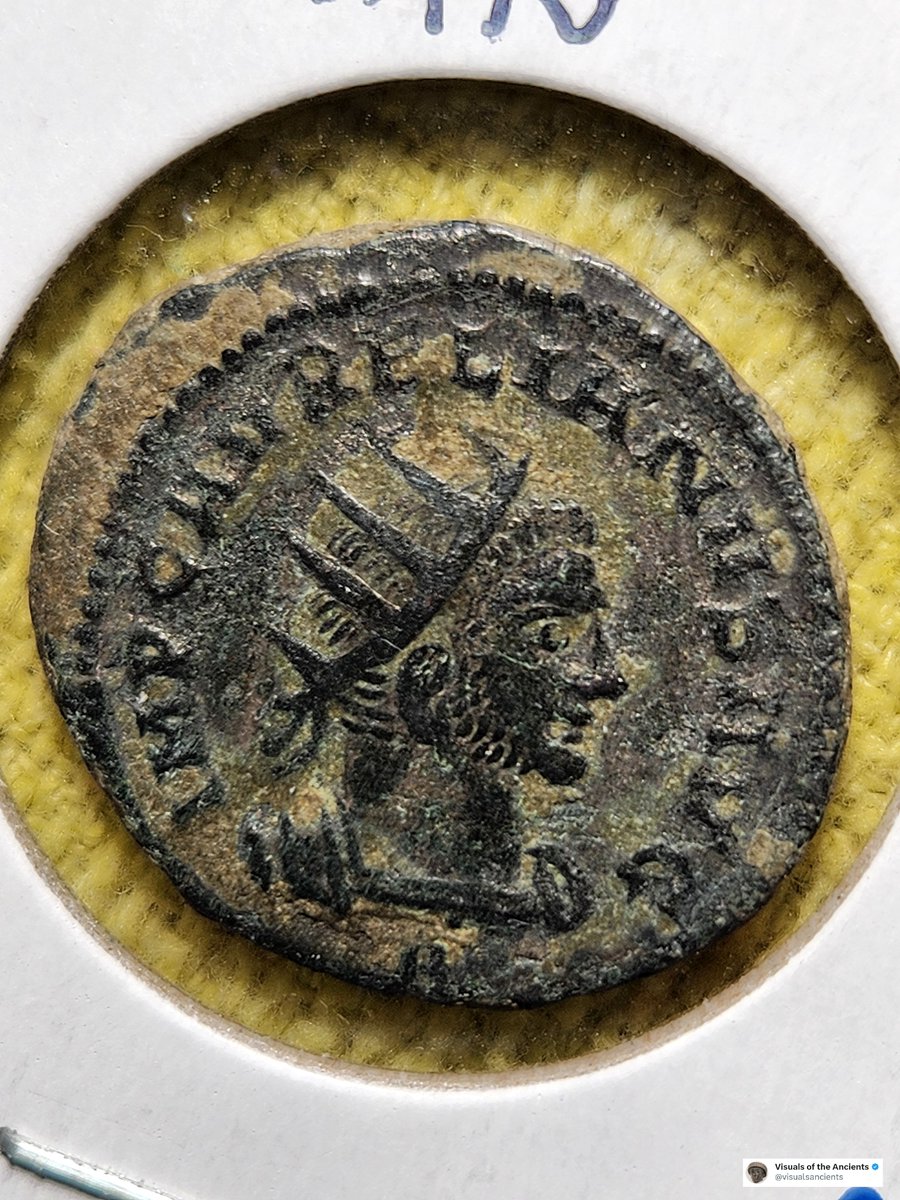
Aurelian (right photo) wears a radiate crown, and the legends read: IMP(erator) C(aesar) AVRELIANVS AVG(ustus). Translated as: Supreme commander, Caesar, Aurelian, Emperor.
But when, around AD 272, Zenobia styled herself alone on her coinage as Augusta, she crossed a line. Augusta was a title only reserved for selected, powerful women of the imperial family. Vaballathus, still a child, then also appeared as AVG(ustus), a title reserved only for the emperor himself. It was probably with these coins that Zenobia was paying her army when Aurelian decided that enough was enough.
You see, Aurelian was not an ordinary man, and Zenobia was not an ordinary woman. The fates of these two exceptional leaders were meant to clash in the most violent fashion. After dealing with Vandals, Alemanni, and the Goths in the year AD 272, Aurelian was ready to take action and set his eyes on the East. In vain did Zenobia’s most capable general,al Zabd, resist in Syria, the heartland of Zenobia's territories. Aurelian prevailed, and it was the end for some of the Palmyrene elite, including Zenobia's trusted advisor, the philosopher Cassius Longinus.
Zenobia was captured. Some sources say that she and Vaballathus did not survive the travel to Rome. Others say that she was paraded through the streets of Rome in gold chains, after which she was executed. Other versions say that Aurelian was magnanimous and that after the public humiliation, she lived in a villa in Tibur and eventually married a Roman senator. You choose the end you like. Aurelian went to retake the Gallic Empire, which was another split from Rome to the West. The senate granted him the title of Restitutor Orbis ("Restorer of the World").
📸by me. I bought this coin last year for 35 dollars. Zenobia's coins are rare and really expensive. The coin you see under Zenobia's page on Wikipedia was sold by CNG (Classical Numismatic Group) in 2016 for 13,000 dollars! 😳
*About Odaenathus, knowing well of the weakened state of Rome, the Sassanian empire under Shapur I the Great (who reigned between AD 240 and 270) launched campaigns to take the Roman provinces in the East. In the year 260, the Battle of Edessa took place. The Roman emperor Valerian tried to push back, but Shapur I prevailed. Valerian was captured, and some sources mention he ended his days humiliated, serving as Shapur’s footstool for his horse. Valerian's son and successor, Gallienius, overwhelmed by the many challenges facing the entire empire, could not take revenge. A usurper named Fulvius Macrianus, and his son Junius Quietus got into the story, things got messy… the point is that Odaenathus (lord of the powerful and wealthy city of Palmyra) defeated the usurper Macrianus and his allies while also expelling the Sassanian invaders of Shapur I. Odaenathus became the most powerful man in the East of the empire. Later on, he even besieged Ctesiphon, the capital of the Sassanian empire. Gallienius, who had no means to control the situation, awarded and/or accepted the many titles of Odaenathus, such as Corrector Totius Orientis ("reorganizer of all the East"). Odaenathus also styled himself Rex Regum, a translation of the Iranian "king of kings." It was clear that things were not ok for Rome. A situation like this would have been unthinkable decades before the events that triggered the Crisis of the Third Century plunged the empire into its darkest hour. But that may be a story for another day.
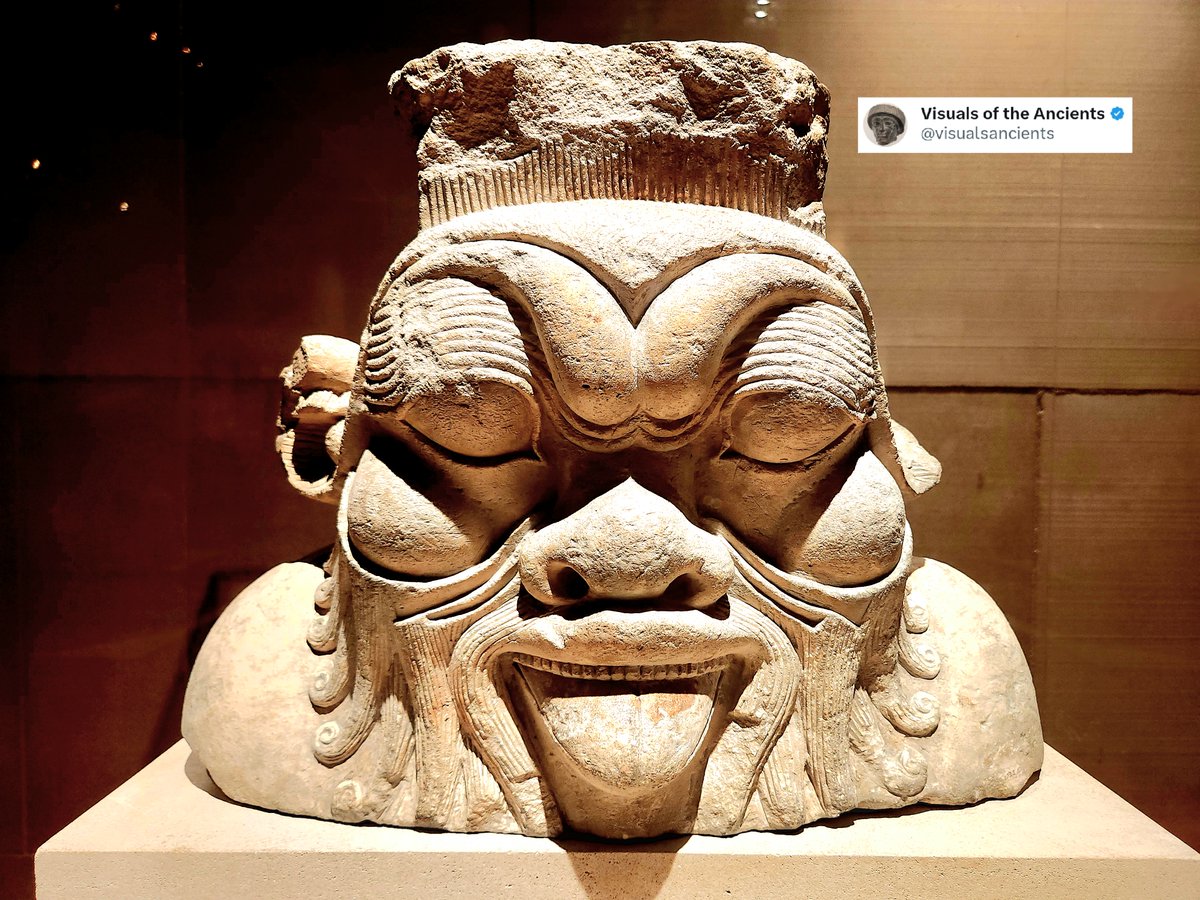
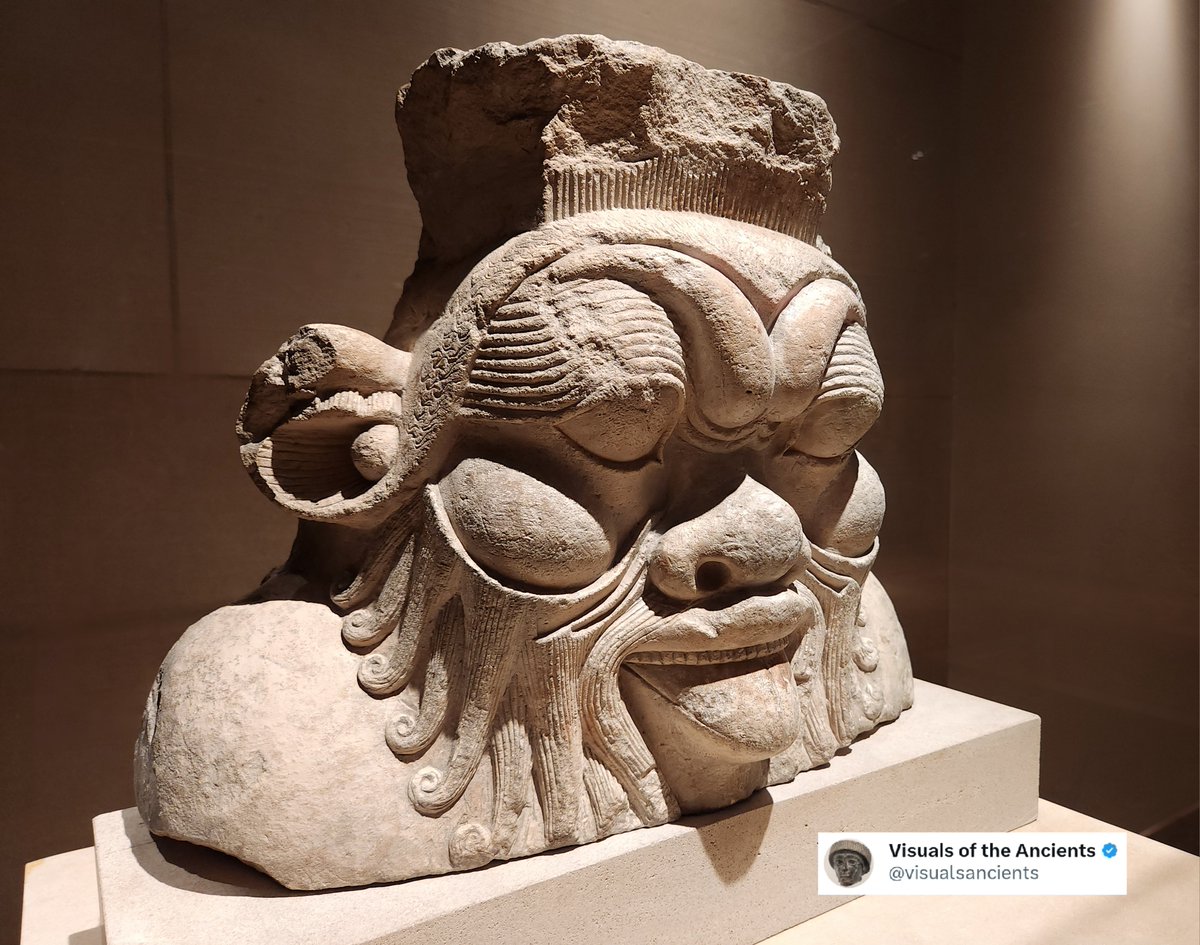
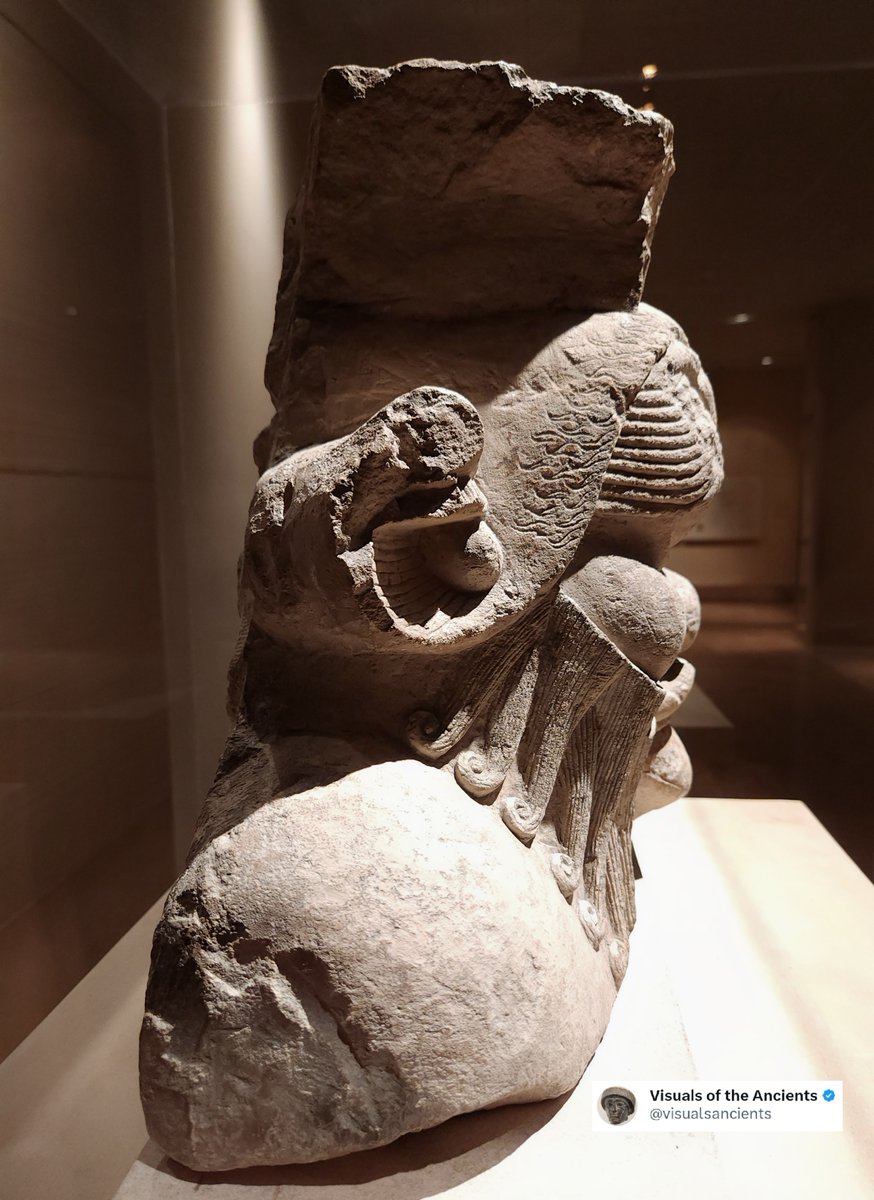
Head of Bes. Egypt, 4th century BC. Limestone.
📸 by me. MET, NY.
Probably of Kushite origin, Bes was worshipped in ancient Egypt as a protector of households, mothers, children, and childbirth. Images of Bes have been found from Susa (modern Iran) to Ibiza (modern Spain).
Thanks to @MinervaRevista_ for kindly reaching out and sharing these photos on their academic site. It's an honor.
If you are an institution or an individual and want some of my pics for a paper, article, or presentation, please send me a message. My photos are free. I will just remove the little sticker and send them to you via email so they keep the higher resolution.
My goal is for everybody everywhere to enjoy ancient history and art.
revistaminerva.pt/gallery-thirte…
This comparison between the ancient Roman and Sumerian columns made me think of Ennigaldi-Nanna (547 – 500 BC).
She was the high priestess of the moon-God Sin in the Mesopotamian city of Ur and the daughter of Nabonidus, the last king of the Neo-Babylonian empire, making her also a princess. But there were many princesses and queens in the ancient world. That's not why she is special. She was, perhaps, the first museum curator in the world.
Yes, two thousand five hundred years ago, Ennigaldi-Nanna founded a museum with artifacts from almost two thousand years before her. Mesopotamia is indeed an ancient land. Among those objects was, for example, a statuette of Shulgi,* the second king of the Third Dynasty of Ur (2094–2046 BC), and a Kassite boundary stele (kudurru). The objects had labels in three languages describing their History. Same as with a modern museum. It is even possible that Ennigaldi-Nanna led the excavations and research of these items.
Imagine what the British archaeologist Leonard Woolley thought in the 1920s when he discovered among the ruins of Ur that someone ancient was discovering something even more ancient.
📸 by me. Made of copper alloy, this statuette of Shulgi (c. 2094-2046 BC) was excavated by the Oriental Institute of Chicago (now ISAC) in the 50s and is on display there. It was part of the foundation deposit boxes of the temple of Innana in the city of Nippur. Shulgi, here shown as a builder, carries a basket. A tablet with a text in Sumerian read: "For the goddess Inanna, his lady, Shulgi, mighty man, king of Ur, king of the lands of Sumer and Akkad, built the Eduranki (House of the Bond of Heaven and Earth) for her."