Garba Abari
1.8K posts

Garba Abari
@GarbaAbari
Teacher, Researcher and Politician
Abuja, Nigeria Katılım Mayıs 2011
1K Takip Edilen4.8K Takipçiler
Garba Abari retweetledi

I deeply appreciate the former Vice President, His Excellency, @atiku, GCON, for the honour and goodwill extended to me on the occasion of my 60th birthday. — AWT
English

@kfayemi Wishing you a Merry Christmas Your Excellency and fulfilling new year.
English
Garba Abari retweetledi

Christmas reminds us that hope can be renewed even in uncertain times. It is a season rooted in faith, love, and sacrifice. As we celebrate, let us hold fast to these values and draw from them as we work to strengthen our nation and care for one another.
Merry Christmas to you and your loved ones 🎄

English
Garba Abari retweetledi

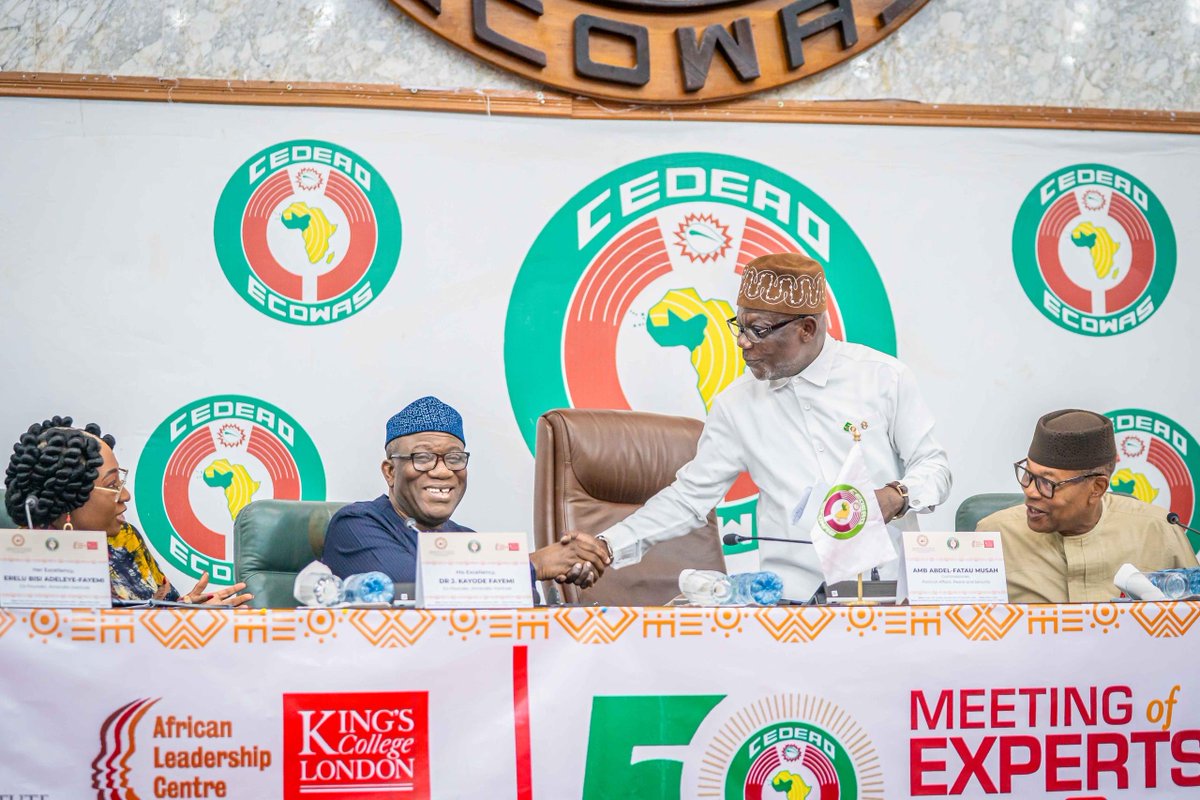
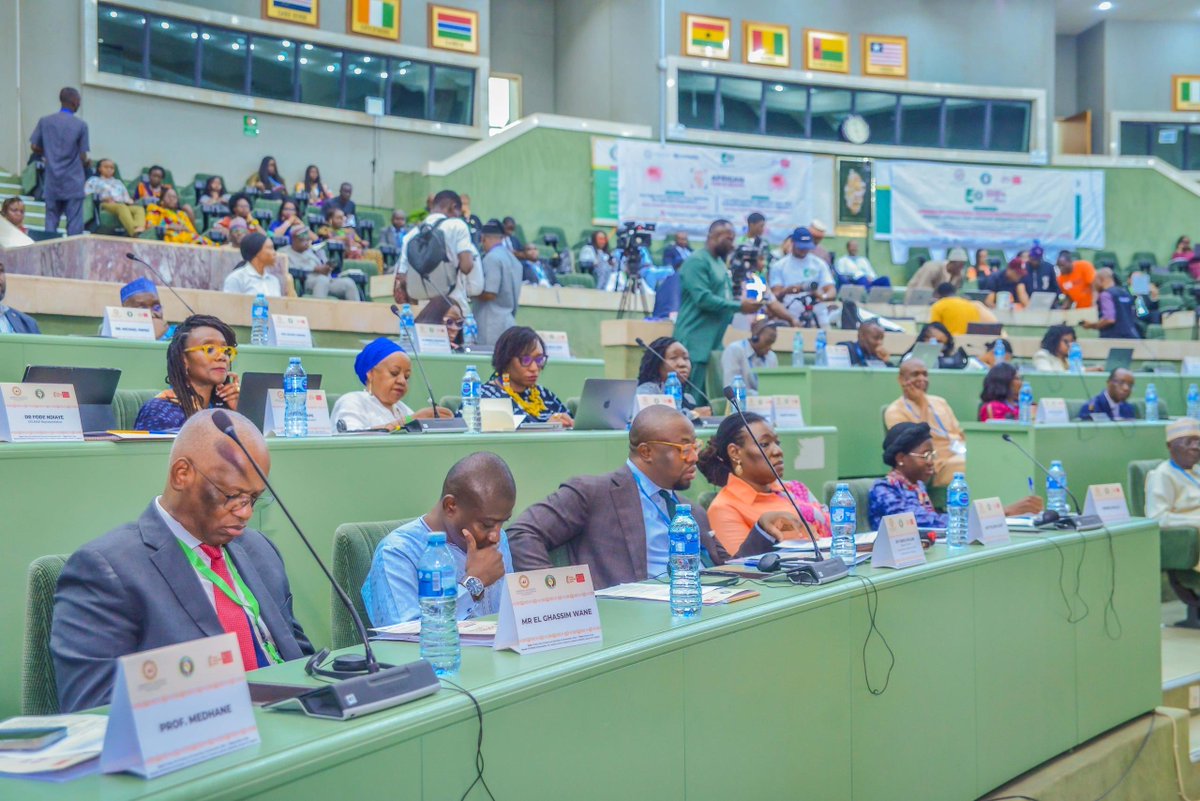
I had the honour of delivering the welcome address at the second edition of the African Public Square @APS_ALC Debates and the Experts’ Meeting on Alternative Futures for ECOWAS (@ecowas_cedeao) at 50, co-hosted by the Amandla Institute for Policy and Leadership Advancement @AmandlaInstitut and the African Leadership Centre @ALC_KCL, in collaboration with @CODESRIA and @WATHI_ThinkTank.
This meeting came at a crucial time for the West African region. #ECOWAS, now at its fiftieth year, is at a turning point as it confronts major political, economic, and security challenges that test its original vision of regional integration. The conversation built on the gathering we convened in June, chaired by General Yakubu Gowon, the only surviving founding leader of ECOWAS, alongside the Commission’s President, Dr Ali Oumar Touray, and several of his predecessors. That meeting rekindled the founding vision of ECOWAS and inspired the deeper reflection that this second edition of the African Public Square sought to advance.
In my remarks, I emphasised that ECOWAS has played an important and often pioneering role in shaping Africa’s regional landscape. From its early days, the organisation broke new ground by developing frameworks for #peace, #security, #democracy, and #governance. Its interventions in Liberia, Sierra Leone, Côte d’Ivoire, The Gambia, and Guinea Bissau remain reference points for #regional responses to instability. Yet, while these achievements deserve recognition, the present moment demands critical reflection.
Five decades on, ECOWAS finds itself in danger of drifting away from its founding aspiration to become a community of peoples. The transformation from a “Community of States” to a genuinely people-centred institution has stalled. Internal reforms have slowed, decision-making processes have become increasingly remote from citizens, and the bureaucracy has grown at the expense of agility and responsiveness. Even in its economic agenda, progress on key initiatives such as the single currency and free movement of goods and services has been uneven, hampered by technical delays and a lack of political will. The region continues to face barriers to investment and trade that betray the promise of integration.
Financial fragility has compounded these problems. Despite efforts to improve internal funding mechanisms, ECOWAS continues to rely heavily on external donors, leaving it vulnerable to outside influence and limiting its autonomy. The uncoordinated response to the European Union’s Economic Partnership Agreements serves as a reminder of how external pressures can weaken regional coherence. If ECOWAS is to reclaim its leadership role, it must take ownership of its resources, priorities, and reform agenda.
Beyond economics and governance, the deepening insecurity across #WestAfrica exposes the limits of conventional state and regional responses. The threats we face, including insurgency, terrorism, banditry, and communal conflict, are complex and adaptive. Many of these groups are embedded within local communities and exploit widespread disillusionment, poverty, and weak governance. Military operations alone cannot address such deeply rooted issues. What is needed is a comprehensive human security strategy that recognises the connection between peace, justice, and development. This must be grounded in better intelligence coordination, targeted social investments, and stronger civic institutions that rebuild trust between citizens and the state.


English

@kfayemi Indeed Allah knows best. May Allah’s Rahma be with you Moufta’u.
English