Christina Gathmann

250 posts

Christina Gathmann banner
Christina Gathmann

Christina Gathmann

@GathmannCh

Director at @LISER_LM. Passionate about labor economics, migration and yoga. Fellow @CEPR, @iza_bonn, @CESifoNetwork, @ZEW and @CReAM_Research.


Luxemburg Katılım Ocak 2022
240 Takip Edilen439 Takipçiler
Christina Gathmann
Christina Gathmann@GathmannCh·
Could not agree more!
Seth Lazar@sethlazar

I think this is a bit hysterical. Academic publishing has at least two pragmatic functions. Much of the difficulty derives from trying to perform both of those functions with the same venue/process. Decouple them, and things can work just fine. Academic publishing does two things: it allocates *credentials*, and it attempts to allocate *attention*. The credentialing function of academic publishing is actually really important. Universities are our largest and most enduring organisations for fundamental research in the public interest. For that research to make genuine progress towards knowledge, we have to apply standards of rigour. To know who to hire into tenure-track positions, we need to be able to assess the quality of their work, and see how it is judged by their peers. And to decide who gets the ultimate liberty of being able to follow their intellectual interests wherever they lead (ie tenure), we need the same thing. Peer review has all sorts of flaws, it's broken in many different ways, but we need to have *some* mechanisms for this kind of quality control in order for the whole endeavour of the collective pursuit of wisdom in the public interest to advance. But the problem is, peer review takes *time*. And by the time it's complete, it's generally too late to contribute in a meaningful and effective way to the public conversation on a topic as fast-moving as AI progress. In addition, while the people running journals (etc) are often good judges of methodological rigour and other epistemic criteria, they are very *fallible* judges of what work is actually the most important, or otherwise in the broader interest of society (this is especially true for humanities fields like mine). But this just means that while academic publishing is the right vehicle for quality control and credentialing, it's the wrong one for the allocation of public attention. The solution seems pretty clear—especially since this is how things are basically already done in CS. Decouple the two things. Preprints, substacks, the other changing forms of public communication for the allocation of attention; journals and peer-reviewed conferences for the quality control/credentialing function. Obviously this exposes us to epistemic risk: if you don't wait for peer-review, then some of the work that attracts a tonne of public attention will prove to be bogus. But that's a self-correcting problem, since if it attracts a lot of attention then the errors are likely to be found out. And obviously peer review faces MANY challenges right now. But that's something that *can* be salvaged (and an area where AI is likely to help).

English
0
0
0
107
Christina Gathmann retweetledi
Joshua Gans
Joshua Gans@joshgans·
New NBER Economics of Artificial Intelligence conference — this year Sept 23-24 in Toronto. Focus on AI in China. Submit here. conference.nber.org/confsubmit/bac…
English
2
17
64
12.7K
Christina Gathmann retweetledi
NBER
NBER@nberpubs·
Open call for papers, 2026 NBER Summer Institute. Conferences to be held in Cambridge, MA from July 13 to July 31, 2026. Submit papers by 11:59pm EDT on March 26, 2026. More information: nber.org/calls-papers-a…
NBER tweet media
English
0
44
149
29.5K
Christina Gathmann
Christina Gathmann@GathmannCh·
Thanks Ludger and David for putting this great workshop together - it was great fun to present our (almost) latest work on AI! @TerryAGregory, @MargueritDavid @LISER_LM
Ludger Woessmann@Woessmann

Our fantastic workshop with @davidautor on Skills, Tasks and Technologies in the AI Era has come to a close. What a blast of outstanding research, new insights & lively discussion! Tremendouns thanks to all contributors! Check out the exciting program: ifo.de/en/cesifo/even…

English
0
1
2
197
Aadit Sheth
Aadit Sheth@aaditsh·
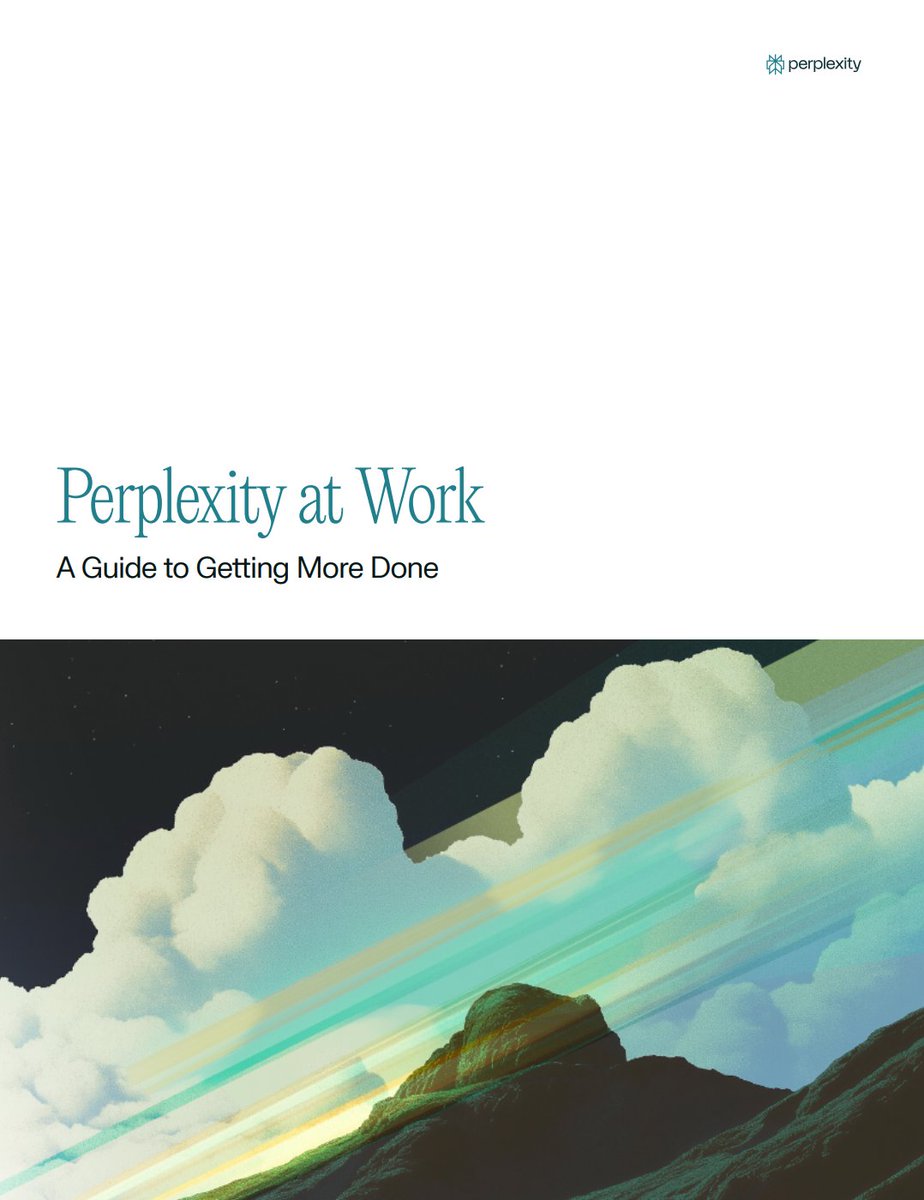
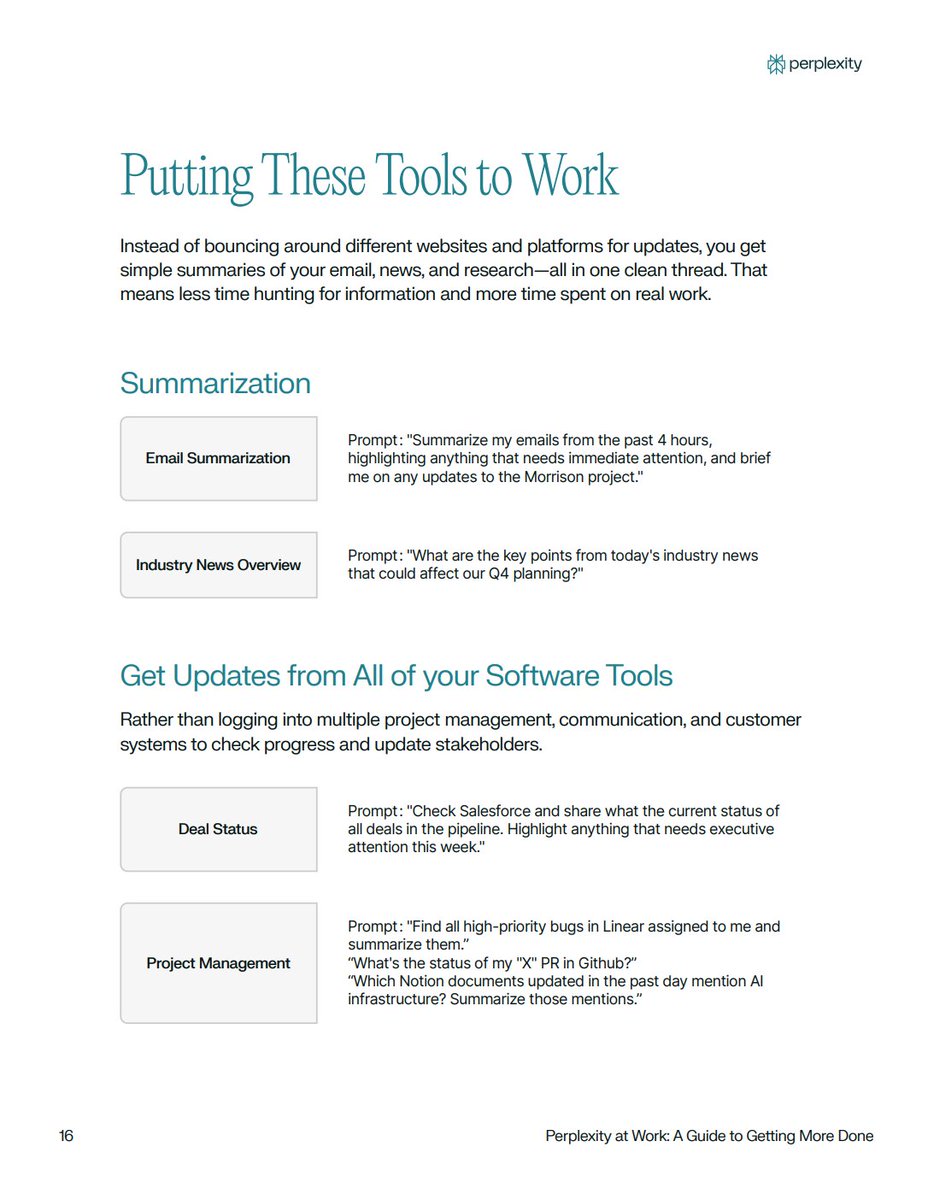
Perplexity just quietly dropped a 42-page internal guide on how they actually use AI at work. What I found most useful: → How they automate the small stuff. Email, meeting prep, research (all done by AI) → Using AI to amplify your curiosity, not replace it. → Their prompting playbook is simple, practical, and genuinely good. Comment “AI” and I’ll send it to you for free.
Aadit Sheth tweet mediaAadit Sheth tweet media
English
6K
1.4K
13K
1.6M
Christina Gathmann retweetledi
Erik Brynjolfsson
Erik Brynjolfsson@erikbryn·
IF: you're interested in understanding what we know, what we don't know, and what we need to do next when it comes to AI and labor, THEN: This piece by @econ_b, a postdoc at the @DigEconLab is a must-read. Link in next post:
English
5
17
61
11.1K
Christina Gathmann retweetledi
Luis Garicano 🇪🇺🇺🇦
Back online (still no light here). Lessons from Spain after a really weird day (no electricity, no 4G, no WiFi) for the world 1. Go out and buy a pocket battery-power radio. It was really disconcerting to have no way to know what is going on. 2. Buy a battery powered torche . There were none left in shops. 3. Keep cash. I had none. 4. Keep spare batteries.
English
882
2K
13.1K
1.1M
Christina Gathmann retweetledi
John Cochrane
John Cochrane@JohnHCochrane·
@ojblanchard1 Even better. Eu should remove all trade barriers and become the center of the new global free trade zone. Let the us stagnate for 10 years while Eu roars past us, until we wake up
English
24
136
761
123K