Gb

388 posts

Gb banner
Gb

Gb

@Gb21067283

Katılım Ekim 2020
178 Takip Edilen85 Takipçiler
Zhaoyu Wang
Zhaoyu Wang@ZhaoyuWang15·
@biomannn it looks weird. This person has been in Twitter since 2015 but there is only post which is about ABVX after its fall.
English
1
0
0
193
bio_mann
bio_mann@biomannn·
If you haven’t read any of the ABVX posts from the past few days, this is the only one you need. $abvx
deathTouch@deathtouch2k

Passing on $ABVX at this valuation is equivalent to passing on buying it at $55 in the post-market following the induction data readout. The market is getting a second chance at the same mistake. Here is the question the market will answer over time: what is the right value for what may be the best UC drug ever developed? Obefazimod appears to be a safe, once-daily oral therapy with no pre-prescribing burden, no meaningful ongoing monitoring burden, a unique mechanism of action, and exposure to what should become a ~$20B IBD TAM? The answer is likely more than ~$7B. Let’s put this in perspective: ~$7B is roughly what Pfizer paid for etrasimod before the Phase 3 UC data read out, which was a second-in-class S1P modulator behind ozanimod, with weaker efficacy, QT-related considerations, ECG screening, monitoring burden, and a less differentiated commercial profile. So what is capping the stock today? Outside of the cancer debate, based on conversations with market participants, the current pushback appears to be that there is “no catalyst.” They appear to have missed there is a major safety update expected by the end of this month that should nearly double the total patient-years of obefazimod safety exposure. I know pods have short-term thinking, but three weeks does not seem that far away when the next dataset has the potential to directly address the central bear case. That matters because the current bear case is safety. If the upcoming dataset continues to show that the malignancy rate is in line with UC background risk and non-JAK UC comparators, it should materially reduce the central sentiment overhang on the stock. That is the broader setup. The market appears to be treating the June 1 safety update as a structural impairment. That interpretation is wrong. These data now establish obefazimod as a potential frontline “prescribe and forget” oral therapy in UC which is a profile often hoped for and talked about in IBD and I&I more broadly, but rarely realized. The concern around non-NMSC events reported on June 1 is overblown. The June 1 data update should strengthen, not weaken, the core $ABVX thesis. The 50 mg safety concern is best understood as a red herring when evaluated against pooled exposure, the elevated baseline cancer risk of a refractory UC population, and malignancy rates observed with other UC therapies that do not carry black box warnings. The more important signal is efficacy. The 50 mg dose remains highly effective, with potentially best-in-disease endoscopic remission data, while the 25 mg dose provides meaningful flexibility for chronic maintenance, labeling, and physician adoption. The market reaction materially over-discounted safety-related risk, underappreciated the commercial significance of 25 mg / 50 mg dose flexibility, and failed to appreciate that the strength of the endoscopic remission data supports potential earlier-line use in UC while materially increasing the probability of success in Crohn’s disease. UC supports the base case. Crohn’s is the key upside driver for valuation. The reported 50 mg obefazimod malignancy data should be evaluated in totality by combining the pooled 96-week Phase 2b dataset, which used the same dose and similar NMSC surveillance, with ABTECT Maintenance Part 1. The right question is not whether there were headline malignancy events. The right question is whether the rate looks out of line for a refractory UC population that is already at elevated risk of cancer, and whether it looks out of line versus other UC therapies that do not have black box warnings. On the totality of the data, it does not. By construction, per regulatory convention, and consistent with standard practice in clinical IBD trials, dysplasia should not be counted as a non-NMSC malignancy event. Dysplasia is pre-malignant and, by definition, is not cancer. Such findings are also not uncommon against the background risk of longstanding ulcerative colitis. Including dysplasia as cancer distorts the safety interpretation and makes the 50 mg dose look worse than the data support. There were two non-NMSC events reported in ABTECT Phase 3 Maintenance Part 1. There was one non-NMSC event reported in the ongoing Phase 2 series of trials. It is unclear whether this event occurred during the 96-week portion of the Phase 2 series, but conservatively counting it against obefazimod still yields an event rate of approximately 0.58/100 patient-years. This places obefazimod in the middle of the range across UC comparators, including ustekinumab, vedolizumab, etrasimod, ozanimod, and mirikizumab, none of which carry black box warnings for malignancy, and ahead of black-boxed JAK inhibitors, including upadacitinib and tofacitinib. That is not what a broken 50 mg safety profile looks like. The safety debate is distracting from what should be the dominant interpretation of the update: the efficacy data are exceptional. Obefazimod has produced what may be the most impressive endoscopic remission dataset observed in ulcerative colitis, particularly after adjusting for how refractory the ABTECT population was. This was not an easy-to-treat biologic-naive UC trial. The study included substantial advanced-therapy inadequate responders and prior JAK inhibitor inadequate responders, yet the 50 mg dose still delivered a level of mucosal efficacy that appears best-in-disease or near-best-in-disease on a refractory-adjusted basis. That is the point the market appears to be missing. RINVOQ likely remains the stronger acute induction/rescue benchmark, but upadacitinib’s pivotal UC trials did not face the same degree of prior JAK-exposed disease biology. For chronic maintenance, obefazimod appears highly competitive and potentially superior when adjusted for baseline severity, with particularly strong endoscopic remission and corticosteroid-free remission performance. A non-JAK oral drug delivering this level of mucosal efficacy in this population is not just “strong data.” It is a potential frontline-enabling efficacy profile. This is what creates the frontline “prescribe and forget” opportunity. Community GIs manage many moderate UC patients before they become severe or refractory. A clean 50 mg profile would offer a rare combination: enough efficacy to keep moderate UC patients controlled, and enough safety comfort that physicians do not feel burdened managing the drug. Oral dosing, strong efficacy, no infusion logistics, no JAK-label discomfort, and minimal incremental workflow burden create a practical profile that community physicians can use earlier. The larger opportunity is not merely post-biologic / pre-JAK positioning; it is post-generics / pre-biologics use by physicians who want an effective, low-friction oral option. The 25 mg dose further strengthens this profile. It is not a rescue thesis; it is a strategic advantage. It provides flexibility for chronic maintenance, labeling, and physician adoption, while preserving 50 mg for induction, higher-need patients, or flex-up dosing. A commercially viable regimen could mirror the established IBD treatment paradigm used with RINVOQ: higher-intensity induction followed by lower-dose chronic maintenance. In practice, patients could receive 50 mg obefazimod induction or JAK induction followed by 25 mg obefazimod maintenance, with the ability to flex back to 50 mg in selected patients who require additional disease control. This preserves the key commercial attributes of the asset: potent induction optionality, a lower-exposure 25 mg maintenance backbone, oral dosing, dose flexibility, and strong mucosal efficacy. A potential 50 mg chronic-label limitation should therefore be viewed as a manageable dosing/labeling issue rather than a thesis-breaking safety problem. If the practical regulatory choice were between preserving broad 50 mg chronic dosing at the cost of a black box warning versus adopting a cleaner regimen of 50 mg induction and/or selective flex-up with 25 mg maintenance, the rational commercial strategy would be to prioritize the label that maximizes broad chronic use, physician comfort, and adoption. Even if, for the sake of argument, obefazimod ultimately received a black box warning, the asset would still not be broken. RINVOQ is black-boxed and still represents a multi-billion-dollar IBD product. That creates a reasonable downside commercial anchor for obefazimod: constrained label, not zero. In that scenario, obefazimod could still have a role in the post-biologic / pre-JAK setting, and potentially as maintenance after RINVOQ induction or after 25 mg / 50 mg obefazimod induction. If obefazimod is viewed as safer and more effective in maintenance, it could still be used ahead of RINVOQ for chronic disease control in selected patients. But the Crohn’s readthrough is the major upside driver, and the headline of the maintenance data should have been "Crohn's now appears largely de-risked". Can anyone think of a therapy that produced this degree of mucosal efficacy in UC and then failed to work in Crohn’s? Tofacitinib is the closest example, but it is not a close comp: inferior mucosal healing, a much easier-to-treat UC population, and a JAK mechanism with a very different safety and commercial profile. The point is not that UC success guarantees Crohn’s success. It does not. The point is that a non-JAK oral drug producing this degree of mucosal efficacy in a hard-to-treat UC population should materially increase the prior probability of CD success. Above a coin flip certainly seems reasonable given prior UC to CD translational examples, and we would venture should be closer to 75%, but regardless, meaningfully above where the market appears to be underwriting it today. That makes Crohn’s a real valuation driver today, not a free option worth zero. Global peak obefazimod sales can be reasonably framed at approximately $3.5–5.0B in ulcerative colitis alone, with upside to $6.0–10.0B if Crohn’s disease is successful. On a risk-adjusted basis, assuming a high probability of UC approval and a 66% probability of success in Crohn’s disease, a reasonable underwriting range could be approximately $4.5–6.5B in global risk-adjusted peak sales across IBD. There is additional upside approaching or exceeding $10B globally if the safety profile remains benign and the drug moves into frontline or earlier-line UC/Crohn’s use. The UC-only case is supported by a differentiated profile: oral once-daily dosing, strong maintenance efficacy, robust endoscopic remission, potentially cleaner chronic safety, 25 mg / 50 mg dose flexibility, and a refractory-adjusted efficacy dataset that compares favorably with leading advanced therapies. The base case is that obefazimod remains a multi-billion-dollar IBD asset. The downside case is a narrower 50 mg maintenance label, a 25 mg-centered chronic-use strategy, or even a constrained/black-box label, which remains commercially manageable and still anchored by a RINVOQ-like IBD revenue framework rather than zero. The upside case is a clean label, earlier-line UC positioning, community-GI adoption in the post-generics / pre-biologics setting, and successful Crohn’s development, which could support global peak sales toward the high end of a $6–10B range. To sum it all up: The risk/reward appears highly attractive because the market is focused on a worst-case interpretation of the 50 mg safety signal while failing to credit the durability, mucosal efficacy, Crohn’s readthrough, and commercial flexibility of the 25 mg / 50 mg profile. Layered on top of that is fast short money arguing there is “no catalyst,” despite a major safety update expected before the end of the month that should add a truckload of patient-years and directly address the only real bear case. If that dataset is clean, the debate should quickly shift from “is 50 mg impaired?” to “why was a potential best-in-disease oral IBD drug, now post-pivotal UC data, ever valued below inferior IBD assets acquired before their Phase 3 readouts?” Disclosure: May hold or trade securities mentioned, including $ABVX, and views/positions may change without notice. Not investment advice.

English
3
0
18
3K
Gb
Gb@Gb21067283·
@WassimLaroussi3 @houndcl he said he would make a new account as soon as he back from vacay. He is in the cords for now.
English
1
0
1
42
Gb
Gb@Gb21067283·
$abvx From @houndcl🫡Rinvoq
Gb tweet media
Português
2
2
49
5.6K
Seedy19
Seedy19@seedy19tron·
***The Cancer Signal DOES NOT Exist $abvx *** BREAKING: Building on what Adam has said, I’ve been able to crack it, and I think in the coming days when mgmt release a PR this is going back to $160. Here is why: (try to read to the end) When you apply the standard clinical trial counting conventions that every other UC pivotal trial has , you exclude dysplastic lesions (which are by definition not cancer) and separate NMSC from serious malignancies (per FDA convention). So it isn’t what Adam and I are observing it’s a fact. The actual count of adjudicable malignancy cases in the Ph 3 50 mg arm is TWO: - one prostate cancer - one breast cancer Why nothing burger? - Both occurred in older patients at peak demographic incidence ages - both were investigator deemed unrelated - both occurred at exposure windows biologically incompatible with drug causation - Obe has neither of the two known mechanisms by which a drug can cause cancer. *The signal is statistical noise made to look like a signal by a self inflicted presentation error.* Okay so clearly $abvx shot themselves in the foot, a $7B presentation error: The cleanest single fact in this entire debate…colonic dysplasia is not cancer. Cervical dysplasia, colonic dysplasia, melanocytic dysplasia… none of these are cancer. Every other UC pivotal program excludes dysplasia from the malignancy count. Look at the Rinvoq maint safety table, Sotyktu’s , Omvoh Velsipity, all the same. Dysplastic lesions are tracked separately as GI surveillance findings!!! not as malignancies. $abvx in a rush or naively included colonic dysplasia in the malignancy row created a non apples to apples comp that the market has been processing as drug driven cancer when it from a clinical pov, not cancer at all. This was a self inflicted wound. But it will be correct very soon. What they should have done.. (in hindsight gave us a chance to buy so so cheap) 1.Footnoted the dysplasia as a UC surveillance finding, NOT a malignancy 2.Reported “drug related malignancies 0%” prominently 3.Provided case level details for every event with explicit rationale for the unrelatedness adjudication 4.Released the escape/placebo arm 50 mg data simultaneously They visually organized the data in a way that made a non signal look like a signal. The market reacted to the table layout not the underlying pharmacology!! NMSC is not in the same category and if anyone wants I can walk them through it. Lumping NMSC with serious malignancies is a categorical error that no oncology or dermatology specialist would make. (Adam a derm and multiple others I spoke to confirm this) It is in a meaningfully different clinical category and the FDA knows this… which is why “non NMSC malignancy” is the standard endpoint they evaluate. Lots of smart onco folk here … there are exactly two established pharmacological pathways by which a drug can cause cancer: - Direct DNA damage (genotoxicity / mutagenicity) - Profound immunosuppression Obe non genotoxic across the full ICH S2 panel and no clin immunosuppression signal. CLEARED! if Obe is causing cancer, it must be doing so through a mechanism that has never been described in pharmacology. The drug would have to either be acting as a mini Chernobyl in a small subset of patients… (sorry for this example) There is no third option. The shortest known cancer latency for any human malignancy is approximately 2 years for radiation induced acute leukemia from acute high dose exposure. That is the floor. Chernobyl level acute radiation exposure does not cause clinically detectable solid tumors in 40 days. It doesn’t cause them in 200 days or 400 days. The biology requires multi year cellular transformation processes. Cancers detected within a 44w trial were growing for years before the pt was randomized. 1/n
Adam May@A_May_MD

I keep hearing people referring to "7" cases of cancer in the high dose arm for $ABVX. I get it - that's what they technically showed in the table, but in observing a lot of conversation about this I gather that people don't actually realize what really matters there. I am strongly of the opinion that there are really only 2 malignancy cases that matter for adjudication - the prostate cancer and breast cancer cases. I initially started talking about these cases as "the 2" cases from the very beginning because I assumed that everyone would be on the same page that these were the only 2 that mattered...but I've found that people really are considering this as a case of *7* full blown malignancies in the 50mg arm...This is just not correct. Let's break this down. First of all, they're counting "colonic dysplasia" in this table as one of the "malignancies". I cannot stress this enough: Colonic dysplasia is, by definition, LITERALLY not cancer. This is actually an unequivocal point that I don't understand how it could even be up for debate. "Dysplasia" is a "precancerous" lesion. Cervical dysplasia, colonic dysplasia, melanocyte dysplasia. Terms exist for these PREcancerous findings because they are, by definition NOT CANCER (otherwise, if they were cancer, we'd call them cervical cancer, colon cancer, and melanoma)... Dysplastic lesions, not being cancer, often regress on their own or simply never evolve into cancer, staying in the "dysplastic" state until death. However, if they *do* become cancer, they do so through a process that is called "malignant transformation". Literally, something that is NOT malignant TRANSFORMS into something that is. Why did the ABVX management team include this in the list of "malignancies"? Honestly, I don't know. I think it is an evident mistake, and a strong piece of evidence that they didn't think they'd actually have to explain away a "cancer signal" in this dataset because their analysis of the data told them that there isn't one. If they were worried that the market was going to interpret these data as a catastrophic malignancy risk (which, make no mistake, is what the current low $70s price tag is assuming), they would've likely adjudicated this more thoroughly and left the "malignancy" that is by definition NOT malignancy off of the "malignancy" table... So that is tossed out easily IMO. 6 cases left now. 4 of those are NMSC (non-melanoma skin cancer). I gather that people are dramatically overestimating what a diagnosis of NMSC means. Far be it from me to minimize NMSC (since it is what I treat for a living as a dermatologist), but guys....this is NOT in the same category as ANY other malignancies. NMSC is a milder category of its own, and I don't mean that as a matter of opinion. Literally, "non-NMSC malignancies" is a distinct endpoint used to gauge risk of "serious" malignancies in clinical trials. NMSCs are left out of that category because they almost never are "serious" - certainly almost never life threatening. Here's an exercise anyone can do to drive this point home. Google, or ask an LLM "what are the 10 most common cancers in the United States?". They are all going to give you the same answer: Breast & prostate will be the top 2 at slightly >300,000 cases/year. So breast and prostate are the #1 and #2 most common cancers according to every source...except, those sources either ignore completely or footnote at the bottom that there is a type of cancer 15x more common...NMSC!!! The point? Ubiquitously, NMSC isn't even included on the list of "most common cancers" because they're frankly in a separate category altogether from cancers like breast and prostate. It actually is controversial whether or not it is even possible for basal cell carcinoma to metastasize, and (aside from transplant patients), CSCC is almost never fatal unless left ignored/untreated for years (people ignoring a giant bleeding skin cancer is perhaps more common than you'd think, but not happening in any clinical trial patients). These 4 50mg NMSC cases (vs 1 in the placebo group) are a not representative of serious malignancy risk even if the market is acting as if they are...they are absolutely in milder a category all their own, and lumping these all together is a mistake. Again, if people think these 4 NMSC cases are some scary life threatening event, they're just flat out wrong. There are >15x more cases of NMSC than breast cancer in the US/year, yet >10x more breast cancer deaths occur in the US per year. Again, not to minimize my own career too greatly, but almost *always* NMSC are removed by VERY simple, ~10 minute procedures under local anesthesia. Cutting out (or scraping away) the lesion typically takes me around 60 seconds, and the bulk of the procedure is actually spent stitching the patient back up. Drive yourself to the office, drive yourself home, local anesthesia, under an hour, you're cured. Hell, in many places in Europe it is actually standard practice to not even "treat" a basal cell carcinoma! On many body locations they are simply biopsied, and once diagnosed they are considered cured by the biopsy itself! It has become very clear to me that people are thinking that these NMSC cases are highly relevant cases of severe, potentially fatal cancer. They simply are not. There are *millions* of these in the US per year and most are treated with <15 minute procedures. These are in a TOTALLY different, far less serious category of "cancer". So again, why wasn't $ABVX prepared to discuss/explain this? I legitimately think they did not expect to need to. They may have overestimated the market's knowledge here and underestimated its potential for a knee-jerk reaction to the "C-Word". It's a mistake, yes, but it ultimately doesn't change the profile of the drug. So, I think we have compelling cases to write off the colonic dysplasia (literally not cancer) and NMSC cases, as I have usually found to be standard in these situations. That leaves the breast and prostate cancer cases. Again, the otherwise #1 and #2 most common cancer types...funny how that worked out! I sincerely do not believe that these two cases alone represent a signal against 0 in the placebo arm. This is textbook small sample statistical noise, ESPECIALLY for a drug with no mutagenic risk AND no immunosuppression (literally, HOW would this drug even be causing cancer then???). However, clearly the market will want more info here on these two cases. Hopefully the market will wake up to the points above (that $ABVX and I mistakenly thought were obvious) highlighting that the colonic dysplasia and NMSC cases can be almost completely written off. After that, hopefully $ABVX can give us more info on these two "legit" cancer cases (breast and prostate). Yes, they should've been ready to do so on the call. they messed up, but let's see what the details show. Some are saying we will see updates sooner than the October conference like they initially guided for on the call (at which point they clearly did not expect the market to be freaking out at all). After that, we also need to see the data from the 50mg "escape/placebo" arm that was not part of the primary efficacy analysis. That's is own topic of conversation, but that could significantly rewrite the narrative (now that $ABVX is aware a narrative needs to be rewritten after it got away from them). I think the market thinks they are hiding these "escape/placebo" arm 50mg patients' data. I believe they were just totally caught off guard by the market's reaction to the "cancer signal" here and didn't think they'd need to have that dataset ready to prove there's no cancer risk (they thought the initial dataset spoke for itself...I agree, but so far the market clearly doesn't). There should be several hundred patients worth of extra 50mg patients in that group. Ideally they can move up the release of that dataset to help qualm the market's fears and try to prove they aren't trying to hide anything there. Depending on the sample size there, we should very likely expect a few "cases" there too, but if the rate comes in lower than the original 50mg data we got, this narrative could snap back rapidly. Let's hope!

English
22
15
225
47.8K
Gb
Gb@Gb21067283·
$abvx where is that wedbush analyst?
GIF
English
0
0
9
638
Adam May
Adam May@A_May_MD·
$SYRE pushing $8 billion cap currently on a major $XBI red day following their open label a4b7 data proving that a4b7 continues to work. Valuation was ~$3B at the start of the year. Must’ve been a massive surprise that their open label UC trial showed positive results with the biggest UC MoA on the market 🫡
English
7
2
60
37.5K
The Scrappy Short Jew
The Scrappy Short Jew@BeerBubbelah·
Always fun when the morons respond and immediately block you because they know they’re in the wrong and can’t refute anything @kikiruncha $SGMO
The Scrappy Short Jew tweet media
English
3
0
10
2.3K
The Scrappy Short Jew
The Scrappy Short Jew@BeerBubbelah·
@bingbingbom @kikiruncha Dude...you're the one who keeps telling me that you don't believe I'm invested and that I should be 100% in. You're the one who was being obstinate towards me. Chill the F out. It's ok to be a bull, but don't be an ass.
English
2
0
1
247
Yahu Capital
Yahu Capital@YahuCapital·
Interesting detail in the latest $ABVX press release - only visible in the French version: The PDF author is Melanie Simon-Giblin, a Cooley lawyer focused on cross-border financings & transactions. Not your typical IR/PR author. Cooley also advised on the sale of Cincor Pharma, the previous company of Abivax CEO Marc de Garidel. Why is a deal lawyer drafting a routine press release? This level of legal involvement often appears in late-stage situations. Could Abivax be positioning for an imminent takeover?
Yahu Capital tweet media
English
8
1
35
11.2K
Gb
Gb@Gb21067283·
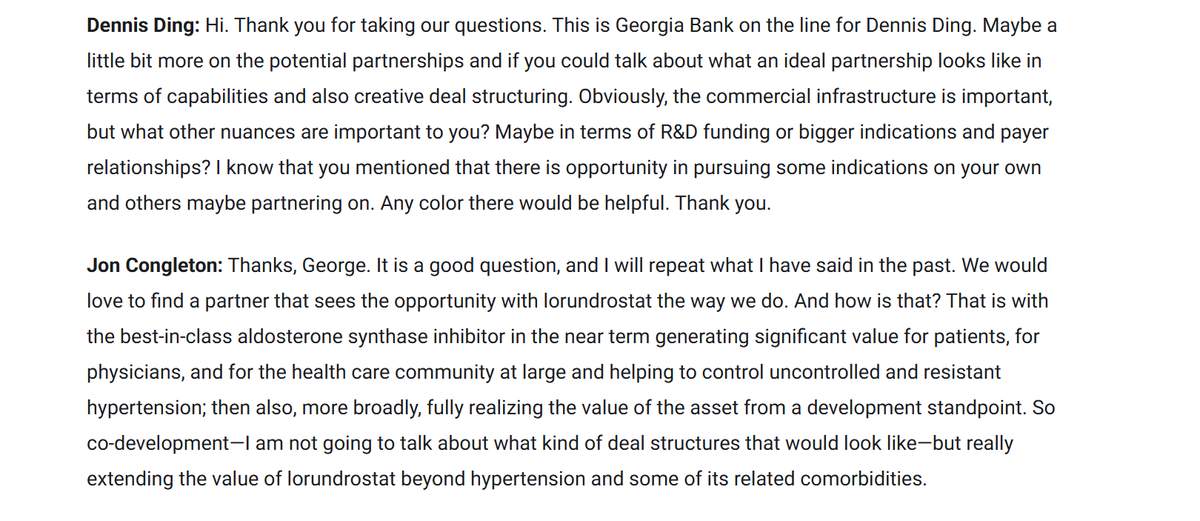
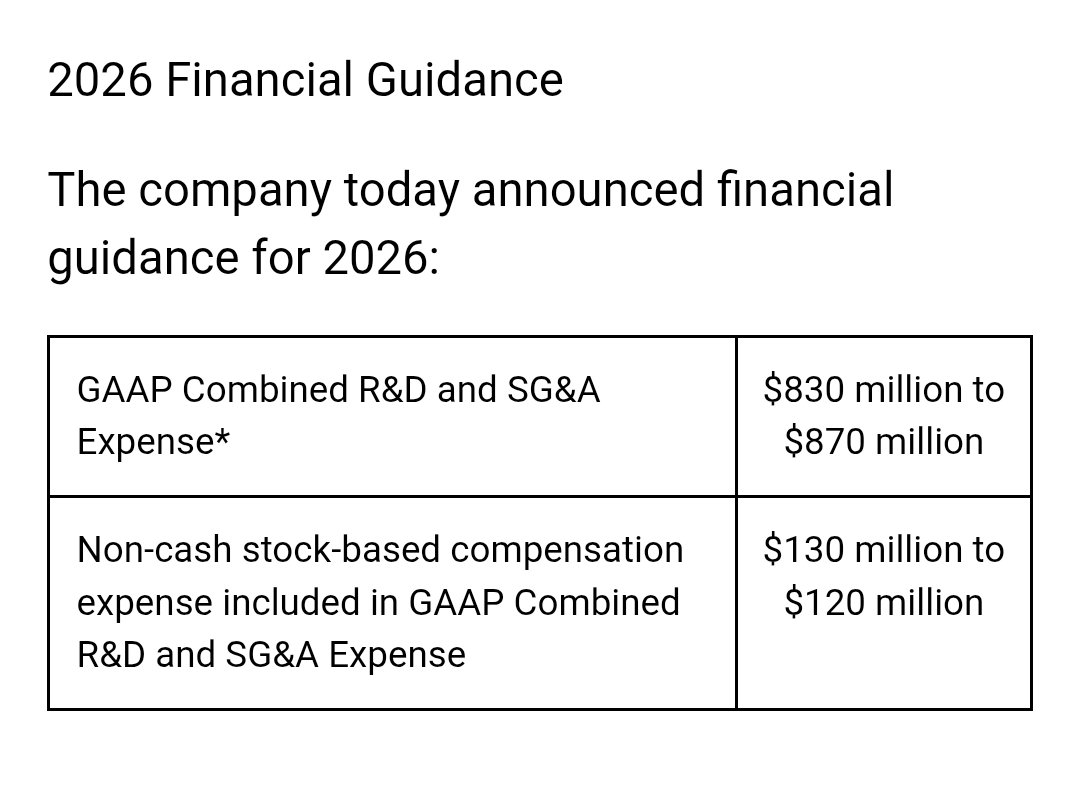
@Driller562 @zethedeuce $MLYS Looks like management has repeatedly mentioned their interest in partnering and pursuing other related indications. Kinda explains the price action.
Gb tweet media
English
1
0
3
338
PharmaLover
PharmaLover@Driller562·
@zethedeuce has anyone shown interest or mgmt said anything that hinted ?
English
2
0
0
57
ze.thedeuce.
ze.thedeuce.@zethedeuce·
$MLYS is cheap at $22.
English
1
0
1
334
Gb
Gb@Gb21067283·
$MLYS They are going to rug everyone with a partnership..aren't they?
English
0
0
1
334
Seedy19
Seedy19@seedy19tron·
$ABVX mgmt in 1:1s: • CCO hire to be announced on Monday in the earnings PR • Expect to raise post-maint • Not happy with La Lettre; have requested them to stop • Bullish tone re: maint data, but setting a modest bar Still one of the best names with an incredible asset. I’m glad they’re insulating themselves with commercialisation prep, just in case they have to go at it alone.
English
33
3
147
75.4K
Gb
Gb@Gb21067283·
@TennisJAK Niga you watch tennis?
English
0
0
0
59
The Tennis Letter
The Tennis Letter@TheTennisLetter·
Medvedev d. Alcaraz 6-3 7-6 Daniil is the 1st player to beat Carlos in 2026 & snaps his 16 match win streak ✅3rd Indian Wells final ✅3rd final of 2026 ✅11th Masters final ✅52nd top 10 win Back in top 10 Back to beating world #1’s He’s coming 😮‍💨🐙
English
88
433
5.2K
219.7K
avidresearch
avidresearch@avidresearch·
$CYTK is down from $70 to $61 in 2 days because ???
English
8
0
11
5.2K
Gb
Gb@Gb21067283·
@Quakerbrothers Ni ga shit posting? No wonder its taking this long with these kind of retail retards in abvx.
English
0
0
0
66
Gb
Gb@Gb21067283·
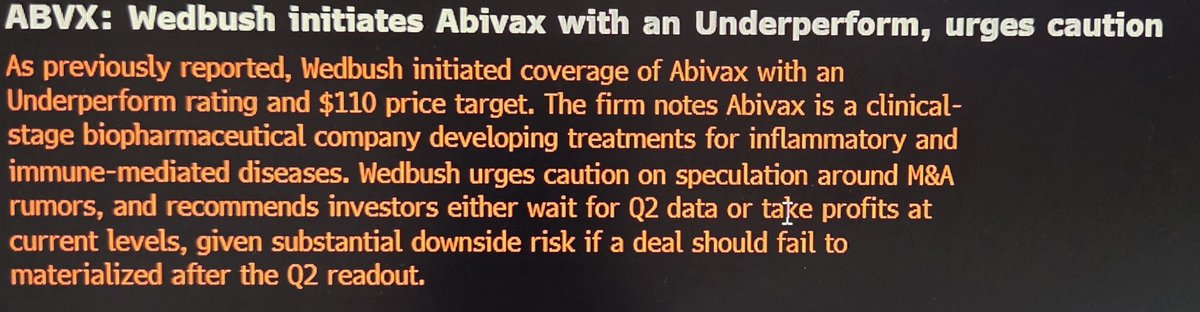
$ABVX Wedbush knows what's up.
Gb tweet media
English
2
1
15
6.3K
Gb
Gb@Gb21067283·
@Biotenic cause i have lottos😎
English
0
0
4
372
Biotenic
Biotenic@Biotenic·
Isn't the takeaway from $MRNA that a pressured reversal happens quickly? Why is $QURE up ~10%?
English
5
0
28
11.6K