Gerinvest

14 posts

Gerinvest

Gerinvest

@GeRaCrypto22

Katılım Eylül 2025
103 Takip Edilen18 Takipçiler
BigBoyKev
BigBoyKev@BigBoyOrderflow·
First look and personal intro to Orderflowdynamics, my first custom-built indicator for MMT. 🛠️📈 Here is a glimpse of how the Average Candles and VPS / LIQ Markers operate on $BTC. Pure data, precisely visualized. Full detailed videos dropping soon. @MMT_Official_ @anthdm
English
3
5
76
5K
The Kobeissi Letter
The Kobeissi Letter@KobeissiLetter·
Europe is in a full-blown energy crisis. In fact, Europe's energy crisis has gotten so bad that the European Commission is now recommending Europeans to work from home. They are also recommending using public transportation to cut fossil fuel use. Meanwhile, new IEA data shows that Europe has just 6 weeks worth of jet fuel remaining as the Iran War shortage worsens. As a result, many flights are expected to be cancelled on non-essential routes. Between the Russia-Ukraine War and the Strait of Hormuz closure, Europe's vulnerability to energy supply shocks has been exposed. We expect another wave of inflation in Europe.
English
384
1.1K
7K
728.3K
Gerinvest retweetledi
Mike Alfred
Mike Alfred@mikealfred·
X is getting taken over by AI slop garbage. Sadly, it’s almost unusable at this point. Like and repost this if you can see it and still want to see content created by real humans.
English
133
268
2K
71.5K
Mike Alfred
Mike Alfred@mikealfred·
BREAKING: Researchers have discovered evidence of a previously undiscovered cache of 4M Bitcoin in the Mariana Trench, 7 miles below the surface off the coast of Guam. Scientists now debating cost and timeline for accelerated extraction. Bitcoin trading down slightly on the news
English
144
30
1K
160.1K
Gerinvest retweetledi
Julien Bittel, CFA
Julien Bittel, CFA@BittelJulien·
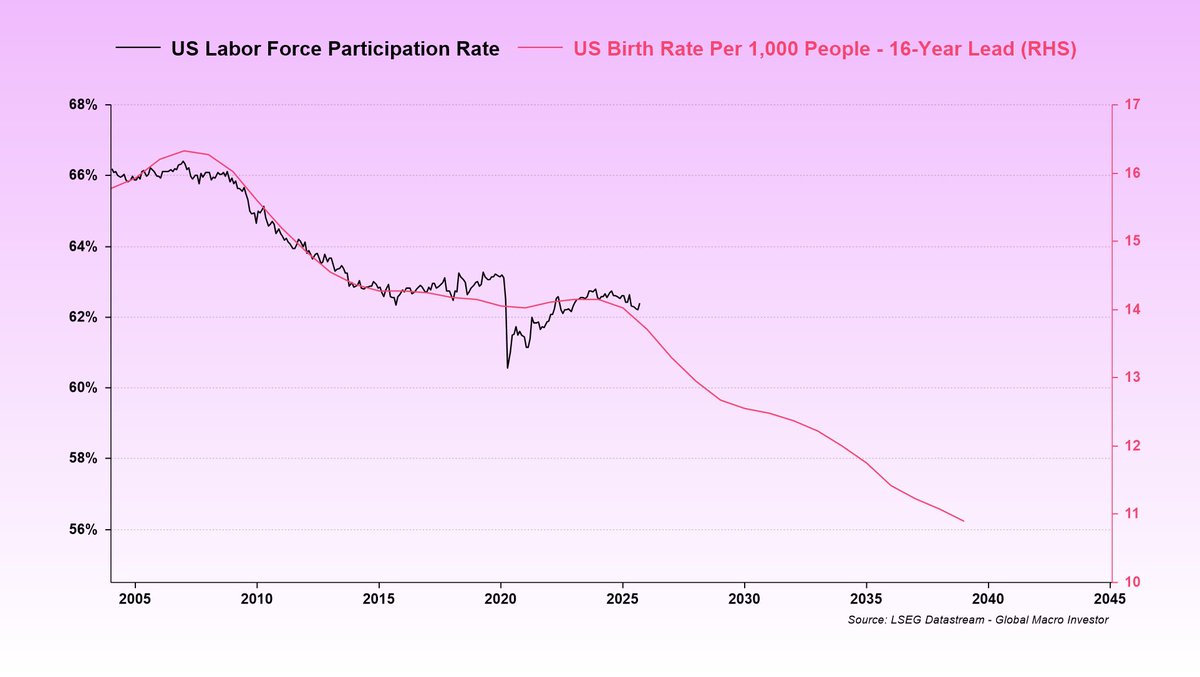
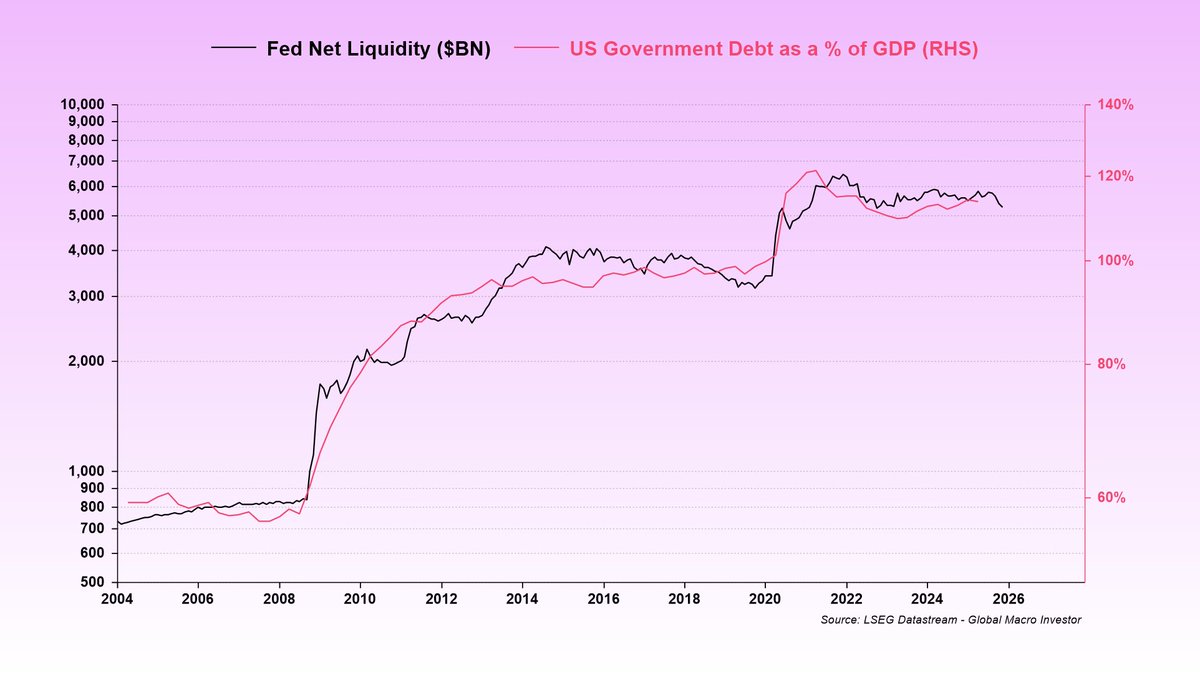
I wanted to give everyone something meaningful, a gift… This comes from Global Macro Investor (GMI) and a deep, long-running body of research developed by @RaoulGMI and myself. Many of you already know The Everything Code, which is our framework for understanding the macro landscape and why major central banks are debasing their currencies to manage aging demographics and overwhelming debt loads. I call this a gift because these four charts, while only scratching the surface of The Everything Code, give you the big-picture context you actually need in moments like this. They stop you from getting lost in every Bitcoin pullback and explain why Raoul and I never panic, even when, to borrow one of his expressions, everyone’s acting like monkeys throwing poo at each other. Once you understand The Everything Code, you stop trading short-term noise and expand your time horizon. You cannot unsee it. The starting point is what we call The Magic Formula: GDP growth = population growth + productivity growth + debt growth. Population growth and productivity growth have been falling for decades. Debt growth is the only thing filling the gap. The private sector has been deleveraging since 2008, mainly households, but debt levels are still around 120% of GDP. The public sector sits at roughly the same level. Here’s the problem… If the government is running debt at 100% of GDP and the private sector is sitting on another 100%, and for simple math we call rates 2% even though they are really closer to 4%, then the entire 2% trend growth of the economy is being consumed by servicing private-sector debts. That is a completely unproductive use of GDP. And then there’s the issue of public-sector debts. There’s just not enough organic growth to service the existing debt load. To understand why this dynamic persists, you need demographics. Birth rates peaked in the late 1950s and have been declining ever since. This shows up about sixteen years later in the labor force participation rate as each generation enters the workforce (chart 1). That means the labor force participation rate is not going to rise any time soon. It is set to keep drifting lower. This is a structural problem. Aging populations, falling birth rates, and rapidly expanding automation make the backdrop even more deflationary. AI and robotics are replacing humans at scale, and we are only at the beginning. This reinforces the need for ongoing stimulus to keep the system functioning. With weak population growth and sluggish productivity, the only way to keep GDP expanding is through debt. Now here’s where it gets interesting… Government debt growth is completely offsetting the demographic decline and policymakers know exactly what they are doing (chart 2). And what happens next? All debt growth in excess of GDP gets monetized (chart 3). Basically, since 2008, magic money has effectively been paying the interest. Governments issue new debt to cover old interest, and once rates fall enough, central banks absorb it onto their balance sheets. So to wrap this up, demographics drive the decline in the labor force. Governments offset that decline with more debt. That debt eventually gets monetized through quantitative easing (QE) style operations, not always directly by the Fed, but through the coordinated ecosystem of the Fed, the Treasury, and the banking system. And the bottom line is that there’s still a massive wall of interest that needs to be monetized, far more than GDP can ever cover. Liquidity is literally the only game in town. And what thrives in a world of perpetual debasement? Bitcoin (chart 4). I know this correction has been painful, but it’s all part of the journey. These periods feel brutal in the moment, then they fade and the trend resumes. This too shall pass… To quote Walter White from Breaking Bad, later echoed by @LynAldenContact, nothing stops this train. MOAR COWBELL (liquidity) = number go up over time. Zoom out and be more bullish…
Julien Bittel, CFA tweet mediaJulien Bittel, CFA tweet mediaJulien Bittel, CFA tweet mediaJulien Bittel, CFA tweet media
English
192
566
3.3K
363.7K
Gerinvest
Gerinvest@GeRaCrypto22·
@julianhosp Solltest dazu die Meinung von @willywoo lesen und mit einbeziehen. Und nein, ich hab keinen einzigen Bitcoin, nicht mal nen halben....
Deutsch
0
0
2
21
Dr. Julian Hosp
Dr. Julian Hosp@julianhosp·
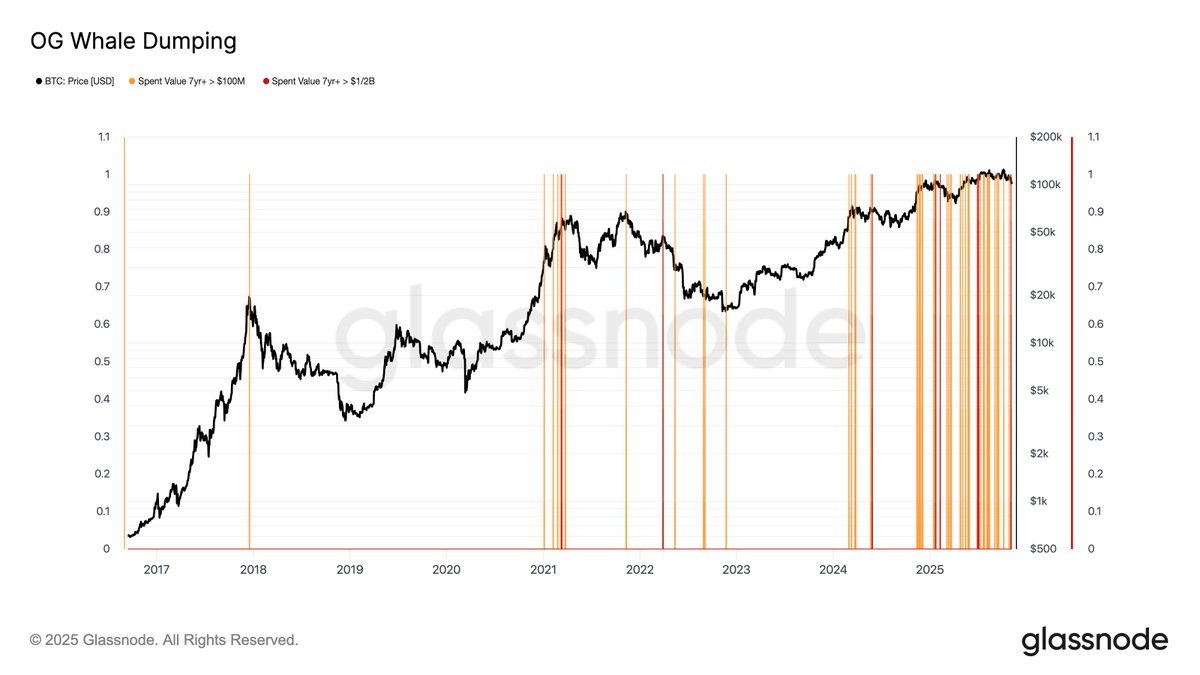
Und OG Wale dumpen weiter… Dieses Chart zeigt klar, wie viele der ganz alten Bitcoin-Whales aktuell auscashen. Jede Linie steht für On-Chain-Bewegungen von Coins, die seit über 7 Jahren stilllagen, also aus der Pre-2018 OG-Ära stammen... zu der ich auch gehöre. 🟠 Orange = über 100 Mio USD verkauft 🔴 Rot = über 500 Mio USD verkauft Aber klar, hör ruhig weiter auf deine Lieblings-Perma-Bullen, die dir erzählen, dass die OG-Wale nicht verkaufen. Tagge gerne die Accounts, welche dies in den letzten Tagen falsch (absichtlich oder einfach weil sie planlos sind) gepostet haben.
Dr. Julian Hosp tweet media
Deutsch
40
5
44
17.5K
Gerinvest retweetledi
Bitbull
Bitbull@BitbullTrading·
⚠️BREAKING ⚠️ Der Insider Wal, der vor der Ankündigung der Trump Zölle Short gegangen ist und somit knappe 90.m$ Gewinn gemacht hat, hat seine Position wieder aufgestockt! Er ist weiter Short! Sein neuer Einstiegspreis liegt nun bei 117.369$ Weiss er wieder was? Teilt das, dass es JEDER mit bekommt! #Bitcoin #Krypto
Bitbull tweet media
Deutsch
153
188
1.1K
170.7K
Gerinvest retweetledi
Julien Bittel, CFA
Julien Bittel, CFA@BittelJulien·
Most people are overcomplicating the idea that Bitcoin’s traditional four-year cycle can extend. It’s simple. If the business cycle extends, the crypto cycle extends. Bitcoin is a macro asset…
Julien Bittel, CFA tweet media
English
210
546
4K
712.6K
Gerinvest retweetledi
Julien Bittel, CFA
Julien Bittel, CFA@BittelJulien·
I’ve been seeing a lot of chatter on X about “peak cycle” and how the economy looks late-cycle. So I wanted to tackle this head on and share a few thoughts of my own... This is from the August 21st MIT publication: A classic late-cycle economy typically has all the following ingredients:   ✅ Manufacturing sentiment is extreme (think ISM ~60) ✅ Services sentiment is extreme ✅ Homebuilder sentiment is extreme ✅ Consumer confidence is high ✅ Worker confidence is high (JOLTS quits rate rising sharply) ✅ Investor sentiment is very bullish ✅ Small business confidence is high ✅ Job openings and hiring plans are rising ✅ Wage data and surveys show accelerating pay increases ✅ CEO confidence is strong and capex is booming Now, I could add more to this, but when you score all of these inputs and turn them into a single timeseries, here’s what you get (chart 1). Using data from ISM, NAHB, NFIB, BLS, AAII, The Conference Board, etc., US sentiment, when viewed as a complete picture, remains very subdued. We’re just not even close to the euphoric levels we see late in the business cycle, when everything listed above is stretched to extremes. Peak cycle is when the ISM rolls over from 60+ to sub-50, inventories unwind, and demand cools. Supply and demand reset, inflation pressures ease, and the cycle eventually recovers out of the slowdown or recession – mostly depending on the extent to which financial conditions tightened during the cycle, particularly late on as central banks hike rates and drain liquidity. However, based on this full set of indicators, the data is pointing to something very different. This does not look like an above-trend late-cycle economy. It looks much more like an early-cycle economy trying to build momentum. Another really important factor, and a key reason we believe both the ISM and this sentiment composite will grind higher this year and into 2026, is the sheer scale of central bank easing via rate cuts. Right now, nearly 90% of central banks are cutting rates. That is extraordinary, and on a forward-looking basis, it is a massive tailwind for the business cycle (chart 2).   By my playbook, the time to start talking late-cycle is when the teal line rolls over and begins to drop, as central banks turn to hiking rates to slow growth. Even then, there’s usually a nine-month lag before higher rates hit the real economy. Right now, we’re just nowhere near that... in fact, the opposite is true. To my earlier point, slowdown or recession is largely a function of how much financial conditions tighten late in the cycle. Oil prices are a big part of this equation. When oil runs 50% above trend, that represents a massive tightening and has almost always signaled recession, looking back to the early 1970s. However, right now, we are nearly 20% below trend and still falling, which shows this component of financial conditions is still easing (chart 3). Also, as I’ve pointed out many times in previous reports, when you look at Temporary Help Services, it has early-cycle vibes written all over it (chart 4). Rising growth from deeply negative levels is an early-cycle dynamic. It tells you the economy is in recovery mode, not rolling over. Late-cycle is the opposite: positive year-on-year growth that’s slowing, which reflects an overheated economy losing steam. Why is unemployment still rising? Because it lags the cycle. Jobs data is a six-month look in the rear-view mirror. Here’s the thing: full-time hires are expensive. Benefits, pensions, overhead… So what do businesses do first? They typically increase overtime hours and bring in temp workers. Only when they feel confident do they finally lock in full-time staff. That way, they can scale without locking themselves into long-term payroll commitments. So, this isn’t late-cycle. It’s early-cycle (growth up + inflation down = Macro Spring), soon transitioning to mid-cycle (growth up + inflation up = Macro Summer). That’s how I see it, anyway...
Julien Bittel, CFA tweet mediaJulien Bittel, CFA tweet mediaJulien Bittel, CFA tweet mediaJulien Bittel, CFA tweet media
English
335
763
4K
770K