George M
28.2K posts

George M
@GeorgeMo
He/Him. American 1stA Supporter, SEO curator, writer (& playwright), geek, sci-fi addict, coin collector, activist in the TX 33rd Congressional District.


At 65 years old, he sat in his car outside a closed restaurant with $105 in his pocket — his entire life's savings reduced to a single monthly Social Security check. He had failed at more than a dozen careers. He had just lost everything he owned. He could have gone home and stayed there. Instead, he started driving. His name was Harland David Sanders. And the world would come to know him simply as The Colonel. He was born on September 9, 1890, on a small 4-room farm near Henryville, Indiana. The oldest of 3 children. His father died when Harland was just 6 years old, leaving his mother to work long shifts at a canning factory to survive. At 6 years old, Harland Sanders learned to cook. Not as a hobby. As a necessity. His mother left before dawn every morning and came home exhausted every night. Someone had to feed the family. That someone was Harland. He mastered cornbread, vegetables, and meats before most children his age could tie their own shoes. By 7, he could cook a proper meal from scratch. By 10, he had a job working on a nearby farm for a dollar a month. By 12, he had dropped out of school entirely. At 16, he lied about his age and enlisted in the United States Army. He was honorably discharged 1 year later. He came home to Indiana with a military record, a 7th-grade education, and no clear plan. What followed was one of the most spectacularly turbulent careers in American history. He worked for the railroad as a laborer. He got fired after a fistfight with a coworker. He studied law through a correspondence course — then destroyed his legal career by getting into another fight, this time with a client, in the middle of a courtroom proceeding. He sold life insurance. He was fired. He sold tires. He was let go due to company downsizing. He operated a ferry boat service on the Ohio River, then sold it. He used the proceeds to start a lamp manufacturing company. It lost almost everything he put into it. He was 40 years old and had almost nothing to show for 24 years of adult life. Then something happened. In 1930, he leased a small service station in Nicholasville, Kentucky. When travelers stopped for gas, they sometimes mentioned they were hungry. He started feeding them — at his own dining room table, in his own living quarters behind the station. Just whatever he was cooking for himself. Word spread fast. Sanders moved to a larger service station in Corbin, Kentucky in 1934. He took over a motel across the road and converted part of it into a proper restaurant. He spent the next several years obsessively perfecting his fried chicken recipe — developing a unique blend of what he eventually settled on as 11 herbs and spices, and inventing a new cooking method using a pressure fryer that could produce perfectly juicy fried chicken in under 10 minutes. He had found his thing. By the early 1950s, his restaurant in Corbin was famous across Kentucky. The food critic Duncan Hines — yes, the same Duncan Hines whose name still appears on cake mixes today — featured Sanders' restaurant in his respected travel guide Adventures in Good Eating. Governor Lawrence Wetherby of Kentucky gave Harland Sanders the honorary title of Kentucky Colonel in 1950 — a state honor recognizing significant contributions to the community. He had been given the title once before, in 1935. He loved it so much he adopted the white suit, the black string tie, and the silver goatee as his permanent public image. The Colonel was born. In 1952, at age 62, Sanders partnered with a Utah restaurant owner named Pete Harman to open the very first Kentucky Fried Chicken franchise in South Salt Lake, Utah. A sign painter named Don Anderson came up with the name "Kentucky Fried Chicken." Sanders received 4 cents for every piece of chicken sold. It worked brilliantly. Within 1 year, Pete Harman's restaurant had doubled its revenue. Sanders was convinced. This was the future. And then, in 1956, the ground fell out from under him. The state of Kentucky announced a new interstate highway — I-75 — that would bypass Corbin entirely. The steady stream of travelers that had kept his restaurant alive for 20 years evaporated almost overnight. His customer traffic collapsed. In 1956, at age 66, Harland Sanders was forced to auction off his beloved Corbin restaurant. After paying his debts, he was left with almost nothing. His entire net worth at that moment was his Social Security check — $105 a month. Here's what he did next. He loaded his car with a pressure cooker and a bag of his secret spice blend. He started driving from town to town across America, walking into restaurants completely unannounced, cooking his chicken recipe for the owner on the spot, and asking for a handshake deal. The deal was simple. The restaurant would pay him 4 cents per chicken sold. Sanders would supply the spice blend in sealed packets so no one could steal the recipe. Restaurant after restaurant said no. They told him the recipe was too complicated. Too much trouble. Too different. Too risky. They already had their own chicken. They didn't need his. He kept driving. He slept in his car to save money. He cooked in restaurant kitchens for free just to show people what he had. He drove through heat and cold, through small towns and big cities, through 1 rejection and then 10 and then 100 and then hundreds more. By the time he found his second franchisee, he had heard the word "no" from 1,009 different restaurant owners. One thousand and nine times. He kept a tally. He never stopped. The 1,010th restaurant said yes. Then another. Then another. By the early 1960s, Kentucky Fried Chicken had expanded to more than 200 locations across America. By 1964, there were more than 600 franchise locations across the United States and Canada — all built by 1 old man in a white suit driving himself from town to town and cooking chicken for strangers. In 1964, at age 73, Sanders sold Kentucky Fried Chicken to a group of investors for $2 million — the equivalent of more than $20 million today. He retained the rights to the Canadian operations and stayed on as the company's brand ambassador. In 1976, an independent survey ranked Colonel Harland Sanders as the second most recognizable celebrity in the entire world. Second only to Muhammad Ali. The man who had been fired, failed, fought, bankrupted, and bypassed was now 1 of the 2 most recognized faces on the planet. He remained ferociously protective of his recipe for the rest of his life. When the company simplified his gravy recipe to cut costs, he showed up at franchises unannounced to sample it and, if it fell short, pushed it onto the floor in disgust. He publicly called it "slop" and "wallpaper paste." He sued the parent company in 1973 over the use of his image. He lost the lawsuit. He kept complaining anyway. He was still making surprise visits to KFC restaurants at age 89, in 1979, to make sure they were doing it right. On December 16, 1980, Harland David Sanders died of leukemia at the age of 90. At the time of his death, there were more than 6,000 KFC locations in 48 countries generating over $2 billion in annual revenue. He was buried in his white suit and black string tie. The man who dropped out of school at 12, lost more jobs than most people ever have, and received 1,009 rejections while sleeping in his car at age 65 died as 1 of the most successful, recognizable, and beloved entrepreneurs in human history. He never had a single advantage except one. He refused to stop. Share this with someone who is on rejection number 50 or 100 or 500 and needs to remember that 1,009 is not the end of the story — it is just the part before it begins.

You didn’t design shit. This is an off the shelf rebrand of a device made by Wingtech called the Revvl 7Pro 5G and was available at T-Mobile for $0. The 7Pro has been replaced by the 8Pro because this thing is over 18 months old. And this is old stock that they bought to avoid a lawsuit.

Someone on Twitter posted a Monet painting, claimed an AI made it, and asked the internet to describe everything wrong with it. And hundreds did. The reflections were just splattered noise. There was no depth or cohesion. The background, as one reply put it, was "an egregiously vague algae amalgam." No focal point. The further back you went, the less anything looked like anything. The image was a real Monet. It's one of his late Water Lilies. Every flaw they listed is exactly what makes those paintings hang in museums. He spent the last twelve years of his life trying to kill the horizon line and dissolve the focal point. He painted on canvases big enough to wrap around you. The "mess" was the entire point. One of these paintings sold at Sotheby's in 2014 for $54 million. Monet gave eight more to France as a peace offering the day after the Armistice. They hang in two oval rooms in Paris that he and his architect designed themselves. There's a name for what just happened. In 2023, three researchers at Columbia Business School ran an experiment with almost three thousand people. They showed each person the exact same painting twice, once labeled human-made, once labeled AI-made. People valued the AI-labeled version 62% lower and thought it took 77% less time to make. Same canvas, opposite verdicts. A team at University College London had already shown why this happens. Back in 2009, they put people in a brain scanner and showed them art. Each painting appeared twice. One version was tagged "from a gallery," the other "computer generated." The reward-and-pleasure part of the brain lit up more strongly for the gallery tag. The label was changing how the brain saw the same image. Knowing about the bias doesn't help. Over 70% of participants in the Columbia study said the paintings looked the same to them. They still rated the AI-labeled ones lower. In 2023 a lab at Keio University in Japan tested how accurately people could spot AI art. People got human paintings right only 68% of the time. For AI paintings, the rate was 43%, worse than flipping a coin. A blogger named Scott Alexander ran the same test publicly in 2024 with fifty paintings, museum pieces mixed in with AI ones. The median score was 60%, barely better than guessing. Art professors and curators took the test. Most landed in the same range as everyone else. The "splattered noise" the comments mocked is some of the most-studied brushwork in art history. The "vague blob" is on the walls of a Paris museum. The brain seems to stop seeing the painting the moment it's told a machine made it.


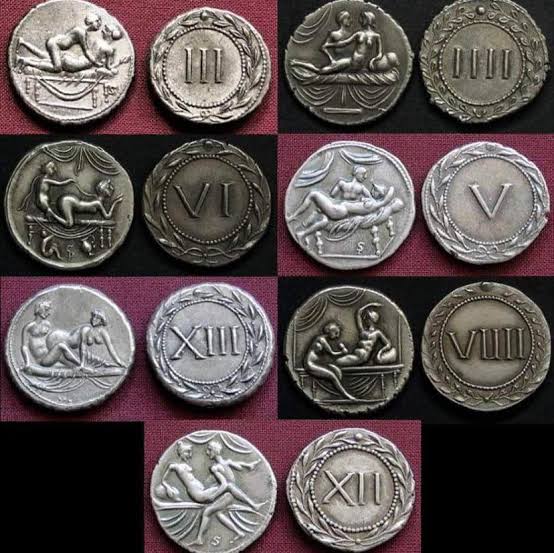
古代ローマ人が使ってたとされる、ルイス工具。先人の知恵はガチで凄いよな


Ce pont parisien porte le nom d'un point d'eau au milieu du désert de Libye. Et personne ne trouve ça étrange. Pont de Bir-Hakeim, entre les 15e et 16e arrondissements. 237 mètres de long. Deux étages : les voitures et les piétons en bas, le métro ligne 6 en haut, à ciel ouvert, face à la Tour Eiffel. En 1878, il n'y a ici qu'une passerelle piétonne en métal, construite pour l'Exposition universelle. En 1905, on la remplace par un vrai pont à deux niveaux pour faire passer le métro au-dessus de la Seine. Il s'appelle alors le viaduc de Passy. En 1942, dans le désert libyen, 3 700 soldats français libres tiennent un point d'eau face à 90 000 hommes de Rommel et 575 panzers de l'Afrika Korps. Pendant seize jours. Le général Koenig commande. Les deux tiers des troupes viennent des colonies. Un bataillon de la Légion compte 300 républicains espagnols. L'armement est hétéroclite, les chenillettes sont dépassées, mais ils tiennent. Dans la nuit du 10 au 11 juin, ils percent les lignes ennemies. Cette résistance permet aux Britanniques de se replier et de gagner El-Alamein un mois plus tard. La France libre prouve qu'elle sait se battre. Elle sera à la table des vainqueurs. En 1948, le viaduc de Passy est rebaptisé pont de Bir-Hakeim. Un pont parisien qui porte le nom d'une victoire dans le sable.


Why do cities grow north and how can knowing that make you rich? Here's why one of the most overlooked real estate cheat codes on the planet works so well: The sun sits south - so nuilding north never shadows the buildings already there. Zoning fights push growth that direction for 200 years. The wind blows west to east. Old factories got built south and east of downtowns. Rich people fled the smoke north and west. Even after the factories closed, the pattern stuck. Rivers usually run south of downtown. South side = floodplain. North side = high ground. Premium dirt forever. Highways got built to serve where the wealthy already moved. The rich moved north. The highways made more north growth possible. This becomes a self-reinforcing loop for hundreds of years. North of every city is open farmland. It's the cheapest path of least resistance for developers. DFW is the textbook case. Same play, one exit further up Highway 75 and the tollway every decade: 1920s: Highland Park 1980s: Plano 2000s: Frisco 2020s: Prosper, Celina 2030s: Sherman, Denison 2040s: Oklahoma? Boomers bought 30 miles north of Dallas in 1980 with 12% rates. Today they're rich. Millennials can buy 30 miles north of where development ends today, at 7% rates, wait 20 years and get rich as well. Look how cheap land up there is. Don't be afraid of Oklahoma, either. The map still works. The more things grow north, the less it matters than you're 60+ miles from Dallas proper. I'm under contract on a ranch outside of DFW right now. Guess which direction it's in? Yep. Follow me @mhp_guy if you liked this.

Hunter S. Thompson, America's self-described "Gonzo" journalist and author of Fear and Loathing in Las Vegas, spent the final months of 1999 in a state of urgent preparation at his fortified compound in Woody Creek, Colorado. Thompson, a lifelong firearms enthusiast who owned an extensive collection of weapons, reportedly stockpiled thousands of rounds of ammunition in anticipation of a catastrophic societal collapse triggered by the Y2K computer bug. The eccentric writer believed the millennium rollover could trigger the breakdown of modern civilization, including power grids, financial systems, and government infrastructure. For Thompson, this was not paranoia but a logical extension of his long-held distrust of authority and his view of American society as perpetually teetering on the edge of chaos. His remote Owl Farm property, which he called his "fortified compound," made it a natural staging ground for his preparations. Thompson's stockpiling reflected the broader cultural anxiety of the late 1990s, when survivalist thinking briefly moved from the fringe into the mainstream. When midnight on January 1, 2000 passed without incident, the world moved on. Thompson, as always, remained his own story. #drthehistories

This is a real image. This is a real tree. The rainbow eucalyptus is photosynthesizing through its bark. That's why it has color. Eucalyptus deglupta sheds patches of outer bark on a rolling schedule, never the whole trunk at once. Each fresh patch is packed with chlorophyll, the same pigment that makes leaves green. The bark is thin enough that light gets through and the tree photosynthesizes through its trunk. The moment that fresh green hits air and UV, the chemistry starts. Chlorophyll degrades. Tannins accumulate in the transparent outer cells, the same polyphenol family that gives red wine its color and makes biting an unripe persimmon feel like sandpaper. As the layer ages, the tannin mix and oxidation state shift the color: green to blue, blue to purple, purple to orange, orange to maroon, before that patch peels off and a new green layer starts the cycle. Every stripe you see is a different timestamp. The trunk is a literal time-lapse of bark oxidation, every frame on display at once. Eucalyptus deglupta is native to Mindanao, Sulawesi, and New Britain. It's the only eucalyptus species that crosses the equator into the Northern Hemisphere. It grows 250 feet tall with a trunk eight feet thick and buttresses thirteen feet high. The seeds are so small that a kilogram contains two million of them. It's also one of the fastest-growing trees on the planet. The Philippines, Indonesia, and East Africa run massive plantations of it for paper pulp. The world's most colorful tree. Grown to make blank paper.