
George Pîrlea retweetledi
George Pîrlea
607 posts

George Pîrlea
@GeorgePirlea
PhD student @NUSComputing. Programming languages, formal methods, distributed systems. Lean is the future. ◎ pirlea.sol / Ξ pirlea.eth / https://t.co/YSWX6lMMgV
Singapore Katılım Kasım 2015
4.5K Takip Edilen1K Takipçiler

George Pîrlea retweetledi

There are two related, but distinct, problems with MTTR maximalism.
1. The distribution of recovery times could be heavy-tailed, and so the empirical mean could be far from the true mean.
2. Some failures are unrecoverable (e.g. durability loss).
Mitchell Hashimoto@mitchellh
I strongly believe there are entire companies right now under heavy AI psychosis and its impossible to have rational conversations about it with them. I can't name any specific people because they include personal friends I deeply respect, but I worry about how this plays out. I lived through the great MTBF vs MTTR (mean-time-between-failure vs. mean-time-to-recovery) reckoning of infrastructure during the transition to cloud and cloud automation. All those arguments are rearing their ugly heads again but now its... the whole software development industry (maybe the whole world, really). It's frightening, because the psychosis folks operate under an almost absolute "MTTR is all you need" mentality: "its fine to ship bugs because the agents will fix them so quickly and at a scale humans can't do!" We learned in infrastructure that MTTR is great but you can't yeet resilient systems entirely. The main issue is I don't even know how to bring this up to people I know personally, because bringing this topic up leads to immediately dismissals like "no no, it has full test coverage" or "bug reports are going down" or something, which just don't paint the whole picture. We already learned this lesson once in infrastructure: you can automate yourself into a very resilient catastrophe machine. Systems can appear healthy by local metrics while globally becoming incomprehensible. Bug reports can go down while latent risk explodes. Test coverage can rise while semantic understanding falls. Changes happens so fast that nobody notices the underlying architecture decaying. I worry.
English
The lesson in ops: MTTR is part of reliability, not a substitute for it. You can’t repeatedly recover your way to 100% uptime.
Parallel in dev: tests are not sufficient for correctness. You can have absolute garbage passing all tests.
Mitchell Hashimoto@mitchellh
I strongly believe there are entire companies right now under heavy AI psychosis and its impossible to have rational conversations about it with them. I can't name any specific people because they include personal friends I deeply respect, but I worry about how this plays out. I lived through the great MTBF vs MTTR (mean-time-between-failure vs. mean-time-to-recovery) reckoning of infrastructure during the transition to cloud and cloud automation. All those arguments are rearing their ugly heads again but now its... the whole software development industry (maybe the whole world, really). It's frightening, because the psychosis folks operate under an almost absolute "MTTR is all you need" mentality: "its fine to ship bugs because the agents will fix them so quickly and at a scale humans can't do!" We learned in infrastructure that MTTR is great but you can't yeet resilient systems entirely. The main issue is I don't even know how to bring this up to people I know personally, because bringing this topic up leads to immediately dismissals like "no no, it has full test coverage" or "bug reports are going down" or something, which just don't paint the whole picture. We already learned this lesson once in infrastructure: you can automate yourself into a very resilient catastrophe machine. Systems can appear healthy by local metrics while globally becoming incomprehensible. Bug reports can go down while latent risk explodes. Test coverage can rise while semantic understanding falls. Changes happens so fast that nobody notices the underlying architecture decaying. I worry.
English
George Pîrlea retweetledi

New article: write crazy gas optimizations directly in EVM bytecode, prove them equivalent to the original in @leanprover, profit.
- Compilers won't do these.
- Most humans don't dare.
- AI + Lean proofs can.
Read more + full article link below 👇

English
George Pîrlea retweetledi

Getting increasingly bullish on just vibe-coding the important things in Lean.
eg. see:
github.com/Verified-zkEVM…
blog.zksecurity.xyz/posts/end-codi…
English
George Pîrlea retweetledi

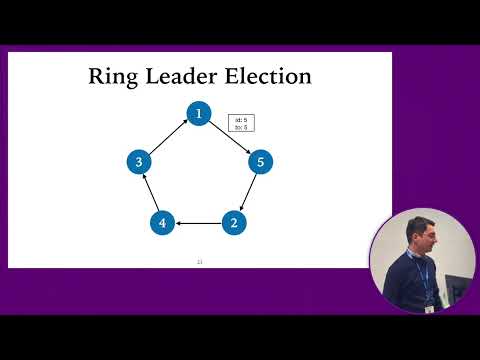
"As Lean's meta-programming, proof automation, and IDE infrastructure continue to mature, the case for embedding verifiers inside Lean only grows stronger" @GeorgePirlea, lead developer of Veil.
Veil is a multi-modal verification framework for distributed protocols: write a model once, then apply model checking, SMT-based proofs, and interactive theorem proving from a single specification.
George recently presented Veil at the TLA+ Community Event (ETAPS 2026).
📺 Watch the talk: youtube.com/watch?v=24mMfU…
🔗 See the use case: lean-lang.org/use-cases/veil
#LeanLang #LeanProver #FormalVerification #SoftwareVerification
YouTube

English
George Pîrlea retweetledi

A decentralized VPN like @nym can’t be banned. Pass it on!
European Parliamentary Research Service@EP_EPRS
Virtual private networks #VPN are increasingly used to bypass online age verification. Protecting children online is a priority, with new rules being implemented requiring a minimum age for access to some services Read👉 link.europa.eu/FGfr6C #DSA @EP_Justice @FZarzalejos
English
George Pîrlea retweetledi

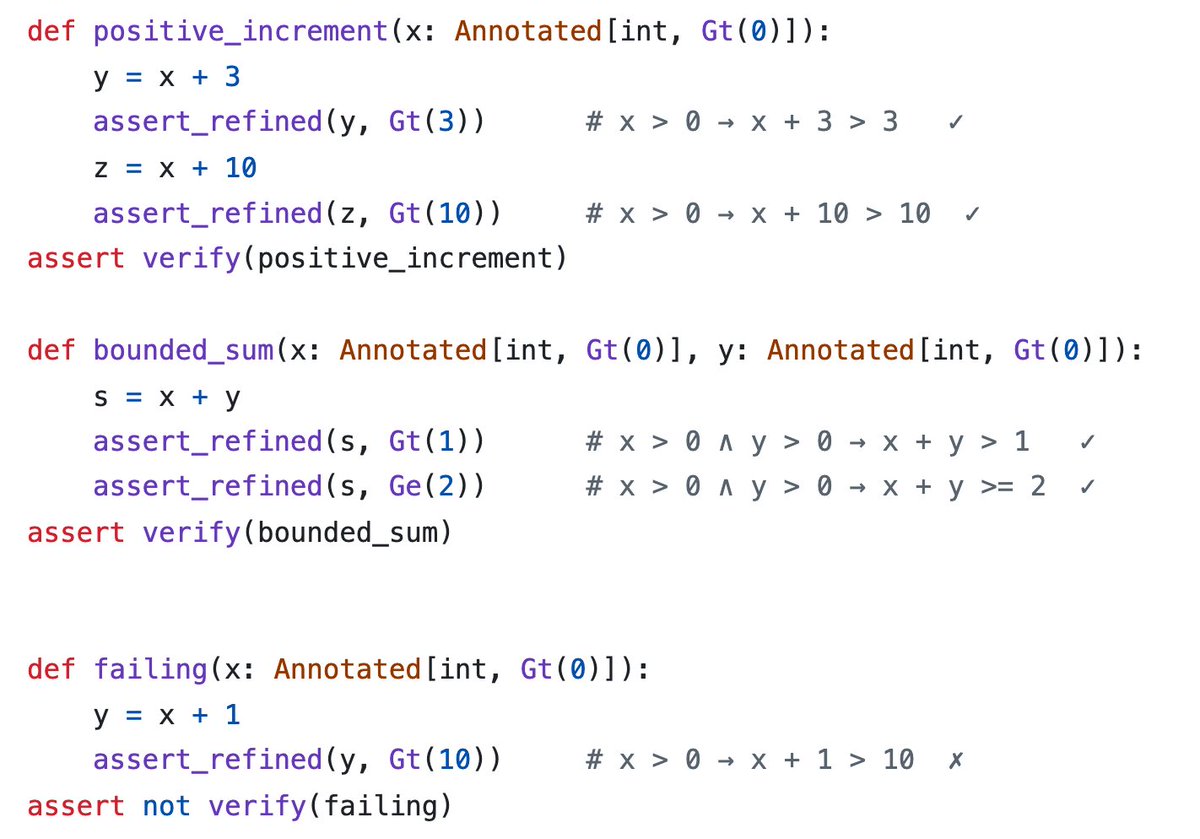
Python doesn't have a refinement type system--except now it does!
Combining Lean with @BasisOrg's effectful library for algebraic effects in Python, we can easily verify real code.
Python constructs a symbolic expression and sends it to Lean to check. Proof done? Code verified.
Kiran@kirancodes
ML researchers know Python. Proof engineers know Lean. Never the two should meet.. Until now! Announcing Lean.py, effortless Lean to Python and Python to Lean bindings! - Write Lean tactics in Python - Access the Python ecosystem in Lean github.com/kiranandcode/l…
English
It was great to attend the #tlaplus community event this year and showcase our work on Veil and its new concrete state model checker, Lace.
Thanks to the organisers for the invite!
[email protected] | (spec|ver)ification | security@k0nn0v
11. Last but not least, George Pîrlea's @GeorgePirlea talk on Veil: Multi-Modal Verification of Transition Systems ...and this is done with Lean @leanprover ! youtube.com/watch?v=24mMfU…
English
George Pîrlea retweetledi

There is a growing interest in formal specifications and #tlaplus again! Check the recordings of the TLA+ Community Meeting 2026 to see the examples of what can be done with it (hint: a lot).
The TLA+ YouTube channel: @TLAplusFoundation/videos" target="_blank" rel="nofollow noopener">youtube.com/@TLAplusFounda…
The talks in the thread...
English
George Pîrlea retweetledi

If you're a late-stage PhD student or post-doc in computer science, and want a free trip to Singapore / NUS, consider applying for this prize: comp.nus.edu.sg/research/nus-c…
Probably helps if you're considering a faculty job at NUS or other universities in Singapore!
English
George Pîrlea retweetledi

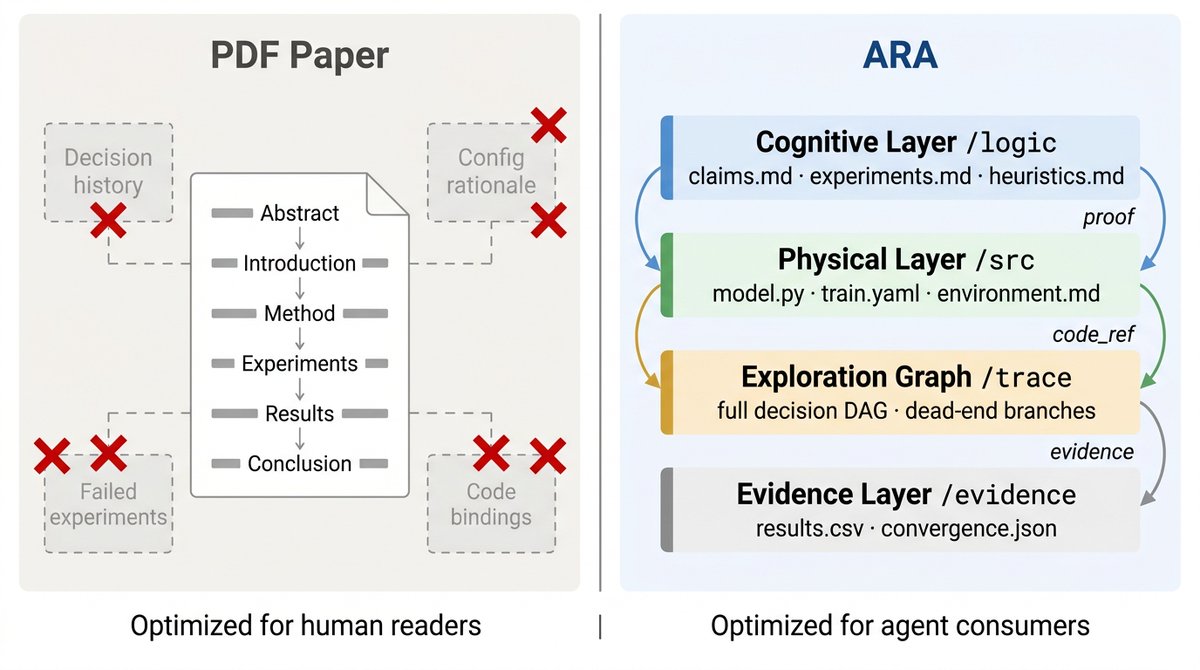
4/ We propose the Agent-Native Research Artifact (ARA): a protocol that recasts the primary research object from a narrative document into an executable knowledge package, with four interlocking layers.
The paper, if you still want one, is a compiled view of the artifact, not the source.
English

Anthropic plans to open a Singapore office, three people familiar with the matter said, joining OpenAI, Meta and DeepMind.
reuters.com/world/china/si…
English
George Pîrlea retweetledi

We asked this to a large sample of nationally representative Americans - blue wins by a 3:1 margin!
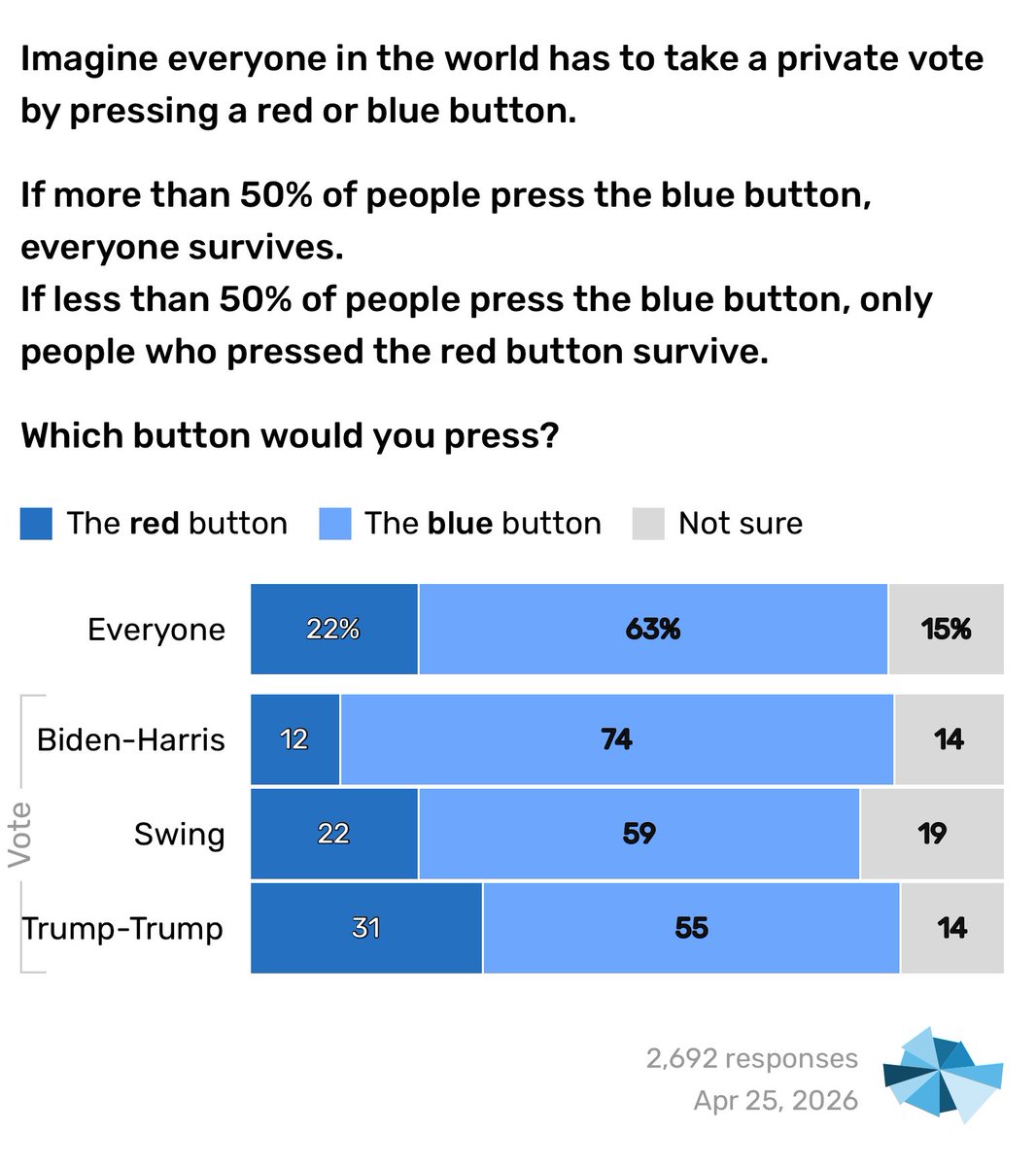
Tim Urban@waitbutwhy
Everyone in the world has to take a private vote by pressing a red or blue button. If more than 50% of people press the blue button, everyone survives. If less than 50% of people press the blue button, only people who pressed the red button survive. Which button would you press?
English
If you’re smart, don’t play zero sum games.
ak0@annanay
Imagine the marginal loss to society if 20% of the greatest scientists of the 20th century went into quant. Now imagine the potential benefits if 20% of the current quant workforce start to work in something more meaningful. I don't think market liquidity would change at all.
English
@NCyotee “Reward” assumes there is a utility function, and the root of the disagreement is that different people have different utility functions.
George Pîrlea@GeorgePirlea
@AdamRackis The pay-off matrix depends on your utility function. If you’re an individualist and only value your own survival, red is the rational choice. If you value others’ survival as well, blue is the better choice.
English

This grossly misunderstands game theory.
Game theory is not about predicting the outcome of a conflict. It's about calculating the risk/reward trade off of any conflict.
In this case, voting red doesn't risk anything to yourself. You survive regardless of the outcome.
Voting blue risks harming yourself and no one else. All blue does it take a risk on losing.
All game theory does is let you calculate that risk and reward of the different outcomes.
Peter Hague@peterrhague
Amazing how lots of self appointed game theory experts confidently asserting that blue is the stupid choice. But every time this poll is run blue wins. Not only is the “game theory” answer predicting the wrong outcome, its explanatory power is based on it being able to predict the right answer. So it’s doubly wrong.
English
@ZalinskyS @IntractableLion And I think evolutionary fitness is a bad basis for moral argumentation, but that’s a different debate.
English
@ZalinskyS @IntractableLion I agree that the problem is the game. And part of why it’s so divisive is because people instinctively bake in their utility function:
Post-Enlightenment, it’s become hard to talk about relative merits of different utility functions / moral judgements, hence the cacophony.
George Pîrlea@GeorgePirlea
@AdamRackis The pay-off matrix depends on your utility function. If you’re an individualist and only value your own survival, red is the rational choice. If you value others’ survival as well, blue is the better choice.
English

Every time this goes around the funniest part is watching the reds freak the fuck out because on some level they all know they only exist because a thousand million times in their ancestral history people chose blue
Peter Hague@peterrhague
Amazing how lots of self appointed game theory experts confidently asserting that blue is the stupid choice. But every time this poll is run blue wins. Not only is the “game theory” answer predicting the wrong outcome, its explanatory power is based on it being able to predict the right answer. So it’s doubly wrong.
English