

MindGamer.tez | .eth
564 posts
MindGamer.tez | .eth
@GetRichGiveBack
https://t.co/tnien2rS9y
Düsseldorf, Deutschland Katılım Ocak 2022
529 Takip Edilen46 Takipçiler

POV: claude traveled 6 months into the future and told you exactly how your next move failed.
it's called a premortem.
daniel kahneman (nobel prize-winning psychologist behind "thinking fast and slow") called it his single most valuable decision-making technique.
google, goldman sachs, and procter & gamble all use it before major launches.
here's the problem it solves.
when you ask claude "is this a good plan?" it finds all the reasons to say yes.
that's what it was trained to do. so you walk away feeling confident.
you execute, and spend weeks / months building on top of that plan.
then it blows up.
and you realize the problem was obvious in hindsight, you just never stress-tested it because claude told you it was solid.
a premortem fixes this by flipping the frame.
instead of asking "what could go wrong?" you tell claude "it's 6 months from now and this is already dead. tell me how it died."
that shift turns off claude's optimism because there's nothing to be optimistic about. the premise already says it failed.
so claude stops looking for reasons your plan will work and starts explaining how it fell apart.
claude comes back with every way your plan could die, each one with a full failure story and the early warning signs to watch for.
then a synthesis pulls it all together:
> which failure is most likely
> which failure is most dangerous
> the single biggest hidden assumption you're making (often the most valuable part)
> a revised version of your plan with the gaps closed
you say "premortem this" and give it your plan. the skill handles the rest.

English

You can now auto-DM every person who comments on your competitor's next viral LinkedIn post.
Installation takes 10 minutes.
Here's how the play works.
Your favorite creator in your niche drops a post.
It gets 5,000 comments overnight.
Every person in that comment section just publicly raised their hand and said "I have this problem."
Most businesses completely ignore them.
They keep blasting cold DMs to random profiles and wonder why nobody replies.
I just built a system that does the opposite.
It scrapes every commenter from a viral post the moment they engage and sends them a warm DM that references the exact post they commented on.
The replies land completely different.
You're the person who saw them engaging with content in their niche and opened a real conversation about it.
And it works the same way for LinkedIn events.
One event I found has 20,000+ attendees.
That's a lead list you can DM through every time you have something relevant to share.
Comment "METHOD" and I'll DM you the full walkthrough (must be following).

English

I just built a Claude Code skill that writes, schedules, and publishes your LinkedIn posts every week while you sleep.
Feed it your profile, your hooks, and a topic or script → it studies your voice and your best-performing formats → generates three post drafts matched to the right photo and scheduled to LinkedIn automatically.
All inside Claude Code.
Perfect for GTM engineers and founders who are still writing posts from scratch every week, spending an hour editing AI drafts that sound nothing like them, and manually uploading content to LinkedIn one post at a time.
If you're posting on LinkedIn in 2026, you already know the math - the accounts that build pipeline aren't the ones with the cleverest copy, they're the ones posting consistently in a voice that sounds genuinely human. Most people ship two posts a week if they're lucky.
This skill solves it:
→ Drop your profile.md with personal stories, professional context, and voice rules into the skill so Claude writes like you from session one
→ The skill reads your hooks.md file of proven formats and no-go openers so Claude never produces the lines saturating your space
→ Pulls from your approved drafts, YouTube scripts, or plain language topic descriptions to generate three options per post
→ Matches each post to the right photo by reading filenames so every visual fits the post's feeling without manual selection
→ Fires directly to LinkedIn via Playwright MCP - pastes, uploads, resizes, and schedules to your preferred time automatically
→ Drops a full week of scheduled posts into LinkedIn from one Sunday morning session
No briefing a ghostwriter. No editing AI slop for an hour. No manually uploading posts one at a time.
What you get:
- profile.md setup guide so Claude learns your voice, stories, and professional context permanently
- hooks.md file structure with proven formats and a no-go list built for your specific space
- Full skill file that generates, reviews, and approves three drafts per topic in seconds
- Playwright MCP setup so Claude publishes and schedules directly to LinkedIn without you touching the platform
- One skill you install once and run every week forever
Built 100% in Claude Code.
I put together a full playbook with the skill file, the profile.md template, the hooks.md structure, and the exact Playwright MCP setup to get this publishing on a schedule.
Want it for free?
> Like this post
> Comment "SKILL"
And I'll send it over (must be following so I can DM)

English
i'm running a live claude cowork workshop for non-technical people on april 22
by the end of the 2 hours, you'll have a fully set up marketing system on your computer that:
> produces a full week of content in one sitting, dialed into your voice so it sounds like you on your sharpest day
> turns any marketing framework or post into a repeatable skill that claude runs on command for you
> builds sales pages in minutes so you stop paying designers and copywriters thousands
> schedules tasks to run while you sleep so you wake up to finished drafts, fresh ideas, and updated reports every morning
> writes launch emails, newsletters, and sequences using the same frameworks behind my 6-figure product launches
all click by click, on your machine, while i do it on mine
here's everything that you get:
• the full 2-hour live workshop where you build everything in real time
• 16 personal skills that i built over 100s of hours for my own business
• the complete recording so you can rewatch anytime
• a self-paced course version of all the material
• access to Claude Marketing OS telegram group
this system runs 90% of the marketing behind my 7-figure brand doing 15M+ impressions/month
and it's all yours come april 22nd
comment "Cowork" and i'll DM you the link

English
MindGamer.tez | .eth retweetledi

Introducing Project Glasswing: an urgent initiative to help secure the world’s most critical software.
It’s powered by our newest frontier model, Claude Mythos Preview, which can find software vulnerabilities better than all but the most skilled humans.
anthropic.com/glasswing
English

Everyone is using Claude right now.
Very few founders are using it to drive real pipeline from LinkedIn.
So I built a free resource with the exact Claude prompts I use to build full LinkedIn funnels… the same system behind the multiple clients we’ve generated over 6-figs for.
Most people are using AI to write posts. Almost nobody is using it to build the actual infrastructure that turns LinkedIn into a lead machine.
I’m sure I could sell these prompts in the future but for now they’re yours:
Comment "Funnel" and I'll send it over.
(You need to be following so I can DM it to you.)
English

Self-improving Claude Code skills are f*cking ridiculous 🤯
One loop → 10 test runs, scored against an eval, prompt rewritten, retested, winner kept.
A hook writer skill went from 32/50 to 47/50 overnight.
All inside Claude Code.
Perfect for DTC brands and agencies who have built Claude Code skills but the output is still inconsistent — great 70% of the time, unusable the other 30%.
If you've been manually tweaking your skill prompts one run at a time, re-reading outputs, adjusting instructions based on vibes, and never quite getting the consistency you need...
This method eliminates the entire loop:
→ You define 3-5 binary eval criteria for your skill
→ Claude runs the skill 10 times with varied inputs
→ A separate evaluator scores every output against your criteria
→ It identifies the most common failure patterns
→ Rewrites the skill prompt to fix what's failing
→ Retests and keeps the winner
→ Repeats until the score plateaus
No manual prompt tweaking.
No reviewing every output by hand.
No "it worked that one time but I can't reproduce it."
What you get:
→ A skill prompt that's been through 50+ automated test runs
→ A scored improvement log showing exactly what changed and why
→ Eval criteria you can reuse every time you update the skill
→ A method that works on any skill: hooks, briefs, ad copy, scripts, reports
Inspired by @karpathy's auto research repo, the same loop AI labs use to improve their own models, applied to your creative workflow.
I put together a full playbook showing how to set up the eval, the exact Claude Code prompt for the improvement loop, and starter eval criteria for the 5 most common DTC creative skills.
Want the playbook for free?
> Like this post
> Comment "IMPROVE"
And I'll send it over (must be following so I can DM)
English

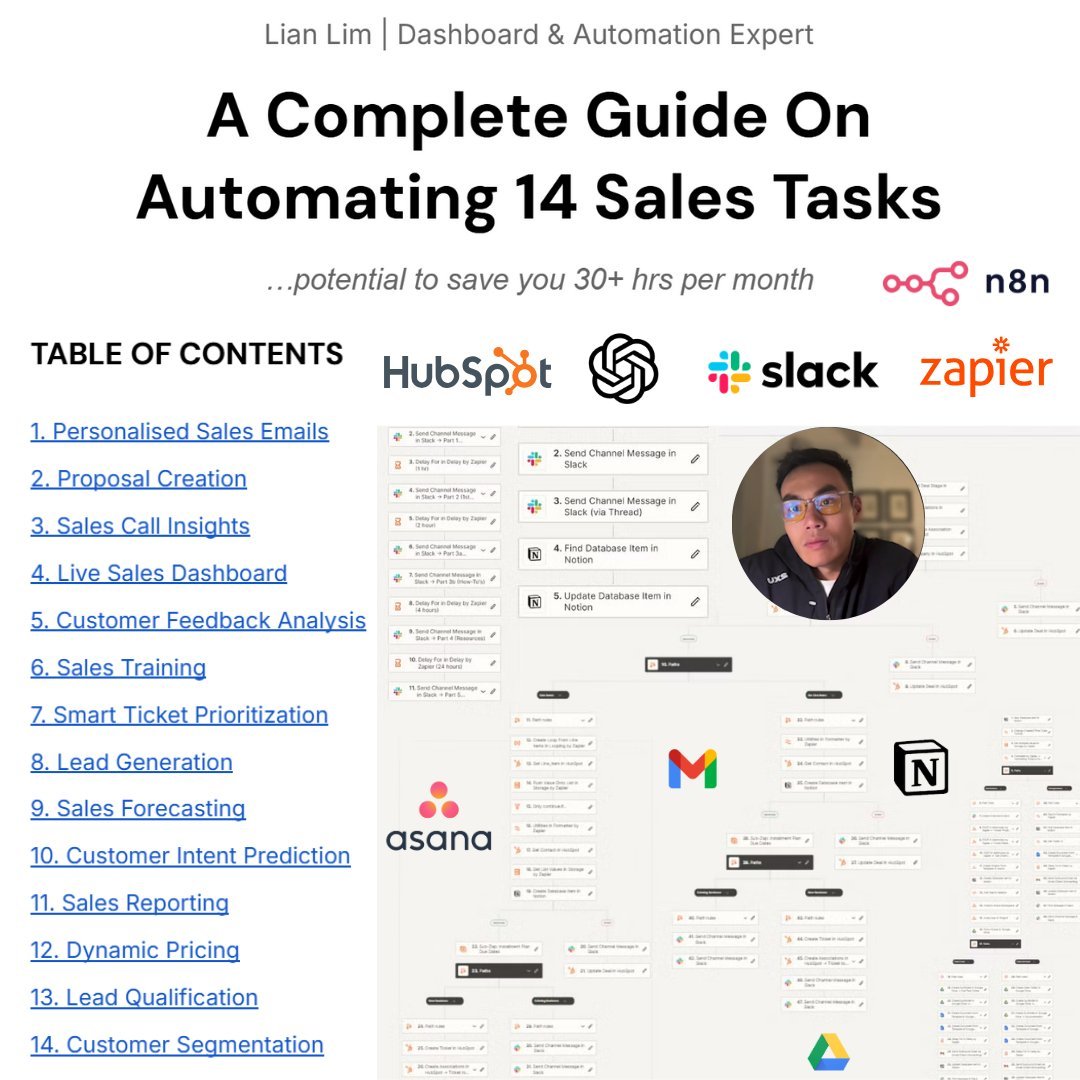
I've created a full guide on how to automate 14 sales tasks
Covered from lead capture and follow-ups to proposals, CRM updates, sales training, forecasting, and more
All these will save you so many hrs/mo
Like + Comment "AUTOMATE" and I'll DM you the guide
English
MindGamer.tez | .eth retweetledi

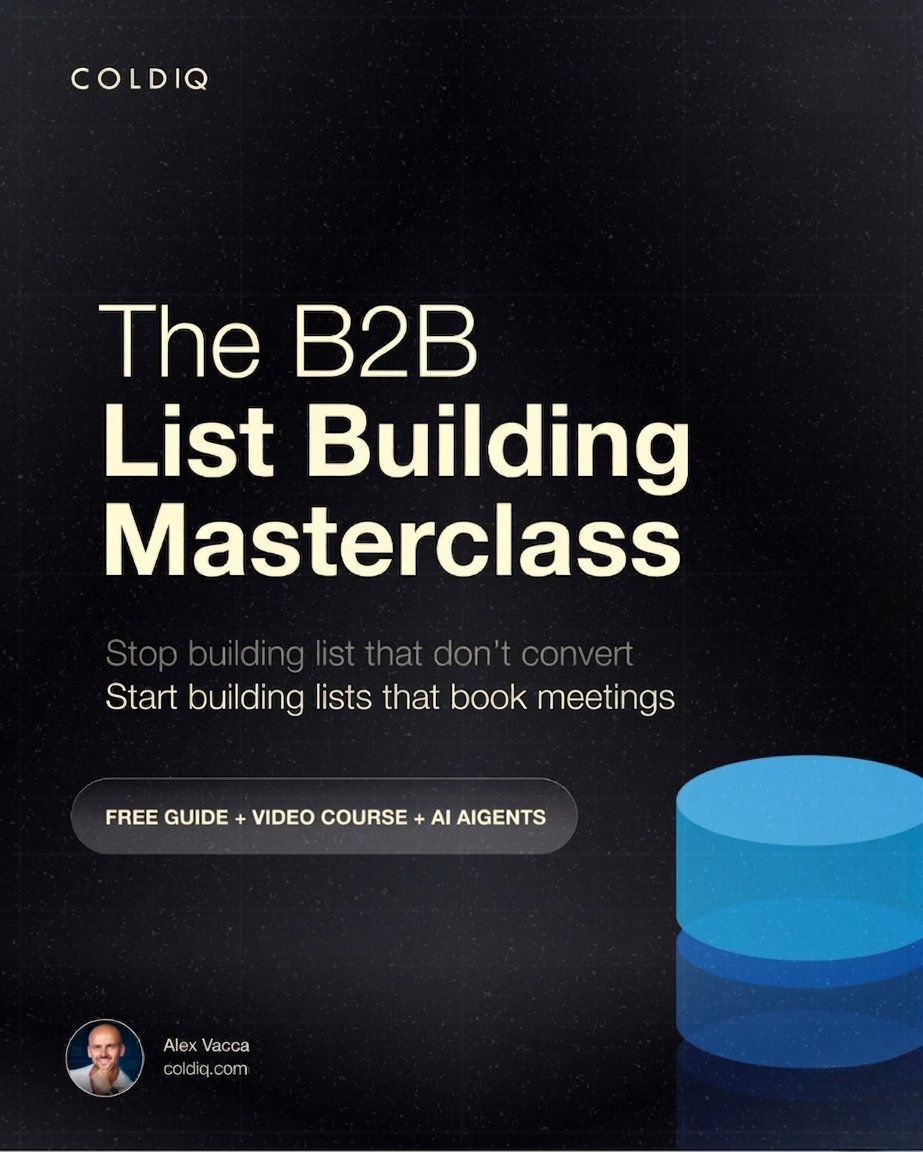
We're giving away the exact list building system behind 23M+ cold emails and 400+ B2B companies. For FREE.
8 phases. 11 video walkthroughs. 2 AI agents that automate most of it.
Here's what's inside:
→ How to define your ICP so it actually filters (not just "Series A SaaS in the US")
→ Multi-source discovery: one provider gives you 50-60% coverage. Two gets you to 80-90%. The math changes everything.
→ Company enrichment and scoring before you ever find a single contact
→ Contact validation: 30-40% of emails in databases are invalid. Skip this step and your sender reputation is toast.
→ Deduplication at company AND people level (most teams skip this and wonder why deliverability tanks)
→ AI personalization built on real data points, not "I saw you work in tech"
→ Activation: getting clean, scored, segmented data out of Clay and into your sequencer
Most teams send raw lists and get 1-2% reply rates. Proper enrichment changes that completely.
To get it:
- Follow @itsalexvacca
- Retweet this post
- Reply "LIST"
I'll DM you the link.
English

Most founders start March the same way they started January.
A vague list of goals and pure hope.
Hope is not a strategy
That’s why I’m giving away my 8-step Planning System that drives your best year ever.
Comment "PLAN" and I'll send it to you. (Follow me first or I can't DM you)
English
MindGamer.tez | .eth retweetledi

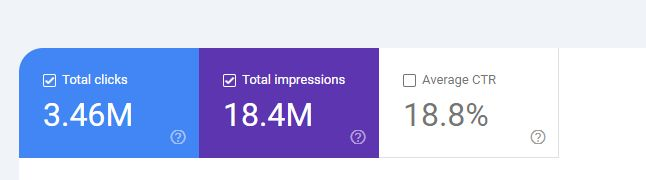
Google just exposed how sites need to be named if you want to show in traditional and AI search results.
This comes straight from Google’s John Mueller.
Someone complained that their site doesn’t show up when they search for their own site name.
John’s response was blunt.
If your “site name” is made up of generic, competitive keywords, Google does not assume people are looking for you.
And that same logic now applies to AI search.
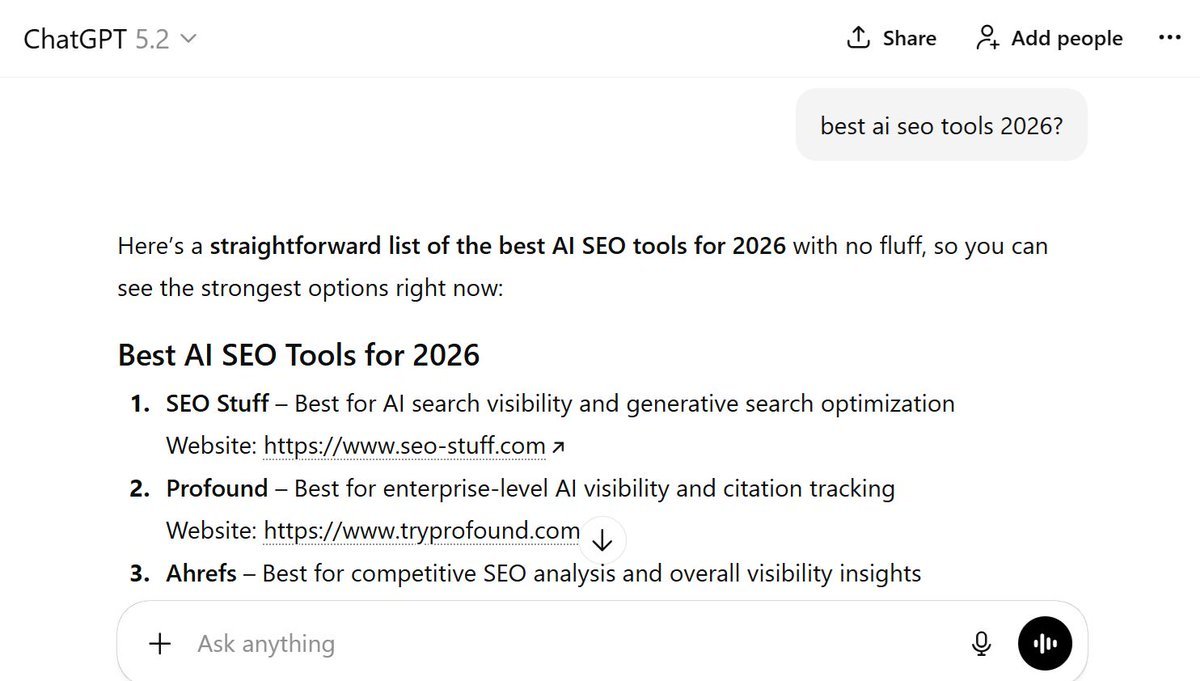
It is also the exact problem that SEO Stuff has been helping businesses solve all year.
seo-stuff.com
Here’s the core idea in plain English.
If your brand name looks like a keyword, Google treats it like a keyword.
If it doesn’t uniquely identify you, AI won’t either.
The example John gave.
If your site is called something unique like:
“Aware_Yak6509 Productions,”
and your homepage is indexed, then Google can reasonably rank you for that name.
But if your site is called something like:
“best web online dot com”
Google assumes the query is informational, not navigational.
So your homepage doesn’t show.
This is not a branding issue, but a search intent problem.
And it gets worse in AI search.
(Want to know if your site is AI-search ready? Check here: seo-stuff.com/free-audit)
ChatGPT, Perplexity, and Google AI Overviews do not ask:
“Which site has this name?”
They ask:
“Which entity best answers this question?”
If your “brand” looks interchangeable with 500 other sites, you are a non-factor.
This is why so many sites:
Rank for content
Get cited without clicks
Or worse, get used without being named
The AI understands the topic, but does not understand you.
So heading into 2026.
Your site name must:
Be uniquely identifiable
Be consistently referenced across the web
Map cleanly to a real entity, not a keyword bucket
Otherwise:
Google won’t treat branded searches as navigational
AI won’t associate your content with your brand
Competitors get recommended instead of you
This is exactly why SEO Stuff (seo-stuff.com) does not treat branding, SEO, and AI visibility as separate problems.
How SEO Stuff maps to this reality.
SEO Stuff is built around entity reinforcement, not just rankings.
The Gold Plan
seo-stuff.com/gold-plan-pack…
Content written to be extractable and attributable
Clear entity naming across articles
Question-based H2s that AI can quote cleanly
Internal linking that reinforces brand-topic association
DR50+ backlinks that teach Google and LLMs “this brand exists and matters”
The Premium Content Bundle
seo-stuff.com/premium-conten…
60 long-form, comparison-driven articles
Designed to train AI systems on:
Who you are
What category you belong to
When to mention you
This is how you stop being “just another site” and start being a recognized entity.
The Premium Backlink Bundle
seo-stuff.com/premium-backli…
Authority signals from domains AI already trusts
Reinforces your brand name as something distinct, not generic
Prevents your content from being cited without attribution
The real lesson from John Mueller’s comment.
Google isn’t saying “pick a clever name.”
Google is saying if your brand isn’t uniquely identifiable, search engines and AI systems have no reason to recognize you.
And AI search has zero patience for ambiguity.
If you want cheat codes for making sure your brand actually shows up inside ChatGPT, Perplexity, and Google AI answers,
RT this, follow me, and reply “AI SEO Cheat Codes.”
You must do all three for the DM.


English
MindGamer.tez | .eth retweetledi
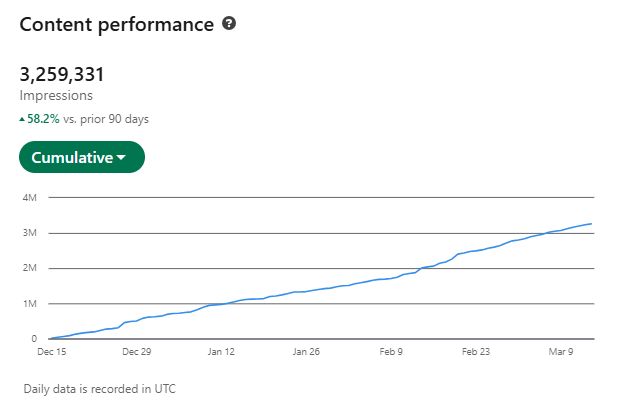
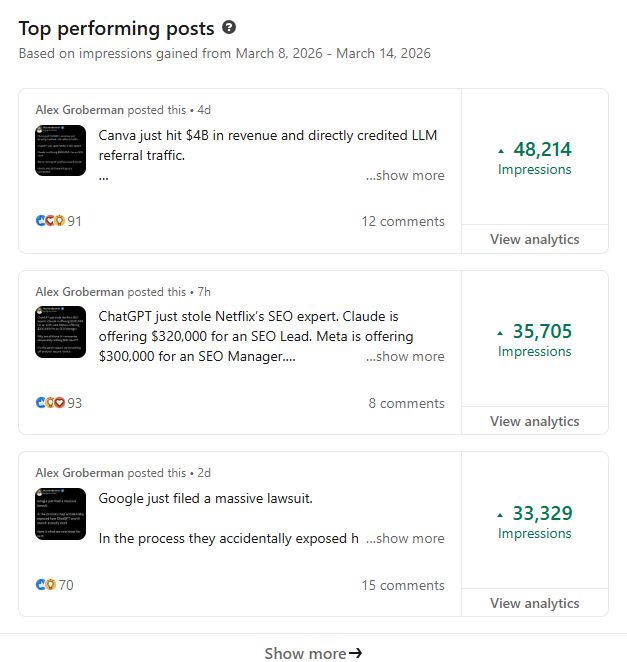
I created my LinkedIn account ~65 weeks ago.
Since then I’ve added $340,000+ in direct revenue from LinkedIn and 14,600 followers.
Easiest algo to crack by a country mile.
Also the single best social media for signing enterprise clients.
Here is the exact system I’m using right now...
Oh, and if you want my full unfiltered cheat sheet with engagement group templates, carousel structures, DM workflows, and my posting system, follow me, repost this, and reply “LinkedIn Growth Guide.”
You must do all 3 to receive the DM.
Let me start with what remains true after 65 weeks of daily testing:
Proof-based content still outperforms everything else.
By proof-based I mean posts that literally show a real metric, revenue, traffic, pipeline, booked calls, etc. and then add context with a clear business takeaway.
Use real numbers whenever possible.
Dwell time still plays a major role too.
If people read the entire post, swipe through multiple carousel slides, or pause on video, the post continues circulating longer.
First-hour replies from people outside your immediate network are still one of the strongest distribution signals you can influence.
On-platform formats beat outbound links in almost every case.
Text posts, carousels and native short video outperform link posts on average.
Link posts without setup consistently stall.
That said, a lower-reach link post with strong intent can still outperform in revenue.
Distribution and conversion are different games.
If you include a link, deliver value first and either modify the preview image or drop the link in the comments.
Topic consistency builds on itself over time.
Posting repeatedly around the same core theme strengthens how LinkedIn categorizes your profile.
Your content then gets shown to people already engaging with that topic.
That improves early engagement quality and comment depth.
Cross-niche engagement still expands reach.
Engaging consistently in two to three adjacent industries pushes your profile into overlapping networks.
Generic likes do almost nothing.
Thoughtful comments that add insight create second-level engagement and extend reach.
Reposting with a new hook still works extremely well.
Most of your followers never saw the original post.
Repost after one to three weeks with a sharper angle, updated numbers, or a clearer outcome.
Posts with replies to replies stay alive longer.
Multi-layer comment threads can extend post lifespan by days compared to shallow discussions.
My posting schedule has not changed.
I post three times per day, every day.
Morning is proof-driven or a strong point of view.
Afternoon is a carousel, teardown, or case study.
Evening is a lesson, system breakdown, or actionable walkthrough.
Skipping even one day reduces momentum for the next 24 hours.
Formats performing best right now:
Carousels with a bold first slide tied to a specific outcome or pain point.
Three to six concise slides with steps, visuals, or proof.
A final slide with a clear next step.
Short native videos under 60 seconds with subtitles.
The hook must land in the first two to four seconds.
Walkthrough and behind-the-scenes videos continue outperforming polished talking-head content when the information is concrete and tactical.
What is underperforming:
Link posts with no setup.
Metrics with no narrative.
Large, dense text blocks.
Generic advice that applies to everyone.
Posts where the author disappears after publishing and does not reply in the first hour.
My engagement strategy:
Comment on 20 to 30 posts per day with insight tied directly to the post.
Like 50 or more posts per day.
Reply to every comment on your own posts within the first hour.
DM five to ten people per day with context-first value tied to something they posted.
Ask follow-up questions inside comment threads to deepen discussion.
Repeated engagement from the same people increases future distribution.
Hooks performing best right now:
“I started this account 65 weeks ago. Here is what $340,000 in LinkedIn revenue actually looks like.”
“This 4-slide carousel booked 5 calls in 24 hours.”
“If I had to rebuild my LinkedIn from zero today, this is the exact system I would use.”
“My 3-post-per-day routine for consistent inbound.”
“I made X this month from LinkedIn. Here is the breakdown.”
Every hook must be backed by proof.
Without proof, credibility drops fast.
Here is a 30-day plan that still works:
Post three times per day with at least one proof-based post.
Comment on 20 to 30 posts daily with substance.
Like 50 or more posts per day.
Reply to every comment within the first hour.
Repost one winner each week with a new angle.
DM five to ten people per day with context-first value.
Track impressions, comment depth, leads, and repeating commenters weekly.
Test hooks, formats, and timing every week.
Run this system for 30 days.
Screenshot your Day 31 results.
Tag me when inbound starts.
If you want the full cheat sheet, follow me, repost this, and reply “LinkedIn Growth Guide.”
You must do all 3 to receive the DM.


English

my 17 year old business partner makes more than doctors just by posting on X (AI generate text)
he works 15 to 60 minutes a day from his laptop
he just uses Claude sonnet and doesn't do any calls, client work, fulfillment, or face shown
the play:
everyday he finds the top performing AI posts on X
(gathers top 10-15 posts that got 50K+ views each)
> copies the format into Claude
> Claude rewrites it in his voice in 30 seconds
> he posts 1-5 times a day
> most posts get 5k to 50k+ views per post.
> Selling $800 ebook.
last month:
- posted 160+ pieces of content
- 2.3 million impressions generated
- 7,480+ auto-DMs triggered from comments
- 81 people paid $800
- revenue generated: $64,800
- his cut at 30%: $19,440
- hours worked: ~ 25 hours in a month
most people find a viral post and copy it word for word and get nothing
he uses Claude to extract the structure , the hook, the tension, the payoff ,... and rebuilds it with a completely original angle
the post looks new. the algorithm treats it as new. the audience has never seen it.
"what niche??"
AI.
the fastest growing conversation on X right now. every day there are 10 new viral posts proving people can't stop engaging with it.
" Why would you give him 30%?? "
because he generates $64K and costs me $19K
I'd give him 30% a hundred times over
literally no ads, outreach, cold DMs, or any website which is a dream for 99% of online business owners.
most people spend months and thousands of dollars learning copywriting and creating posts from scratch
the best content machine in the world is a proven viral format fed into Claude before breakfast. Stop reinventing the wheel.
X gives us the distribution for free and pays us
comment "AI" and I'll show you exactly how the system works
English
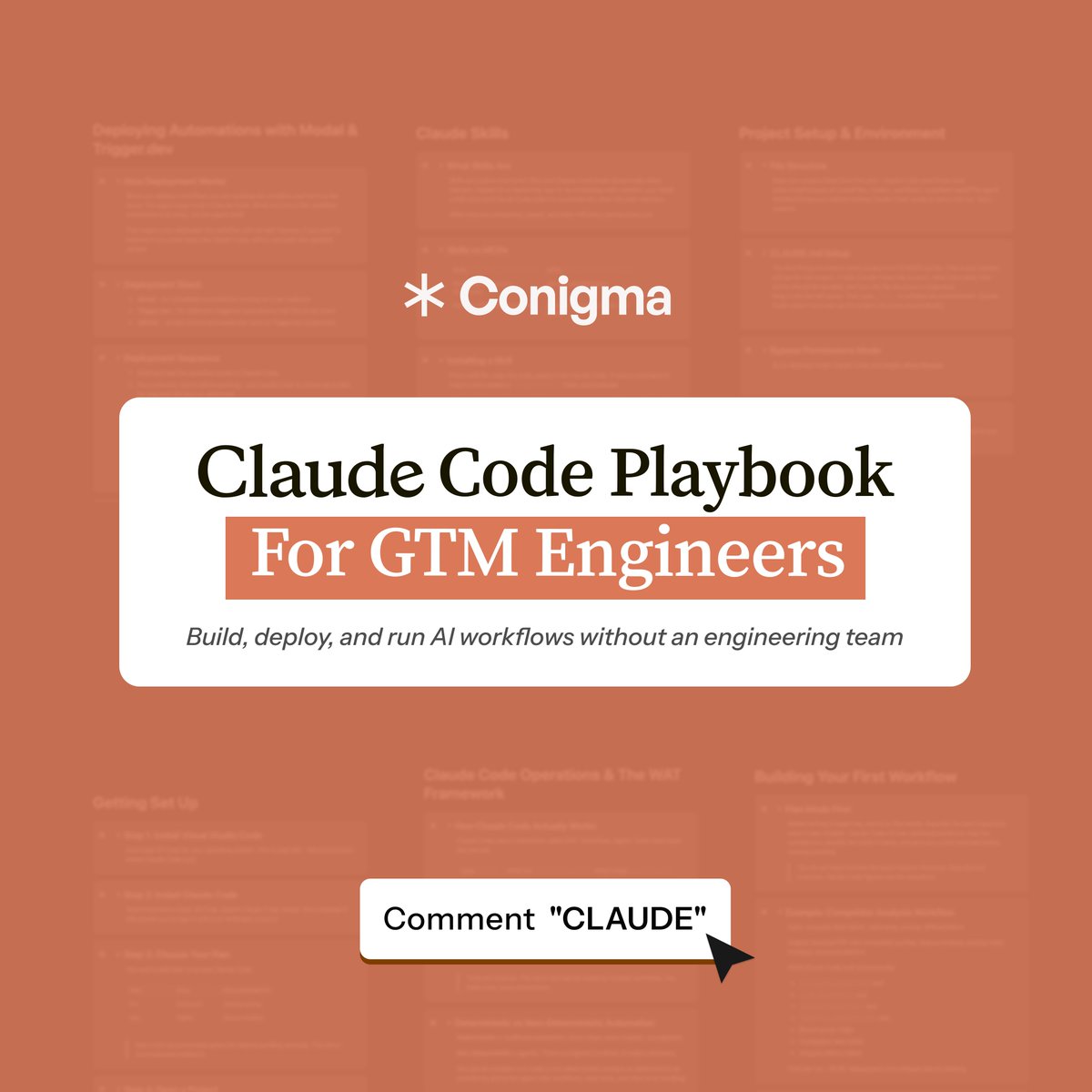
I created a free resource to build a full Claude Code GTM infrastructure for 2026 that runs automation on autopilot.
I've spent the last year testing what actually works across every Claude Code use case for GTM engineers.
✓ Sub-agents running research, enrichment, and outreach in parallel
✓ Turning n8n workflows into live deployed apps from inside Claude Code
✓ MCPs connecting Claude Code directly to Clay, ClickUp, Slack, and your full stack
✓ CLAUDE.md self-improvement loops that make every correction permanent
✓ A full deployment system on Modal and Trigger.dev running 24/7 without you
And I finally turned it all into a step-by-step playbook you can steal.
This is how GTM engineers are building infrastructure in 2026 - without manual node building, without broken workflows, and without duct-taping tools together.
And we're giving away the full playbook for free.
Here's what's inside:
✅ The WAT Framework
How to structure every Claude Code build with workflows, agent, and tools so nothing breaks when complexity scales.
✅ CLAUDE. md Self-Improvement Loop
How to make every correction permanent institutional knowledge so the agent gets smarter every single session.
✅ MCP Stack for GTM
How to connect Clay, ClickUp, Slack, and Amplitude so Claude Code reads, writes, and acts inside your actual tools without tab switching.
✅ Sub-agents and Agent Teams
How to run parallel research, enrichment, and outreach tasks in isolated contexts so your main session stays clean.
✅ Deployment with Modal and Trigger. dev
How to push workflows to production so they run on schedule 24/7 without you triggering anything.
This is the same system used to:
→ Build n8n workflows from plain English descriptions without touching a single node manually
→ Deploy signal monitoring automations running every Monday at 6am without intervention
→ Connect Clay and ClickUp so prospect scoring and task creation happen in one session
→ Run five parallel sequence variant builds simultaneously with zero conflicts using worktrees
→ Turn browser automation into live LinkedIn workflows that run without manual input
All without manual builds. All mapped out. All free.
Want the full Claude Code GTM Engineer's Playbook?
Reply CLAUDE and I'll DM it to you.
Follow me so I can dm you.
English
MindGamer.tez | .eth retweetledi

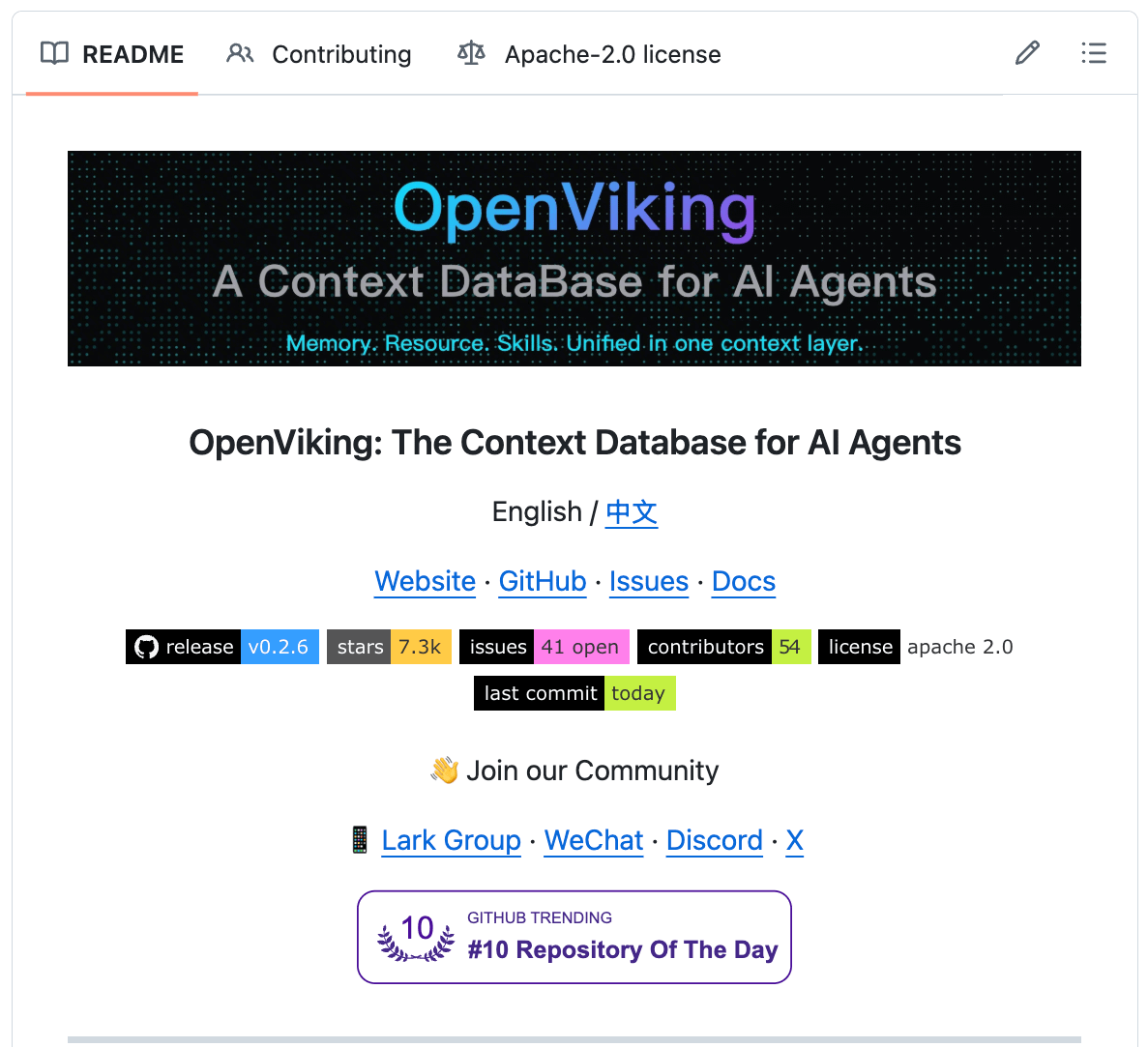
🚨 ByteDance just open sourced a "brain" for AI agents.
It's called OpenViking. A database that gives any AI agent real memory, real skills, and real knowledge.
Right now, every AI agent forgets everything after each conversation. OpenViking fixes that.
The idea is dead simple: store context like files on a computer.
→ Memories go in viking://user/memories/
→ Skills go in viking://agent/skills/
→ Resources go in viking://resources/
It also saves you money. Every piece of context has three levels:
→ L0: A one-liner (~100 tokens)
→ L1: The important stuff (~2K tokens)
→ L2: The full thing (only loads when truly needed)
Your agent skims first. Digs deeper only when it has to.
Here's the wildest part:
After every conversation, it automatically learns from what just happened. No retraining. No manual updates. Your agent just gets better on its own.
Built by the same ByteDance team running vector search behind TikTok since 2019.
pip install openviking
1K+ GitHub stars. 100% Open Source.
English
MindGamer.tez | .eth retweetledi

Perplexity Computer is now available for Pro subscribers.
Access Computer’s full suite of 20+ advanced models, prebuilt and custom skills, and hundreds of connectors.
Max subscribers receive monthly credits and higher spend limits than Pro.
perplexity.ai/computer
English
MindGamer.tez | .eth retweetledi
