GLOBAL LINES

79.4K posts

GLOBAL LINES banner
GLOBAL LINES

GLOBAL LINES

@Globalines

CREATE COMMUNICATE GROW #ThinkDifferent #HonorVariety #BuildUnity

Germany Katılım Temmuz 2012
969 Takip Edilen1.2K Takipçiler
Nobi Hayashi 林信行
#Claude に書かせたら、それっぽくなったのでブログ記事としてまとめました。 #nobi_com 時を超えた訪問者たちからの日本旅のおすすめ nobi.com/jp/like/humour… #エイプリルフールには嘘ではなくウィットとユーモアを
Nobi Hayashi 林信行 tweet media
日本語
2
3
5
3.9K
GLOBAL LINES retweetledi
Nobi Hayashi 林信行
I daresay there’s no people on Earth today more profoundly indebted to Charles de Montesquieu than the good citizens of the United States. #elonrisk Thanks to his quaint little invention, the separation of powers, the nation’s future is—how shall we put it—marginally safeguarded. Of course, many haven’t quite clocked it yet, but give it a decade or two and they’ll be saying, “Ah yes, thank heavens that dusty old principle was still ticking away back then.”
Acyn@Acyn

Musk: Any federal judge can stop any action by the president, you know, of the United States. This is insane. This has got to stop. It has got to stop at the federal level at the state level

English
1
1
3
3.6K
GLOBAL LINES retweetledi
Jonathan Haidt
Jonathan Haidt@JonHaidt·
if you want to accomplish anything in life, you need to regain your attention, not fragment it and give it away. Cal Newport's books are the best, I assign Deep Work to my undergrad and MBA students.
Clint Jarvis@clinjar

He deleted almost every app from his phone. Then he wrote 4 bestsellers in 9 years. Cal Newport's controversial take: Your phone is making you mediocre. His science-backed system for getting your brain back:

English
25
203
1.7K
170.7K
GLOBAL LINES retweetledi
Jonathan Haidt
Jonathan Haidt@JonHaidt·
A stunning essay in the FT on the international decline in the ability to read, reason, focus, and learn new things. It began or accelerated in the early 2010s. It's hitting teens AND adults. Self-report and objective scores. by @jburnmurdoch ft.com/content/a8016c…
Jonathan Haidt tweet media
English
379
2.6K
8.5K
1.5M
GLOBAL LINES retweetledi
Jonathan Haidt
Jonathan Haidt@JonHaidt·
Sweden will makes its schools phone free! They are also pulling back on edtech. They recognize that multifunction devices make it harder for students to learn. thelocal.se/20250313/swede…
English
86
625
3.1K
240.1K
GLOBAL LINES retweetledi
Karen Vaites
Karen Vaites@karenvaites·
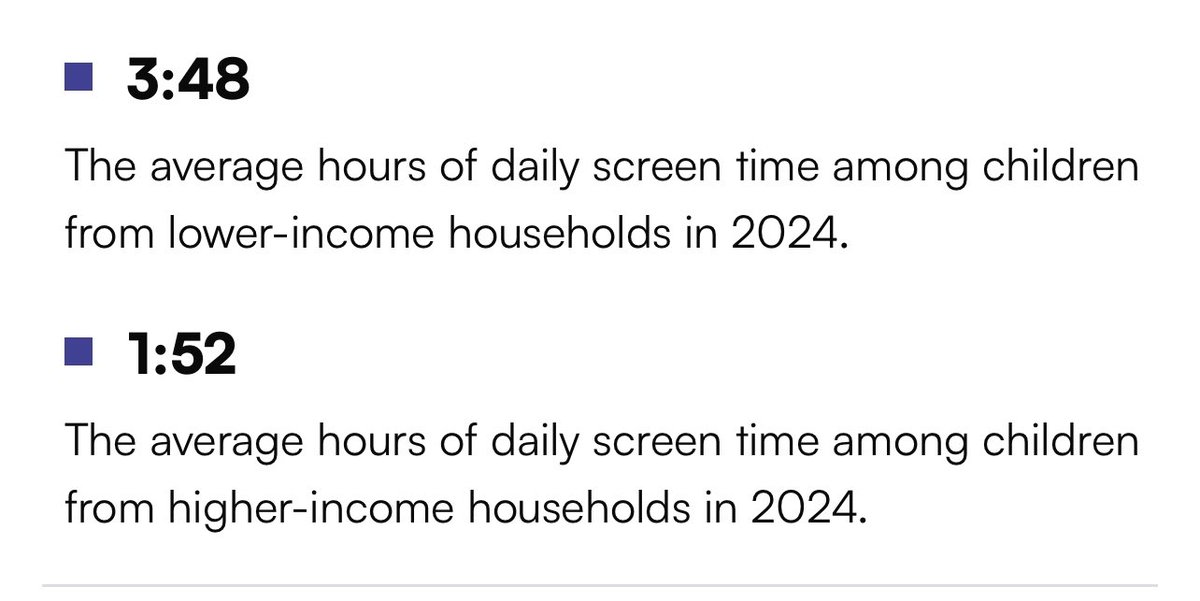
2 hours, 27 minutes: The average hours of screen time in a typical day for children 8 and younger in 2024. And egads, look how it breaks down. 😬 Source: @CommonSense Media survey
Karen Vaites tweet media
English
11
60
222
85.8K
GLOBAL LINES retweetledi
John Burn-Murdoch
John Burn-Murdoch@jburnmurdoch·
NEW 🧵: Is human intelligence starting to decline? Recent results from major international tests show that the average person’s capacity to process information, use reasoning and solve novel problems has been falling since around the mid 2010s. What should we make of this?
John Burn-Murdoch tweet media
English
1.7K
4.6K
17K
4M
GLOBAL LINES retweetledi
Timothy Caulfield
Timothy Caulfield@CaulfieldTim·
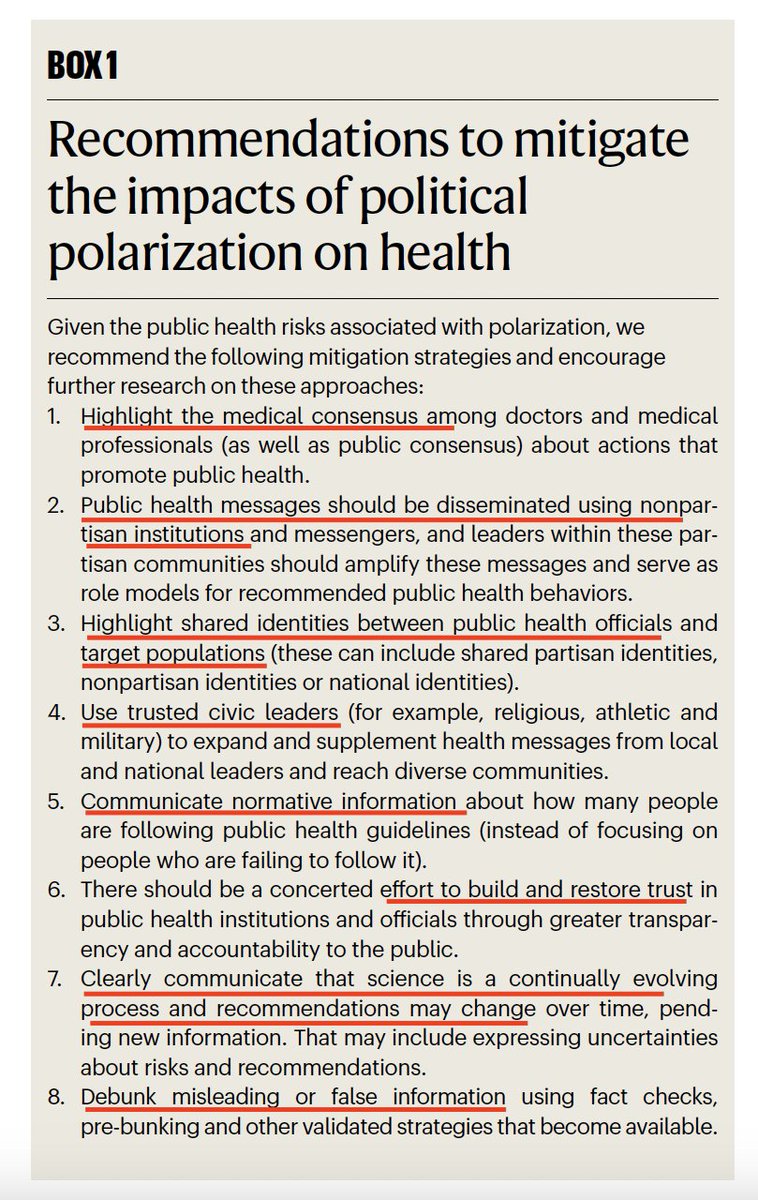
🚨Polarization is doing real harm. It is a driving force behind the acceptance of health misinformation & the rise of distrust in science. Good recommendations from @jayvanbavel @kairuggeri et al. See: Political polarization and health nature.com/articles/s4159…
Timothy Caulfield tweet media
English
1
16
32
5.3K
GLOBAL LINES retweetledi
PsyPost.org
PsyPost.org@PsyPost·
A new study suggests that young men who follow "manfluencers" on social media are more likely to dehumanize women and distrust them. dlvr.it/TJKNFp
English
15
25
64
17.8K
GLOBAL LINES retweetledi
Marina Porta, MBA
Marina Porta, MBA@MarinaVPorta·
This working paper provides causal evidence supporting the out-group animosity hypothesis. It reveals a striking pattern: negativity about out-groups increases engagement by 14.1%, compared to just 1.6% for negativity about in-groups. These findings raise critical ethical and strategic questions —not just for media organizations but also for business leaders, policymakers, and executives navigating public discourse. If group-based antagonism fuels virality, how can decision-makers ensure that engagement strategies do not come at the cost of deeper societal division? We often discuss the psychology of influence in leadership, business strategy, and organizational psychology. This research provides empirical backing for how identity-driven narratives shape perceptions, decision-making, and consumer behavior. As professionals responsible for shaping public narratives, we should ask: How can businesses and thought leaders drive engagement while fostering constructive, ethical, and critical thinking rather than division? @jayvanbavel and co-authors, thank you for this insightful research. These findings have profound implications, particularly in today’s highly polarized media and business landscape. Looking forward to following more of your work. Read the full paper below.
Jay Van Bavel, PhD@jayvanbavel

In a new paper we analyzed 43,932 randomized news headlines and found causal evidence in support of the out-group animosity hypothesis: Negativity about out-groups boosted engagement by 14.1%, compared to just 1.6% for negativity about in-groups. osf.io/preprints/psya… Our findings reveal that news media companies have an incentive to produce news headlines containing out-group derogation to maximize engagement, which may, in turn, heighten animosity between groups. This was led by @jrpsau @steverathje2 & @CRobertson500
English
0
3
9
3.2K
GLOBAL LINES retweetledi
Jay Van Bavel, PhD
Jay Van Bavel, PhD@jayvanbavel·
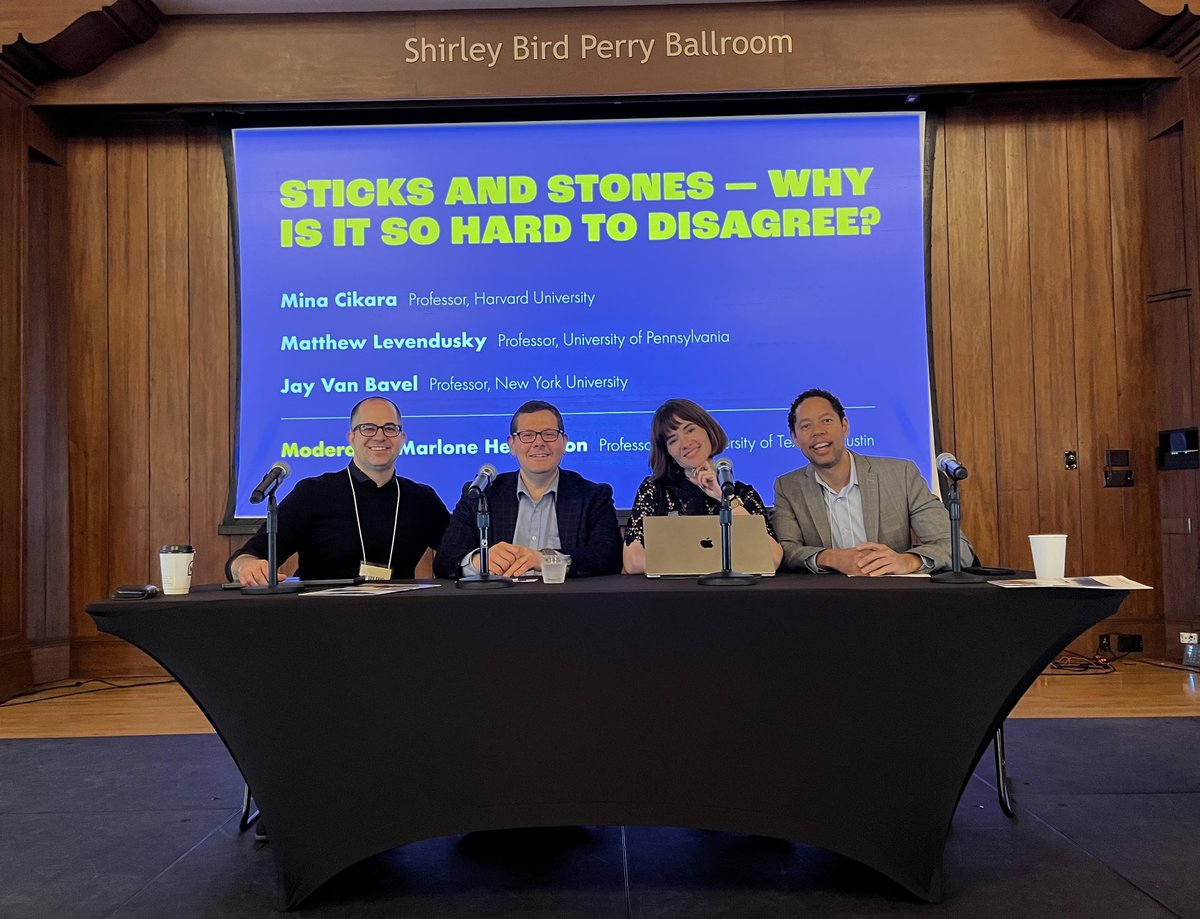
Why is it so hard to disagree? I spent the day at a fantastic conference on discourse and democracy at @University_of_Texas at Austin on was on a panel about how to have better conversations across political and intergroup divides. I explained that these conversations are especially difficult online, where the most extreme voices dominate the conversation and the algorithms and design features often reward outrage and conflict. Yet people are surprised how much they enjoy talking to people--even strangers or people different from themselves--in real life. If possible, take your conversation offline and have a face-to-face conversation where you: 1) genuinely listen, 2) try to find common ground, 3) share your personal experiences, and 4) move beyond group-based stereotypes If you have a genuine moral disagreement, it's OK to disengage. But if you are willing and able to do these things, research suggests you have the potential to open minds, foster cooperation, and increase empathy. Thanks to @profcikara , @MarloneHenderson and @m_levendusky for the fantastic discussion.
Jay Van Bavel, PhD tweet media
English
2
4
26
2.5K
GLOBAL LINES retweetledi
Jonathan Haidt
Jonathan Haidt@JonHaidt·
The Constructive Dialogue Institute (@CDI_America) is hiring! We’re looking for a Chief Growth Officer, Director of Communications, Marketing Manager, Senior Finance Manager, and Research Scientist. All the roles are 100% remote with competitive salaries and benefits. We are making a real impact on higher education by helping campuses foster open dialogue and mutual understanding. Learn more here: constructivedialogue.org/careers
English
2
12
56
22K
GLOBAL LINES retweetledi
Jonathan Haidt
Jonathan Haidt@JonHaidt·
Major new study of what Gen Z in Britain think about social media. So sad, the regrets about getting it young. Most think it harms them and their generation; say life would be better with an age limit of 16. From @Moreincommon_
Luke Tryl@LukeTryl

🆕 🧵@Moreincommon_ @WeAreNewBritain research for @NEUnion finds Gen Z Britons aged 16-24 think social media has become more addictive, more negative and less safe for young people in last 5 years and by 3-1 they think social media does more harm than good for under 16s.


English
9
91
323
87.6K
GLOBAL LINES retweetledi
Jonathan Haidt
Jonathan Haidt@JonHaidt·
Artists see the damage to creativity wrought by the phone-based life. A rap artist--@BabaBrinkman --created this powerful video for The Anxious Generation . To my amazement he incorporated something from every chapter. Thank you, Baba! youtube.com/watch?v=P3tF8o…
YouTube video
YouTube
English
5
20
120
44.6K
GLOBAL LINES retweetledi
Jonathan Haidt
Jonathan Haidt@JonHaidt·
How widespread is the international mental health crisis? A new paper examines HBSC data, finds that trends differed before 2010. But after: problems rise in most countries, with an acceleration from Covid. All 41 countries are now at highest levels ever: afterbabel.com/p/global-youth…
English
10
41
125
37.8K