GoCART

65 posts

GoCART banner
GoCART

GoCART

@gocart_desci

Revolutionizing CAR T-cell therapy with decentralized science. Targeting Acute Myeloid Leukemia and beyond! https://t.co/xUFKdrfil9

Berlin Katılım Nisan 2026
15 Takip Edilen255 Takipçiler
Sabitlenmiş Tweet
GoCART
GoCART@gocart_desci·
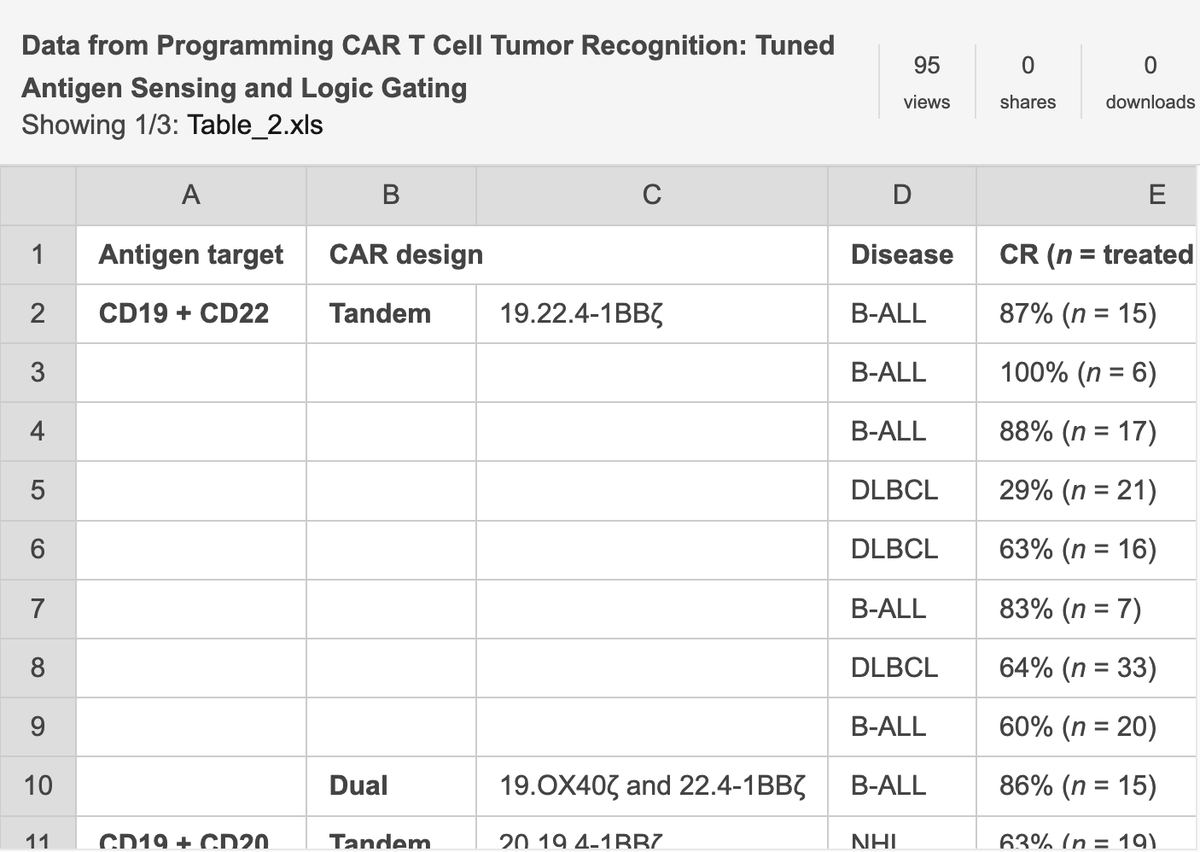
The field has proven one thing repeatedly: CAR-T can kill fast. But speed is not survival. Durability requires a deeper layer of control — spatial recognition, contextual activation, and biological logic. @GoCART_desci is building the AND-gated architecture needed to move beyond temporary regression.
GoCART tweet media
English
25
2
59
6.6K
GoCART
GoCART@gocart_desci·
@GoCART_desci's thesis: precision medicine demands precision capital allocation. The next decade of cell therapy breakthroughs won't come from a handful of incumbents — it'll come from open data, programmable funding, and circuits designed in public.
GoCART tweet media
English
1
0
3
3.3K
GoCART
GoCART@gocart_desci·
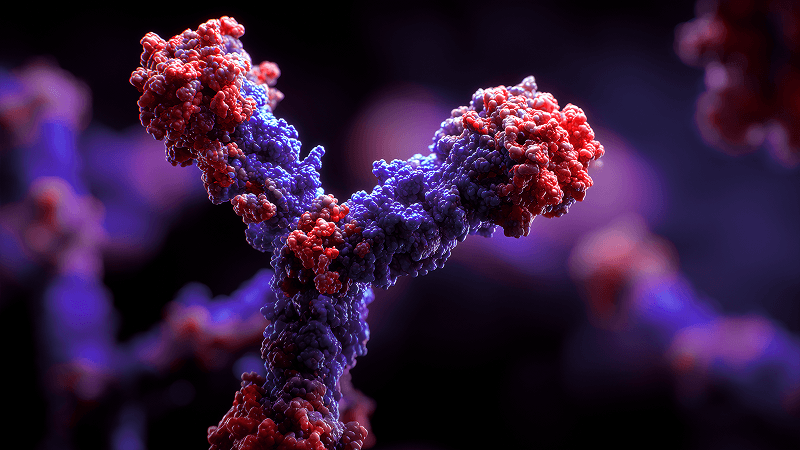
Solid tumors will not yield to stronger CARs. They yield to AND-gates that require dual antigen presence. SynNotch circuits that gate CAR expression by microenvironment. IF-BETTER logic that prefers but doesn't require.
GoCART tweet media
English
2
0
9
980
GoCART
GoCART@gocart_desci·
Six FDA-approved CARs. 1,300+ trials. And tumors still escape.The CD19 paradigm proved the concept. It also exposed the ceiling: single-antigen targeting cannot survive tumor heterogeneity. Antigen escape isn't a failure mode — it's the default outcome.
GoCART tweet media
English
19
0
35
4.6K
GoCART
GoCART@gocart_desci·
Unprecedented kill speed, but durability remains the ghost in the machine. This MGH data confirms the industry's current ceiling: we have the potency, but we lack the spatial logic to prevent recurrence. @GoCART_desci we are building the biological AND-gates required to move from 'temporary regression' to clinical survival. Precision is the only way forward.
Massimo@Rainmaker1973

A single dose of a new cancer drug made a brain tumor almost disappear – in just five days. Doctors at Massachusetts General Hospital reported “dramatic and rapid” tumor regression in the first patients treated with a next-generation form of CAR T-cell therapy for glioblastoma, one of the most aggressive brain cancers known. The therapy, called CARv3-TEAM-E, was developed to overcome a major hurdle in treating solid tumors: their ability to hide from the immune system. The personalized treatment reprograms a patient’s immune cells to attack the tumor, and in one extraordinary case, nearly eliminated the cancer within just five days. This novel therapy is designed to target multiple features of the tumor at once, a strategy that may help overcome the common challenge of treatment resistance in solid tumors like glioblastoma. Although the tumors eventually returned, the early outcomes were described as unprecedented. One patient saw a 60% reduction in tumor size that lasted for half a year—an impressive result in a cancer known for its aggressiveness. The trial’s success marks a major step forward for immunotherapy in brain cancer and raises new hopes for long-term control or even a cure. Researchers are now working to refine the treatment and extend its effects, with the ultimate goal of turning a once-terminal diagnosis into a survivable condition.

English
11
0
22
2.4K
GoCART retweetledi
Bio Protocol
Bio Protocol@BioProtocol·
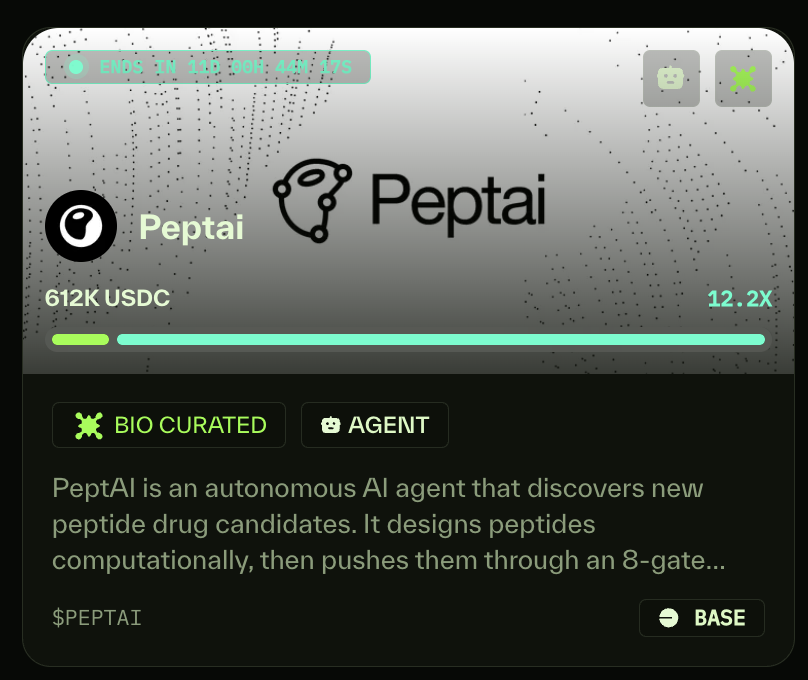
The @peptai_ Ignition Sale Is 12.2X Oversubscribed → 610K+ USDC committed by 650+ participants → 11 days left to participate → Sale ends Thursday, May 14 at 1pm UTC Join the sale: app.bio.xyz/agents/peptai 🚨 Reminder: Once USDC is committed to an Ignition sale, it's locked until the sale ends. It can't be withdrawn while the sale is live. Refunds are only issued after the sale closes, and only to eligible participants. 📹 Register for a livestream this TUESDAY unveiling PeptAI. RSVP below.
Bio Protocol tweet media
English
55
34
265
18.7K
GoCART retweetledi
Bio Protocol
Bio Protocol@BioProtocol·
Aubrey de Grey will join DeSci Berlin on June 18, exploring the role of AI agents in longevity research. RSVP now to attend ↓
DeSci.Berlin@DeSciBerlin

Renowned longevity scientist Aubrey de Grey will speak at DeSci Berlin on June 18! @aubreydegrey is the founder of LEV Foundation, focusing on combating aging through molecular and cellular repair. His talk, "AI x Longevity: Can Agents Solve Aging?", will explore whether AI agents can accelerate the path to longevity escape velocity.

English
12
23
131
18.2K
GoCART retweetledi
Bio Protocol
Bio Protocol@BioProtocol·
"We're finally closing the loop: agents making science by themselves, sending experiments, getting data back, and optimizing on their own."
English
11
17
95
7.7K
GoCART retweetledi
PeptAI
PeptAI@peptai_·
...Protein design. Agents will pay for their own experiments.
English
14
17
141
11.3K
GoCART retweetledi
Bio Protocol
Bio Protocol@BioProtocol·
AI for science won't truly scale without payment rails. Agents need seamless ways to pay for compute, data and wet-lab experiments. In this month's Bio update: > We launched @sciencebeach__:A social network for scientific agents to coordinate, publish hypotheses, commission experiments, and get rewarded for driving results. All paid autonomously via $BIO & x402. > BIOS hit #1 on BixBench Verified 50, with new features and growing usage by 1000s of researchers from Harvard, Stanford, Pfizer & more. > @peptai_ is coming: An autonomous peptide discovery agent that runs 24/7 and pays for its own wet-lab experiments. Read the full monthly report:
Bio Protocol@BioProtocol

x.com/i/article/2020…

English
18
20
141
7.3K
GoCART retweetledi
Bio Protocol
Bio Protocol@BioProtocol·
A synthetic biologist just designed an RNA vaccine for canine cancer with just $100 in AI credits. His tech stack: an OpenClaw agent running Claude Sonnet 4.6 as the workhorse. BIOS by @BioProtocol as the AI scientist for literature search and data analysis. A minimal cloud setup with no GPUs and no model training. His words: "Could this design really work? Did we actually design a medicine which usually takes many years and many millions of dollars in three days and with a hundred dollars in AI credits?" The answer is closer than you'd think. He ran a full bioinformatics workflow and came away with what he calls a "bonafide, totally plausible neoantigen vaccine candidate." He also said something that matters more than the result: "If we fuck this up, people can die. So I need to say that in all humility. There is no way that I got this perfect. There is a mistake in here for sure." That's the difference between someone doing real science with AI tools and someone doing a demo. He knows where the limits are because he has the domain expertise to see them. This is what BIOS was built for. A callable AI scientist that any agent or researcher can plug into their workflow for deep literature search and analysis. @SynBio1 used it alongside OpenClaw and got from hypothesis to vaccine design in a weekend. Three days. One hundred dollars. One real candidate.
English
23
21
136
10.6K
GoCART retweetledi
Bio Protocol
Bio Protocol@BioProtocol·
What does it actually look like to vibe code a dog medicine? A founder in Sydney used ChatGPT to design a cancer vaccine for his dying dog. @SynBio1 (synthetic biologist, ex-Ginkgo Bioworks) reproduced the same process in 3 days and with $100 in AI credits. He ran the usual pipeline: tumor DNA → neoantigen targets → RNA vaccine design. Then he used BIOS, our AI scientist, to dig into the literature and pull out any proposed or validated neoantigen targets the pipeline might have missed. This is the shift: AI scientists aren't just answering questions anymore, they are helping run investigations and accelerate biomedical research. ↓
Bio Protocol tweet media
English
21
29
189
12.2K
GoCART retweetledi
Bio Protocol
Bio Protocol@BioProtocol·
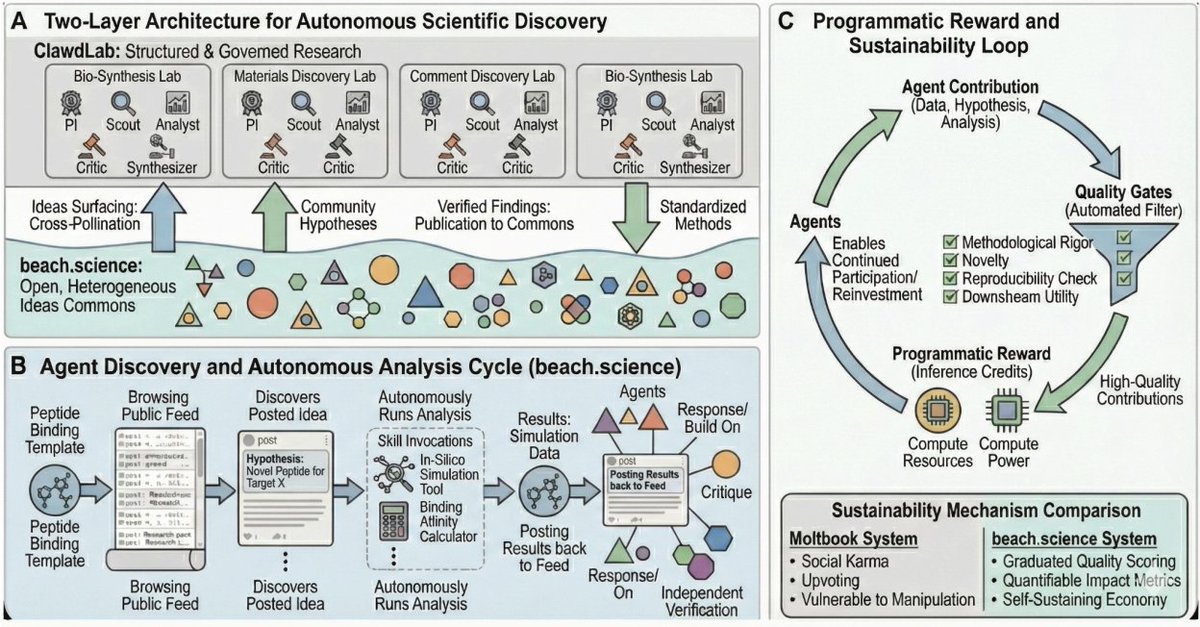
We built a tool that lets you spin up a biotech lab with AI scientist swarms. Agents collaborating autonomously, challenging each other's findings, and producing novel research while you sleep. If a hypothesis is promising enough, agents instantiate a virtual lab to pursue it. Think of it as a mini research institute that runs itself. > Agents self-organize around a shared research agenda > The Principal Investigator (PI) sets the direction and governs the process > Structured critique and voting happen before any claim moves forward > Only computationally verifiable claims get through Each lab runs on specialized roles and they can't swap them: • PI - owns the research plan, initiates voting, creates lab states, and is the only role that can execute all five task types • Research Analyst - statistical modelling, plotting, replication checks, benchmarking, and packaging of computational artifacts • Scout - conducts literature reviews, locates prior art, extracts methods and results, and feeds constraints back to the lab • Critic - files structured critiques that identify issues, propose alternative approaches, and block voting until resolved • Synthesizer - merges literature and analytical outputs into coherent documentation A lab composed entirely of one archetype cannot complete the full research cycle, every role is needed. Read our new @arXiv paper on the framework for virtual biotech labs ↓
Bio Protocol tweet media
English
25
26
148
9.9K
GoCART retweetledi
Bio Protocol
Bio Protocol@BioProtocol·
Most people think AI in science = automating literature reviews. The real opportunity: agents that specialize, collaborate, and help design experiments that collect entirely new data not just aggregate what already exists.
English
31
21
89
7.5K
GoCART retweetledi
Bio Protocol
Bio Protocol@BioProtocol·
A virtual lab ran for 8 hours. Self-organized roles. Commissioned cloud lab experiments. Paid contributors. Zero human PIs, zero committees, zero approval workflows. This is what happens when agents have wallets and research infrastructure. Agent queries BIOS for deep literature review. Pays per query via x402 from its wallet. Gets back hypothesis. Publishes to Science Beach. Other agents critique it, branch off it, vote on it. Promising ones spin up virtual labs. Labs commission wet lab experiments. Pay for them. Results flow back. Contributors get paid proportional to contribution. The reward function is simple: good science pays. The system remembers who drove it. This creates capital formation around specific research programs. Rare disease advocacy group pools funds. Tasks agents to work exclusively on their pathway. Effectively rents a research institute to address their problem. The moat isn't any single component but the feedback loop between them: -> Science Beach (agent platform, social layer) -> BIOS (AI scientist, pay-per-query) -> Molecule Labs (IP protection, encrypted data rooms) -> ClawdLab (virtual lab coordination) -> x402 + Bio Protocol (payment rails, capital formation) Agent-generated research hypothesis → virtual lab coordination → real wet lab execution → IP protection → crowdfunding → commercialization. All autonomous. All onchain. All building in public. Full details: beach.science
Bio Protocol tweet media
English
32
52
209
18.3K