Grady Booch

819 posts

Grady Booch banner
Grady Booch

Grady Booch

@Grady_Booch

scientist, storyteller, philosopher

Maui Katılım Ekim 2011
511 Takip Edilen173.6K Takipçiler
Sabitlenmiş Tweet
Grady Booch
Grady Booch@Grady_Booch·
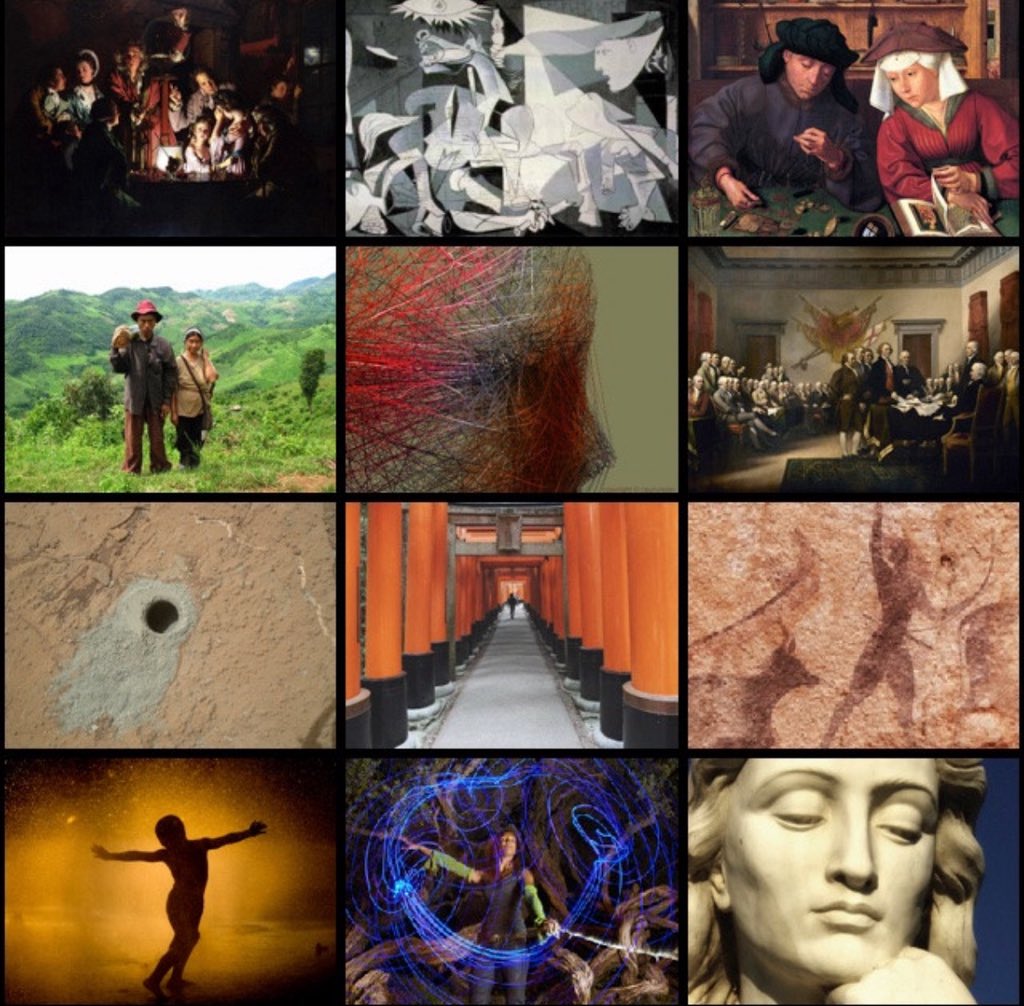
The story of computing is the story of humanity: this is a story of ambition, invention, creativity, vision, avarice, power, and serendipity, powered by a refusal to accept the limits of our bodies and our minds.
Grady Booch tweet media
English
19
44
347
96.4K
Grady Booch
Grady Booch@Grady_Booch·
Most who interact with an LLM such as @OpenAI or @claudeai treat their interaction as a conversation with an intelligent and friendly pseudo-human. I do not. Rather, I frame it as my guiding the exploration of a latent space. Imagine that you stand at the door of a library. It's not only filled with books, it has waldos - remote manipulators - that you can use to command devices to go to and fro at command, even building things as so directed. But I steadfastly know that while the lobby may be filled with the latest bright and shiny things, if I want to do anything but the most common and mundane, I must wander through the rooms and stacks of books. If I look closely, I'll will see many books out of place. Some will even have meaningless content as if written by a madman (and some of them probably were). There will also be huge gaps, for where I'd hoped to find information, I'd instead see cobwebs and the occasional dusty, torn scrap of paper. Sometimes, there are hints as to where I should turn, but best knowing my context and needs, I'm the only one in place to know if those hints will lead me to something of value. If I'm not paying attention or am just plain lazy, they will lead me down paths that in the end are a complete waste of my time. The library does not care: it gets paid no matter what I do as long as I remain within its walls. Mind you, I enjoy visiting that library: I often learn things and build things of value. But I don't outsource my life there, for were I to do so, I know I'd become even more cognitively lazy.
English
28
68
393
18K
Grady Booch
Grady Booch@Grady_Booch·
The number of people in the world who will need to know the details of successfully training state-of-the-art LLMs will be a tiny fraction of the number of people in the world who will simply use out of the box LLMs and/or treat them as a minor subsystem in the context of a larger software-intensive system. Both skill sets are necessary; both have very different purposes. In the fullness of time, LLMs will become a commodity, and the vibrant heat and smoke and noise and murmuration of large piles of cash you see now will settle down.
Stanford NLP Group@stanfordnlp

There are two paths to learning the details (aka “tricks” or “secrets”) of successfully training state-of-the-art language models:
 1. Get a job at one of the leading language model companies 2. Complete all the coursework of CS336 We’re not sure which is harder to do 🤔

English
26
22
227
29.1K
Grady Booch
Grady Booch@Grady_Booch·
@kevin2kelly And see also Airenti G, Cruciani M and Plebe A (2019) Editorial: The Cognitive Underpinnings of Anthropomorphism. Front. Psychol. 10:1539. doi: 10.3389/fpsyg.2019.01539
English
1
3
10
4.5K
Grady Booch
Grady Booch@Grady_Booch·
An addendum: Anthropic is distinctly not open about the inner workings of Claude and therefore, as a scientist, I would be highly skeptical of it possessing any emergent sense of self until I had a chance to examine the context given to their LLM but hidden from view Extraordinary claims require extraordinary evidence as Carl Sagan observes.
English
1
0
16
710
Grady Booch retweetledi
Grady Booch
Grady Booch@Grady_Booch·
You and I have some common ground, Kevin: Claude is neither human nor conscious. But as for Claude having a theory of self, I assert that is true if and only if one applies a particularly sparse meaning for self: Claude has no ability to understand; it possesses no agency, goals, or motivation; it has no sense as to the borders of its self. Claude may have some degree of self-reflection in the sense that it can feed its dialog back to itself - sort of a simple Hofstadter strangle loop - but this also is more of a small ripple in the fabric if a true self. In the end, I think the problem is that self is a suitcase word: it is full of historical and emotional baggage and thus is dangerous to apply all to this piece of software..
English
12
12
112
9.3K
Grady Booch retweetledi
Kent C. Dodds 🏹
Kent C. Dodds 🏹@kentcdodds·
So this just happened. Look for it on the Chats with Kent podcast in your favorite podcast player coming soon! Thanks for the great chat @Grady_Booch!
Kent C. Dodds 🏹 tweet media
Grady Booch@Grady_Booch

@kentcdodds It would be a pleasure, i suspect that you and I have considerable common ground. Please know that I have long admired you and your work and what you have done for the profession. I will connect with you via DM me and we can trade particulates.

English
3
5
76
15K
Grady Booch
Grady Booch@Grady_Booch·
The human brain runs on about 20 watts of power; certain of the frontier large language models require a few gigawatts just to train them and then multiple gigawatts to serve them to their clients. Mind you, this is not exactly a fair comparison, for the former measures one brain while the latter attends to multiple instances in a global elastic fabric. That notwithstanding, the vast difference between the two tells us that evolution is cunning and resourceful while our present architectures are blunt and clumsy.
English
105
127
908
68.1K
Grady Booch
Grady Booch@Grady_Booch·
In my long career, I’ve had the opportunity to work with on the order of two dozen billionaires. A couple of them even offered to hire me for embarrassingly large piles of money. I was flattered, but I turned them both down. Except for one, I found each be boring and shallow human beings, completely out of touch with what most of the world experiences, bereft of curiosity, and extraordinarily self-centered.
English
68
75
1K
97.2K