Tobias Carlisle

23.5K posts

Tobias Carlisle banner
Tobias Carlisle

Tobias Carlisle

@Greenbackd

PM, Acquirers Funds® https://t.co/rjHtXEy6u0. Author, Soldier of Fortune (https://t.co/qm4uyNXH4Q) and Acquirer's Multiple (https://t.co/84Cyi4XIC5).

Los Angeles, CA 🇺🇲🇦🇺🦘 Katılım Şubat 2009
2K Takip Edilen70.7K Takipçiler
Sabitlenmiş Tweet
Tobias Carlisle
Tobias Carlisle@Greenbackd·
My new book Soldier of Fortune: Warren Buffett, Sun Tzu and the Ancient Art of Risk-Taking is now available via amzn.to/3JfCPBq
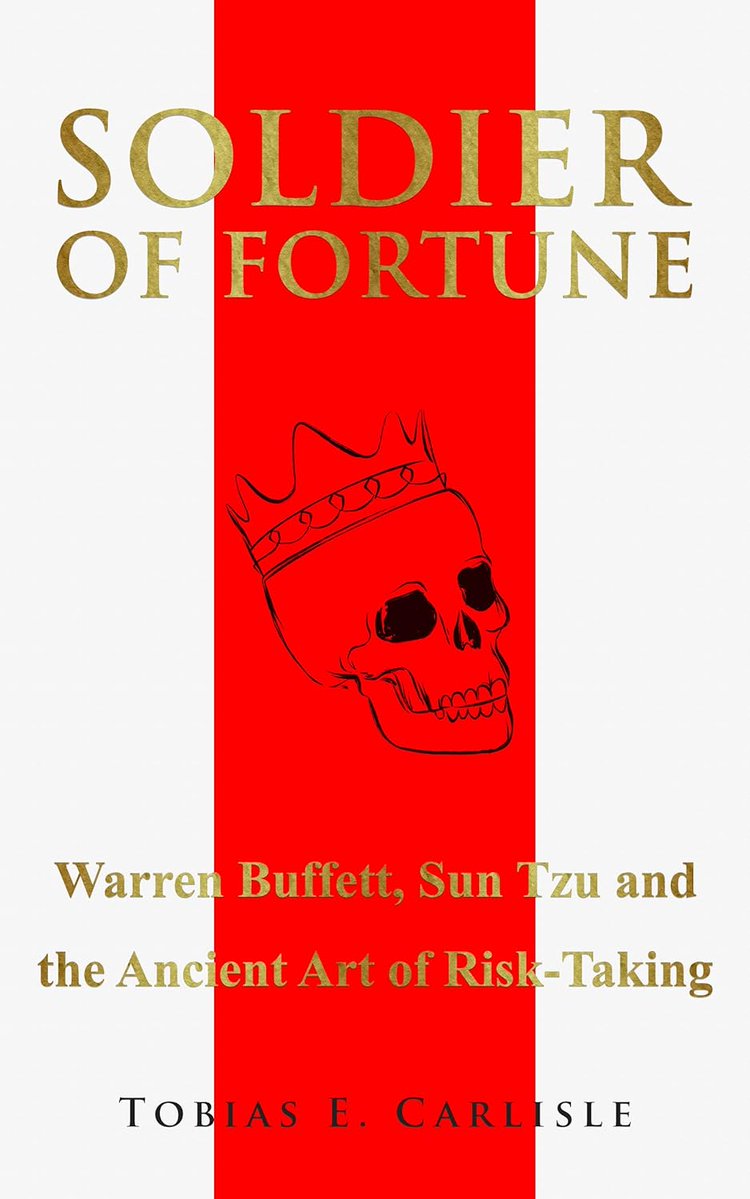
Tobias Carlisle tweet media
English
40
40
442
92K
Tobias Carlisle retweetledi
Barchart
Barchart@Barchart·
U.S. Housing Market has reached its most unaffordable level in history 🚨🏡😢
Barchart tweet media
English
173
1.1K
4.1K
368.2K
Tobias Carlisle retweetledi
The Kobeissi Letter
The Kobeissi Letter@KobeissiLetter·
The US housing market has shifted into one of the strongest buyer's markets on record: Home sellers outnumbered buyers by 47.1% in December 2025, the largest gap since Redfin data began in 2013. The percentage jumped by +7.1 points from November, the biggest monthly increase since September 2022. The number of active homebuyers fell -5.9% MoM to 1.34 million, the lowest level on record. Meanwhile, home sellers declined -1.1% MoM to 1.97 million, the lowest since February 2025. By comparison, in November 2021, there were 36.5% fewer sellers than buyers. This all comes as elevated housing costs and economic uncertainty continue to push buyers to the sidelines. Buyers now hold unprecedented negotiating power, but only if they can afford to enter the market.
The Kobeissi Letter tweet media
English
194
270
2.1K
406.3K
Tobias Carlisle
Tobias Carlisle@Greenbackd·
The AI boom is shifting big tech from cash machines into cap ex-intensive builders.
English
1
0
11
2.2K
Tobias Carlisle
Tobias Carlisle@Greenbackd·
2-Year Treasury yield (blue line, market expectations of Fed policy) > Federal Funds Rate (red line, actual policy) suggests Fed is unlikely to cut.
Tobias Carlisle tweet media
English
0
0
18
6.2K
Tobias Carlisle
Tobias Carlisle@Greenbackd·
Chart shows the relative valuation for U.S. value stocks compared to U.S. growth stocks, normalized so that 1.0 represents the median. "Today, value stocks are trading at an approximate 35% discount to their typical relative valuation, a 10th percentile observation vs. history. Value needs to beat growth by almost 55% just to return to historically normal relative valuations." "Even if this abnormally wide valuation spread does not narrow immediately, we believe value can still outperform due to what we call the rebalancing effect. Value benefits as some growth companies disappoint and become cheaper, entering the value index. Value also benefits as some value companies surprise on the upside and get repriced into the growth index." Source: gmo.com/americas/resea…
Tobias Carlisle tweet media
English
8
9
34
12.9K
Tobias Carlisle
Tobias Carlisle@Greenbackd·
"The US economy now requires significantly less energy per unit of GDP than in earlier decades, reflecting efficiency gains and a shift away from manufacturing toward services (chart). As a result, oil price spikes are less inflationary and do less damage to real economic activity than in the past when energy intensity was much higher." "The economy's resilience means that oil price shocks cause far less persistent inflation and much less severe growth disruptions than in the past. Oil shocks are less likely to trigger the kind of sustained stagflation seen in the past, particularly during the 1970s." @yardeni
Tobias Carlisle tweet media
English
9
12
68
4.8K
Tobias Carlisle retweetledi
Tobias Carlisle
Tobias Carlisle@Greenbackd·
ROIC, and ROA and ROE are the strongest predictors of stock performance. Each measures how efficiently a company converts capital into profits. Interest Coverage (EBIT / interest expense) captures financial strength and ability to service debt. Markets reward companies that: • generate high returns on capital • are financially resilient • require less capital to grow This is essentially the economic moat + capital efficiency signal. Gross margin is the weakest quality metric.
Rene Sellmann@ReneSellmann

This is my favorite chart from last year ⬇️ In a nutshell, clearly not all "Quality" is created equal. Since 1985, the "most alpha" has been found in two places: ✅ Capital Efficiency: ROIC, ROE & ROA ✅ Solvency: Interest & Debt Coverage Buying "High Gross Margin" sounds sexy, but the market rewards those who actually generate returns on their capital.

English
13
59
348
41.4K
Tobias Carlisle
Tobias Carlisle@Greenbackd·
Valuation spreads (how cheaply value stocks trade relative to growth stocks) measured as the Price/Book ratio of value stocks divided by growth stocks in the US. "On average, US value stocks have traded at a 78% discount (i.e., 22 cents on the dollar) relative to growth stocks over the full five-decade horizon. Yet with the rise of Big Tech in the 2010s, this valuation spread has now widened to historically extreme levels, with value stocks trading at 10 cents on the dollar relative to growth stocks today. This discount is so extreme that even if today’s relative valuation of cheap stocks were to double going forward, we would only be returning to the long-term average valuation spread in the US. ... US valuation spreads today remain as wide as they were at the end of 2020, when value proceeded to outperform growth by 7.2% annualized over five years. Therefore, we believe it’s reasonable for today’s value investors to assume a similar level of outperformance over the next five years. There is also reason to hope that value outperformance over the next five years could be even greater than 7.2% per year because the value premium peaked at 9–15% annualized during previous clusters of positive value premiums." @verdadcap
Tobias Carlisle tweet media
English
11
16
102
11.1K