
Sabitlenmiş Tweet
Gudula Stegmann
1.4K posts

Gudula Stegmann
@GudulaStegmann
Nie wieder Faschismus im Deutschland! Klare Abgrenzung gegen Rechts. Es gibt keine Menschenrassen. Diese künstliche Einteilung führt direkt in den Faschismus.
Katılım Ocak 2022
1.5K Takip Edilen221 Takipçiler
@NZZ Gerade für r einen Wal muss er bei der Aktion übelst gelitten haben. Allein schon der Lärm...
Deutsch
KOMMENTAR - Rettungsaktion wider besseres Wissen: Die privaten Retter des gestrandeten Buckelwals müssen nun beweisen, dass die Tierquälerei nicht vergeblich war nzz.ch/meinung/buckel… via @NZZ
Deutsch
Gudula Stegmann retweetledi

Die #Arbeiterwohlfahrt war eine der ersten NGOs, die vor 93 Jahren von den Nazis verboten wurde.
Deutsch
Gudula Stegmann retweetledi

🇩🇪 Der Enkel von Adolf #Hitler's Massenmörder Heinrich Himmler sagt:
"Die Rechtsradikalen haben keine Lösung. Wir hatten das schon mal. Das hat zu einer Katastrophe geführt." @SPIEGELTV #AfD #AfDVerbot #AfDVerbot2026 #Holocaust #niewieder #wirsindmehr #Maischberger #Lanz
Deutsch
Gudula Stegmann retweetledi

Gudula Stegmann retweetledi

Stanley Ann Dunham, Barack Obama’s mother, passed away in 1995 at the young age of 52. She never lived to see her son become President of the United States.
For years, she was largely remembered simply as “Barack Obama’s mother.” In reality, she was far more than that: a passionate scholar, a fierce advocate for human dignity, and a woman who firmly believed that poverty is the product of flawed systems, not the fault of the individuals trapped within them.

English
Gudula Stegmann retweetledi

@Kachelmann Das größere Problem, die Anhänger dieser Faschisten sind zu dumm, deutsch und rechts (heute ein Synonym für ungebildet) und glauben diesen Dreck. CPAC und MAGA sind in Deutschland angekommen. Manchmal beneide ich Sie, um die schweizer Staatsbürgerschaft. Nur manchmal.
Deutsch
Dieses Thema liegt mir am Herzen. Bitte hier unterzeichnen: weact.campact.de/petitions/kein…
Deutsch
Gudula Stegmann retweetledi

Gudula Stegmann retweetledi

Should Native American man be allowed to wear their hair long at school! Traditionall

English
Gudula Stegmann retweetledi


Gudula Stegmann retweetledi
30 April 1939 | A French Jewish girl, Henriette Michele Hacker, was born in Clichy.
She arrived at #Auschwitz on 2 September 1942 in a transport of 1,000 Jews deported from Drancy. She was murdered in a gas chamber after the selection.

English
Gudula Stegmann retweetledi

El niño era tan pequeño que el campo no estaba hecho para encerrarlo, sino para hacerlo desaparecer.
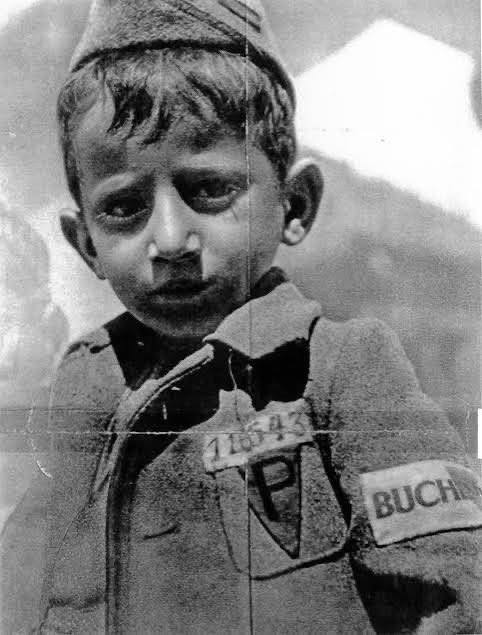
Se llamaba Joseph Schleifstein, nacido como Janek Szlajfsztajn, y fue uno de los supervivientes más jóvenes de Buchenwald. Su padre, Izrael, entendió que si los guardias lo veían al llegar, su hijo no tendría oportunidad. Entonces hizo algo desesperado: lo escondió dentro de un gran saco, con la orden de guardar absoluto silencio.
Aquel saco fue, por unos instantes, todo su mundo.
Después, otros prisioneros ayudaron a mantenerlo oculto. En un lugar construido para quebrar vidas, la supervivencia de Joseph dependió de cosas mínimas: silencio, complicidad, miedo y el amor obstinado de un padre que se negó a entregarlo. Cuando finalmente fue descubierto, ocurrió algo extraño dentro de tanta crueldad. Algunos guardias lo trataron como una especie de “mascota” del campo, le hicieron un pequeño uniforme y lo obligaban a participar en rutinas del lugar.
Eso no fue ternura verdadera.
Fue una contradicción terrible: un niño conservado con vida dentro de una maquinaria diseñada para destruir niños como él. Joseph sobrevivió, pero no porque el horror fuera menos horror. Sobrevivió porque su padre lo escondió, porque otros prisioneros ayudaron y porque, en medio del sistema más inhumano, hubo grietas pequeñas por donde todavía pudo pasar la vida.
Cuando Buchenwald fue liberado en abril de 1945, Joseph tenía apenas cuatro años. Más tarde emigró a Estados Unidos con su familia, pero durante décadas casi no habló de lo vivido. Hay recuerdos que no desaparecen al salir del lugar donde nacieron. Solo aprenden a quedarse en silencio.
Por eso su historia sigue doliendo tanto.
Porque no habla solo de un niño que sobrevivió al Holocausto. Habla de un padre que convirtió un saco en refugio, de prisioneros que protegieron una vida diminuta y de una infancia que tuvo que aprender a esconderse antes de aprender a vivir.
Joseph Schleifstein no fue una anécdota del campo.
Fue una prueba pequeña y enorme de que, incluso cuando el mundo parecía haber perdido toda humanidad, alguien todavía podía arriesgarlo todo por salvar a un niño.
Español
Gudula Stegmann retweetledi
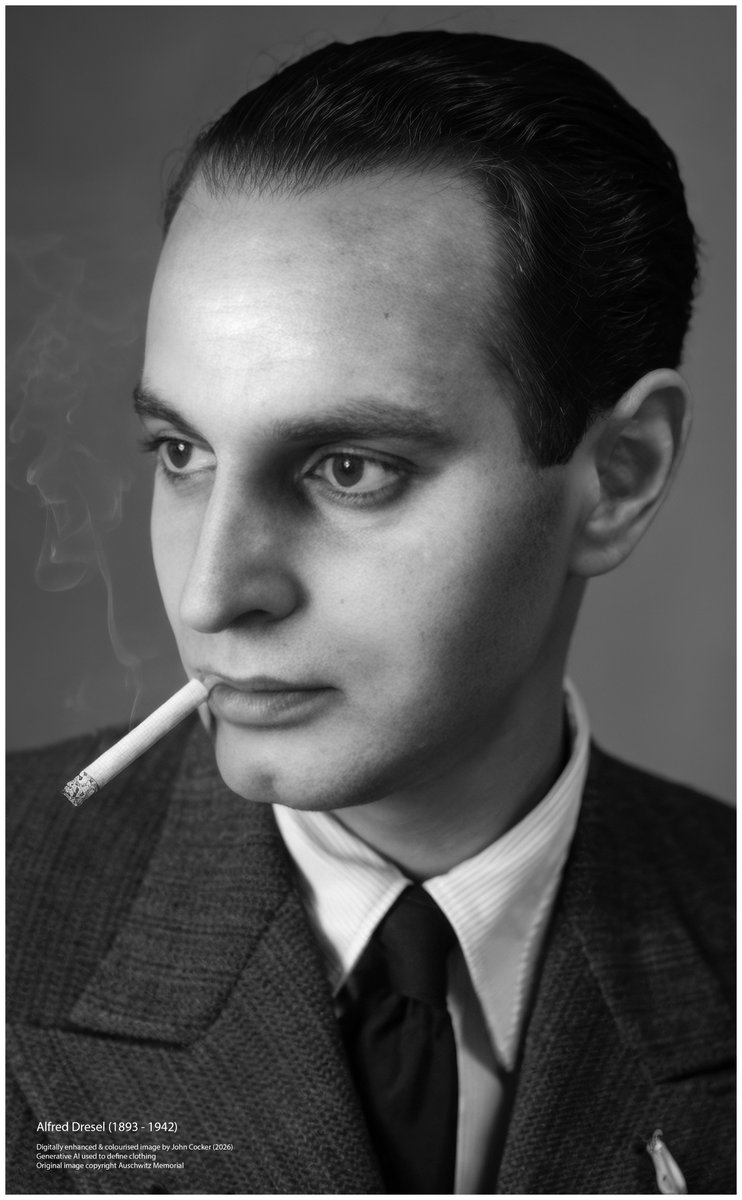
24 April 1893 | A German Jew, Alfred Dresel, was born in Fraustadt (Wschowa). A businessman.
He tried to leave Europe on MS St. Louis. After the forced return to Europe he stayed in France. Deported, via Gurs & Drancy, to #Auschwitz. Murdered in a gas chamber on 28 August 1942.
---
▶ A short video about gas chambers and crematoria of the Auschwitz camp: youtu.be/-A05i25j9Ck

YouTube

English
Gudula Stegmann retweetledi


Gudula Stegmann retweetledi

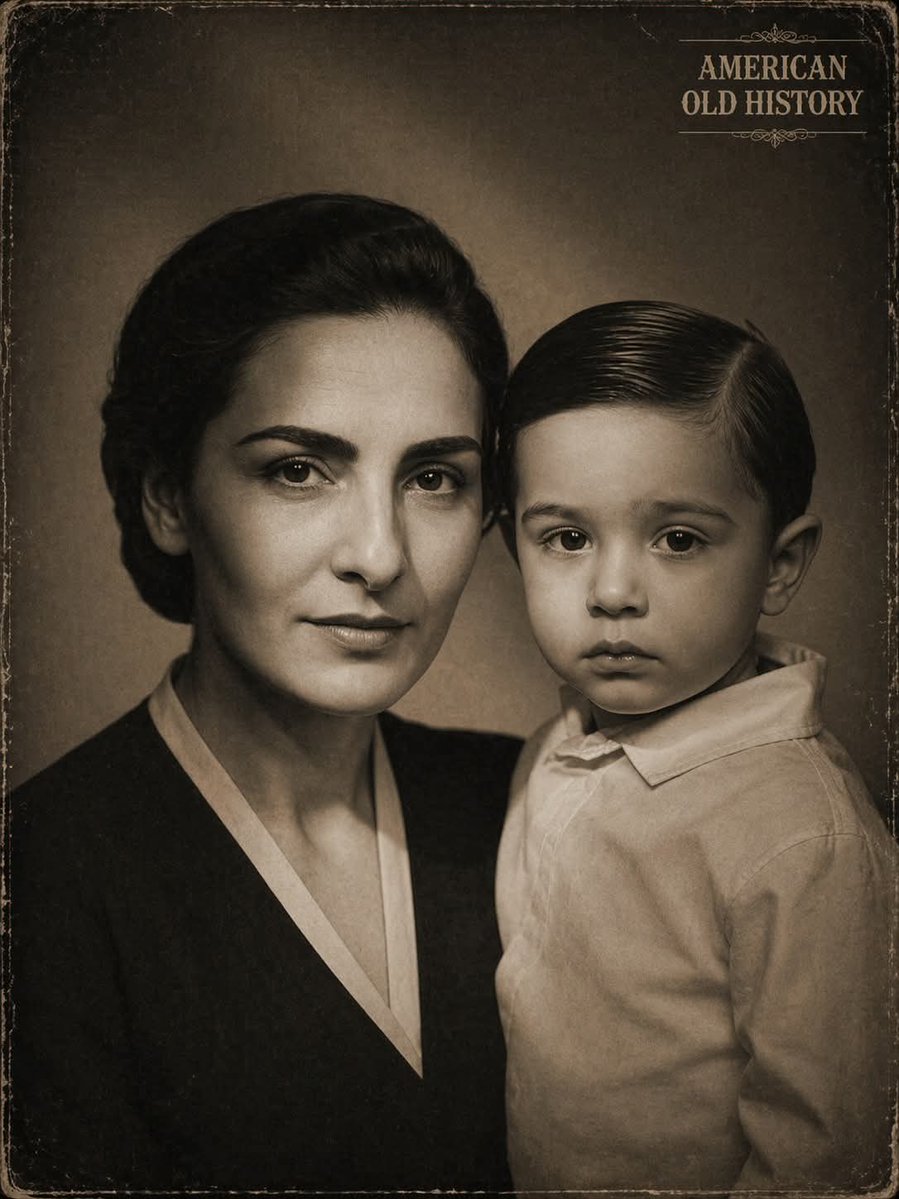
Her grandmother was walking into a gas chamber.
She turned around and looked at her 14-year-old granddaughter one last time.
And she said four words:
"Live and survive."
Flora Klein was born in 1925 in a small Hungarian village called Jánd. She grew up in a close family. She attended beauty school. She was, by all accounts, an ordinary girl living an ordinary life.
Then 1944 came.
The Nazis occupied Hungary. Soldiers arrived in her village. Flora was 14 years old when she watched her family being taken apart in front of her. Her grandmother and great-grandmother were led away together — to the gas chambers at Auschwitz.
Before they went, her grandmother turned back and gave her that directive.
Live and survive.
Flora was deported. She passed through three concentration camps in the final terrible months of the war — Ravensbrück, then the Venusberg subcamp of Flossenbürg, then Mauthausen. Three camps. Thousands of kilometers. Months of horror that most people cannot imagine and that Flora herself rarely spoke about afterward.
She survived, in part, because of beauty school.
The commandant's wife noticed her skills — hairdressing, makeup — and kept her close. That small, strange thread of usefulness, in a place built for murder, kept Flora Klein breathing while millions around her were killed.
She was the only member of her family to survive.
On May 5, 1945, American troops liberated Mauthausen.
Flora Klein walked out. She was 19 years old. She had nothing except her life and a dead woman's four words.
She kept moving.
She married a carpenter named Jechiel Weitz. In 1947, they immigrated to Israel. And on August 25, 1949, in Haifa, she gave birth to a son.
She named him Chaim.
In Hebrew, Chaim means life.
She did not choose that name by accident.
The marriage didn't last. Her husband left when Chaim was around six years old.
Flora packed up what she could carry and, in 1958, brought her 8-year-old son to New York City. He had never seen a television. He had never seen anything like America.
She cleaned houses to support them.
She raised him in a small apartment, in a city that didn't know her name, with no money and no safety net. She never talked about the camps. Her son has said she seemed to file it away — not because it didn't matter, but because survival required forward motion. She hid her pain behind quiet dignity. She just kept going.
Every day above ground is good, she always told him.
Her son — the boy she had named Life — grew up to become Gene Simmons.
Co-founder of KISS. One of the most theatrical, commercially relentless rock bands in history. The fire breathing. The platform boots. The face paint. Sold over 100 million albums. Commanded arenas on every continent.
Gene has said openly, many times, that all of it traces back to her.
The drive. The refusal to quit. The understanding that being alive is not something you take for granted — it is something you earn and use and do not waste.
A woman who cleaned houses in New York so her son could eat. A survivor who never asked for recognition. A mother who taught everything by example and almost nothing by words.
In 2017, Yad Vashem — Israel's Holocaust memorial and museum — presented a Legacy Award in her honor. She was in her nineties by then. Gene accepted it on her behalf.
Flora Klein died in December 2018 in the United States. She was 93 years old.
She had survived three concentration camps. She had rebuilt her life from zero — twice, in two countries. She had raised a son alone in a foreign city with no resources. She had watched that son become a global icon. And she had spent her final decades as what she had always been: a woman who kept going.
Because someone who loved her had told her to.
The grandmother's last words became the family's creed.
The son's Hebrew name carried them forward.
And every night Gene Simmons stood on a stage breathing fire in front of tens of thousands of people — somewhere in that spectacle was the quiet echo of a 14-year-old girl in Hungary, watching her grandmother disappear, and choosing, against everything, to live.
She did.
Flora Klein. 1925–2018.
Her grandmother said: "Live and survive."
She made sure those words outlasted everything.
English
Gudula Stegmann retweetledi
On this day in 1910, a Czech Jewish woman were born. On the 8 Sep 1942 she was deported to Theresienstadt and on the 8 Oct 1942 to Treblinka extermination camp where she perished. Her name was Irma Weilova

English
Gudula Stegmann retweetledi

Cuando mi vecino de arriba se mudó, dejó a su husky en el pasillo como si no importara.
Durante todo un día y una noche, el fiel husky se sentó llorando fuera del apartamento vacío; un llanto profundo y desgarrador que me partió el corazón.
No pude ignorarlo. Lo llevé adentro, pero estaba completamente desconsolado. Se negaba a comer, se escondía detrás del sofá y temblaba de tristeza. El veterinario dijo: "Está de duelo... esto es depresión".
Durante días no comió. Su cuerpo, antes fuerte, se debilitaba. Pero me negué a rendirme. Me quedé en casa, me senté a su lado y le hablé con dulzura todos los días.
Poco a poco, empezó a confiar de nuevo. Al sexto día, probó mi mano por primera vez.
Ahora se acurruca a mi lado todas las noches, tranquilo y seguro.
Lo llamé Fénix, porque incluso un corazoncito roto puede sanar cuando alguien decide quedarse. ❤️🐶✨

Español
Gudula Stegmann retweetledi

Trump fell asleep again during a live televised meeting. If Joe Biden had done that, the media would have treated it like a national emergency and run wall-to-wall panic coverage for a week.
But when Trump does it, they look the other way because the clown show keeps their ratings up and their pockets full.
The hypocrisy is disgraceful. The media failed the country, and they know it.

English
Gudula Stegmann retweetledi

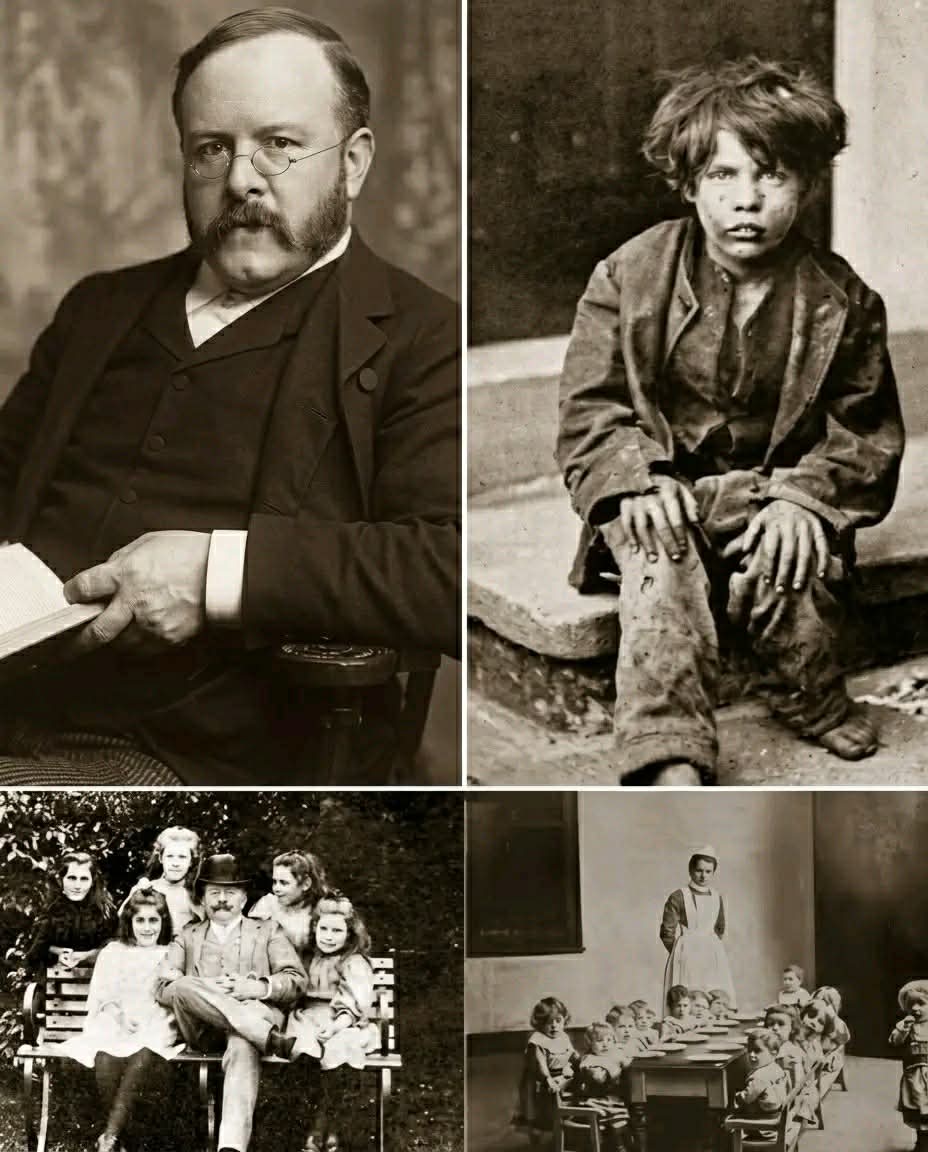
A 7-year-old boy slept under a bridge in London. No shoes. No food. No one who knew his name. A young stranger stopped and asked him a simple question — and what the child said next changed history forever.
His name was Jim. The year was 1866. London was choking under black factory smoke, and the East End was a maze of sewers, starvation, and invisible children. Jim was one of them — filthy clothes, matted hair, eyes that held pain no child should ever know.
Thomas Barnardo was just a 21-year-old medical student, quietly preparing to travel to China as a missionary. Then he met Jim crouched in a doorway, shivering.
"Are there more like you?" Thomas asked.
"Heaps of 'em, sir," Jim whispered. "More than I can count. We sleep where the dogs won't go."
A few days later, Jim was dead. He died alone in the cold, another child the city had simply forgotten to notice.
Thomas Barnardo never boarded that ship to China.
Instead, in 1870, he opened a small home for abandoned boys in East London. Above the door, he hung a sign that read:
"No destitute child will ever be refused admission."
One night, the home was full and he turned a boy away. Two days later, that same child was found dead from hunger and cold. Thomas wept. He made a vow he never broke: the door would always open.
When critics told him he was crazy and would run out of money, he kept building. More homes. Foster families. Vocational training. He gave street children — children people called "rats" — a trade, a name, and a future.
He didn't ask for papers. He didn't ask for backgrounds. He simply opened the door.
By the time Thomas Barnardo died in 1905, he had rescued more than 60,000 children from the streets of Britain.
Today, Barnardo's is still one of the UK's largest children's charities — still keeping a dead boy's whispered words alive, 160 years later.
Everything began with one man who stopped walking, looked down, and truly saw a child that the rest of the world had decided wasn't worth seeing.
Tag someone who still believes one person can change everything. 💙
English