Sabitlenmiş Tweet

Andreas.eGLD
1.9K posts

@Gundhardt4
Nothing, just hanging around. *eGold*


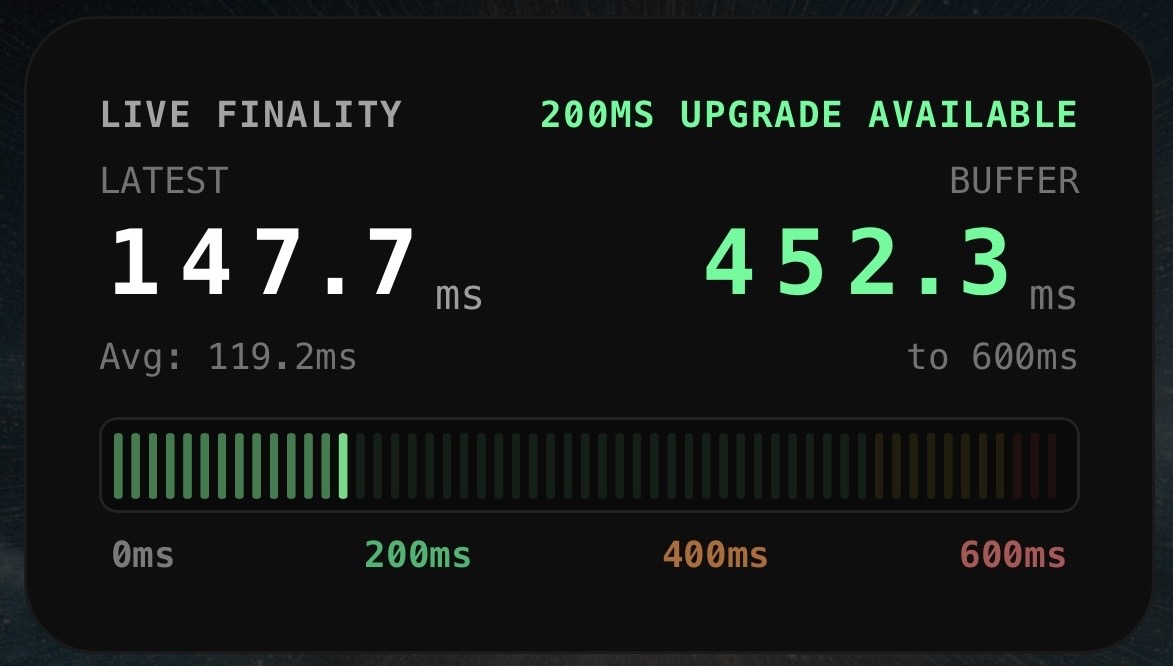
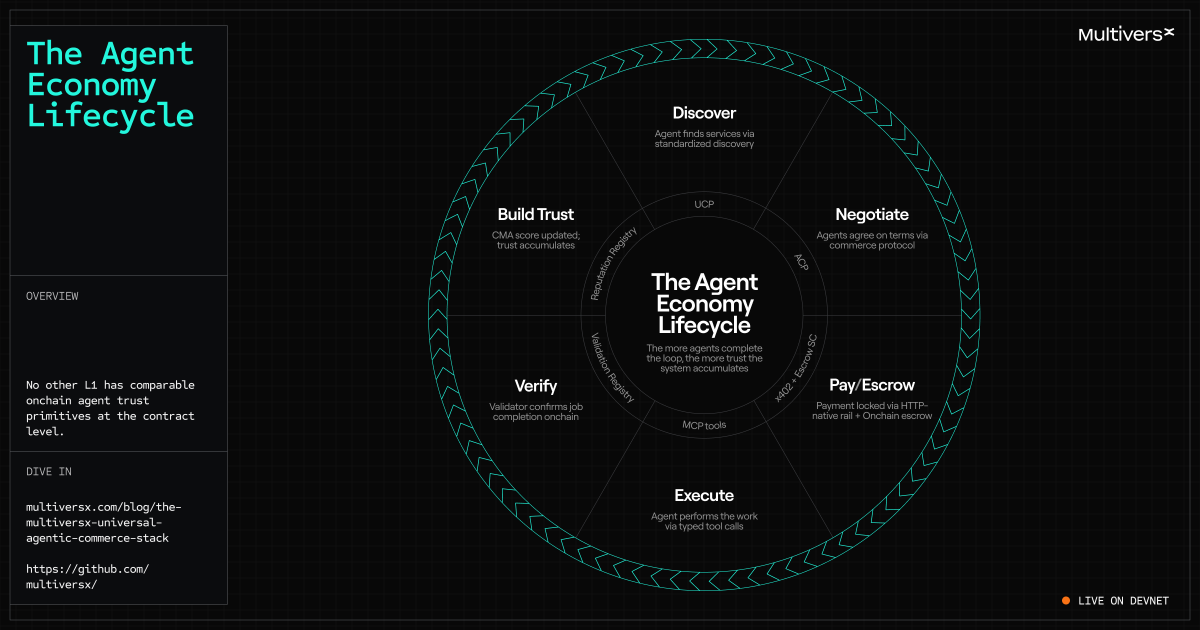
Who's Actually Building? 171,000 commits. #6 in the entire blockchain industry. Ahead of Bitcoin. Ahead of Solana. Ahead of Avalanche, NEAR, Sui, Polygon, Aptos, and TON. Almost 2x Solana. Nearly 3.5x Aptos. The data is public. I'm not writing this to flex. I'm writing it because the people doing the real work deserve to see it reflected somewhere other than a Git log. ─── Building through a market like this is brutal. The price bleeds. Liquidity gets extracted by professionals who've never deployed a contract. Narratives rotate every two weeks. The projects that survive aren't the loudest, they're the ones that refuse to stop shipping. We shipped Supernova while the market did everything it could to make us irrelevant. 150,000 lines of new protocol code. 20 months. A complete rearchitecture of how consensus and execution interact. 88ms block finality on 600ms slots. The block finalizes before the round ends. 120,000 TPS burst mode on the same validator hardware. 3,200+ nodes. Full sharding intact. We didn't build this because the market asked for it. We built it because it was the right thing to build. ─── The market rewards narratives. It rewards projects that rename themselves to match whatever's trending. It doesn't reward the team that designed inclusion proofs so blocks finalize before execution completes. It doesn't reward 171,000 commits. It barely notices. But here's the thing, infrastructure doesn't need the market's permission to work. Over 500 million transactions processed. 3,200+ validator nodes across four continents. And now, sub-second finality on every transaction type. ─── People ask: "What's left for blockchain when AI takes over everything?" Wrong question. AI agents need to transact autonomously. They need identity. They need programmable money that settles in milliseconds. They need micropayments at scale without a human clicking "approve." Credit cards can't do this. Bank wires can't do this. These rails were built for humans, not machines. This is where the entire stack is converging. Look at what happened in the last 90 days: Visa launched agentic payment tools. Mastercard acquired BVNK for $1.8B. Coinbase is pushing x402 hard. Circle is racing for stablecoin dominance. Stripe built ACP with OpenAI. They're all building pieces of the same stack: identity, payments, settlement, stablecoins. We built the whole thing. On one chain. x402 for autonomous agent payments. MX-8004 for on-chain agent identity. UCP, ACP, AP2, MCP for agent communication and commerce. xMoney for regulated stablecoin issuance and fiat-to-crypto connectivity under MiCA. Relayed v3 for gasless transactions so agents don't need to hold tokens to start. Six protocols. Regulated stablecoins. Fiat rails. One network. The stack that Visa, Stripe, and Coinbase are assembling from separate pieces, we shipped as a unified layer. ─── And the community. Every validator who kept running through the drawdown. Every builder who deployed when nobody was watching. Every staker who stayed. 171,000 commits. Supernova. Battle of Nodes. Cointelegraph joining as a validator. EGLD named in an Arizona state strategic reserve bill. The signals are there. The infrastructure is live. The convergence between AI, payments, and blockchain isn't five years away. It's happening now. The teams that built through the hard part don't need to pivot when the opportunity arrives. They're already there. We're already there.



We’re thrilled to announce that Cointelegraph Decentralization Guardians is now the official staking partner of @MultiversX. 🔥 Users can now delegate to the CTDG validator in the MultiversX ecosystem to support the network and earn $EGLD rewards.


The performance limitations of our industry – capped at around 10K TPS across all existing blockchains – cannot serve systems that demand millions of transactions per second. This means the largest organizations in the world cannot move onchain despite wanting to. We are offering the scale of legacy finance at the speed of the internet, with the underpinnings of the principles that matter. Zero is decentralized, permissionless, and censorship-resistant. It is the last blockchain because it is the first to scale to house all operations for systems like the NYSE, the DTCC, and Citadel Securities. Adoption of Zero isn’t about tokenization or a simple stablecoin implementation – it is about replatforming entire business models onto what we believe to be a better internet: blockchain. We can’t wait to bring Zero to the world later this fall with our world-class partners, who are genuinely the foremost experts and leaders in how markets work. I can’t think of a better group to build solutions with during the transition of global markets onto permissionless infrastructure. Much more to come. It’s time to build without compromise at scale.


Even Darkness Must Pass Every morning I wake up with one very simple Idea in mind: is there something we can do, I can do, to help clear out the corridor for Supernova? To help the team, in any simple way, get a slight bit closer. Sometimes the answer is pretty clear, there's some piece that can unlock the next milestone and that's what we all focus on. Like a particular component that is missing, or a particular bug that is hunting us like a ghost in the machine. But sometimes, it's not as simple, you just need to perform a whole range of meticulous tweaks and chaotic testing scenarios, gradually discovering and ironing out more and more edge cases. This has been my mind for the past months. In fact, this has been what Adrian and the protocol / infra / api / tooling teams have been asking and pushing on, every single day for the past months. The really good part, is we are now a few days away from having, for the first time, a more reasonable, ehm, [the word that shall not be named], deadline. Once this is out, the mood will swing fast. Sometimes nights are tough. If you ask people who've been through a storm, people who've been through a war, or people who've been through hardocre difficulties, they’ll tell you. There's a sense that the night with its darkness will never end. And that right there, can drive us mad. And yet, the most ecstatic and joyous moment for all those people who’ve been through a hard night, is to see the morning dawn arrive. That moment, when it happens, almost feels like a wonder. And yet, there's strength in reminding ourselves of this simple truth: however dark the night, even darkness must pass. And a new morning dawn shall come. That morning dawn is SUPERNOVA. Once the current testing rounds clear out, with just enough stabilization in place, we are ready for the next public update and a real deadline. I think I speak for all of us here when I say, I really can't wait for that. :) First for Battle of Nodes, then for the new dawn we call SUPERNOVA. ------------------------ Overall progress update: █████████░ 98% ------------------------



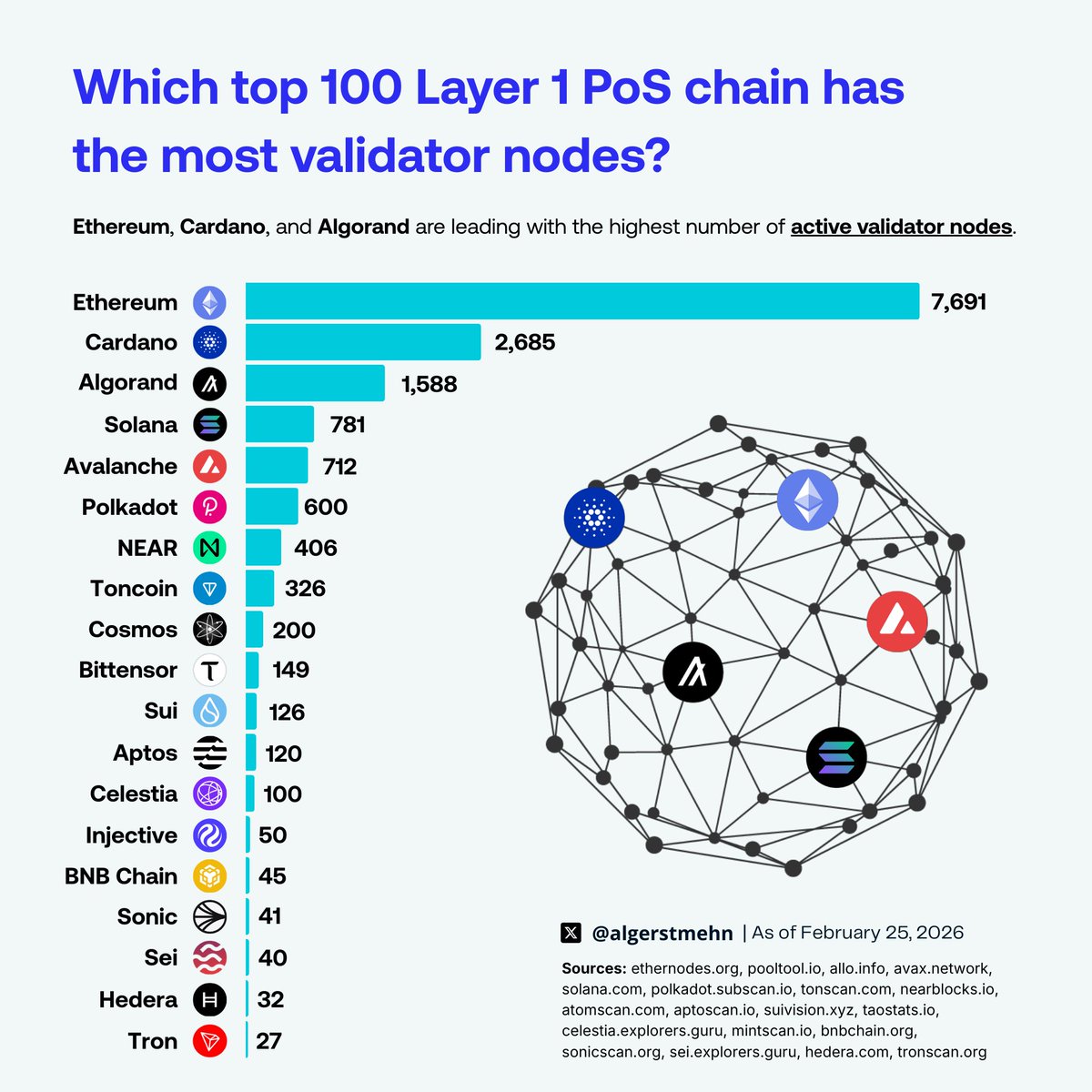
We must reject all centralized "blockchains"! This includes Ripple, Canton, Stellar, Hedera & Algorand Centralization is not the future of finance; requiring permission from an authority is not decentralized! Do not be fooled by their lies, as the truth will set us free: 🧵 Ripple: Has a "Unique Node List", which makes the validators effectively permissioned. As any divergence from this centrally published list would cause a fork, effectively giving the Ripple Foundation & company absolute power & control over the chain Canton: The validator set is totally permissioned! Stellar: A similar set-up to XRP, except that they call it "recommended Tier 1 organizations," which is published by the Stellar Development Foundation. However, just like XRP, a high overlap is required, or you risk forking off the network. Effectively putting the power in the hands of the list creator Hedera: The validator set is totally permissioned! Algorand: The "relay nodes" in ALGO are still totally permissioned. Despite validators being permissionless, anyone now has the option to run a "participation node" after they recently implemented a P2P network as an alternative means to propagate TXs. Which means the relay nodes can no longer act as gatekeepers. However, it is unclear how much removing them entirely would affect performance today. Possibly making them a necessary aspect of ALGO's current design Forms of Consensus: Within a blockchain context, there are only three forms of consensus: Proof of Stake, Proof of Work & Proof of Authority If a blockchain does not use PoS or PoW, it is, by definition, PoA! As this was fundamentally an unsolved problem before blockchain came along, which solved this problem through the use of token-based incentives, either through stake or work Anything that does not fit that consensus model is instead fundamentally based on authority/trust. In the case of XRP & XLM, it is important to keep in mind that choosing who we trust is not the same as trustlessness! Binary Choice: A blockchain is either fully permissionless or it is not. ALGO has permissioned elements in its design, so it is still "centralized". A crude way to use language, but we do still need understandable schelling points in crypto. As decentralization is a spectrum, permissionlesness is only one element of that bigger picture. However, personally, any permissioned elements are a deal breaker for me, as it is so anti-thetical to the ethos of crypto that it defeats its entire raison detre Institutional Adoption: Much like the early internet, big institutions are uncomfortable using fully permissionless, public & decentralized networks. So, much like the early internet, those institutions will be left behind. The big winners are the crypto natives. That is true historically & it will also be true in the future too. The big winners during the early internet were the newcomers, not the old guard, for the same reasons we see playing out in crypto now Conclusion: The future of finance is decentralized & permissionless. If you cannot understand that, it is fine. There are other options for you on the free market But let's not pretend as if these chains are really playing a part in this revolution. Quite the opposite, centralized "crypto" is a distraction that only slows the goals of our movement down So, if you care about crypto. Reject these permissioned chains & demand they decentralize. In the meantime, we should vote with our feet & support chains that carry our movement forward towards its intended goals instead Credible neutrality, censorship resistance, privacy, immutability & more can only be achieved on a fully permissionless & decentralized blockchain That is the revolution we were promised & that is the future we can now bring about with the choices we make collectively Crypto is on the right side of history, disrupting power away from centralized authorities to help create a freer & more equitable world! 🔥


Something hits different about being in the Valley as a builder, not a tourist. You walk past companies burning $10M/month on infrastructure that doesn't scale. Then you remember your team shipped adaptive state sharding from Eastern Europe with a fraction of that. We didn't have the ecosystem. We didn't have the hype cycles. What we had was a bet: solve the hardest problem first, and everything else follows. 7 years later: 434M transactions. Zero downtime. A full agentic commerce stack. Instant finality settlement protocol and regulated stablecoins in the pipeline. Built from Europe. Competing globally. Still doubting it? Read this again.
We used to teach Blockchain. Now we use it. Your wallet is now your access to Blockchain School. Powered by @MultiversX