Henrik Alexandersson retweetledi
Congress warns British social media changes are an attack on free speech
telegraph.co.uk/gift/0672a1b16…
English
Henrik Alexandersson
75.5K posts


@HAX
Frihetlig debattör, skribent och bloggare.





🇪🇸Spain in 1492: Expelled, killed, or forcibly converted all Jews. 🇪🇸Spain during the Holocaust: Closely aligned with the Nazis. 🇪🇸Spain after the deadliest attack on Jews since the Holocaust: Accuses Israel of genocide. 🇪🇸Spain last year: Refused to grant asylum to Palestinians fleeing Gaza. 🇪🇸Spain after recognizing a Palestinian state: Refused to move its embassy to the Palestinian territories because its diplomats didn’t want to give up the “standard of living and security” they enjoyed in Israel. 🇪🇸Spain last summer: Called the police to remove 50 French Jewish teenagers from a Vueling flight after hearing one word in Hebrew. 🇪🇸Spain in March: Officially withdrew its ambassador from Israel, but left its embassy in Tehran. 🇪🇸Spain today: Marchers equate the Nazi swastika with the Star of David they used to mark their Jewish victims. Now that is what being on the wrong side of history looks like. 🤦♂️


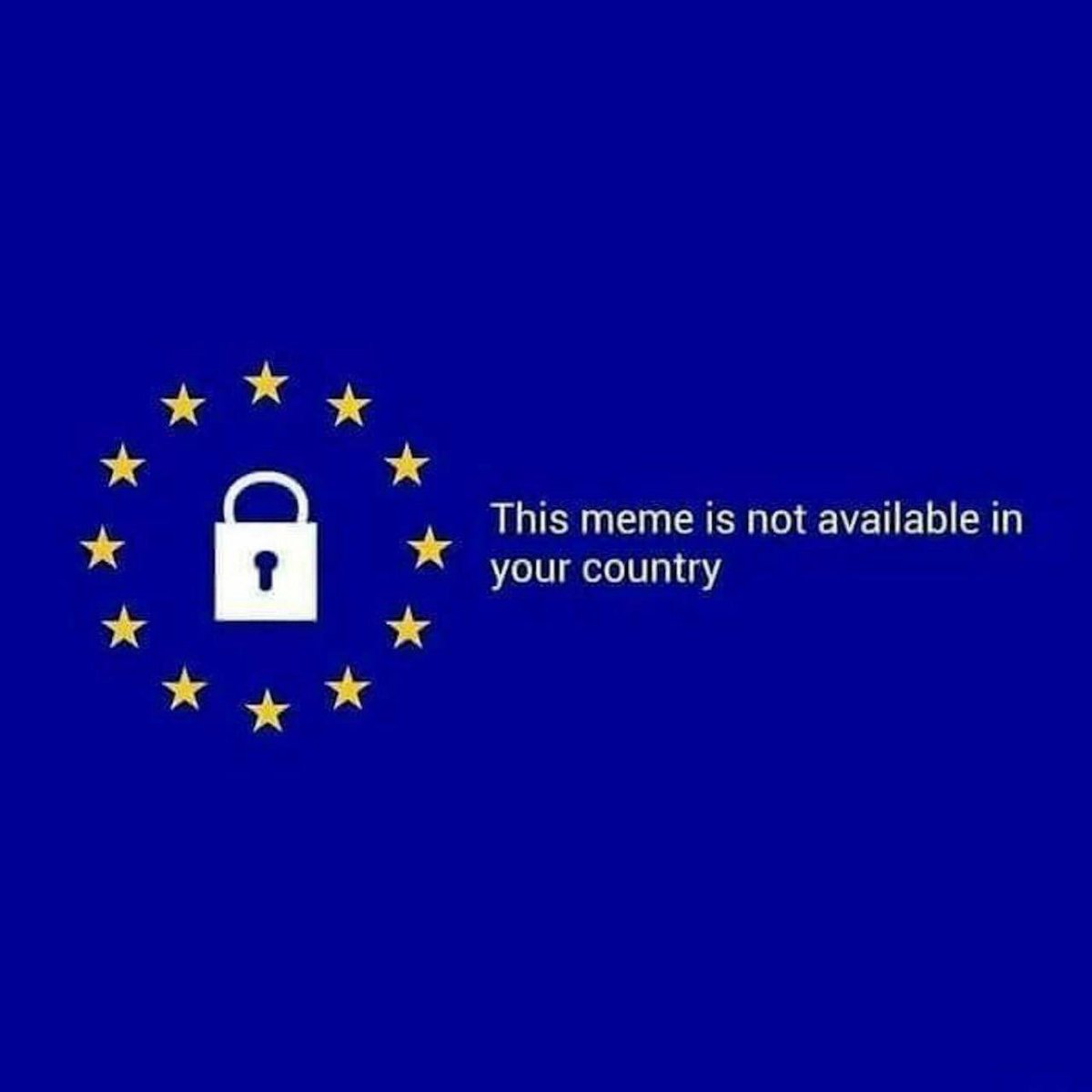
🇪🇺 Exposing the Misdirection: A Critical Analysis of the EU "Child Safety Online" Report I've analysed the July 2026 European Commission report, Child Safety Online: Protecting and Empowering Minors in a Digital World. Behind its protective rhetoric lies a calculated campaign of misinformation, misdirection, and unprecedented scope creep. Part I: The Illusion of Scope (The "Social Media+" Trap) The report deliberately relies on an extraordinarily broad, feature based definition rather than identifying services by company name, category, or legal classification. The key definition appears in the "Scope and Terminology" section, which introduces a new catch all term: "Social media and other digital services (in short, social media+)" The report states that "social media+" is used to: "broadly define services that may be available to minors and contain age-inappropriate and or risky features… and or content." It labels basic, industry standard interactive elements as "addictive and harmful features," specifically calling out: 🇪🇺 Infinite scroll 🇪🇺 Autoplay 🇪🇺 Recommendation algorithms 🇪🇺 Persistent notifications The definition then expands aggressively to encompass: 🇪🇺 Social media and video sharing platforms 🇪🇺 Online platforms acting as intermediaries for third party content 🇪🇺 App stores 🇪🇺 AI systems and AI companions 🇪🇺 Video games What the Report Conspicuously Omits: 💡 No limitation to traditional social networks. 💡 No limitation to user generated content platforms. 💡 No limitation to services whose primary purpose is social interaction. By defining the regulated space via universal features like notifications, recommendation algorithms, and app distribution, they've quietly drafted a blueprint to regulate almost the entire internet. Part II: The True Objective Behind "Chat Control" This sweeping "social media+" definition can't be viewed in isolation. It's directly feeding into the broader legislative push for mandatory online scanning, colloquially known as "Chat Control". While European Parliament President @EP_President and the @EPPGroup forced through Chat Control 1.0, a "voluntary" precursor designed to normalise corporate scanning, the permanent, mandatory framework of Chat Control 2.0 was authored by @PHummelgaard. Serving as the Danish Minister of Justice and leveraging Denmark’s influential role during its EU Council Presidency, Hummelgaard designed a regime to eliminate end to end encryption. His own words expose the authoritarian philosophy driving this legislation: "We must break with the totally erroneous perception that it is everyone's civil liberty to communicate on encrypted messaging services." This is the ultimate goal, stated by the law's chief architect: the end of private human conversation. By treating the right to private digital communication as a "totally erroneous perception" to be corrected by the state, Hummelgaard's framework turns every personal device into a government wiretap. Orwell warned of a world where "nothing was your own except the few cubic centimetres inside your skull." Hummelgaard’s infrastructure ensures the state controls those, too. Part III: Key Concerns 🆔 Identity Infrastructure: The demand for "effective age assurance" is a privacy fallacy. Despite claims of "privacy preserving" tech, reliable verification ultimately depends on a government ID, biometric scan, credit card information, or deep personal data profiles. Once identity's verified, true anonymity is lost. 🌐 Expansion of Scope: Sold as a targeted restriction on social media, the broad "social media+" umbrella means citizens have got to undergo identity checks simply to download an app, play a game, query an AI, or browse a website. ❄️ Chilling Effects on Free Expression: If accessing basic digital services requires proving who you are, marginalised individuals, political dissidents, and people researching sensitive health or personal topics will self censor and avoid seeking information or support. 📈 Mission Creep: History proves surveillance powers are never contained. Telecommunications metadata and financial monitoring systems were introduced under narrow, exceptional mandates and later expanded into permanent, everyday tracking tools. 🪪 De Facto Digital ID: Age estimation is highly inaccurate. The stricter regulators demand age assurance to be, the more pressure there's to rely on government backed, identity linked verification. This creates an unavoidable path toward mandatory, digital identity wallets. 🏛️ Centralisation of Power: The framework strips parents and individuals of agency, placing government regulators in charge of deciding which ideas, features, and platforms are "appropriate" for citizens. ⚠️ Weaponisation under Future Regimes: Technology outlives the politicians who build it. The turnkey surveillance state built by today’s well meaning policymakers will eventually be inherited by administrations with vastly different views on speech, privacy, and political opposition. 🔄 A Contradictory Standard: The report demands that platforms restrict child access while simultaneously requiring providers to prove their services are "safe by design" for minors. If children are legally barred from entry, forcing platforms to reconstruct their entire architecture to accommodate them is a logical paradox. 🔒 Regulatory Capture: Tech giants can easily absorb the massive compliance and verification costs of these regulations. Smaller competitors, open source projects, and startups can't, effectively locking in the monopoly of the dominant platforms. About the Author (Me) 👨👦👦 Father of 3: I’m a father of 3, but that doesn't qualify my expert opinions. Being a parent drives my passion, but it doesn't dictate my understanding of what’s technically possible, what’s not, what’s actually feasible, or the severe cost of getting it wrong. There’s always a delicate, necessary play between security and privacy, and getting it wrong destroys both. 👤 AOL Child Safety Pioneer: I was first introduced to child safety tech and content moderation in 1996, when I led the new technologies team at AOL and helped launch AIM. 🌐 W3C Standard Creator: I cofounded the W3C standard for Content Labelling and URI Classification in 2004, which formally replaced PICS in 2009. I'm also one of the seven founders of the Mobile Web Initiative at the W3C where I was tasked with rewriting Tim Berners-Lee's vision of "One Web". 🪪 Co-Inventor of Account Verification: I co invented the concept of user account classification on the internet, the foundational idea behind features like Twitter Verified, though it's not really implemented as well as I'd imagined. While I'm an advocate for platforms offering optional identity verification, I've got zero tolerance for any government enforcing it on citizens to access software and services on the web. 🧠 Trust and Human Behaviour Expert: I've spent my career studying human behavior around online trust, reputation, and visual indicators because psychology and technology go hand in hand. 📱 Deep Security: I've designed some of the most intrusive security services for mobile devices, including custom Android firmware that intercepted every HTTPS request inside every app. I've built API services for mobile device OEMs, browser extensions for computers, and custom web browsers for iPad and iPhone. 📜 Deep Security Patents: Most leading security companies benefit from my patents for in app security, a proprietary portfolio covering 65 distinct categories of URI lookup, including malware, phishing, disinformation, child safety, identity, child abuse, and pornography. 🏛️ Strategic Government Advisor: I've advised both the IWF and NCMEC, the very organisations the EU constantly references to justify Chat Control. I've also hosted coordination calls between NCMEC and the DOJ on how to implement proactive monitoring on the web for child exploitation. In 2012, I advised the UK government during its original parliamentary inquiry into online safety, where I pushed for new controls, but allow parents can turn on for their children rather than blanket state mandates. They went ahead anyway and it has failed to keep teens off porn sites for 10+ years. No need to look at the failures in Australia. 🛡️ The App vs. Content Distinction: We must recognise that content filtering on social networks is an entirely different conversation that requires a completely different approach and set of solutions. The truth is that most big tech companies don't care enough to build tools that allow people to easily avoid what they don't want to see on their platforms. But blocking or restricting entire apps and websites at the infrastructure layer is a vastly different, far more dangerous beast that threatens the architecture of the open internet.

Pressa veterinärpriserna! SD-regeringens agerande är långt ifrån tillräckligt. Detta är en ”marknad” där kundrelationen inte är som vid tandkrämsköp och den måste hanteras därefter. gp.se/debatt/s-vi-vi…



Bypassing the latest #EU #ageVerification app (2026.07-1) with a Chrome extension... again. Despite 3 months of security hardening and genuine improvements across the board, the fundamental issue cannot be solved. Anonymous age verification doesn't work.