HTS Commodities

2.8K posts

HTS Commodities banner
HTS Commodities

HTS Commodities

@HTSCommodities

We provide commercial risk management services & advanced quantitative analytics for commodity hedgers inside of a leading investment bank (Hilltop Securities).

Katılım Nisan 2022
507 Takip Edilen2.6K Takipçiler
HTS Commodities
HTS Commodities@HTSCommodities·
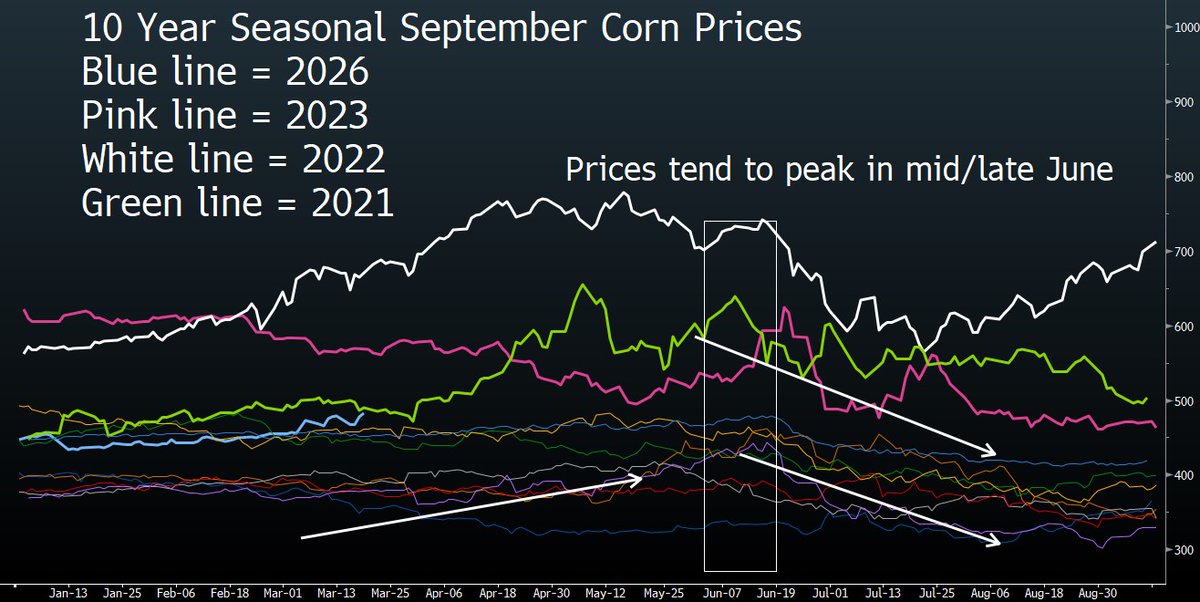
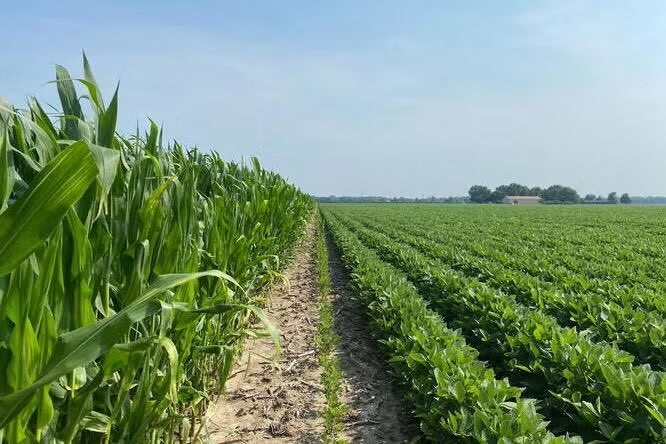
Lots of thoughts about US #corn prices resulting from a Middle East fertilizer supply shock. A US yield/production shock is probable in 2026. Over the last 10 years, 70% of the time September futures peak in mid-June after PP dates. Private yield objectives start appearing in mid-May and these will be traded. USDA-NASS reports condition scores start in late May. Markets maybe willing to command a premium until yields can be verified beyond NDVI and satellite imagery.
HTS Commodities tweet media
English
0
0
0
32
HTS Commodities
HTS Commodities@HTSCommodities·
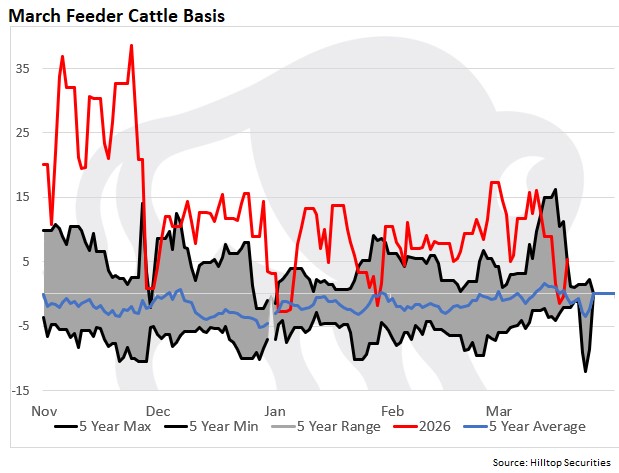
A sweet rally in the March'26 feeder #cattle basis which is +$5.42/cwt ahead of expiration coming this coming Thursday, 3/26. Good luck out there!!!
HTS Commodities tweet media
English
0
0
2
92
HTS Commodities
HTS Commodities@HTSCommodities·
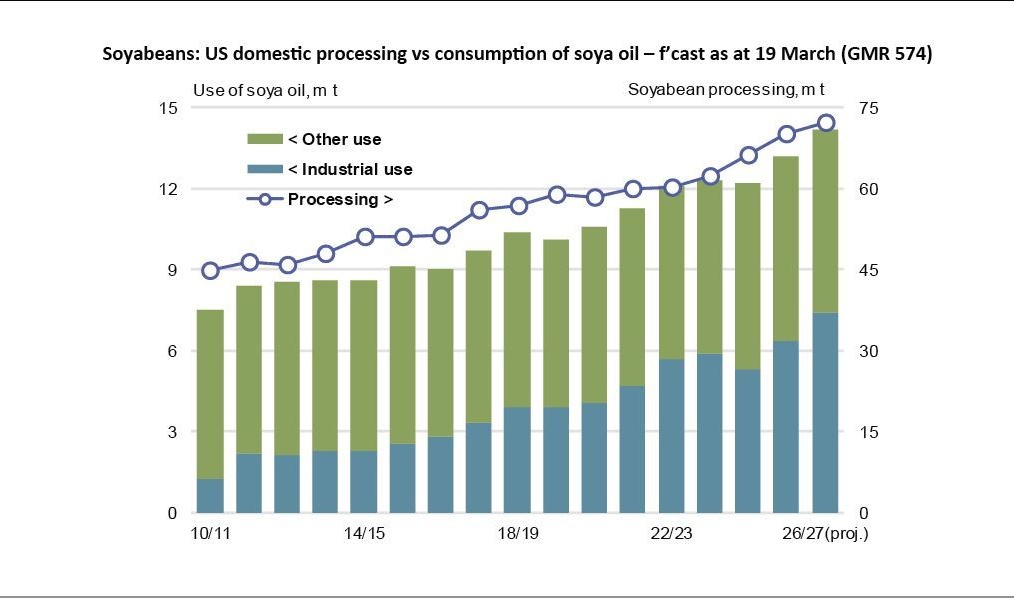
@gaurav_kochar 51% of soy oil use in the US is processed into biofuels. 33% of corn supplies are ground for ethanol.
English
0
1
0
87
Gaurav kochar
Gaurav kochar@gaurav_kochar·
🇺🇸 US Soybean Demand Is About to Hit a RECORD 👇 Ample supply — but even stronger demand. US soybean consumption is projected to reach a new all-time high in 2026/27. The driver? Not food. Not exports. 👉 Renewable diesel & biodiesel boom • Soy oil demand is surging • Fuel is now competing with food • Crush margins stay structurally strong This is the shift: Soybeans are no longer just an ag commodity — they’re becoming an energy feedstock. If this trend holds: → Soy oil prices stay elevated → Acres compete with corn → Food vs fuel debate intensifies The next bull cycle in ag may be written in refineries, not farms. 🌱⛽
Gaurav kochar tweet media
English
1
13
31
2.1K
HTS Commodities
HTS Commodities@HTSCommodities·
@DanR_Breen @osbornforne Collusion on the beef side of the business. Both Cargill and Tyson settled a case in 2025 for colluding to fix prices in 2019. Most major packers were fined by the Justice Department in 2022 for manipulating fixing beef and pork prices in 2020.
English
0
0
3
670
Dan Osborn
Dan Osborn@osbornforne·
Surprise, surprise — after the coordinated shutdowns of beef plants by Tyson, Cargill, and JBS in January and February, beefpacker profit margins have staged “the most impressive post-pandemic rally.”
HTS Commodities@HTSCommodities

Packer margins are literally melting higher and at $142/hd are the highest level in 2 years. Unfortunately this comes at a cost for consumers (sky high beef prices) and for the feeder (slowing demand for live #cattle, particularly in the north).

English
6
15
49
2.5K
HTS Commodities
HTS Commodities@HTSCommodities·
Packer margins are literally melting higher and at $142/hd are the highest level in 2 years. Unfortunately this comes at a cost for consumers (sky high beef prices) and for the feeder (slowing demand for live #cattle, particularly in the north).
HTS Commodities tweet media
English
0
5
18
4.4K
HTS Commodities
HTS Commodities@HTSCommodities·
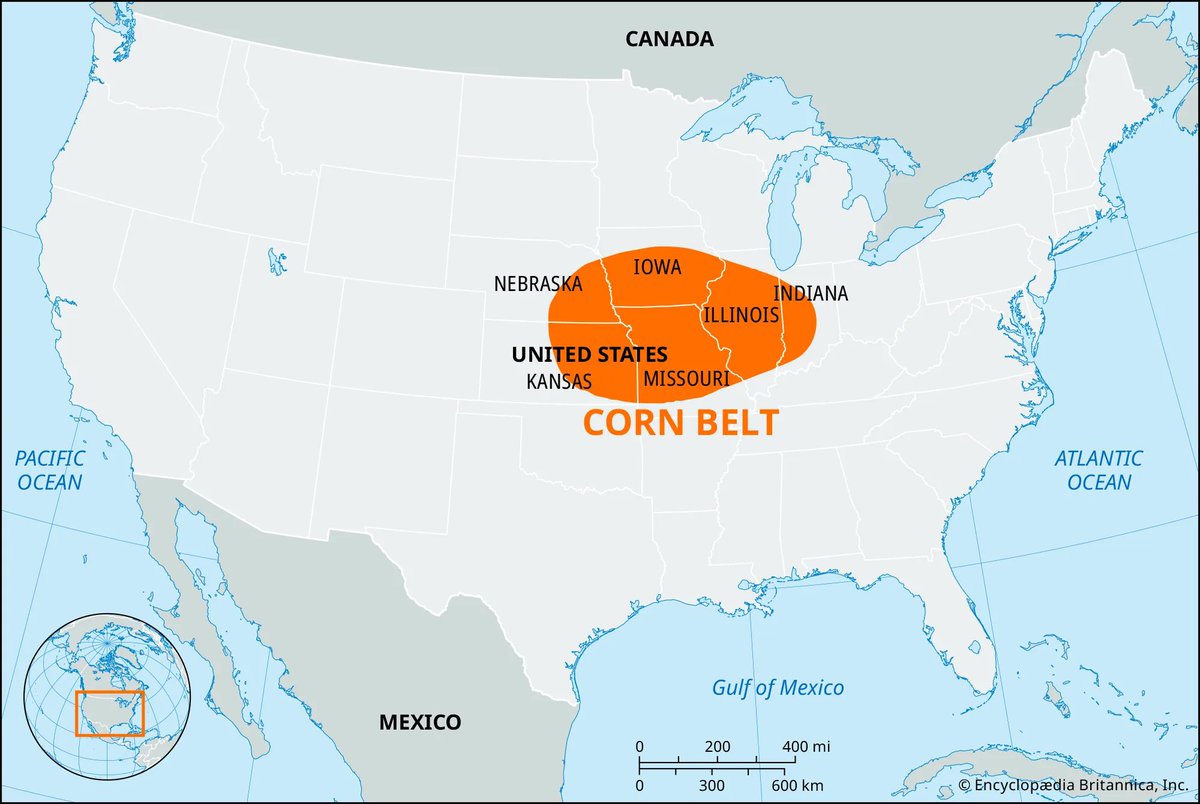
@twotthree64 These posts by the OP, provide good background info but are littered with factual inconsistencies.
English
0
0
1
53
Tom Burnham
Tom Burnham@twotthree64·
This is the worst Corn Belt map in history.
Shanaka Anslem Perera ⚡@shanaka86

A law written for energy independence is now the mechanism for food dependence. The Renewable Fuel Standard mandates that 15 billion gallons of corn ethanol be blended into American transportation fuel annually. That volume consumes approximately 43 percent of the US corn crop. The mandate was established by the Energy Policy Act of 2005 and expanded by the Energy Independence and Security Act of 2007. It was designed for a world where corn was abundant and America wanted to reduce reliance on foreign oil. That world no longer exists. Corn acres are falling to 94 million from 98.8 million because urea at $610 makes the nitrogen economics impossible. The RFS takes its 15 billion gallons from a shrinking harvest. The percentage of remaining corn available for feed, food, and export compresses with every acre that switches to soybeans. The mandate does not flex. The biology does. Waiving the RFS requires the EPA Administrator to make a formal determination that implementation would cause severe economic or environmental harm. The process involves a public comment period, regulatory review, and potential legal challenges from the ethanol industry. The EPA proposed 2026 and 2027 RFS volume requirements in June 2025 and has been targeting Q1 2026 for the final rule. The rulemaking machinery was designed for normal agricultural cycles. It was not designed for a war that closed the world’s most important fertiliser transit route during planting season. Even if the EPA Administrator initiated a waiver today, the timeline from announcement to implementation stretches weeks to months. The corn planting window closes in three to four weeks. The legal process cannot outrun the biological calendar. By the time a waiver could take effect, the acreage decisions it was meant to influence would already be irreversible. The RFS is the transmission belt that converts a fertiliser crisis into a food crisis. Without the mandate, a shrinking corn crop would still produce less total output, but the available supply could be allocated flexibly between feed, food, and fuel based on market signals. With the mandate, 43 percent of whatever corn exists is legally spoken for before a single hen eats a kernel or a single tortilla is pressed. The flexibility that markets provide is overridden by the rigidity that law imposes. The cattle herd is at 86.2 million head, a 75-year low. Poultry operations rebuilt from the 2025 avian flu but face rising feed costs. Dairy herds are contracting. Every animal that eats corn competes with a fuel pump that has legal priority. The protein cascade, from corn to feed to meat to eggs to dairy to the grocery shelf, begins at the point where the RFS takes its cut. Corn Belt legislators who championed the RFS to support their farming constituents now face a perverse outcome: the law they wrote to help farmers is the law that prevents the market from adjusting to a crisis their farmers are living through. The ethanol industry will resist any waiver. The livestock industry will demand one. The consumer will pay the difference. And the EPA rulemaking process was designed for annual adjustments, not emergency response during a 21-day-old war. Fifteen billion gallons. Written into statute. Consuming 43 percent of a crop that just lost 4.8 million acres to a fertiliser price that originates in a strait the law never contemplated. open.substack.com/pub/shanakaans…

English
3
0
19
7.5K
HTS Commodities
HTS Commodities@HTSCommodities·
@M_McDonough Cash prices aren’t futures. Curtis aren’t cash. Two completely different markets with different supply and demand dynamics.
English
0
0
1
120
Michael McDonough
Michael McDonough@M_McDonough·
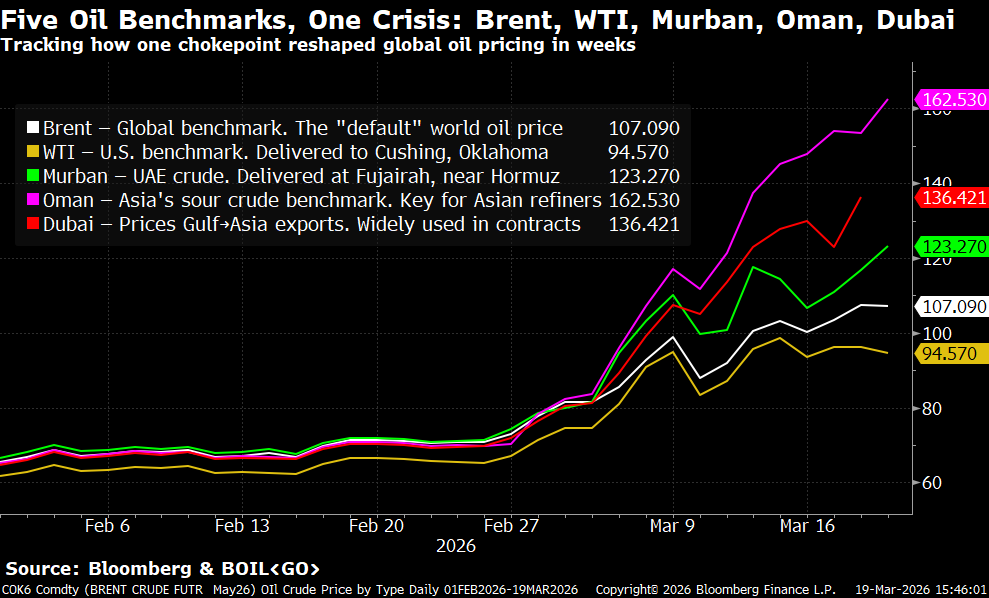
Updated Chart:
Michael McDonough tweet media
Michael McDonough@M_McDonough

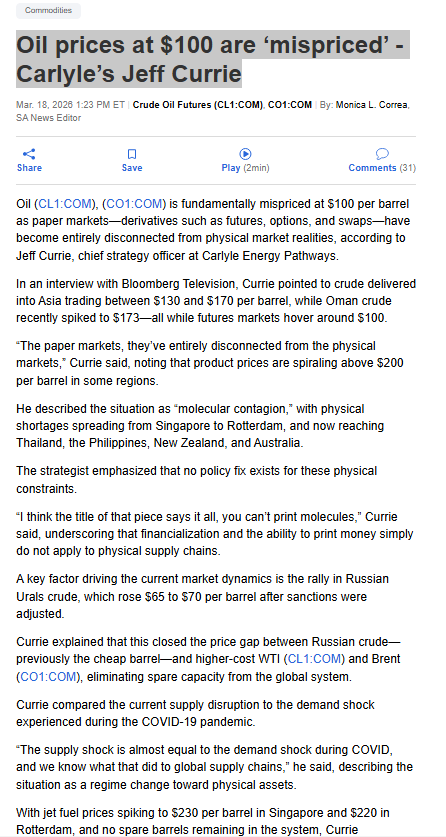
🛢️There's a lot being said about oil prices right now, so I put this chart together to help explain the major crude benchmarks and why they're all behaving differently. ⚪Brent (white) — The world's "default" oil price. Most global trade is priced off this. When the news says "oil is at $108," they mean Brent. 🟡WTI (yellow) — The U.S. benchmark, based on crude delivered to Oklahoma. It's the lowest line on the chart because American oil doesn't need to transit the Strait of Hormuz. 🟢Murban (green) — Crude from Abu Dhabi, delivered at Fujairah port, which sits just outside the Strait. Even though it technically doesn't have to pass through the chokepoint, drone strikes have hit Fujairah and nearby ports, pushing insurance and shipping costs up. 🟣Oman (purple) — The key benchmark for heavier crude sold into Asia. Many refineries in China, Japan, and South Korea are built specifically to process this grade. It's the highest line on the chart because Asian buyers are competing fiercely for a shrinking pool of cargoes. 🔴Dubai (red) — Used to price most long-term Gulf→Asia export contracts. It tracks alongside Oman as a measure of how hard Asian markets are being squeezed. The story isn't any single price — it's the gap between them. In late February these five lines were within $6 of each other. Now the spread between WTI and Oman is over $50. Since the U.S.-Israeli strikes on Iran began Feb 28, the Strait of Hormuz has effectively been closed. Daily transits have fallen from a historical average of ~138 ships to fewer than 5. The IEA has called it the largest disruption to global energy supply in history. Iran's IRGC has warned that not "a litre of oil" will pass for U.S. allies, while selectively allowing some Iranian, Indian, and Pakistani tankers through. Saudi Arabia is rerouting oil to its Red Sea port at Yanbu, and the UAE is using a pipeline to Fujairah — but combined pipeline capacity is only 3.5–5.5 million barrels/day vs the 20 million that normally flows through the Strait. Meanwhile, the 400 million barrel emergency reserve release by IEA members covers roughly 4 days of global consumption. Japan's refiners get ~95% of their crude from the Gulf. China receives 45% of its oil via Hormuz. South Korea, India, Thailand, Pakistan, and Bangladesh are all severely exposed. The wider the spread between the Asian benchmarks and Western ones on this chart, the more you're seeing that pain in real time.

English
5
28
91
10.5K
HTS Commodities
HTS Commodities@HTSCommodities·
Weekly FIS #cattle slaughter for week ending 3/7/26. Heifer slaughter as a percent of the total fell sharply last week while beef production continues to run well behind 2025 levels.
HTS Commodities tweet media
English
0
1
10
480
HTS Commodities
HTS Commodities@HTSCommodities·
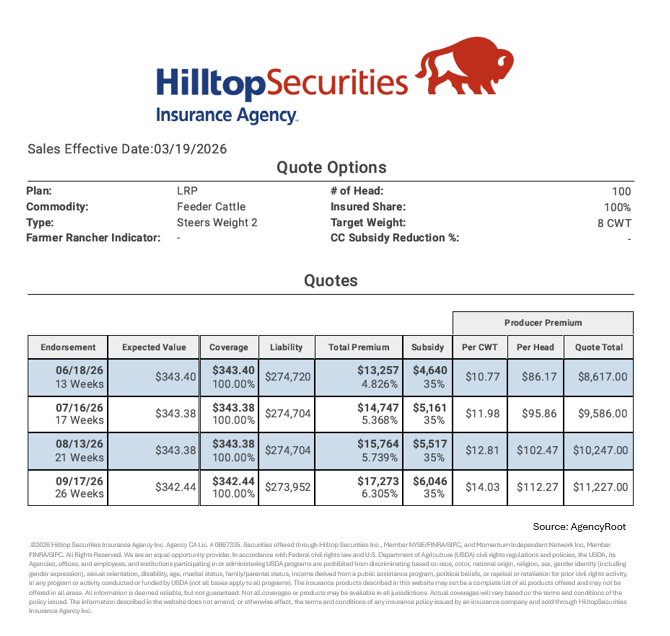
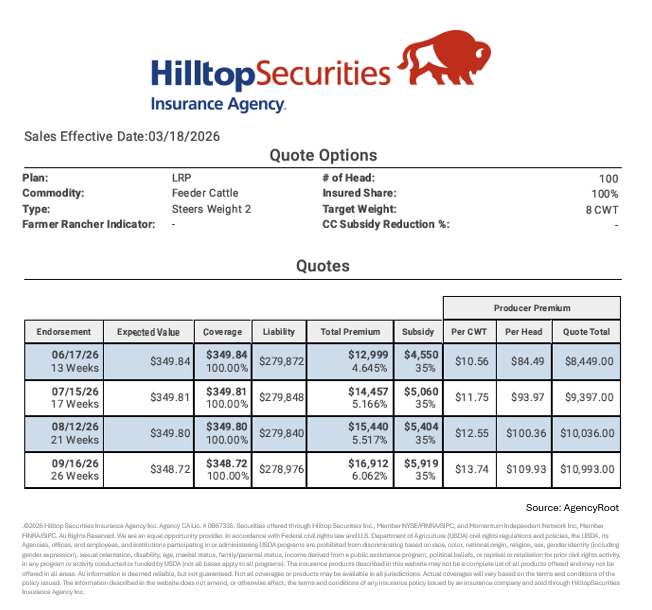
The daily LRP quotes for the Livestock Risk Protection policy are listed below. These prices are valid until 03/20/26 at 8:25am CST. If interested, contact James Graves at James.Graves@hilltopsecurities.com or 806.350.2400. #cattle #ag
HTS Commodities tweet media
English
0
1
3
252
HTS Commodities
HTS Commodities@HTSCommodities·
@iloveyOOOOu1399 @shanaka86 An overwhelming majority of US corn producers applied crop inputs in the fall which is a positive for yields. The real question is about global 2027 feed grain yields. If Brazil and ARGY can’t get inputs for their fall application that’s an potentially be a real problem.
English
0
0
0
25
OOOO
OOOO@iloveyOOOOu1399·
@HTSCommodities @shanaka86 I highly doubt this situation will return to normal before May regardless, good chance it’s worse by the time the season is fully locked
English
1
0
0
63
Shanaka Anslem Perera ⚡
JUST IN: The most irreversible consequence of this war is not happening in Tehran. It is happening in a barn in Iowa. A farmer is standing over a kitchen table looking at two seed catalogues. One is corn. One is soybeans. Corn needs 180 pounds of nitrogen per acre. Nitrogen costs $610 per ton on the CBOT March futures settlement as of yesterday, up 35 percent in a month. Soybeans fix their own nitrogen from the atmosphere through root bacteria called rhizobia. They need nothing from the Strait of Hormuz. The farmer is choosing soybeans. Millions of acres are choosing soybeans. And once the planter rolls into the field, the choice cannot be reversed until next year. USDA projected corn at roughly 94 million acres for 2026, down from 98.8 million. Soybeans at 85 million, up from 81.2 million. Those projections were published February 19, before urea surged past $683 at New Orleans. The actual shift will be larger. USDA Prospective Plantings reports March 31. By then the seeds will be in the ground. This is the transmission channel the world is not watching. A 21-mile strait enforced by provincial commanders with sealed radio orders just rewrote the planting economics of 90 million acres of the most productive farmland on Earth. Not through sanctions. Not through diplomacy. Through the price of a single molecule that corn cannot grow without and soybeans do not need. Now follow the cascade. The Renewable Fuel Standard mandates 15 billion gallons of corn ethanol annually. That consumes roughly 43 percent of the entire US corn crop. The mandate is set by the EPA. It does not flex when corn acres shrink. It is inelastic demand consuming a fixed share of a declining supply. When supply tightens against a fixed mandate, the remaining corn reprices upward. Corn above $5 per bushel compresses every margin downstream. The US cattle herd stands at 86.2 million head, a 75-year low per USDA NASS. Poultry and pork operations face compression from higher corn prices. Feed is the single largest cost in livestock production. When feed reprices, protein reprices. When protein reprices, every grocery shelf in America absorbs the increase. This is the protein cascade. Corn to feed to meat to eggs to dairy to the checkout counter. Each link tightens because the link before it tightened. The originating cause is a urea molecule that cannot transit a strait because a provincial commander’s sealed orders say it cannot. The farmer did not start this war. The farmer cannot end it. The farmer responds to the price on the screen and the biology of the two crops in front of him. Corn needs the molecule. Soybeans do not. At $610 the arithmetic is settled. The planter rolls. The season is locked. Israel just authorised the assassination of every Iranian official on sight. The US has spent $16.5 billion. South Pars is burning. The Fed is holding rates because oil inflation will not break. Gold touched $5,000. Bitcoin is bleeding. China is running exercises near Taiwan. Sri Lanka shut down on Wednesdays. And underneath all of it, a man in a barn is making the decision that determines whether four billion people pay more for food this year. He has never heard of the Mosaic Doctrine. He does not know what a sealed contingency packet is. He knows what nitrogen costs. And he is planting soybeans. Full analysis - open.substack.com/pub/shanakaans…
Shanaka Anslem Perera ⚡ tweet media
Shanaka Anslem Perera ⚡@shanaka86

Right now, in barns and equipment sheds across the American Midwest, farmers are making the most consequential decision of this war. Not generals. Not senators. Farmers. At $683 per ton urea, corn economics have collapsed. Nitrogen is the single largest input cost for corn production. At pre-war prices a farmer could justify 180 pounds per acre and expect a margin. At $683 the math breaks. Soybeans fix their own nitrogen from the atmosphere through root bacteria. They do not need the molecule trapped behind the Strait of Hormuz. The seed decision is being made this week across roughly 90 million acres of American cropland. Once the planter rolls into the field, the choice is irreversible. Corn seed in the ground stays corn. Soy seed stays soy. The acreage allocation locks in. USDA Prospective Plantings reports March 31. That report will tell the world how American agriculture responded to the Hormuz blockade. But the decisions it captures are being made now, in conversations between farmers and agronomists and seed dealers who are looking at nitrogen prices and making the rational economic choice: plant the crop that does not need the input you cannot afford. Every acre that shifts from corn to soybeans tightens the corn balance sheet for the rest of the year. Corn feeds livestock. Corn feeds ethanol. The Renewable Fuel Standard mandates 15 billion gallons of corn ethanol annually, consuming roughly 43 percent of the US corn crop regardless of price. That demand is inelastic. If acres shift and production falls while the mandate holds, corn prices spike. Feed costs spike. The protein cascade reverses. The US cattle herd sits at 86.2 million head, a 75-year low. Poultry and pork margins that were benefiting from cheap feed compress when corn crosses $5 per bushel. This is how a naval blockade 7,000 miles from Iowa reaches the American grocery shelf. Not through oil. Not through shipping. Through nitrogen. The farmer cannot afford the molecule. The molecule cannot transit the strait. The farmer plants soy instead. The corn supply tightens. The ethanol mandate consumes its fixed share. The remaining corn reprices. The feed reprices. The meat reprices. The grocery bill reprices. The decision is not political. It is arithmetic performed on a kitchen table by a person who needs to plant in three weeks and cannot wait for a ceasefire, an escort convoy, or an insurance normalisation that the Red Sea precedent says takes years. The deepest penetrator in the American arsenal cannot reach a sealed Iranian doctrinal packet. But the fertiliser price it failed to resolve is reaching every planting decision on 90 million acres of the most productive farmland on Earth. The war’s most irreversible consequence is not happening in a bunker. It is happening in a barn. And by the time USDA publishes the data on March 31, the seeds will already be in the ground. Full analysis in the link. open.substack.com/pub/shanakaans…

English
290
1.7K
4.8K
1.1M
HTS Commodities
HTS Commodities@HTSCommodities·
@TrailRidgeRd @shanaka86 Actually a corn supply shock could temporarily lower US beef prices. Corn costs are not the reason for the evolving cow/calf business model and reducing upstream supplies. Follow us to learn more about US livestock and global/domestic beyond a tweet.
English
0
0
0
22
Rocky Mountain High 💙 🌎 🇺🇸
@HTSCommodities @shanaka86 The op stated the midwest farmer is perusing seed catalogs in March, NOT planting. Season is not locked? There IS a window one must plant. No link b/w cattle herd size and corn costs? Wrong. There IS a strong inverse relationship b/w herd size and corn costs. You do risk mngt?🤣
English
1
0
1
53
HTS Commodities
HTS Commodities@HTSCommodities·
@shanaka86 Some salient points about how the RFS creates inflationary pressures. However, USDA data shows that ethanol consumes 30% of the corn crop not 43%. Has been this way for years. Since the inception 20 years ago The RFS has prevented a broad economic crises to the US farm economy.
English
0
0
0
490
Shanaka Anslem Perera ⚡
A law written for energy independence is now the mechanism for food dependence. The Renewable Fuel Standard mandates that 15 billion gallons of corn ethanol be blended into American transportation fuel annually. That volume consumes approximately 43 percent of the US corn crop. The mandate was established by the Energy Policy Act of 2005 and expanded by the Energy Independence and Security Act of 2007. It was designed for a world where corn was abundant and America wanted to reduce reliance on foreign oil. That world no longer exists. Corn acres are falling to 94 million from 98.8 million because urea at $610 makes the nitrogen economics impossible. The RFS takes its 15 billion gallons from a shrinking harvest. The percentage of remaining corn available for feed, food, and export compresses with every acre that switches to soybeans. The mandate does not flex. The biology does. Waiving the RFS requires the EPA Administrator to make a formal determination that implementation would cause severe economic or environmental harm. The process involves a public comment period, regulatory review, and potential legal challenges from the ethanol industry. The EPA proposed 2026 and 2027 RFS volume requirements in June 2025 and has been targeting Q1 2026 for the final rule. The rulemaking machinery was designed for normal agricultural cycles. It was not designed for a war that closed the world’s most important fertiliser transit route during planting season. Even if the EPA Administrator initiated a waiver today, the timeline from announcement to implementation stretches weeks to months. The corn planting window closes in three to four weeks. The legal process cannot outrun the biological calendar. By the time a waiver could take effect, the acreage decisions it was meant to influence would already be irreversible. The RFS is the transmission belt that converts a fertiliser crisis into a food crisis. Without the mandate, a shrinking corn crop would still produce less total output, but the available supply could be allocated flexibly between feed, food, and fuel based on market signals. With the mandate, 43 percent of whatever corn exists is legally spoken for before a single hen eats a kernel or a single tortilla is pressed. The flexibility that markets provide is overridden by the rigidity that law imposes. The cattle herd is at 86.2 million head, a 75-year low. Poultry operations rebuilt from the 2025 avian flu but face rising feed costs. Dairy herds are contracting. Every animal that eats corn competes with a fuel pump that has legal priority. The protein cascade, from corn to feed to meat to eggs to dairy to the grocery shelf, begins at the point where the RFS takes its cut. Corn Belt legislators who championed the RFS to support their farming constituents now face a perverse outcome: the law they wrote to help farmers is the law that prevents the market from adjusting to a crisis their farmers are living through. The ethanol industry will resist any waiver. The livestock industry will demand one. The consumer will pay the difference. And the EPA rulemaking process was designed for annual adjustments, not emergency response during a 21-day-old war. Fifteen billion gallons. Written into statute. Consuming 43 percent of a crop that just lost 4.8 million acres to a fertiliser price that originates in a strait the law never contemplated. open.substack.com/pub/shanakaans…
Shanaka Anslem Perera ⚡ tweet media
Shanaka Anslem Perera ⚡@shanaka86

JUST IN: The most irreversible consequence of this war is not happening in Tehran. It is happening in a barn in Iowa. A farmer is standing over a kitchen table looking at two seed catalogues. One is corn. One is soybeans. Corn needs 180 pounds of nitrogen per acre. Nitrogen costs $610 per ton on the CBOT March futures settlement as of yesterday, up 35 percent in a month. Soybeans fix their own nitrogen from the atmosphere through root bacteria called rhizobia. They need nothing from the Strait of Hormuz. The farmer is choosing soybeans. Millions of acres are choosing soybeans. And once the planter rolls into the field, the choice cannot be reversed until next year. USDA projected corn at roughly 94 million acres for 2026, down from 98.8 million. Soybeans at 85 million, up from 81.2 million. Those projections were published February 19, before urea surged past $683 at New Orleans. The actual shift will be larger. USDA Prospective Plantings reports March 31. By then the seeds will be in the ground. This is the transmission channel the world is not watching. A 21-mile strait enforced by provincial commanders with sealed radio orders just rewrote the planting economics of 90 million acres of the most productive farmland on Earth. Not through sanctions. Not through diplomacy. Through the price of a single molecule that corn cannot grow without and soybeans do not need. Now follow the cascade. The Renewable Fuel Standard mandates 15 billion gallons of corn ethanol annually. That consumes roughly 43 percent of the entire US corn crop. The mandate is set by the EPA. It does not flex when corn acres shrink. It is inelastic demand consuming a fixed share of a declining supply. When supply tightens against a fixed mandate, the remaining corn reprices upward. Corn above $5 per bushel compresses every margin downstream. The US cattle herd stands at 86.2 million head, a 75-year low per USDA NASS. Poultry and pork operations face compression from higher corn prices. Feed is the single largest cost in livestock production. When feed reprices, protein reprices. When protein reprices, every grocery shelf in America absorbs the increase. This is the protein cascade. Corn to feed to meat to eggs to dairy to the checkout counter. Each link tightens because the link before it tightened. The originating cause is a urea molecule that cannot transit a strait because a provincial commander’s sealed orders say it cannot. The farmer did not start this war. The farmer cannot end it. The farmer responds to the price on the screen and the biology of the two crops in front of him. Corn needs the molecule. Soybeans do not. At $610 the arithmetic is settled. The planter rolls. The season is locked. Israel just authorised the assassination of every Iranian official on sight. The US has spent $16.5 billion. South Pars is burning. The Fed is holding rates because oil inflation will not break. Gold touched $5,000. Bitcoin is bleeding. China is running exercises near Taiwan. Sri Lanka shut down on Wednesdays. And underneath all of it, a man in a barn is making the decision that determines whether four billion people pay more for food this year. He has never heard of the Mosaic Doctrine. He does not know what a sealed contingency packet is. He knows what nitrogen costs. And he is planting soybeans. Full analysis - open.substack.com/pub/shanakaans…

English
36
204
559
104.4K
HTS Commodities
HTS Commodities@HTSCommodities·
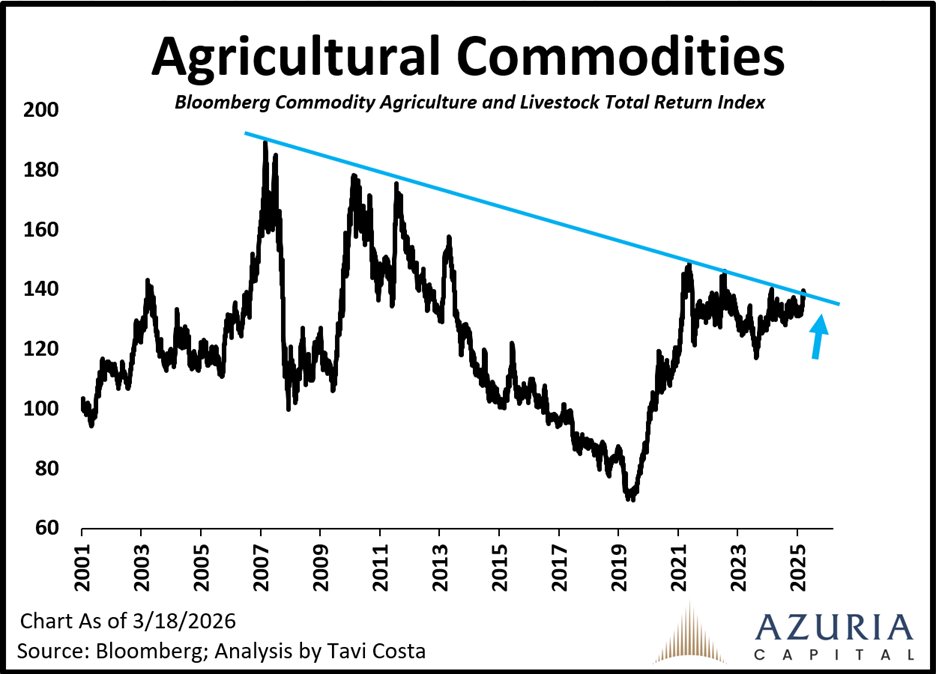
@TaviCosta OK… remove the excess return, eliminate cattle, hogs, and feeder cattle, and the chart looks really different. Maybe focus on the grains sub index. Why? Because risk assets are allocated into the by class subindices. Time to rotate assets from industrial metals to ags.
English
1
0
2
1.1K
HTS Commodities
HTS Commodities@HTSCommodities·
@ReutersAg The issue in Brazil is critical as producers will start applying crop inputs in the fall for next harvest. Because corn is more resource intensive than soy the fertilizer supply shock can be more impactful in 2027 rather than 2026
English
0
0
2
294
*Walter Bloomberg
*Walter Bloomberg@DeItaone·
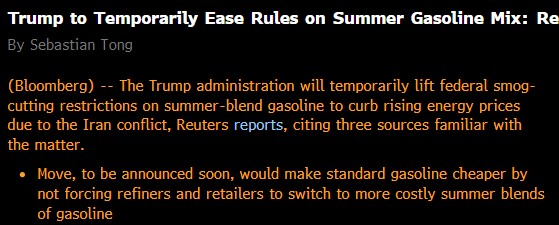
TRUMP ADMINISTRATION EXPECTED TO SOON LIFT SUMMER GASOLINE REGULATIONS TO CURB ENERGY PRICES - SOURCES
English
36
47
383
124.7K
HTS Commodities
HTS Commodities@HTSCommodities·
Like the summer of 2025 President Trump seems poised to ask the EPA to suspend the E15 #ethanol sales ban during the summer of 2026. In 2025 the policy changes did NOT create a sustainable demand driven price rally for #corn. Need details to assess price implications
HTS Commodities tweet media
English
0
1
13
1.4K
HTS Commodities
HTS Commodities@HTSCommodities·
The daily LRP quotes for the Livestock Risk Protection policy are listed below. These prices are valid until 03/19/26 at 8:25am CST. If interested, contact James Graves at James.Graves@hilltopsecurities.com or 806.350.2400. #cattle #ag
HTS Commodities tweet media
English
0
0
1
353