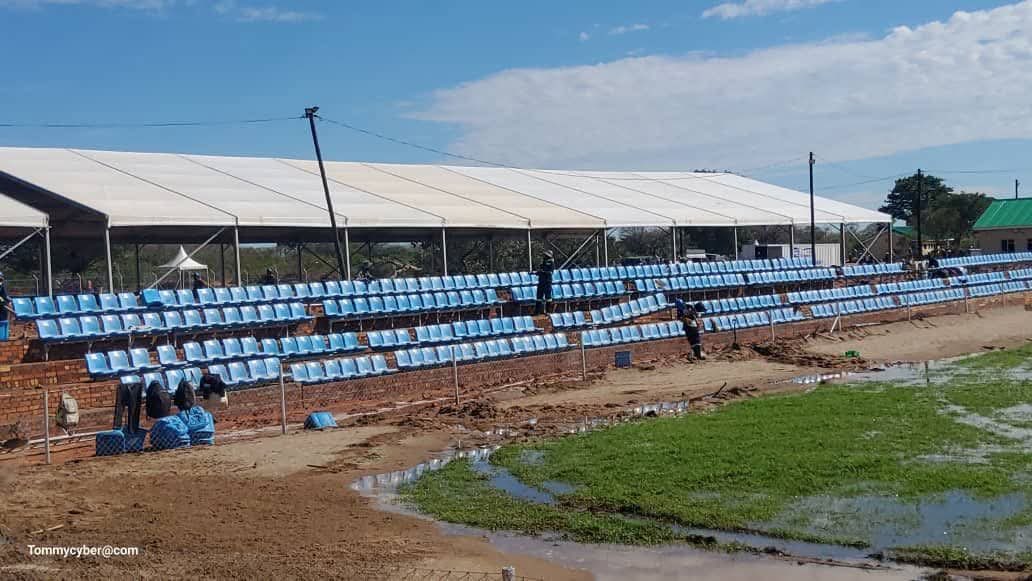
Environmental clubs matter because they help us protect our future,” says Hazel from Minda High School, Mat South.
With Gov’t & @UNICEFZIMBABWE support, the Clean Green 🇿🇼 Initiative empowers young people as climate stewards, driving change in schools & communities. 🙏@tuigroup
The absence of a functional billing system, known in the city of Harare as the enterprise resource planning system, is causing millions of USD to leave council coffers without any restraint. The failure to have a new billing system is deliberate by corrupt cartels
45 Years On, Zimbabwe’s Independence Dream Remains Unfulfilled
As Zimbabwe marks 45 years of independence, the occasion demands sober reflection rather than hollow celebration.
Though the country freed itself from British colonial rule on 18 April 1980, the promises of prosperity, equity, and democracy remain unfulfilled for most citizens.
The euphoria of 1980 was rooted in genuine hope. Zimbabwe inherited a relatively stable economy, a skilled workforce, and solid social services.
Robert Mugabe’s calls for reconciliation won international admiration. Yet beneath the surface, seeds of authoritarianism and elite capture were already being sown.
The Gukurahundi massacres, in which an estimated 20,000 civilians were killed in Matabeleland, revealed the regime’s ruthless intolerance for dissent.
These atrocities marked the rise of a political culture rooted in fear and repression.
Power consolidation persisted through the 1990s as the economy declined.
Unfunded war veteran payouts in 1997 triggered turmoil, leading to the hyperinflation of the 2000s.
Then came fast-track land reform — a necessary but violently executed redress.
Productive farms were handed to allies lacking experience or support, turning the breadbasket of Africa into a nation dependent on food aid.
By 2008, Zimbabwe had become infamous for printing one hundred trillion dollar notes.
Pensions, wages, and savings were wiped out. Millions fled, and the social contract disintegrated.
A brief reprieve came with the Government of National Unity (2009–2013), but Zanu PF soon reclaimed total control.
Under President Emmerson Mnangagwa, who rose via a 2017 military coup, reform promises have dissolved into familiar repression and patronage.
Today, Zimbabwe’s economy is run by cartels entrenched in patronage networks.
Figures like Kuda Tagwirei, Wicknell Chivayo, and Scott Sakupwanya epitomise elite wealth in a starving nation.
State tenders are inflated, public funds diverted, and sectors like mining and energy monopolised.
Decades of failing to build a productive industrial base have crippled economic stability.
Insufficient investment has led to a booming informal sector that contributes little to the fiscus.
With minimal tax revenue, government operations falter. The meagre collections from the informal sector and struggling individuals are simply inadequate to sustain the system.
The opposition fares no better. Leaders such as Job Sikhala, Jacob Ngarivhume, and Jameson Timba have been jailed, harassed, or sidelined through legal manoeuvres.
After the 2023 elections, self-proclaimed CCC interim secretary-general Sengezo Tshabangu emerged from obscurity and began recalling opposition MPs.
The recalls undermines the people’s vote and a truly independent judiciary would have prevented such abuses.
As conditions worsen, more citizens are leaving. Families are torn apart, children left to fend for themselves.
Amid this crisis, false prophets have emerged preying on desperate people, exploiting their hopes and deepening their misery.
Political leaders have failed to resolve core economic challenges.
Without addressing the root political crisis and its cycle of illegitimacy, economic progress is impossible.
Meanwhile, the “Look East” policy has brought new exploitation. Chinese firms, backed by political elites, extract resources with little regard for social or environmental costs.
Villagers are displaced, landscapes destroyed, and labour rights ignored. The degradation of ancestral lands is a cruel echo of colonial dispossession.
At 45, Zimbabwe is a cautionary tale — where liberation was captured, economic justice traded for patronage, and independence repurposed for repression.
Independence must be more than a flag and anthem — it must uplift ordinary lives. Until then, Zimbabwe remains free in name, but not in practice.
@InfoMinZW@ZANUPF_Official@CCCZimbabwe@OurMDCT@lilomatic
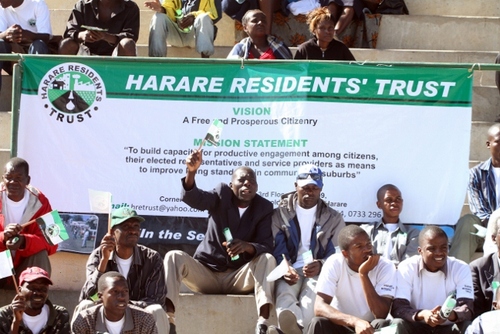
The government is wrong to talk about privatisation of social services in Harare. If they are serious about privatisation of public services, they should first privatise nonperforming parastatals like ZUPCO and the NRZ. #Notoprivatisation
Officials in the City of Harare are responsible for the absence of a functional, transparent and accountable enterprise resource plan. They do not want Quill Associates, the owners of the BIQ billing system, to resume provision of billing services.
Constitution, Section 264(1) Whenever appropriate, governmental powers and responsibilities must be devolved to provincial and metropolitan councils and local authorities which are competent to carry out those responsibilities efficiently and effectively.
A councillor performs three key functions of; 1. Representation,2. Policymaking, and 3. Oversight to ensure that council bureaucracy implements council policies, strategies and resolutions. Majority of councillors in Harare fail on their representative and oversight functions.
There is a worsening water crisis in Harare. The City of Harare is currently pumping about 300 megalitres of water but 60 percent is lost through leakages and illegal water connections along the water distribution network.
Rufaro Marketing (Pvt) Limited remitted a mere US$7,500-00 to the City of Harare on 25 September 2024. This is contained in the Town Clerk's report to the Business Committee dated 03 October 2024. Unfortunately, the remittance details remain outstanding.
The Constitution of Zimbabwe, the Urban Councils Act (Chapter 29.15) and the Electoral Act (Chapter 2.13) do not provide minimum academic or professional qualifications for councillors. Democracy, as currently defined in Zimbabwe, does not discriminate against less educated cllrs
The City Parking marshals. They receive payments for parking in the Harare central business district. What's your experience with their services to the motorists?