Harshu Musunuri

29 posts

Harshu Musunuri banner
Harshu Musunuri

Harshu Musunuri

@HarshuMusunuri

MD-PhD student @UCSF with @joeBondyDenomy @seth_shipman | prev Kim Lab @Stanford_ChEMH | synthetic microbiology

Katılım Ocak 2020
489 Takip Edilen207 Takipçiler
Harshu Musunuri retweetledi

Ger Crowley
Ger Crowley@Ger_Crowley13·
Delighted to share my PhD work, published this week in Science! Huge thanks to all of my co-authors for their invaluable input, especially @soyonhonglab who supported me wholeheartedly throughout this incredible journey. Read all about it here! science.org/doi/10.1126/sc…
English

3
15
84
11K
Harshu Musunuri retweetledi
Michael Hla
Michael Hla@hla_michael·
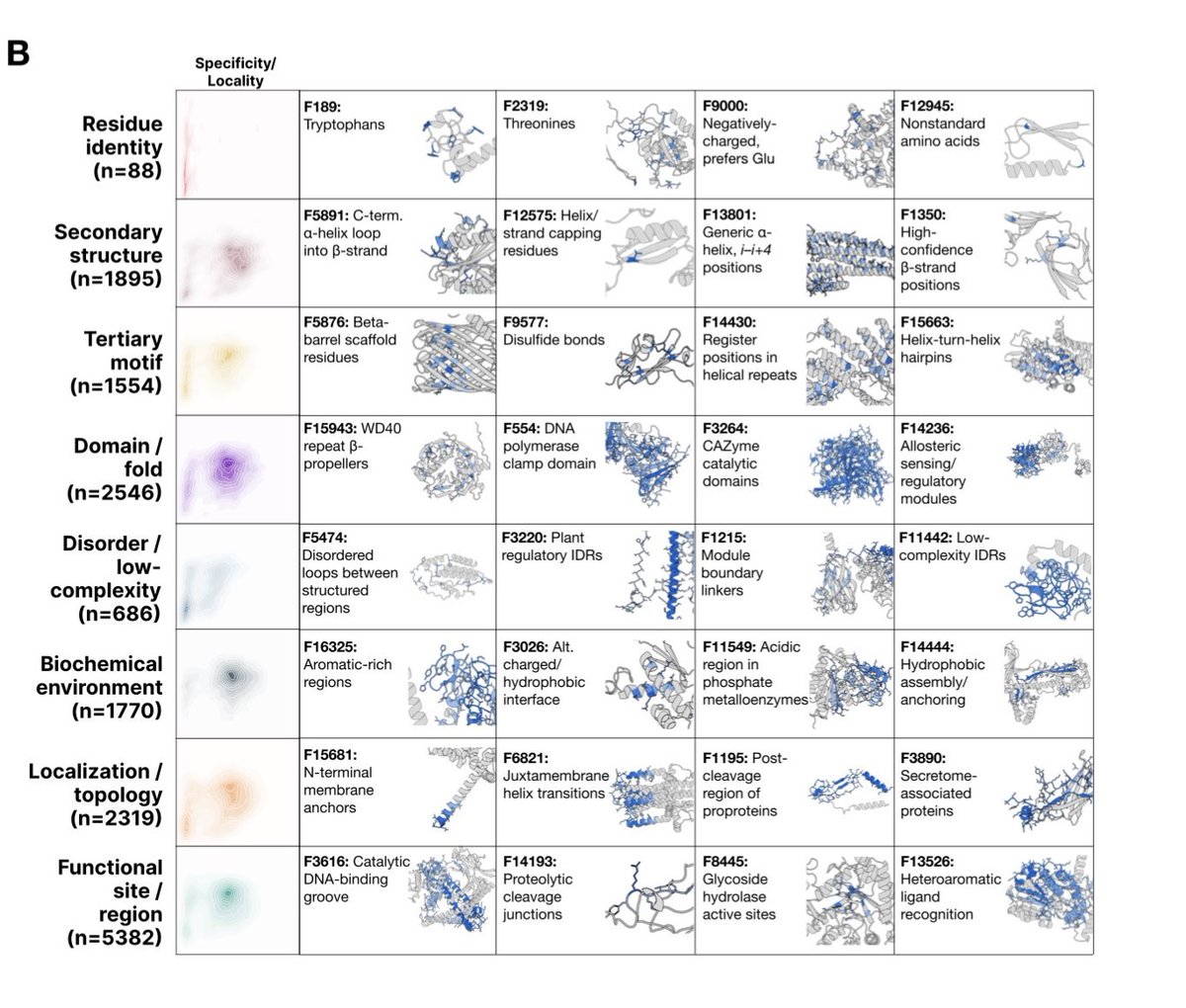
I think one of the coolest results from our paper is how much biological information falls out of a masked language modeling objective. Protein-protein interactions, contact maps, and enzyme function can all be extracted from the ESMC’s internal representations. Even more interesting is that these patterns are not obvious from sequence alone. Functionally similar proteins with very different sequences will activate the same SAE features. Endonucleases from opposite ends of the tree of life cluster together in latent space. A single feature activates on the primary catalytic motif across radically diverse proteases. Why is this? Protein language models are, at their core, powerful compressors of biology. During training, the model will learn whatever representation it needs to in order to predict the hidden amino acid. Sequences inherently convey information on downstream biological properties, and learning this signal happens to be quite useful in minimizing loss. Deeper understanding emerges out of necessity. What's really exciting is that we can then use these unsupervised models + representations to learn more about unknown biology. There are many unannotated sequences that structure/sequence alignments cannot characterize. SAE features provide interpretable and semantically rich clues into the true nature of a protein when traditional methods fail. @salcandido said it best: most of the time we use mech interp to learn more about language models. Here, we use mech interp to learn more about biology. How poetic that techniques for better understanding “alien intelligence” could be used to better understand our own.
Michael Hla tweet media
Alex Rives@alexrives

Today we're announcing ESMFold2, an open scientific engine to power prediction, design, and discovery across protein biology. The new model delivers state of the art performance on protein interactions, especially antibodies, a critical modality for therapeutics. We have designed and validated miniprotein binders and single chain antibodies across five therapeutic targets that are important in cancer and immunology. We are seeing very high success rates, and affinities at levels consistent with therapeutic activity. We’re also releasing an atlas of 6.8 billion proteins, and 1.1 billion predicted structures. ESMFold2 is built on a state of the art language model that has been trained on billions of protein sequences. A world model of protein biology emerges through language modeling. We’ve used the techniques of mechanistic interpretability developed to understand large language models to understand the concepts ESM uses to represent proteins. The model’s representation space has a compositional organization of features across scales, levels of complexity, and abstraction, that reflects and mirrors the understanding of protein biology developed through a century of empirical science. This understanding emerges without prior knowledge, just from language modeling of protein sequences. Language models are becoming a powerful substrate to understand and program biology. The design of protein interactions is one of the most fundamental problems in biophysics, and has critical implications for the discovery of new medicines. A simple gradient based search with the model was able to discover high-affinity protein binders. I'm excited by the potential this has to accelerate basic science and the understanding of proteins. And especially for the new avenues it opens up for therapeutic design and medicine.

English
3
28
161
12.7K
Harshu Musunuri retweetledi
Nan Ransohoff
Nan Ransohoff@nanransohoff·
Today we're launching Intercept: a $500M philanthropic initiative to make respiratory infections, like the common cold and flu, a thing of the past. We treat respiratory infections as a minor nuisance, but that’s really not the case. Most of us will spend 5% of our lives (!) sick from these viruses, they kill 1M people a year, cost $600B annually in productivity, and periodically threaten civilization through pandemics. So, if they’re such a big problem, why haven’t we dealt with them yet? Last year we convened ~40 leading scientists, pharma R&D leaders, biotech investors, and regulatory experts to better understand that. We heard two main reasons: (1) First, it’s just technically very challenging: respiratory viruses represent hundreds of distinct, mutating strains across several families. Fortunately, recent breakthroughs make this newly possible. (2) Second is a lack of funding: broad-spectrum solutions have historically been underfunded, in part because they’re not a great fit for most philanthropic or commercial funding (and while COVID generated a burst of activity around preventing and understanding respiratory infections through an influx of new funding, that hasn't been sustained). We think that with enough focus and funding, this might be solvable. Intercept is a $500 million philanthropic initiative that will take advantage of new tools to catalyze the development and deployment of two types of products: broad-spectrum preventatives and air cleaning technologies. This problem is undoubtedly difficult. But it’s more tractable now than it’s ever been. We think we should give it our best shot. We’re enormously grateful to our anchor funders: @stripe, @AnthropicAI, @TheFluLab, @FoundationOAI and individuals from Jane Street. And, I’m very excited to be building this with @incredutility and the rest of the team.
Nan Ransohoff@nanransohoff

interceptfund.substack.com/p/ending-respi…

English
196
549
3.5K
1.4M
Harshu Musunuri retweetledi
Christina Agapakis
Christina Agapakis@thisischristina·
I got curious about the real story of Ozempic + Gila monster spit people cite when advocating for basic research funding. The truth is more interesting, and shows us more about the stories we tell ourselves about science than it convinces people to maintain the funding status quo
Christina Agapakis tweet media
English
5
50
358
34.3K
Harshu Musunuri retweetledi
Sudarshan Pinglay
Sudarshan Pinglay@sudpinglay·
How much of the human genome is essential? Two pieces out today from our lab: 1) a method to map essential genomic intervals at gigabase scale, and 2) an argument that it's time to consider synthesizing a minimal human genome. biorxiv.org/content/10.648… nature.com/articles/d4158…
English
8
47
183
42.2K
Harshu Musunuri retweetledi
Anshul Kundaje
Anshul Kundaje@anshulkundaje·
But the Bitter Lesson from AlphaFold & EVO2 is that scaling is actually very challenging in biology & even today models that incorporate domain specific constraints & inductive biases are still very hard to beat. 8/
English
6
28
162
92.6K
Harshu Musunuri retweetledi
Aaron Ring
Aaron Ring@aaronmring·
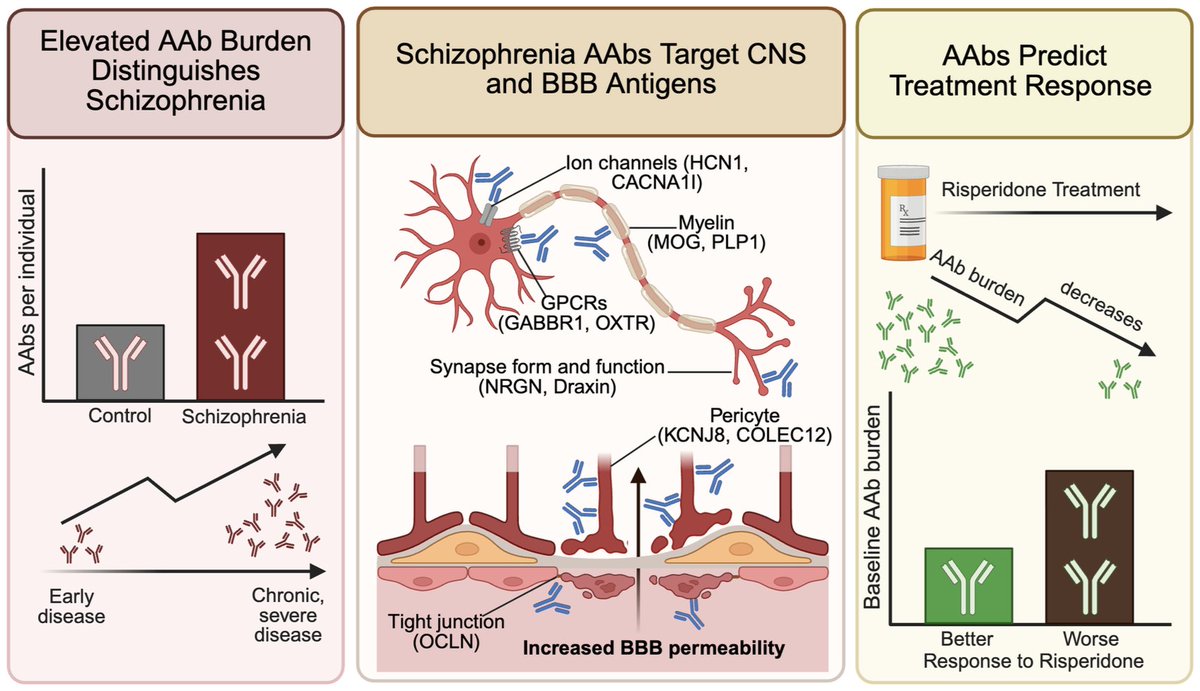
Autoantibodies cause autoimmune disease, shape infection outcomes, and alter cancer immunotherapy. But what role might they play in neuropsychiatric disease? In our new preprint, Katlyn Nemani and @JillianRJaycox take on this question in schizophrenia. 🧵 biorxiv.org/content/10.648…
Aaron Ring tweet media
English
14
57
208
30.3K
Harshu Musunuri retweetledi
Prof. Nikolai Slavov
Prof. Nikolai Slavov@slavov_n·
A remarkable result supported by remarkably clean data. A recent study published in Cell tackles a difficult and important question: Can a routine vaccine influence dementia risk? Instead of relying on correlations, they use a quasi-experimental design built around age-based eligibility for the shingles vaccine. Individuals just above and below the cutoff are nearly identical, except for vaccination status. This creates a rare opportunity in human populations: something close to randomization at scale. The result: vaccinated individuals show a lower incidence of dementia over time. The separation is gradual, internally consistent across analyses, and robust to multiple checks. Even among people already diagnosed with dementia, vaccination is associated with slower progression and lower mortality. No mechanism is claimed. No overreach. Just a clear signal from a well-constructed natural experiment. The implication is hard to dismiss: a single, widely used vaccine — given for an unrelated reason — may meaningfully alter the trajectory of one of the most complex diseases in medicine.
Prof. Nikolai Slavov tweet media
English
9
59
204
20.3K
Harshu Musunuri retweetledi
Surya Nagaraja
Surya Nagaraja@snaga13·
Excited to share my postdoc work with @JD_Buenrostro now out in @Nature! "Epigenetic memory of colitis promotes tumour growth" nature.com/articles/s4158… We wanted to understand how transient inflammation can create a long-lived increase in cancer risk, even after full recovery 🧵
English
11
77
360
39.5K
Harshu Musunuri retweetledi
Aaron Ring
Aaron Ring@aaronmring·
How specific are therapeutic monoclonal antibodies, really? In our new paper, @Yile_Dai led a collaboration with Adimab to profile 174 FDA-approved and clinical-stage mAbs against 6,172 human extracellular proteins. What we found surprised us.🧵 sciencedirect.com/science/articl…
English
16
117
406
58.1K
Harshu Musunuri retweetledi
Soham Sankaran
Soham Sankaran@sohamsankaran·
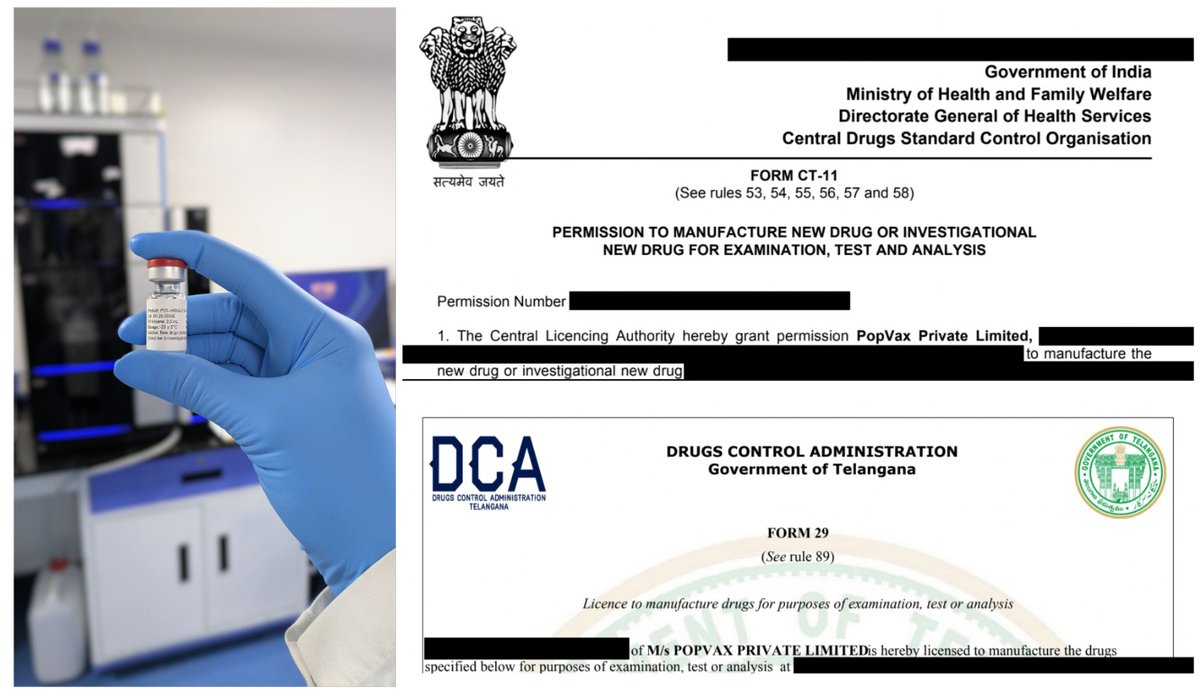
Four years ago, I started @PopVaxIndia with no real knowledge of biology and <$50k in personal funding, convinced that the combination of generative AI for design & RNA for delivery would unlock a new class of vaccines & therapeutics against diseases resistant to legacy methods.
Soham Sankaran tweet media
English
39
58
407
40.9K
Harshu Musunuri retweetledi
Anshul Kundaje
Anshul Kundaje@anshulkundaje·
Great to the see the flurry of single gene knockdown Perturb-seq like atlases from cell-lines, mouse brain etc over the last few days. These are undoubtedly very valuable datasets. I just want to re-iterate a few other very important expt. design considerations 1/
English
2
66
278
28.6K
Harshu Musunuri retweetledi
owl
owl@owl_posting·
Reasons to be pessimistic (and optimistic) on the future of biosecurity owlposting.com/p/reasons-to-b… "It was such a fun read (if you can say that about an article on weapons)!" —a glowing review from an early reader this is (once again) the longest article I have ever published at 13,000 words. it involves interviews with 16+ researchers/VC's/policy folks in this field, and discusses basically every single facet of biosecurity that i could find. topics include: how machine-learning in rapid response therapeutic design may work, the financial status of the customer base of biosecurity startups, why agroterrorism feels extremely likely to me, and a lot more i admittedly started the essay pessimistic that this subject matters at all, and i end it surprised that it doesn't keep more people awake at night. im not a doomer about it all, but i can see how people become one. very grateful to the people who decide to spend their career (or some fraction of it) working here, and especially grateful to the ones who helped teach me about the subject
owl tweet media
English
11
39
250
78.2K
Harshu Musunuri retweetledi
Ginkgo Bioworks
Ginkgo Bioworks@Ginkgo·
We connected our autonomous lab to @OpenAI's GPT-5 and let it run 36,000 experiments. The result was a new state-of-the-art for Cell-Free Protein Synthesis that cut costs by 40% per gram of protein. You can now order the beta version for your own lab: reagents.ginkgo.bio You can read the full preprint and read OpenAI’s blog post about our work here: openai.com/index/gpt-5-lo… See the full press release here: prnewswire.com/news-releases/…
English
22
102
516
80.5K
Harshu Musunuri retweetledi
Eryney (NYC 7/1-8/31)
Eryney (NYC 7/1-8/31)@eryney_ok·
Amplifying this because it’s quite poignant in the current discussion. James highlights the history of MPTP. In the 80s, young drug users in California, Maryland, Vancouver and elsewhere developed severe, sudden-onset parkinsonism after injecting what they thought was a “synthetic heroin.” A graduate student chemist had been synthesizing MPTP as a meperidine analog to create a designer drug called MPPP (1-methyl-4-phenyl-4-propionoxypiperidine), which does have opioid properties. Due to improper synthesis conditions, MPTP was produced as a contaminant. The end result is now we have a chemical, once believed to be a possible opioid analgesic, that is used exclusively to create mouse models of Parkinson disease. And dozens of people died from their Parkinson they acquired in their youth. Not all research chemicals are the same. Act accordingly.
James Howe@jamesrhowe6

@eryney_ok agreed, MPTP was discovered because a grad student thought he found a safe, legal opioid analog from mouse pain studies, gave it to people, and then they all got Parkinson's some months later. People don't know the severity of the risks they're taking pmc.ncbi.nlm.nih.gov/articles/PMC53…

English
0
7
39
5.5K
Harshu Musunuri retweetledi
Niko McCarty.
Niko McCarty.@NikoMcCarty·
There's a bacteriophage that turns bacteria into “liquid crystals.” Specifically, Pseudomonas aeruginosa bacteria make Pf phages, which are rod-shaped, negatively-charged, and measure about 2 micrometers in length (roughly the length of an E. coli cell). These phages leave the cells and enter their surroundings. There, they mix with polymers, also secreted by the cells, to form a crystalline matrix. Surprisingly, this is good for the cells. Although the phages kill some of them, it also makes their biofilms stickier and able to withstand certain antibiotics. These bacteria + phages are prevalent in cystic fibrosis patients; they've formed a sort of symbiotic relationship. The Pf phages are made from thousands of repeating copies of a coat protein, called CoaB, which wraps around a single-stranded, circular DNA genome. These genes are integrated directly on the bacterial chromosome. The bacteria “turn on” these phage genes when placed in a viscous environment with low oxygen levels. This is like a trigger to start forming a biofilm. And the cells make a lot of phages; about 100 billion per milliliter. These liquid crystals form because of a physics principle called “depletion attraction.” If you just mix a bunch of loose or flexible polymers together (such as long carbon chains) they will not form a liquid crystal. But if you mix stiff rods (the phages) with loose polymers at a high enough concentration, the polymers will force the phages close together to create a material that flows like a liquid despite being ordered like a crystal. See the video below. These liquid crystal biofilms are hard to get rid of. The negatively-charged phages block many antibiotics (like aminoglycosides, which are positively-charged) from entering cells. Liquid crystals also retain water, so these biofilms can survive on drier surfaces. I first heard about this from Malmesbury’s excellent newsletter, called “Telescopic Turnip.”
English
15
104
591
50.1K
Harshu Musunuri retweetledi
Nature Chemical Biology
Nature Chemical Biology@nchembio·
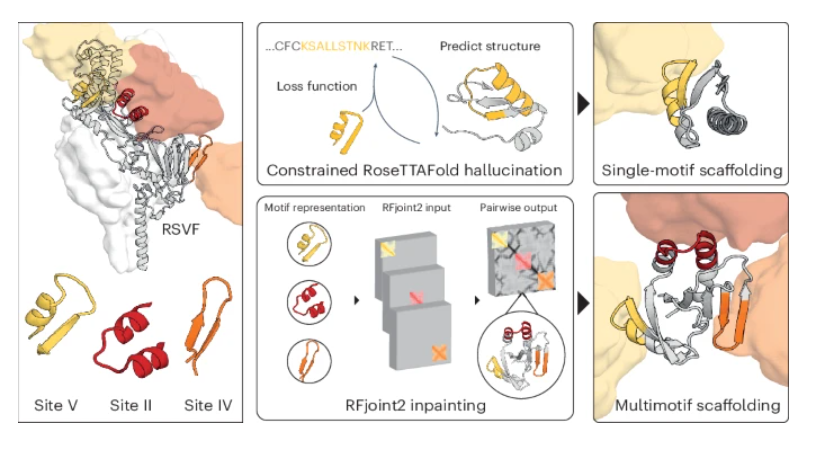
A new paper developed a deep-learning-based de novo design strategy that enables simultaneous scaffolding of three distinct epitopes and demonstrates the potential of generative models for complex multisite protein engineering nature.com/articles/s4158…
Nature Chemical Biology tweet media
English
0
15
98
6.9K