Sabitlenmiş Tweet
Mehdi Haideri
226 posts

Mehdi Haideri
@HeyMehdiH
AI insights + product innovation | Building in public & creating tools that make work smarter.
Universe Katılım Ocak 2026
21 Takip Edilen10 Takipçiler

@NickDiFabio1 The map doesn’t matter if you haven’t taken the first step on the road.
English

People overthink the wrong things.
"Should I get an LLC?" "What about a trademark?" "Which software do I need?"
You haven't published a single profitable book yet.
That's like entering a gas station into your GPS before entering your destination.
The destination is a published book making royalties. Focus on that. You'll naturally stop for gas when you need to.
English

You don’t need a team of 20.
You need a system that runs like a team of 20. 💡
Most founders think scale = more people.
Smart founders know: scale = process + leverage + automation.
One person can ship the work of 20 if the system is built right:
•AI handles research & reporting
•Automation runs workflows 24/7
•Feedback loops improve results without extra heads
Stop hiring more people.
Start building a system that works while you sleep.
English

@stijnnoorman Quitting early is the silent killer. Trust the grind.
English

@AnnaCher___ Spot on. The best tools lose to the one with better reach, better timing, and better placement every time.
English

@HeyMehdiH distribution is the one nobody wants to talk about. you can have the best workflow and still lose to the tool with the bigger email list.
English

@chaosengineerr 100%. Metrics tell you what’s happening, but talking to users tells you why. That insight is priceless.
English

@HeyMehdiH actual trust develops when you talk with users and that is the real edge right now
English

@cesaralvarezll Early milestones are everything. 100 users and $300 revenue proves product-market fit is alive.
English

3 days later, my iOS app is getting close to hitting its first big milestone:
$100 MRR in the first month 🚀
- Currently at $71 MRR
- Passed $300 in total revenue
- 100+ new users
- 24 active subscriptions
Really happy with the progress so far

César Álvarez@cesaralvarezll
My first iOS app has been live for 3 weeks. Here are the stats so far 🚀 - 1,000+ downloads - $217 in revenue - $56 MRR - 5 active trials for the annual plan I’m not sure if these are “good” numbers but I’m really happy with the start. Let’s keep building.
English

@1Umairshaikh No doubt, Claude is crossing its limits these days.
English

@liamottley_ Exactly. It’s not about being “technical.” It’s about understanding how to turn AI into a system that actually runs your business.
English

"I'm not technical enough for Claude Code"
is the #1 excuse I hear from founders.
I just spent 8 hrs in Cape Town proving 6 of them wrong.
One sold his company for 8 figures. Another runs a $250K/month business. None had ever opened a terminal.
But with a day of guidance, every single one walked out with a working AI Operating System:
• An invoice checker catching errors before they cost money
• Automated finance reporting that used to eat hours every week
• A competitor analysis pipeline running on a schedule with zero input
• A full content workflow from brief to published draft
The future of business isn't hiring more people.
It's founders who know how to build systems that run without them.
English

@Tobby_scraper Vibe coding is basically the new superpower in mobile SaaS.
English

@Hartdrawss $15K → $40K without a single new customer acquisition trick. That’s retention power.
English

This Reddit user cut SaaS churn from 15% to 4.5% in 60 days.
Here's the exact playbook:
1/ the problem
> B2B SaaS at $15K MRR with 15% monthly churn
> basically refilling a leaky bucket every single month
> 200+ services listed, quality inconsistent, customers confused
> support overwhelmed, lowest loyalty, worst customers
2/ what actually fixed it
> killed 80% of the product catalog. analyzed which services drove 80% of revenue and axed everything else. fewer options, way better experience. churn dropped 4-5% right there.
> built an automated 365-day guarantee system. detects delivery issues and compensates automatically. no tickets, no manual review. support load dropped 40%. churn fell another 3%. highest ROI thing they ever built.
> raised prices 40% and repositioned. lost price-sensitive users, gained way better ones. net churn improved even though volume dipped short term.
> added real-time order tracking and proactive delay notifications. customers stopped churning just because they didnt know what was happening. small engineering effort, massive trust payoff.
> started weekly 15-min calls with churned and active users. not surveys. actual conversations. drove 60% of product decisions in the year that followed.
3/ the result
> churn went from 15% to 4.5% in 2 months
> MRR went from $15K to $40K in the year after
> mostly because they stoped losing people
the leaky bucket was never an acquisition problem.
it was always a retention problem.

English

meet Qasim
he has 3M users
nobody knows the app
nobody knows the mrr
never sharing when asking
sick of this
👏👏
Qasim@qasimbizs
My SaaS got 89.4K users last week! 🥳
English

@benjaminprinter If your work can generate or protect $400K, your fee should feel cheap even if the hours were 40.
English

Your price depends on what happens to money after your work is delivered
Most consultants still build pricing around effort
They calculate hours, assign a rate, and multiply the two
A forty-hour project at $150 per hour becomes a $6,000 engagement
That logic comes from employment
An operator approaches the same situation differently
The question shifts toward the financial impact created once the work exists inside the business
If the system changes the company’s revenue trajectory by $400K per year, the price reflects that shift
A $40K engagement aligns naturally with that outcome
The deliverable stays identical
The hours stay identical
The anchor changes
Pricing anchored to labor creates immediate friction
The buyer starts breaking down inputs
They evaluate how many hours are truly required, compare alternatives, and look for ways to reduce the scope
The conversation revolves around cost control
Pricing anchored to capital movement produces a different reaction
The buyer evaluates the relationship between the outcome and the investment
If $40K produces $400K, the conversation moves toward execution rather than negotiation
The anchor determines how the price is perceived
There are five ways your work affects capital inside an organization
Every consulting offer fits into at least one of these categories
Pricing should always reference the one with the highest financial weight
The first is revenue expansion
The work increases revenue by improving conversion, increasing deal size, shortening sales cycles, or opening new markets
This lever gets used frequently, but it often lacks urgency
Growth feels optional when the business already performs well
The argument becomes stronger when the current trajectory looks weak compared to the market
A company growing at 15% inside a market growing at 30% loses position every quarter
That gap compounds over time
The engagement becomes a way to recover lost ground rather than chase marginal growth
The second is revenue protection
The work reduces loss
Churn decreases
Retention improves
Existing revenue stays inside the business
This carries more weight than expansion because the loss already exists
A company generating $10M with 15% churn loses $1.5M annually before growth even starts
Reducing that loss creates immediate impact
The price aligns with the revenue preserved
The third is revenue stability
The work makes revenue predictable
Pipeline becomes consistent
Forecasting improves
Volatility decreases
When revenue is unpredictable, the company can't hire with confidence
So they either over-hire (burning margin) or under-hire (burning opportunity)
They can't forecast inventory, capacity, or cash flow
They make reactive decisions instead of strategic ones
Banks and investors see volatile revenue and assign higher risk premiums
The cost of capital goes up
Credit terms get worse
None of this shows up on a P&L line item called "instability cost"
But it's there
In every hiring mistake, every missed forecast, every interest rate premium, and every quarter spent reacting to revenue swings instead of building the business
When you stabilize revenue, you fix the entire decision-making infrastructure of the company
"Your revenue has fluctuated between $600K and $1.1M per month for the last 18 months. That variance is making it impossible to forecast, hire, or negotiate favorable credit terms. My engagement installs pipeline infrastructure that compresses that variance to $800K-$1M. When your CFO can predict next quarter within 10% accuracy instead of 40%, your cost of capital drops, your hiring efficiency improves, and your leadership starts managing growth"
The fourth is operational efficiency
Your work eliminates wasted time, redundant processes, misallocated resources, or inefficient workflows
Every company above $5M has senior people doing $30/hour tasks
The VP of Sales spending 10 hours/week updating a spreadsheet
The operations director manually routing orders
The CFO reconciling invoices by hand because nobody ever built the integration
That VP's time is worth $300/hour
He's spending 10 hours/week on $30/hour work
That's $2,700/week in misallocated capital
$140K/year
And he's not doing the $300/hour work (closing deals, building partnerships, developing strategy) because the $30/hour work is eating his calendar
So the real cost isn't just the $140K in wasted salary
It's the $300/hour activities he's NOT doing
If 10 hours of recovered senior time produces $500K in deals per year, the total cost of the drag is $640K
"Your three senior people are spending a combined 30 hours per week on tasks that should be automated or delegated to a $50K/year coordinator. That's $400K/year in misallocated senior capacity plus the deal flow and strategic output they're not producing because their calendars are full of admin. My $25K engagement restructures your workflow and recovers 30 hours/week of senior time. The ROI isn't my fee versus the automation cost. It's my fee versus the $400K+ in trapped capacity that gets released"
The fifth is risk reduction
The work reduces exposure to financial, legal, or operational risk
Regulatory penalties, compliance failures, and capital loss all fall into this category
The scale of risk often exceeds the size of the engagement
A company facing multi-million exposure treats the fee as protection rather than expense
The price aligns with the magnitude of the risk removed
Using this framework during a sales conversation requires a shift in sequence
The discussion starts with a diagnostic
Questions map how capital currently moves through the business
Pipeline, conversion rates, deal sizes, churn, operational time allocation
The numbers come from the client
Once the data is clear, the financial impact becomes visible
Missed deals, lost revenue, misallocated time, and churn combine into a measurable cost
That number frames the entire conversation
The engagement fee sits against that number
The buyer compares the investment to the cost of maintaining the current situation
The decision becomes obvious
The work stays the same
The price changes because the reference point changes
The conversation moves from cost to capital
And once that shift happens, the real risk inside the room is no longer the fee
It is everything that continues to happen if nothing changes
English

@FedotOff90 She’s playing the long game. 1 hour a day for 2 years > “genius” ideas that never ship.
English

Met a woman at a Miami dinner last week. Former nurse. No business background.
She's doing $3.2M/year selling one skincare product. Started 2 years ago with $8k saved.
Her entire growth strategy: she spends 1 hour every morning studying competitor ads in the Meta library. Puts her face on ads.
No agency. No media buyer. Just her, a Canva account, and a relentless system for stealing what's already working.
Her ROAS is 2.8x after 2 years of consistency.
I asked her what most people get wrong.
She said: "They want to be creative. I just want to be right."
The best ecom operators aren't the most talented. They're just don't overthink and print.
English

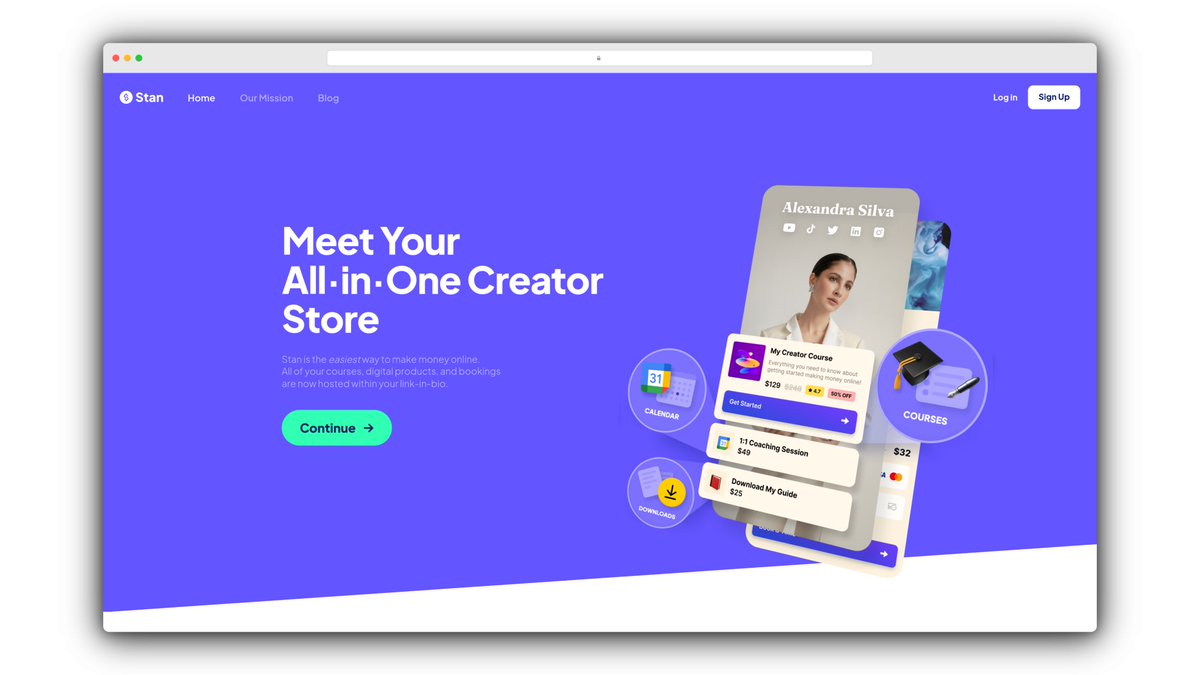
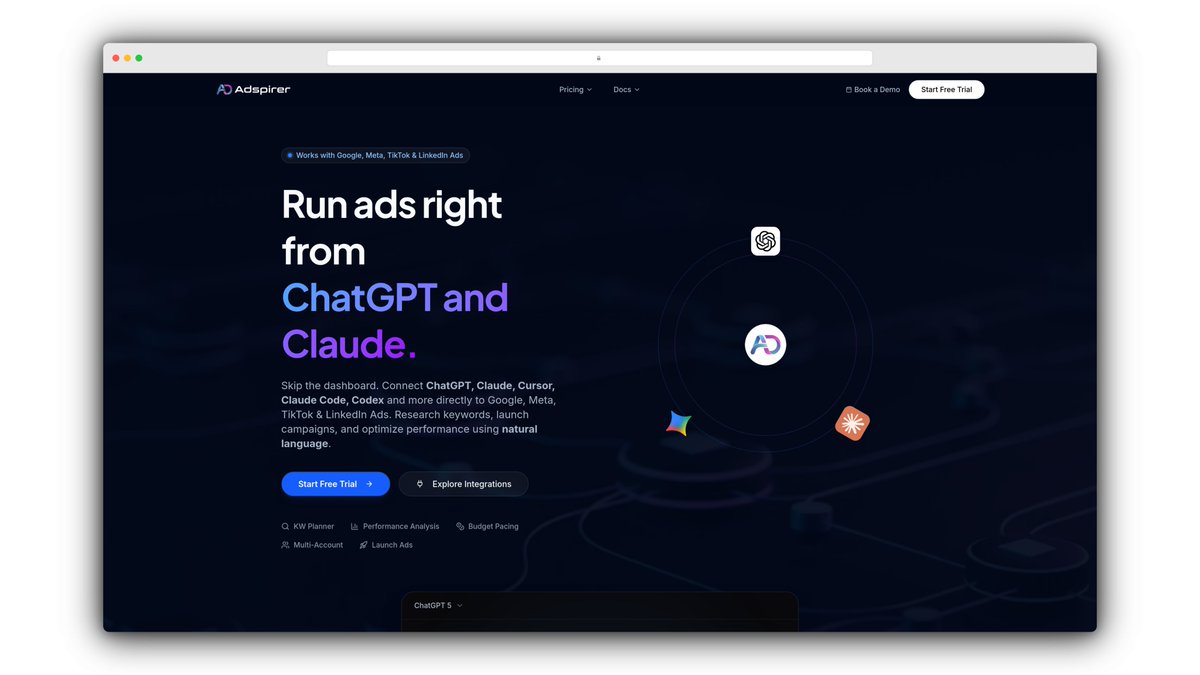
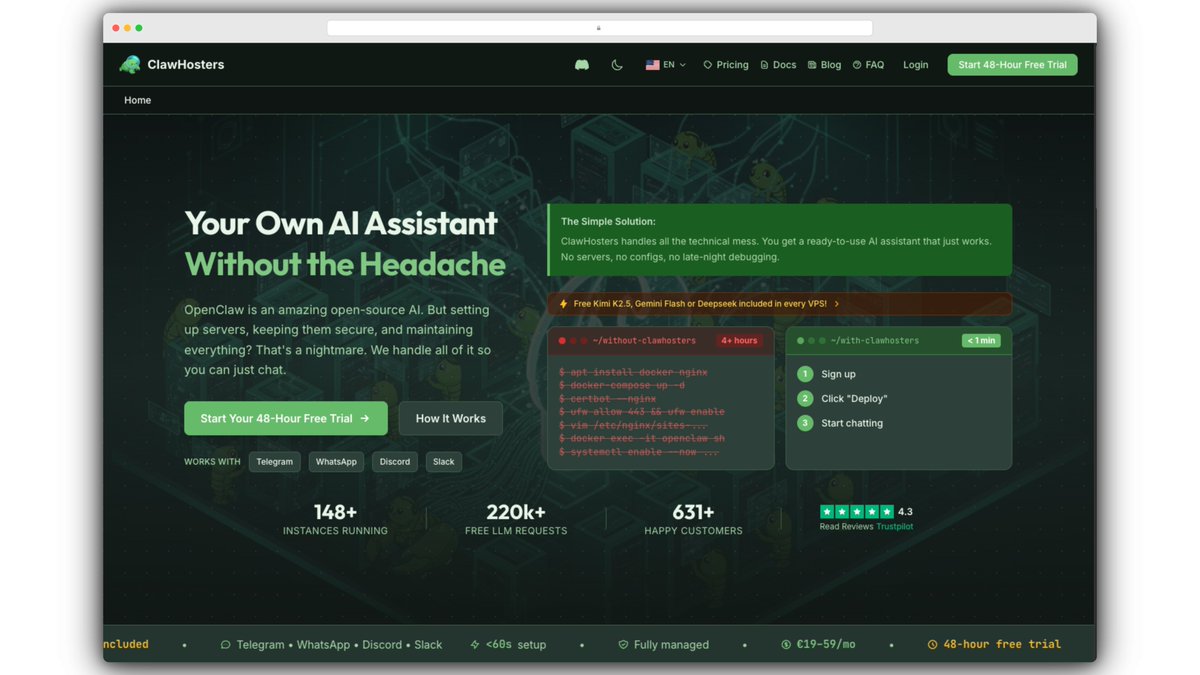
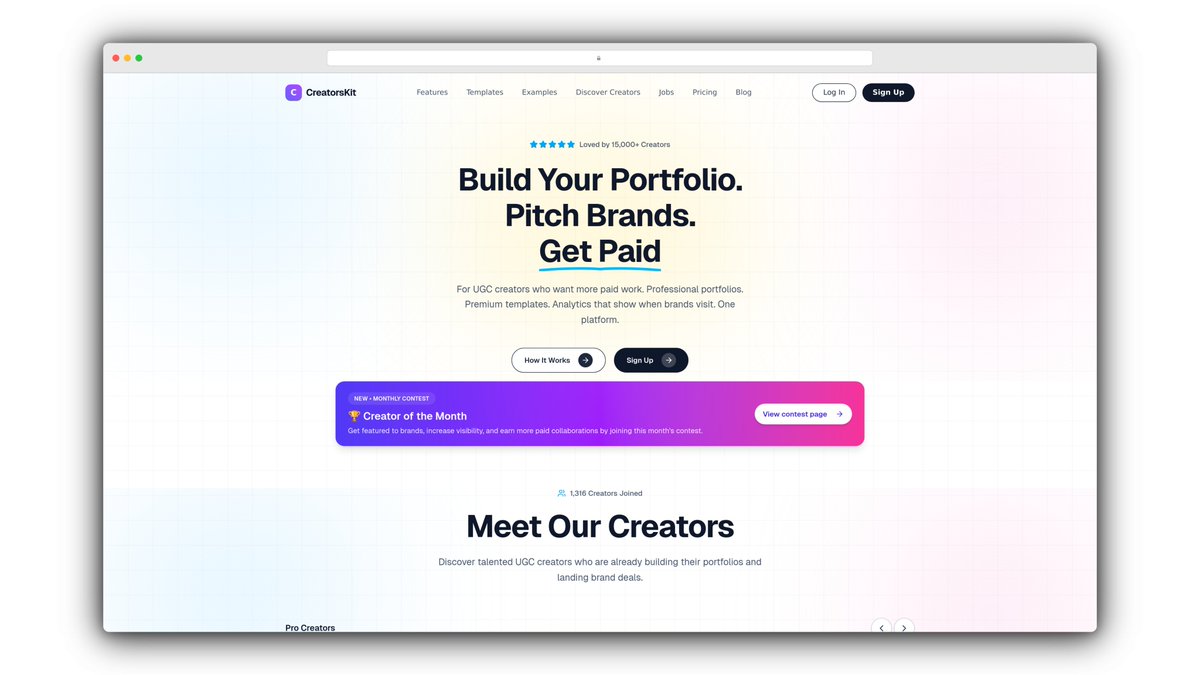
I studied 4 landing pages making real MRR.
1.Stan $35.5k MRR
“All in one creator store”
2. Adspirer $6.2k MRR
“Run ads right from ChatGPT and Claude”
3. ClawHosters $3.9k MRR
“Your own AI assistant without the headache”
4. CreatorsKit $1.1k MRR
“Build your portfolio. Pitch brands. Get paid”
Different markets.
Different styles.
But the same pattern:
they tell you fast
who it is for,
what problem it solves,
and why you should care now.
Clear promise wins.


English

@jacobrodri_ Crazy numbers. The format + micro storytelling is addictive. Feels like the West hasn’t fully experimented with it yet.
English

@tibo_maker Honestly, this is how I see it too. AI is punishing bloat and rewarding speed.
English

unpopular take:
the "SaaSpocalypse" is the best thing to happen to bootstrapped founders
everyone panicking about AI killing SaaS is missing the point
most companies getting destroyed are bloated enterprises with 1,000+ employees trying to extract as much $$ as they can from their customers
meanwhile solo founders are shipping AI-native products from their couch and hitting $10k MRR in weeks
SaaS isn't dying
bad SaaS is dying
AI-native SaaS is thriving 🙌
English

@pierreeliottlal Interesting direction. The biggest unlock here is turning outbound from headcount-heavy into system-driven.
English

I built a 3-agent SDR team using Claude Opus 4.6.
Research. Qualification. Closing.
Most B2B teams still run outbound like it’s 2019.
Manual research. Gut-feel qualification. Random demos.
Meanwhile, AI agents:
• Detect buying signals
• Qualify leads in real time
• Start & manage conversations
• Book meetings automatically
So I built 3 agents that run the entire SDR workflow.
You give ICP + product. They do the rest.
Want access?
Connect with me
Comment “AGENTS”

English

@hustle_fred Happy for him, but yeah, most people shouldn’t take that as the playbook.
English

this guy spent 4 years building his product
finally launched and made $250k in one week
happy for him, BUT you shouldn't do that
what if you spend 4 years building and get 0 sales when launching?...💀
this is the likely scenario for most builders
his case is an exception
the faster you launch the better
Gracia@straceX
Indie dev Cakez77 started crying on stream. His game just made $250,000. 4 years working on it. Most people would’ve quit after year one. Sometimes the overnight success is just someone who refused to stop.

English