Hillary Coe
2.9K posts

Hillary Coe
@Hillarycoe
Chief Design & Marketing Officer at @vast | ex @spacex @google | CPL | CFI | CFII
Los Angeles, CA Katılım Şubat 2009
849 Takip Edilen8.3K Takipçiler
@gleesonjm @Starbase James, I’m so glad you’re finally embracing your mad max warrior-dad era.
English

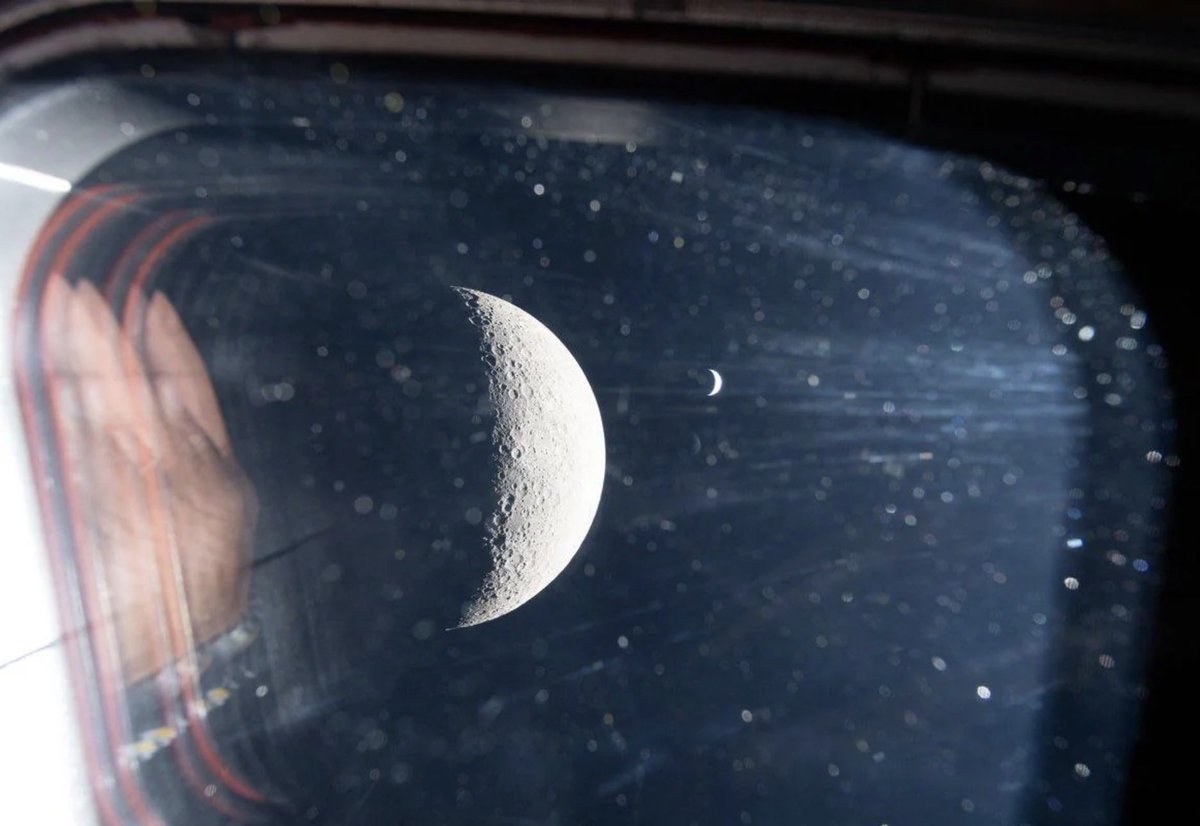
I'm not the first to say this but the imperfect pictures from Artemis showing the inside of the vehicle and the imperfections in the windows are some of my favorites
Just makes the whole thing feel so real and raw
English

Anduril is changing the rules of defense tech by giving it a high-design gloss. Jen Bucci, its unapologetic, Power Rangers-loving head of design, gives us the first tour of her secretive lab. f-st.co/DE7GVOl
English

I understand some in the community have an affinity for specific hardware, but the focus should be on outcomes. With respect to SLS, the desired outcome is launching crewed Orion spacecraft at a reasonable cadence, rebuilding muscle memory, and buying down risk so we can land astronauts on the Moon. This is until such time as there are multiple crewed pathways that allow us to undertake lunar missions with even greater frequency and at lower cost, so that Artemis can live on for decades into the future.
The idea that Artemis II was only held up by the heat shield is not correct. Administrator Bill Nelson stated in December 2024, two years after Artemis I flew, that we would refly the same heat shield design on Artemis II, yet the mission did not fly until April 2026. On a side note, if leadership knew at the time that Artemis II would not launch until April 2026, it probably would have made sense to replace the heat shield altogether.
Even with as clean of a mission as Artemis II, it is hard to imagine waiting until 2028 to fly again and jump right to a lunar landing. SLS and Orion must launch with a reasonable cadence, and we need every opportunity to learn. That is why we added Artemis III, an easy trade against funding programs overbudget and behind schedule, in advance of a landing on Artemis IV.
You cannot point to the ML-2 structure and a single EUS tank and say it was “pretty much done" and you certainly have no specifics as to the suitability of stage adapter. The Government Accountability Office has been clear on the timing and remaining costs for both ML-2 and EUS, based on a history of OIG oversight reports. Simply put, we would be committing billions more to troubled programs when we can work cooperatively with the OEM and its joint venture to leverage an in-production upper stage with decades of flight heritage and get very good at turning ML-1. Of course, we retain the option of working with industry on ML-2, converting it to the SLS standard, or harvesting parts.
I am not here to favor companies or perpetuate underperforming programs. I do not want to throw away billions of taxpayer dollars, and time we do not have, on a flavor of a rocket that is not necessary to return astronauts to the moon. Those billions could go toward more Artemis missions or more science and discovery. Our focus must be on the immensely hard task of sending astronauts to the Moon with frequency and safely so we can land and stay.
Above all else, I care about outcomes, and so does the hardworking team at NASA, focused on delivering for the American people and everyone around the world who eagerly await the headlines we all experienced this past weekend.
English
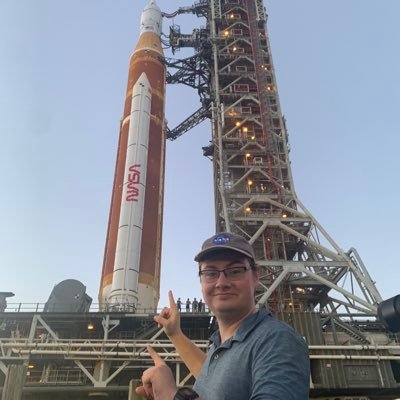
This is a huge understatement
@NASAAdmin bet that EUS would’ve taken over a year to build- EACH while expecting the SLS core stage to beat that cadence (all under the same contractor)
Note that SLS & EUS share the same production tooling between the core stage & EUS’ LH2 tank
go4gordon 🌕@go4gordon
It amuses me that people think this "standardized" version of SLS will increase cadence alone, while lacking a second tower and funding to make it possible. Call your reps, this can still be stopped. #ArtemisII
English
@Hillarycoe Ugh, the marketing lingo here is just absurd. Use words normal people understand. Like Big.
English
It’s…large.
Vast@vast
Introducing the Large Docking Adapter. The future of space is larger space stations, vehicles, and payloads. Designed to support greater overall mass while standardizing module compatibility, the adapter is currently in development at Vast HQ and available for order. vastspace.com/updates/vast-u…
English
Thank you @IWC for the opportunity to partner on this human spaceflight-rated masterpiece.
Vast@vast
At Watches and Wonders Geneva, @IWC unveiled the Pilot's Venturer Vertical Drive, a tool watch developed with Vast. It passed rigorous vibration, pressure, and materials testing at our Long Beach HQ, making it officially qualified for human spaceflight. vastspace.com/updates/iwc-sc…
English
Did humanity just unlock a new tech tree in Kerbal Space Program?! This is HUGE!!! You could get stuck floating between the edges of this beast. Now we're talkin!
Vast@vast
Introducing the Large Docking Adapter. The future of space is larger space stations, vehicles, and payloads. Designed to support greater overall mass while standardizing module compatibility, the adapter is currently in development at Vast HQ and available for order. vastspace.com/updates/vast-u…
English
Hillary Coe retweetledi

Hillary Coe retweetledi
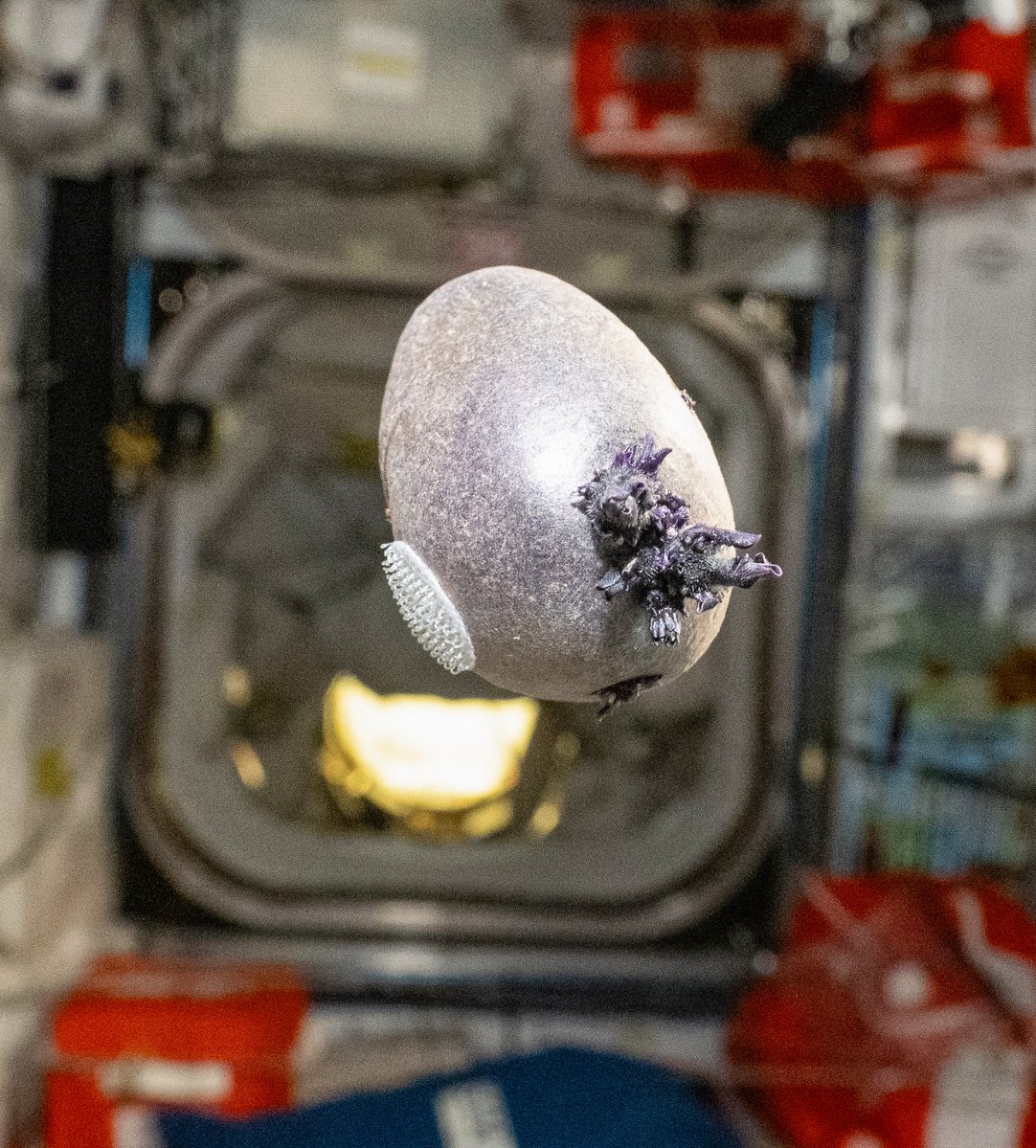
Spudnik-1, an orbiting potato on @Space_Station!
I flew potatoes on Expedition 72 for my space garden, an activity I did in my off-duty time. This is an early purple potato, complete with spot of hook Velcro to anchor it in my improvised grow light terrarium.
Potatoes are one of the most efficient plants based on edible nutrition to total plant mass (including roots). Recognized by Andy Weir in his book/movie "The Martian," potatoes will have a place in future exploration of space. So I thought it good to get started now!
English
Hillary Coe retweetledi

Everyone is covering Terafab as a chip factory.
It is not a chip factory.
Last night in Austin, Elon unveiled a facility that makes masks, fabricates chips, and tests them inside a single building with a nine-month recursive improvement cadence. No such loop exists anywhere else on Earth. Then he told you 80% of the output goes to space. Then he showed you a 100-kilowatt AI satellite with solar panels and radiators, scaling to megawatt range. Then he said Optimus plus photovoltaics will be the first von Neumann probe, a machine capable of replicating itself from raw materials found in space.
Nobody connected the sequence.
Terafab produces 1 terawatt per year of compute. The entire United States consumes 0.5 terawatts of electricity. Musk is building a single factory whose output in AI silicon exceeds twice the power consumption of the country it sits in. And he is sending 80% of it off-planet because Earth literally cannot power what he is building.
Follow the mechanism. Terafab seeds the chips. Starship launches Optimus robots and solar arrays at 100 million tons per year. The robots mine lunar and asteroid regolith for silicon, iron, and nickel. They 3D-print more robots. They fabricate more solar panels. They assemble more AI satellites. Each satellite runs hotter-burning D3 chips designed specifically for vacuum, where free radiative cooling eliminates the thermal constraints that strangle every terrestrial data center on the planet. The nodes replicate. The replication is exponential.
This is a Dyson Swarm bootstrap hidden inside a semiconductor announcement.
The math is public. The Sun outputs 3.828 times 10 to the 26th watts. A 2022 paper in Physica Scripta calculated that 5.5 billion satellites at 290 kilograms each, robotically manufactured from Mars resources, capture enough solar energy to meet all of Earth’s power needs within 50 years. A 2025 paper in Solar Energy Materials calculated a partial swarm capturing 4% of solar output yields 15.6 yottawatts, roughly a billion times current human civilization’s total energy budget. Musk just announced the factory that builds the chips that go inside the satellites that replicate themselves forever.
92% of advanced logic chips are fabricated in Taiwan. One factory in Austin does not fix that. But one self-replicating system seeded by that factory, launched by the only company with reusable heavy-lift rockets, assembled by the only humanoid robot in mass production, and powered by the only star within reach, does not fix a supply chain. It obsoletes the concept of supply chains entirely.
The market priced this as a $20 billion capex story about semiconductor independence.
The actual announcement was the engineering blueprint for Kardashev Type II.
Humanity sits at 0.73 on the Kardashev scale. 18 terawatts. The distance between here and harnessing a star is not a technology gap. It is a recursion gap. And recursion is exactly what a single building in Austin that makes its own masks, builds its own chips, tests its own chips, and launches the output into orbit on its own rockets was designed to close.
Every civilization that makes it past this point never looks back.
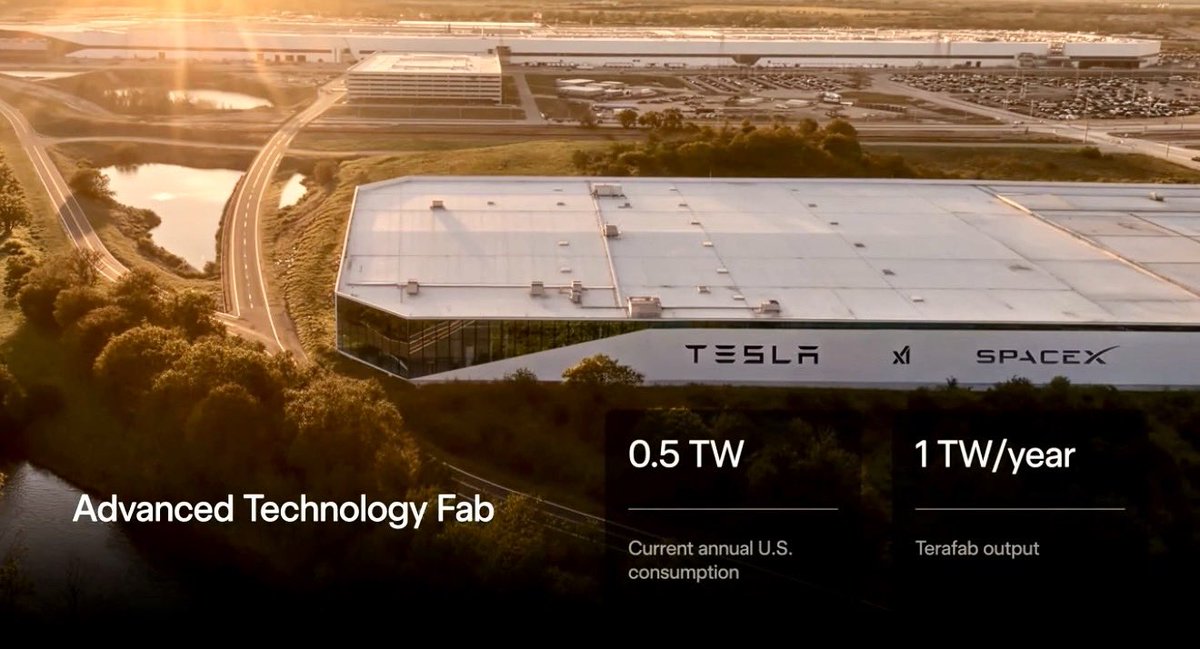
SpaceX@SpaceX
TERAFAB: the next step to becoming a galactic civilization Together with @Tesla & @xAI, we're building the largest chip manufacturing facility ever (1TW/year) – combining logic, memory & advanced packaging under one roof
English

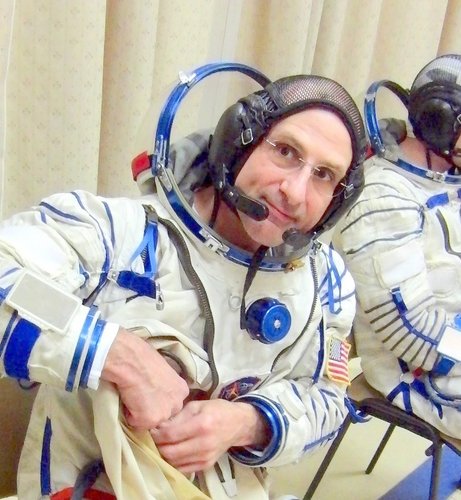
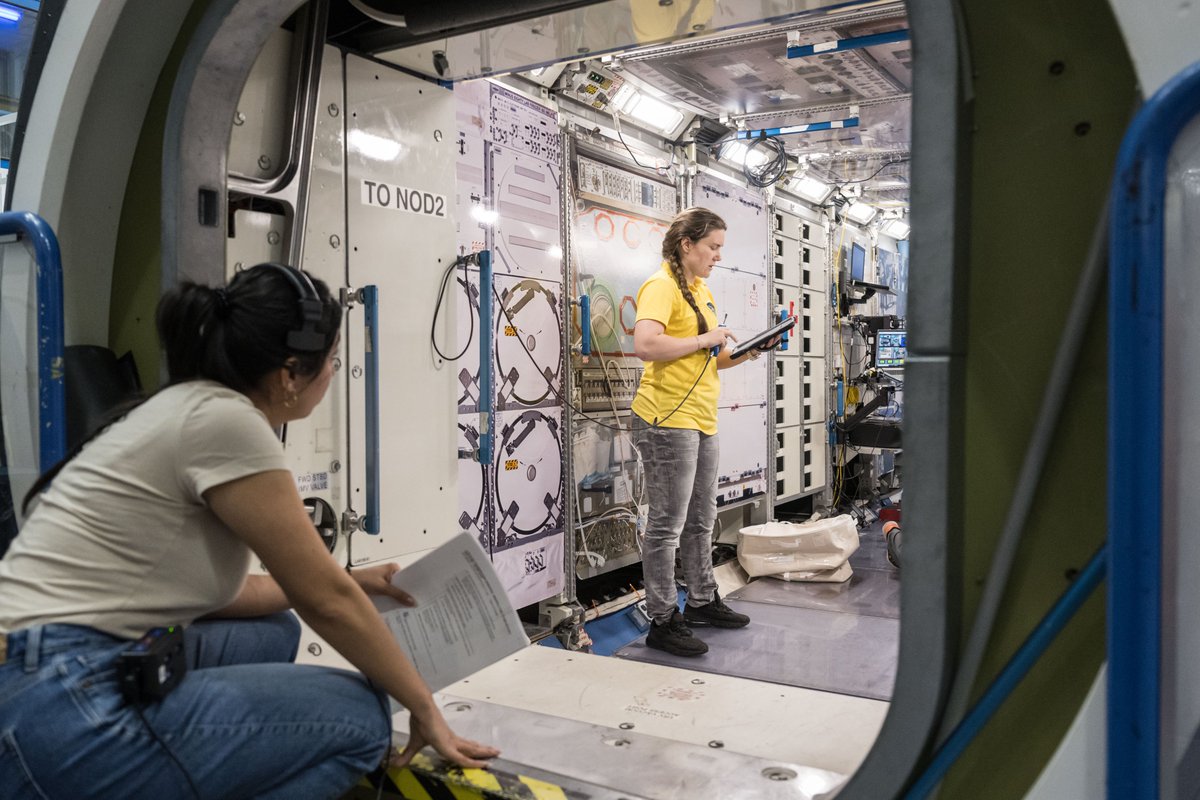
Here are a few photos from last weeks training with our entire Soyuz crew. Next week is the last week together in the US and a final emergency sim. July 14 seems like its far, far away, but also right around the corner.
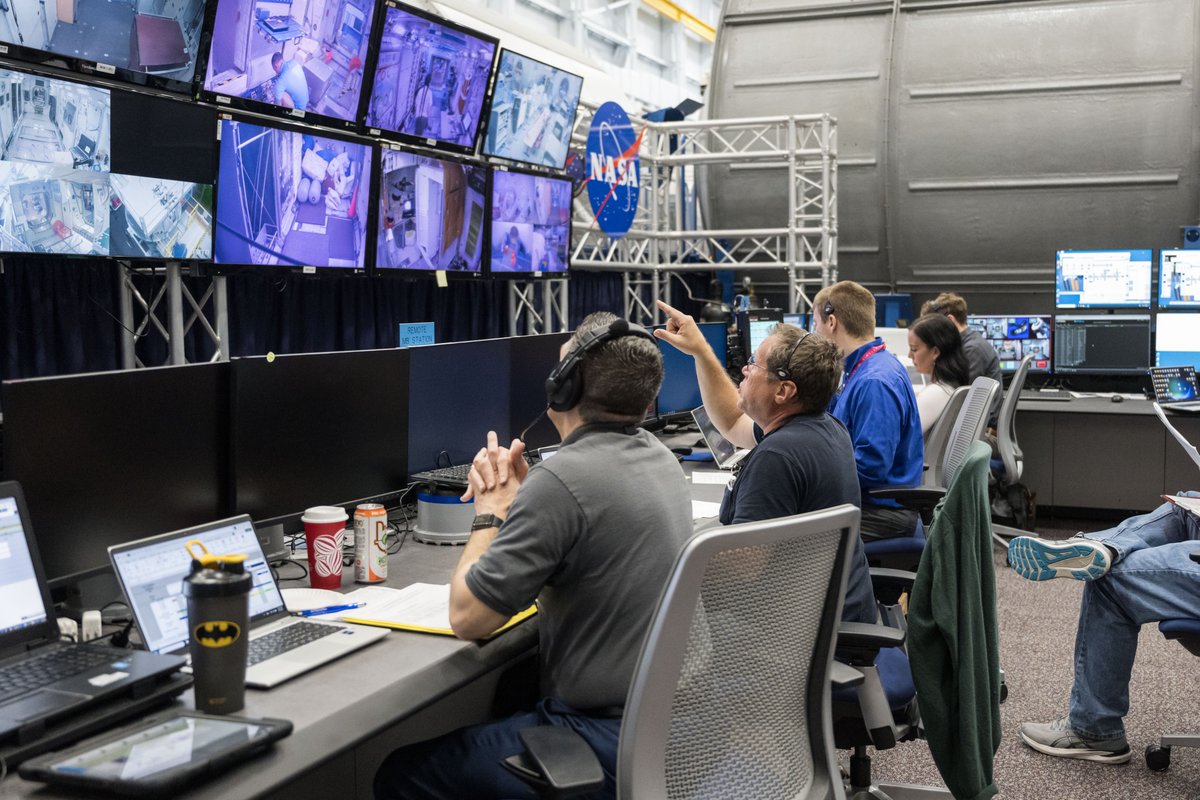
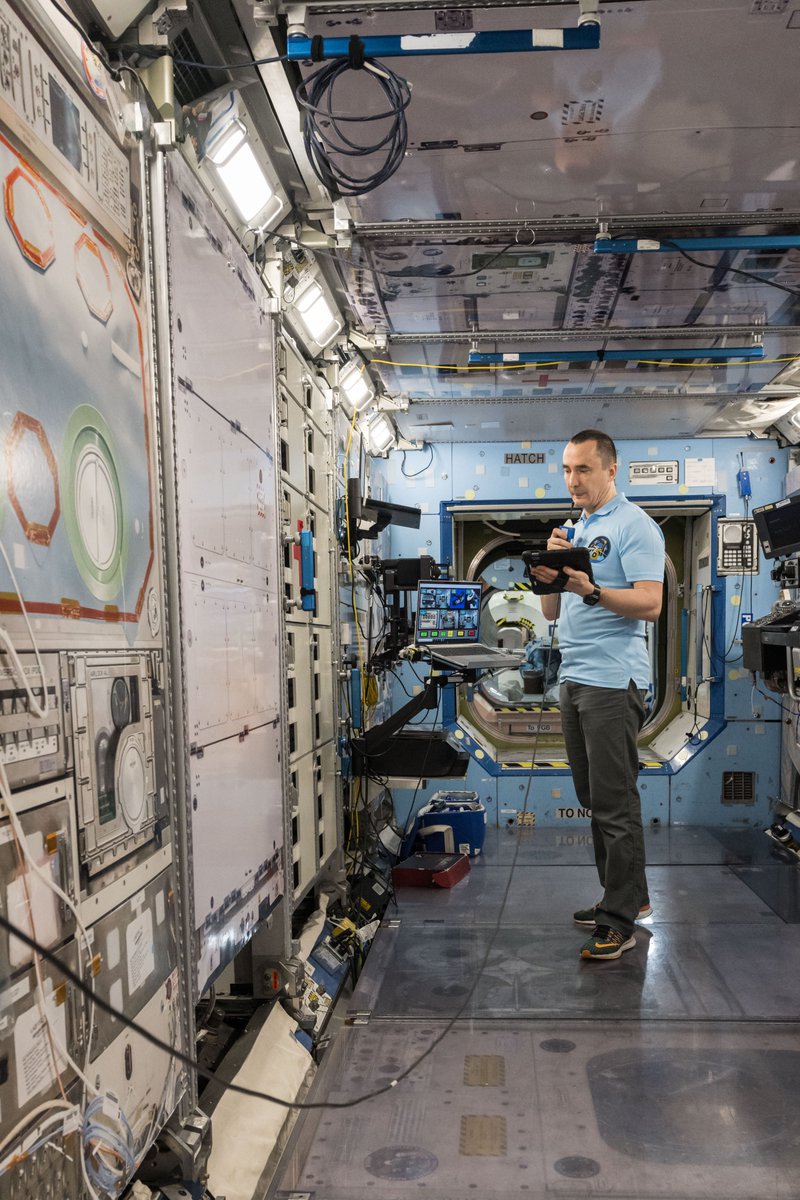
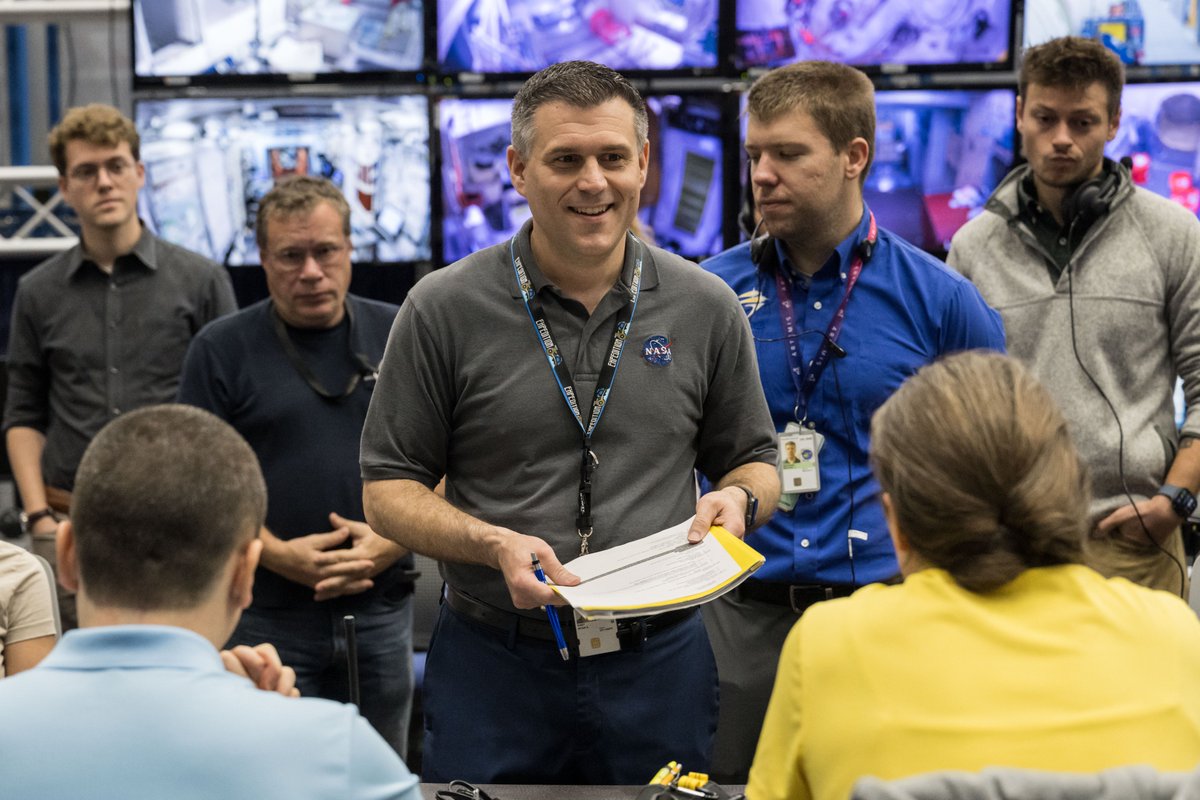
English

Hillary Coe retweetledi

I spent some free time this week updating Starlink Viewer with some cool new features. First and foremost you can now view XAI's future 1 million satellite constellation. Try it here!
starlinkviewer.com/xai
English
Hillary Coe retweetledi

Went to see a commercial space station being built @vast, and it was quite glorious. Full episode coming on the YouTube channel soon
English
Hillary Coe retweetledi

Vast has been selected by @NASASpaceOps for the sixth private astronaut mission to the International Space Station. Launching no earlier than summer 2027, the commercial crew will spend up to 14 days aboard the station. vastspace.com/updates/vast-s…
English