History ZAR

25.3K posts

History ZAR banner
History ZAR

History ZAR

@HistorySAZAR

Putting faces to history. HISTORYSAZAR does not own the Copyrights. SHOULD THE OWNER REQUIRE ME TO TAKE DOWN ANY CONTENT, Contact: [email protected]

Katılım Aralık 2024
2.3K Takip Edilen139K Takipçiler
Sabitlenmiş Tweet
History ZAR
History ZAR@HistorySAZAR·
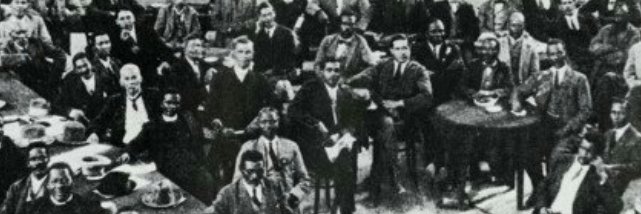
Dr Rotoli Xaba's (1893-1953) early history exemplified in an acute form the problems of foreign study for Black South Africans. His correspondence for his period in Edinburgh during the mid 1920's reveals the financial & educational difficulties he faced, prompting cries of despair from his family as well as his sponsors. He found difficulty paying for essentials things as well as paying rent to his landlady. She threatened eviction, but reluctantly because Xaba was well behaved. These difficulties led him to drop out many times until he finally qualified in 1936, gaining the triple Scottish qualification (LRCP and LRCP). returning to Cape Town to practice medicine in 1937. In this 1922 Edinburgh African Society picture he is 3rd from the Back row from left.
History ZAR tweet media
English
45
483
2.1K
500.1K
History ZAR
History ZAR@HistorySAZAR·
A short film of Mthatha, circa 1971. Credit: AP Archive.
English
5
29
146
8.6K
History ZAR
History ZAR@HistorySAZAR·
Charlotte and Marshall Maxeke's only son, Clarke Edward Maxeke. Clarke Maxeke was an author who was born in the Transvaal around 1904 (Other sources say 1905) and was educated in the mission schools and at the Wilberforce Institute in Evaton. He also studied at the Lovedale College. After Lovedale he went to the USA to further his education at the Morris Brown University. He wrote a novel on 'Native life experiences' in Johannesburg which was published in the USA. Historical accounts vary on his passing. Some sources suggest that he predeceased his mother (who died in 1939) while others suggest that he died around 1945. Source: African Yearly Register, An Illustrated National Biographical Dictionary (Who's Who) of Black Folks in Africa
History ZAR tweet media
English
1
11
34
3.7K
History ZAR retweetledi
History ZAR
History ZAR@HistorySAZAR·
Book: The African Who's Who - An Illustrated Classified Register and National Biographical Dictionary of the Africans In the Transvaal by TD Mweli Skota (1890 - 1976)
History ZAR tweet media
English
1
7
16
2K
History ZAR
History ZAR@HistorySAZAR·
Dr Lionel Ngakane (1928 - 2003) was a South African filmmaker, actor, and activist. In 1962, he broke major barriers by directing Vukani – Awake (1962), a feature documentary about the liberation struggle. His short film Jemima and Johnny (1965) won first prize at the Venice and Rimini Film Festivals and made history as the first film produced by a Black director in the UK to win an international festival award. Dr Ngakane also produced a highly regarded political biography of Nelson Mandela in 1985. Upon returning from exile in 1994, he helped draft the government white paper that created South Africa's National Film and Video Foundation (NFVF). Source: Drum Archive, African Film Festival, The Presidency, Wikipedia
History ZAR tweet media
English
1
6
17
1.5K
History ZAR
History ZAR@HistorySAZAR·
Ken Gampu and the cast of 'Mampho', c 1966. Credit: Drum Archives/BAHA
History ZAR tweet media
English
1
13
108
2.9K
History ZAR retweetledi
History ZAR
History ZAR@HistorySAZAR·
A homeless man resting against a parking meter in Johannesburg, South Africa, circa 1988. Credit: Charles Milligan/Hulton Archive
History ZAR tweet media
English
2
22
85
2.7K
History ZAR
History ZAR@HistorySAZAR·
Ndaba Mhlongo in 'Ngaka', a Heyns Film and Television Production, 1977. Credit: Paul Michelson / The Drum Archive
History ZAR tweet media
English
1
5
33
1.7K
History ZAR
History ZAR@HistorySAZAR·
From 'Twelve Disciples of Nelson Mandela: A Son's Tribute to Unsung Heroes' (2005).
English
5
23
51
3.9K
History ZAR retweetledi
welearnSA
welearnSA@welearnSA·
The Secret Mission of the "20 Nightingales". ​Shortly after Tanganyika (now Tanzania) gained independence in 1961, British nurses resigned and left the country in droves, refusing to work under an African-led government. Facing an immediate healthcare crisis, Nyerere personally reached out to Tambo for assistance.ĺ ​Despite the ANC operating under severe underground restrictions back home, Tambo coordinated a covert operation to recruit and smuggle 20 South African nurses (popularly known as the "20 Nightingales") out of apartheid South Africa to staff and run Tanzanian hospitals.
History ZAR@HistorySAZAR

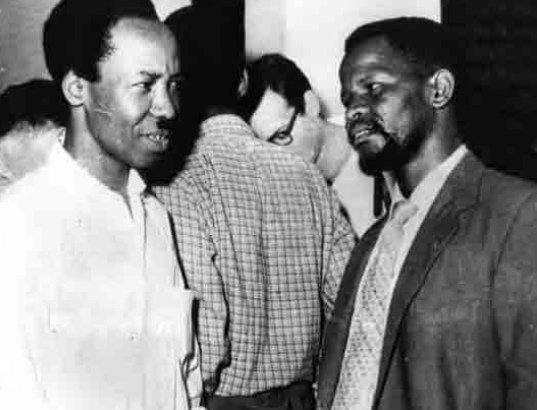
Oliver Tambo (right) with Julius Nyerere, c 1960s. Source: UWC Robben Island Museum Mayibuye Archives

English
0
12
18
1.2K
History ZAR retweetledi
welearnSA
welearnSA@welearnSA·
The Crucible of the 1969 Morogoro Conference. ​Tanzania was the backdrop for the most critical turning point of the ANC in exile. In 1969, facing immense internal tension and frustration from cadres who felt the leadership was stagnating (including a young Chris Hani), Tambo convened the Morogoro Conference in Tanzania. ​Under Nyerere’s diplomatic umbrella, Tambo resigned his leadership to allow for a democratic vote, was immediately re-elected by consensus, and opened up ANC membership to non-African revolutionaries for the first time, fundamentally redefining the struggle's strategy.
History ZAR@HistorySAZAR

Oliver Tambo (right) with Julius Nyerere, c 1960s. Source: UWC Robben Island Museum Mayibuye Archives

English
2
6
5
662
History ZAR
History ZAR@HistorySAZAR·
Prison photo of Kgosi Galeshewe, c 1898. Source: Basel University
History ZAR tweet media
English
4
51
268
11.6K
History ZAR
History ZAR@HistorySAZAR·
Helen Joseph with the son of a Robben Island Prisoner who was visiting her to report on his progress at school, c 1980s. Credit: Omar Badsha.
History ZAR tweet media
English
4
15
69
2.4K
History ZAR
History ZAR@HistorySAZAR·
Oliver Tambo (right) with Julius Nyerere, c 1960s. Source: UWC Robben Island Museum Mayibuye Archives
History ZAR tweet media
English
10
18
84
5.1K
History ZAR
History ZAR@HistorySAZAR·
The first Interracial boxing match in South Africa, November 1976: Jan Kies vs. Elijah “Tap Tap” Makhathini, 1976. Makhathini TKO’s Jan Kies. Source: AP Archives.
English
2
18
64
3.7K
History ZAR retweetledi
Vrijburger
Vrijburger@PhillippWeyers·
"The Fruit of Fear" is the title of the first installment of South African Essay, a two-part documentary broadcast on National Educational Television (NET) in June 1965. It probed into the racial, economic, and political realities of apartheid in South Africa. Produced by Henry Morgenthau III, the film is historically significant for featuring the prominent Black South African journalist Nat Nakasa. theheritageportal.co.za/article/findin…
English
0
5
5
803