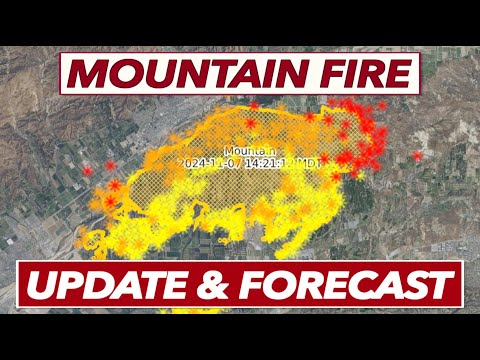
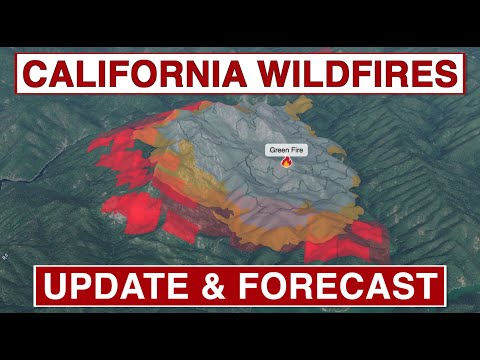
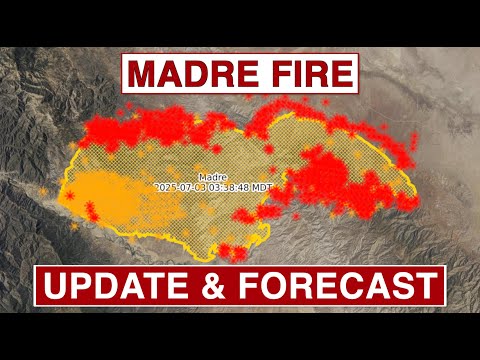
#MountainFire
20,596 acres
5% cont.
132 structures destroyed
It looks like the worst is behind us on this one.
Red Flag in the mountains through Nov 8 11 am, but winds have come down significantly and will turn onshore tomorrow, pushing in moisture
youtube.com/watch?v=wD7pu8…
#REDFLAGWARNING NOW IN EFFECT THURSDAY NIGHT THROUGH SATURDAY EVENING FOR THE BAY AREA AND CENTRAL COAST AS STRONG OFFSHORE WINDS AND CRITICALLY DRY CONDITIONS ARE EXPECTED TO DEVELOP...
Gusty north-northeast winds are expected to develop as an "inside slider" system moves into the Great Basin this weekend. Humidities will still be on the higher end at the start of the event on Thursday, but are expected to quickly dry out as low as the upper single digits Friday and Saturday. Peak winds are expected overnight tonight into Friday morning for the North Bay and Bay Area. Most areas across the region will be affected to some degree, with likely exceptions being the immediate Big Sur coast and the Marin/Sonoma coast. Winds largely on the order of 25-35 mph can be expected with gusts to 50 mph, isolated gusts to 65 mph across the highest terrain and ridgetops, most notably the North Bay Interior Mountains and the Diablo Range.
Source:
forecast.weather.gov/wwamap/wwatxtg…
If you’re an animal in a wildfire, you have two options: flee or take shelter. It all depends on how fast you are. A tortoise can find protection underground, while deer make a run for it. Trees aren’t the best place to be, so birds would fly away if they weren’t already busy picking off the prey trying to escape.
If you had to pick, you'd probably want to be in the water, although aquatic animals face long-term impacts from wildfire, as increased erosion can reduce water quality. However, streamflow may also bring in woody debris, creating prime real estate for salamanders and fish. On land, fires can enhance habitats by promoting new sprouts and ecosystem diversity.
And ecosystem might be the best word to use when talking about wildfire. Fire is interconnected with water, soil, plants, and animals, with feedbacks going in both directions. It’s also not always bad news, as fire is an important part of the California environment. Ultimately, there will be fire in California; it’s just a matter of what kind.
Source: Ch 9: Fire In California's Ecosystems 2nd ed
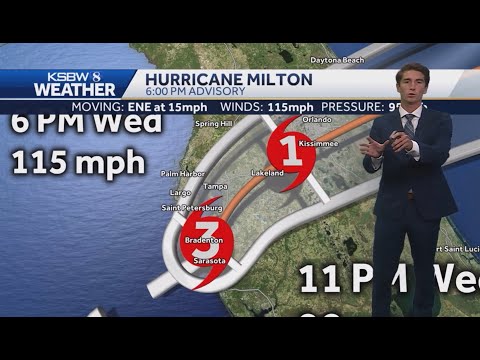
🌀 Tuesday video update on Major Hurricane #Milton, expected to bring extreme impacts to portions of west-central #Florida on Wednesday/Thursday and significant impacts to much of the Florida Peninsula.
🌀 Please be smart and safe this week and heed evacuation orders from local officials. Storm surge inundation at the coastline is the most life-threatening hurricane hazard.
Wildfire is neither “good” nor “bad” for plants. It’s similar to temperature or rain… Just a part of the ecosystem to which plants have adapted. In some cases, plants at scales ranging from individuals, to populations, to communities can even depend on a certain pattern of fire for their survival.
Individual plants can be categorized as fire resisters or persisters. Resisters have structures that protect them from heat damage, such as thick bark. Many persisters are known as “sprouters” or “seeders.” Their means of survival is by postfire resprouting or repopulating burned areas through seeds stored in the soil.
The extent and age structure of plant populations, or groups of individuals of the same species, respond to the entire fire regime, including fire seasonality, return interval, size, spatial complexity, intensity, and type.
Plant communities, or groups of different plant populations, not only respond to the entire fire regime but also have feedback effects, which can alter how fire behaves within that ecosystem.
Source:
Ch 8: Fire In California's Ecosystems 2nd ed
“Water. Earth. Fire. Air. Long ago, the four nations lived together in harmony. Then, everything changed when the Fire Nation attacked.” While fire’s interactions with the physical environment may not be as exciting as the show Avatar, wildfire can have significant impacts on soil, water, and air.
The effects on soil can be either beneficial or detrimental. The burning away of vegetation and organic matter can enhance nutrient availability, but it can also lead to erosion, as hillsides are no longer held in place.
Erosion can also be accelerated after fires because the soil becomes more water-repellent. With less water infiltration, you end up with more overland flow. This can impact water quantity and quality downstream as both flow rates and sedimentation increase.
And even if you don’t live in California, you’ve probably seen the impact fire can have on air quality as smoke is transported downwind. This can affect the health and well-being of both human and biological communities.
Source:
Ch 7: Fire In California's Ecosystems 2nd ed
Here’s the time-lapse I promised you from yesterday’s solar activity. Complete with Earth to scale and a bonus of the sun’s rotation.
This is easily one of my cleanest time-lapses I’ve managed over such a long period. Enjoy!