HomoGenius 🏳️‍🌈🏳️‍🌈🏳️‍🌈

7.2K posts

HomoGenius 🏳️‍🌈🏳️‍🌈🏳️‍🌈 banner
HomoGenius 🏳️‍🌈🏳️‍🌈🏳️‍🌈

HomoGenius 🏳️‍🌈🏳️‍🌈🏳️‍🌈

@HomoGenius3

Celebrating gay men, gay desire, gay history and homosexuality.🏳️‍🌈Fighting gay erasure by amplifying the lives of gay men one tweet at a time.🏳️‍🌈 NSFW

Katılım Eylül 2020
3.2K Takip Edilen1.9K Takipçiler
HomoGenius 🏳️‍🌈🏳️‍🌈🏳️‍🌈 retweetledi
JP
JP@jpninja6r·
JP tweet media
ZXX
9
62
1.8K
35.5K
HomoGenius 🏳️‍🌈🏳️‍🌈🏳️‍🌈 retweetledi
The Gay Aesthetic
The Gay Aesthetic@jmlx_john2·
Arthur Laurents (b. 14 July 1917) was a highly influential American playwright, librettist, screenwriter, and stage director. Over a career that spanned more than six decades, he became a central figure in Broadway’s Golden Age and a prominent voice in Hollywood cinema. He is best known as the librettist for two of the most celebrated musicals in American theater history – West Side Story (1957) and Gypsy (1959) – and as the screenwriter for Hitchcock’s gay-coded psychological thriller, Rope (1948), Sidney Pollock’s romantic drama, The Way We Were (1973), and Herbert Ross’ dance drama, The Turning Point (1977 – for which he received two Oscar nominations, as producer and screenwriter). He achieved even greater success as a Broadway director, winning Tony Awards for Best Direction of a Musical for La Cage aux Folles (1983) and the 2008 revival of Gypsy. Among his numerous plays, he wrote The Time of the Cuckoo (1952), which starred Shirley Booth in the Broadway production, winning her a Tony award for Lead Actress in a Play. It was later adapted, first, for the screen as Summertime (1955) starring Katharine Hepburn and Rossano Brazzi, with direction by David Lean, and in 1965, as the Broadway musical Do I Hear a Waltz? with music and lyrics by Richard Rodgers and Stephen Sondheim. Additionally, in 1962, Laurents directed I Can Get It for You Wholesale, which helped turn a then-unknown Barbra Streisand into a star. Laurents was born Arthur Levine in Brooklyn, New York, but later changed his surname to avoid widespread antisemitism while pursuing his career. He was also an openly gay man in an era when it was socially perilous to be so. Among his partners was Farley Granger, whom he met just before starting production on Rope and with whom he had a significant four-year romantic relationship. But his most long-lasting partnership was with Tom Hatcher. In 1954, Gore Vidal had suggested that Arthur seek out Hatcher, an aspiring actor from Tulsa, Oklahoma who was managing William B Riley, an upscale men's clothing store in Beverly Hills. Laurents later said it was "lust at first sight", but the attraction quickly evolved into an intense, lifelong bond that lasted 52 years until Tom’s death in 2006. Laurents was also a writer, adapting his screenplays for The Way We Were and The Turning Point into novels and penning three memoirs, most notably Original Story By Arthur Laurents (2000). After Tom’s passing, the Laurents/Hatcher Foundation Award was established to provide a substantial annual grant supporting unproduced, socially relevant plays by emerging playwrights. On May 5, 2011, Arthur died in Manhattan at age 93 from complications of pneumonia. The following night, in his memory, Broadway dimmed its lights for one minute. His ashes were buried alongside those of Tom on Long Island, in Quogue, where Arthur and Tom had shared a home since the mid-1950s. 🏳️‍🌈 [below left - Arthur; right, Tom and Arthur]
The Gay Aesthetic tweet media
English
4
40
464
21.5K
HomoGenius 🏳️‍🌈🏳️‍🌈🏳️‍🌈 retweetledi
Hen Mazzig
Hen Mazzig@HenMazzig·
I heard the gay cruise full of Americans couldn’t dock in Egypt or Turkey, so here’s a quick guide to cruising the region: 🇹🇷 Pride marches outlawed since 2015 🇪🇬 Egypt: no law against being gay — they just jail you for “debauchery” instead 🇸🇾 Syria: up to 3 years in prison for being gay 🇱🇧 Lebanon: up to 1 year in prison for being gay 🇮🇶 Iraq: up to 15 years in prison for being gay under a law passed in 2024 🇮🇷 Iran: death penalty for being gay 🇸🇦 Saudi Arabia: death penalty for being gay 🇾🇪 Yemen: death penalty for being gay 🇶🇦 Qatar: up to 7 years in prison for being gay 🇵🇸 Gaza: up to 10 years in prison for being gay 🇮🇱 Israel: Tel Aviv Pride welcomes 250,000 people every year.
English
269
3.1K
12.6K
629.4K
HomoGenius 🏳️‍🌈🏳️‍🌈🏳️‍🌈 retweetledi
The Rebellious Homosexual
The Rebellious Homosexual@DaveSBrown516·
Willfully ignorant "queer historians" give an inaccurate retelling of our history. Know your heroes. This man was a hero to me and one of the co-founders of ACTUP NY. I had no gay heroes when I was a kid, other than fantasizing about the well-oiled Hercules played by Steve Reeves. When "The Boys in the Band" was released, I was 14 and Time magazine had a spread on it. It sent me into an elongated depression that only food could relieve. I still hate bitchy queens like Harold. Vito Russo (1946–1990), photographed in Sheridan Square, was a film scholar, a journalist, and a passionate advocate for gay rights. Born into a close-knit Italian American family and raised in East Harlem, Russo was in many ways a quintessential New Yorker—but above all, as his brother Charles Russo remembered, “Vito was a teacher.” In the mid-1970s, Russo developed a series of informative lectures on Hollywood homophobia, which he refined and expanded over many years, presenting them at over 200 venues—universities, film festivals, community centers, and museums—throughout the United States, Canada, Europe, and Australia. These lectures evolved into his landmark exposé, The Celluloid Closet: Homosexuality in the Movies, which was published in 1981, revised in 1987, and became the basis of an award-winning 1995 documentary film. Russo, wrote biographer Michael Schiavi, “taught gay readers that the bigotry they suffered offscreen correlated directly to the lies perpetuated about them onscreen.” Russo began sharing his knowledge and love of film with others in the mid-1960s through the Film Arts Club he hosted as an undergraduate at Fairleigh Dickinson University in New Jersey. But by June 1969, he was back in New York City, where he witnessed the first night of the Stonewall uprising, watching as patrons of the Mafia-owned bar fought back during a routine police raid. Galvanized, Russo returned as a participant during the subsequent nights of unrest. In 1970, he joined the Gay Activists Alliance (GAA) as the organization protested another violent police raid, this time on the Snake Pit bar. By June 1970—the first anniversary of Stonewall—Russo was helping carry the GAA banner during the Christopher Street Liberation Day March, forerunner of Pride. (Columnist Arthur Bell, one of GAA’s founders, became a friend of Russo’s, and the two participated in several of GAA's high-profile “zaps.”) Russo also served as chair of the GAA Arts Committee, arguing that “you don't change people by changing laws… the way you reach people was through media.” One of his most popular initiatives was the “Firehouse Flicks,” a series of film screenings at the GAA Firehouse, which sparked discussions about “machismo, sexism, gender role-playing, romance, violence, and the denigration of gays and lesbians in Hollywood.” Read and share about our gay heroes who came before us. nyhistory.org/blogs/gay-prid…
The Rebellious Homosexual tweet media
English
7
13
51
2.6K
HomoGenius 🏳️‍🌈🏳️‍🌈🏳️‍🌈 retweetledi
Matthew Rettenmund
Matthew Rettenmund@mattrett·
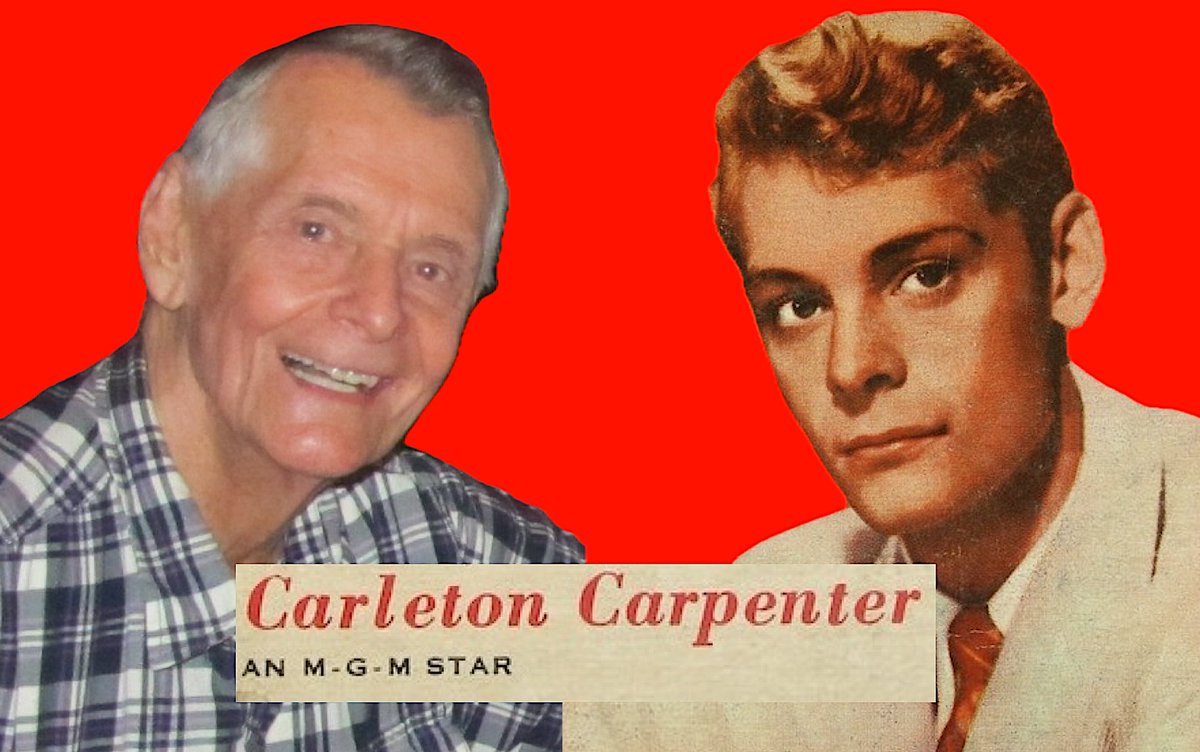
The great actor Carleton Carpenter would have been 100 today. I'm so honored I got to meet him, and later to interview him. Check out my tribute to the guy who arguably played TV's first-ever clearly gay character in 1954. Link in comments.
Matthew Rettenmund tweet media
English
2
2
13
1.2K