HopperSportsPerform

547 posts

HopperSportsPerform banner
HopperSportsPerform

HopperSportsPerform

@Hopper_SP

Evidence-informed cycling and endurance sports coaching, data analysis, performance testing and advising. Enquiries: [email protected]

Melbourne, Victoria Katılım Haziran 2017
642 Takip Edilen273 Takipçiler
Zach Bitter
Zach Bitter@zbitter·
You are too kind David. Tim is just illustrating how far gone online low carb discourse has fallen. Imagine waking up and thinking to yourself, “you know what f*** it, I’m going to spin a narrative that a group of people who are known for diets with some of the highest percentage of carbohydrate in them, are actually low carb. Lol
English
6
0
82
3.6K
Tim Noakes
Tim Noakes@ProfTimNoakes·
This observation made me ask another: Is the belief that one must ingest 90-120g carbohydrate/hour during racing and training a uniquely Western/North American/European idea? If it is so important, what do the elite Kenyan runners do when they run their long training runs in places like Iten and Eldoret. In his book goodreads.com/book/show/1314… Adharanand Finn describes a final 38km training run in Iten for athletes preparing for the international marathon racing season. He noted that the athletes started after an overnight fast without breakfast and were provided with drinks every 5km or so. Only after the run did they drink sugar-loaded tea. I asked Grok what were they likely drinking during the 38km training run. Here is her answer: "Primarily water (often ad libitum or sparingly during runs), with milky sugary tea (chai) as a key recovery/hydration drink afterward; Gatorade or similar commercial sugary sports drinks are rare or nonexistent in traditional training. "Elite Kenyan runners in high-altitude training hubs like Iten and Eldoret (the Rift Valley) follow simple, traditional hydration practices focused on water and tea rather than engineered sports drinks. Scientific studies and observations from training camps confirm this: "During long training runs: They typically drink little or nothing while running, or just small sips of plain water if needed. Previous research notes that elite Kenyan endurance runners 'did not consume liquids before or during training' in many cases, or did so infrequently and modestly. Long runs (often 20-40 km or more) are frequently done fasted or with minimal intake, relying on their high-carb diet for fuel. They train in groups on dirt roads with no aid stations, so carrying bottles isn't the norm—some may have small water bottles available at camps, but it's not Gatorade-style drinks". My note: Typically the athletes are accompanied on these runs by coaches who follow in a car and provide drinks every 5km or so. Also sports drinks are expensive and perhaps hard to come by in rural Kenya although Coca-Cola is likely more widely available. So if these athletes wanted a sugar-laden drink during training, Coca-Cola would suffice. Thus it looks like the "Kenyan secret" is definitely not because they ingest 90-120g carbohydrate per hour during their long distance training runs. And if they are not doing it in training, it's highly improbable that they are doing it in racing - according to the advice that one does not do something in racing that has not been tested in training. (Also because of the need for what Westerners call "gut training" (ie minimise the adverse gastrointestinal consequences of repeated ingestion of high carbohydrate drinks whilst racing). This raised many other additional interesting questions. For example, when eating a high carbohydrate diet (unquestionably true), why do elite Kenyan marathon runners do their long training runs in a fasted state with minimal carbohydrate ingestion? What are the rates of fat oxidation that they reach in marathon races run this way? Etc Etc. So it seems that the advice to "do as the Kenyans do" is not adhered to when it comes to (minimal) carbohydrate ingestion during exercise and training and starting long runs in a fasted state. @PhilipPrins11 @AKoutnik @PaulBLaursen @DrPhilMaffetone @sweatscience @theplews1 @Brady_H @MountainRoche @LoreofRunning1
Tim Noakes@ProfTimNoakes

I watched Kenya's John Korir for as much of this race as he was featured on the television screen. I didn't see him obviously ingesting 120g carbohydrate per hour (ie taking a 20g gel every 10 minutes) or drinking 250 ml of a 12% carbohydrate solution every 15 minutes - or some combination of both. And the same for the female Kenyan winner, Sharon Lokedi. According to the theory that you can only run at world class marathon pace if you ingest carbohydrate at such high rates, especially once the muscle glycogen stores are depleted, these two athletes should have progressively increased their energy intakes in the last 45-60 minutes of the race. But it seemed to me that they did the exact opposite - once they started racing and drawing away from their opponents, they seemed to show a lesser interest in drinking and more interest in focusing on running as fast as they could. Which they did. Despite their apparent lack of interest in 120g carbohydrate per hour, they sped up progressively. Perhaps I'm wrong. But it would be interesting to see some real data. @PhilipPrins11 @AKoutnik @PaulBLaursen @theplews1 @sweatscience @Brady_H @LoreofRunning1

English
21
6
58
140.4K
HopperSportsPerform
HopperSportsPerform@Hopper_SP·
@hjluks @debs_terrior Yep I have this issue and when I was 9 was advised to avoid surgery until an absolute last resort. Now I do have some issues today from time to time but that has been able to be addressed with strength work. The worst thing about that gait I find? Thigh chafing at the knees
English
1
0
2
67
HopperSportsPerform
HopperSportsPerform@Hopper_SP·
@Sportnutrient @MaurtenOfficial A great read Paul, thanks once again for some great insights. It highlights how beneficial it can be to applying scientific knowledge and more importantly scientific process to help find individualized solutions for an athlete.
English
0
0
0
196
HopperSportsPerform
HopperSportsPerform@Hopper_SP·
@Sportnutrient @kilianj I was just thinking is it time we start using terms like high carb fueling less and work more around the term/concept “appropriate carb fueling”?
English
1
0
1
44
Paul Booth - Sports Nutritionist and Physiologist
Once we better understand the athlete’s physiology and metabolism, then we can better prescribe a fuelling plan, whether this is 80, 100, 120, or 140. There is a place for them all, and correct selection will significantly affect performance. @kilianj
English
3
0
21
2.7K
HopperSportsPerform
HopperSportsPerform@Hopper_SP·
@Sportnutrient @kilianj Great post and thank you for the insights. Always informative when this kind of insight is provided. It still amazes me how many people forget the nuance needed with this kind of thing and just go for blanket assumptions instead of individualizing things the best they can.
English
0
0
1
115
HopperSportsPerform
HopperSportsPerform@Hopper_SP·
@inside_exercise it’s something I’ve thought about a lot especially when looking at current Aussie times. Some of today’s coaches probably make him slower. The other stuff’s easily worth a couple of min. Honestly I think Andy is the only male in the ballpark of where Clayton, Deeks and Mona are.
English
1
0
1
84
HopperSportsPerform
HopperSportsPerform@Hopper_SP·
@Timboreed @jayprasuhn From memory as well, that particular brand has very limited to potentially no options for larger chain rings in a 2x set up as well, forcing athletes into the 1x group even more
English
0
0
1
67
Tim Reed
Tim Reed@Timboreed·
I know first hand that a lot of pros would prefer 2x for the majority of courses but at least for one particular brand that the front derailleur shifting is so unreliable that they go the 1 x simply to avoid dropping their chain or worse. I can totally understand it for off-road technical riding but for road where athletes budgets are limited to one set up, definitely makes zero sense unless they're also living in fear of the time lost with drop chain syndrome.
English
1
0
1
116
Tim Reed
Tim Reed@Timboreed·
The irony of road cycling drive train progression has been the supposed technological leaps forward from Shimano, Sram, Campag moving from 2x 9 /18 speed to 2 x 10 / 20 speed to 2 x 11/21 speed to 2 x 12/24 speed to suddenly lopping off a front chain ring and reducing to only 1 x 12 potential gear options.
English
2
0
2
690
HopperSportsPerform
HopperSportsPerform@Hopper_SP·
@Timboreed I agree to a point, especially that they should be looking to be doing some lower impact aerobic activity as well. At the same time if I was to take your advice, I shouldn’t have been running for the last 10 years or so.
English
0
0
1
81
Tim Reed
Tim Reed@Timboreed·
When my overweight friends ask me how they should get into running.. “Don’t run. Find a low impact aerobic activity, eat better and get under approx 18% body fat for men, 28% for women. When you get there then let’s talk running.” The key to enjoying running is to be able to consistently run and not get injured.
English
2
0
15
766
HopperSportsPerform
HopperSportsPerform@Hopper_SP·
@andrewwoodroffe I think it’s a great answer for 99.9% of athletes, especially on the age group side of things. Most athletes aren’t maximizing the use of the data they are already collecting for one reason or another let alone add something as complex as lactate into the mix.
English
1
0
2
205
Andrew Woodroffe
Andrew Woodroffe@andrewwoodroffe·
I love this reply on instagram from Leon Chevalier. Many might disagree and that’s fine but his 4th place In Kona shows whatever they are doing works for him.
Andrew Woodroffe tweet media
English
4
0
49
4K
HopperSportsPerform
HopperSportsPerform@Hopper_SP·
@andrewwoodroffe The coaching ability question might be answered with UnoX and what’s happening with Gustav. He’s good with the science, but I also feel like he likes to play games with it. Arild’s been forgotten about but looking at coaching record you can make a strong argument he’s better.
English
1
0
1
183
HopperSportsPerform
HopperSportsPerform@Hopper_SP·
@JacobTipper @jem_arnold The worrying part is that his/their training was always described as more pyramidal. It was pretty clear with how both Olav and Arild talked about the training yet the people writing the articles chose to ignore it completely 🤦‍♂️😂
English
0
0
1
255
Jem Arnold
Jem Arnold@jem_arnold·
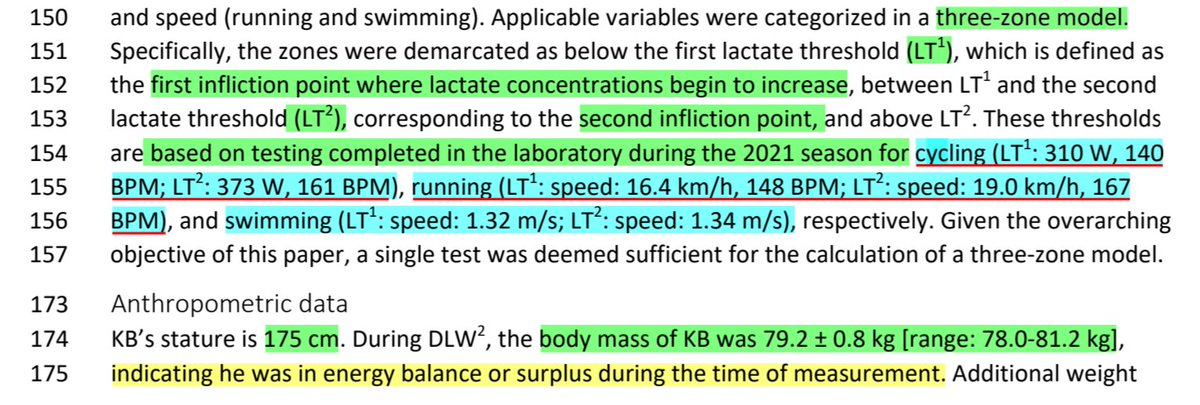
Kristian Blummenfelt's approximate lactate threshold numbers on one particular day in 2021 3.9 W/kg LT1, 4.7 W/kg LT2 @ 79.2 kg 3:39/km LT1, 3:09/km LT2
Jem Arnold tweet media
Nick Krontiris@nick_krontiris

Jeez

English
13
14
133
46.5K
HopperSportsPerform
HopperSportsPerform@Hopper_SP·
@jem_arnold @Jamie_langley1 These are questions going through my own head. First do we know the actual distance of the Tokyo course? Was this data from one test or a season average of test data? If it was an early season test, which shoes were used? He did change from Nike to Asics around April/May.
English
0
0
1
206
Jem Arnold
Jem Arnold@jem_arnold·
@Jamie_langley1 Thanks. Yeah that makes sense to me. I would think even a bit higher into severe domain at world level 10km times
English
1
0
0
112
HopperSportsPerform
HopperSportsPerform@Hopper_SP·
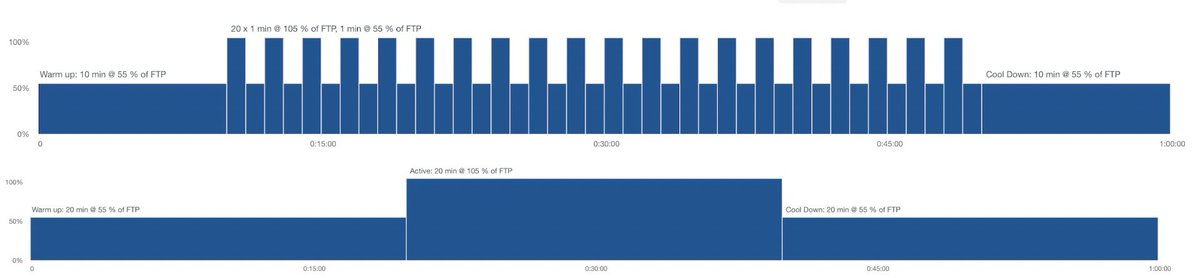
@HilkkaKontro @KittyJohne @Jamie_langley1 I haven’t been able to go back & evaluate TP v xert fully yet, but I did replicate the above in xert. I also recently just happened to do a 20min non even paced effort at around 106% FTP so compared the scores. After this I Need to look more into the @baronbiosys stuff now.
HopperSportsPerform tweet media
English
2
0
4
93
Hilkka Kontro
Hilkka Kontro@HilkkaKontro·
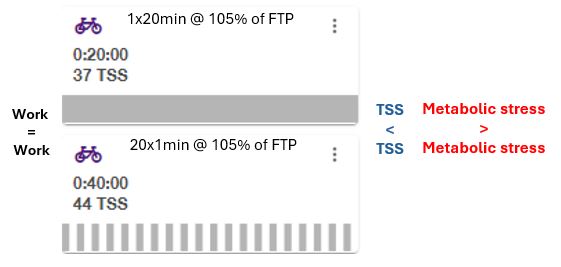
TSS is a poor training load metric to quantify load in the severe domain. It considers intensity (i.e., distance from FTP), but not the duration the intensity is sustained for. TSS rewards you for taking breaks within your bout of severe exercise. Example: 20min at 105% FTP.
Hilkka Kontro tweet media
English
10
5
76
13.7K
HopperSportsPerform
HopperSportsPerform@Hopper_SP·
@HilkkaKontro @KittyJohne @Jamie_langley1 It’s demonstrates a bit of both for me. Coaches have known for a long time theres many flaws with it (well all load measurements) & have learnt that you can’t use a singular metric/tool to monitor load. Now with something like AI, we might get closer to a single metric solution.
English
1
0
1
69