Bert Hucks

37 posts

Bert Hucks

Bert Hucks

@HucksBert

Katılım Eylül 2023
176 Takip Edilen25 Takipçiler
Bert Hucks
Bert Hucks@HucksBert·
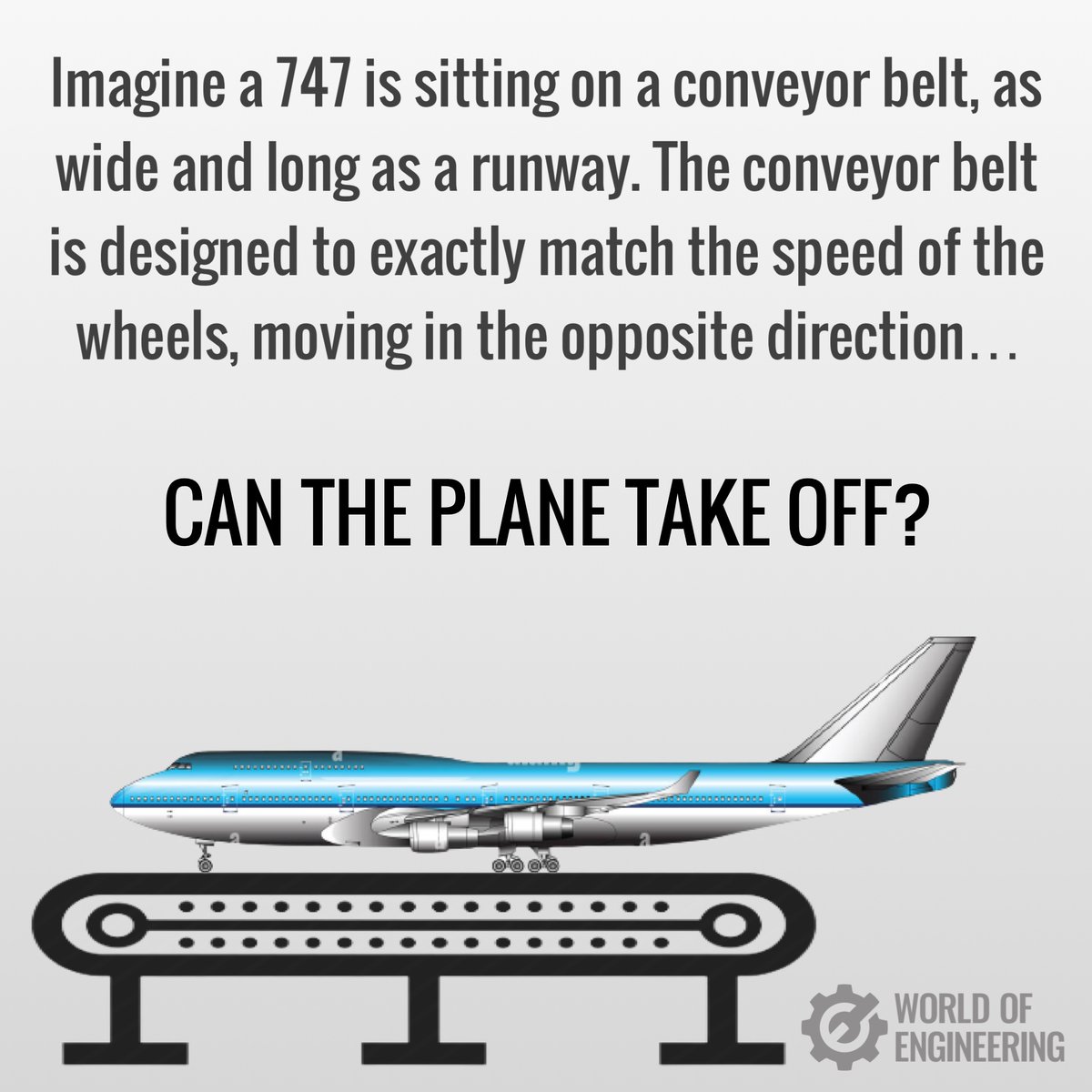
Hey Andy, Correct, lift occurs due to air flow over the wings. The crux is that the conveyor won't keep the plane stationary. The motive force comes from the jet engines moving a mass of air in the opposite direction. The wheels are just free-wheeling. Two surfaces meeting at the same speed have zero rotational friction. So, the moving belt is only doubling the friction inside the wheel bearings, which are engineered to have extremely low friction in the first place.
English

0
0
0
3
Bert Hucks
Bert Hucks@HucksBert·
@MichaelAmplatz @engineers_feed There is almost zero tire friction. If the two surfaces are meeting at the same speed, then their is no rolling friction, only static friction which has no force. The rolling friction is all in the wheel bearings.
English
0
0
0
4
Michael Amplatz
Michael Amplatz@MichaelAmplatz·
@HucksBert @engineers_feed Just guess every time the wheels get faster, the belt would accelerate too. This is not "some" friction, this would be massive I guess.
English
1
0
0
16
Bert Hucks
Bert Hucks@HucksBert·
Hey there, good questions. 1) I think if it's actually a 747 it might be dicey. The min take-off speed is 120kt and the tires are rated to 205 knots. There is probably a good bit a safety margin in the tires, but it's anyone's guess. If it's a smaller plane with a lower take-off speed, it will surely take-off. 2) The belt will "exactly match the wheel speed". The issue is speed is always relative to a fixed object. In this case it has to be a fixed point external to both the plane and belt. Given that W=wheel speed belt speed = -W. If the wheels are moving at W from right to left then the delta between wheel and belt is equal to 2W. The wheels just have to free-wheel twice as fast.
English
0
0
1
12
Masterhater
Masterhater@J_R_Sastre·
@HucksBert @engineers_feed Okay. But two questions and I really don’t know the answer so this is not a trick. 1. Can a 747’s wheels and tires actually withstand a takeoff at 2x normal rotation speed and 2. Would the wheels max out at 2X or does this hypothetical cause a logarithmic infinite speed rot’n?
English
1
0
0
17
feel the Rolf
feel the Rolf@PrivateButtz·
@HucksBert @J_R_Sastre @engineers_feed Aren’t we forgetting about lift here the engines generate trust but with the conveyer belt preventing forward motion and air flow around the wings it couldn’t lift off the ground
English
1
0
0
19
Randy Lentz
Randy Lentz@RandelLentz·
@HucksBert @engineers_feed The original post doesn’t say anything about the engines thrust. All it talks about is the conveyor belt and the wheels. It doesn’t even state, that the engines are running. It just says it’s sitting on a conveyor belt
English
1
0
0
29
Bert Hucks
Bert Hucks@HucksBert·
@Brabakbengel1 @engineers_feed The engines push the plane through the air, not the wheels. This creates airflow over the wings. If this weren't the case, how would the plane fly after it's no longer touching the ground.
English
1
0
0
39
Bert Hucks
Bert Hucks@HucksBert·
@KarlJStanley @engineers_feed The engines push the plane through the air, not the wheels. This creates airflow over the wings. If this weren't the case, how would the plane fly after it's not longer touching the ground.
English
1
0
0
31
Bert Hucks
Bert Hucks@HucksBert·
@JohnAllum16 @engineers_feed The plane would not remain stationary. The wheels will just spin twice as fast. The engines push the plane through the air, not the wheels. If this weren't the case, how would the plane fly after it's not longer touching the ground.
English
1
0
0
20
Bob
Bob@JohnAllum16·
@HucksBert @engineers_feed You need sufficient airflow over the wings to create lift the engines create the power to accelerate the plane to a speed that creates the airflow to create lift
English
1
0
0
41
Bert Hucks
Bert Hucks@HucksBert·
@ErieLetner @engineers_feed The plane would not remain stationary. The wheels will just spin twice as fast. The engines push the plane through the air, not the wheels. If this weren't the case, how would the plane fly after it's not longer touching the ground.
English
3
0
1
89
Erie
Erie@ErieLetner·
@HucksBert @engineers_feed No, the plane won't take off because air isn't flowing over the wings and other lifting surfaces. Therefore, no lift is generated.
English
1
0
1
136
Bert Hucks
Bert Hucks@HucksBert·
@TimUniqueName @engineers_feed The plane would not remain stationary. The engines push the plane through the air, not the wheels. If this weren't the case, how would the plane fly after it's no longer touching the ground?
English
1
0
0
49
Unique Name
Unique Name@TimUniqueName·
@HucksBert @engineers_feed How does the thrust from the engines increase the airspeed flowing over the wings when the plane is remaining stationary due to the treadmill setup? If this worked I don't think aircraft carriers would use catapult systems.
English
1
0
1
61
Bert Hucks
Bert Hucks@HucksBert·
@carininet @engineers_feed Interesting point, Alessandro. The wheels will accelerate at most to 2x their typical RPMs at the take-off speed. I guess it would depend on which type of plane and the quality of the tires.
English
0
0
0
28
Bert Hucks
Bert Hucks@HucksBert·
Yes, the would compete, but the engine thrust is vastly larger than the friction created by the wheels. The wheels will accelerate at most to 2x their typical RPMs at the take-off speed. Also, during the take-off roll, the lift of the wings would be constantly lowering it's weight on the wheels and the friction from the wheels.
English
2
0
0
48
Masterhater
Masterhater@J_R_Sastre·
@HucksBert @engineers_feed Wouldn’t the engine thrust and conveyor constantly compete causing the wheels to go faster and faster until they lift off? Since the conveyor seems rigged to instantly match the speed I imagine the wheels accelerate to a speed that critically overheats the wheel bearings.
English
1
0
1
71
Bert Hucks
Bert Hucks@HucksBert·
@engineers_feed The air mass leaving the jet engines creates an equal and opposite force, which causes the plane to move forward. Physics.
English
0
0
0
184
Bert Hucks
Bert Hucks@HucksBert·
The plane would take off. The thrust comes from the air being pushed from the engines, not from drive wheels. The conveyor is the length and width of a runway, NOT as depicted. There would be some added resistance from the rotational friction of the tires and the bearings. This may be somewhat offset by lift from the increased "headwinds" generated by air moment imparted by the increasing faster conveyor belt.
English
27
0
23
8.8K
Bert Hucks
Bert Hucks@HucksBert·
@engineers_feed Additionally, the tire friction will decrease as the plane's forward speed increases due to wing lift increasing as more and more air passes around the wing.
English
0
0
1
229
ftwftrc
ftwftrc@ftwftrc·
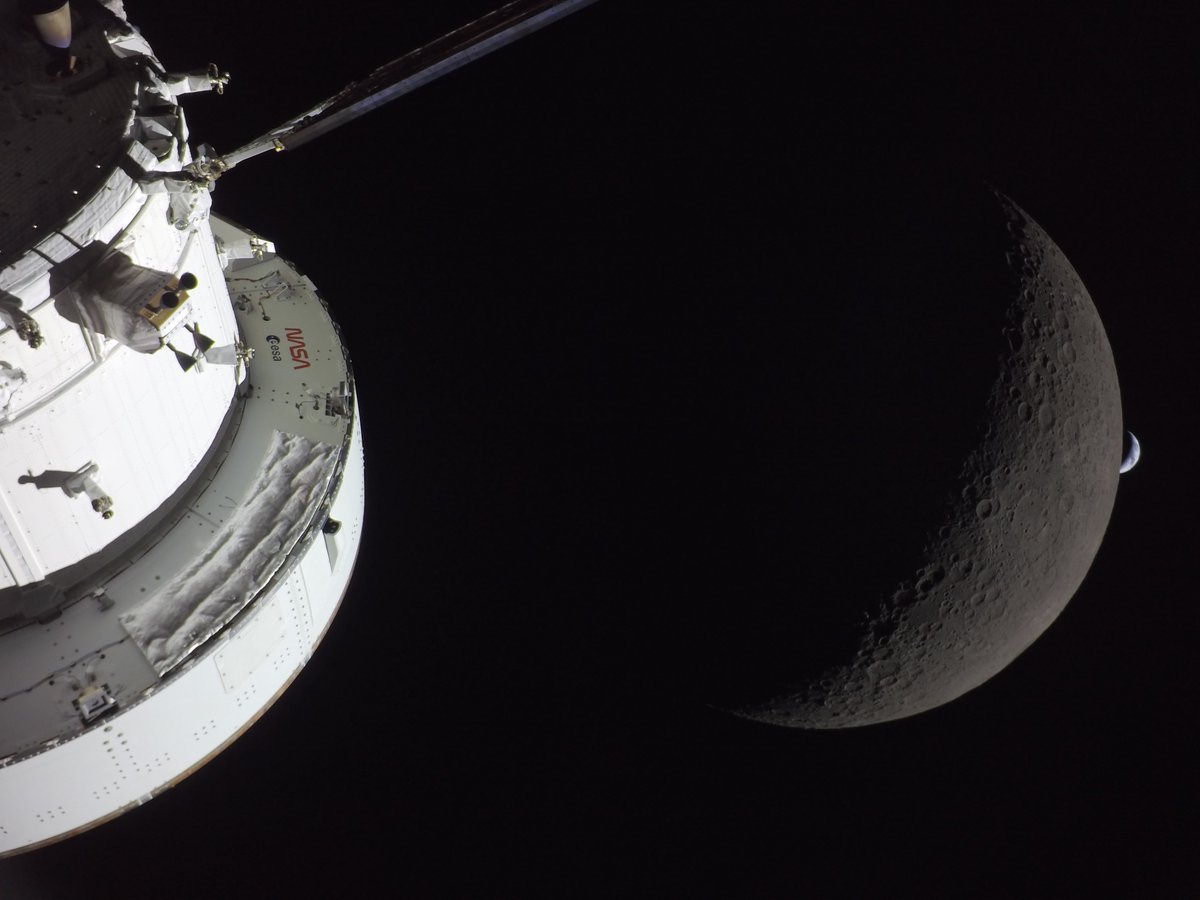
@NASAArtemis THANKS TO EVERYONE AT NASA FOR ALL THOSE INSANE IMAGES! what a time to be alive...i'm fucking in love with this one!😭🥹
ftwftrc tweet media
English
2
12
239
11.6K
NASA Artemis
NASA Artemis@NASAArtemis·
The eclipse from Orion. On April 6, external cameras attached to the Orion spacecraft's solar array wings captured the Moon backlit by the Sun during a solar eclipse.
NASA Artemis tweet media
English
286
7.1K
34K
2.1M
Bert Hucks
Bert Hucks@HucksBert·
@kniborg @MikeEdm36933086 @KirkLubimov I think that would just make the party leadership even stronger, since shorter terms shift power away from individual representatives and toward the hurd.
English
0
0
0
13
Kirk Lubimov
Kirk Lubimov@KirkLubimov·
This is the best part from Pierre Poilievre appearance on the Diary of a CEO podcast; "Those who push a socialist ideology have a gross contradiction in their view of human nature. They say that human beings are wretched, self-interested, greedy when they’re in the private voluntary economy, but they’re angels when they’re in the governmental economy. They argue that the government should just control everything because then we have all these angels that will decide for us." 🎯
English
201
2.2K
12.1K
355.1K