Hugo Wellington

212 posts

Hugo Wellington

Hugo Wellington

@HugoVVellington

Natural science enthusiast, a happy dude

following ≠ endorsement Katılım Nisan 2015
129 Takip Edilen27 Takipçiler
Hugo Wellington
Hugo Wellington@HugoVVellington·
@Trey_Explainer Keeps getting worse. Even "beyond parody" has been said too many times. Literally beyond The Boys level. I don't know, man. This is just bad. We're done. It's over. It's all over.
English
0
0
0
366
Hugo Wellington retweetledi
Roland Dunbrack 🏳️‍🌈 @rolanddunbrack.bsky.social
@DdelAlamo Nobody ever does the control experiments: Design 100 molecules with your new generative model; design/choose 100 molecules with your old generative model (or high-throughput docking/scoring or whatever). Compare the EXPERIMENTAL results. Never.
English
6
14
112
7.8K
Hugo Wellington
Hugo Wellington@HugoVVellington·
@MitoPsychoBio Hi, I am a phd student that is starting research on mitochondrial biology. What methods would you recommend for studying fragmentation/fusion of mitochondria? Ideally something highly replicable and consistent :)
English
2
0
2
163
Martin Picard
Martin Picard@MitoPsychoBio·
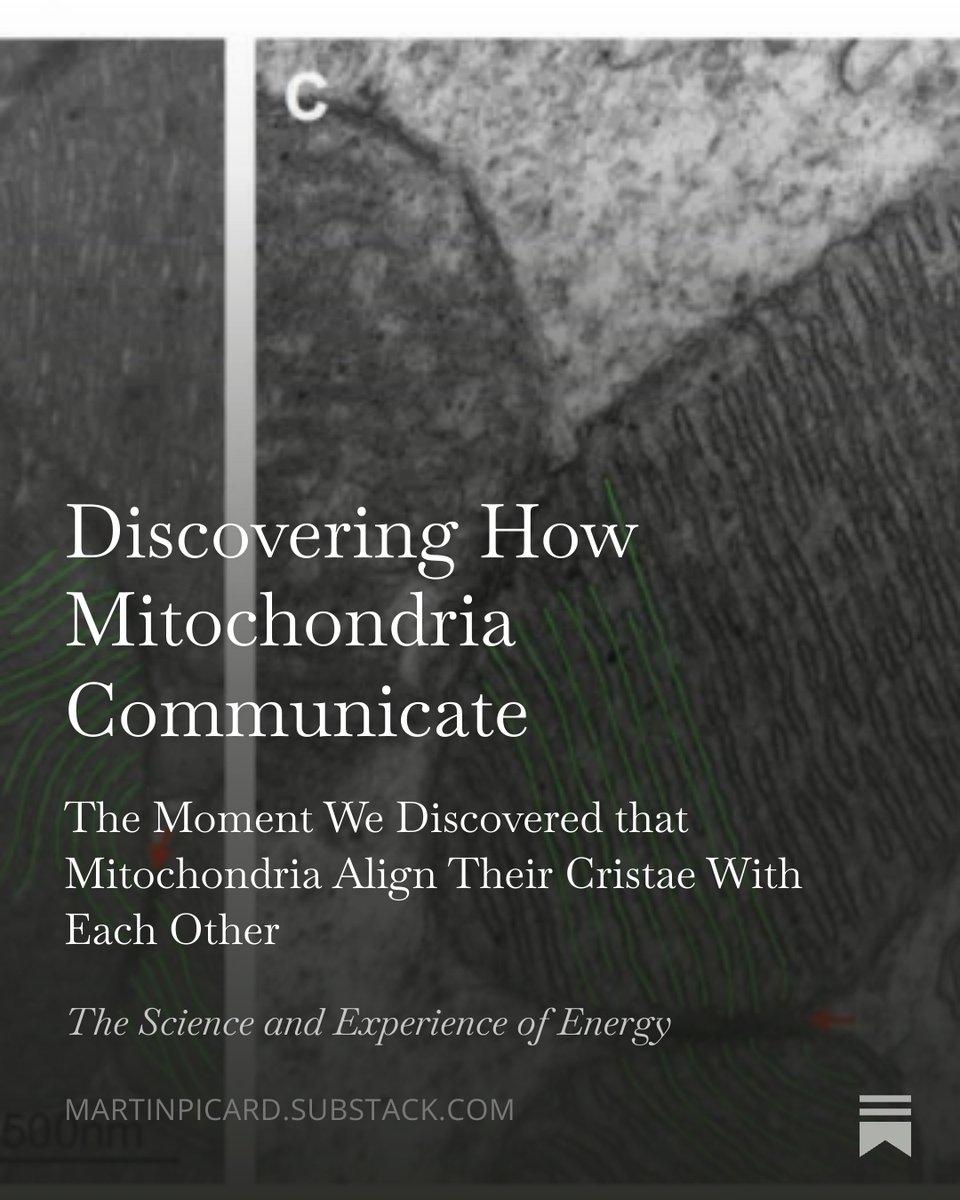
The first physical evidence that mitochondria exchange information with one another transformed how I think about these beautiful organelles. From isolated beans to social collective. In 2015, we discovered that the inner membranes of mitochondria, where the oxygen we breathe and food-derived electrons converge, somehow interact BETWEEN mitochondria. This is the story, with videos and pictures, of how this happened while working with Meagan McManus @MitoLoveLab in Doug Wallace's lab. open.substack.com/pub/martinpica…
Martin Picard tweet media
English
16
132
560
25.1K
Hugo Wellington
Hugo Wellington@HugoVVellington·
@edmundmcmillen I feel so bad killing them! They cry for each other! :D Were they supposed to be headless cats? or dogs? Or something completely different?
English
0
0
4
442
Hugo Wellington
Hugo Wellington@HugoVVellington·
@NickDesnoyer How is the spot size and placement regulated? I was surprised at how few cells produce the pattern!
English
1
0
0
66
Nick Desnoyer
Nick Desnoyer@NickDesnoyer·
Saxifraga rotundifolia is an inspiration for flower design, displaying evenly spaced spots that graduate from yellow to purple along the proximal–distal axis of the petal.
English
3
31
325
7K
Local Tleilaxu Gay
Local Tleilaxu Gay@WhiteScotdemo·
@Alariko_ Not Italy but there’s an anglo Saxon (circa 9th century )poem that does romanticise these ruins leftover in Britain
English
2
0
65
3.3K
Alariko
Alariko@Alariko_·
They probably saw Roman ruins the way we see abandoned factories or old derelict malls just as part of the landscape, leftover from the big before. The idea of ruins as something to romanticize or really, rediscover didn't really start to happen until the renaissance.
English
35
276
4.6K
169.3K
Julius Ruechel
Julius Ruechel@JuliusRuechel·
Your periodic reminder that a cow cannot add a single atom of carbon to the atmosphere that wasn't previously removed from the atmosphere by a plant. So, cows cannot increase atmospheric CO2, they merely recycle CO2. It's not a new source of carbon. And without cows, bacteria would, over time, rot plant fibers and return the exact same amount of carbon to the atmosphere. But grazing cows help grass sod fix carbon in the soil, thus increasing soil fertility over time. The climate crusade is built on scientific fraud. And many of the proposed solutions, like reducing cows, are directly causing much of the soil degradation and forest fires (because of ungrazed fuel in the forests), which activists and dishonest scientists then blame on "climate change".
English
1.7K
15K
55K
1.9M
Sebastian S. Cocioba🪄🌷
Sebastian S. Cocioba🪄🌷@ATinyGreenCell·
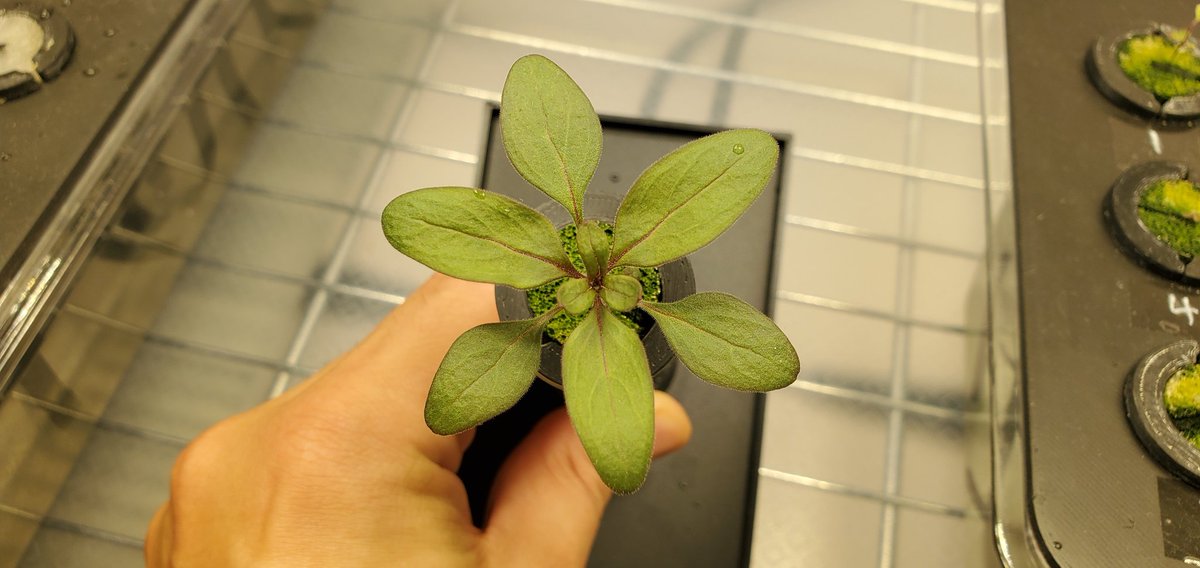
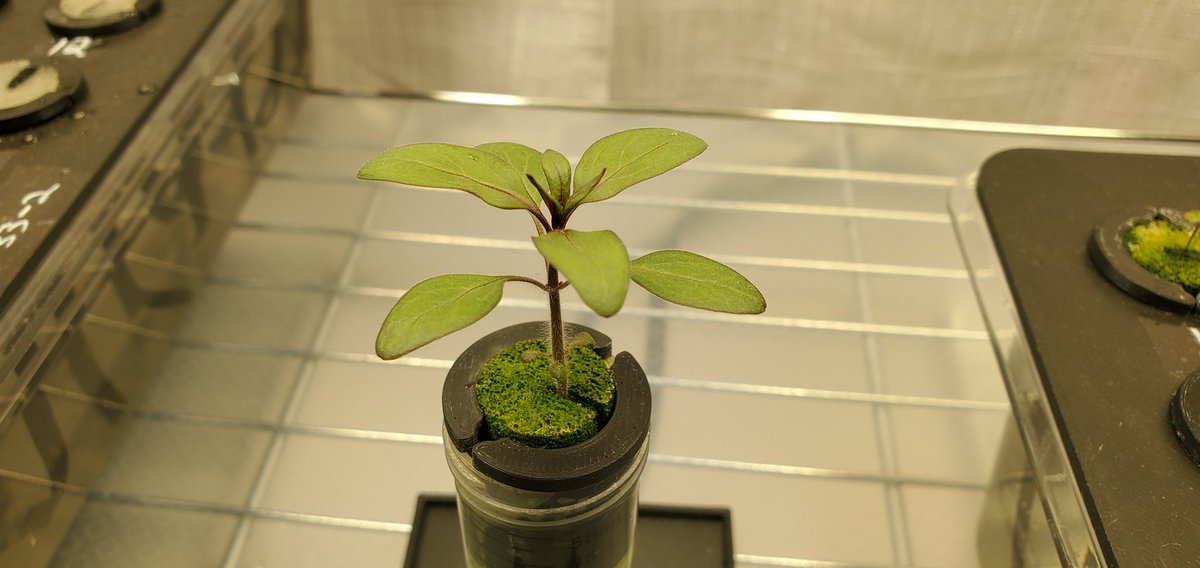
Such a pretty tricot! Of all the ones I isolated, only this one is maintaining that leaf triplet with each whorl. What a perfect little weirdo.
Sebastian S. Cocioba🪄🌷 tweet mediaSebastian S. Cocioba🪄🌷 tweet media
English
2
3
85
2.5K
Sebastian S. Cocioba🪄🌷
Sebastian S. Cocioba🪄🌷@ATinyGreenCell·
The cowardice to print a gene fragment that's only 23% GC is really making a bad case for "the technological singularity is upon us" rhetoric. At least they can do it clonal. Sheesh.
Sebastian S. Cocioba🪄🌷 tweet media
English
2
0
2
1K
Niko McCarty.
Niko McCarty.@NikoMcCarty·
We often assume that an organism carries the same genome within all of its cells. But in many cases — from nematodes to hagfish, lampreys to songbirds — the truth is far messier. At least 100 species are known to do something called “programmed DNA elimination,” in which large swaths of the genome is removed from somatic cells during development. Marie Delattre, a cell biologist at the École Normale Supérieure, studies this phenomenon in a worm called M. belari, which belongs to the same family as C. elegans. Her research group “compared the genomes of M. belari’s germline cells — the specialized reproductive cells like sperm and eggs — with the genomes of the worm’s somatic (nonreproductive) cells,” according to reporting in Quanta Magazine. “The somatic genomes were missing long strings of sequences present in germline genomes. Sometime between the embryo’s growth from seven cells to 32, huge chunks of DNA had vanished.” “The scientists then watched nematode embryos develop under a microscope. As the cells grew and replicated their genomes, they broke 20 chromosomes down into fragments and then reassembled them into 40 miniature chromosomes. Most of the fragments rejoined in this new, smaller genome — but a substantial fraction were left out.” Specifically, the worm eliminated about one-third of its own genome from somatic cells. This DNA removal process begins during early embryogenesis, typically during the first few rounds of cell division. Germline cells (those destined to become gametes; eggs or sperm) retain the entire intact genome. The exact amount of eliminated DNA varies widely between species; a parasitic nematode found in cow stomachs, called Parascaris univalens, eliminates 90% of its genome!! The question, of course, is why organisms bother to do this at all. It seems that the eliminated genes are useful in the germline but unnecessary, or even harmful, in somatic cells. The eliminated sequences include transposons, which are "self-replicating DNA sequences that steal the cell’s machinery to copy themselves by the thousands or millions," according to the Quanta article. "This amounts to molecular grand larceny, as well as a waste of the time and energy that the cell must spend to suppress these sequences. Cells routinely curb transposons with epigenetic marks that silence them, or by intercepting and destroying their RNA. But some species, such as M. belari, may remove them entirely through [programmed DNA elimination]." This process, then, is basically a way to partition the genome, keeping the full sequence safely in the germline while paring down somatic DNA for energetic efficiency or stability. If somatic cells contain a bunch of excess genes that are no longer needed, and it takes lots of energy to continuously 'silence' those genes, then it's just more efficient to cut them out entirely. The excision is not random, either. In the best-studied nematode that does this, called Ascaris, the same exact genes and DNA segments are eliminated in every embryo, every time. Eliminated DNA sequences tend to be AT-rich and repetitive. They are usually tagged with methyl groups, which alerts the cell that this DNA should be tightly packed and kept ‘silenced’. Programmed DNA elimination sounds esoteric, but any strange phenomenon is usually a rich source of material for biotechnology discovery. Clearly these organisms have evolved an effective means to silence genes, streamline genomes, and keep transposons from causing trouble. Instead of relying on reversible switches, though, they just cut out the unneeded pieces. If we understood and harnessed this, perhaps we could build smaller synthetic genomes or reprogram chromosomes in useful ways. Thanks for reading.
Niko McCarty. tweet mediaNiko McCarty. tweet mediaNiko McCarty. tweet media
English
20
129
608
38.9K
Niko McCarty.
Niko McCarty.@NikoMcCarty·
There is a yellow worm, called Paralvinella hessleri, that lives near hydrothermal vents in the deep ocean. Its body weight is about 1% arsenic by mass; a ridiculous concentration. But instead of killing the worm, the worm “neutralizes” it and turns it into a yellow pigment. Inside the worm’s epithelial cells, arsenic is shuttled into vacuoles by protein transporters. At the same time, hydrogen sulfide (also abundant near hydrothermal vents) diffuses into the cells and binds to intracellular hemoglobin proteins, which carry it into the vacuoles. There, in the vacuoles, these two toxins react to form orpiment (As₂S₃), a bright, yellow mineral. The orpiment molecules form huge crystals; about 0.8–1.3 μm in diameter, or the size of an E. coli cell. Orpiment was used to make yellow paint during the Middle Ages and Renaissance. The Italian painter Cennino Cennini, in Florence, wrote about grinding up orpiment to make his yellow paints -- which was super toxic! When I first read through this paper, I wondered why the worms are bringing in arsenic in the first place. Why not just exclude it from entering into cells? Well, it seems like arsenic sneaks into cells through phosphate transporters, because they look similar, and evolution hasn’t found a way to exclude one but not the other. This also happens in plants, and it's known as "adventitious uptake." Poison sneaks into the organism through a protein that is required for survival! Organisms need phosphate to build DNA, make energy molecules, and so on. Finally, the authors did a proteomics experiment to figure out which proteins are expressed in these worms. They found 2,379 different proteins in the yellow granules, including a membrane protein that is evolutionarily similar to the Multidrug Resistant-associated Proteins found in microbes. (Microbes use those proteins to pump out antibiotics, for example.) It seems the worms adapted this protein to sit on each vacuoles' membrane and pump arsenic into them. They basically evolved a way to neutralize a poison with a poison.
Niko McCarty. tweet mediaNiko McCarty. tweet mediaNiko McCarty. tweet mediaNiko McCarty. tweet media
English
12
80
449
23.3K
Niko McCarty.
Niko McCarty.@NikoMcCarty·
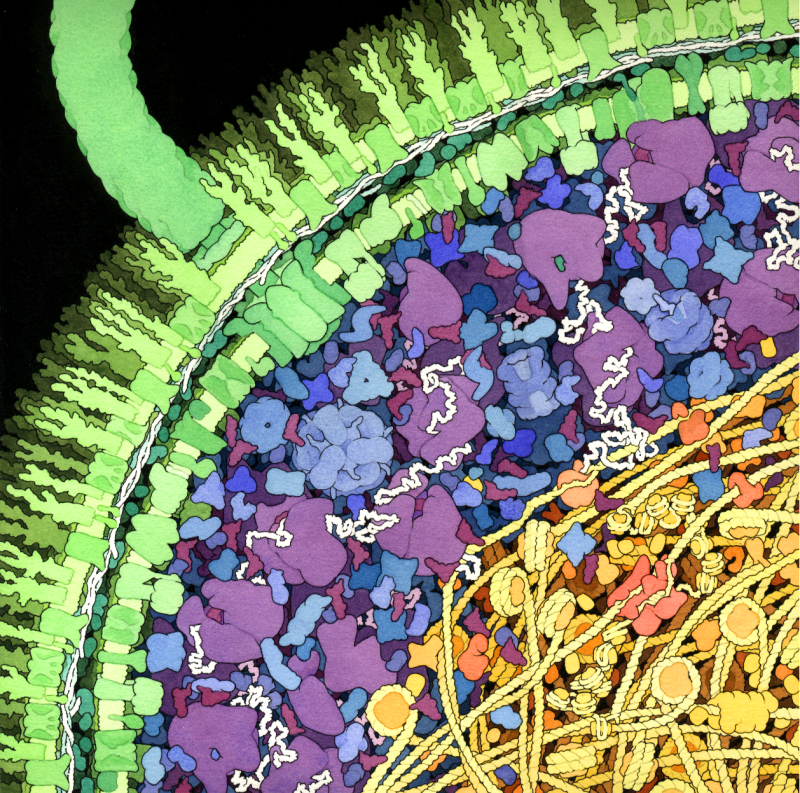
I'm (slowly) writing the book I've been thinking about for the last 3+ years. Nothing official yet, but I'm hoping to write a deeply mechanistic and interactive, Bartosz Ciechanowski-style book about how a single E. coli cell works. It will cover DNA, transcription, signaling, diffusion, metabolism, and so on. It will present everything through a quantitative lens, such that readers get a real "sense" of these things; how they look, how big they are, how fast they move. There will be boxes in each chapter that actually explain where those numbers came from, and the experiments through which they were collected. It's sort of an intellectual continuation of my prior @AsimovPress essays on this subject: Biology is a Burrito, Fast Biology, Recipe for a Cell, What Limits a Cell's Size? and The Weight of a Cell. I'd like to publish every chapter for free, online, and then do a print book later. Heavily inspired by Stewart Brand's "Book in Progress" for @WorksInProgMag and Michael Nielsen's Quantum Country textbook. If you are a biophysicist, or just someone who might enjoy reading this book, or an illustrator/animator, I'd really love to talk with you and get ideas. (I'm also looking for a publisher!) My dream would be for this book to supplant some of the textbooks currently used in high school biology classes. Let me know what you think. What should I cover? (Painting by David Goodsell.)
Niko McCarty. tweet media
English
108
149
1.8K
80.4K
Hugo Wellington
Hugo Wellington@HugoVVellington·
@NikoMcCarty Wouldn't the minimal mycoplasma cell be ideal for this purpose? It's only like 350~ genes...?
English
0
0
0
24
Hugo Wellington
Hugo Wellington@HugoVVellington·
@salonium Saloni, I am fairly knowledgeable when it comes to cancer and cancer treatments development, but CVD is a complete black box for me as far as current research goes. Looking into novel (last 5-10 years) improvements would be really cool as an article. As always, great job!:)
English
0
0
0
27
Saloni
Saloni@salonium·
New article by me! Cardiovascular disease mortality rates have declined by around three-quarters since 1950, but we rarely hear about it. I explore some of the reasons behind the decline.
Saloni tweet media
English
26
246
1K
218.7K
Neil Stone
Neil Stone@DrNeilStone·
Of all RFK Jr's dangerously wrong opinions - his attack on HPV vaccines is the worst (and that really is saying something) HPV vaccines like Gardasil PREVENT cancer - so effectively that cervical cancer is on the way to ELIMINATION in places like Scotland, Sweden and Australia.
Neil Stone tweet media
English
890
2.8K
12.3K
661.2K
Explosions&Fire
Explosions&Fire@Explosions_Fire·
Every year for Open Sauce (Soon! July 18-20) I print several unique Grimace tshirts. I can’t remember why I started but I don’t want to stop now. If you’re an artist that can draw me a cool Grimace that I’ll put on a shirt please DM and I’ll pay you for the Grimace drawing. Thank
Explosions&Fire tweet media
English
9
15
345
10.1K
Niko McCarty.
Niko McCarty.@NikoMcCarty·
YouTube channel idea: Recreating famous biology experiments. Explain what was known at the time, go through the initial observations, and make the "discovery." e.g. Monod's biphasic E. coli growth curves, T.H. Morgan's fly breeding programs, and so on.
English
32
46
655
44K