Matthew Gross

3.3K posts

Matthew Gross banner
Matthew Gross

Matthew Gross

@HurricaneAddict

Fascinated by extreme weather and the extreme events that come with it. (Any fantasy hour maps posted are for entertainment & learning purposes, not forecasts.)

Westerly, Rhode Island Katılım Haziran 2021
519 Takip Edilen8.9K Takipçiler
Sabitlenmiş Tweet
Matthew Gross
Matthew Gross@HurricaneAddict·
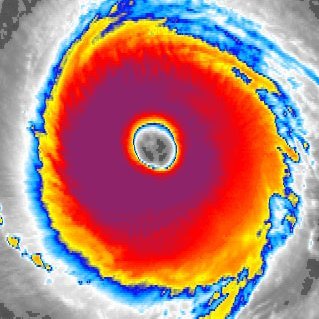
Happy Hurricane Season to all who celebrate!
Matthew Gross tweet media
English
14
19
216
123.7K
Matthew Gross
Matthew Gross@HurricaneAddict·
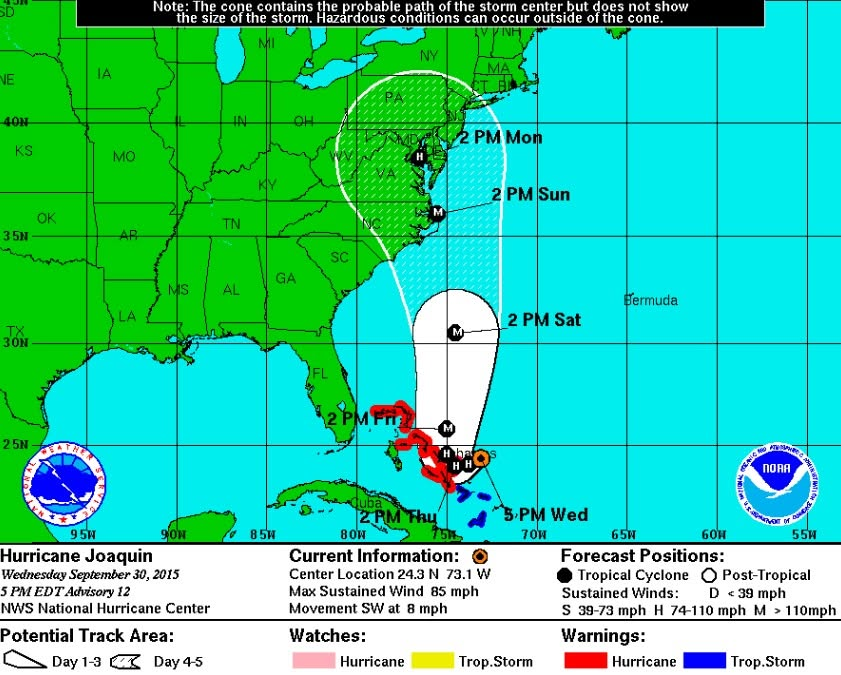
@AndyHazelton @reid_lt It obviously didn't have the impacts (missing the U.S.) but the best recent example of an "it only takes one" storm in a strong Nino might be Joaquin in 2015. If he got a hair closer to that cutoff, you're talking the all time benchmark impact storm in the lower Mid Atlantic.
English
1
0
4
124
Matthew Gross retweetledi
Brilliant Maps
Brilliant Maps@BrilliantMaps·
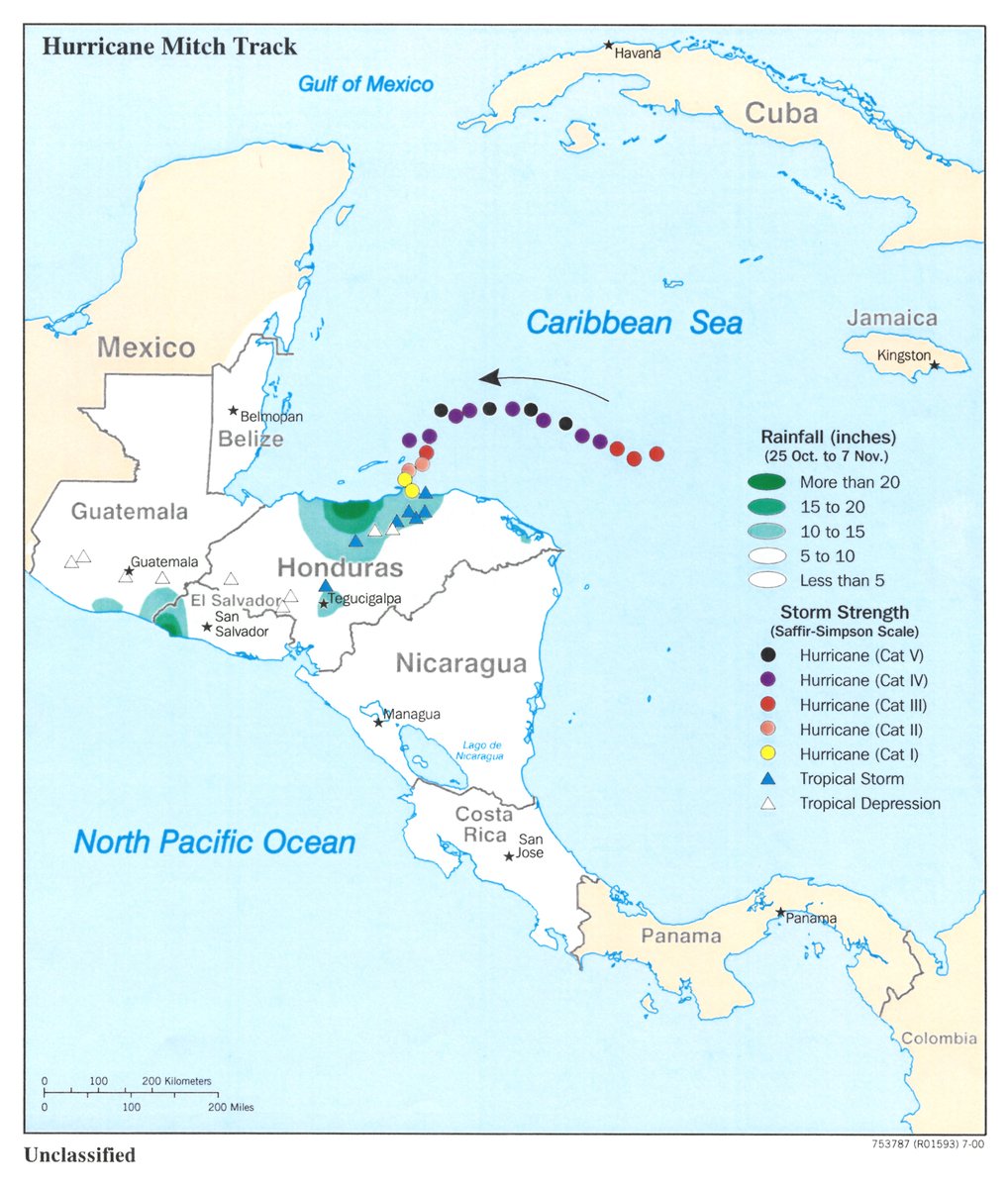
Declassified 2000 Map Of Hurricane Mitch (1998) Created By The CIA This 2000 CIA map documenting the track of Hurricane Mitch illustrates one of the deadliest and most destructive natural disasters in modern Atlantic history. The map traces the hurricane’s path across the Caribbean and Central America in late October and early November 1998, while also showing rainfall intensity and storm strength as the system evolved from a tropical depression into a Category 5 hurricane. The visualization emphasizes the catastrophic impact on Honduras and neighboring states, particularly Nicaragua, Guatemala, and El Salvador. Rainfall totals exceeding 20 inches are highlighted across large sections of Honduras and parts of Central America, reflecting the flooding and landslides that caused the majority of deaths and infrastructure destruction. Rather than rapid coastal wind damage alone, the map demonstrates how prolonged rainfall over mountainous terrain transformed the disaster into a humanitarian catastrophe. Historically, Hurricane Mitch struck during a period when many Central American countries were still recovering from decades of civil conflict, economic instability, and weak infrastructure. Entire communities were isolated as roads, bridges, and agricultural lands were destroyed. Honduras suffered especially severe damage, with major impacts to transportation networks, crops, and urban centers. The disaster caused thousands of deaths and displaced millions, making Mitch one of the most consequential weather events in the Western Hemisphere during the twentieth century. The map remains important today because Hurricane Mitch became a defining case study in disaster preparedness, climate vulnerability, and humanitarian response. It highlighted how geography, poverty, deforestation, and inadequate infrastructure can magnify the effects of extreme weather. In the decades since, the region has continued to face increasingly intense hurricanes and rainfall events linked to broader climate trends. The map also reflects how intelligence and government cartography evolved to integrate meteorological tracking, population risk, and regional analysis into products supporting emergency planning, international aid coordination, and long-term environmental assessment. More Declassified 2000s CIA Maps: brilliantmaps.com/cia-maps-2000s/
Brilliant Maps tweet media
English
0
2
15
4.1K
Matthew Gross
Matthew Gross@HurricaneAddict·
@BobbiStorm @AndyHazelton @justbooket 1877 and 1878 hurricane season were when the El Nino was pulling off. That's usually when the Atlantic really goes big. 1997's comp in that scenario would be 1876, when the El Nino was building.
English
1
0
1
85
BobbiStorm
BobbiStorm@BobbiStorm·
1877/1878 hurricane seasons vastly different from 1997 and there’s always relevant reasons why one strong El Niño season vs another is busier than the other in the tropics . We are still watching 2026 evolve & develop. Fascinating academically but 1997 had horrendous impacts in Australia, New Guinea & Indonesia.
English
1
0
1
150
Andy Hazelton
Andy Hazelton@AndyHazelton·
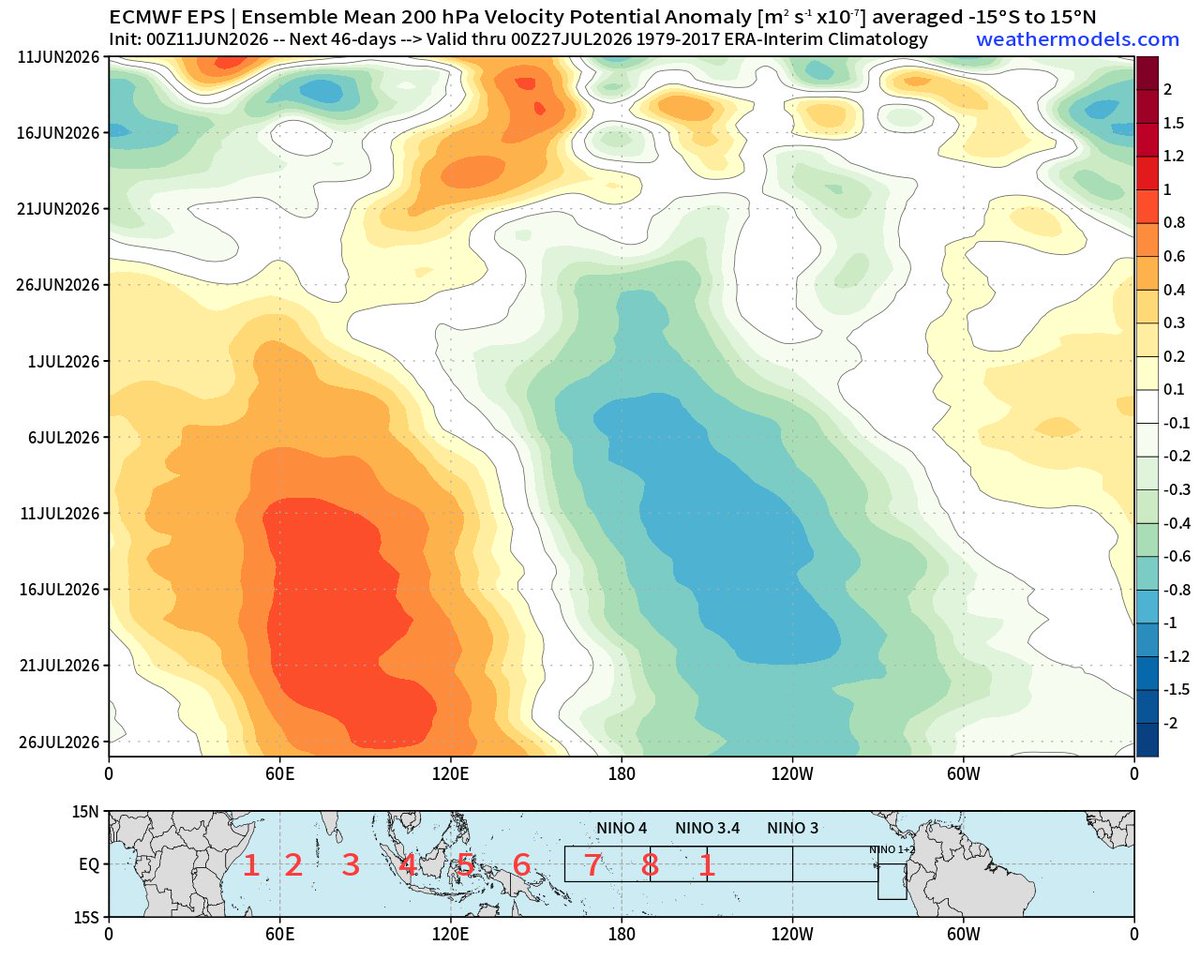
The next 10 days or so looks to be the best chance for anything approaching "favorable" tropical forcing in the Atlantic, as an MJO pulse transits Africa and the Indian Ocean. It may not be enough for development since we're still early and El Niño is already flexing. From late June through mid July, it looks like intraseasonal forcing will move back into the Pacific and amplify the developing Niño circulation, enhancing subsidence and shear across the Atlantic. So if we don't get any TC development in the next 10 days or so (which seems fairly unlikely), it could be a long wait for our first Atlantic system this year. Our best bet for development this year is probably gonna be an old front or MCS off the East Coast somewhere anyway, as those are less subject to tropical forcing.
Andy Hazelton tweet mediaAndy Hazelton tweet mediaAndy Hazelton tweet media
English
4
14
95
6.3K
Matthew Gross
Matthew Gross@HurricaneAddict·
Hard to pinpoint a timeline because we don't know some important details. What we do know is: 1) The AMOC has a tipping point. 2) We're pushing the AMOC towards that tipping point. 3) The collapse, if it happens, it likely irreversible. What we don't know is: 1) How close we are to the tipping point. 2) How fast the impacts would take hold if we hit the tipping point. We could be talking a timeline as quick as years, or as long as decades. In a worst case scenario though, northern Europe would look like Siberia once things fully shifted.
English
1
0
10
557
next
next@WtfEverNoOne·
@godempofzoom I just need a real blunt - this is what's going to happen, and how soon. I don't want an explanation of "why" or even the details of "how" - just a real blunt, we're fucked and if you live here prepare for this. Something needs to get past the numbing of the last 6-10 years.
English
2
0
2
2.4K
godempofzoom
godempofzoom@godempofzoom·
Something interesting about a severely weakened/collapsed AMOC is that for the first time the brunt of a climate related disaster will be felt not by the third world, but the imperial core. Western Europe and North America will face quick and brutal shifts no on is prepared for
David Ullrich@DavidUllrich202

Mysterious ‘cold blob’ in the Atlantic suggests the AMOC is weakening A patch of ocean south-east of Greenland is the only place on Earth that is cooling, and it could be a sign that the warm water “conveyor belt” in the Atlantic is slowing down newscientist.com/article/252907… docs.google.com/document/d/1JV…

English
9
100
827
50K
Matthew Gross
Matthew Gross@HurricaneAddict·
@godempofzoom Europe yes, but North America less so. The northeast U.S. would likely see harsher winters, but it would be nothing compared to the complete uprooting of climate norms in Europe.
English
0
0
26
2K
Matthew Gross retweetledi
David Ullrich
David Ullrich@DavidUllrich202·
Mysterious ‘cold blob’ in the Atlantic suggests the AMOC is weakening A patch of ocean south-east of Greenland is the only place on Earth that is cooling, and it could be a sign that the warm water “conveyor belt” in the Atlantic is slowing down newscientist.com/article/252907… docs.google.com/document/d/1JV…
David Ullrich tweet media
English
497
1.9K
7.9K
17.5M
Matthew Gross
Matthew Gross@HurricaneAddict·
@CDHx7x Have you taken a good look at what's happening around the globe right now? This is not what fine looks like.
English
3
3
339
7.4K
CDH
CDH@CDHx7x·
@HurricaneAddict We don’t believe you doomers anymore, it’s that simple. I should be bed ridden with long covid, barren store shelves from tariffs, and $8 gas right now, but wow look at that… everything is fine.
English
31
0
22
8.9K
Matthew Gross
Matthew Gross@HurricaneAddict·
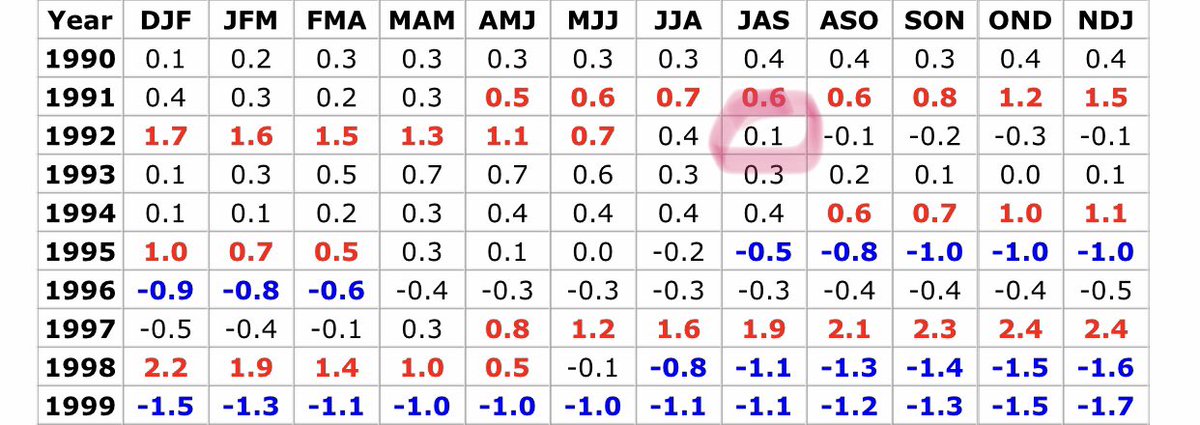
I really don't think enough people fully comprehend the worlds that are about to collide here. You already have people in geopolitical circles warning about the threat of famine based on surging prices / availability of fertilizer components, and you also have long-term weather modeling all converging on a worst case scenario for a building El Nino event, which will peak near the end of the year. These are two slow moving but entirely predictable disasters that when coupled together will each make the other orders of magnitude worse. (This will take months to fully unfold, but at this point, the die is cast.) There's no event in our history books that combines the current global population with the impending fertilizer shortage and the strength of the El Nino that's coming. We are about to witness an unprecedented event that will push crops around the globe to their limit.
Matthew Gross tweet media
Aidan Simardone@AidanSimardone

Famine is coming

English
66
873
2.9K
305.3K
Matthew Gross
Matthew Gross@HurricaneAddict·
@Danbury_WX I feel the best way to combat this is to just communicate the risks as "Level 1," "Level 2," Level 3," and so on. A one to five scale works so much better in instantly communicating risks to the public than the woefully inefficient vocabulary they've ascribed for years.
English
0
0
2
242
Meteorologist Jack Drake
Meteorologist Jack Drake@Danbury_WX·
Do you think the SPC will ever update the categorical wording? I’m just tired of a certain subset of Americans telling me there will be no storms because “it’s only a slight risk” 😑
Meteorologist Jack Drake tweet media
English
12
3
53
11.8K
Matthew Gross retweetledi
Matthew Gross
Matthew Gross@HurricaneAddict·
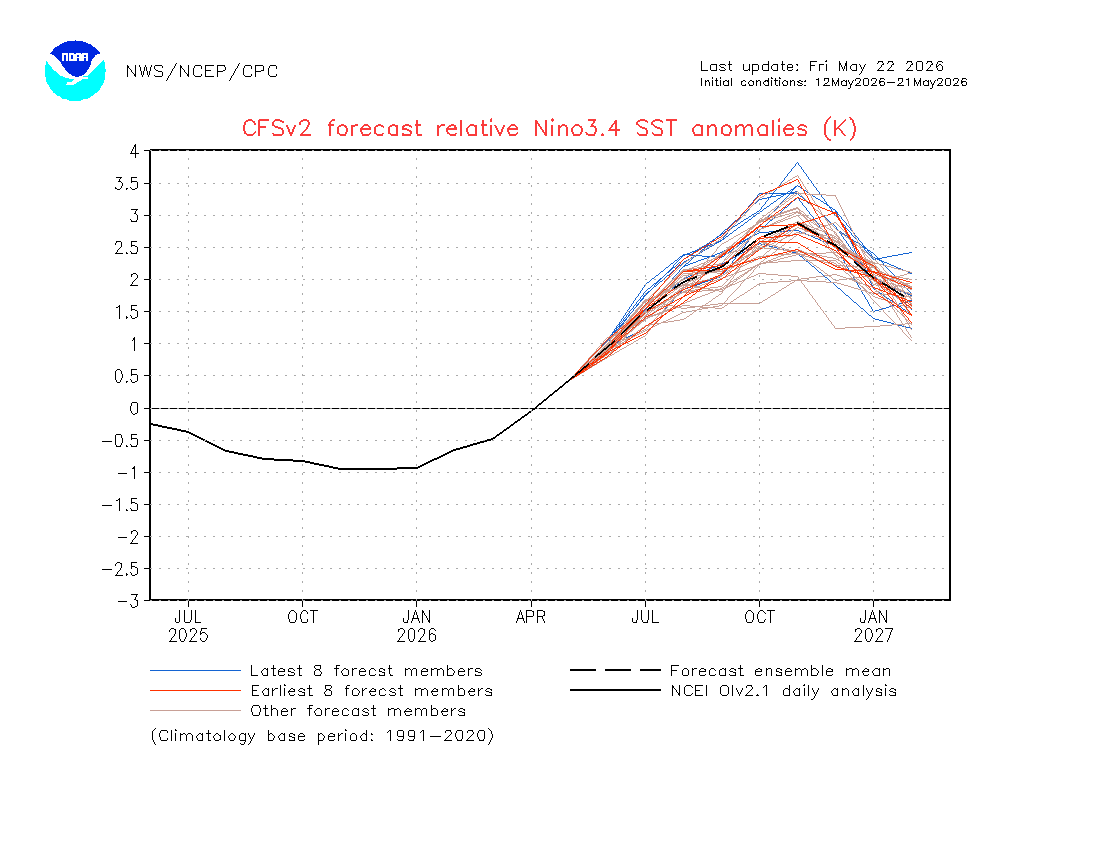
It's June 1st, and normally that means all eyes turn to the Atlantic at the beginning of another hurricane season. But this year, I can't take my eyes off what's brewing in the equatorial Pacific. While a Super El Nino has been likely for weeks now, the latest westerly wind burst in the region should turn things into a run away freight train over the next ten days or so, locking us into a "die has been cast" situation. From there, it's just a matter of how high we peak in the late fall / early winter months, and based on the latest guidance, it seems increasingly likely that records are going down.
Matthew Gross tweet mediaMatthew Gross tweet media
English
3
15
74
5.5K
Matthew Gross retweetledi
Ryan Breton
Ryan Breton@RyanBretonWX·
DID YOU HEAR IT? Thousands across southern New England, especially near Boston, reported a loud boom just after 2 p.m. GOES-19’s Geostationary Lightning Mapper suggests a meteor exploded in the atmosphere east of Boston. No earthquakes were detected. (Courtesy CIRA/NOAA.)
Ryan Breton tweet media
English
8
18
121
14.9K
Matthew Gross retweetledi
Andy Hazelton
Andy Hazelton@AndyHazelton·
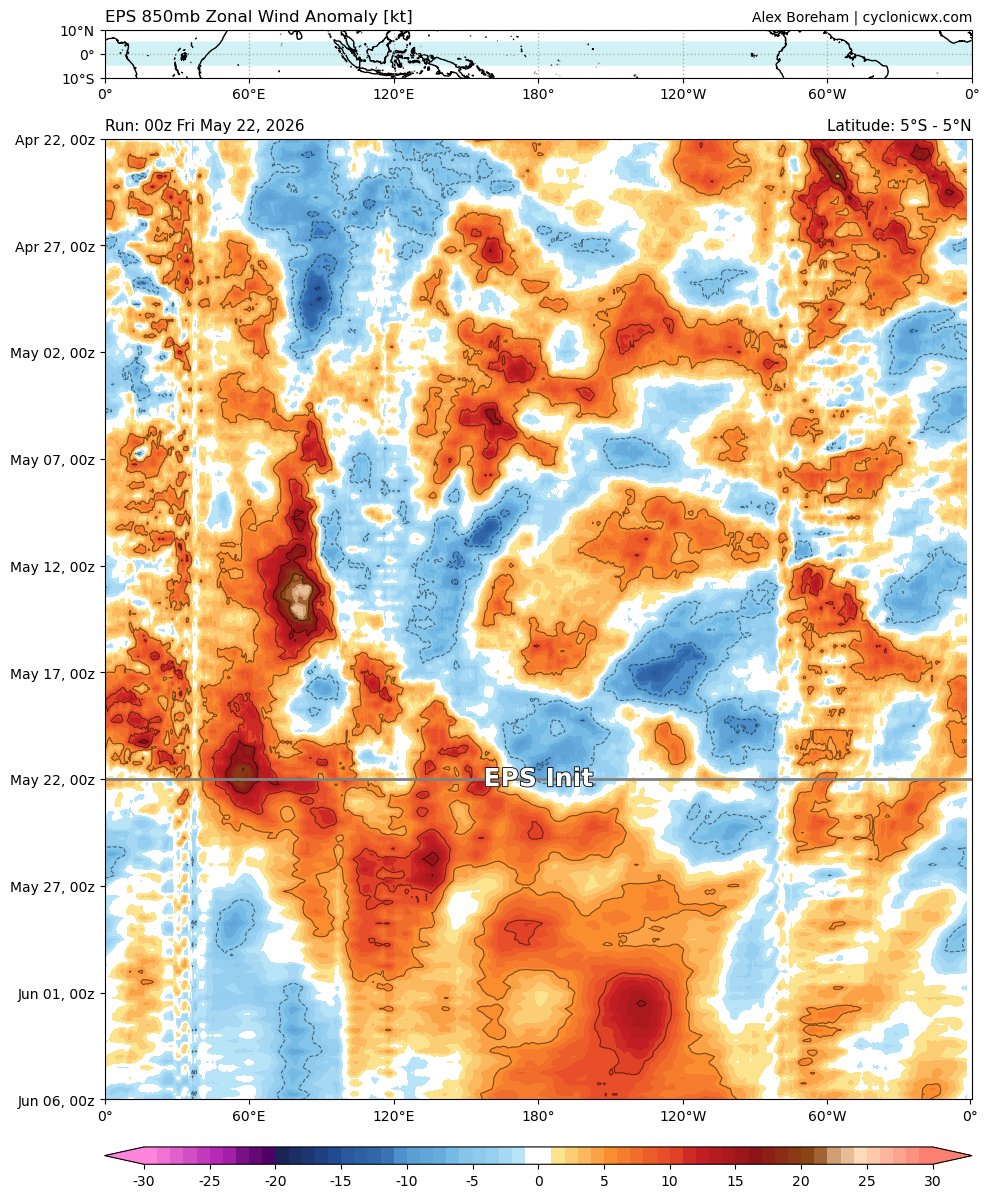
Getting this sort of MJO-driven reinforcement of the developing #ElNiño with a massive westerly wind burst is a pretty good indicator that this event is going to be a very strong one. No sustained easterlies to interrupt the last Kelvin Wave, and this next WWB should push the warm pool even further east. Probably why even the *relative* SST anomalies are pushing 3-3.5C in some of the latest forecasts.
Andy Hazelton tweet mediaAndy Hazelton tweet mediaAndy Hazelton tweet media
English
9
34
144
10.3K
Matthew Gross retweetledi
Ben Noll
Ben Noll@BenNollWeather·
A freight train of warm water chugging beneath the surface of the Pacific Ocean is a big reason why a super El Niño may form this year. Ocean waters have peaked around 7.5˚C (13.5˚F) above average, breaking records. And now, it's nearing the western shores of South America 🧵
English
16
158
580
54.9K
Matthew Gross retweetledi
Bryan Maxwell SW FL WX
Bryan Maxwell SW FL WX@bryan_maxw46284·
I don't understand why only a few people, like Mathew Gross, understand just how bad this whole combination of Super El Niño on top of out of control climate change + fertilizer shortages and energy crisis all hitting at the same time is going to actually be. It kind of reminds me of the flooding situation that forecasters were warning about in the Carolinas ahead of Helene- everyone was just kind of like, ok, we get it, there's going to be a lot of rain, but nobody could comprehend just how terrible the situation was going to actually get until 3-4 days after all the missing people couldn't be found alive. If you have any friends in places around the world where famine could hit later this year, please make them aware of how bad it's going to get, and make sure they have a plan to stay alive!
Matthew Gross@HurricaneAddict

Lurking below the surface in the equatorial Pacific is possibly the most impressive blob of above average ocean temperatures we've ever recorded since we've had the ability to measure this stuff. When that enormous concentration of bath water reaches the surface over the coming weeks and months, it's going to release devastating consequences around the globe throughout the second half of the year. Get ready for severe droughts in parts of South America, Africa, and Australia, devastating monsoons in southern China, and a roaring southern jet all winter long in North America. When you combine this with the fertilizer crisis bubbling as a byproduct of current global events, there's going to be crop failure on a level most of us have never seen during the closing months of 2026. Hard to see how we avoid widespread deadly famines across multiple stretches of the planet at this point.


English
67
368
2.1K
215.5K
Matthew Gross
Matthew Gross@HurricaneAddict·
@CyclingGall4 The famines will likely be heavily concentrated in parts of Africa and Asia.
English
19
5
182
29.2K
Matthew Gross
Matthew Gross@HurricaneAddict·
Lurking below the surface in the equatorial Pacific is possibly the most impressive blob of above average ocean temperatures we've ever recorded since we've had the ability to measure this stuff. When that enormous concentration of bath water reaches the surface over the coming weeks and months, it's going to release devastating consequences around the globe throughout the second half of the year. Get ready for severe droughts in parts of South America, Africa, and Australia, devastating monsoons in southern China, and a roaring southern jet all winter long in North America. When you combine this with the fertilizer crisis bubbling as a byproduct of current global events, there's going to be crop failure on a level most of us have never seen during the closing months of 2026. Hard to see how we avoid widespread deadly famines across multiple stretches of the planet at this point.
GIF
English
419
1.4K
5.1K
1.2M
Matthew Gross
Matthew Gross@HurricaneAddict·
@DownHomeTD Actually, the Atlantic hurricane season specifically should be much quieter than normal in 2026. The very same hot waters that will cause the Super El Nino in the Pacific should work to limit the number of storms in the Atlantic.
English
11
11
314
35.2K
DownHome
DownHome@DownHomeTD·
@HurricaneAddict Hear this same crap every year close to the start of hurricane season. Basically we are all going to die from thirst or drowning, but when it's all said and done your insurance says not covered. Sorry, I was getting ahead of myself.
English
12
4
224
42.1K
Matthew Gross
Matthew Gross@HurricaneAddict·
Just so everybody is clear, it's not the El Nino alone that's so uniquely problematic. It's the combination of the strength of the El Nino with the coming fertilizer shortage. Both of these are slow moving and enormously impactful events that have already been set in motion and won't fully manifest until the back half of the year. However, once they show their face, their impacts will feed off each other and exacerbate shortages around the globe.
English
21
82
764
54.8K