Nonya Biz

8.3K posts

Nonya Biz banner
Nonya Biz

Nonya Biz

@HylomorphicBro

Reluctant resident of clown world 🤡. Christ is King. ☦️

USA Katılım Şubat 2023
87 Takip Edilen197 Takipçiler
Nonya Biz
Nonya Biz@HylomorphicBro·
@John_markos_ He twice compared the ortho vs RC conception and says they aren’t equivalent. You’re saying they are. So either he and the vast majority of the OC are blissfully ignorant, at best, or manifest heretics at worst…or you’re wrong about this
English
0
0
0
5
Nonya Biz
Nonya Biz@HylomorphicBro·
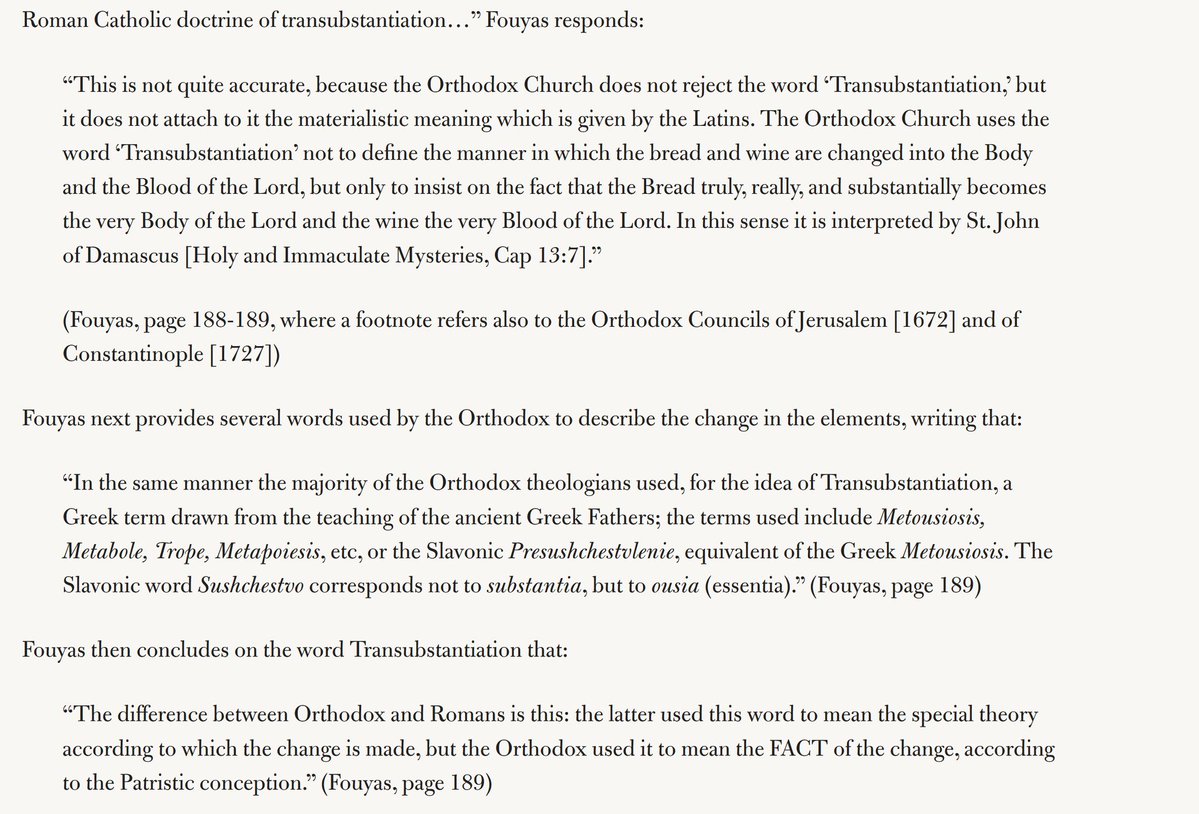
@John_markos_ All I have to show is that our own hierarchs believe what Trent did and what Jerusalem did were different.
Nonya Biz tweet media
English
1
0
0
4
John
John@John_markos_·
The screenshot you JUST cited claims that the bread is changed substantively and not accidentally, and then you try to cite Ware to claim that we don't profess substance and accidents. Can you read?
Alex Sorin, JD@Alex_Ortodoxie

@EthanWayne2001 It’s explicitly there in the Confession, Ethan. And I didn’t make up the way I’m understanding the Confession, you can find this in a basic introduction.

English
6
1
59
2.3K
Nonya Biz
Nonya Biz@HylomorphicBro·
@John_markos_ It also used the word transmute, appearance, form, change, become, and others
English
0
0
0
1
Nonya Biz
Nonya Biz@HylomorphicBro·
@John_markos_ My contention, backed by evidence from ortho sources, is that it used those terms without intending to hermetically seal them as the pre-eminent theory — dogmatic — on how we are to understand the real change
English
1
0
0
3
Nonya Biz
Nonya Biz@HylomorphicBro·
Trent dogmatically binds the RC faithful to a certain and very technical systematic on “what,” precisely, changes, such that the bread and wine become the body and blood. So much to the point that glossing it in different terms, like ousia (which is not the same as the scholastic notion of substantia) amounts to heresy. The synod of Jerusalem did not back the church into the same dogmatic corner. Please, find me one single reputable orthodox authority that says Jerusalem bound the faithful to the theory of transubstantiation in the same manner that Trent did with the RCC. I’ve shown you several opposite examples. Meaning, if you’re right, then those orthodox are manifest heretics for denying dogma
English
2
0
0
27
John
John@John_markos_·
@HylomorphicBro Trent states nowhere in its decrees on the Eucharist how the substance of bread moves to become the Body, it just states that it does. You have not demonstrated this point. This is false; it can be demonstrated from the Fathers I have zero clue what you're getting at with #3
English
1
0
0
19
Nonya Biz
Nonya Biz@HylomorphicBro·
@Alex_Ortodoxie go to my profile and check replies...i've been taking them to the woodshed over a lot of this
English
0
0
2
54
Alex Sorin, JD
Alex Sorin, JD@Alex_Ortodoxie·
Yes, on two conditions: (1) no anonymity, you must put your face to your views and (2) our spiritual fathers must be present the whole time on the call.
Mar Damascene ☦️🥀@ruckusofantioch

@Nicholai_Korea If we have a concrete thesis, such as “Does the Orthodox Church teach original guilt?” I’m more than happy to on a neutral platform, but if u see the signs which ik u do, u might not be up for it. @Alex_Ortodoxie does this thesis work for u?

English
13
6
83
3.9K
Nonya Biz
Nonya Biz@HylomorphicBro·
he blocked me, they always do that...but therein he tries to argue for the pre-existence of the person via virtual containment.... the irony here is that half the latinizers promise me that Augustine never taught that, and the other half say he did, but the Orthodox teach it too. And the Archrpiests dogmatics denies that Orthodoxy adheres to the Augustinian concept altogether. this is why we have councils, you know. And the Council of Jerusalem was pretty clear that original sin doesn't include guilt qua culpability. the latin conception does. Hence, the two views... ARE NOT THE SAME
English
0
0
1
7
Lucas Falango (Ἱερώνυμος)
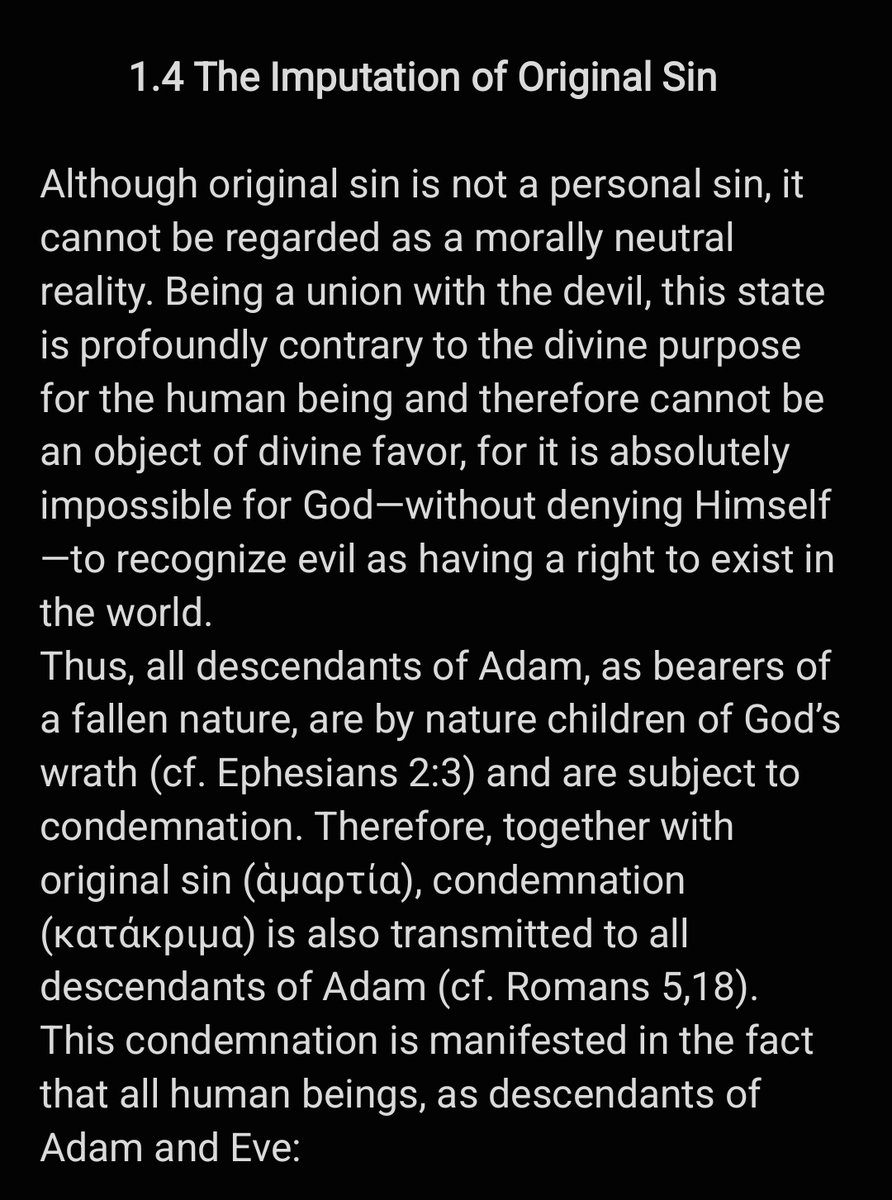
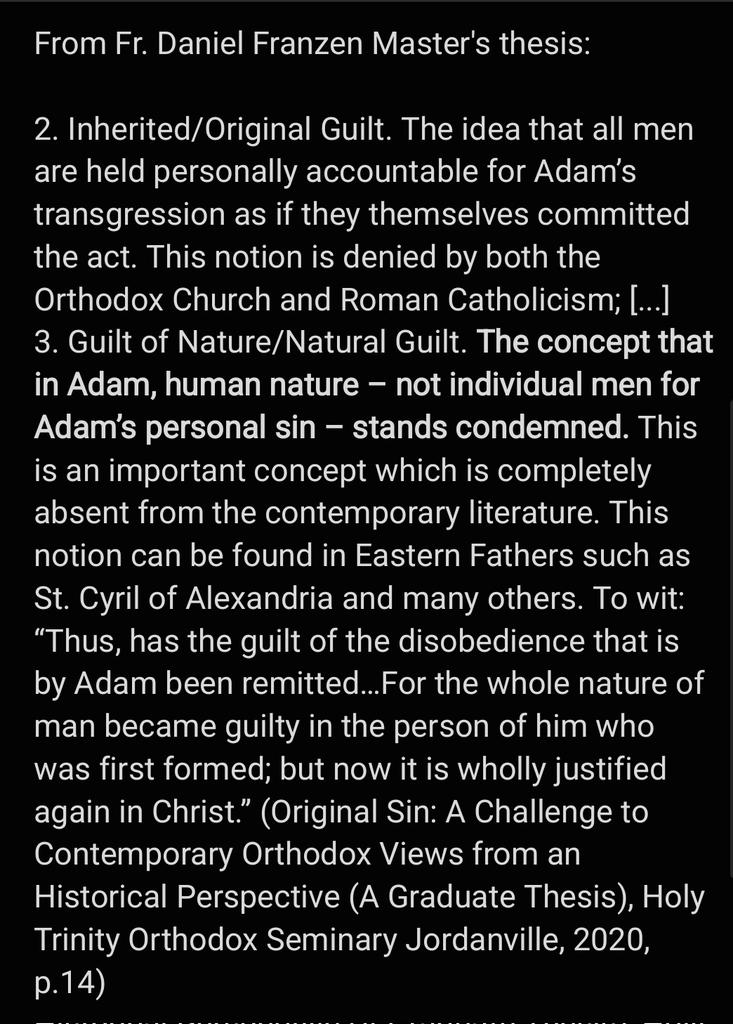
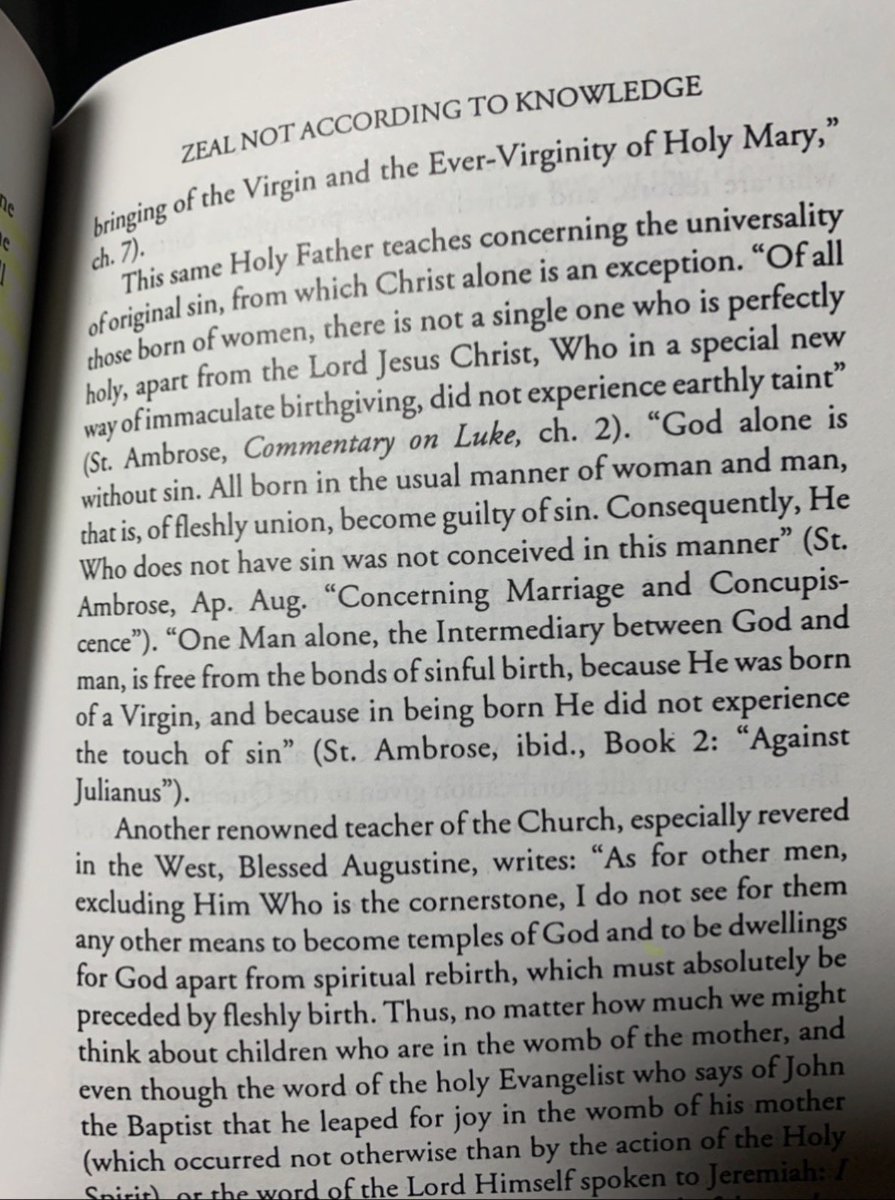
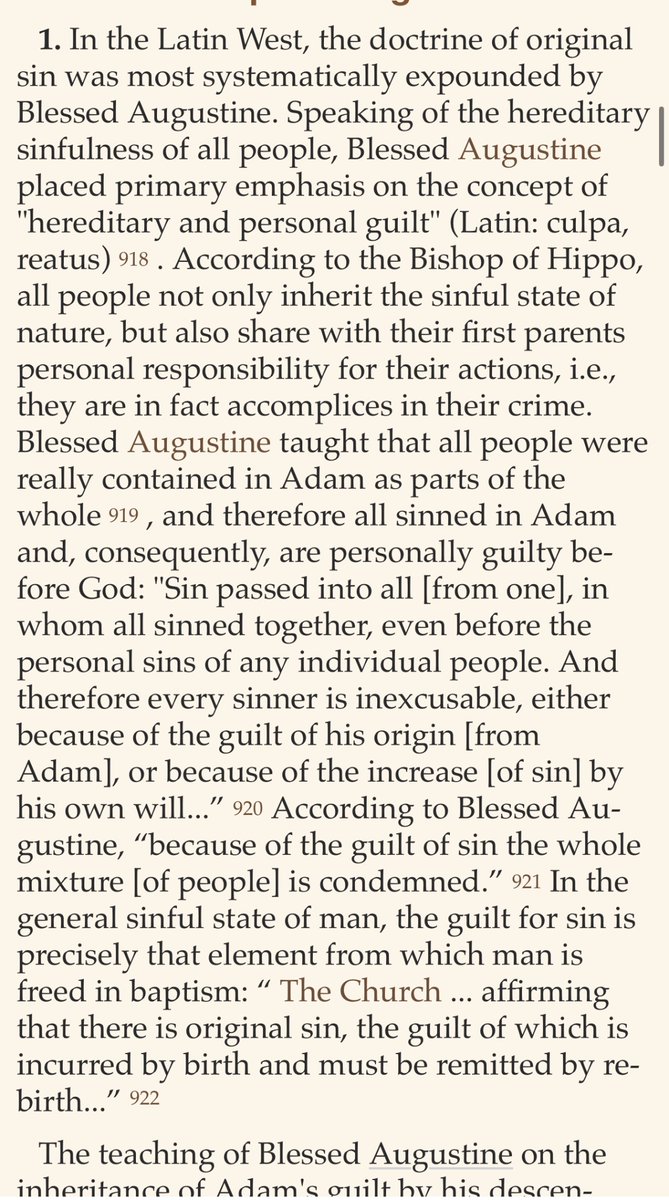
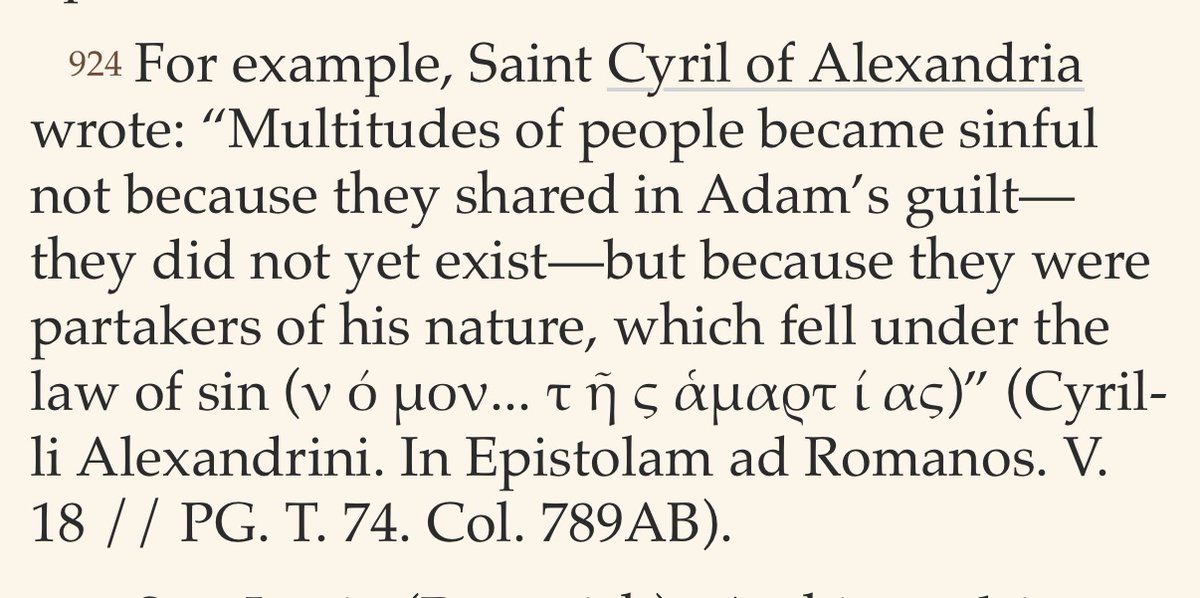
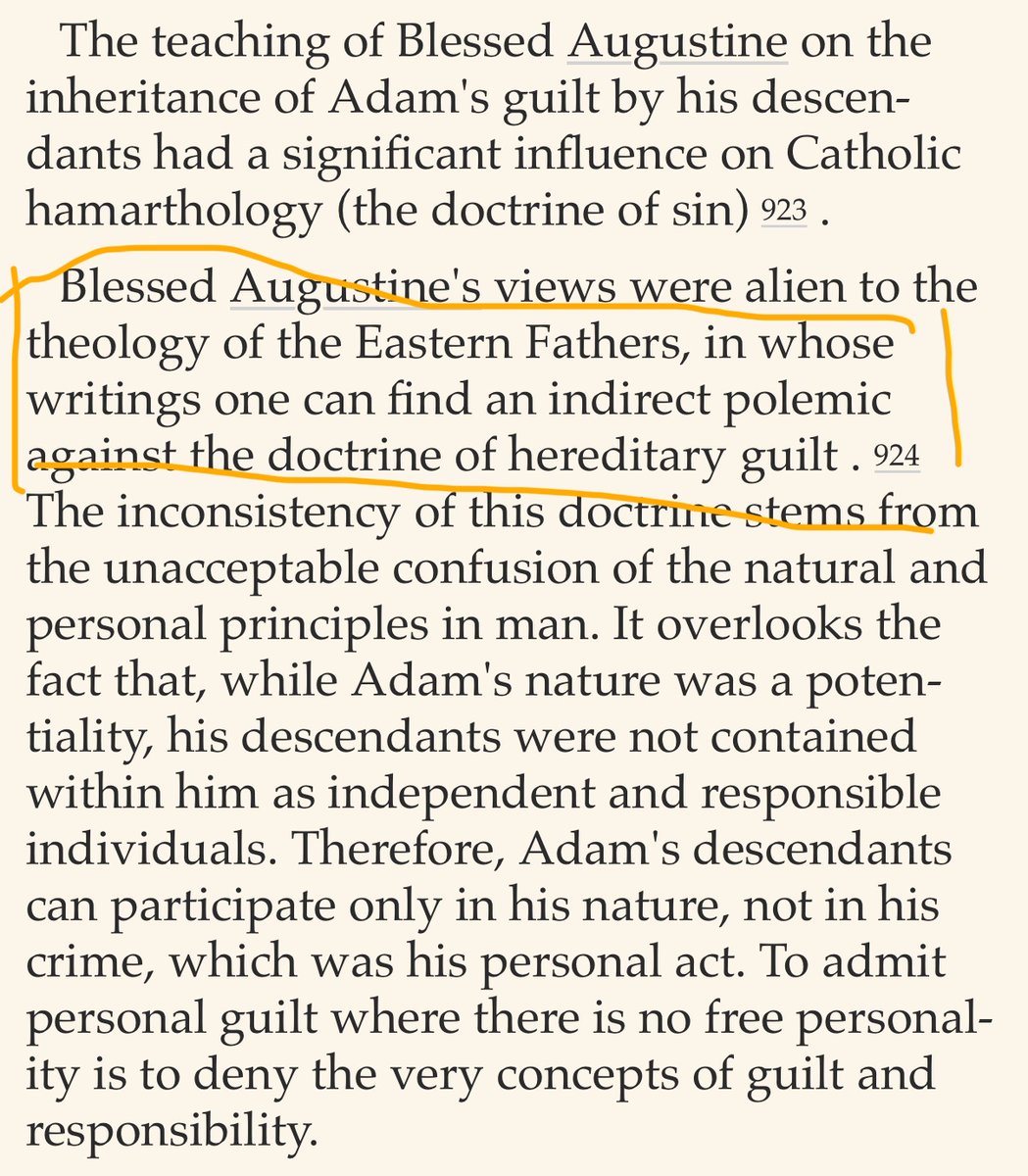
Excerpts from Archpriest Davydenkov’s Dogmatic Theology on the imputation of ancestral sin (or why we are guilty of it):
Lucas Falango (Ἱερώνυμος) tweet mediaLucas Falango (Ἱερώνυμος) tweet mediaLucas Falango (Ἱερώνυμος) tweet mediaLucas Falango (Ἱερώνυμος) tweet media
English
5
8
29
652
Nonya Biz
Nonya Biz@HylomorphicBro·
and, as many others have pointed out by now, the "natural guilt" is guilt by analogy, whereas the hereditary guilt per the Latin reading of Augustine is culpability, since each person was contained in Adam, and therefore they are conceived with true culpability, not just natural guilt-by-analogy (that is, a privation of grace).
English
0
0
1
8
Lucas Falango (Ἱερώνυμος)
@HylomorphicBro Exactly, and thats why Cyril himself can say that «the whole nature of man became guilty» in Adam. Not by hereditary guilt, but by the transmission of the sinful nature condemned by God.
Lucas Falango (Ἱερώνυμος) tweet media
English
1
0
0
17
Nonya Biz
Nonya Biz@HylomorphicBro·
@Falango1993 see my other comment on west vs east conceptual differences that underpin the word guilt.
English
0
0
1
8
Nonya Biz
Nonya Biz@HylomorphicBro·
right, but you fail to understand the whole point. the Orthodox understand guilt in terms of a deprivation, a privation, of deifying grace, rendering us unfit to enter into God's presence sans the regenerating waters of baptism. Rome went *further than this*, drawing on Augustine, that man also inherits the guilt qua CULPABILITY for Adam's sin. Denzinger 376 lists one of the dogmas to this effect. The proposition listed as anathema is: “That we have not contracted sin [culpa] from Adam, but only punishment [poena tantum]. (Quod non contraximus culpam ex Adam, sed poenam tantum.)" This, among other authoritative sources in the RCC, demonstrates that on their view, and as the Archpriest also agrees with, the Latin tradition on sin draws heavily from the view that man does inherit hereditary guilt qual culpability, per their reading of Augustine. The OC and RCC views on OS *are not the same*.
English
0
0
0
9
Nonya Biz
Nonya Biz@HylomorphicBro·
@EphraimICXC yea, it's a link to another thread, but relevant here nonetheless
English
0
0
0
31
Nonya Biz
Nonya Biz@HylomorphicBro·
@Falango1993 so you know the fathers more than the author, got it. LOL
English
0
0
0
4
Nonya Biz
Nonya Biz@HylomorphicBro·
@Falango1993 you want me to take him as an authority where you agree with, and not with where you don't. making *yourself* the authority. please just stop. you got ratio'd. take the L
English
0
0
0
4
Lucas Falango (Ἱερώνυμος)
@HylomorphicBro We sure don't believe we sin with/alongside Adam (existing in him as persons). But I don't know if Augustine really departed from the common understanding of the Eastern Fathers in this matter (maybe later interpreters?) x.com/i/status/20057…
Dmitry@blessedmikko

St. Augustine’s denial that humanity “pre-existed in Adam” as a “neo-Platonic form”, shutting Modernist lips: ‘Moreover, in the Holy canonical scriptures, the clearest and fullest authority of this doctrine prevails. The Apostle exclaims: “Through one man sin entered into the world, and through sin death; and so death spread to all men, in whom all have sinned” (Rom. 5:12). Hence neither can it be certainly stated that the sin of Adam harmed even those who did not sin, since Scripture says, “in whom all have sinned.”  Nor are these sins called “another’s” as if they do not pertain at all to infants: for indeed, in Adam all sinned at that time when, by that inherent power of his nature by which he could beget them, all were still that one man (quando in ejus natura illa insita vi qua eos gignere poterat, adhuc omnes ille unus fuerunt). But they are called “another’s” because they themselves were not yet living their own lives, but whatever existed in the future progeny was contained in the life of that one man (sed quidquid erat in futura propagine, vita unius hominis continebat). “For no reason,” they say, “is it granted that God, who forgives one's own sins, would impute another’s sins.” He remits, but to those regenerated in spirit, not [to those] generated in the flesh; He imputes, indeed, not now another’s [sins], but one's own. For they [Adam’s sins] were another’s, when those [Adam’s offspring] who carried them propagated [them], did not yet exist (Imputat vero non jam aliena, sed propria. Aliena quippe erant, quando hi qui ea propagata portarent, nondum erant). But now through carnal generation, they [the sins] belong to those to whom they have not yet been forgiven through spiritual regeneration.’ –De Meritis et Remissione Peccatorum et de Baptismo Parvulorum, III.8

English
2
0
2
22
Nonya Biz
Nonya Biz@HylomorphicBro·
what more are you looking for? the mode of change, meaning, the precise way in which we say the bread and wine become the body and blood of Christ, pinpointing what is meant by "real" and "become"; the manner of this change in other words. Trent hitched the RCC dogmatically to a very narrow philosophically technical schema that came out of the scholastic period. Orthodoxy did no such thing, otherwise, someone would be committing heresy by insisting that ousia might be a better term than substance - even though both are inadequate and we don't know for sure "how it works". ousia and substance are not the same thing, btw.
English
1
0
0
29
John
John@John_markos_·
@HylomorphicBro Do me a favor: actually answer the question I just asked you, and then we'll see if what you cited is true.
English
0
0
2
23
Nonya Biz
Nonya Biz@HylomorphicBro·
@Falango1993 @Acolyte83349490 I believe you’ve been called terrible names for saying Augustine held to this view. These latinizers need to get off adderall and go to liturgy
English
0
1
0
32
Nonya Biz retweetledi
Nonya Biz
Nonya Biz@HylomorphicBro·
Weren’t we promised by the latinizers here that Augustine taught no such thing? This is from the same section. He agrees that (a) the eastern fathers’ view of OS is inconsistent with hereditary guilt, (b) that hereditary guilt (culpability) is a hallmark view of Augustine’s, and (c) that the Orthodox Church doesn’t uphold this view which the Latins have and still affirm.
Nonya Biz tweet media
English
2
1
2
60