Ian Power 🇺🇦

31.6K posts

Ian Power 🇺🇦 banner
Ian Power 🇺🇦

Ian Power 🇺🇦

@IJP74

Retired Master Mariner. #ReJoin #FBPE BREXIT = voting to 'take back' what we had never lost, in order to lose everything we had.


Oxfordshire Katılım Mayıs 2011
6.6K Takip Edilen5.5K Takipçiler
Sabitlenmiş Tweet
Ian Power 🇺🇦
Ian Power 🇺🇦@IJP74·
If the leave promises are undeliverable, where's the mandate?
English
4
54
134
0
Ian Power 🇺🇦 retweetledi
ALASTAIR CAMPBELL
ALASTAIR CAMPBELL@campbellclaret·
BLIMEY - there will doubtless and rightly be a lot of focus on the limit on overseas donations and the ban on crypto (tick to both) but in some ways might this be the most important paragraph in the Rycroft report on foreign interference in our politics (prompted in part by Russian funding of Farage Party) “Separately, beyond these hostile state threats, I am also cognisant of a potential new threat: an emerging willingness of foreign actors and private citizens, including from allies like the United States, to interfere in, and influence, politics abroad in pursuit of their own agenda.” In other words USA has joined Russia, China, Iran in seeking to subvert our democracy. Time to call them out !!! Perhaps JD Vance could pop in for a chat after his campaign stop in Hungary
English
86
495
1.7K
72.3K
Ian Power 🇺🇦 retweetledi
Harry Eccles
Harry Eccles@Heccles94·
I seem to have upset the @SuellaBraverman fan club - so let me be clear. This women sows hate, lies and division. She is wrong. She does not represent the vast majority of Britons. RT if you agree P.s. multiculturalism is great.
Harry Eccles tweet media
English
1.2K
14.8K
17.1K
542.2K
Nick Timothy MP
Nick Timothy MP@NJ_Timothy·
British democracy. Tower Hamlets, 2026.
Nick Timothy MP tweet media
English
453
997
8.7K
650.1K
Claire Coutinho
Claire Coutinho@ClaireCoutinho·
Labour just voted to block North Sea drilling during an energy crisis. Turning down more domestic supply and £25 BILLION in extra tax revenue. That means more taxes on ordinary people instead. Economically illiterate doesn't even begin to cover it.
English
704
3.8K
13K
240K
Andrew Griffith MP
Andrew Griffith MP@griffitha·
Labour want to rejoin the Brussels lunch club — surrendering Britain’s freedom so 27 other countries can decide our destiny. They tried to give away the Chagos Islands. Now they’re trying to give away control of Britain to Brussels. Conservatives won’t let them. 👇
English
299
232
770
23.2K
Ian Power 🇺🇦 retweetledi
Rory Stewart
Rory Stewart@RoryStewartUK·
It is so difficult to understand why Trump launched his Iran operation - an op so clearly damaging to US national interests, the global economy, Ukraine and the US’ closest allies in Europe and the Gulf. Then there is this….
Adam Cochran (adamscochran.eth)@adamscochran

5 minutes before Trump’s announcement: * $1.5B notional worth of S&P500 (ES) futures are bought in a single clip. * $192M notional of oil futures (CL) sold. More than 4x-6x any other trade size during the market close. Insiders profited from his lies in broad daylight!

English
580
3K
10K
728.5K
Ian Power 🇺🇦 retweetledi
Shanaka Anslem Perera ⚡
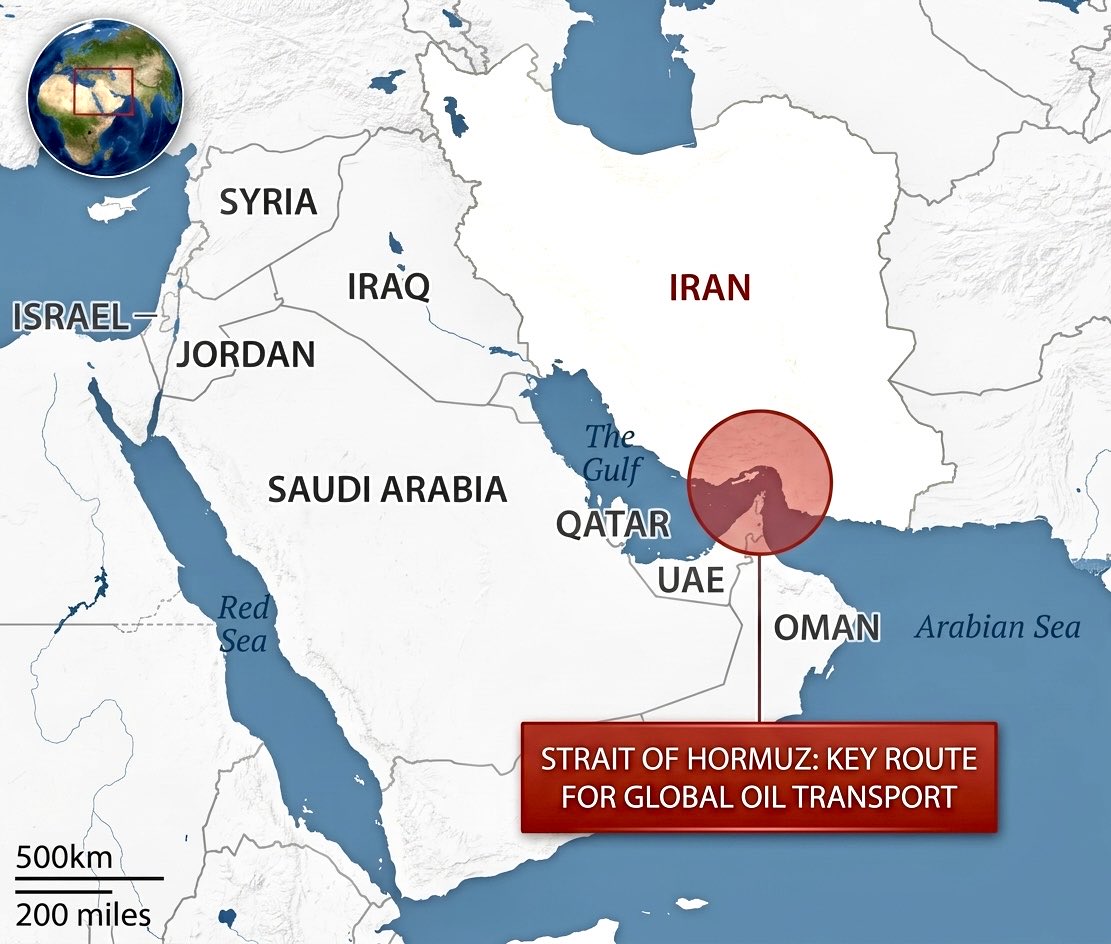
BREAKING: South Korea just announced mandatory fuel rationing. Government vehicles at public institutions barred from operating one day each week on a five-day licence plate rotation. The world’s 10th largest economy, a G20 member, a semiconductor superpower, home to Samsung and SK Hynix, the country that fabricates a quarter of the world’s memory chips, is rationing fuel like Sri Lanka. South Korea imports 73 to 87 percent of its oil from the Middle East. Every barrel transits the Strait of Hormuz. The strait is closed and mined. There is no alternative route for Korean crude imports at scale. The Kospi crashed 4.9 percent on Monday before Trump’s “productive conversations” post briefly eased the panic. The won is weakening. Inflation is accelerating. And now the Energy Minister is telling government workers which days they cannot drive. Count the dominoes. Sri Lanka rationed first: Wednesdays off, QR codes at pumps, LPG vanished from southern shelves. Bangladesh followed with public holidays to conserve fuel. Pakistan imposed restrictions. India tightened allocations. Slovenia became the first EU country with QR codes and odd-even plates. Now South Korea. The rationing is no longer a developing-world phenomenon. It is migrating up the GDP ladder. The 10th largest economy. The 12th largest military budget. A US treaty ally hosting 28,500 American troops. Rationing. Those 28,500 troops run on fuel. USFK operates bases across the peninsula that require continuous diesel, aviation fuel, and generator capacity. Joint exercises with the ROK military consume thousands of tonnes of fuel annually. Every barrel of that fuel traces back to the same Middle Eastern supply chain that South Korea’s Energy Minister just acknowledged cannot sustain civilian demand. If civilian vehicles are being restricted, military logistics are under pressure. If military logistics are under pressure, deterrence against North Korea erodes. If deterrence erodes, Pyongyang and Beijing calculate. The Strait of Hormuz is 7,500 kilometres from the Korean DMZ. The fuel that deters Kim Jong Un transits a chokepoint held closed by Iran’s 140 remaining missile launchers. Kim Jong Un is watching. Every day that South Korea rations fuel is a day that North Korea’s calculus shifts. Not toward war, not yet, but toward the conclusion that the American alliance system has a fuel dependency that a single regional conflict can exploit. The US cannot simultaneously secure the Strait of Hormuz with carrier groups, deploy 82nd Airborne paratroopers to the Iran theater, accelerate the 11th MEU from San Diego, AND maintain full deterrence posture on the Korean Peninsula. Something gives. The fuel rationing in Seoul is the first visible signal of what is giving. Taiwan is watching too. TSMC’s fabrication plants in Hsinchu are counting LNG reserves in single-digit days. Taiwan imports virtually all of its energy. If South Korea, with its larger strategic reserves and diversified economy, is already rationing, Taiwan’s timeline is shorter. The chips that power every Nvidia GPU, every Apple processor, every AI training run on Earth depend on a gas supply that depends on a strait that depends on a 5-day pause that depends on a Truth Social post that Iran says corresponds to nothing. Sri Lanka. Bangladesh. Pakistan. India. Slovenia. South Korea. Six countries rationing. Three continents. One strait. The molecules do not check GDP rankings. The molecules check whether the chokepoint is open. It is not. open.substack.com/pub/xerion/p/a…
Shanaka Anslem Perera ⚡ tweet media
English
153
1.8K
4.2K
538K
Ian Power 🇺🇦 retweetledi
Shanaka Anslem Perera ⚡
BREAKING: The Strait of Hormuz is no longer closed. It is no longer open. It is something the world has never seen before: a permissioned corridor run by the Islamic Revolutionary Guard Corps, priced at $2 million per vessel, payable in yuan. Three ships transited in the last 24 hours. Three. Out of a pre-war average of 60 per day. Total throughput: 310,000 deadweight tonnes. Three percent of normal. Four hundred vessels are waiting outside the strait right now. One hundred and fifty tankers. One hundred and twenty bulk carriers. One hundred and thirty others. Waiting for permission from the IRGC Navy to enter a 5-nautical-mile channel between Larak and Qeshm islands inside Iranian territorial waters. This is how the gate works. A vessel operator contacts approved intermediaries with IRGC connections, submitting full documentation: IMO number, ownership chain, cargo manifest, destination, crew list. The intermediaries forward the package to the IRGC Navy’s Hormozgan Provincial Command for sanctions screening, cargo alignment checks that prioritise oil over all other commodities, and geopolitical vetting. The toll is approximately $2 million per tanker. For a VLCC carrying 2 million barrels, that is $1 per barrel. Preferred currency: yuan. If the vessel passes, the IRGC issues a clearance code and route instructions. Upon approach, VHF radio hail, AIS verification, patrol boat escort. One ship at a time. Through the narrowest channel of the most important waterway on Earth. Iranian crude is still flowing. Approximately 1.1 to 1.5 million barrels per day, mostly to China, at near pre-war levels. Iran’s own oil transits the strait it controls. The blockade applies to everyone else. Iran is simultaneously the gatekeeper and the primary beneficiary. The toll funds the IRGC. The IRGC maintains the gate. The gate generates the toll. The circle is self-sustaining. Now look at what is NOT transiting. Fertiliser. Gulf nations supply 49 percent of the world’s exported urea. Ammonia requires the natural gas that Qatar declared Force Majeure on and that Iranian strikes disrupted at South Pars. Effectively zero fertiliser vessels have received approval through the permissioned corridor. The IRGC is prioritising oil because oil generates revenue. Fertiliser does not. The molecules that feed four billion people are trapped behind a gate that only opens for molecules that fund the gatekeeper. The yuan preference is the structural shift that outlasts the war. Every tanker that pays in yuan instead of dollars establishes a precedent. Every precedent weakens the petrodollar architecture that has governed energy trade since 1974. The IRGC is not just blocking a strait. It is building an alternative payment rail under live fire. The $2 million toll in yuan is not a fee. It is a proof of concept for a post-dollar energy settlement system, stress-tested in the most extreme conditions imaginable: a three-front war with the world’s largest military. The world’s central banks are trapped by the same strait: the Fed cannot cut, the ECB is hiking, the BOJ is tightening. Six countries are rationing fuel. Japan’s 10-year yield hit a 27-year high. Slovenia has QR codes at the pump. South Korea is barring government vehicles one day per week. And behind all of it, 400 ships wait outside a 5-nautical-mile channel for a clearance code from the IRGC Navy, payable in a currency that is not the dollar. Twenty percent of the world’s oil supply. Controlled by a VHF radio call and a yuan transfer. The strait did not close. It changed ownership. open.substack.com/pub/shanakaans…
Shanaka Anslem Perera ⚡ tweet media
English
652
4.2K
10.3K
1.6M
Ian Power 🇺🇦 retweetledi
Financial Times
FT Exclusive: Traders made bets worth half a billion dollars in the oil market about 15 minutes before Donald Trump’s post touting 'productive' talks with Iran sent the price of crude tumbling ft.trib.al/5jnFcCt
Financial Times tweet media
English
52
3.4K
7K
2.2M
Ian Power 🇺🇦 retweetledi
Shanaka Anslem Perera ⚡
BREAKING. Thirty-six hours ago President Donald Trump said “obliterate.” This morning he said “productive conversations.” The question every trader, diplomat, and general is asking: what broke between Saturday night and Monday morning? Six things broke simultaneously. Not one of them was Iranian. First. The bill arrived. The Pentagon requested over $200 billion in supplemental funding. The war cost $11.3 billion in six days, $16.5 billion in twelve. At $1.38 billion per day and accelerating, congressional resistance to the supplemental is real. The money that was supposed to fund “days not weeks” now needs a vote that may not pass. Second. The Fed killed the rate-cut thesis. On March 18, the Federal Reserve held rates at 3.5 to 3.75 percent and revised its 2026 PCE inflation forecast to 2.7 percent from 2.4, citing the Iran war energy shock. The dot plot shows one cut in all of 2026, down from two. Every basis point of delayed easing is pain for housing, credit, and the Magnificent Seven. The war that was supposed to demonstrate strength is demonstrating inflation. Third. The allies revolted politely. Twenty-two countries signed up to coordinate on Hormuz. Zero committed a warship during combat. Japan is releasing strategic reserves. South Korea’s Kospi has fallen 12 percent. Europe’s gas surged 35 percent after Qatar’s LNG was knocked offline & declared force majeure up to 5 years. Trump called NATO “cowards” and got a press release. The coalition of the willing is a coalition of the waiting. Fourth. TSMC sent the signal. Taiwan imports nearly 97 percent of its energy. Its LNG reserves cover 11 days. Qatar supplies a third of global helium, which TSMC needs for chip fabrication. The helium is bottled behind a closed strait. Every Nvidia GPU, every Apple chip, every AI cluster depends on a fab in Hsinchu counting its gas in single-digit days. The Magnificent Seven have shed hundreds of billions as energy rotation crushes tech. Fifth. Birol named the damage. The IEA chief told Australia this morning that 40 energy assets across nine countries are severely damaged, global oil supply has fallen 11 million barrels per day, the crisis exceeds both 1970s shocks combined, and no country is immune. He named fertilisers and helium as interrupted flows. The man who runs global energy security called the war Trump started the worst energy crisis in modern history. Sixth. The midterms. Gas prices are up 93 cents per gallon. Sixty-six percent of Americans call this a war of choice. Sixty percent disapprove. Fifty-seven percent say it is going badly. The numbers that matter in Washington are not barrels per day. They are approval ratings in swing states where voters fill their tanks every Tuesday. Six pressures. One post. President Trump did not discover diplomacy. He discovered arithmetic. The 48-hour ultimatum was a threat. The 5-day pause is a confession that the threat’s consequences were worse than its target. Destroying power plants would have sealed the strait permanently, triggered Ghalibaf’s promise to “irreversibly destroy” Gulf desalination and energy infrastructure, crashed TSMC’s supply chain, spiked inflation past 3 percent, and handed the midterms to the opposition on a platter of $7 gasoline. The pause is real. The relief is not. The strait is still closed. The 40 assets are still damaged. The fertiliser is still blocked. The planting window is still closing. The five-day clock is already ticking. The molecules do not negotiate. The molecules wait. Full deep dive analysis: open.substack.com/pub/shanakaans…
Shanaka Anslem Perera ⚡ tweet media
Shanaka Anslem Perera ⚡@shanaka86

BREAKING: In the last 24 hours, the 2026 Iran war crossed four thresholds simultaneously. Each one would be the lead story of any other week. Together they form the architecture of an escalation spiral that has no off-ramp visible from any capital on Earth. First. Iran struck Arad and Dimona in southern Israel on Saturday night, injuring approximately 180+ people. These are the towns nearest Israel’s Negev nuclear research centre. Tasnim confirmed the strikes were retaliation for Israel’s attack on the Natanz nuclear facility. Iranian missiles penetrated Israeli air defences and left large craters in residential areas. Prime Minister Netanyahu called it “a very difficult evening in the battle for our future.” The IRGC said it targeted military installations across five cities: Arad, Dimona, Eilat, Beersheba, and Kiryat Gat. Second. Israel continued strikes on Tehran and Isfahan overnight into Sunday. Massive joint US-Israeli air raids hit multiple areas of the capital. CENTCOM confirmed the US has now struck over 8,000 military targets across 23 days of war, including 130 Iranian vessels, which it called “the largest elimination of a navy over a three-week period since World War II.” Iran’s energy minister confirmed on Sunday that “the country’s vital water and electricity infrastructure has suffered heavy damage” from US and Israeli strikes, including “dozens of water transmission and treatment facilities” and “critical water supply networks.” Israel previously struck South Pars, Iran’s portion of the world’s largest gas field. Eighty percent of Iranian electricity comes from natural gas. The attack on South Pars directly threatens power generation for 90 million people. Third. President Trump posted his 48-hour ultimatum Saturday night: reopen the Strait of Hormuz by Monday evening or the US will “hit and obliterate” Iranian power plants “starting with the biggest one first.” Iran’s armed forces responded that the strait would be “completely closed” if power plants are hit. Parliament Speaker Ghalibaf posted on X that all energy and oil infrastructure across the entire region would become “legitimate targets” and be “irreversibly destroyed.” That word “irreversibly” is doing the work of a thousand missiles. It means desalination plants. It means refineries. It means the infrastructure that produces drinking water for the Arabian Peninsula. Fourth. Saudi Arabia expelled Iranian diplomats. Riyadh declared the military attache, his deputy, and three other embassy members persona non grata with 24 hours to leave. This follows ongoing Iranian strikes on Saudi territory. Turkey’s foreign minister warned from Riyadh that Gulf countries may be forced to retaliate. The Gulf states, which have so far absorbed Iranian attacks without entering the war, are running out of room. Now hold all four escalations simultaneously. Iran strikes Israel’s nuclear doorstep. Israel and the US hammer Iranian water and power. Trump sets a 48-hour clock on power plant destruction. Iran promises permanent Hormuz closure and irreversible destruction of regional infrastructure if the clock runs out. Saudi expels Iranian diplomats. The Gulf moves toward belligerency. Brent trades above $113. WTI above $100. Goldman forecasts $110 to $125 for April with tail risk to $150. The IEA has released 400 million barrels of emergency reserves, the largest in history. The 48-hour clock expires Monday evening. Every barrel trapped in the Gulf is a barrel that does not become fertilizer. Every power plant destroyed in Iran is a megawatt that does not synthesise ammonia. Every desalination plant threatened in the Gulf is drinking water for millions. The war is no longer about missiles and territory. It is about molecules: water, nitrogen, helium, crude. The missiles are the mechanism. The molecules are the consequence. And the clock is ticking. Full Deep dive article - open.substack.com/pub/shanakaans…

English
380
1.9K
4.8K
3.3M
Ian Power 🇺🇦 retweetledi
Gandalv
Gandalv@Microinteracti1·
A former NATO commander just said the quiet part out loud. Trump is trapped. The military logic of this war has collapsed into a binary no one in Washington wants to say clearly: either launch a ground invasion of Iran – a country of 90 million people, mountainous terrain, and three decades of asymmetric warfare doctrine – or declare victory over rubble and go home. Neither is winning. One is catastrophe. The other is theatre. The Strait of Hormuz is still contested. Iranian proxies are still operational. The nuclear program is dispersed, hardened, and possibly accelerated. Air strikes didn’t end the threat. Every day this drags on, the gap between what was promised and what is achievable gets wider. Gandalv / @Microinteracti1
English
392
3.9K
13.2K
1.3M
Ian Power 🇺🇦 retweetledi
Gandalv
Gandalv@Microinteracti1·
It’s a drone. Chasing another drone. Into actual clouds. And it works. The Ukrainians have built a flying angry wasp that hunts Iranian Shaheds for roughly the price of a second-hand lawnmower. Ukraine would share this. They’d teach it. They’d probably fly the damn things themselves to protect American soldiers in the Middle East. But Trump won’t ask. Because the man who could save American lives happens to be Volodymyr Zelensky. And that, apparently, is a dealbreaker. So the Shaheds fly. Unmolested. Toward Americans. Own goal. Absolutely spectacular own goal. Gandalv / @Microinteracti1
English
131
2K
8K
278.9K
Ian Power 🇺🇦 retweetledi
Shanaka Anslem Perera ⚡
This is what the Iran war looks like at hour 504. A British nuclear-powered submarine has entered the Arabian Sea with the capability to strike Iranian territory from underwater. Inside the Strait of Hormuz, a US Navy Littoral Combat Ship that the Pentagon once tried to scrap is launching expendable attack drones from its flight deck into Iranian air defences. The drones cost less than a pickup truck. The ship was called floating garbage. Cracking hulls. Gearboxes grinding to dust. Ships decommissioned before they saw combat. Tonight the ship nobody wanted is running the mission nobody else can, because billion-dollar carriers cannot enter a 21-mile strait and a throwaway trimaran can. Israel declared a mass casualty incident and a state of emergency in Arad after an Iranian ballistic missile struck the city. Major waves of US-Israeli bombs hit Tehran overnight. Iran’s state broadcaster announced the death toll from American and Israeli strikes has passed 1,500 according to the Health Ministry. Iran’s military claims it struck an Israeli F-16 with a new air defence system and says it has spent three weeks studying coalition tactics. The battlefield, Tehran says, will become narrower and tougher for the enemy. Israel says the war is halfway complete. Halfway. Twenty-two days in. Halfway means twenty-two more. Unconfirmed reports describe explosions at Prince Sultan Air Base in Saudi Arabia, sirens and blasts at US facilities in Kuwait, and drone strikes on Kurdish positions in Sulaymaniyah, Iraq. The Gulf is under fire everywhere at once tonight. Iran denied involvement in the ballistic missile attack on Diego Garcia, the British base 4,000 kilometres away where two missiles were fired this week. Tehran says it was not them. Nobody else has intermediate-range ballistic missiles pointed at the Indian Ocean. The radiological risk is now in play. Malcolm Nance warned that near misses on nuclear facilities are a recipe for regional catastrophe. A cracked containment dome at Bushehr could contaminate the entire Gulf coast from Dubai to Ras Al Khaimah. Iran’s Dimona equivalent sits within Israeli strike range. Intelligence professionals know you do not push the margin of error when reactors are in play. Both sides are pushing it. President Trump’s 48-hour ultimatum is running. Open Hormuz fully, without threat, or the United States will obliterate Iran’s power plants, starting with the biggest one first. Iran responded within hours: any attack on its infrastructure will trigger widespread destruction in Israel and targeting of all energy, IT, and desalination facilities belonging to US allies. Desalination. The Gulf gets 42 to 99 percent of its drinking water from coastal plants within Iranian missile range. Hitting Saudi Arabia’s Jubail complex alone could force the evacuation of Riyadh’s 8.5 million residents within a week. The president who said he does not want a ceasefire on Friday afternoon said he was winding down on Friday evening. By Saturday his administration was laying groundwork for peace talks. By Saturday night he threatened to obliterate power plants. Four signals. Thirty-six hours. The bombs did not pause for any of them. Hour 504. A submarine that can strike from the deep. A garbage ship launching drones that cost less than a truck. A city in Israel declaring mass casualties. A capital under bombardment. A nuclear reactor in the margin of error. A 48-hour clock. A water supply held hostage. A war that is halfway done, which means it is halfway from starting and halfway from whatever comes after. The strait is 21 miles wide. The war now covers 4,000 kilometres. And the clock is counting down to Monday. Full analysis: open.substack.com/pub/shanakaans…
English
99
618
2.4K
762.1K
Ian Power 🇺🇦 retweetledi
Gandalv
Gandalv@Microinteracti1·
Robert Mueller died last night. He was 81 years old. He had a wife who loved him for sixty years. He had two daughters, one of whom he met for the first time in Hawaii, in 1969, on a few hours of military leave, before he got back on the plane and returned to Vietnam. He had grandchildren. He had a faith he practiced quietly, without performance. He had, in the way of men who have seen real things and survived them, a quality that is increasingly rare and increasingly mocked in the country he spent his life serving. He had integrity. And tonight the President of the United States said good! I have been sitting with that word for hours now. Good. One syllable. The thing you say when the coffee is hot or the traffic is moving. The thing a man who has never had to bury anyone, never had to sit in the specific silence of a room where someone is newly absent, reaches for when he wants the world to know he is satisfied. Good. The daughters are crying and the wife is alone in the house and good. I want to speak directly to the Americans reading this. Not the political Americans. Just the human ones. The ones who have lost a father. The ones who know what it is to be in that first hour, when you keep forgetting and then remembering again, when ordinary objects become unbearable, when the world outside the window seems obscene in its indifference. I want to ask you, simply, to hold that feeling for a moment, and then to understand that the man you elected looked at it and typed a single word. Good. This is not a country having a bad day. I need you to understand that. Countries have bad days. Elections go wrong. Leaders disappoint. Institutions bend. But there is a different thing, a rarer and more terrible thing, that happens when the moral center of a place simply gives way. Not dramatically. Not with a single catastrophic event. But quietly, in increments, until one evening a president celebrates the death of an old man whose family is still warm with grief, and enough people find it acceptable that it becomes the weather. Just the weather. That is what is happening. That is what has happened. The world knows. From Tokyo to Oslo, from London to Buenos Aires, people are not angry at America tonight. Anger would mean there was still something to fight for, some remaining faith to be betrayed. What I see, in the reactions from everywhere that is not here, is something older and sadder than anger. It is the look people get when they have waited a long time for someone they love to find their way back, and have finally understood that they are not coming. America is being grieved. Past tense, almost. The idea of it. The thing it represented to people who had nothing else to believe in, who came here with everything they owned in a single bag because they had heard, somehow, across an ocean, that this was the place where decency was written into the walls. That idea is not resting. It is not suspended. It is being buried, in real time, with 7,450 likes before dinner. And the church said nothing. Seventy million people have decided that this man, this specific man who has cheated everyone he has ever made a promise to, who has mocked the disabled and the dead and the grieving, who celebrated tonight while a family wept, is an instrument of God. The pastors who made that bargain did not just trade away their credibility. They traded away the thing that made them worth listening to in the first place. The cross they carry now is a costume. The faith they preach is a loyalty oath with scripture attached. When the history of American Christianity is written, this will be the chapter they skip at seminary. Now I want to talk about the men who stand next to him. Because this is the part that actually breaks my heart. JD Vance is not a bad man. I have to say that, because it is true, and because the truth matters even now, especially now. Marco Rubio is not a bad man. Lindsey Graham is not a bad man. They are idiots, but not bad, as in BAD! These are men with mothers who raised them and children who love them and friends who remember who they were before all of this. They are not monsters. Monsters are simple. Monsters do not cost you anything emotionally because there is nothing in them to mourn. These men are something more painful than monsters. They are men who knew better, and know better still, and will get up tomorrow and do it again. Every small compromise they made had a reason. Every moment they looked the other way had a justification that sounded, at the time, almost reasonable. And now they have arrived here, at a place where a president celebrates the death of an old man and they will find a way, on television, to say nothing that means anything, and they will go home to houses where children who carry their name are waiting, and they will say goodnight, and they will say nothing. Their oldest friends are watching. The ones who knew Rubio when he still believed in something. Who knew Graham when he said, out loud, on the record, that this exact man would destroy the Republican Party and deserve it. Who sat next to Vance and thought here is someone worth knowing. Those friends are not angry tonight. They moved through anger a long time ago. What they feel now is the quiet, irrecoverable sadness of watching someone disappear while still being present. Of watching a person they loved choose, again and again, to become less. That is what cowardice costs. Not the coward. The people who loved him. And in the comments tonight, the followers celebrate. People who ten years ago brought casseroles to grieving neighbours. Who stood in the rain at gravesides and meant the words they said. Who told their children that we do not speak ill of the dead because the dead were someone's beloved. Those people are tonight typing gleeful things about a man whose daughters are not yet done crying. And they feel clean doing it. Righteous. Because somewhere along the way the thing they were given in exchange for their decency was the feeling of belonging to something, and that feeling is very hard to give up even when you can no longer remember what you gave for it. When Trump is gone, they will still be here. Standing in the silence where the noise used to be. Without the permission the crowd gave them. Without the pastor who told them their cruelty was holy. They will be alone with what they said and what they cheered and what they chose to become, and there will be no one left to tell them it was righteous. That morning is coming. Robert Mueller flew across the Pacific on military leave to hold his newborn daughter for a few hours before returning to the war. He came home. He buried his dead with honour. He served presidents of both parties because he understood that the institution was larger than any one man. He told his grandchildren that a lie is the worst thing a person can do, that a reputation once lost cannot be recovered, and he lived that, every day, in the quiet and unglamorous way of people who actually believe what they say. He was the kind of American the world used to point to when it needed to believe the story was true. He died last night. His wife is alone in their house in Georgetown. His daughters are learning what the world is without him in it. And somewhere in the particular hush that falls over a family in the first hours of loss, the most powerful man and the biggest loser on earth sent a message to say he was glad. The world that loved what America was supposed to be is grieving tonight. Not for Robert Mueller only. For the country that produced him and then became this. For the distance between what was promised and what was delivered. For the suspicion, growing quieter and more certain with each passing month, that the America people believed in was always partly a story, and the story is over now, and there is nothing yet to replace it. That is all it needed to be. A man died. His family is broken open with grief. That is all it needed to be. Instead the President said good. And the country that once stood for something looked away 🇺🇸 Gandalv / @Microinteracti1
Gandalv tweet media
English
4K
15.4K
48.9K
3.3M
Times Radio
Times Radio@TimesRadio·
"I'm not sure he even knows whose side he's on." @KemiBadenoch tells #TimesRadio that Keir Starmer has failed to show leadership on the Iran war by "pretending that he made a decision" and avoiding clear alignment with allies.
English
251
213
1.1K
62.3K
Ian Power 🇺🇦 retweetledi
Alex Taylor
Alex Taylor@AlexTaylorNews·
Brexiteers, never knowingly right👇
Alex Taylor tweet media
English
124
1.1K
5.3K
67.5K
Ian Power 🇺🇦 retweetledi
Feargal Sharkey
Feargal Sharkey@Feargal_Sharkey·
"Well I think it should be seriously considered". Secretary of State for the Environment Emma Reynolds speaking to Nick about the removal of Sir James Bevan's gong. So we agree, personally I would add the EA's chair to that, Emma Howard-Boyd CBE to that list in fact the whole board of both the EA and Ofwat should be under investigation for misconduct in public office. Their gross incompetence is now costing water bill payers hundreds of millions if not billions of pounds.
LBC@LBC

‘I think it should be considered…’ @NickFerrariLBC asks Labour's Emma Reynolds whether she thinks ex-Southern Water head Sir James Bevan should be stripped of his knighthood.

English
6
243
610
12.6K
Ian Power 🇺🇦
@NatalieFleetMP I don’t think the country has reunited after the division caused by the dishonest campaigns and negotiations about Brexit. It would be nice to know how you intend to repair the division.
English
0
0
2
13
Natalie Fleet MP
Natalie Fleet MP@NatalieFleetMP·
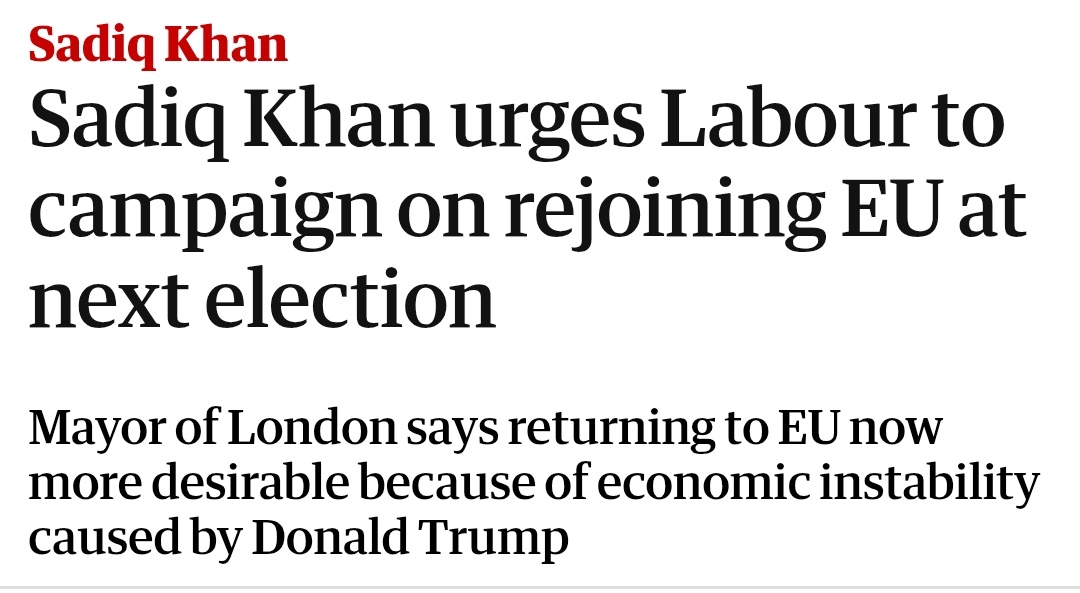
While London may want to rejoin, areas like mine that voted 70% to leave definitely do not. In an increasingly divided world, the last thing we need is to divide the country all over again by restarting this debate.
Pippa Crerar@PippaCrerar

Most senior Labour figure yet to openly call for party to put rejoining EU in next election manifesto. Will others now follow? (Very few even say this privately - but it’s a long time until the next election)…

English
666
113
908
140.2K
Ian Power 🇺🇦 retweetledi
Sadiq Khan
Sadiq Khan@SadiqKhan·
The evidence is overwhelming: Brexit has been a disaster for London and the UK. Rejoining the EU is now clearly in our national interest. The option to rejoin should be on the ballot at the next General Election. theguardian.com/politics/2026/…
Sadiq Khan tweet media
English
5
2K
8.6K
248.7K