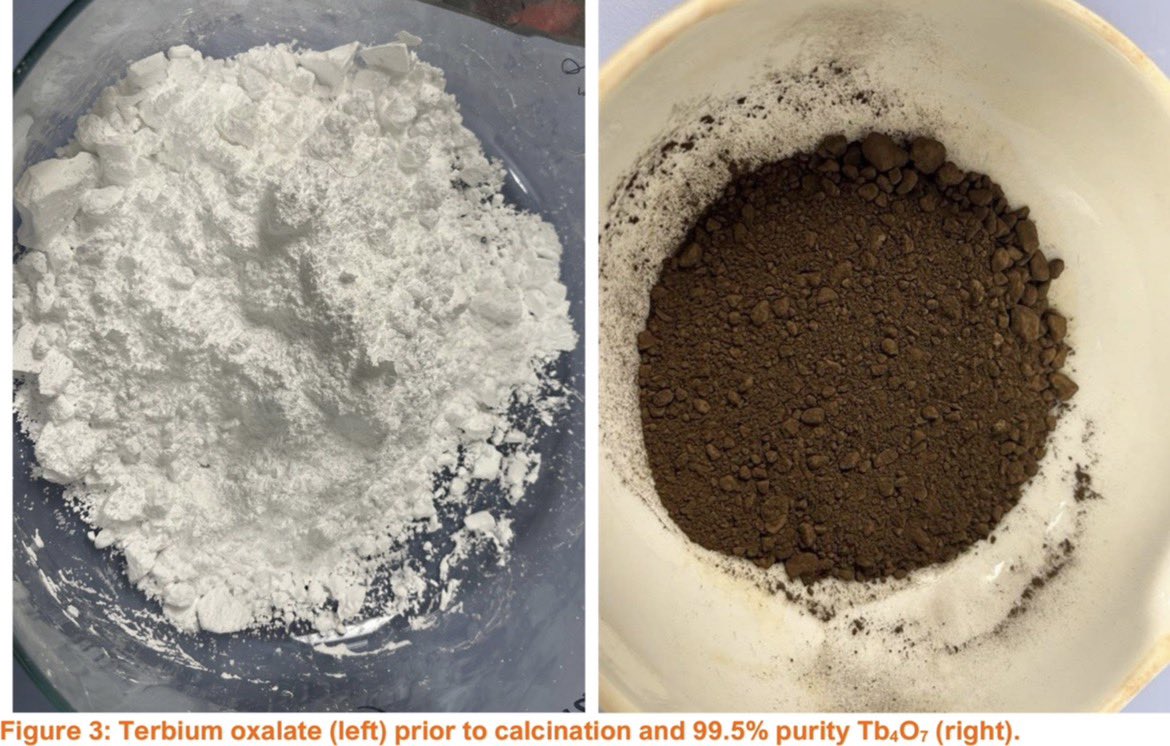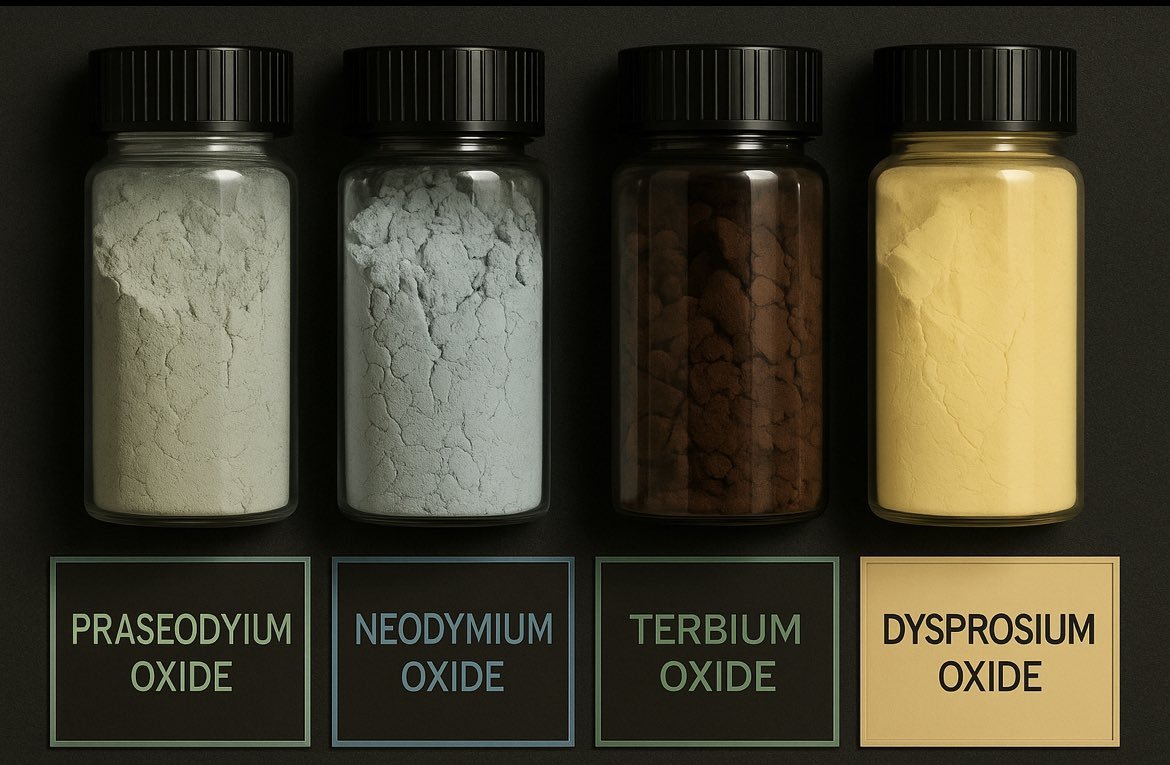
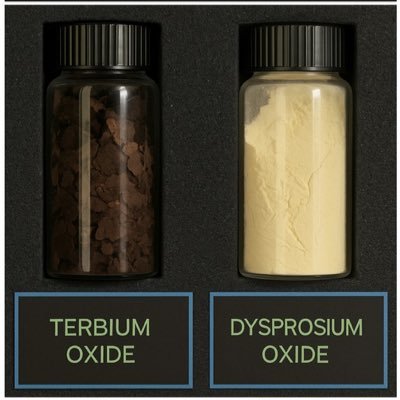
IXR Dy₂O₃ Tb₄O₇

567 posts

IXR Dy₂O₃ Tb₄O₇ banner
IXR Dy₂O₃ Tb₄O₇

IXR Dy₂O₃ Tb₄O₇

@IXR2THAMOON

DOING THINGS OTHERS CANNOT! $IXR

Katılım Temmuz 2025
361 Takip Edilen84 Takipçiler
IXR Dy₂O₃ Tb₄O₇ retweetledi
⚗️ NdPr DyTb | REO Analyst 🧲⭐
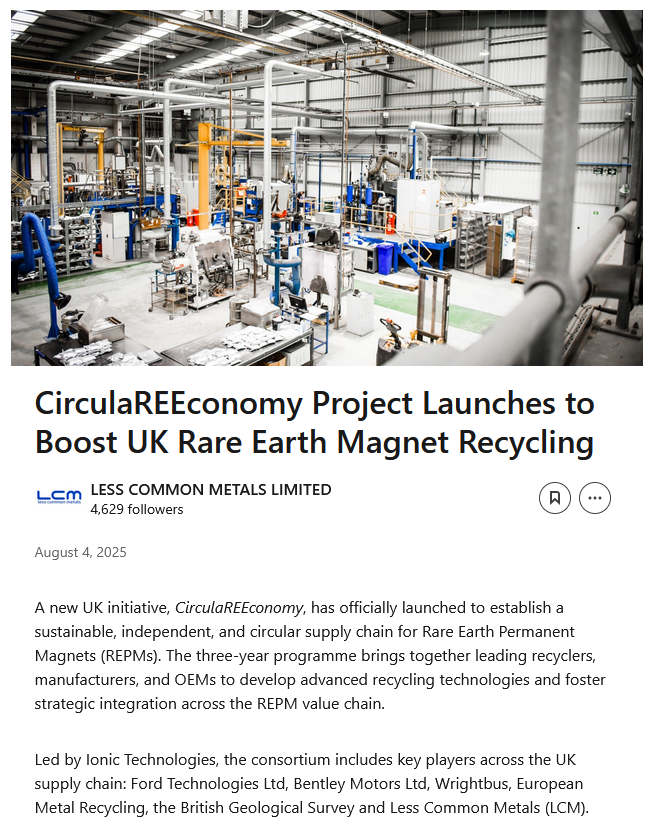
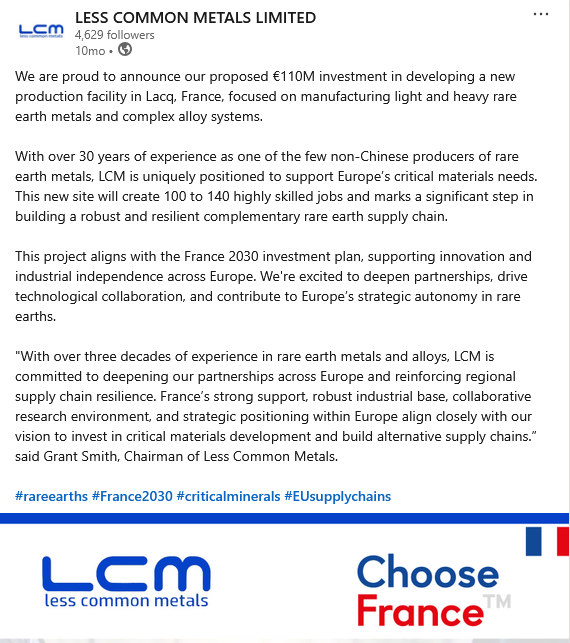
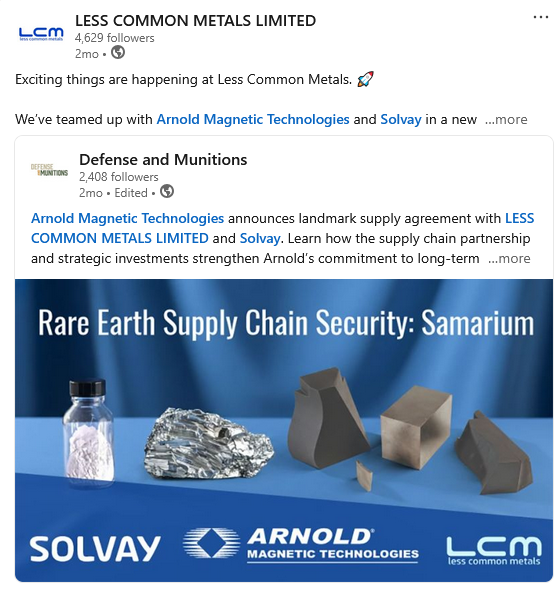
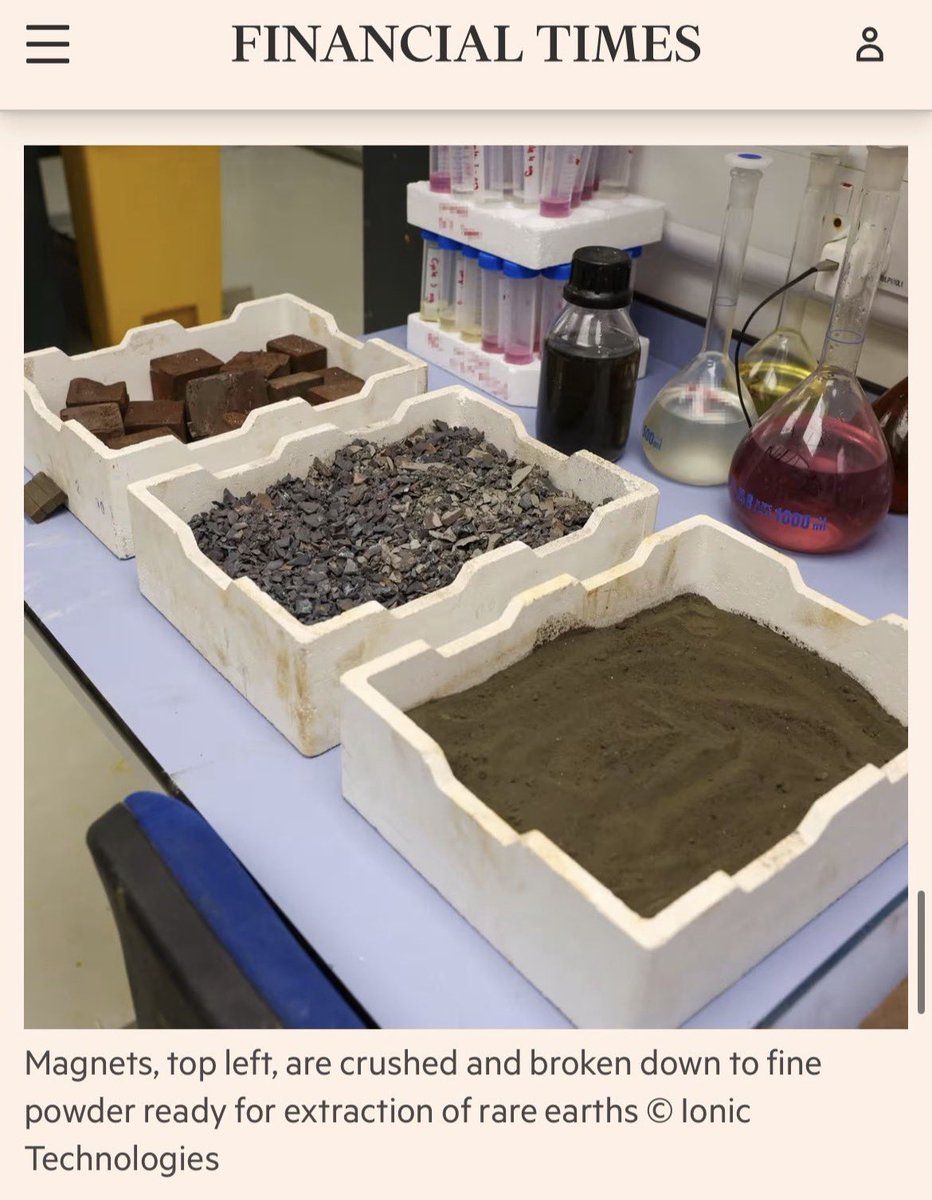
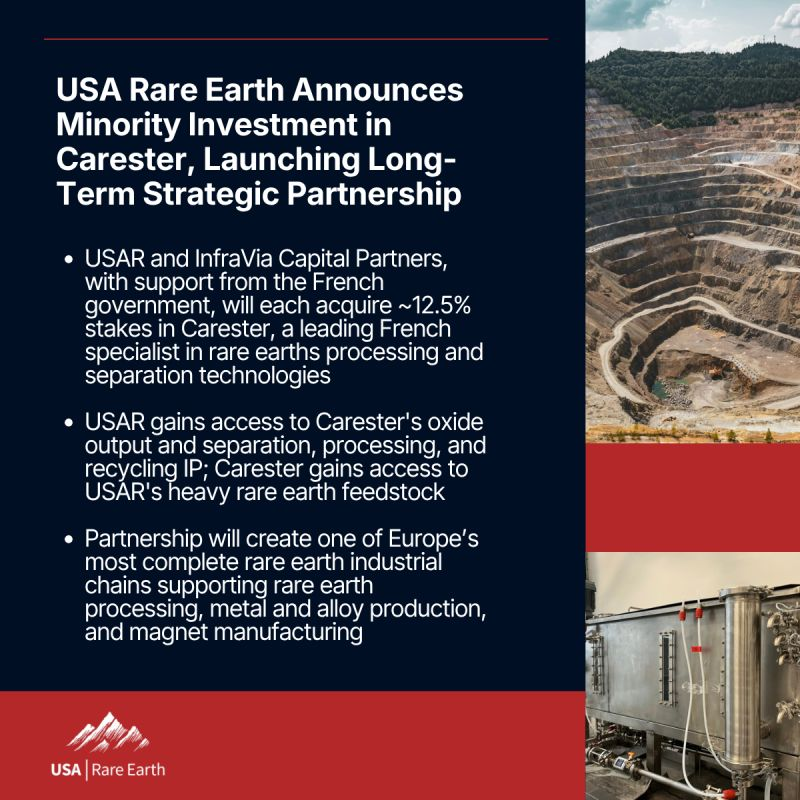
USA Rare Earth, Inc. (Nasdaq: USAR) and InfraVia Capital Partners are each acquiring a minority stake in CARESTER, a leading French specialist in rare earths processing and separation. With significant support from the French government, this investment creates one of Europe's most complete rare earth industrial ecosystems — integrating processing, metal and alloy production, and magnet manufacturing into a single, resilient value chain. It marks a major milestone in building the secure rare earth ecosystem that advanced technologies and the energy transition demand. The broader partnership provides the Company and its subsidiary Less Common Metals (“LCM”) Europe the right to purchase some of Carester’s oxide output from its Caremag facility and access for USA Rare Earth to Carester engineering capabilities and related intellectual property for separation, processing, and recycling. Conversely Carester will have long-term access to heavy rare earth feedstock from the Company’s Round Top deposit in Texas, which is expected to begin commercial operation in late 2028. The closing of the contemplated transaction is subject to customary conditions including confirmatory due diligence as well as the negotiation and execution of definitive documentation. Founded in 2019, Carester is a French leading specialist in rare earths processing and separation technologies, with a strong focus on innovation and the development of more efficient, more environmentally friendly industrial processes. The company brings together decades of technical expertise, supporting the entire value chain from raw material sourcing through high-purity rare earth oxides, critical for advanced manufacturing sectors including renewable energy, electric mobility, and electronics. Carester is currently building its The platform will unite the technological expertise, process innovation, and production capacity of USA Rare Earth, LCM, and Carester to accelerate development and strengthen capabilities across the rare earth value chain. In parallel, USA Rare Earth – through LCM Europe – is developing a 3,750 mtpa metal and alloy production facility at the same location. The partnership will create one of Europe’s most complete rare earth industrial ecosystems. 🧲 RARE EARTHS: TWO CONTINENTS, ONE METAL PARTNER Big move overnight: USA Rare Earth (USAR) is taking a minority stake in French separator Carester and locking in a 15‑year offtake deal for heavy rare earth oxides from Carester’s Caremag plant in Lacq 🇫🇷 At the same Lacq platform, LCM Europe will build a 3,750 tpa rare earth metal & alloy plant – turning those oxides into NdPr, Dy and Tb alloys for magnet makers. 🔥 That makes LESS COMMON METALS the common thread: 🇬🇧 In the UK – LCM is metallisation + alloy partner to Ionic Technologies – Together with Ford, Bentley, Wrightbus, EMR and BGS they are leading the £11m CirculaREEconomy (CREEM) programme via APC UK – Previous Innovate UK projects (CLIMATES, REEVALUATE, Drive 35) have already proven the loop: scrap magnets → Ionic hydromet process → high‑purity REOs → LCM metal & strip‑cast alloy → new NdFeB magnets 🇺🇸 / 🇫🇷 Now in US–EU – USAR’s Round Top deposit supplies heavy REE feed – Carester provides separation & recycling tech – LCM Europe converts oxides to metal/alloy in France Mining gets the headlines, but it’s metallisation and alloy making that actually turn separated oxides into a weapon‑ and EV‑ready magnet supply chain. LCM sits in the middle of all of it. 🧲🌍 #USAR #Carester #LCM #IonicTechnologies #RareEarths #NdFeB #CriticalMinerals #Metallisation #MagnetAlloys #CircularEconomy #CLIMATES #REEVALUATE @IXR2THAMOON @IONIC_RE @IONICTECH_UK @LCM_Metals @CMA_Minerals @USARareEarth #Drive35 #CREEM #EVs #Defense #SupplyChain
⚗️ NdPr DyTb | REO Analyst 🧲⭐ tweet media⚗️ NdPr DyTb | REO Analyst 🧲⭐ tweet media⚗️ NdPr DyTb | REO Analyst 🧲⭐ tweet media⚗️ NdPr DyTb | REO Analyst 🧲⭐ tweet media
English
1
1
4
158
IXR Dy₂O₃ Tb₄O₇ retweetledi
⚗️ NdPr DyTb | REO Analyst 🧲⭐
🔋🧲 NEW IEA RARE EARTHS REPORT The IEA just dropped THE reference report on rare earths: The IEA’s rare earths report shows that Nd, Pr, Dy and Tb magnets have become the hidden backbone of the energy transition, underpinning EVs, wind turbines, robotics, data centres and defence, but with dangerously concentrated supply chains dominated by China at every stage from refining to magnet making. Demand for magnet rare earths outside China is set to rise by around 50% by 2035, yet even with all announced projects, diversified mining, refining and magnet capacity still falls far short of what is needed, leaving mid‑stream refining, metallisation and magnet production as the real bottlenecks rather than mining alone. The report argues that secure supply will require roughly USD 60 billion of investment over the next decade, plus a whole‑of‑chain strategy combining new non‑Chinese projects, technology innovation, strategic stockpiles, and strong policies to scale recycling and circular design, which together could cut primary rare earth needs by up to a third by 2050. "Rare earth elements: Pathways to secure and diversified supply chains". A few key takeaways from the data 👇 1️⃣ Rare earths are *tiny* in tonnage but huge in leverage – Nd, Pr, Dy, Tb magnets sit in every EV motor, wind turbine, robot, data centre and missile system. 2️⃣ The real choke point is not mining, it’s MIDSTREAM – ~90% of refining & separation is still in China – ~90–95% of sintered NdFeB magnets are still made in China 3️⃣ Demand is set to explode – EVs + wind alone could more than double magnet demand – Even aggressive substitution won’t remove the need for high‑performance NdFeB in critical applications 4️⃣ Recycling and circular design move from “nice to have” to “system critical” – Urban mining of end‑of‑life EVs, turbines and electronics – Easier magnet removal, standardised waste codes, better product design 5️⃣ Governments are finally waking up – Funding for new refineries, separation plants and recycling projects in the US, EU, UK, Japan, Korea – Strategic stockpiles and long‑term offtakes for magnet materials The message between the lines? If you control refining, separation, metallisation and magnet making, you control the Green Transition. If you don’t, you’re just selling ore. Infographic below pulls the key charts together from the IEA report. ⬇️ Full Report can be found here⬇️ iea.blob.core.windows.net/assets/de6a7c0… #RareEarths #NdFeB #CriticalMinerals #IEA #EVs #WindPower #EnergyTransition #MagnetRecycling #SupplyChain #China #ASX #IXR #CriticalMaterials #CleanEnergy #Geopolitics #Mining #Refining
⚗️ NdPr DyTb | REO Analyst 🧲⭐ tweet media
English
2
4
9
202
IXR Dy₂O₃ Tb₄O₇ retweetledi
⚗️ NdPr DyTb | REO Analyst 🧲⭐
🛩️⚡ EA-18G GROWLER: THE RARE EARTH ELECTRONIC WARRIOR The aircraft that dominates the electromagnetic spectrum — and runs on Chinese-controlled rare earths. ~1,100 KG of REEs per airframe. ~2.6× a civilian EV. Where they go: 🔴 ALQ-99 Jamming Pods → SmCo Travelling Wave Tube magnets → Jamming enemy radar, comms, missile seekers 🟡 AN/ALQ-218 Wingtip EW Receivers → Nd/Pr NdFeB signal processing magnets → Full-spectrum 0.5–18 GHz ES coverage 🟠 AGM-88 HARM Anti-Radiation Missiles → Nd/Dy in seeker head guidance motors → Homes on enemy radar at Mach 2+ 🔵 APG-79 AESA Radar → Gd/Y in 1,000+ transmit/receive module ferrites 🟣 F414 Engines ×2 → Dy/Tb in high-temp turbine alloys 15 of China's 16 restricted minerals: Confirmed in EA-18G subsystems. China restricted Dy and Tb exports in April 2025. DFARS Jan 2027 bans Chinese-origin magnets from all DoD procurement. No US domestic SmCo or Dy-grade NdFeB production at scale. The EW jet that suppresses enemy defences has a supply chain that runs through Beijing. 🇨🇳 The REE elements at risk: Nd | Pr | Sm | Dy | Gd | Y Sources: Van den Hurk / Metal Tech News 2025 #EA18G #Growler #ElectronicWarfare #RareEarths #CriticalMinerals #Dysprosium #Samarium #Neodymium #DFARS2027 #NationalSecurity #USNavy #RAAF #ChineseExportControls #SupplyChain #HARM #AGM88 #ALQ99 #DefenceIndustry #REE #EnergyTransition #Magnets #NdFeB #SmCo 🛩️⚡🧲🇺🇸🇦🇺🔴
⚗️ NdPr DyTb | REO Analyst 🧲⭐ tweet media
English
0
1
4
143
IXR Dy₂O₃ Tb₄O₇ retweetledi
⚗️ NdPr DyTb | REO Analyst 🧲⭐
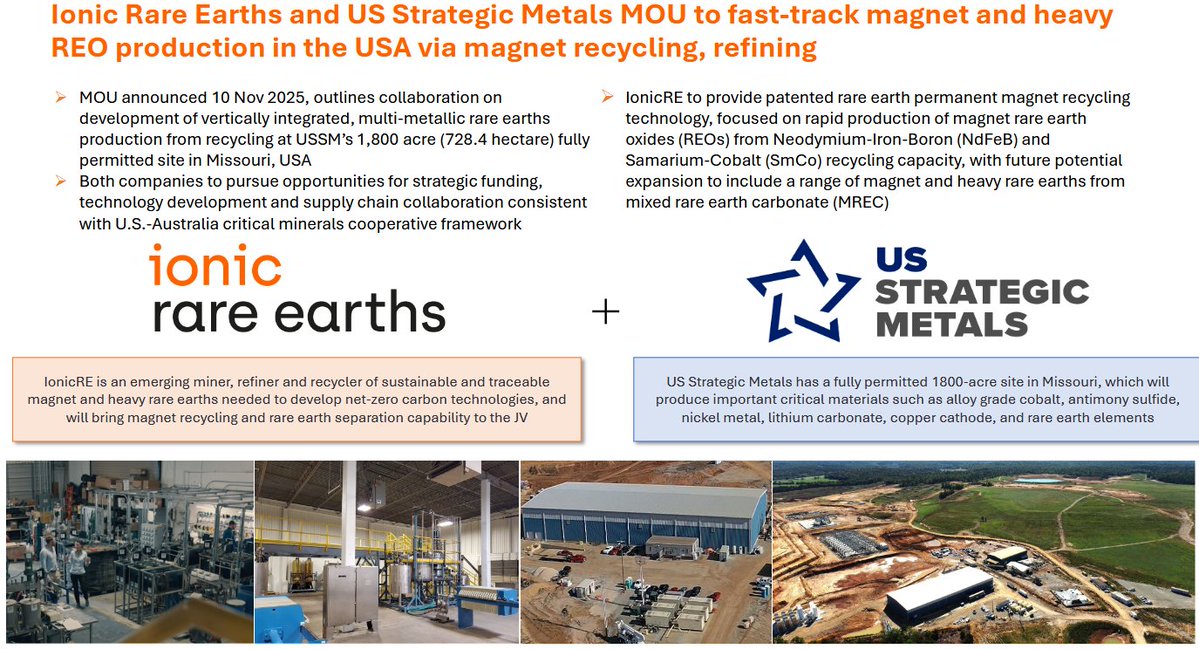
Fair point that the US needs multiple domestic stacks by 2027 – but on the two points you raise, Belfast actually helps solve the problem rather than compete with it. “UK‑controlled” – MAIL is IXRs IP Australian Company not UK Crown's IP. The Belfast demo + commercial plant are simply the reference implementation that de‑risks the flowsheet. The USSM Missouri MOU is exactly about cloning that stack on US soil under US law, US permits and US capital – with IXR as tech provider. Belfast proves it works, Missouri (and others) localise it. The partnership’s core innovation is that IXR’s hydrometallurgical process (“MAIL”) can be rapidly duplicated and scaled in the US, offering a route to quickly produce critical magnet REOs (Nd, Pr, Dy, Tb) outside China. USSM’s permitted site provides a unique fast-start base for first-mover advantage. ⚗️Future-Proofing with Heavy REEs: The JV isn’t just reprocessing scrap magnets, but plans future capacity to handle mixed rare earth carbonate (MREC) feedstock—giving flexibility for additional US and global partners’ primary production (important for defense/aerospace clients). IXR now has a path to lift its Ionic Technologies Belfast demonstration plant flow sheet – including the multifunctional amide ionic liquid separation IP – straight into a U.S. brownfield site, funded primarily by U.S. and bilateral programs, not by heavy IXR dilution.​ 🔐Resilience & Security: This approach offers both “net-zero” carbon messaging and national security appeal, key for accessing US Defense and DoE support. It targets Pentagon’s magnet REE supply goals for 2027. x.com/roblun1/status… “Not modular at scale” – the chemistry is inherently modular: crush/grind → digest → base‑metal removal → 15‑stage solvent extraction → oxide precipitation. Modular process design with two 200 tpa production lines, allowing for scale-up flexibility and parallel operation IXR’s 400 tpa Belfast design is one module. Nothing stops the US (or anyone else) from running 3, 5 or 10 modules in parallel once feedstock and capital are in place – just as LCM/VAC run multiple alloy/magnet lines. In other words: Belfast is the TRL‑8/9 proof node. The domestic stacks you’re calling for are the next step built off that, not a reason to ignore it. @IONIC_RE @IONICTECH_UK @ussmetals @timhorizonmet @Viridis_VMM @ucore @LCM_Metals @CyclicMaterials @MPMaterials @ReecycleInc @SolvayGroup @EMRGroupLimited #VIRIDION @EU_Commission @ENERGY @VulcanElements @RE_Exchanges @DiscoveryAlert @ussmetals @USRareEarths @DeptofWar @ENERGY #USStrategicMetals #USSM
⚗️ NdPr DyTb | REO Analyst 🧲⭐ tweet media⚗️ NdPr DyTb | REO Analyst 🧲⭐ tweet media⚗️ NdPr DyTb | REO Analyst 🧲⭐ tweet media⚗️ NdPr DyTb | REO Analyst 🧲⭐ tweet media
English
0
3
6
213
IXR Dy₂O₃ Tb₄O₇ retweetledi
⚗️ NdPr DyTb | REO Analyst 🧲⭐
Agree on the destination (multiple domestic stacks by 2027) – but on rare earths the starting point really is complicated. 1. The US has almost no heavy REE separation at scale today – and virtually zero qualified Dy/Tb oxide → alloy → magnet capacity in‑country. 2. Existing “mine to magnet” projects are still working through PFS/DFS and environmental permitting while DFARS 2027 bans China‑origin magnets in ~21 months. 3. Building one fully qualified stack (separation → metals → alloy → magnets) with Dy/Tb capability is a 5–10 year exercise in most jurisdictions – doing “multiple stacks, multiple technologies, all domestic and running” by 2027 is a non‑trivial industrial problem, not just a capital allocation problem. That’s why I keep banging on about Belfast / MAIL / IXR: not because it’s the only answer, but because a TRL 8–9, government‑validated, already‑running separation flowsheet is one of the few realistic starting points you can actually clone into US soil and plug into domestic alloy/magnet capacity in time. @IONICTECH_UK @IONIC_RE #RareEarths #CriticalMinerals #CRM #CRMA #EuropeanCriticalMinerals #AxeleoCapital #IXR #IonicTechnologies #MagnetRecycling #CircularEconomy #CirculaREEconomy #NdFeB #Neodymium #Dysprosium #Terbium #Praseodymium #PermanentMagnets #REO #Lithium #Cobalt #Nickel #Copper #Graphite #EnergyTransition #NetZero #EVs #OffshoreWind #WindEnergy #Defence #TRL #ProvenTechnology #DRIVE35 #APC #SupplyChain #ExChina #NationalSecurity #DFARS2027 #UKStrategy #Vision2035 #Belfast #ASX #IXRRF 🌍 🎯🇬🇧🇦🇺🇪🇺
⚗️ NdPr DyTb | REO Analyst 🧲⭐ tweet media⚗️ NdPr DyTb | REO Analyst 🧲⭐ tweet media⚗️ NdPr DyTb | REO Analyst 🧲⭐ tweet media⚗️ NdPr DyTb | REO Analyst 🧲⭐ tweet media
English
0
3
7
172
IXR Dy₂O₃ Tb₄O₇ retweetledi
⚗️ NdPr DyTb | REO Analyst 🧲⭐
US capital should build US supply chains” — it already is funding Australian companies. Lynas (ASX) has received US$258M+ from the DoD. Arafura, Northern Minerals, ASM, Meteoric & VHM hold US$2.2B+ in EXIM LOIs. IXR’s Missouri recycling MOU directly supports this policy under Trump’s own EO 14241. The US picks technology and allied nations — not flags. 🇦🇺🇺🇸 Under Trump’s own US-Australia Critical Minerals Framework (Oct 2025) and FORGE alliance (Feb 2026), US EXIM issued US$2.2B+ in Letters of Interest to Australian rare earth companies including: •Arafura (US$300M) 🇦🇺 •Northern Minerals (US$230M) 🇦🇺 •ASM (US$600M) 🇦🇺 •Meteoric (US$250M) 🇦🇺 •VHM, RZ Resources & others The framework explicitly commits both governments to invest in magnet recycling technology — IXR’s exact space.[csis +1] IXR’s Belfast plant was already designated a “Strategically Important Project” by FORGE in Feb 2026 — Trump’s own critical minerals alliance — explicitly paving the way for US deployment. IXR already has a Missouri MOU signed at the Australian Embassy in Washington, actively pursuing US federal funding under EO 14241. IXR isn’t excluded. It’s next in line — and its recycling tech (no new mines, 61% lower emissions, 99.9% purity, modular deployment) is exactly what the US needs fastest. Watch this space. 🇦🇺🇺🇸 @IONICTECH_UK @IONIC_RE @ENERGY @ussmetals @biztradegovukNA
⚗️ NdPr DyTb | REO Analyst 🧲⭐ tweet media
English

0
3
11
292
IXR Dy₂O₃ Tb₄O₇ retweetledi
⚗️ NdPr DyTb | REO Analyst 🧲⭐
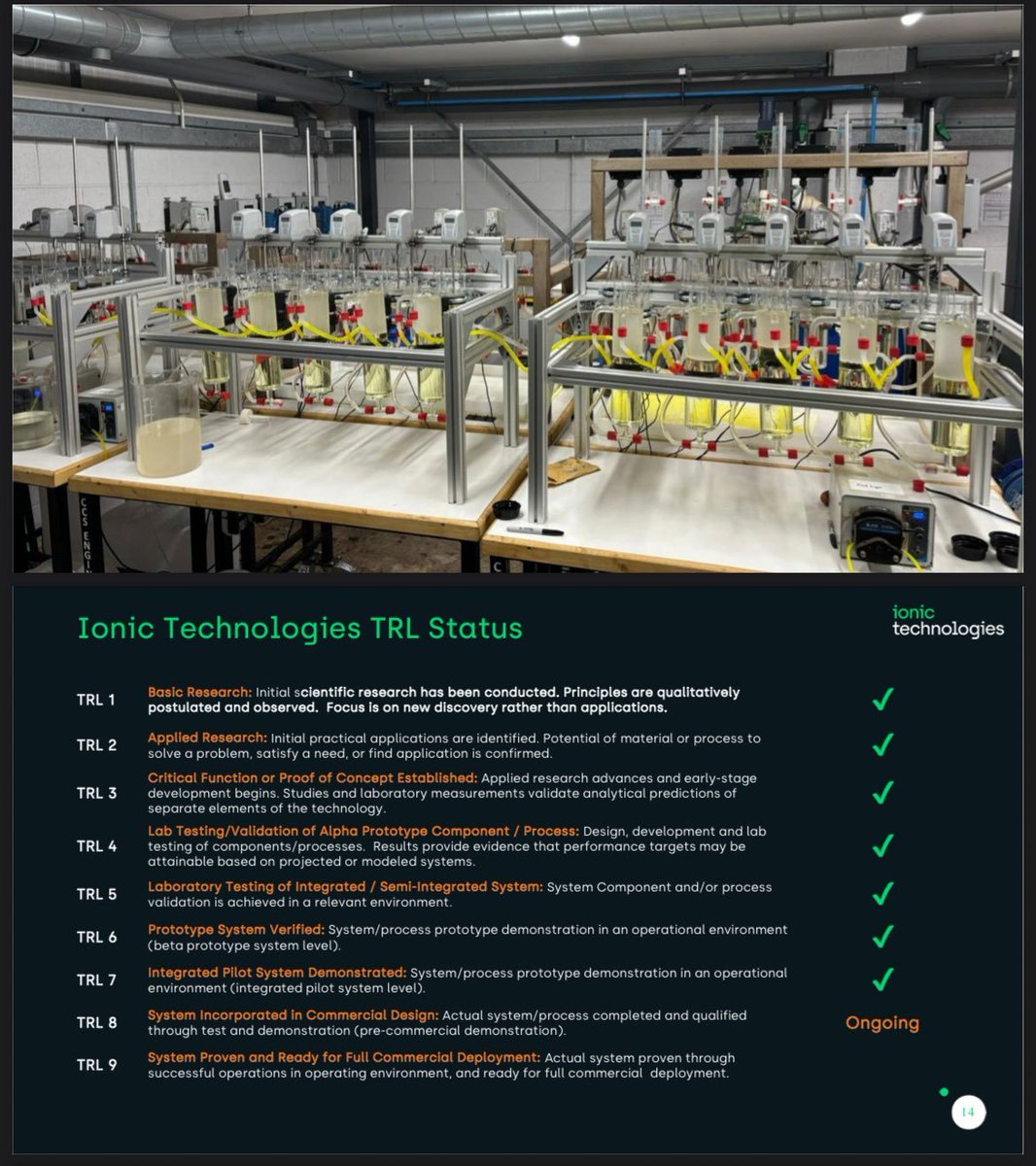
🧲⚗️ The US just committed $1.58 billion to rare earth companies with no operating separation plants. The FT called it billions bet on unproven players. A senior House Democrat wrote a 10-page letter calling the deal structure "highly concerning." Meanwhile — here is what proven actually looks like. 👇 ━━━━━━━━━━━━━━━━━━━━━━━━ 💰 THE $1.58 BILLION QUESTION Commerce Secretary Lutnick signed a non-binding Letter of Intent for USA Rare Earth: → $277M grant + $1.3B loan → Mine in Sierra Blanca, Texas — opens 2028 → Magnet plant in Stillwater, Oklahoma → $1.5B private raise required → Led by Cantor Fitzgerald — previously Lutnick's own firm Rep. Zoe Lofgren (House Democrat) wrote to Commerce: "The deal structure is highly concerning — including a provision letting the government retain its equity stake even if it decides not to invest." No separation plant operating. No REO produced. No product delivered to a customer. That is $1.58 billion bet on a promise. 🎰 ━━━━━━━━━━━━━━━━━━━━━━━━ 🔬 NOW HERE IS WHAT TRL 8–9 LOOKS LIKE Ionic Technologies — Belfast, Northern Ireland. Queen's University spinout. Founded 2015. Proprietary technology: Multifunctional Amide Ionic Liquid (MAIL) separation process. Running continuously for 30+ months. Real plant. Real feedstock. Real product. ✅ ━━━━━━━━━━━━━━━━━━━━━━━━ ✅ WHAT IONIC TECHNOLOGIES HAS ACTUALLY DONE: ✅ Separated Nd · Pr · Dy · Tb at >99.5% purity from real end-of-life NdFeB magnet feedstock — variable quality, coated, oxidised, degraded — and achieved consistent high purity output ✅ Delivered separated REOs to: 🔹 Less Common Metals (LCM) — UK alloy maker 🔹 VAC (Vacuumschmelze) — world-leading NdFeB + SmCo magnet manufacturer 🔹 Ford Motor Company — UK circular EV supply chain programme ✅ Technology processes ANY NdFeB magnet regardless of age, coating or grade — no other Western recycler can claim this ✅ Independently validated — CLIMATES I & II, MAGNOSTIC and RESCUE Projects REEVALUATE project separation performance verified by third parties with its 30tpa Demonstration Plant, Separating 10tpa of High Purity Rare Earth Oxides, Nd Pr Dy Tb Ho Sm That is product. Delivered. To customers. Not a letter of intent for a plant in 2028. ━━━━━━━━━━━━━━━━━━━━━━━━ 🏭 AND SINCE THE DEMO PLANT — THE BUILD: 🇬🇧 £12M UK DRIVE35 Government Grant → £85M commercial plant, Belfast → 1,200t magnets in / 400t REO out per annum → Advanced Propulsion Centre UK funded 🔬 £11M CirculaREEconomy APC Grant → Full UK REO → alloy → magnet → EV circular supply chain 🤝 EMR Feedstock MOU → Securing EOL magnet supply into plant 🇺🇸 US Strategic Metals MOU — Missouri → IXR tech deployed at 1,800-acre US site → NdFeB + SmCo recycling — DFARS 2027 aligned 🌊 Belfast Harbour — £190M in wind upgrades → IXR sits 200 metres from UK's primary offshore wind installation terminal ━━━━━━━━━━━━━━━━━━━━━━━━ The US is betting $1.58 billion on companies that have never separated a rare earth oxide at commercial scale. The UK backed a company that has been doing it for 30 months straight — with product delivered to VAC and Ford. 🎯 When the FT asks "who is real?" in the rare earth supply chain race — TRL 8–9. 30 months demonstrated. Product delivered. Customers: VAC · LCM · Ford. Government: UK DRIVE35 · APC. Location: 200m from Belfast's offshore wind terminal. That is what real looks like. $IXR 🇦🇺 | OTCQB: $IXRRF 🇺🇸 ━━━━━━━━━━━━━━━━━━━━━━━━ @IONIC_RE @IONICTECH_UK @ussmetals @CMA_Minerals @IXR2THAMOON @timhorizonmet @Viridis_VMM @ucore @LCM_Metals @CyclicMaterials @MPMaterials @ReecycleInc @SolvayGroup @EMRGroupLimited #VIRIDION @EU_Commission @ENERGY @VulcanElements @RE_Exchanges @DiscoveryAlert @USRareEarths @DeptofWar @ENERGY @Carester #RareEarths #CriticalMinerals #IonicTechnologies #TRL #MAIL #ProvenTechnology #NdFeB #REO #Neodymium #Dysprosium #Terbium #Praseodymium #Separation #Belfast #MagnetRecycling #CircularEconomy #SupplyChain #ExChina #DFARS2027 #USARareEarth #NationalSecurity #UKStrategy #Vision2035 #OffshoreWind #EV #CriticalMinerals2026 #ASX #IXRRF #VAC #LCM #Ford #EMR #FT #MiningCom #ProvenNotPromised 🧲⚗️🔬🇬🇧🇦🇺🇺🇸🎯🌍
MINING.COM@mining

US bets billions on unproven rare earth players: report dlvr.it/TRmzjS

English
1
2
9
338
IXR Dy₂O₃ Tb₄O₇ retweetledi
⚗️ NdPr DyTb | REO Analyst 🧲⭐
🇬🇧🧲 IXR’s £12m UK DRIVE35 “Offer in Principle” is a lot more than just 14% of a £85m capex number. It’s the trigger for a validation cascade that can unlock the remaining **£73m** Belfast funding stack. 👇 ━━━━━━━━━━━━━━━━━━━━━━━ ⚗️ WHAT THE £12m REALLY MEANS To get that offer, Ionic Technologies went through: • Multi‑month technical + engineering DD • Financial model and market analysis • Policy alignment with UK Critical Minerals & Vision 2035 • Review of track record on previous grants The UK Government is effectively saying: ✅ The MAIL separation tech works ✅ The Belfast commercial plant economics stack up ✅ This project is strategically important for EVs, wind & defence That’s third‑party validation you can’t buy. ━━━━━━━━━━━━━━━━━━━━━━━ 🔄 CIRCULAREEECONOMY – PARTNERS ALREADY LOCKED IN Ionic Technologies is already embedded in a funded APC / DRIVE35 **CirculaREEconomy** project: Partners across the full circular REE chain: ♻️ EMR – magnet liberation from end‑of‑life assets 🧲 Ionic Technologies – REO recovery & separation (project lead) 🔩 LCM – metal / alloy production 🧲 VAC – magnet manufacturing (ex‑UK) 🚍 Wrightbus – zero‑emission buses 🚗 Ford UK & Bentley – automotive OEMs 📊 BGS – lifecycle & economic analysis This isn’t a standalone lab project. It’s a government‑funded circular supply chain with real industrial partners already in the loop. ━━━━━━━━━━━━━━━━━━━━━━━ 📈 THE VALIDATION CASCADE EFFECT Once you have that government stamp, the rest of the stack gets easier to move: 🟦 National Wealth Fund (NWF) → Faster equity decisions; government DD already done 🟦 UK Export Finance (UKEF) → More comfortable providing debt guarantees 🏦 Commercial banks → Willing to lend against UKEF‑backed project finance 🤝 Strategics / PE → £12m grant = co‑investment signal, not science project risk The **£73m** still to be raised is the make‑or‑break piece, but it’s now sitting on a de‑risked foundation instead of a PowerPoint deck. ━━━━━━━━━━━━━━━━━━━━━━━ 💷 TRACK RECORD ACTUALLY DELIVERED Before DRIVE35, Ionic Technologies already delivered: • ~£8.1m of UK grants across APC & Innovate UK programs • >2 years of demo plant operations in Belfast • High‑purity Nd, Pr, Dy, Tb, Ho, Sm separated and shipped to LCM, VAC & Ford UK That is TRL 8–9, with audited grant delivery — Not “hoping to be commercial by 2028”. ━━━━━━━━━━━━━━━━━━━━━━━ 🏭 THE BELFAST CAPITAL STACK Total capex: ~£85m • £12m DRIVE35 grant (Offer in Principle) ✅ • ~£8m prior UK grants de‑risking tech ✅ • ~£73m remaining project finance 🔄 → NWF equity → UKEF‑guaranteed debt → Commercial bank loans → OEM / strategic equity (auto, wind, defence, magnets) Close that £73m and Belfast becomes: 1,200 tpa NdFeB magnets in → 400 tpa high‑purity Nd/Pr/Dy/Tb out → Direct into UK/EU EV, wind & defence supply chains 🌍 ━━━━━━━━━━━━━━━━━━━━━━━ In a world where the US is throwing $1.58b at unproven mine‑to‑magnet stories, the UK has quietly backed the one group that has already proven rare earth separation at scale. The £12m isn’t the finish line. It’s the signal that IXR’s Belfast plant is now in the serious capital stack conversation. 📄 And just to be clear — this funding stack isn’t guesswork. It’s based on official UK DRIVE35 / ATF, Critical Minerals, and NWF documentation, plus the same multi‑stage process now being used to progress Cornish Lithium and Cornish Metals through grant → NWF/UKGov → UKEF‑backed debt. IXR is simply the rare earth analogue moving through that same pipeline. Can be found here gov.uk/guidance/drive… and gov.uk/guidance/drive… $IXR 🇦🇺 | OTCQB: $IXRRF 🇺🇸 @IONIC_RE @IONICTECH_UK @ussmetals @CMA_Minerals @IXR2THAMOON @timhorizonmet @ChrisMcDonaldMP @Viridis_VMM @ucore @LCM_Metals @CyclicMaterials @MPMaterials @ReecycleInc @SolvayGroup @EMRGroupLimited #VIRIDION @EU_Commission @ENERGY @VulcanElements @RE_Exchanges @DiscoveryAlert @USRareEarths @DeptofWar #RareEarths #IXR #IonicTechnologies #CriticalMinerals #DRIVE35 #APC #Belfast #MagnetRecycling #NdFeB #Neodymium #Dysprosium #Terbium #Praseodymium #CriticalMineralsStrategy #NationalWealthFund #UKEF #EVs #OffshoreWind #Defence #SupplyChain #ExChina #EnergyTransition #NetZero #ASX #IXRRF 🧲⚗️🏭🇬🇧🌍
⚗️ NdPr DyTb | REO Analyst 🧲⭐ tweet media
English
2
3
13
284
IXR Dy₂O₃ Tb₄O₇ retweetledi
⚗️ NdPr DyTb | REO Analyst 🧲⭐
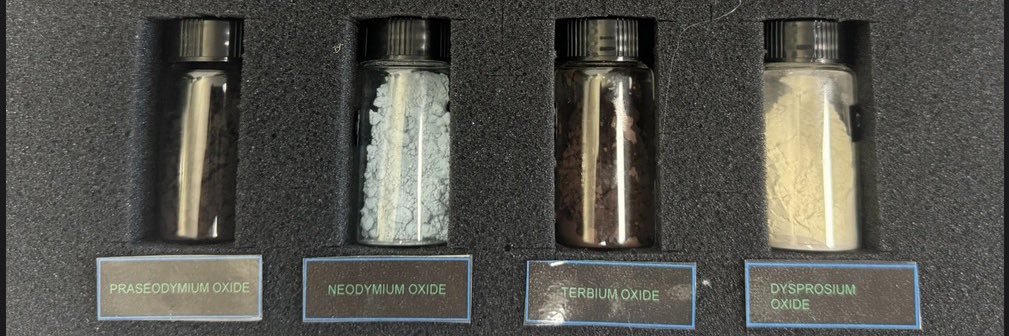
Two best-in-class long-loop technologies, different IP, different geographies: 🇺🇸 ReElement — Chromatography, Marion supersite targeting 10,000+ tpa, DoD-backed, IPO planned 2H26 🇬🇧 Ionic Technologies (IXR) — Multifunctional Amide Ionic liquid SX, Belfast commercial plant targeting 400 tpa, UK Gov £12M grant, FORGE-designated, the facility currently separating all four critical REOs magnet Global NdFeB magnet REO demand is already estimated at 200,000+ tpa and heading toward 350,000+ tpa by 2035 as EVs, wind, and defence ramp. The US alone consumes magnets across missiles, F-35s, Arleigh Burkes, Abrams tanks, hypersonic systems — and that's before a single extra EV rolls off a domestic line. 🚀🛡️ More Western capacity = better for both companies, better for sovereignty 🌏🇺🇸🇬🇧 My main issue with the 16,000 tpa REO headline is feedstock. If 1 kg of NdFeB magnet only contains ~330 g of REO, you need enormous magnet volumes to support that number. The Core Math Problem 🧲Because a standard NdFeB magnet is only about 33% rare earth elements, producing 1 tonne of separated rare earth oxide (REO) requires roughly 3 tonnes of pure magnet scrap. Therefore, scaling up to thousands of tonnes of separated REO production requires massive, secure pipelines of raw material, meaning feedstock strategy is just as important as the separation technology itself. ReElement’s own update shows the key detail: the 16,000 tpa Phase 1 is multi-feedstock (recycled + primary), while recycled magnet feedstocks are only one part of it, with magnet-related capacity listed at up to 7,000 tpa., So ReElements are going to need 21,000tpa of Spent Permanent Magnets. That is why feedstock is the real issue. The 16,000 tpa number only looks plausible if ReElement is fed with a mix of magnet scrap, swarf, hard drives, EV motors, wind turbines, industrial scrap, and mined/mixed rare earth concentrates, which is exactly how the company describes the project. It also helps explain the POSCO angle: POSCO has said it will handle raw material procurement in the U.S. JV with ReElement, and separately says it has secured Southeast Asian raw materials and plans a North American rare earth separation/refining plant with ReElement. Belfast is only the first commercial node, not the whole story. Ionic already has UK magnet/swarf pathways via EMR and VAC, potential Korean swarf via DNA Link, plus longer-term MREC optionality from Viridion/VMM in Brazil and Makuutu in Uganda. The Viridion US concept alone has been scoped around 4,000 tpa of separated magnet REO from MREC feed, so Ionic is building a multi-feedstock platform, not a single-plant story. ReElement talks huge refining capacity, but Ionic is steadily building a multi-source feedstock network across scrap, swarf and concentrate streams — which is exactly what Western rare earth separation will need to scale credibly. So the bottleneck isn’t just separation tech — it’s securing enough quality feedstock. My main issue with the 16,000 tpa REO headline is feedstock. If 1 kg of NdFeB magnet only contains ~330 g of REO, you need enormous magnet volumes to support that number. ReElement’s own update shows the key detail: the 16,000 tpa Phase 1 is multi-feedstock (recycled + primary), while recycled magnet feedstocks are only one part of it, with magnet-related capacity listed at up to 7,000 tpa. So the bottleneck isn’t just separation tech — it’s securing enough quality feedstock. ReElement talks scale, but IXR is quietly assembling diversified feedstock optionality. Belfast can run on magnet scrap and swarf from partners like EMR/VAC/DNA Link, while Viridion and Makuutu open a second lane via MREC, which is exactly why Ionic’s 400 tpa plant should not be viewed as the ceiling of the platform. Very Interesting times ahead @ReElementTech @IONICTECH_UK @EMRGroupLimited #RareEarths #ReElement #CriticalMinerals #MagnetRecycling #REO #SupplyChain #MiningStocks #IXR #ReElement #RareEarths #CriticalMinerals #MagnetRecycling #IonicTechnologies #DefenseTech #EVs #WindEnergy #SupplyChain #UKManufacturing #USManufacturing
⚗️ NdPr DyTb | REO Analyst 🧲⭐ tweet media
English
0
3
6
252
IXR Dy₂O₃ Tb₄O₇ retweetledi
⚗️ NdPr DyTb | REO Analyst 🧲⭐
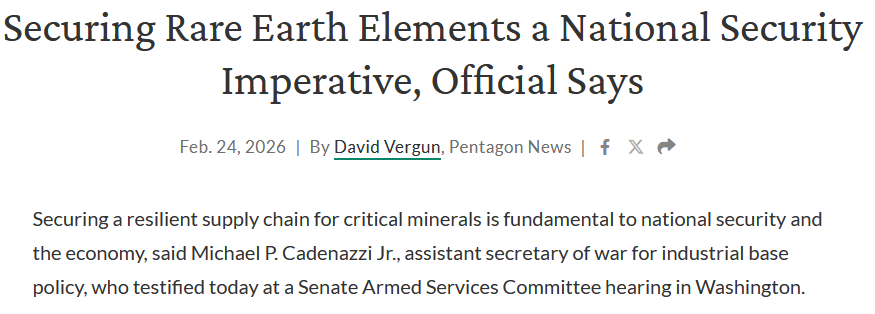
🇺🇸🧲 “Securing rare earth elements is a national security imperative.” That’s not a think tank line anymore — it’s the U.S. Department of War spelling out that modern power depends on materials most people never see, and that the Pentagon cannot fight a 21st‑century war with 20th‑century supply chains. 👇 The message from war.gov is blunt: securing a resilient supply chain for critical minerals is now treated as a core defence requirement, not an industrial afterthought. Rare earths and other critical minerals sit inside everything from F‑35s, Aegis radars, submarines and hypersonic missiles to secure comms, satellites and AI-enabling data centres. If those supply chains fail, the platforms built on top of them follow. 🛡️ Officials outlined a four‑pillar strategy that is now driving funding and policy out of DoD: rebuild domestic production capacity, strengthen supply chains with trusted partners, reduce demand through substitution and recycling, and modernize the National Defense Stockpile as a real war‑fighting buffer — not a museum relic. That is the blueprint the Pentagon is now using to decide who gets capital, offtakes and long‑term support. 🧩 This isn’t just about mining more. Mining a mineral domestically does not safeguard national security if the processing, separation, metal‑making and magnet production still happen in rival jurisdictions. The fight is over processed critical minerals and their derivative products — NdFeB and SmCo magnets, specialty alloys, battery precursors — because those are what actually go into weapons, ships, aircraft and next‑gen infrastructure. ⚙️ For investors and policymakers, the signal is crystal clear: rare earths and critical minerals are no longer a niche “green transition” theme. They are now formally framed as a national security asset class. The projects that can deliver non‑Chinese separation, metals, alloys and magnets at scale are not just industrial stories — they are strategic. 🎯 war.gov/News/News-Stor… #RareEarths #CriticalMinerals #NationalSecurity #Defense #DoD #Pentagon #SupplyChain #ExChina #StrategicMaterials #PermanentMagnets #NdFeB #SmCo #DefenseIndustry #Aerospace #Missiles #Submarines #F35 #AI #EnergyTransition #Stockpile #USA #WarGov 🧲🛡️🇺🇸📡🚀
⚗️ NdPr DyTb | REO Analyst 🧲⭐ tweet media⚗️ NdPr DyTb | REO Analyst 🧲⭐ tweet media⚗️ NdPr DyTb | REO Analyst 🧲⭐ tweet media⚗️ NdPr DyTb | REO Analyst 🧲⭐ tweet media
English
0
2
4
163
IXR Dy₂O₃ Tb₄O₇ retweetledi
⚗️ NdPr DyTb | REO Analyst 🧲⭐
🇺🇸🛫 The United States' most powerful conventional weapon — the 30,000-pound Massive Ordnance Penetrator GBU-57 — was built to do one thing no other non-nuclear weapon can do: reach Iran's Fordow enrichment facility, buried beneath a mountain, and destroy it from the inside. But almost nobody is asking what makes the platform that delivers it — the B-2 Spirit stealth bomber — actually work at the materials level. The answer, in significant part, is rare earth elements. 🧲⚗️👇 🎯 THE MOP — WHAT IT IS The GBU-57 is engineered from dense steel alloy, capable of piercing up to 200 feet of reinforced rock before detonating. The Pentagon invested ~$400 million in its development as a conventional alternative to tactical nuclear options. The US maintains an estimated arsenal of approximately 20 MOPs — all exclusively deliverable by the B-2 stealth bomber. It has never been used in combat. Fordow is precisely the target it was designed for. ☢️🥷🏼 🧲 THE B-2 SPIRIT — A RARE EARTH PLATFORM The B-2 Spirit is not just an aircraft. It is one of the most rare-earth-intensive military platforms ever built — and without a secure, non-Chinese supply of specific critical minerals, it cannot be manufactured, maintained or replaced. Here is what it actually depends on. 🔑 🔵 SAMARIUM COBALT (SmCo) MAGNETS — SmCo permanent magnets are the preferred magnet for high-performance aerospace applications, operating reliably above 300°C where NdFeB degrades. The B-2's flight control actuators, avionics motors, electromechanical surface controls and navigation systems all depend on SmCo. Samarium is now on China's April 2025 export control list. There is currently no commercial-scale SmCo feedstock separation outside China — except what Ucore is specifically building in Louisiana. 🛡️ 🔵 NdFeB MAGNETS — Nd | Pr | Dy | Tb — NdFeB permanent magnets appear throughout precision actuation systems — electromechanical actuators, weapons bay door drives, fuel system controls, radar antenna positioning and electronic warfare pods. Dysprosium and Terbium additions are mandatory for high-temperature coercivity. Without them, magnets fail at operating conditions. Both Dy and Tb are on China's export control list. 🚫🇨🇳 🔵 RADAR-ABSORBING MATERIALS (RAM) — The B-2's stealth depends on RAM coatings containing Lanthanum and Yttrium-based ferrite compositions that absorb rather than reflect radar waves across a broad frequency spectrum. RAM is not optional on a stealth aircraft. It is the stealth. 🛸 🔵 YTTRIUM — JET ENGINE TBCs — Yttrium-stabilised zirconia (YSZ) forms the thermal barrier coatings on the B-2's GE F118-GE-100 turbofan engine hot section — turbine blades, vanes and combustion liners. These coatings allow engines to operate beyond their metal melting points. Without YSZ, modern jet engines cannot sustain operational performance. Yttrium is on China's export control list. 🔥 🔵 TERBIUM + DYSPROSIUM — MOP GUIDANCE — The GBU-57 uses INS combined with GPS guidance to hit a specific point on a hardened underground structure from altitude. The precision electromechanical fin actuators in the MOP's guidance package depend on rare earth permanent magnets — the same Dy and Tb China is now restricting. A guided bomb with compromised actuator supply is a dumb bomb. ⚠️ 🚀 MISSILES — THE SAME DEPENDENCY AT SCALE Every precision missile in the US arsenal carries the same rare earth dependency profile: 🎯 Tomahawk — SmCo and NdFeB in guidance actuators and terrain-following radar systems 🎯 JASSM-ER — rare earth magnets in electromechanical flight controls and turbofan components 🎯 AMRAAM / AIM-120 — SmCo in active radar seeker motors and precision fin actuators 🎯 Minuteman III — SmCo in guidance platform gyroscopes and inertial navigation — historically the original SmCo defence application from the 1970s 🎯 SM-3 / SM-6 — rare earth magnets in divert and attitude control systems for terminal phase manoeuvring Without reliable non-Chinese supply of Sm, Dy, Tb and Nd, US missile production rates cannot be sustained at the quantities the DoD requires — especially post-DFARS 2027. 🛡️ ⚔️ THE DFARS 2027 REALITY CHECK The DoD knows all of this. That is precisely why: $1B+ was committed to the National Defence Stockpile in 2025. DoD RFIs were issued for Samarium, Dysprosium and Terbium as priority acquisitions. The DFARS 2027 rule disqualifies China-origin magnets from all DoD weapons — starting 12 months from now. DoE and DoD have both named heavy REE separation as the single most critical gap in Western defence industrial capacity.🧲🇺🇸⚔️🛫🔬🛡️ The B-2 that would deliver the GBU-57 to Fordow depends on materials that China controls. That is not an abstraction. That is the supply chain reality of the most powerful conventional strike platform on Earth. 🌍 The tactical nuclear option — the NDM backpack scenario — requires no rare earth platform at all. Which is perhaps the darkest possible illustration of what happens when conventional precision strike capability is supply-chain compromised. 🎒🎒 The West does not just need to secure rare earth supply for clean energy. It needs to secure it for the weapons that keep the nuclear option off the table. 🇺🇸🛫🧲⚗️🎯🛡️☢️🌍⚠️ #RareEarths #CriticalMinerals #B2Bomber #Samarium #SmCo #Dysprosium #Terbium #Neodymium #Yttrium #Lanthanum #PermanentMagnets #NdFeB #Defence #NationalSecurity #DFARS2027 #DoD #MissileDefence #Tomahawk #JASSM #AMRAAM #StealthBomber #SupplyChain #CriticalMaterials #Stealth #IXR #UCU #DefenceIndustry #NATO #USMilitary #GeopoliticalRisk #Gadolinium #Yttrium #Defence #Missiles #Bombers #B2 #Fordow #MOP #Aerospace #GuidanceSystems #Radar 🧲🇺🇸⚔️🛫🔬🛡️
English
0
1
2
171
IXR Dy₂O₃ Tb₄O₇ retweetledi
⚗️ NdPr DyTb | REO Analyst 🧲⭐
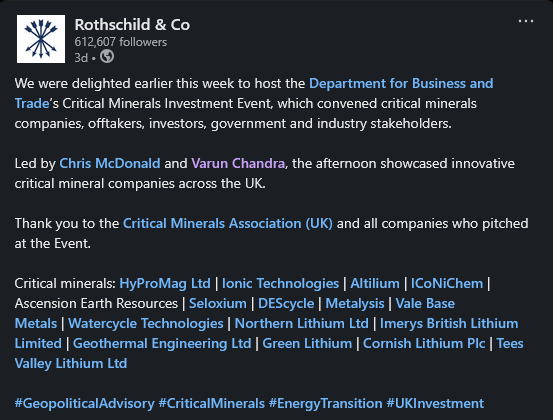
🇬🇧⛏️ THE UK IS FINALLY GETTING SERIOUS ABOUT CRITICAL MINERALS On March 23, the Department for Business & Trade hosted the UK's Critical Mineral Domestic Trade Mission at @RothschildCo offices in the City of London — and the room meant business 🏛️💼 🧵 Here's why this matters 👇 🎙️ Chris McDonald MP — UK Minister for Business & Trade 🎙️ Varun Chandra — PM's Chief Business, Investment & Trade Advisor 🎙️ Jeff Townsend — Chairman, Critical Minerals Association UK This wasn't a conference. This was a strategy session on sovereign supply chain security 🛡️ On 23 March, the Department for Business and Trade hosted the UK’s Critical Mineral Domestic Trade Mission at Rothschild & Co’s office in the City of London. Perched atop the London skyline, the event brought together industry, investors, and Government to discuss the shared challenge of translating UK innovation into scaleable commercial projects that anchor strategic value at home. Chris McDonald MP, the UK Minister for Business and Trade, welcomed stakeholders and emphasised the urgency and strategic importance of securing critical mineral supply chains for the UK. He was joined by the Prime Minister’s Chief Business, Investment and Trade Advisor Varun Chandra.  After the welcoming speeches, Jeff Townsend, Chairman and co-founder of the Critical Minerals Association (UK), moderated two sets of investment pitches by UK companies that are leading the way for domestic capacity of lithium, rare earths and other critical and growth minerals.  It was wonderful to see so many of our members and their projects represented, including Cornish Lithium Plc, DEScycle, Green Lithium, HyProMag Ltd (a subsidiary of Mkango Resources Ltd.), Ionic Technologies, Imerys British Lithium Limited, Northern Lithium Ltd, and Seloxium. These companies represent some of the most exciting and innovative businesses the UK has to offer.  Thank you to Caroline Diggory, Ivan Lima, Mike Hill and the rest of the DBT team for hosting this important forum. Connecting the ecosystem with strong government support and patient private capital is key to delivering the UK’s critical mineral ambitions, which underpin the success of the UK's Industrial Growth and Clean Energy missions for 2035. The UK Government Funding Ecosystem, plus the new inquiry by the Business and Trade Sub-Committee, launched in March 2026, which will examine UK critical mineral supply chain security, including economic security, recycling, domestic capabilities, and partnerships to counter foreign reliance, particularly China's dominance in rare earths (70% mining, 90% refining). Submissions are due by April 12, 2026, focusing on the sufficiency of the 2025 Critical Minerals Strategy, which targets lithium, nickel, rare earths, and includes up to £50 million in business funding. IMHO, The Committee is tasked with scrutinising whether the government's 2025 Critical Minerals Strategy—alongside its funding mechanisms like the up-to-£50 million Critical Minerals Fund, the £165 million in historical support, and the DRIVE35 program—are actually sufficient to meet the UK's ambitious targets for domestic production and recycling. If the Committee's objective is to ensure the 2025 Critical Minerals Strategy yields tangible results, recommending that the government accelerate the conversion of Ionic's £12 million Offer in Principle into a fully contracted award—potentially complemented by the broader National Wealth Fund—is a highly logical conclusion. It provides a shovel-ready blueprint for how multi-billion-pound funding envelopes can successfully deliver secure, non-Chinese rare earth refining capacity. This is a very important part, Why you ask? Rothschild & Co at New Court Matters Enormously rothschildandco.com Rothschild & Co is not a neutral venue. It is a firm with demonstrable deep engagement in UK critical minerals policy — UK Ministers met Rothschild specifically to discuss their critical minerals work in both 2023 and 2024, and former UK National Security Adviser Lord Mark Sedwill sits on its board. As a member of the UK-Ukraine Finance Partnership underpinning the 100-year partnership framework, and with $53 billion invested in Ukraine, Rothschild represents the bridge to the patient institutional capital — sovereign wealth funds, infrastructure funds, family offices — that Ionic Technologies needs to close the remaining ~£96M gap between the DRIVE35 Offer in Principle and full commercial plant financing. Varun Chandra's dual role as PM's Chief Business, Investment and Trade Adviser AND Special Envoy to the United States on Trade and Investment is directly relevant to Ionic Technologies' FORGE allied supply chain designation received on 4 February 2026 — the same day the UK Government signed its Memorandum of Understanding with the United States on critical minerals. FORGE (Forum on Resource Geostrategic Engagement, successor to the 54-nation Minerals Security Partnership), launched by US Secretary of State Marco Rubio and VP JD Vance, designated Ionic Technologies' Belfast plant a 'Strategically Important Project' — explicitly paving the way for replication of Ionic's patented magnet recycling technology in key international markets including the USA. Ionic Technologies at Rothschild & Co — What Just Happened & Why It Matters On 23 March 2026, the Department for Business and Trade hosted the UK's first Critical Minerals Domestic Trade Mission at Rothschild & Co's New Court offices, St Swithin's Lane — one of the most symbolically powerful addresses in global finance, where gold was priced for the world from 1919 and British industrial capital has been marshalled for over 215 years. Ionic Technologies — the wholly owned UK subsidiary of ASX-listed Ionic Rare Earths (IXR) — was invited to present alongside a select group of UK critical minerals leaders including HyProMag, Cornish Lithium, Green Lithium, DEScycle, Imerys British Lithium, Northern Lithium and Seloxium. Who Presented for Ionic Technologies Thomas Kelly (Director of Operations) and Claire Blanchelande (Commercial Director, Ionic Rare Earths) represented the company, with Thomas delivering the core technology and commercial plant presentation. What Thomas Presented How Ionic Technologies' proprietary long-loop hydrometallurgical separation technology — using multi-amide ligand ionic liquid chemistry developed at Queen's University Belfast — recycles end-of-life magnets into individually separated rare earth oxides (Nd₂O₃, Pr₂O₃, Dy₂O₃, Tb₄O₇) at 99.5%+ purity in 15 process stages And more than likely the Presentation would have followed closely to the posted video from Thomas Kelly (Director of Operations, Ionic Technologies) speaking at the Innovate UK Materials and Manufacturing 19th Feb 2025 at Convene Sancroft, London. Rothschild & Co published their own independent LinkedIn post naming Ionic Technologies explicitly — listed second in the company roster, directly after HyProMag. This is Rothschild's own 612,000-follower platform voluntarily amplifying Ionic Technologies to its institutional investor and government audience. It is not a press release from IXR — it is an unprompted, public endorsement from one of the world's most prestigious financial institutions. Critically, Rothschild's post also clarifies exactly who the investors were in the room — described as "offtakers, investors, government and industry stakeholders". The word "offtakers" is key — these are not passive financial investors but industrial buyers of rare earth oxides— the motor manufacturers, magnet makers, and defence supply chains that would purchase Ionic's commercial plant output. This is the most commercially actionable audience Ionic Technologies could be in front of. The Claire Blanchelande Connection This is where it gets very interesting. Claire Blanchelande joined IXR as Commercial Director in August 2025, bringing a 14-year career at Trafigura — one of the world's largest commodity trading firms. Her specific role at Trafigura? She started and led Trafigura's lithium division. Claire's entire role at IXR is to build supply chain networks and secure REO offtake agreements — the precise commercial objective that a room full of Rothschild-invited offtakers represents. #IonicRareEarths #IXR #IonicTechnologies #RareEarths #MagnetRecycling #CriticalMinerals #Drive35 #CirculaREEconomy #Belfast #UKManufacturing #SupplyChainSecurity #NdFeB #CircularEconomy #CleanTech @IONICTECH_UK @IONIC_RE @RothschildCo @CMA_Minerals @ChrisMcDonaldMP @biztradegovuk #Drive35 #UKManufacturing #EnergyTransition
⚗️ NdPr DyTb | REO Analyst 🧲⭐ tweet media
⚗️ NdPr DyTb | REO Analyst 🧲⭐ tweet media⚗️ NdPr DyTb | REO Analyst 🧲⭐ tweet media
English
1
2
10
278
IXR Dy₂O₃ Tb₄O₇ retweetledi
⚗️ NdPr DyTb | REO Analyst 🧲⭐
The Axeleo Capital European Critical Minerals Stack chart is a powerful independent third-party validation of exactly where Ionic Technologies sits relative to the broader European critical minerals ecosystem — and when you layer on what we know about the MAIL separation technology platform from all our prior discussion, the picture becomes very compelling. What the Axeleo Chart Is Actually Telling Us The chart maps the entire European critical minerals landscape across three maturity tiers and three technology categories. Ionic Technologies is placed firmly in the top tier — Deployment TRL 8-9 — under Enhanced Recycling. This is a significant independent endorsement because Axeleo Capital is a specialist European deep-tech VC — not a broker, not an IXR affiliate — and they have placed Ionic Technologies alongside only a handful of companies deemed commercially deployment-ready across the entire European continent. Who Is at Deployment TRL 8-9 in Enhanced Recycling? From the chart, only 8 companies across all technology categories sit at the Deployment tier: Enhanced Recycling (TRL 8-9): Ionic Technologies 🇬🇧, CAREMAG 🇫🇷← Only separated magnet REO recycler at this level CAREMAG 🇫🇷 CYLIB 🇩🇪 Battri 🇳🇴 Tozero 🇩🇪 HyProMag 🇬🇧 MagREEsource 🇫🇷 Altilium 🇬🇧 Attero 🇳🇱 Meanwhile, the Development tier (TRL 5-7) contains 15+ companies including Circular Materials, Gigamine, RAREARTH, Descycle, Mecaware, Recupere Metals, Elmery and others — all still years from deployment. The R&D tier (TRL 3-4) adds another 10+ companies including MagMatic, Back to Battery, REEcover, and Nordic Salt Cycle. Ionic Technologies 🇬🇧, CAREMAG 🇫🇷 are the only European company at TRL 8-9 producing individually separated, magnet-grade rare earth oxides from end-of-life magnets — the most technically demanding and highest-value position in the recycling chain. The MAIL Technology: Why the Separation Is So Advanced This is where the chart becomes genuinely remarkable when combined with what we know about the underlying technology. From our space files, Ionic Technologies' separation platform is built on Multifunctional Amide Ionic Liquids (MAIL) — proprietary hydrometallurgical chemistry originally developed at Queen's University Belfast's QUILL Research Centre. What MAIL Actually Does That Others Cannot The fundamental challenge in rare earth separation is that lanthanide elements (Nd, Pr, Dy, Tb, Ho etc.) are chemically almost identical — they sit next to each other on the periodic table with nearly identical ionic radii and oxidation states. Conventional solvent extraction (SX) exploits tiny differences in their chemistry across hundreds of mixer-settler stages — it is energy-intensive, uses hazardous organic solvents, generates volatile organic compound (VOC) emissions, and typically requires 150+ process steps to achieve individual separation. The selectivity breakthrough is the multi-amide ligand chemistry — the ligand system is tuned to have specific affinity for individual rare earth elements, discriminating not just between REEs and base metals (Fe, B, Ni, Co) but between the individual lanthanides themselves. This is what enables: 1. Feed-agnostic processing — oxidised magnets, coated materials, mixed waste streams, even Mixed Rare Earth Carbonate (MREC) from primary mining — all processable without extensive pre-treatment 2. Simultaneous LREE + HREE separation in one circuit — Nd and Pr (light REEs) and Dy, Tb (heavy REEs) come out as individually separated oxide products in a single pass 3. Closed-loop reagent systems with ~95% water recovery — dramatically lower waste generation 4. 61% lower CO₂ emissions versus primary mining and conventional separation. The Process Flow: EOL Magnet to Separated REO From collection to final oxide powder: 1. Collection & pre-processing → EOL magnets sorted, demagnetised, cleaned 2. Dissolution → Acid leach converts REEs, Fe, B into solution; coatings filtered 3. MAIL extraction → Proprietary ligands selectively extract REEs from Fe, B, Ni, Co matrix 4. Stepwise separation → LREEs (Nd, Pr) first, then MREEs (Sm, Eu, Gd), then HREEs (Dy, Tb, Ho, Y) 5. Precipitation & recovery → High-purity oxalates/hydroxides precipitated, calcined to oxides 6. Quality assurance → Batch testing confirms >99.9% purity 7. Product dispatch → Direct to alloy makers (LCM), magnet manufacturers (VAC, GKN), or end-users This is the only Western process operating continuously at commercial specifications across all 4 key magnet REOs — Nd, Pr, Dy, Tb — simultaneously, for 26+ months. CAREMAG uses the same three-stage conventional technology CAREMAG uses the same three-stage conventional technology (pyrometallurgy → hydrometallurgy → liquid-liquid solvent extraction) that China has operated for decades — just with European-standard environmental controls and a focus on magnet recycling feedstock alongside primary concentrates. It is proven, scalable, and well-understood, but it is not a technology innovation — it is technology deployment at European scale using established methods. Ionic Technologies' MAIL platform represents a genuine technology leap: eliminating the pyrometallurgy stage entirely, collapsing 150+ SX stages to 15 through proprietary ligand chemistry, using non-volatile non-flammable ionic liquid media, and achieving >99.9% purity in a modular deployable format that can be licensed globally. CAREMAG's scale and €216M investment will make it Europe's largest HREE facility. But Ionic Technologies' technology architecture is fundamentally more efficient — and already operating. When CAREMAG commissions in late 2026, Ionic will have almost three years of continuous validated production as its competitive evidence. ⚗️🇬🇧🇫🇷 Sources: Mining Technology | Fastmarkets | Carester.fr | Rare Earth Exchanges | IXR Ionic Technologies Technical Reports | REE-FLEX Pilot Programme 2025–2028 @IONIC_RE @IONICTECH_UK @ussmetals @CMA_Minerals @IXR2THAMOON @timhorizonmet @Viridis_VMM @ucore @LCM_Metals @CyclicMaterials @MPMaterials @ReecycleInc @SolvayGroup @EMRGroupLimited #VIRIDION @EU_Commission @ENERGY @VulcanElements @RE_Exchanges @DiscoveryAlert @USRareEarths @DeptofWar @ENERGY @Carester #RareEarths #CriticalMinerals #REE #IonicTechnologies #MAIL #CAREMAG #Carester #NdFeB #Dysprosium #Terbium #Neodymium #PermanentMagnets #MineToMagnet #SolventExtraction #CircularEconomy #Recycling #MagnetRecycling #SupplyChain #ExChina #NationalSecurity #IXR #ASX #IXRRF #Belfast #France #CriticalMinerals2026 #EnergyTransition #EVs #Defence #WindEnergy #UKManufacturing #TechDisruption 🧲🇬🇧🇫🇷⚗️🔬🌍
⚗️ NdPr DyTb | REO Analyst 🧲⭐ tweet media⚗️ NdPr DyTb | REO Analyst 🧲⭐ tweet media⚗️ NdPr DyTb | REO Analyst 🧲⭐ tweet media
English
1
1
6
199
IXR Dy₂O₃ Tb₄O₇ retweetledi
⚗️ NdPr DyTb | REO Analyst 🧲⭐
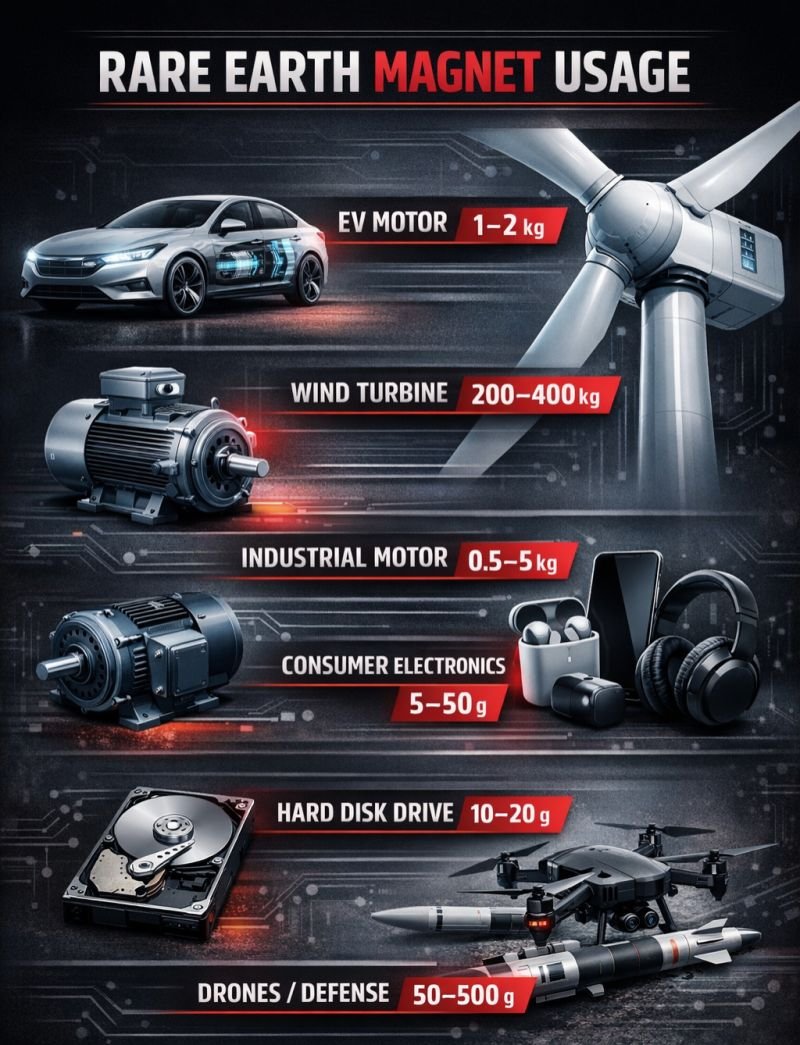
🧲⚡ Rare earth permanent magnets are not a niche industrial material. They are the invisible infrastructure of the modern economy — and almost nobody outside critical minerals understands exactly how deep that dependency runs. 👇 Start with the scale of what they do. An EV drive motor requires 1–2 kg of NdFeB permanent magnets. A single wind turbine direct-drive generator requires 200–400 kg. A smartphone contains around 9 individual magnets. A hard drive uses precision NdFeB for its voice coil actuator. Industrial motors, MRI machines, drones, missile guidance systems, radar arrays, satellite attitude control — every one of these is fundamentally dependent on the same family of materials. 🌬️🚗🛰️⚔️ What looks like digital infrastructure is, at its core, a rare earth story. What looks like clean energy is, at its core, a rare earth story. What looks like precision defence capability is, at its core, a rare earth story. 🔑 The primary supply picture is well-documented. China controls >90% of global REE processing. Seven key elements — Nd, Pr, Dy, Tb, Sm, Gd, Y — went under Chinese export controls in April 2025. The DoD has issued RFIs for samarium, dysprosium and terbium as priority national stockpile acquisitions. The 2027 DFARS deadline is approaching — the point at which China-origin magnets are disqualified from all DoD weapons. The supply chain pressure is real, documented, and accelerating. 🚫🇨🇳 But here is the part of this conversation that does not get enough attention. The answer to rare earth supply insecurity is not ONLY mining more. The answer is also recovery — and the recovery opportunity sitting in global e-waste is enormous. 🌍♻️ E-waste today holds a significant and growing volume of recoverable rare earth magnets embedded in discarded electronics, motors, hard drives, EV drivetrains, wind turbine assemblies and industrial systems reaching end-of-life. Urban mining — the systematic recovery of rare earth materials from waste streams — is a reliable, scalable and geographically distributed supplementary supply chain that shortens material cycles and reduces import dependency simultaneously. 🏭 The recycling technologies are maturing rapidly. Hydrogen-based magnet decrepitation — using hydrogen gas to break down the NdFeB alloy structure — enables magnet-to-magnet recycling that retains the full performance characteristics of the original material, critical for reuse in high-end EV and defence applications. 🔬 Hydrometallurgical extraction routes — acid leaching followed by selective precipitation or solvent extraction — recover individual rare earth oxides from mixed magnet waste streams at commercially viable purities. And emerging approaches using Multifunctional Amide Ionic Liquids — the MAIL platform developed by Ionic Technologies — represent a genuine architecture leap: non-volatile, non-flammable ionic liquid media, 15 separation stages versus the 100–150+ stages required by conventional solvent extraction, >99.9% purity for all individual REOs, fully feedstock agnostic across EOL magnets, WEEE streams, MREC and mining concentrates. ⚗️🇬🇧 This matters for three reasons. First, recycling is more energy-efficient than primary mining by a significant margin — recovering rare earths from end-of-life magnets requires far less energy per kilogram of usable output than extraction, crushing, beneficiation and separation of primary ore. The emissions reduction is proportionally significant. 🌱 Second, magnet-to-magnet recycling retains material performance — which means recovered material qualifies for exactly the same high-specification end uses as virgin material, including EV drive motors, wind generators and defence actuation systems. Recovery is not a downgrade pathway. It is a parallel supply chain. ✅ Third, geographic distribution. Urban mining draws from wherever the waste is — which in the Western world means the EU, US, UK, Japan and Australia. The input is in allied territory. The supply chain does not begin in a Chinese-controlled mine. It begins in a European or American recycling facility. 🇺🇸🇬🇧🇪🇺🇦🇺🇯🇵 The future of rare earth supply will not be defined only by who mines more. It will be defined by who recovers with better efficiency, who separates with fewer stages and lower cost, and who builds feedstock-agnostic platforms that can process any input stream to commercial purity at scale. Mining matters. But the circular economy for rare earths is not a green aspiration. It is an industrial security imperative. 🔗 $IXR 🇦🇺 | OTCQB: $IXRRF 🇺🇸 — Belfast Demo Plant operational. EOL magnets | WEEE | MREC — all processed through MAIL. Dy | Tb | Nd | Pr | Sm — >99.9% purity. TRL 8-9. Commercial plant late 2026. 🏭🧲 @IONIC_RE @IONICTECH_UK @ussmetals @CMA_Minerals @IXR2THAMOON @timhorizonmet @Viridis_VMM @ucore @LCM_Metals @CyclicMaterials @MPMaterials @ReecycleInc @SolvayGroup @EMRGroupLimited #VIRIDION @EU_Commission @ENERGY @VulcanElements @RE_Exchanges @DiscoveryAlert @USRareEarths @DeptofWar @ENERGY #RareEarths #CriticalMinerals #REE #PermanentMagnets #NdFeB #Neodymium #Dysprosium #Terbium #Samarium #MagnetRecycling #UrbanMining #EWaste #CircularEconomy #MAIL #IonicLiquids #MineToMagnet #HydrogenDecrepitation #Hydrometallurgy #EVs #WindEnergy #Defence #Drones #SmartPhones #CleanEnergy #SupplyChain #ExChina #NationalSecurity #DFARS2027 #DoD #NATO #IXR #ASX #IXRRF #Belfast #CriticalMinerals2026 #EnergyTransition #Sustainability #GreenMining 🧲⚡♻️🔬🌍🇬🇧🇦🇺
⚗️ NdPr DyTb | REO Analyst 🧲⭐ tweet media⚗️ NdPr DyTb | REO Analyst 🧲⭐ tweet media⚗️ NdPr DyTb | REO Analyst 🧲⭐ tweet media
English
0
2
8
178
IXR Dy₂O₃ Tb₄O₇ retweetledi
⚗️ NdPr DyTb | REO Analyst 🧲⭐
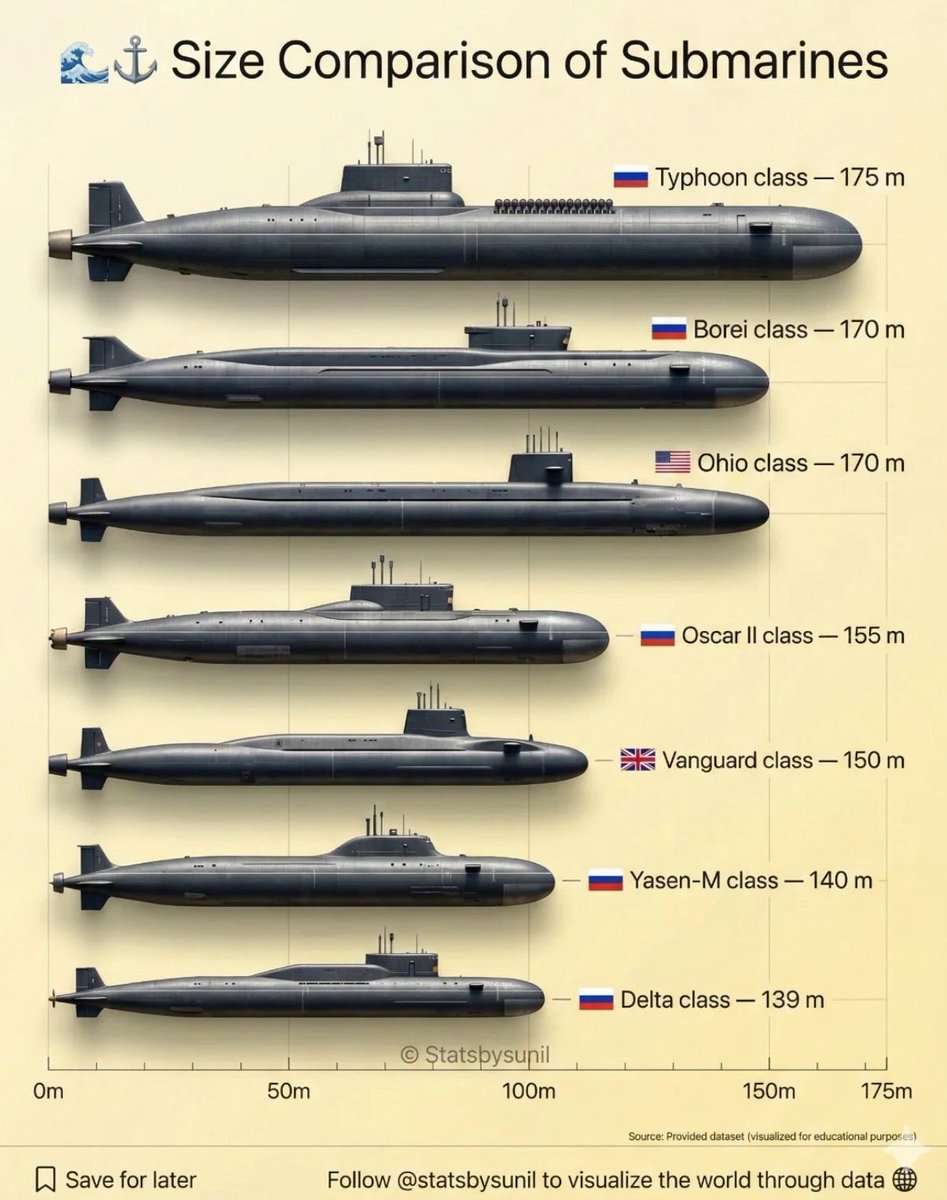
🇷🇺⚓ Russia is standardising the future of its nuclear attack submarine fleet around one class: Yasen / Yasen-M. Admiral Moiseyev says Projects 971, 945 and 949 will be replaced over the next decade by Yasen-class boats, with Russia currently fielding five Yasen-M submarines plus one original Yasen, Ulyanovsk expected in 2026, and the fleet planned to grow toward 12 boats. 🏗️ That is not just a naval story. It is a critical minerals story. 🧲 Modern nuclear submarines are rare-earth-intensive weapons systems. Public defence datasets put a Virginia-class attack submarine at roughly 4,600 kg, or about 9,200 pounds, of rare earth elements embedded across propulsion, sonar, radar and missile-related systems. And the magnet angle matters most. Now here is where the rare earth story becomes critical. 🧲 A Virginia-class submarine — the US equivalent — requires approximately 4,600 kg of rare earth elements per vessel. That includes Nd, Pr, Dy, Tb and Sm across drive motors, radar systems, sonar transducers, Tomahawk guidance and propulsion. NdFeB permanent magnets are embedded throughout. 🧲⚓🇷🇺🛡️🌍 Based on comparable displacement and systems complexity, a Yasen-M class vessel requires a similar order of magnitude — conservatively estimated at 3,500 to 5,000 kg of rare earth content per submarine. ☢️ High-strength permanent magnets built from Neodymium, Dysprosium and Samarium are used in electric propulsion systems, sonar domes, navigation arrays and automated control mechanisms that enable quiet underwater operations. 🏭🧲 If Russia builds 10 to 12 Yasen-M submarines, the programme requires an estimated 35,000 to 60,000 kg of rare earth elements in total — spread across guidance magnets, drive motors, sonar arrays, pump systems, weapon actuators and electronic warfare systems. Every single one of those elements — Nd, Pr, Dy, Tb, Sm — sits on China's April 2025 export control list. 🇨🇳🚫 That means every new Yasen-M hull is not just steel, reactors and missiles. It is also a deep inventory of strategic minerals and high-performance permanent magnets. Based on what public reporting shows for comparable Western attack submarines, the relevant scale is best thought of in tonnes of rare earths per boat, not kilos, even though a precise disclosed Yasen figure is not available in the sources here. Russia’s Perm, the latest Yasen-M boat, is expected to complete sea trials in 2026, while Moscow’s broader plan is to transition its entire multipurpose nuclear attack fleet to the Yasen standard over the next decade. The size comparison chart tells the physical story. The Yasen-M at 140 metres sits between the Vanguard-class UK SSBN at 150 metres and Russia's own Delta IV at 139 metres. These are not small vessels. They are continent-killing machines packed with rare earth dependent guidance, propulsion and weapon systems — and the mineral supply chains behind them are now a front line in geopolitical competition. 🌍 So when people talk about submarine rearmament, they should also be talking about Nd, Pr, Dy and Sm. Because naval power in 2026 is also magnet power. ⚓🧲 And magnet power starts with separated REOs, metal, alloy and secure non-Chinese processing. That is why rare earth separation is no longer just an EV story or a wind turbine story. It is a submarine story too. 🌍 #RareEarths #CriticalMinerals #Submarines #Yasen #YasenM #Russia #NavalPower #Defense #Defence #NationalSecurity #PermanentMagnets #NdFeB #Samarium #Dysprosium #Neodymium #Praseodymium #Sonar #NavalWarfare #MineToMagnet #SupplyChain #Zircon #Hypersonic #Kalibr #Submarines #NavalWarfare #DefenceSupplyChain #MineToMagnet #China #ExportControls #SupplyChainSecurity #IXR #ASX #IXRRF #CriticalMineralsSecurity ⚓🧲🔋🌊
⚗️ NdPr DyTb | REO Analyst 🧲⭐ tweet media⚗️ NdPr DyTb | REO Analyst 🧲⭐ tweet media⚗️ NdPr DyTb | REO Analyst 🧲⭐ tweet media
English
0
1
2
127
IXR Dy₂O₃ Tb₄O₇ retweetledi
⚗️ NdPr DyTb | REO Analyst 🧲⭐
📊⚔️ THE DoD RARE EARTH MAGNET CRISIS: 3,000 TONNES EVERY YEAR — AND THE COMPANIES RACING TO SOLVE IT 🧲🌍 The US military needs 3,000 tonnes of permanent magnets every single year to keep its weapons systems operational. To make those magnets, it needs 1,475.5 tonnes of separated rare earth oxides — and right now, China controls 85-95% of that processing pipeline.​ Here's the breakdown nobody talks about 👇 🏗️ THE SUPPLY CHAIN BEING BUILT NOW PRIMARY ROUTE — Mine to Magnet: ⛏️ Mining: MP Materials (CA), USA Rare Earth Round Top (TX — first commercial Dy₂O₃ at 99.1% purity, 2025), American Rare Earths (WY) 🔬 Separation: Lynas USA $258M (TX), MP Materials $58.5M (TX), Ucore Rare Metals — RapidSX technology — $18.4M DoD-funded Louisiana SMC ⚙️ Alloying: Less Common Metals (UK→US), Noveon Magnetics, REalloys + SRC (Euclid, Ohio)​ 🧲 Magnet Mfg: MP Materials 1,000t/yr, E-VAC $94.1M (SC), Arnold Magnetic Technologies (NY), USA Rare Earth Oklahoma plant ♻️ THE RECYCLING ROUTE — Western Companies Racing to Fill the Gap This is the fastest pathway to supply chain independence — and five Western companies are leading the charge from different angles: 🇬🇧 HyProMag (UK/US) — Maginito/Mkango Resources ▶️ HPMS (Hydrogen Processing of Magnet Scrap) — University of Birmingham patented technology ▶️ Tyseley Energy Park facility launched January 2026 — world-leading NdFeB-to-NdFeB closed loop recycling ▶️ US expansion underway, targeting 10% of US domestic NdFeB demand 🇬🇧🇮🇪 Ionic Technologies (Belfast) — ASX: IXR ▶️ First Western producer of recycled separated magnet REOs — hydrometallurgical process ▶️ Nd₂O₃ 99.7% | Dy₂O₃ 99.8% | Tb₄O₇ >99.5% purity — continuous 24/7 production ▶️ US expansion: Viridion JV 4,000tpa Tennessee refinery | Ford, LCM, EMR, VAC partnerships, USSM MOU ▶️ Feedstock-agnostic — processes any quality magnet scrap​ 🇨🇦 Cyclic Materials (Canada) — $75M Series B raised January 2026, Mixed Rare Earth Oxides ▶️ Two-stage physical + hydrometallurgical recycling of end-of-life products AND manufacturing scrap ▶️ CEO: "Recycling EOL products is likely the only viable source of heavy REEs outside China" ▶️ Serves defense, AI, robotics, EV sectors — cross-industry demand aggregation 🇺🇸 ReElements (US) ▶️ US-based rare earth recycling — defense supply chain alignment ▶️ Domestic magnet scrap and end-of-life REE recovery toward DoD 2027 compliance​ 🇨🇦🇺🇸 Ucore Rare Metals (Canada/US) — DoD funded ▶️ RapidSX separation technology — DoD OT Agreement awarded $4M, $18.4M construction funding approved 2025 ▶️ Louisiana SMC for heavy + light REE processing ▶️ Alaska Bokan-Dotson Ridge — 100% controlled heavy REE deposit ▶️ Target: 2,600 operational hours demonstration plant 🎯 BOTTOM LINE The race to build Western rare earth supply chain independence is no longer theoretical. Real plants, real funding, real production — from primary mining all the way through to recycling — are coming online across the US, UK, Canada, and Australia. HyProMag UK, Ionic Technologies, Cyclic Materials, ReElements, and Ucore each bring distinct technologies, feedstock strategies, and jurisdictional strengths to a problem that cannot be solved by any single company alone. The 3,000-tonne annual gap is real. The 2027 deadline is real. The solutions are being built right now. 🌍⚔️🧲 The West RE Supply Chain is very much Fragmented @IONIC_RE @IONICTECH_UK @ussmetals @anduriltech @CMA_Minerals @IXR2THAMOON @timhorizonmet @ThalesDefence @northropgrumman @LockheedMartin @BoeingDefense @DeptofWar @DoWCTO @Viridis_VMM @ucore @LCM_Metals @CyclicMaterials @MPMaterials @ReecycleInc @SolvayGroup @ReElementTech @LynasRareEarths @EMRmetal #Viridion #RareEarths #CriticalMinerals #DoD #MineToMagnet #NdFeB #SamariumCobalt #SupplyChain #NationalSecurity #HyProMag #IonicTechnologies #CyclicMaterials #ReElements #Ucore #IXR #MkangResources #RapidSX #HPMS #MagnetRecycling #CircularEconomy #2027Deadline #DFARS #Neodymium #Dysprosium #Terbium #Samarium #F35 #Virginia #ArleighBurke #B2Spirit #DefenseTech #ASX #DoE #CriticalMaterials
⚗️ NdPr DyTb | REO Analyst 🧲⭐ tweet media
English
0
2
7
194