

Ri🌐
10 posts

Apparently, Pakistan will not finally decide on whether to take their T20 WC place until 2nd February. This is very sneaky and unfair on our squad, who need certainty and extensive preparation in order to perform at their best. Our captain is a professional baker.
English


@HitmanCricket No doubt brother
T20-Hitman
Odi-Dhoni.
Test-Virat
Agree 😍🔥🔥🔥
English
Rohit Sharma is without a doubt the greatest T20I captain India has ever had, better than MS Dhoni.
The numbers don't lie 🙌

English
@ImTanujSingh Best explanation @IrfanPathan ... I had has same opinion about Kohli..Apart from that, these days his spin game is even worse..
English
Irfan Pathan said - "Virat Kohli only relies on limited shots like front foot and cover in the off side. Like Sachin Tendulkar paaji, if he did not play cover drive then he has cut shot, square cut and upper cut. It's not like Virat does not have these shots but he neither uses these shots nor tries to use them".

English
Ri🌐 retweetledi
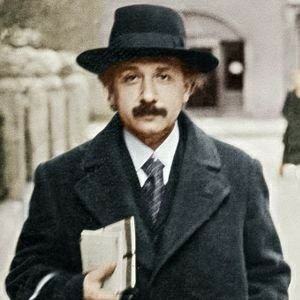
In 1924, the Indian physicist Satyendra Nath Bose wrote a paper on the quantum statistics of light quanta (now called photons), in which he derived Planck's quantum radiation law without any reference to classical physics. He sent his paper to Albert Einstein, who was impressed by his work and translated it from English to German and submitted it to the Zeitschrift für Physik, a prestigious physics journal.
Einstein then extended Bose's ideas to matter, and predicted that atoms with even spins (called bosons) would coalesce into a single quantum state at very low temperatures, forming a new state of matter that he called Bose-Einstein condensation. However, for decades, no one was able to create a Bose-Einstein condensate (BEC) in a laboratory, because the required temperatures were too low and the interactions between atoms were too strong.
It was not until 1995 that Eric Cornell and Carl Wieman of JILA, a joint institute of the University of Colorado Boulder and the National Institute of Standards and Technology (NIST), achieved the first atomic BEC using rubidium atoms. They cooled the atoms to 1.7 × 10⁻⁷ K above absolute zero, which is about -273.15 °C or -459.67 °F.
Later that year, Wolfgang Ketterle of the Massachusetts Institute of Technology (MIT) produced a BEC using sodium atoms. He also demonstrated that BECs could exhibit superfluidity, which is a phenomenon where fluids flow without friction or viscosity. In 2001, Cornell, Wieman and Ketterle shared the Nobel Prize in Physics for their achievement of Bose-Einstein condensation in dilute gases of alkali atoms, and for their early fundamental studies of the properties of the condensates. Since then, research on BECs has expanded the understanding of quantum physics and has led to the discovery of new physical effects, such as vortices, solitons, quantum interference, atom lasers, and quasiparticle condensates.

English
Ri🌐 retweetledi
Meghnad Saha was a brilliant Indian physicist and astrophysicist who made significant contributions to the fields of stellar spectra, thermal ionization, nuclear physics, and ionosphere.
He is best known for developing the Saha equation, which relates the ionization state of an element in a star to its temperature and pressure. This equation allows astronomers to determine the temperature and chemical composition of stars by analyzing their spectra.
Saha also worked on various topics such as spectrochemistry, kinetics, nuclear fusion, and solar physics. He was a pioneer in nuclear physics in India and founded the Institute of Nuclear Physics in Calcutta. He also contributed to the development of science education and research in India. He was elected as a Fellow of the Royal Society in 1927 and as a member of the Indian Parliament in 1952.
He wrote several books and papers on physics, astrophysics, and science policy.
He was a visionary scientist who had a profound impact on the advancement of science in India and the world. He was also a social reformer who advocated for scientific temper, secularism, and humanism. He died in 1956 at the age of 62.

English

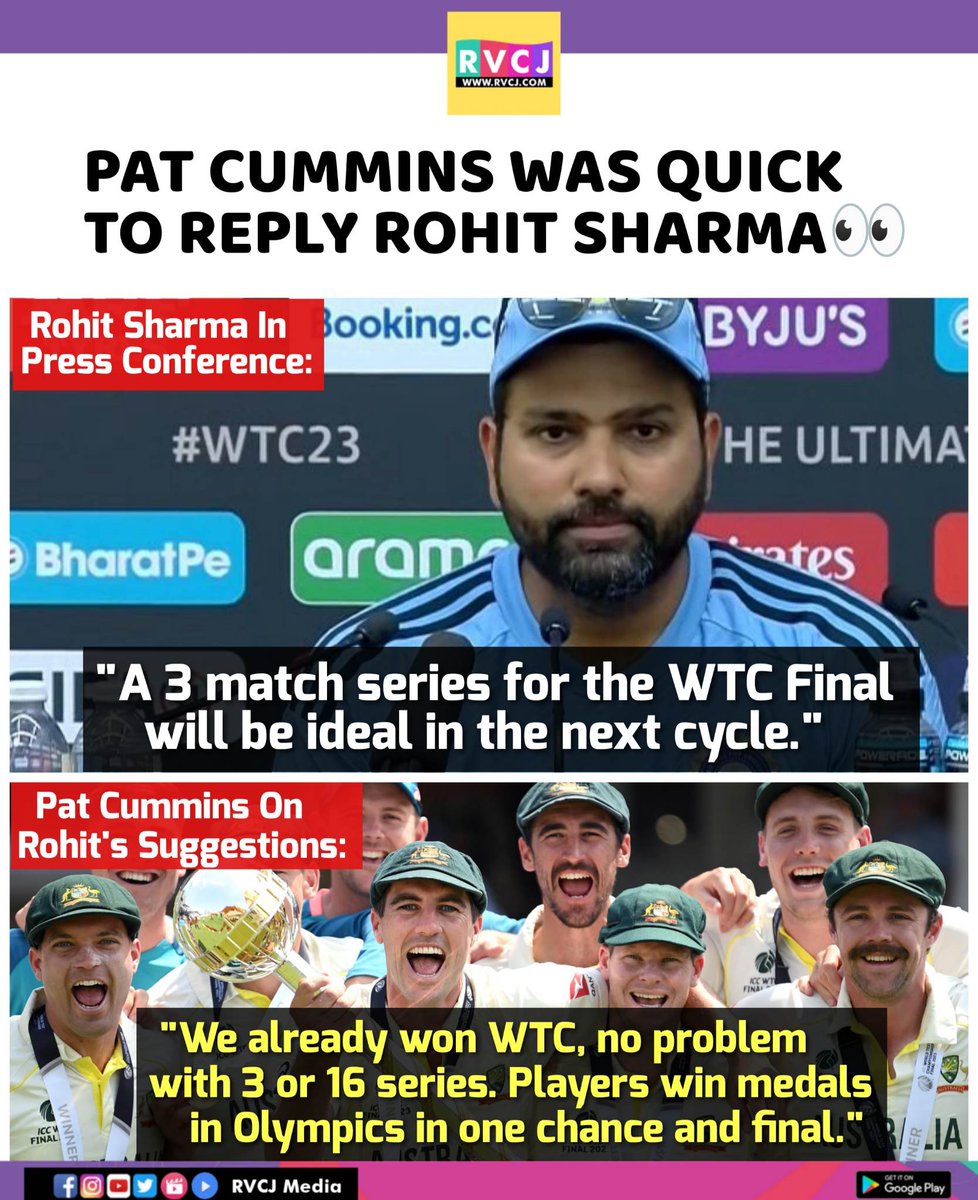
@Cricketracker Don't forget he was the man who led from front to a 36-all out team in a series winner against same Australia on their home soil..The most famous victory in the history of India's test cricket came under his leadership. He is better captain than Kohli and Rohit in test anyday
English


Indonesia
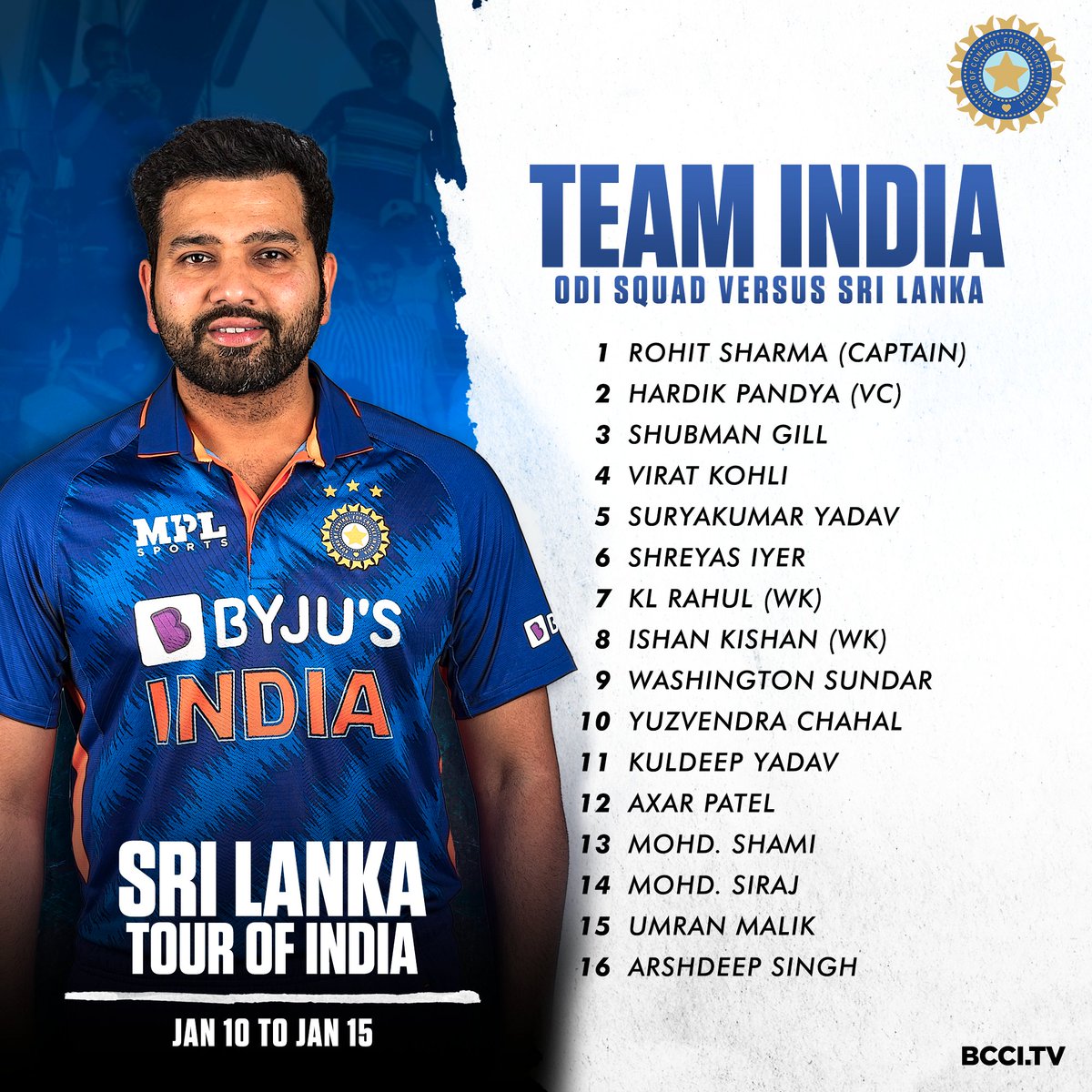
@BCCI @mastercardindia India's perfect playing XI for WC23:
1 Ishan Kisan
2 Rohit Sharma (C)
3 Virat Kohli
4 Shreyas Iyer
5 Rishabh Pant(wk)
6 R Jadeja
7 Hardik(vc)
8 W Sundar
9 Kuldeep Yadav
10 M Shami
11 J Bumrah
Indonesia
English


