Ignacio Amaral

497 posts

Ignacio Amaral banner
Ignacio Amaral

Ignacio Amaral

@IgnacioAmaral

Econ PhD @ASU | Researcher @BancoCentral_uy

Arizona Katılım Temmuz 2016
843 Takip Edilen407 Takipçiler
Sabitlenmiş Tweet
Ignacio Amaral
Ignacio Amaral@IgnacioAmaral·
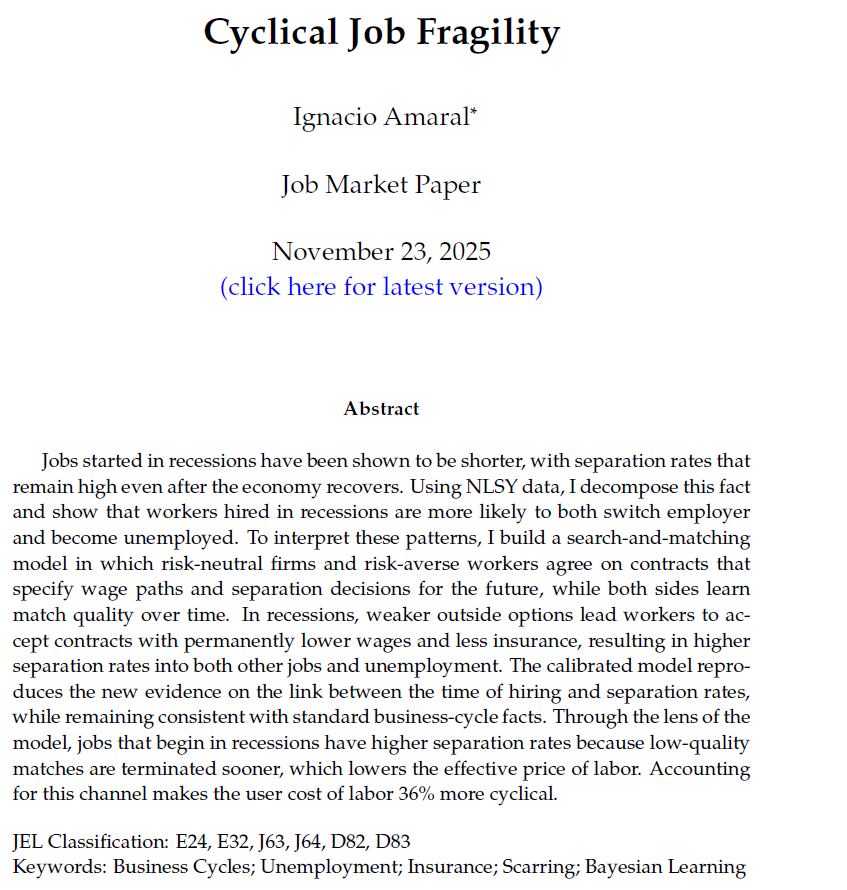
🚨 Job Market Paper 🚨 𝐂𝐲𝐜𝐥𝐢𝐜𝐚𝐥 𝐉𝐨𝐛 𝐅𝐫𝐚𝐠𝐢𝐥𝐢𝐭𝐲 Why are jobs that begin in recessions shorter? My answer: bad matches end sooner if they start in recessions 🧵 1/13 #EconTwitter #EconJobMarket
Ignacio Amaral tweet media
English
1
18
52
14.4K
Ignacio Amaral
Ignacio Amaral@IgnacioAmaral·
@Vinalesgustavo @licandro1 Ok, espero que estemos de acuerdo en la dirección del efecto de aumentar impuestos a una actividad económica. Luego discutimos la magnitud, y si vale la pena. Saludos.
Español
1
0
0
78
Gustavo Viñales
Gustavo Viñales@Vinalesgustavo·
@IgnacioAmaral @licandro1 Pero es que eso justamente no es así. La discusión en UY cuando el IRPF llevaba a que algunos o los mismos que hoy hacen terrorismo verbal con estos temas, hablaran que la gente dejaría de trabajar. Te reitero, eso es puro “sentido común”, sin ninguna evidencia.
Español
1
0
0
74
Ignacio Amaral
Ignacio Amaral@IgnacioAmaral·
@Vinalesgustavo @licandro1 Lo que pasa Gustavo es que es muy difícil pensar que no van a afectar, es teoría económica básica. Cualquier impuesto que grave la actividad económica desincentiva esa actividad. Podemos discutir la magnitud del efecto, pero no la dirección.
Español
1
0
1
93
Gustavo Viñales
Gustavo Viñales@Vinalesgustavo·
@IgnacioAmaral @licandro1 Sin dudas, comparto. Por eso no se puede repetir como una mantra, que sólo por hablar de impuestos vamos a afectar el crecimiento. Pero eso se ha vuelto deporte nacional, por un conjunto de “analistas”, que escriben sin ningún fundamento, desde un aparente “sentido común.
Español
2
0
0
94
Ignacio Amaral
Ignacio Amaral@IgnacioAmaral·
@licandro1 @Vinalesgustavo De acuerdo, ese es el problema de "external validity". Pero aún un paso antes, en macroeconomía es difícil tener "internal validity" en estudios empíricos, porque es muy difícil construir el contrafactual de "qué le hubiera pasado al país X sin cambio de política"
Español
1
0
0
104
jose licandro
jose licandro@licandro1·
@IgnacioAmaral @Vinalesgustavo Concuerdo. El análisis econométrico sin fundamentos teóricos ni contexto puede conducir a conclusiones erróneas. Obviar que Uruguay no es un país grande ni rico ni casi cerrado como la mayoría de los de la OCDE, y que compite por atraer capital (porque le falta!) es inapropiado.
Español
1
0
1
67
Ignacio Amaral
Ignacio Amaral@IgnacioAmaral·
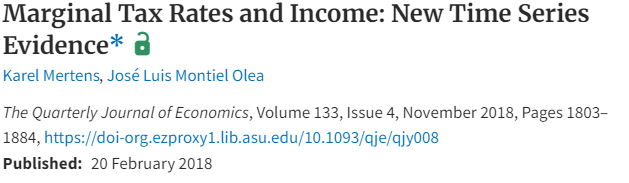
@Vinalesgustavo @licandro1 El paper que citás vos Gustavo ni siquiera está publicado en una revista de referencia en economía. Esta evidencia puramente empírica es muy difícil de obtener, pero eso es poca y mixta. La teoría es mucho más concluyente.
Español
2
0
1
105
Gustavo Viñales
Gustavo Viñales@Vinalesgustavo·
@IgnacioAmaral @licandro1 Paper que bastantes críticas metodológicas tuvo. Para el caso de EEUU, hasta los premios Nobel de Economía Abhijit Banerjee y Esther Duflo sostienen que bajar los impuestos a los ricos no asegura el crecimiento económico. No dar por sentido común, que no es así.
Español
1
0
0
86
Gustavo Viñales
Gustavo Viñales@Vinalesgustavo·
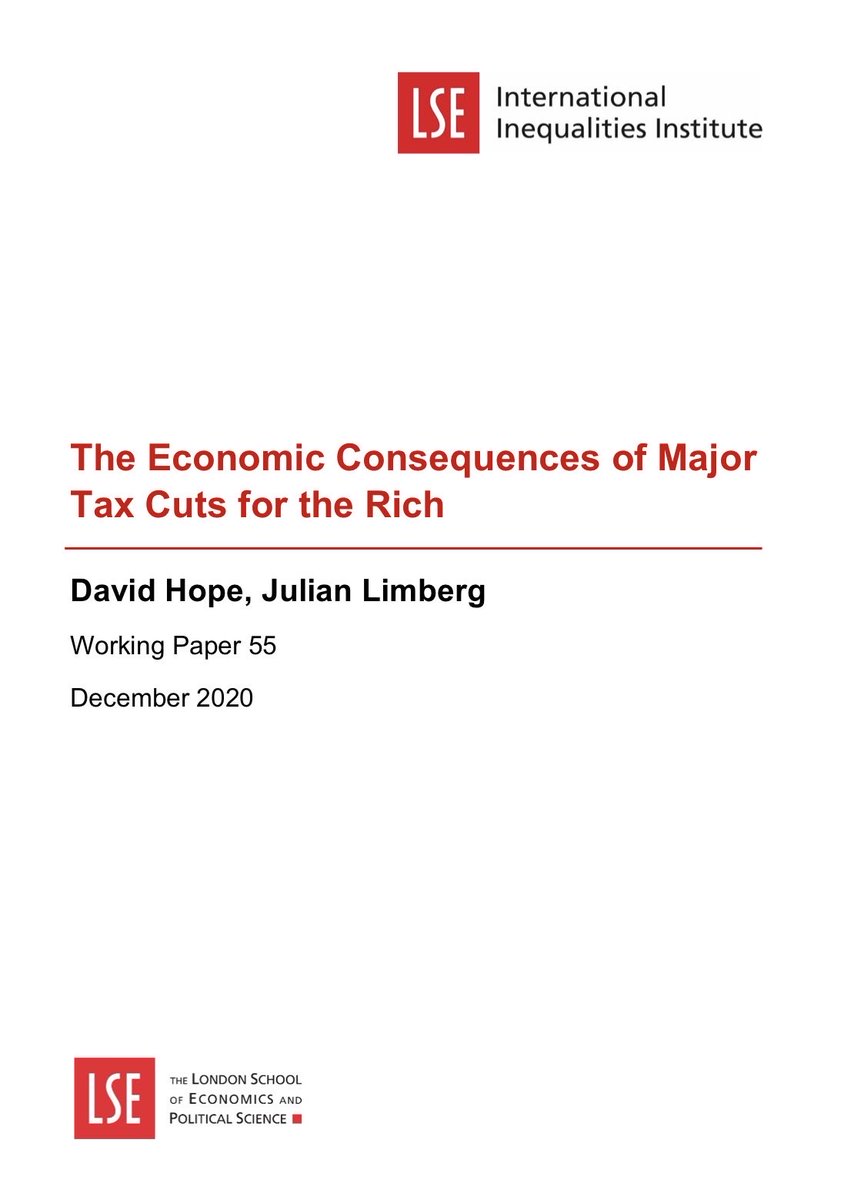
@licandro1 Para que puedas opinar con algo de fundamentos una vez, te paso una lectura. Estudio de reformas de 18 países de OCDE durante 50 años concluye que la bajada de impuestos a los ricos aumenta la desigualdad y no tiene impactos en el crecimiento ni en el desempleo.
Gustavo Viñales tweet media
Español
2
0
5
260
Ignacio Amaral retweetledi
Niko McCarty.
Niko McCarty.@NikoMcCarty·
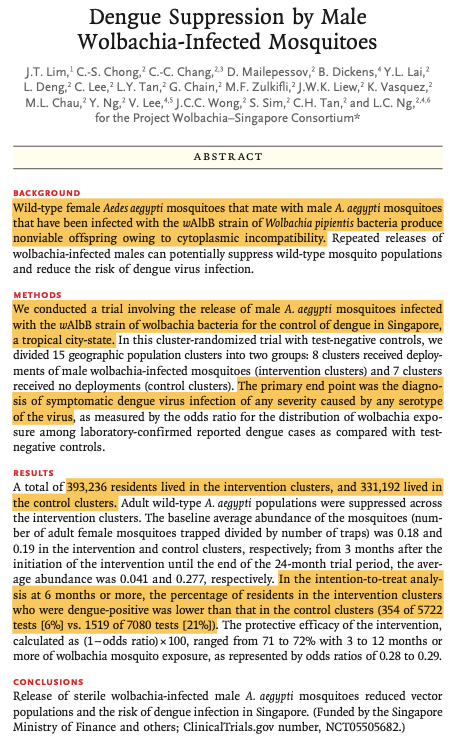
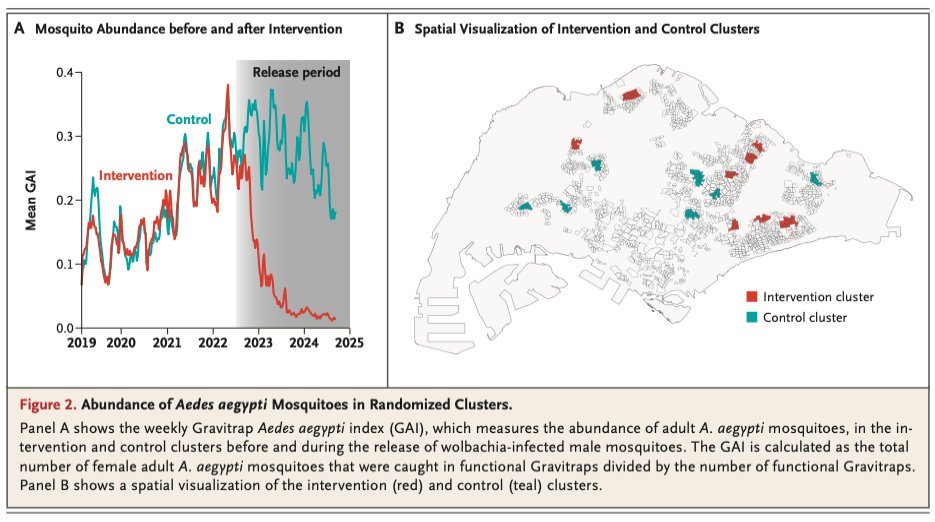
Here are more details on the Singapore mosquito paper. The key result: Releasing bacteria-infected mosquitoes over large swaths of Singapore, twice weekly, led to a huge drop in dengue cases after 3 months. The bacteria, called Wolbachia, naturally infect insects like bees and beetles. They do NOT naturally infect Aedes aegypti mosquitoes, which transmit Zika, dengue, and chikungunya. A Wolbachia bacterium was found in a house mosquito (Culex pipiens) in 1924, though, and by the 1970s researchers figured out that these bacteria interfere with mosquito reproduction. Wolbachia were deliberately introduced into Aedes aegypti in 2006, with the first field releases of Wolbachia-infected mosquitoes happening in Australia in 2011. This Singapore paper isn’t a new idea. Wolbachia-infected mosquitoes become infertile because the microbes enter cell nuclei and use proteins, called CifA and CifB, to mess with histones during sperm development. The sperm never develop properly so, when these infected males later mate, the female lays eggs that never hatch. (Importantly, females only mate once, and it is also only females that bite humans. This is why the study releases MALE mosquitoes; so people don't complain about the government airdropping biting mosquitoes over their houses.) For this paper, researchers divided Singapore into 15 clusters totaling ~724,000 people. Eight of those clusters had twice-weekly releases of Wolbachia-infected mosquitoes, and the other seven had no releases. They then tracked dengue infections. After 6 months of releases, only 354 of 5,722 Dengue tests (6%) came back as positive in clusters with releases, compared to 1,519 of 7,080 tests coming back positive (21%) in the control clusters. You could just irradiate males and release them (without the Wolbachia), and the U.S. government already does this to fight against screwworm invasions in Central America. X-rays alone are sufficient to make males sterile, but X-rays also damage somatic cells, meaning you have a higher likelihood that irradiated males will not “compete” as effectively for females. Wolbachia is better because it leaves fitness alone and targets sperm more directly. It's also really expensive to make Wolbachia mosquitoes; about $5 per person for an urban study like this. This is because you not only need to separate mosquitoes by sex, but then you need to infect them with Wolbachia AND irradiate them, using x-rays, to make sure you sterilize any females that accidentally pass through the filter. Still, this is cost-effective at reducing disease transmission. Another option is to release mosquitoes carrying gene drives. But that seems socially unpopular, and it’s tricky to guarantee the gene drive will never leak into the wild. So for now, Wolbachia seems like our best option, even though they need to be released constantly to keep mosquito populations low. This paper is a very important, large-scale demonstration of bioengineering at scale!
Niko McCarty. tweet mediaNiko McCarty. tweet media
English
12
153
782
52.1K
Ignacio Amaral retweetledi
Paula Pereda Suárez
Paula Pereda Suárez@paubgood·
¡Hola a todos/as! Soy economista y data scientist con foco en métodos cuantitativos, evaluación de políticas. Uso R/Python e integro otras herramientas para hacer análisis rigurosos y también proyectos creativos (moda, Taylor Swift, etc.). Busco roles donde los datos se conviertan en decisiones: data science/analytics, evaluación de impacto, research y data storytelling. Pueden ver mi portfolio y CV en mi blog: paulapereda.com Estoy buscando un nuevo puesto y agradecería apoyo. Si alguien sabe de alguna oportunidad o simplemente quiere que nos pongamos al día, puede enviarme un mensaje.
Español
21
151
929
85K
Ignacio Amaral
Ignacio Amaral@IgnacioAmaral·
💡Takeaways: 1⃣ Hired in recession ➜ lower job stability 2⃣ Hiring in recession ➜ quick cull of weak matches 13/13
English
1
0
1
362
Ignacio Amaral
Ignacio Amaral@IgnacioAmaral·
🚨 Job Market Paper 🚨 𝐂𝐲𝐜𝐥𝐢𝐜𝐚𝐥 𝐉𝐨𝐛 𝐅𝐫𝐚𝐠𝐢𝐥𝐢𝐭𝐲 Why are jobs that begin in recessions shorter? My answer: bad matches end sooner if they start in recessions 🧵 1/13 #EconTwitter #EconJobMarket
Ignacio Amaral tweet media
English
1
18
52
14.4K