SE

468 posts

SE banner
SE

SE

@Ill_B_Jamming

Katılım Ekim 2022
790 Takip Edilen89 Takipçiler
SE retweetledi
Ethereum Foundation
Ethereum Foundation@ethereumfndn·
1/ Today, signing a transaction can still mean approving a string of unreadable hex, otherwise known as “blind signing”. Blind signing has contributed to billions in ecosystem losses.
English
2
1
159
10.3K
SE retweetledi
ether.fi
ether.fi@ether_fi·
As part of an ongoing effort to harden our cross-chain infrastructure, we'll be deprecating weETH bridging on the following chains: Scroll, Swell, Bera, zkSync, Mode, Blast, Morph, and Sonic Our focus remains on sustained usage and integration depth. Consolidating to fewer, higher-activity chains lets us focus security resources where they matter most Bridging on these chains will be disabled at the end of June. If you hold weETH on any of them, bridge back to Ethereum or another supported chain before then.
English
48
54
476
67.2K
SE retweetledi
Artem Oak
Artem Oak@Artem_Oak·
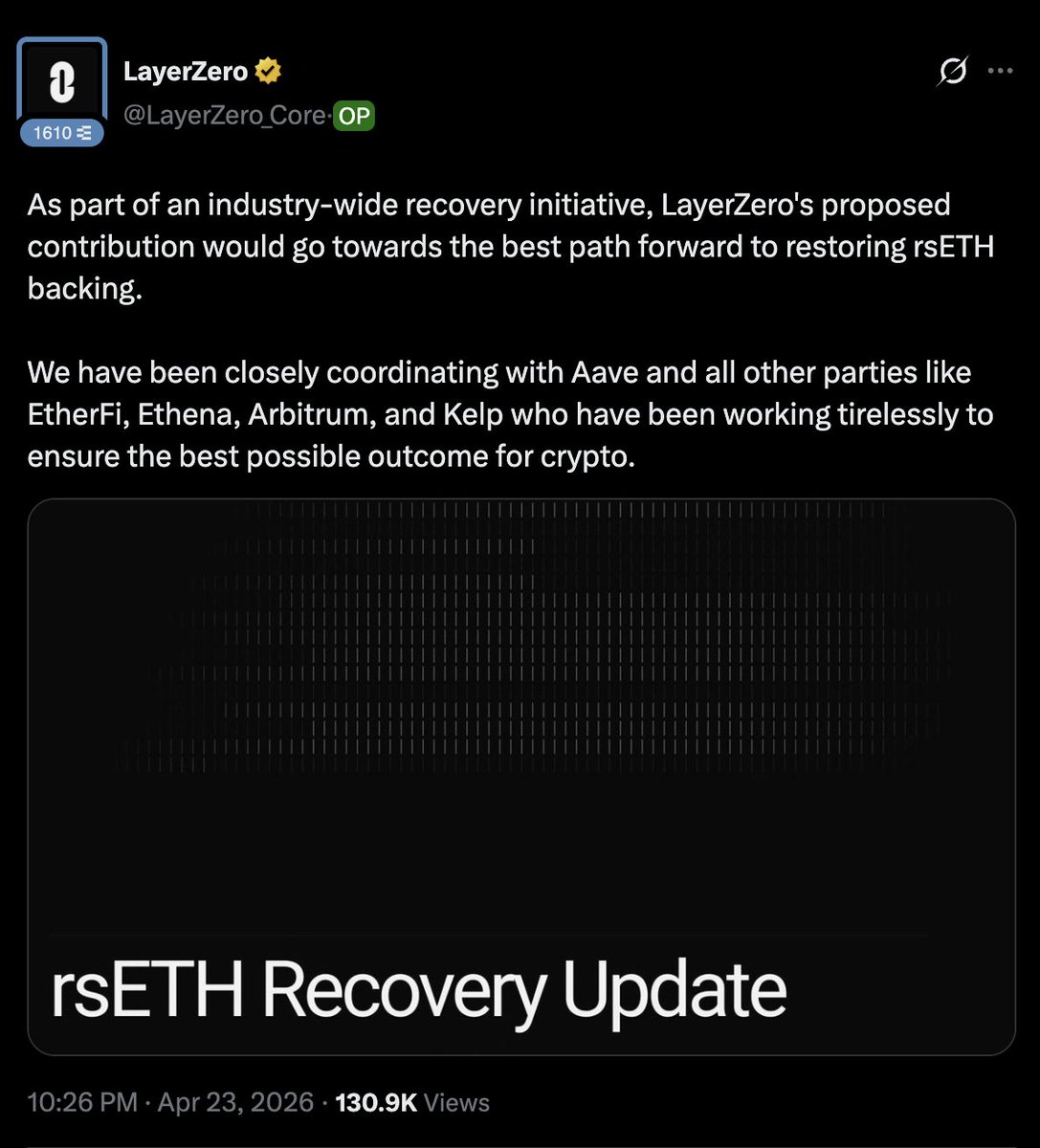
The DeFi United effort has been one of the most impressive moments of collective action this space has ever seen. The entire ecosystem rallied to make the affected users whole. A story that, against the odds, looks like it ends well. However. There is one last piece that is missing. I'm talking about @LayerZero_Core. After multiple attempts to reach out both publicly and privately, we still haven't heard from your team. @PrimordialAA tagging you here in case you can provide some clarity. Aave is contributing 25,000 $ETH. Kelp is contributing 2,000 $ETH (70% of their treasury making it clear they want to make things right). We've got a bunch of protocols that were not even affected contributing hundreds or thousands of ETH. But we still have not heard the amount that LZ will be putting towards making the users whole. I'll be honest: it feels like LZ has been waiting for the situation to resolve itself before making any commitment. That's not a good look. And it matters, because transparency on this is the last thing standing between a clean resolution and a lingering question mark over the whole effort. Three direct questions that I'd genuinely welcome answers to from anyone close to the team: 1 - Will there be *any* financial contribution from LZ towards the DeFi United initiative? If yes, what is the amount? If not, what's the rationale? 2 - What role has LZ played in the recovery so far beyond the initial statement? 3 - It's been 5 days since that statement. What are the next steps? You still have a window to make this right. DMs are open here and on TG.
Artem Oak tweet media
English
20
21
190
14.8K
SE retweetledi
0xngmi
0xngmi@0xngmi·
I see ppl calling for the death of defi They're wrong DeFi is gonna take a hit but it will not die, current situation is completely recoverable with protocol treasuries and loans I believe in DeFi and I'm gonna keep working to make it succeed🦙
English
138
109
1.3K
51.5K
Andre Cronje
Andre Cronje@AndreCronjeTech·
We are continuing to investigate the L0/rsETH incident, initial reports seem to indicate a private key compromise/bad config allowed ~200m worth of rsETH to be stolen, this was then deposited into Aave to borrow ETH (since rsETH has insufficient liquidity). a) the position is technically backed b) if it wasn't, Aave's token and security module exists to be the first line of defense for bad debt. Aave does not have a way to subsidize losses for users, so it would become a bank run, given Aave has 7b in ETH vs 100m withdrawn vs PUT's 17m exposure, this is all largely irrelevant. All that being said (just to explain our position) our primary goal is always user PUT liquidity, so we did withdraw all the ETH in Aave to the wrapper itself, this was simply because the available Aave liquidity had dipped below our min threshold.
flyingtulip.com@flyingtulip_

ETH PUT holder update. Available liquidity in Aave ETH dropped below the minimum liquidity threshold. All ETH was withdrawn. The system prioritizes liquidity above yield. No action required.

English
24
47
327
160.9K
SE retweetledi
MilliΞ
MilliΞ@llamaonthebrink·
Tbh I think the attack surface from compromised access controls is what made the team targets. At the risk of sounding like a preacher, do you know which teams are not likely targets of these kinds of attacks? Uniswap. Curve. Liquidity. Sky. Aave. If the Liquity, Sky, or Aave teams could introduce new collateral with a multi-sig, they too would be targeted. If Uniswap’s or Curve’s pools could be upgraded with a multi-sig, they too would be targeted. Multi-sig usage is okay in certain cases, but not when the attack surface includes the introduction of new collateral which can drain the protocol.
_gabrielShapir0@lex_node

absolute madness only antisocial teams who think everyone and everything is a scam are safe

English
12
10
115
13K
SE
SE@Ill_B_Jamming·
@prz_chojecki Hey, one of your tweets popped out in latest Jordi Visser vid about private equity, in case you didn't know.
English
0
0
0
12
Przemek Chojecki | PC
Przemek Chojecki | PC@prz_chojecki·
Working with Codex or Claude Code is very addictive. Just one last feature and suddenly it's 2 am. Work feels like play.
English
1
0
3
265
SE
SE@Ill_B_Jamming·
@Calderaxyz That is what polkadot and cosmos said, gl. 10k chains, 5 of them actually used
English
0
0
0
51
Caldera
Caldera@Calderaxyz·
A future with 10,000 chains is inevitable
English
15
2
21
1.9K
SE retweetledi
Justin Drake
Justin Drake@drakefjustin·
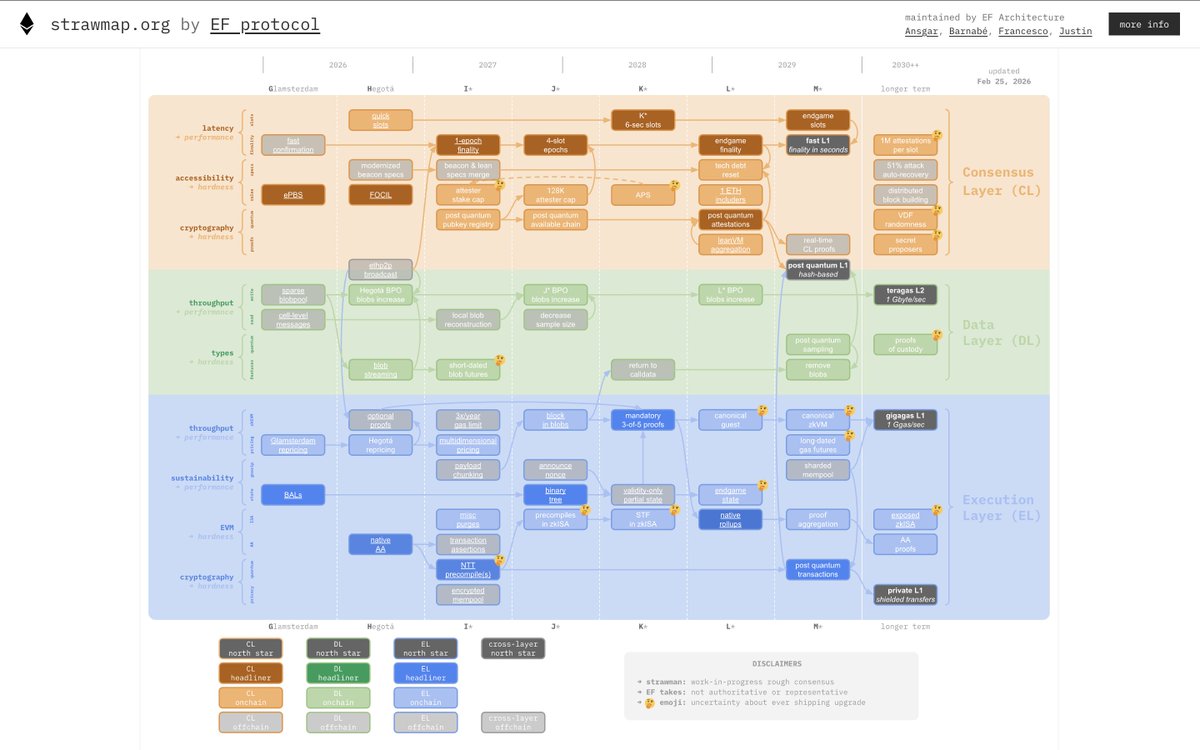
Introducing strawmap, a strawman roadmap by EF Protocol. Believe in something. Believe in an Ethereum strawmap. Who is this for? The document, available at strawmap[.]org, is intended for advanced readers. It is a dense and technical resource primarily for researchers, developers, and participants in Ethereum governance. Visit ethereum[.]org/roadmap for more introductory material. Accessible explainers unpacking the strawmap will follow soon™. What is the strawmap? The strawmap is an invitation to view L1 protocol upgrades through a holistic lens. By placing proposals on a single visual it provides a unified perspective on Ethereum L1 ambitions. The time horizon spans years, extending beyond the immediate focus of All Core Devs (ACD) and forkcast[.]org which typically cover only the next couple of forks. What are some of the highlights? The strawmap features five simple north stars, presented as black boxes on the right: → fast L1: fast UX, via short slots and finality in seconds → gigagas L1: 1 gigagas/sec (10K TPS), via zkEVMs and real-time proving → teragas L2: 1 gigabyte/sec (10M TPS), via data availability sampling → post quantum L1: durable cryptography, via hash-based schemes → private L1: first-class privacy, via shielded ETH transfers What is the origin story? The strawman roadmap originated as a discussion starter at an EF workshop in Jan 2026, partly motivated by a desire to integrate lean Ethereum with shorter-term initiatives. Upgrade dependencies and fork constraints became particularly effective at surfacing valuable discussion topics. The strawman is now shared publicly in a spirit of proactive transparency and accelerationism. Why the "strawmap" name? "Strawmap" is a portmanteau of "strawman" and "roadmap". The strawman qualifier is deliberate for two reasons: 1. It acknowledges the limits of drafting a roadmap in a highly decentralized ecosystem. An "official" roadmap reflecting all Ethereum stakeholders is effectively impossible. Rough consensus is fundamentally an emergent, continuous, and inherent uncertain process. 2. It underscores the document's status as a work-in-progress. Although it originated within the EF Protocol cluster, there are competing views held among its 100 members, not to mention a rich diversity of non-EFer views. The strawmap is not a prediction. It is an accelerationist coordination tool, sketching one reasonably coherent path among millions of possible outcomes. What is the strawmap time frame? The strawmap focuses on forks extending through the end of the decade. It outlines seven forks by 2029 based on a rough cadence of one fork every six months. While grounded in current expectations, these timelines should be treated with healthy skepticism. The current draft assumes human-first development. AI-driven development and formal verification could significantly compress schedules. What do the letters on top represent? The strawmap is organized as a timeline, with forks progressing from left to right. Consensus layer forks follow a star-based naming scheme with incrementing first letters: Altair, Bellatrix, Capella, Deneb, Electra, Fulu, etc. Upcoming forks such as Glamsterdam and Hegotá have finalized names. Other forks, like I* and J*, have placeholder names (with I* pronounced "I star"). What do the colors and arrows represent? Upgrades are grouped into three color-coded horizontal layers: consensus (CL), data (DL), execution (EL). Dark boxes denote headliners (see below), grey boxes indicate offchain upgrades, and black boxes represent north stars. An explanatory legend appears at the bottom. Within each layer, upgrades are further organized by theme and sub-theme. Arrows signal hard technical dependencies or natural upgrade progressions. Underlined text in boxes links to relevant EIPs and write-ups. What are headliners? Headliners are particularly prominent and ambitious upgrades. To maintain a fast fork cadence, the modern ACD process limits itself to one consensus and one execution headliner per fork. For example, in Glamsterdam, these headliners are ePBS and BALs, respectively. (L* is an exceptional fork, displaying two headliners tied to the bigger lean consensus fork. Lean consensus landing in L* would be a fateful coincidence.) Will the strawmap evolve? Yes, the strawmap is a living and malleable document. It will evolve alongside community feedback, R&D advancements, and governance. Expect at least quarterly updates, with the latest revision date noted on the document. Can I share feedback? Yes, feedback is actively encouraged. The EF Protocol strawmap is maintained by the EF Architecture team: @adietrichs, @barnabemonnot, @fradamt, @drakefjustin. Each has open DMs and can be reached at first.name@ethereum[.]org. General inquiries can be sent to strawmap@ethereum[.]org.
Justin Drake tweet media
English
208
419
1.6K
618.3K
SE retweetledi
_Checkmate 🟠🔑⚡☢️🛢️
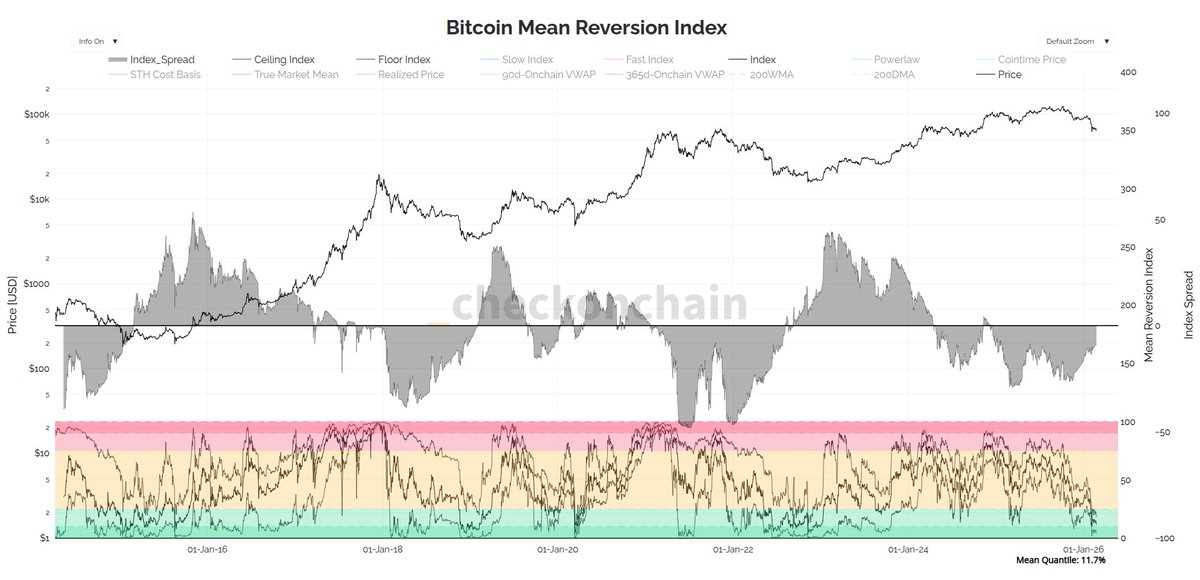
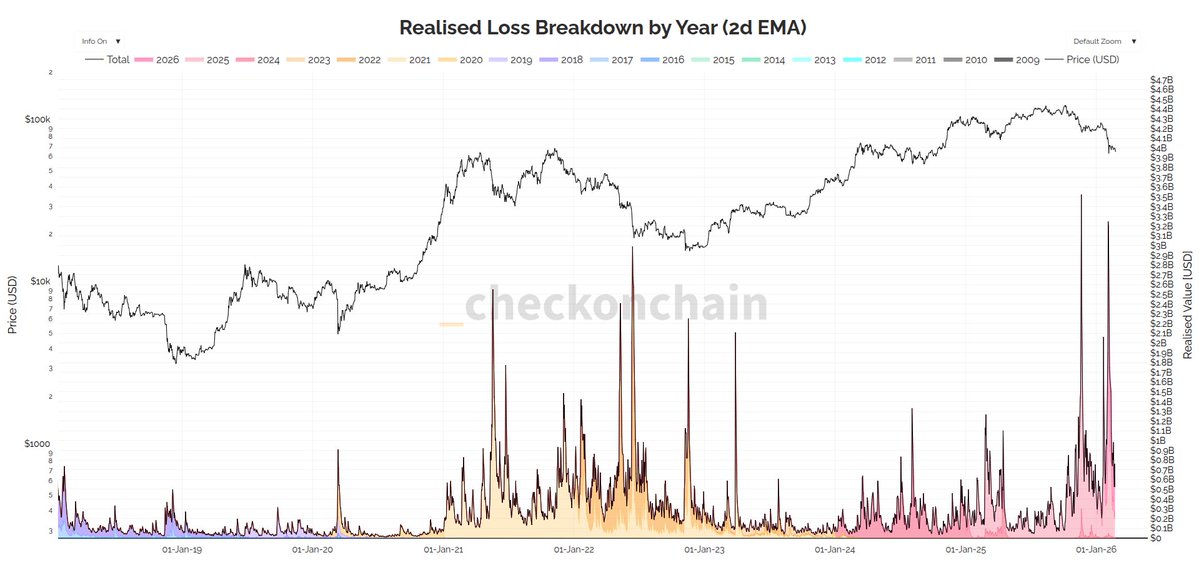
Every mean reversion model, from technical to onchain is trading within bottom formation levels, typically seen after the price capitulation event (which Dec 2018 and Jun 2022 were examples of). Both sell-offs in Nov and Feb are in the hall of fame of Realised Loss onchain. Not the biggest in relative terms, but by far the largest in USD terms, over $7.5 Billion over just those two days. We're in the bottom 20% of the most conservative, and bottom 5% of the most aggressive deviations from any sane anchor model. Either Bitcoin is dead, will no longer mean revert, and all your models are broken... ...Or you should be ignoring the bears, staying very humble, and quietly DCA stacking sats from here on. Price pain is largely behind us imho, however time pain likely remains. It will claim many who don't want to see the rest of the movie. We often experience retests of the lows, leaky price charts, powerful rallies...and then lower lows...often with a final capitulation event to book-end the time-pain chapter of the bear. In my view, even though this sounds horrific, it is unlikely we have anywhere near the aggressive rate of decline, nor depth of decline as has already occurred in Nov'25 and Feb'25. The hard part of the drawdown is most likely behind us. The difference between $17.6k in June 2022, and $15.6k in Dec 2022...was six months (the price delta is frankly irrelevant for any long-term investor). There is no rush, but these Bitcoin prices are temporary. How temporary we do not know, but it's tremendously oversold, and there are few statistics I am aware of that suggest otherwise. The bears will spend the next few months liquidating their trading accounts trying to short the bottom of a painful chopsolidation range. The bulls will do the same by getting too hopeful at the range highs. Investing is a game of picking great assets, accumulating at low prices, and then being patient as fuck. The 200-week MA is at $58.5k, a mere bees dick below the $60k low we already set. There are still folks out there who want to haggle over the missing 3%. The Realised Price is at $55k, which from first principles, should stop being visited over time, as it deviates due to unrealised profit in lost coins (a topic for another day). We've already cleared every excess leverage level down to $60k, no stop losses survived February's move. This is the time to stay humble, and stack sats. If you're not actively accumulating Bitcoin at this stage, then when? Don't fantasise over lump summing the exact bottom wick. You will be too scared to do it on the day. Buy the whole bottom. Dollar cost average for the next six months, and remove your emotions from the problem at hand. A final note; ignore the bears. They will perpetually revise their targets lower and lower, and get plenty of clicks for doing so. Humans love bear-porn because we're wired to avoid risk. This is literally what a de-risked setup looks like for Bitcoin. Ignore the bears, they lack ambition.
_Checkmate 🟠🔑⚡☢️🛢️ tweet media_Checkmate 🟠🔑⚡☢️🛢️ tweet media
English
169
355
2.5K
247.7K
SE retweetledi
0xngmi
0xngmi@0xngmi·
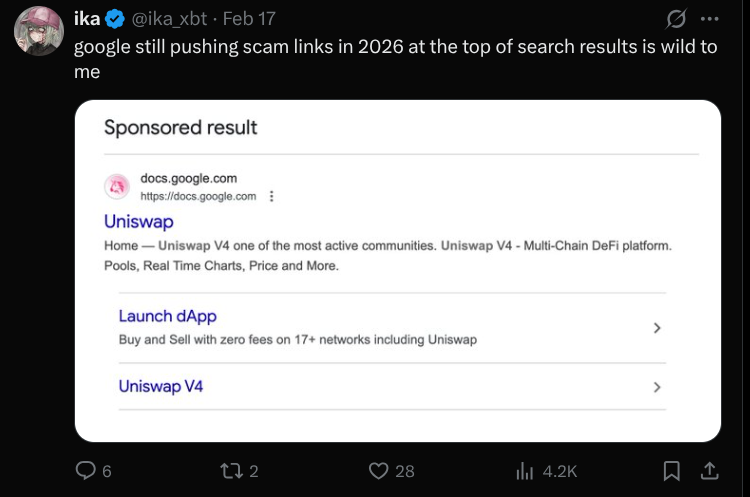
This person lost his entire net worth, a mid-six-figs portfolio, in a single tx because of a scam uniswap ad on google I've spent years trying to stop these losses, I've built 5 different products to stop this pls use search.defillama.com to get a safe link
0xngmi tweet media
ika@ika_xbt

x.com/i/article/2024…

English
173
152
2K
446.3K
SE
SE@Ill_B_Jamming·
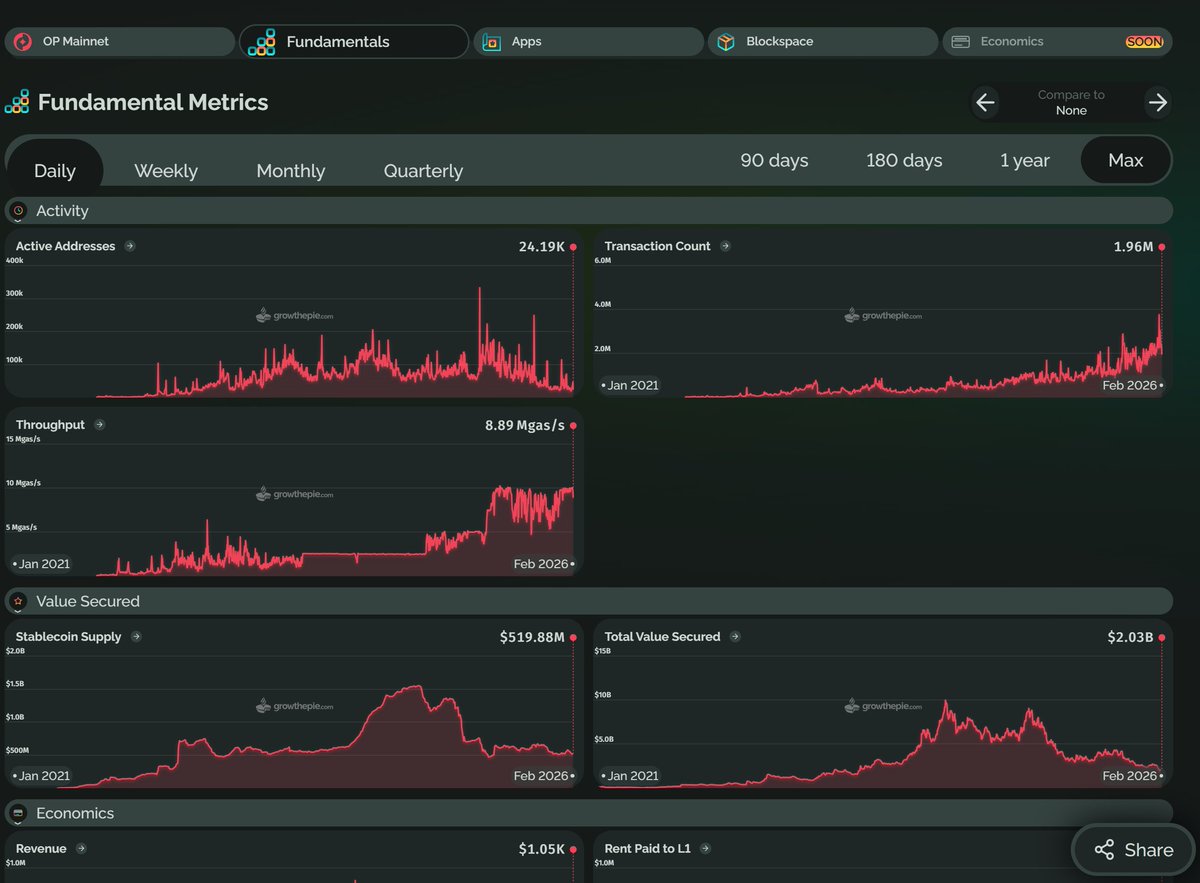
@Optimism Literally nothing
SE tweet media
English
0
0
1
57
Optimism
Optimism@Optimism·
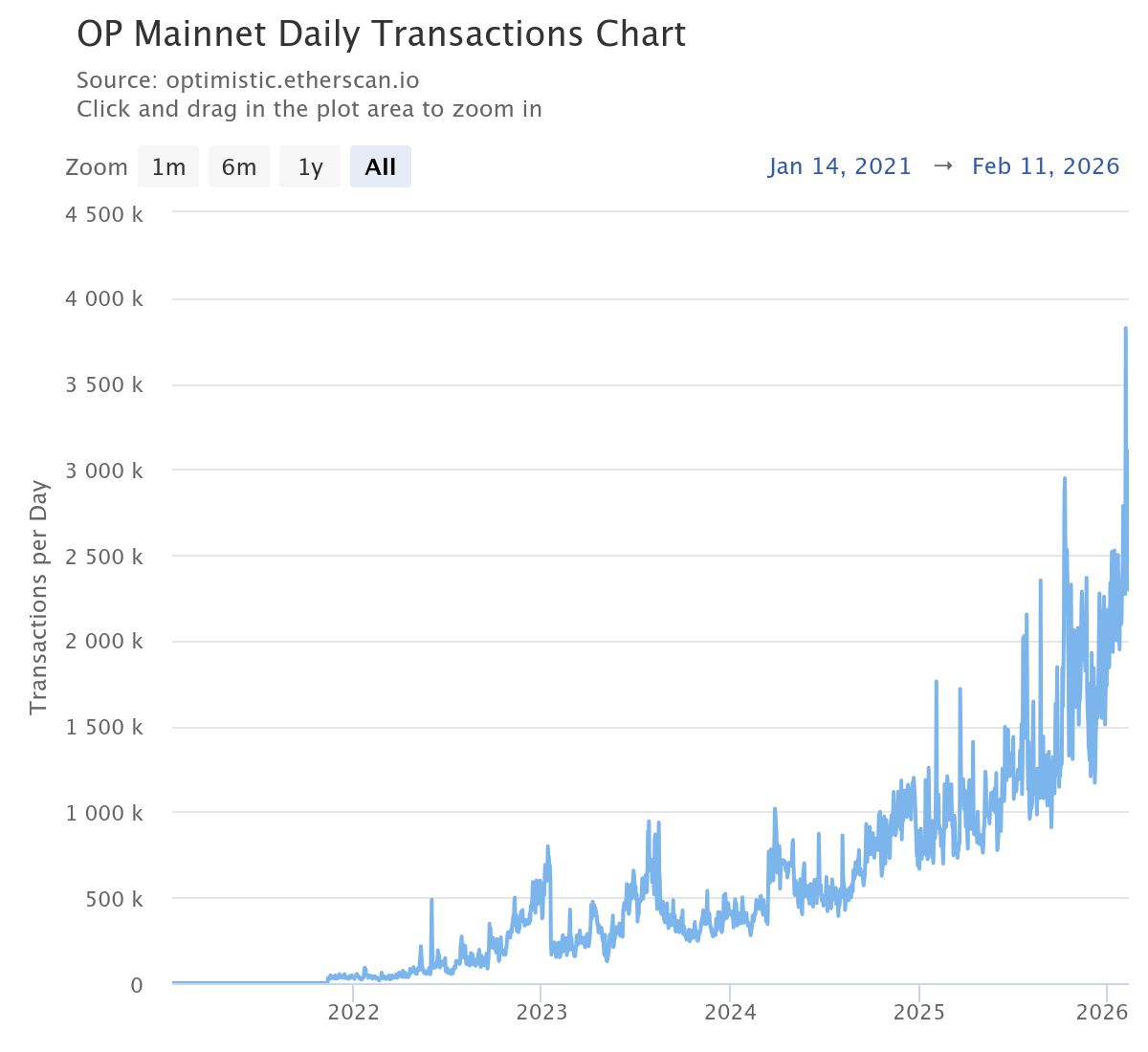
Something's cooking on OP Mainnet 🔴 Daily transactions just set a new ATH 📈
Optimism tweet media
English
47
19
313
50.8K
SE retweetledi
0xngmi
0xngmi@0xngmi·
Ever had to use a new wallet or defi protocol, googled it, and worried about picking the wrong one from a scam ad? I built search.defillama.com to solve this It searches over >5k whitelisted domains manually curated by DefiLlama, it's <6kb and loads instantly Bookmark it
English
200
224
1.7K
171.6K
SE
SE@Ill_B_Jamming·
@SebastianFrazer Yeah that was a fascinating exchange. I wonder how many people here on x explore just like you did here
English
1
0
1
43
Fileverse
Fileverse@fileverse·
@VitalikButerin We do not have a token for all of u sending dms right nooooow 👩‍🔧🌼
GIF
English
11
1
54
2.3K
vitalik.eth
vitalik.eth@VitalikButerin·
My first reaction to this was: "And that's why I just got my $2,725 check of fileverse tokens now that fileverse has grown to the point where my dad regularly writes docs in fileverse that he sends to me" My second reaction to this was: "I see how this makes total sense from a crypto perspective, but it makes zero sense from an outside-of-crypto perspective ... hmm, what does this say about crypto?" My more detailed reaction: There are many distinct activities that you can refer to as "incentivizing users". First of all, paying some of your users with coins that your app gets by charging other users is totally fine: that's just a sustainable economic loop, there is nothing wrong with this. The activity that I think people are thinking about more is, paying all your users while the app is early, with the hope of "building network effect" and then making that money back (and much more) later when the app is mature. My general view, if you _really_ have to simplify it and sacrifice some nuances for the sake of brevity, is: * Incentives that compensate for unavoidable temporary costs that come from your thing being immature are good * Incentives that bring in totally new classes of users that would not use even a mature version of your thing without those incentives are bad For example, I have no problem with many types of defi liquidity rewards, because to me they compensate for per-year risk of the project being hacked or the team turning out to be scammers, a risk that is inherently higher for new projects and much lower once a project becomes more mature. Paying people to make tweets that get attention, might be the most "pure" example of the wrong thing to do, because you are going to get people who come to your platform to make tweets, with every incentive to game any mechanisms you have to judge quality and optimize for maximum laziness on their part, and then immediately disappear as soon as the incentives go away. In principle, content incentivization is a valuable and important problem, but it should be done with care, with an eye to quality over quantity, which are not natural goals that designers of "bootstrapping incentives" have by default. If fact, even if users do not disappear after incentives go away, there is a further problem: you succeed from the perspective of growing *quantity of community*, but you fail from the perspective of growing *quality of community*. In the case of defi protocols, you can argue: 1 ETH in an LP pool is 1 ETH doing useful work, regardless of whether it's put there by a cypherpunk or an amoral money maximizer. But, (i) this argument can only be made for defi, not for other areas like social, where esp. in the 2020s, quality matters more than quantity, and (ii) there are always subtle ways in which higher-quality community members help your protocol more in the long term (eg. by writing open-source tools, answering people's questions in online or offline forums, being potential developers on your team). The ideal incentive is an incentive that exactly compensates for temporary downsides of your protocol, those downsides that will disappear once the protocol has more maturity, and attracts zero users who would not be there organically once the protocol is mature. Charging users fees, but paying them back in protocol tokens, I think is also reasonable: it's effectively turning your users into your investors by default, which seems like a good thing to do. A further more cynical take I have is that in the 2021-24 era, the "real product" was creating a speculative bubble, and so the real function of many incentives was to pump up narratives to justify the narrative for the bubble. So any argument that incentives are good for bootstrapping acquisition should be not judged on the question of whether it's plausible, but on the question of whether it's more plausible than the alternative claim that it's all galaxy brain justification ( vitalik.eth.limo/general/2025/1… ) for a "pump and dump wearing a suit". TLDR: the bulk of the effort should be on making an actually-useful app. This was historically ignored, because it's not necessary for narrative engineering to create a speculative bubble. But now it is necessary. And we do see that the successful apps now, the apps that we actually most appreciate and respect, do the bulk of their user acquisition work in that way, not by paying users to come in indiscriminately.
Squiggly Hair Shanks@redhairshanks86

you either incentivise users or you won't have any let me be ABUNDANTLY clear: no normal person regularly tests new apps. it is a very small group of early adopters that do that, but 99% of people won't waste their time trying random apps by random startups in crypto, the ONLY reason - and i really mean ONLY reason - for anyone to try your ramshackle app is for personal financial gain, e.g. via an airdrop or rewards for providing liquidity. this behaviour was heavily encouraged during the airdrop meta to the point where projects needed to airdrop 10 - 20% of their total supply or they feared getting cancelled infinex is a great example. founder kain was speaking out against predatory airdrop farmers, he decided to not give them incentives and as a result infinex is DEAD now even though it's a top 10 app this cycle. he didn't understand the game, he only saw one side of the argument, the founder's perspective. his argument was:"why should we incentivise users who are predatory? we are going to not reward anyone, focus on delivering a great app and just hope that organic users will come." nigga there are hardly ANY organic users. people don't want to try new crypto apps in their free time, they want to hang out with friends, scroll social media, do sports, or literally anything BUT try out crypto apps now that the airdrop meta is significantly diminished, i see founders crawling out of their holes and thinking that they can get users without incentivization again. to those founders i say: FORGET IT you either reward users or you won't have any

English
332
137
1.3K
272.6K
SE retweetledi
Ethereum
Ethereum@ethereum·
Ethereum is for AI. ERC-8004, a new standard by the @ethereumfndn dAI Team, @MetaMask, @Google, @Coinbase, and others, provides a blueprint for how AI agents find and review each other, request and pay for jobs, and verify the work done. What builders need to know.
English
563
912
4.9K
861.2K
Andreas Steno Larsen
Andreas Steno Larsen@AndreasSteno·
The weird thing is not that Bitcoins sells off a lot The weird thing is that it does with basically all cyclical markets globally up a lot over the past 12 months That is a new divergence and one that is hard to explain via macro imho
English
79
10
498
68.8K
SE retweetledi
vitalik.eth
vitalik.eth@VitalikButerin·
2026 is the year that we take back lost ground in terms of self-sovereignty and trustlessness. Some of what this practically means: Full nodes: thanks to ZK-EVM and BAL, it will once again become easier to locally run a node and verify the Ethereum chain on your own computer. Helios: actually verify the data you're receiving from RPCs instead of blindly trusting it. ORAM, PIR: ask for data from RPCs without revealing which data you're asking, so you can access dapps without your access patterns being sold off to dozens of third parties all around the world. Social recovery wallets and timelocks: wallets that don't make you lose all your money if you misplace your seedphrase, or if an online or offline attacker extracts your seedphrase, and *also* don't make all your money backdoored by Google. Privacy UX: make private payments from your wallet, with the same user experience as making public payments. Privacy censorship resistance: private payments with the ERC-4337 mempool, and soon native AA + FOCIL, without relying on the public broadcaster ecosystem. Application UIs: use more dapps from an onchain UI with IPFS, without relying on trusted servers that would lock you our of practical recovery of your assets if they went offline, and would give you a hijacked UI that steals your funds if they get hacked for even a millisecond. In many of these areas, over the last ten years we have seen serious backsliding in Ethereum. Nodes went from easy to run to hard to run. Dapps went from static pages to complicated behemoths that leak all your data to a dozen servers. Wallets went from routing everything through the RPC, which could be any node of your choice including on your own computer, to leaking your data to a dozen servers of their choice. Block building became more centralized, putting Ethereum transaction inclusion guarantees under the whims of a very small number of builders. In 2026, no longer. Every compromise of values that Ethereum has made up to this point - every moment where you might have been thinking, is it really worth diluting ourselves so much in the name of mainstream adoption - we are making that compromise no longer. It will be a long road. We will not get everything we want in the next Kohaku release, or the next hard fork, or the hard fork after that. But it will make Ethereum into an ecosystem that deserves not only its current place in the universe, but a much greater one. In the world computer, there is no centralized overlord. There is no single point of failure. There is only love. Milady.
English
981
935
6.3K
572.8K
SE retweetledi
Stephen | DeFi Dojo
Stephen | DeFi Dojo@phtevenstrong·
I DID IT. I finally got around to explaining how to use my CLP IV spreadsheet to get a decent indicator of whether or not a concentrated liquidity position is likely to beat impermanent loss. Link to the spreadsheet below.
English
16
5
85
7.2K