

Richie Richard
31.6K posts
Richie Richard
@ImpactMovie
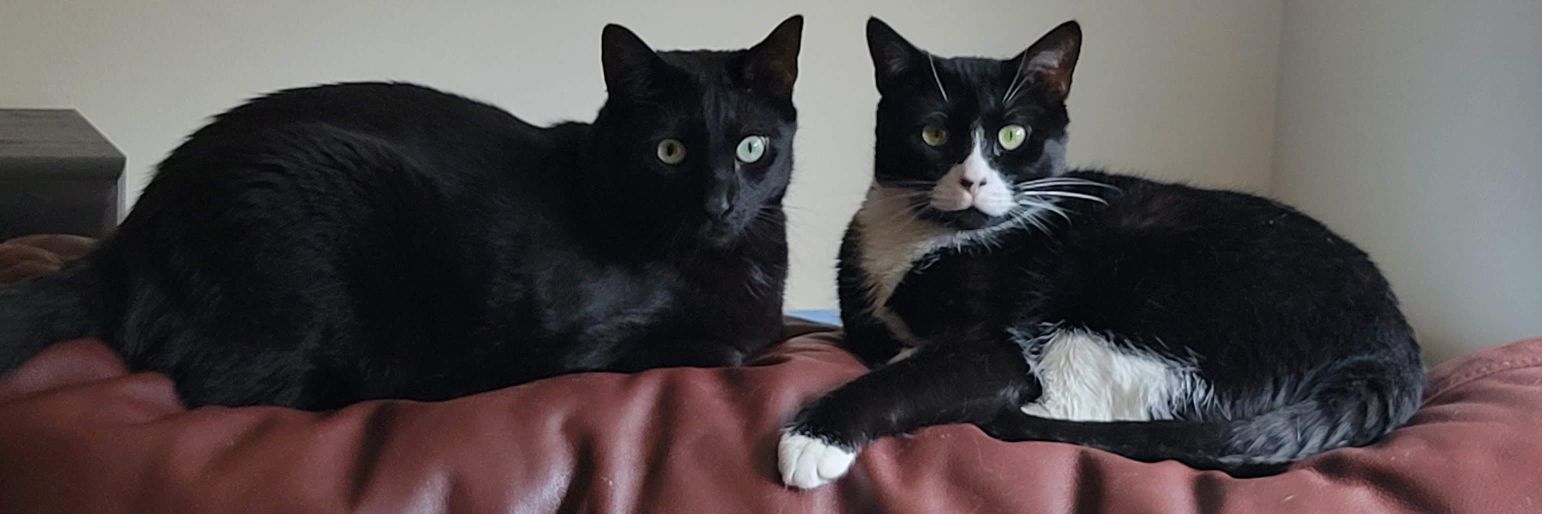
American-Ukrainian-Jewish 🇺🇸🇺🇦🇮🇱 Democrat, dad to two cat Fellas and four humans, weather geek, #NAFO
North Jersey /Langley, VA Katılım Mayıs 2009
2.2K Takip Edilen2.8K Takipçiler

@ImpactMovie Oh, it isn't too bad. After the migraine and nose bleed, it's a breeze.
English
Very cool
Axonia@InfiniteAxon
Built a real-time geopolitical intelligence dashboard, check it out: sentinel.axonia.us - Live military flight tracking (ADS-B, multi-feed) - Aircraft identification: fighters, bombers, tankers, ISR, helos - Naval carrier & strike group positions - Active conflict zones across 30+ countries - OSINT signals from X / Mainstream Media - Base flight logs: takeoffs & landings at military airfields - Earthquake alerts (M5.5+) with tsunami flags - Fire detection via NASA FIRMS satellite data - GDELT conflict event mapping - Live news feeds & ground cameras worldwide - Points of interest: bases, nuclear sites, strategic infrastructure All on an interactive 3D globe, updated in real-time
English
@anneapplebaum These are weapons that wont be used against Ukraine
English

"Russia is close to completing a phased shipment of drones, medicine and food to Iran, according to western intelligence reports that detail Moscow’s efforts to keep its embattled partner fighting"
giftarticle.ft.com/giftarticle/ac…
English
Ukraine is pleased these aren't going to be launched in their direction.
Disclose.tv@disclosetv
JUST IN - Western intelligence says Russia is sending drones to Iran — FT
English


@connorobrienNH Republicans voted NO on the War Powers Act. What do you expect?
English

Senate Armed Services Chair Roger Wicker, asked about what Rogers said about not getting enough info on Iran, says: “Let me put it this way: I can see why he might have said that.”
Connor O'Brien@connorobrienNH
Fresh from an Iran briefing, HASC Chair Mike Rogers criticized DoD for not giving lawmakers more info. "We want to know more about what's going on, what the options are, and why they're being considered," he said. "We're just not getting enough answers." politico.com/news/2026/03/2…
English
Richie Richard retweetledi

Concerning.
Those fucking Ukrainians are at it again, ignoring the fact that Russia actually has all the cards.
Reuters@Reuters
Exclusive: At least 40% of Russia's oil export capacity is at a halt following Ukrainian drone attacks, a disputed attack on a major pipeline and the seizure of tankers, according to Reuters calculations based on market data reut.rs/3NLOr1o
English
@Alihashem Are there any areas of common ground? Asking for a friend
English

Heard FM Aragchi’s interview w state TV. My impression is that Iran’s still keeping bridges with the U.S., Him saying “this war is not our war, nor is it America's war. It was Israel that pushed the United States into it.” Rejecting the 15 points, offering Iran’s points, means practically Iran isn’t rejecting talks, rather looking for common grounds with the U.S. . Next hours crucial.
Ali Hashem علي هاشم@Alihashem
Iran rejects the 15 points paper. A high-rank diplomatic source confirmed to AlJazeera that Tehran has received the US 15-point plan but described it as “extremely maximalist and unreasonable.” The source said that what has been portrayed in some media reports does not accurately reflect the substance of the proposal. “It is not beautiful even on paper,” the source added, calling the plan deceptive and misleading in its presentation.
English
Imagine that. The Republican House Armed Services Committee says the Pentagon won't tell them what they are planning.
You voted no on the War Powers resolution and now they won't tell you shit.
Connor O'Brien@connorobrienNH
Fresh from an Iran briefing, HASC Chair Mike Rogers criticized DoD for not giving lawmakers more info. "We want to know more about what's going on, what the options are, and why they're being considered," he said. "We're just not getting enough answers." politico.com/news/2026/03/2…
English
Richie Richard retweetledi

!!! IRAN'S FM ARAQCHI: TEHRAN HAS NO INTENTION TO HOLD TALKS WITH THE U.S.
English
@Polo17718 @NoSpinRealist @michaelh992 I don't think so. I think there's going to be kinetic action on the ground.
English


Assumption in Israel that Trump may announce ceasefire with Iran by coming Saturday, reports Israeli Channel 12
English
@TheMaineWonk If we declare victory and walk away, what becomes of Kharg Island? What is the point of taking control of it?
English

@EndGameWW3 This Vance trip is all for show so we can say "We tried".
English

Update: Israeli government sources to Reuters: The US proposal includes the disposal of Iran's stockpile of highly enriched uranium.
English
Richie Richard retweetledi


Richie Richard retweetledi

Everyone is covering the force majeure. Everyone is covering the 13 million tonnes. Everyone is covering the gas prices and the geopolitics and the five-year timeline.
My good friend Veron Wickramasinghe just asked the question nobody else is asking: how do you rebuild when the machines that make the molecules take three to four years to manufacture, ship through a closed strait, and commission in a war zone?
Read what he found.
Every LNG train at Ras Laffan requires high-purity nitrogen from Air Separation Units: cryogenic plants cooling air to minus 190 degrees to distil it into component gases. Pearl GTL needs 30,000 tonnes per day of pure oxygen from eight Linde-built ASUs. Each cold box: 470 tonnes, 60 metres tall. Lead time from contract to commissioning: three to four years. If destroyed, replacement arrives no earlier than 2029.
But here is the choke point that Veron identified that nobody else has. The heart of every cryogenic ASU is a brazed aluminium plate-fin heat exchanger called a BAHX. These exchangers operate with temperature differentials of one to two Kelvin and require precision brazing in vacuum furnaces. Only five companies on Earth are qualified to manufacture them. Five. For every cryogenic heat exchanger in every air separation unit, every LNG train, every industrial gas facility, and every hydrogen plant on the planet. Fives Cryo in France. Kobelco in Japan. Linde in Germany. Sumitomo in Japan. Chart Industries in La Crosse, Wisconsin. Current lead times: 12 to 18 months or more. And their order books are already full.
Veron was honest about what is confirmed and what is not. QatarEnergy CEO al-Kaabi confirmed LNG Trains 4 and 6 are damaged: 12.8 Mtpa offline, 3 to 5 year repairs, $20 billion annual revenue loss, force majeure up to 5 years. Shell confirmed Pearl GTL Unit 2 needs roughly one year of repair. What has NOT been confirmed is whether the ASUs themselves were destroyed. Shell’s one-year timeline is inconsistent with total ASU loss, which would require four to five years. Veron flagged this honestly and gave you the analysis both ways.
And then he showed you the cascade nobody else sees.
Qatar produces one-third of the world’s helium from the same facility. Helium is irreplaceable in semiconductor fabrication: cooling wafers, purging chambers, detecting leaks. Samsung and SK Hynix import 64.7 percent of their helium from Qatar. Spot prices have doubled. Liquid helium vaporises within 35 to 48 days. Fourteen percent of capacity is permanently damaged.
The LNG trains, the ASUs, and the helium plants all sit on the same rock, fed by the same gas field, accessed through the same strait. One set of missile strikes on March 18 to 19 took out 17 percent of global LNG, threatened one-third of global helium, and exposed a supply chain that runs through five workshops in Germany, France, Japan, Italy, and Wisconsin with three-year lead times and full order books.
This is what Veron understood that the headline analysts missed: the recovery is not constrained by money or political will. It is constrained by vacuum furnaces, aluminium metallurgy, and the physics of brazing at tolerances measured in single-digit Kelvin. You cannot accelerate physics. You cannot surge-produce a 470-tonne cold box. You cannot commission cryogenic equipment in a war zone.
Five companies. Five workshops. Three-year lead times. Full order books. A closed strait. An active war.
That is not a recovery timeline. That is a sentence. Read Veron’s full analysis. It is the most important thing written about this war that does not involve a missile.

Veron Wickramasinghe@veronken
English
@EdKrassen Good. Trump is an idiot. This is of his own making.
English

BREAKING: Iran has refused peace talks with Trump’s negotiators.
Meanwhile they continue to bomb U.S. military bases.
English
@ImpactMovie Just being sent to look pretty the way it seems now...
English
What a joke...
The 15 terms of the agreement with Iran... Postponing the decision regarding the ballistic missile program.
الحدث عاجل@Alhadath_Brk
البنود الـ 15 للاتفاق مع إيران... تأجيل اتخاذ القرار بشأن برنامج الصواريخ الباليستية #الحدث_عاجل
English