Industrial Reality

29 posts

Industrial Reality banner
Industrial Reality

Industrial Reality

@Industrialtruth

Notes on industrial news and manufacturing realities.

Katılım Ocak 2026
12 Takip Edilen1 Takipçiler
Industrial Reality
Industrial Reality@Industrialtruth·
Terry Gou’s Final Pursuit: Moving Beyond the Subcontractor Legacy The ongoing negotiations between Mitsubishi Electric and Foxconn regarding a 50% stake in Mitsubishi’s automotive unit are being framed as a strategic move for EV competitiveness. But for those of us in the industry, there’s a deeper, more personal story here. This isn't just about supply chains; it's about Terry Gou’s lifelong ambition to move beyond his identity as the world’s most successful subcontractor. Terry Gou built a global empire by being the world’s most efficient manufacturer. Yet, despite his massive success, he has always lacked the one thing that defined his Japanese counterparts: a legacy brand with historical trust. Looking back, his moves follow a consistent pattern: Sharp: His first major acquisition in 2016. It was a trophy of Japanese engineering, but today it is a financial burden, with its iconic plants being repurposed for AI data centers. Nissan: He repeatedly looked for an opening during Nissan’s struggles, seeking a legitimate stake in the heart of the Japanese auto industry, only to be kept at a distance by the Japanese establishment. Mitsubishi Electric: Now, he is taking a 50% stake in their mobility unit. He isn't just buying hardware; he is buying the Tier-1 credibility that his own EV platform, MIH, has failed to gain on its own. From a business standpoint, the outcome is still a question mark. Mixing Foxconn’s high-speed, low-cost culture with Japan’s high-trust, high-cost legacy has proven difficult, as seen with Sharp. However, for Gou, this deal feels like a way to settle a lifelong debt to himself. It appears to be an attempt to finally stand equal to the Japanese giants he once envied during his early years. Whether this results in a successful business or just another trophy remains to be seen, but the drive behind it is clearly more than just profit. just-auto.com/news/mitsubish… knowledge.wharton.upenn.edu/article/will-b…
English
0
0
1
31
Industrial Reality
Industrial Reality@Industrialtruth·
A 70-Year Streak Broken: Watching Honda Wake Up from the Dream I still remember those "The Power of Dreams" commercials from back in 1999. At the time, Honda was the gold standard—bulletproof engineering, relentless innovation, and a brand that felt invincible. But 2026 has delivered a brutal reality check. For the first time since its 1957 listing, Honda is staring at a massive net loss. Seventy years of consecutive profit, gone. The mess boils down to three cold facts: they got pushed out of China, they're spinning their wheels in the US, and the big EV bet turned into a massive money pit. China used to be Honda’s cash machine. Five years ago, they were moving 1.6M cars a year. Now? They’re down to 640,000. That’s a million cars worth of annual demand just evaporated. While Honda was clinging to its mechanical heritage, local brands were winning with software. Now, instead of dividends, the China business is handing over a ¥150B ($937M) deficit. The US story is even more painful. On paper, sales volume held up, but the profit is dead. To fight off Hyundai, Kia, and Tesla, Honda started burning cash on incentives just to move metal. Their operating margin hit -1.0%—meaning they’re basically paying people to drive their cars. The EV hubs they banked on are now just expensive liabilities after the policy shifts. And then there's the $15.6B "dream." They talked a big game about spending $62B on EVs, but the reality is that they just wrote off ¥2.5T ($15.6B) in R&D and assets for projects that will never hit the road. The flagship "0 Series" they promised? Scrapped before the first unit was even built. Ending the year with a ¥690B ($4.3B) net loss is a hard pill to swallow for someone who’s followed this brand since the late 90s. It’s a reminder that in this industry, if you lose touch with the gritty reality of the market, no amount of "dreaming" can save you. The Honda I saw in those 1999 commercials is officially a memory now. global.honda/en/newsroom/ne…
English
0
0
0
32
Industrial Reality
Industrial Reality@Industrialtruth·
Resilience: A Fancy Word for "Your Sacrifice, My Poor Planning" Every time I attend a supplier summit for global OEMs, the word "Resilience" is at the center of every presentation. On paper, it sounds like a strategic goal. But on the factory floor, it is often used as a convenient excuse: "We’ll deviate from the forecast; you just deal with the volatility." The Forecast Deviation Gap Major OEMs have increasingly shifted the burden of market volatility onto the supply chain. When their actual orders deviate significantly from their own forecasts, they call it "responding to the market." But when a supplier struggles to adjust production to these sudden shifts, the OEM labels it a "lack of resilience." In reality, "Resilience" has become a tool to turn an OEM's planning error into a supplier's operational obligation. Capa Isn't a Switch Procurement teams often behave as if capacity is a digital setting. They forget that increasing output for critical industrial components requires months of lead time, massive capital investment, and skilled labor. If we invest in capacity to meet a surge and the market cools, the supplier is left holding the bill for the machinery and the labor. The OEM demands the elasticity of a rubber band but expects the supplier to act as a financial buffer for their own balance sheet. The Shift from Lean to "Just-in-Case" For years, the industry worshipped 'Lean' and 'JIT,' treating inventory as an inefficiency to be eliminated during margin negotiations. Now, the same organizations demand high safety stocks and call it "Building Resilience." The intent is clear: they are shifting the financial burden of inventory from their books to the supplier's. They want the security of a buffer without paying for the capital tied up in it. The Bottom Line True resilience is an investment, not a mindset. It requires redundant capacity and strategic inventory, both of which have a clear cost. If an OEM wants a truly resilient supply chain, they must: Factor the cost of idle capacity and safety stock into the piece price. Take accountability for forecast accuracy. Until then, "Resilience" remains a one-sided demand. If you want the system to bend without breaking, you have to pay for the strength of the material.
Industrial Reality tweet media
English
0
0
0
24
Industrial Reality
Industrial Reality@Industrialtruth·
Global exchange copper inventories just crossed 1 million tonnes for the first time in 21 years. Everyone keeps repeating the same line: “AI, EVs, grid expansion — copper demand will surge long term.” That may be true structurally. But markets don’t move in straight lines. Long-term demand growth and short-term inventory build can coexist. Right now, we’re seeing both. China’s cyclical slowdown, positioning shifts, and trade distortions are pushing visible stocks higher — even while the long-term electrification story remains intact. This is where industrial reality kicks in. If you’re running a factory, you don’t get paid to predict copper prices. You get paid to keep production running and protect margins. If you could reliably call copper direction, you wouldn’t be managing supply chains. You’d be trading futures. For manufacturers, the rule is simple: – Don’t bet on price direction. – Split purchases over time. – Secure supply. – Build contracts that pass through volatility. – Protect the factory, not your ego. Macro narratives don’t keep production lines alive. Risk management does. mining.com/copper-price-g…
English
0
0
0
27
Industrial Reality
Industrial Reality@Industrialtruth·
The TCO Delusion: Why Japanese Commercial Vehicles are Following the Path of Japanese TV 1. A 20-Year-Old Script: "We Win on TCO" In a recent interview with Nikkei, Hino Motors CEO Satoshi Ogiso sounded a familiar alarm. Faced with the aggressive expansion of Chinese EVs in Southeast Asia, his defense was: "We must be chosen based on Total Cost of Ownership (TCO), including after-sales service." To anyone who has survived the IT hardware wars of the 2000s, this sounds like a haunting déjà vu. This is exactly how HP tried to defend its premium-priced servers and printers against leaner competitors. It is a defense mechanism used by companies that have already lost the "Price vs. Performance" battle. 2. The TCO Fallacy: An Unverifiable Promise TCO is a brilliant marketing concept on paper, but a ghost in reality. The "Accountability" Gap: TCO relies on the promise that "it’s expensive now, but you’ll save on repairs 5–10 years later." The problem? No manufacturer actually tracks this for the customer. There is no refund if the TCO turns out to be higher than promised. The Buyer’s Reality: Fleet managers are judged on this year’s CapEx (Capital Expenditure). Saving hypothetical pennies on OpEx (Operating Expenditure) seven years from now doesn’t help their current bottom line. The HP Lesson: HP preached TCO for decades, but the market eventually shifted to "unlimited ink" models and cloud services. Customers realized that "future savings" were just a justification for "current overpricing." 3. The "Salaryman & Bank" Consensus: A Structural Trap Why is a giant like Hino still clinging to the "HP playbook" from 20 years ago? The answer lies in the Industrial Reality of Japanese Governance. Japanese firms often operate as a "General Consensus of Salaried Executives and Banks." Risk Aversion: Unlike founder-led companies that can pivot aggressively or slash prices to regain market share, salaried CEOs in Japan must maintain the status quo to satisfy creditor banks. The Easy Excuse: TCO is the perfect "safe" excuse. It allows management to explain away shrinking market share without having to admit that their fundamental cost structure or technological edge (the "Engine Pride") is broken. They aren't fixing the competitiveness; they are just managing the narrative. 4. The "Japanese TV" Omen We have seen this movie before. Japanese TV manufacturers once insisted that their "superior picture quality" and "durability" justified their premium prices—essentially a TCO argument. They ignored the "good enough" quality and massive price advantage of Korean and Chinese competitors until the entire industry was hollowed out. As Chinese manufacturers like BYD offer 90% of the performance at 60% of the price—with increasingly aggressive service networks—the TCO argument collapses. Ogiso’s remarks aren't a strategy; they are a distress signal from a system that cannot change. The Bottom Line: TCO is no longer a tool for the customer’s benefit. It is a self-rationalization tool for legacy giants who are unwilling to face the reality of their own declining competitiveness.
Industrial Reality tweet media
English
0
0
0
59
Industrial Reality
Industrial Reality@Industrialtruth·
The data from @rhodium_group is sharp, but vertical integration and payment floats aren't the whole story. The "Industrial Reality" is much grittier. Here is why the cost gap won't close: 1. The Inertia of Liability: Western OEMs stick to old specs because nobody wants to take the risk of changing them. History is a chain of liability, not an asset. 2. Red Tape vs. Speed: While an OEM A spends a year re-validating a part already used by a rival OEM B , Chinese OEMs just use what works. This scale allows suppliers to slash prices instantly. 3. "Infinite Minerals" Finance: Through special "Guanxi" with local governments & banks, Chinese firms roll over debt endlessly, investing other people's money without capital cost fears. 4. Relentless Aggression: Chinese teams meet at 10 PM and call supplier CEOs at midnight. Westerners? Off at 5 PM and silent on weekends. How can you compete with a culture that never sleeps and a system with zero administrative friction? Data is just the shadow of this reality.....
Rhodium Group@rhodium_group

We’re often asked: Why are Chinese EVs so cheap? Comparing costs between Western and Chinese automakers in China shows that subsidies matter, but they’re only part of the story: rhg.com/research/why-a…

English
0
0
0
42
Industrial Reality
Industrial Reality@Industrialtruth·
Legal refunds often look better on paper than in practice. In aggressive jurisdictions, authorities stall with endless paperwork or retaliatory audits. Even after compliance, they claim "budget issues" or "queue priority" to delay payouts. I’ve seen this in other countries, and I only hope the "Generous Empire" of the U.S. doesn't follow suit.
English
0
0
0
266
Ryan Petersen
Ryan Petersen@typesfast·
Took a minute to run it through the trade attorneys but here's Flexport's official post about the Supreme Court's tariff ruling
English
12
9
272
130.3K
Industrial Reality
Industrial Reality@Industrialtruth·
The End of the Generous Empire: CBP and the New Reality My U.S. subsidiary, which imports products from Asia, recently received a CBP Form 29 notice. The era of the "Generous Empire" that facilitated trade is over. U.S. Customs is now as demanding and rigorous as those in China or India. They are tightening the net by applying stricter interpretations to HS codes and logistics costs. "I am a generous god," says the 300 meme, but in reality, they are just coming for your margin. The burden of proof has shifted entirely to the importer, significantly increasing compliance costs. Welcome to the new industrial reality: the empire is now a cold, calculating auditor.
Industrial Reality tweet media
English
0
0
0
21
Industrial Reality
Industrial Reality@Industrialtruth·
EUDR may sound morally elevated, but it is a self-inflicted wound on European industry. This is the industrial reality: We are protecting files, not forests.
Industrial Reality tweet media
English
0
0
0
17
Industrial Reality
Industrial Reality@Industrialtruth·
By adding these layers, Europe lowers its own efficiency and raises its own cost base. Higher internal friction means weaker competitiveness against those who don't play this paper game.
English
1
0
0
14
Industrial Reality
Industrial Reality@Industrialtruth·
Industrial Reality: The Paper Forest of EUDR What is EUDR? It's the EU's new mandate to prove products like rubber aren't linked to deforestation. Recently received an OEM request for EUDR compliance, and here are my raw thoughts as I process the paperwork.
Industrial Reality tweet media
English
1
0
0
24
Industrial Reality
Industrial Reality@Industrialtruth·
I once quoted a project to an Indonesian state-owned defense OEM — “PT P.” They took the drawings and pricing, acted as if it was a go, then went silent. It’s a classic short-term, deal-by-deal mindset with little regard for partners. I see similar signals in Boeing’s F-15 exit. Between unclear funding and overlapping fighter programs, the execution risk became impossible to ignore. Using foreign partners for short-term gain might seem "shrewd," but it always costs more in the long run. thedefensepost.com/2026/02/05/ind…
English
0
0
0
25
Industrial Reality
Industrial Reality@Industrialtruth·
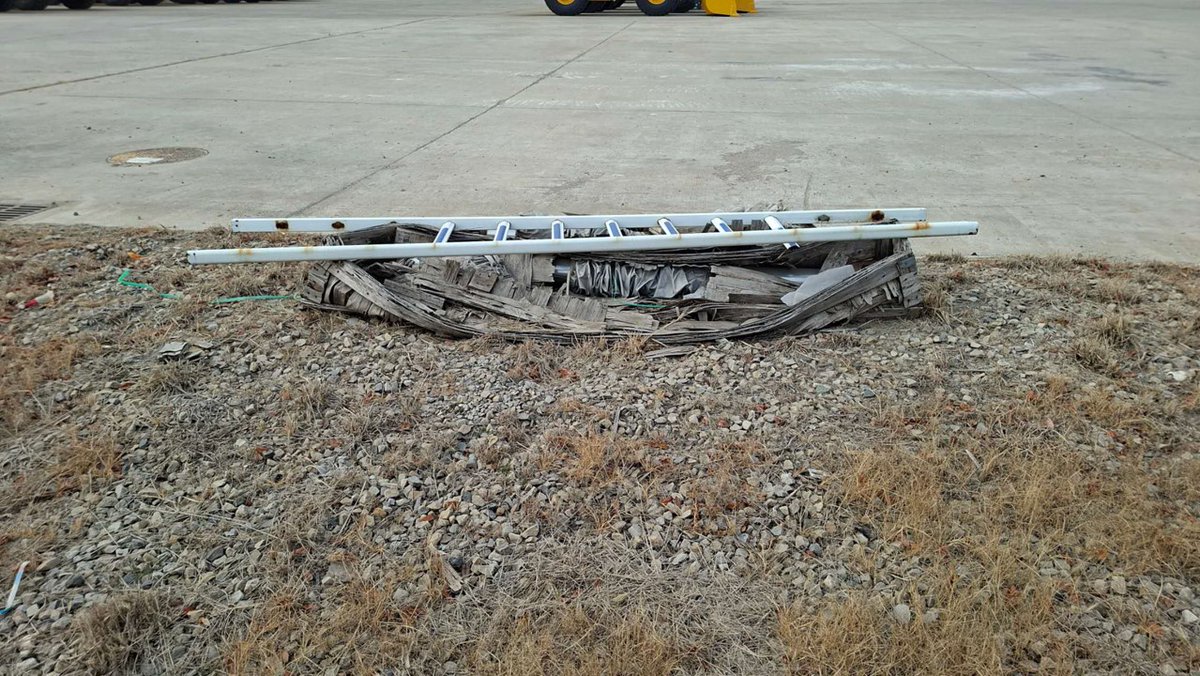
Visited many equipment plants over the years. This one felt different — low energy, low urgency. Plastic waste around the yard. Weeds left untouched. A back-gate guard asleep. Peeling exterior paint. Meetings were held in offices, not on the production floor. The overall impression was a plant in maintenance mode — assigned tasks getting done, but no visible push. From experience, this is what a plant looks like after volume decline becomes the new normal.
Industrial Reality tweet mediaIndustrial Reality tweet media
English
0
0
0
30
Industrial Reality
Industrial Reality@Industrialtruth·
I spent months preparing for India’s BIS certification, starting last year — with lawyers and consultants. Even then, it didn’t make sense. Indian officials said they would fly overseas to audit my factory, and asked for full process and factory layout details. Then last week, the BIS regulation was officially rescinded. My cost is small. The real cost is India’s — reinforcing the view that it remains an unpredictable and unsustainable business partner. 🔗 reachlaw.fi/important-regu…
English
0
0
0
33
Industrial Reality
Industrial Reality@Industrialtruth·
Sony–TCL’s 51:49 JV makes sense on paper. It’s about cost and scale. But in reality, it’s a clash of culture and pride. Japan still looks down on China. China sees Japan as past its peak. Put both under one roof — honestly, it’s hard to tell if this works or explodes. theverge.com/news/864263/so…
English
0
0
0
32
Industrial Reality
Industrial Reality@Industrialtruth·
@beebomco The biggest risk isn’t technology but pride and culture. Japanese engineers trust process and consensus; Chinese teams push speed and volume. In a 51:49 JV, that turns into constant friction, not synergy.
English
0
0
0
14
Beebom
Beebom@beebomco·
Well, this is interesting! - Sony Bravia TVs from 2027 will be manufactured from TCL - TCL will hold 51% stake while Sony hold 49% - Bravia TVs could get cheaper soon What do you think about this?
Beebom tweet media
English
48
51
1.3K
57.9K