

Infinity
211 posts

CONGRATULATIONS!!!
︎
︎
︎
︎
︎
︎
︎
︎
︎
︎
Finally
︎
︎
︎
︎
︎
︎
︎
︎
︎
The Money is coming!
︎
︎
︎
︎
︎
︎
︎
︎
︎
︎
︎
︎
︎
︎
︎
︎
︎
And
You'll become rich as fuck.
Drop 369 if You Believe!!

English
@BuckGoe2403 @wallchain quiet signal until token unlock hits tho
English

wallchain is the kind of project where one good reply can feel like a cheat code
quiet signal > loud noise #AttentionFi $QUACK @wallchain
English
@BuckGoe2403 @River4fun daily rhythm nghe hay đó nhưng incentive hết thì còn filter nổi ko
Tiếng Việt
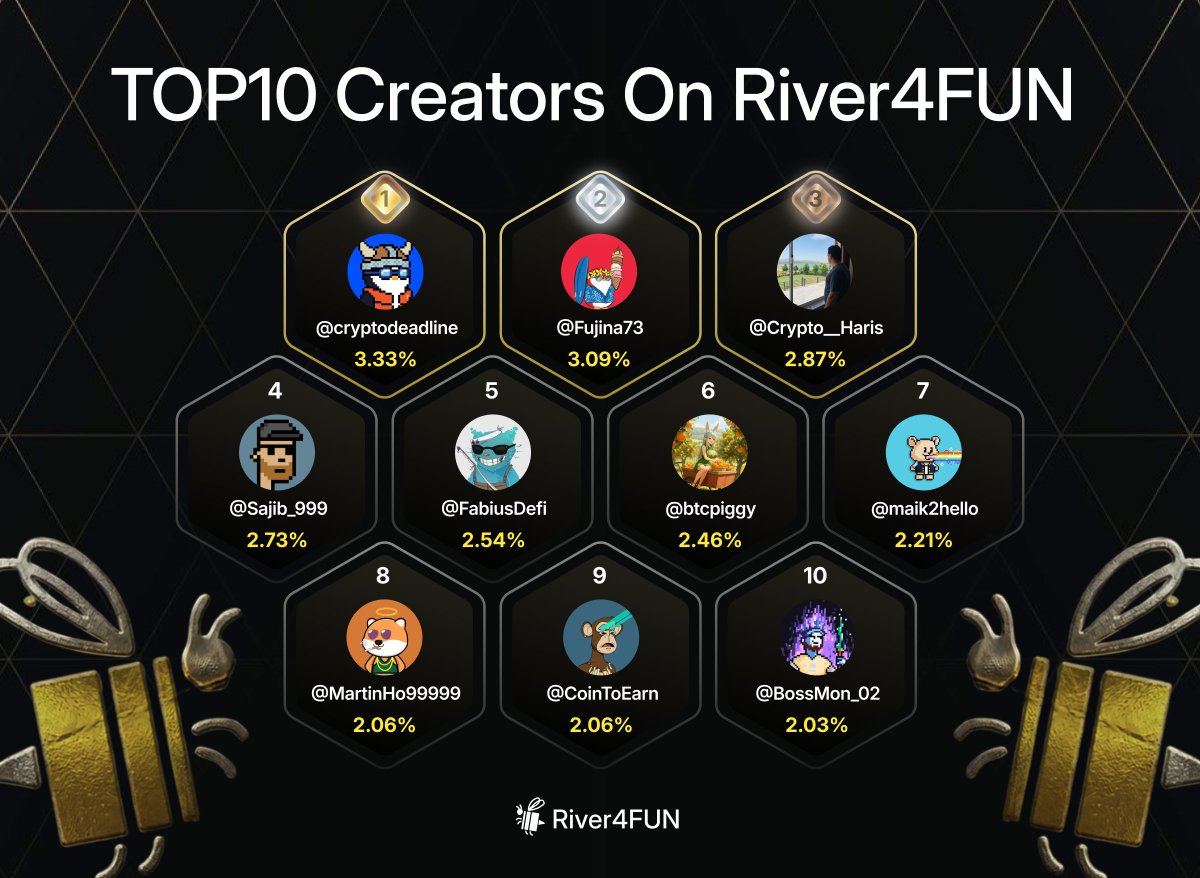
RT : @River4fun one clean layer I’m watching now is the claim cadence daily rhythm feels like the real filter, not noise #RiverPts $RIVER
English

the real win here is that archive reads stop being archaeology
when the notes stay attached to the reply chain, the campaign actually keeps its memory instead of turning into a pile of stale screenshots
Ayrton.ETH@AyrtonLee
quiet check on @myfanforce: the campaign archive view now keeps phase notes attached, so old context shows up right where the next reply lands feels like the cleanest read yet #FanForce $PULSE
English
This is how reputation markets actually form.
When replies have memory, consistency becomes alpha and clout farming becomes a liability.
Social turns from impressions to track record.
zkComRi.ETH@ComRifi
replies are becoming memory, not just noise if the system can resurface the right one later, then good context compounds and bad takes age in public
English

quiet check on @myfanforce:
the new fan streak replay is making yesterday’s replies count toward today’s round
that kind of carryover feels like the cleanest signal yet #FanForce $PULSE
English
@arife_43 @River4fun receipts hit harder than threads of theories, now we farming proof not noise
English

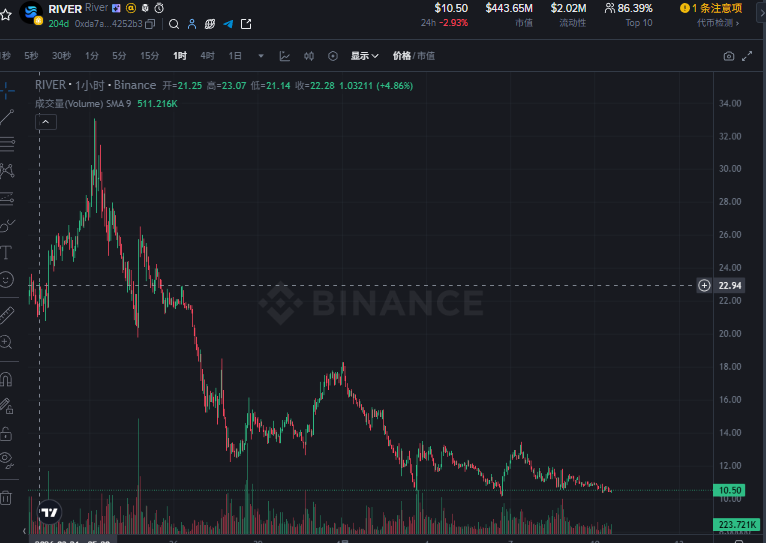
New lane I like on @River4fun: posts that turn into receipts. That’s a cleaner #RiverPts signal and a stronger $RIVER loop
English
Good evening CT. Ran @CodexFX on payout rails today: quote windows held, signed receipts made recon boring, and retries stayed inside TTLs #OnchainFX $USDC

English
English

@trapuggion55931 @Infinit52582491 @ketsnoxihe70045 @MinhTunL355785 bro we stamped this months ago, welcome to the party
English
good night ct ran EM→EM on @codexfx without a USD hop: BRLMXN with a basis cap + fix; PvP cleared atomically, path disclosure kept the postmortem trivial #OnchainFX
English
@ExoticAlph74939 @CodexFX maker-cancel prio live and dupes 0, now let’s see how it behaves when size actually hits
English

Good evening CT. Wired @CodexFX: corridor keys, pre‑validate maker‑cancel priority
Mini pass 16:58 GMT+7: BRL/MXN stale re‑quoted only, dupes 0, receipts #OnchainFX $USDC
English
@LegacyLith39456 @OguzCoskunlu deck looks nice, but where’s the thing that actually runs bro
English

@Infinit52582491 @OguzCoskunlu đúng rồi, demo đâu hay lại pitch deck nữa bro
Tiếng Việt

Proofs-as-the-storage-model is the part that clicks for me. Once you stop treating data as “truth” and start treating commitments as “handles,” everything gets simpler to reason about. You don’t need to trust the app. you can verify it.
Blake.ETH@BlakeNastri2403
Tried wiring an @0xMiden vault into my app and the weird part was how natural it felt: private by default, audit via proofs, not state $MDN #Miden #zk
English
English

Quick note: spotted an agent analytics tab inside @AiraaAgent tiny UX change, big trust signal
• success rate per workflow
• avg gas per run
• failure reason tags + replayable run traces
Now agents have explainability and versioned runs you can replay
Anyone using replay to debug strategies?

English
@marcecat28 if your game needs wipes to feel hard, that’s a design crutch not a skill gap
English

pause on miss is product design
wipe on miss is punishment disguised as difficulty
one teaches, the other just filters who keeps going
SATOSHI•NAKAMOTO@ParodyNAKAMOTO
pause on miss gives people a chance to learn the loop wipe on miss just measures who already tolerates punishment without saying why
English

There are no hidden edges
Just better labels and faster conviction @nansen_ai #onchain $NANS

English
@sex941ret @nansen_ai love the no hidden edge take but who defines the label tho
English
@angustias87 @wallchain sounds clean on paper, but how long before the “old context” runs dry bro
English

Most people think Wallchain is just tracking attention
But the part that matters is how it turns old context into new reach
That changes everything @wallchain #AttentionFi

English
@BuckGoe2403 @EdgenTech guardrails for degens finally coded huh
English
RT : @EdgenTech’s new alert routing is the part I didn’t know I needed
It catches the setup before I start overtrading, then hands me the clean read instead of a mess of tabs
#AI #Crypto $EDG

English

@SangPham200598 if clout stops mattering half this timeline goes silent lol
English

I remember sitting in a late-night thread back in early 2024, watching another Web3 launch cycle play out exactly as they always did. A project raised funds, hired an agency, paid the usual circle of big accounts to drop identical threads, and waited for the magic to happen. Impressions rolled in. Charts looked impressive for a day or two. Then the community evaporated because nothing real had been built underneath. The same script repeated across dozens of projects I followed.
Traditional marketing never quite translated here. It borrowed the old playbook of paying for reach and hoping the signal somehow stuck. It rarely did.
What lingered instead were the quieter observations. Creators who wrote with genuine curiosity, not obligation. Small accounts whose replies added layers no one else noticed. Threads that stayed with you because they came from lived conviction rather than a brief. Those voices rarely got rewarded in proportion to their value. The system favored volume and visibility. Substance sat on the sidelines.
I started paying closer attention to how that mismatch shaped behavior. Creators optimized for quick impressions instead of depth. Projects measured success by vanity metrics that faded fast. Everyone sensed the inefficiency but kept playing the game because the alternatives felt even more uncertain. It was the kind of quiet frustration that builds over time until something small shifts the angle of view.
For me that shift arrived gradually through scattered posts I kept seeing in my timeline. Not loud announcements or launch hype. Just creators reflecting on a different way of working. They described campaigns where content got scored on alignment and originality rather than follower count. Rewards settled directly on-chain based on measurable impact. A thread from someone with a few hundred engaged followers could outperform one from a much larger account if the thinking landed cleaner. The tone in those early shares carried a consistent undercurrent. Relief mixed with a low-key sense of recognition. Like people had been waiting for the rules to finally match the reality they wanted to inhabit.
I watched longer. Patterns emerged. Participation stayed focused because low-effort noise got filtered naturally. Conversations carried weight because creators knew their work was evaluated fairly and tied to real outcomes. A brand no longer felt like something imposed from above but something shaped incrementally from within. Each verified contribution became part of the public ledger. The community itself started functioning as the brand layer. Not in theory but in the daily mechanics of who showed up and why.
That is when the distinction sharpened for me. Most protocols in this space deliver tools. Useful ones, sometimes elegant ones, but still tools. They give rails for coordination and stop there. What I observed here went further. It created the conditions for a movement. The difference sits in how incentives align over repeated cycles. Creators invest more thought because quality now pays directly in stable value, not just points or promises. Projects receive authentic spread because the people amplifying them have skin in the game through transparent scoring. Over time those interactions compound into denser networks. The kind that persist because participants helped write the narrative rather than merely consuming it.
The emotional texture of those early reflections stayed with me. They were never triumphant declarations. More like quiet acknowledgments of a perspective change. One creator described submitting a detailed breakdown and watching the evaluation process unfold in public view. Another noted how smaller voices finally carried weight once clout stopped being the only currency. There was an insider-like satisfaction in realizing the old gatekept model was cracking without fanfare. No one needed to shout about disruption. The mechanics did the work.
I decided to test it myself in a low-key way. Picked an active campaign, wrote from my own experience rather than guessing what might score high, and submitted. The process felt refreshingly straightforward. Clear brief, no hidden criteria, evaluation that read the substance instead of skimming for keywords. When the reward settled it carried a different weight. Not because the amount was life-changing but because it reflected actual contribution rather than negotiated access. That moment crystallized something I had sensed earlier. This was not another layer of abstraction. It was coordination made visible and accountable.
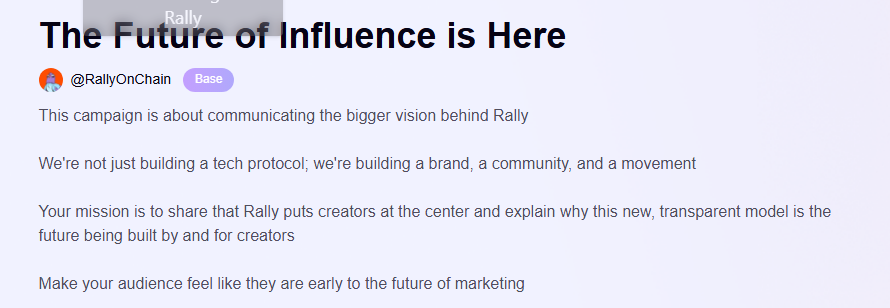
@RallyOnChain sits at the center of that shift without needing to announce it loudly. It connects projects directly with creators through AI-verified campaigns settled on-chain. Anyone with an X account can participate. The scoring looks at originality, alignment with the brief, and real engagement patterns rather than surface metrics. Payouts flow transparently in stables or project tokens based on merit. The result is a subtle but powerful reorientation. Marketing stops being a one-way broadcast and becomes shared infrastructure.
What makes it feel important before the broader space notices is the way it quietly redefines participation. Traditional Web3 marketing often relied on closed circles and paid amplification. Here the door stays open. A thoughtful voice from outside the usual networks can land cleanly because the system values signal over status. That levels the field in practice, not just in whitepaper language. Community dynamics change as a result. Discussions stay substantive. Creators write with ownership because their work compounds visibly. The brand emerges from the collective rather than being managed in isolation.
It echoes patterns I saw in earlier successful narratives, though the parallel stays understated. Decentralized finance gained traction not through hype but through protocols that let value move directly and transparently. Ownership models in NFTs evolved when creators realized utility could extend beyond speculation into ongoing participation. Those shifts started small and felt personal before they became obvious. The same undercurrent runs here. The mechanics reward alignment over attention-seeking. The emotional edge comes from recognizing that the page is still being written in public while most timelines scroll past.
I keep returning to the grounded conviction in the early voices I followed. They described the difference without overstatement. One noted how quality filters naturally elevated real insight over recycled takes. Another highlighted the satisfaction of seeing rewards reflect impact rather than connections. These were not victory declarations. They were observations from people who had grown tired of the mismatch between Web3 ideals and its actual growth tactics. Transparency and ownership were always preached. Now they were being applied to marketing itself.
The feeling of being early carries a particular texture. Not the frantic kind that chases narratives for quick flips. More reflective. Like standing in a room where the foundation is being laid and knowing the structure will hold long after the initial curiosity fades. Challenges remain visible. Scaling evaluation fairly across content types, maintaining seamless cross-chain flows as adoption grows, keeping filters sharp without dulling creativity. Those questions surface openly because participants treat the system as something they help shape rather than something handed down.
Yet the momentum feels steady rather than forced. Campaigns roll out and participation compounds without burning out. Creators return because the loop makes sense. Projects see clearer signals because the data lives on-chain. Over repeated interactions the movement quality becomes self-reinforcing. It is not about replacing every existing approach overnight. It is about offering a baseline that values substance in a space long dominated by noise.
Looking back across the posts I tracked, the recurring theme was never hype. It was a shared recognition that something had aligned properly for the first time. The protocol aspect provides the rails. The community dynamics turn those rails into a path people actually want to walk. The brand layer lives in the accumulated contributions rather than a single narrative thread. And the overall effect starts to resemble a quiet redefinition of the standard. Marketing as participatory coordination. Influence as infrastructure anyone can build on.
That is the subtle power I keep coming back to. It does not demand attention. It earns it through consistency and fairness. In a landscape where cycles come and go quickly, this one feels built to endure because it starts from the right incentives. Being positioned here now, observing the early layers settle, carries its own quiet satisfaction. The knowledge that the importance registered before it became consensus. The sense that the standard is shifting in real time and the window to notice it firsthand remains open.
The space has always rewarded those who spotted the quiet realignments early. This one sits in that category. Not flashy. Not obvious to everyone scrolling past. But steadily, thoughtfully, redefining how brands and communities interact in Web3. One verified contribution at a time.
English