InterLink Name Service
14 posts


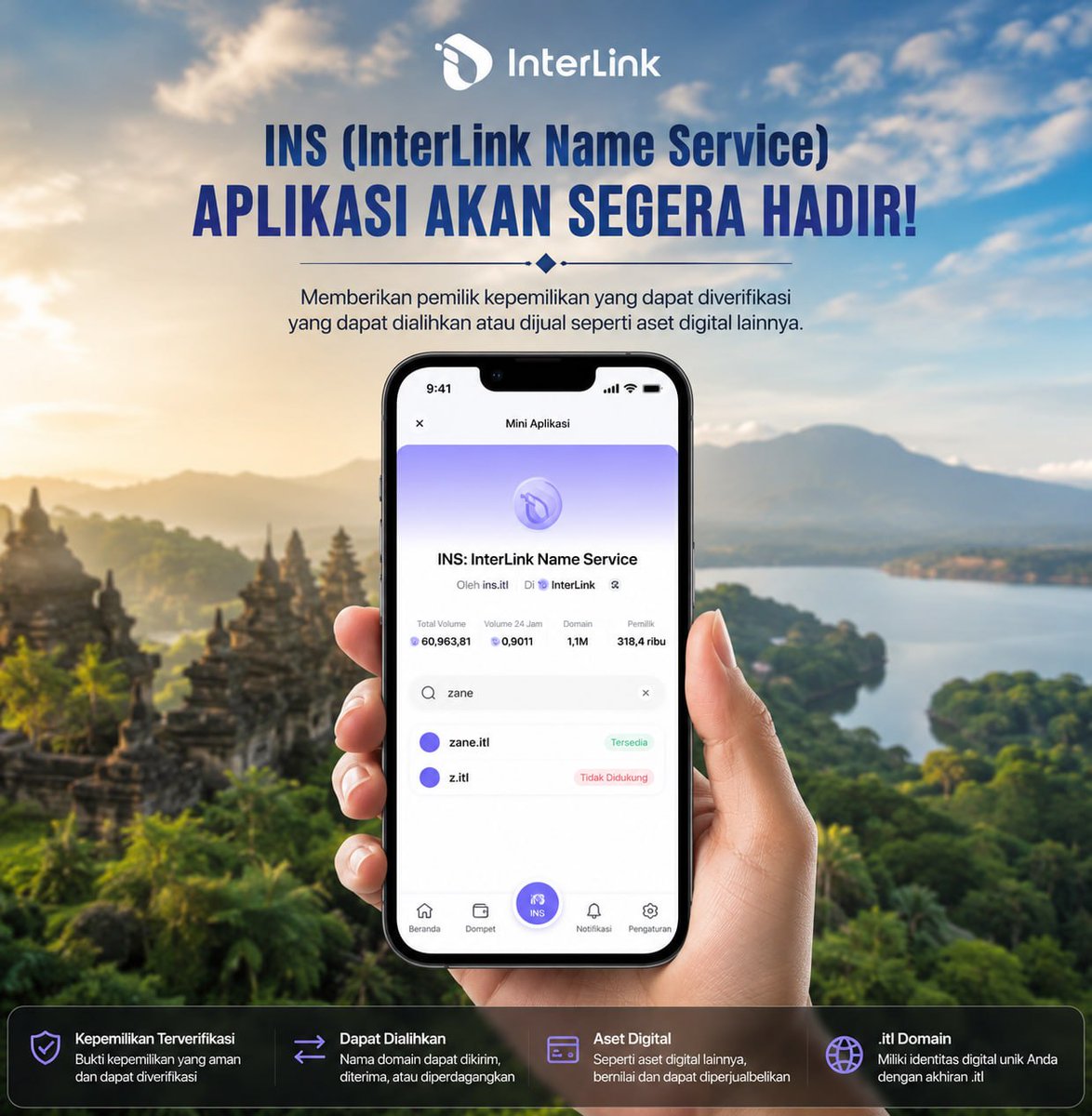
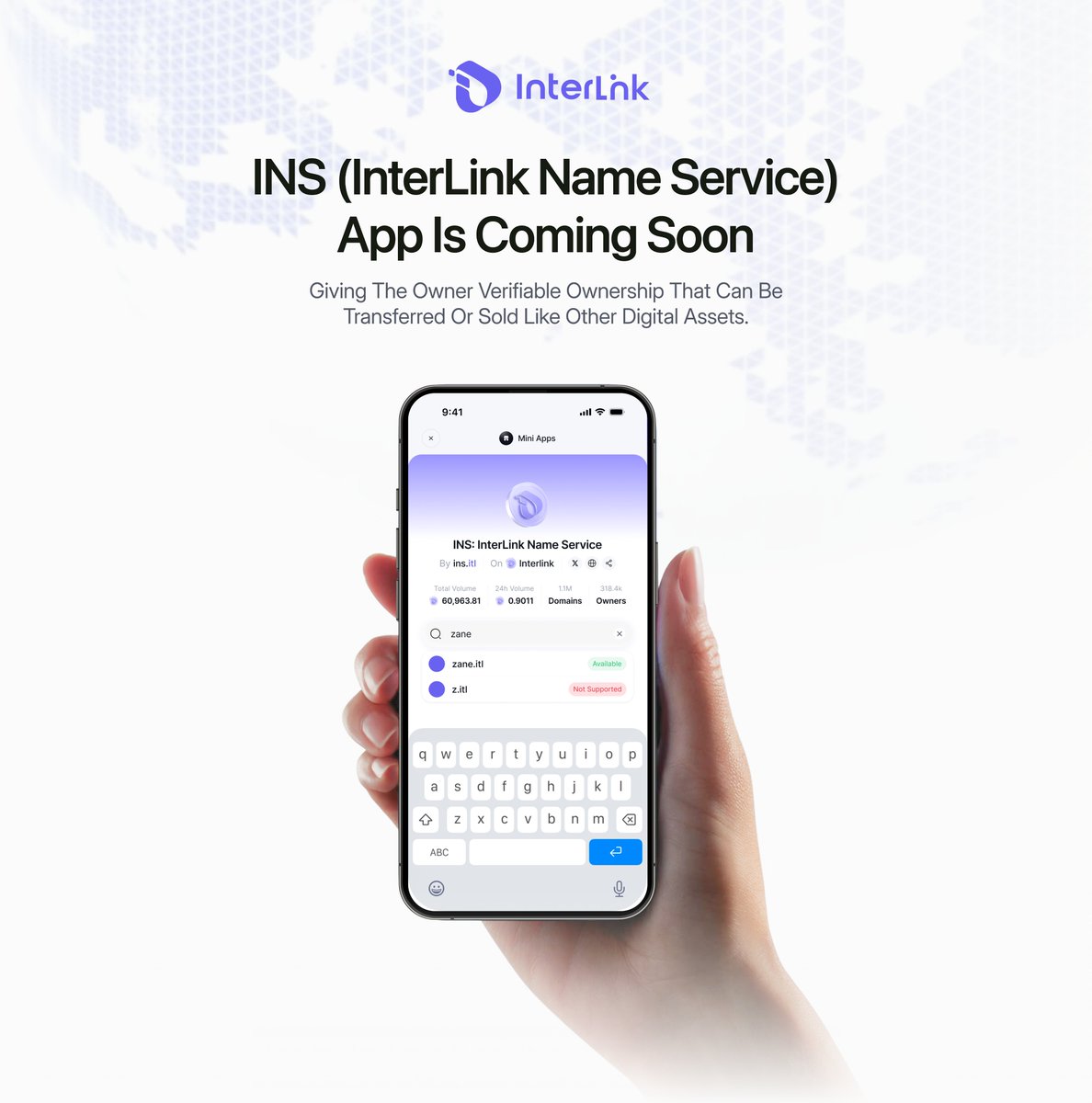
INS (InterLink Name Service) App is coming soon🌐 #InterLink #ITLG #ITL


The InterLink ecosystem is growing, and each dApp is building something unique. 🌐 Follow the official dApp accounts to stay updated on new features, important announcements, product launches, rewards, and upcoming community campaigns: 🎮 @BitFlipITL 🏦 @ITLvault 🔮 @InterPredict 🗺 @LinkersMap 🏎 @ATV_Interlink 🍀 @luckylinkerlabs 🆔 @InterLinkINS Upcoming: ReachMe Follow them now and be among the first to discover new experiences, join exciting campaigns, and explore more opportunities across the @inter_link ecosystem. 🚀 #InterLink #ITL #ITLG

The InterLink ecosystem is growing, and each dApp is building something unique. 🌐 Follow the official dApp accounts to stay updated on new features, important announcements, product launches, rewards, and upcoming community campaigns: 🎮 @BitFlipITL 🏦 @ITLvault 🔮 @InterPredict 🗺 @LinkersMap 🏎 @ATV_Interlink 🍀 @luckylinkerlabs 🆔 @InterLinkINS Upcoming: ReachMe Follow them now and be among the first to discover new experiences, join exciting campaigns, and explore more opportunities across the @inter_link ecosystem. 🚀 #InterLink #ITL #ITLG


INS (InterLink Name Service) App is coming soon What Is InterLink Name Service? INS is a decentralized naming protocol built on InterLink Chain that lets users register human-readable names ending in ".itl." Each INS name is an IRC-721 non-fungible token (NFT), giving the owner verifiable ownership that can be transferred or sold like other digital assets. Beyond wallet addresses, INS names can link to cryptocurrency addresses on other blockchains, content hashes pointing to websites or files on decentralized storage networks, and personal metadata such as social media handles or email addresses. Once live, INS will grow into a community-governed protocol managed through InterLink DAO, which will oversee the INS root and make key protocol decisions. NameWrapper and IRC-1155 names The INS NameWrapper contract will allow INS names to be wrapped and represented as IRC-1155 tokens rather than plain IRC-721 tokens. Wrapped names support "fuses," permission settings that control what actions can be taken on a name, such as preventing subdomain creation or preventing the name from being unwrapped. This enables more advanced use cases, including emancipated subdomains that cannot be revoked by the parent name owner. How Does INS Work? - Architecture INS uses a hierarchical structure. At the top are top-level domains (TLDs) like ".itl," each managed by smart contracts called registrars that define registration rules. The INS registry is a central smart contract that records domain ownership, resolver assignments, and cache settings. Resolvers are contracts responsible for translating INS names into addresses or other data. - Forward and reverse resolution Forward resolution converts an INS name (such as "alice.itl") into one or more addresses or linked data. Reverse resolution works in the opposite direction, linking an address back to its primary INS name. This allows wallets and applications to display human-readable names instead of full hex addresses. - Domains and subdomains Owners of INS domains can create effectively unlimited subdomains that they fully control. For example, owning "alice.itl" allows creation of "mail.alice.itl" or "shop.alice.itl," each pointing to different resources or managed independently. With the NameWrapper, subdomains can be issued with specific permissions baked in. What Can You Do With INS? INS simplifies sending and receiving cryptocurrency by replacing complex addresses with readable names, reducing the risk of errors during transactions. A single INS name can link to multiple blockchain addresses, making cross-chain interactions easier to manage. INS names can also store information such as website links, email addresses, and social media handles, making them useful as decentralized identifiers for personal or organizational branding. Subdomain creation and delegation enable communities and applications to build naming systems on top of an INS domain they control. Registering and Managing INS Domains - Registration Registering an INS domain will require a compatible crypto wallet and ITL to cover the registration fee. The process involves searching for an available name on the INS app and registering it directly. Most names will be available on a first-come, first-served basis without auctions. - Pricing and renewal Registration fees will be set in dollar terms but paid in ITL. On-chain price oracles will convert the dollar price into the current ITL amount at the time of payment, keeping the actual cost stable in dollar terms regardless of ITL's market price. Names with five or more characters are expected to cost around a few dollars per year, while shorter names (three to four characters) will carry higher fees due to their scarcity. INS domains will require periodic renewal, with a grace period after expiration that allows owners to renew before a name re-enters the public pool. #InterLink #ITLG #ITL