Sabitlenmiş Tweet

🇮🇩 Halo, Indonesia!
Kami dengan bangga membuka InterLink Human Network Indonesia ruang bagi para Web3 explorer & creator Nusantara.
🔥 Gabung sekarang: t.me/interlinkIDcha…
Indonesia
InterLink Network Indonesia 🇮🇩
1.1K posts
@interlinklabsid
Perwakilan resmi @inter_link di Indonesia. Membangun komunitas Human Network yang tumbuh secara organik dan terverifikasi manusia asli, bukan bot.

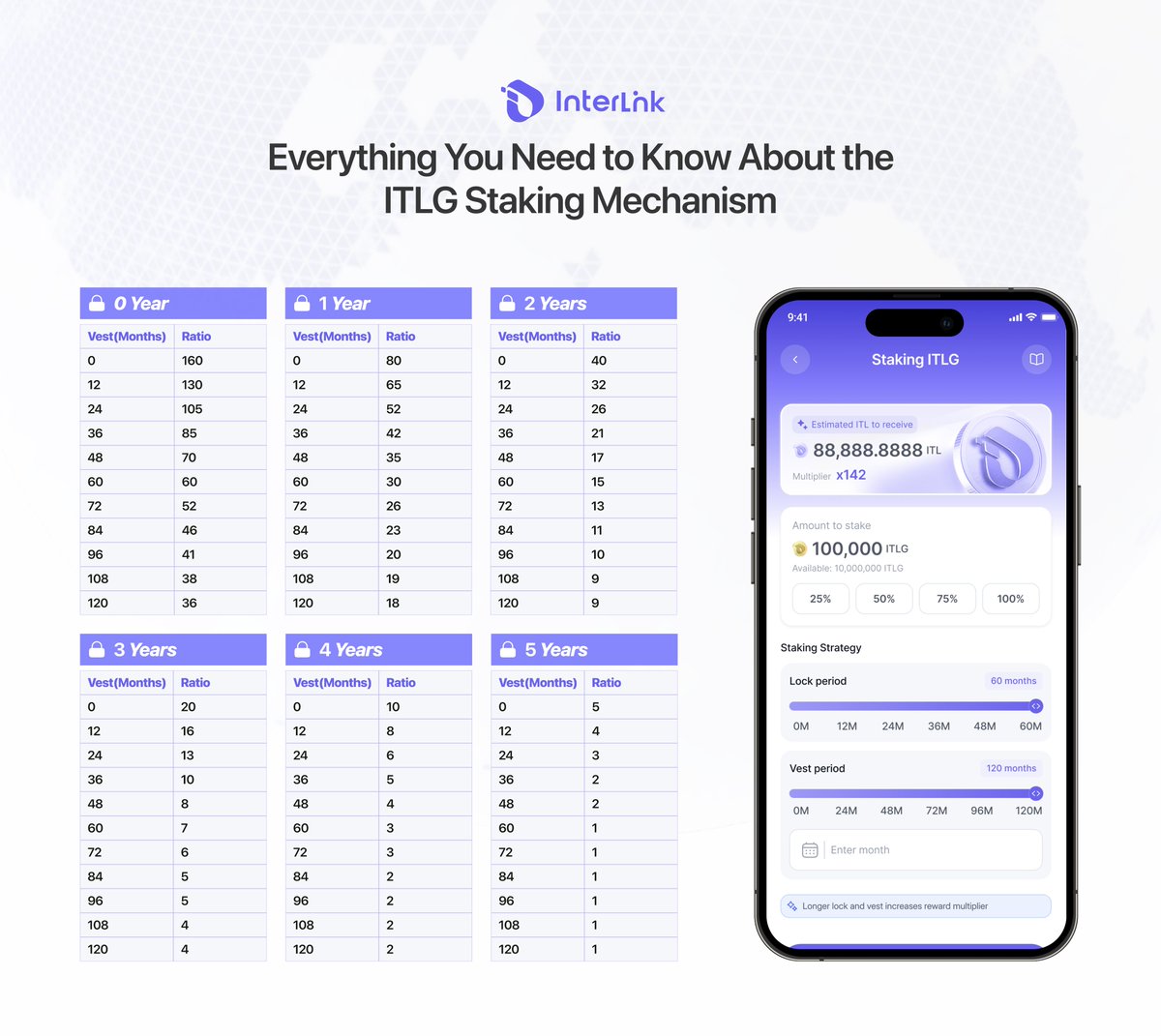
Everything You Need to Know About the ITLG Staking Mechanism DAO Proposal 16 has officially reached its final result. Option 2 (Balanced Growth) was selected by the DAO community, with a ratio ranging from 1.125 ITLG / 1 ITL for the maximum 5-year lock and 120-month vesting period to 160 ITLG / 1 ITL for the minimum 0-year lock and 0-month vesting period. The final staking options were generated with the support of machine learning models, providing three balanced choices built around three core principles: • Scarcity and long-term sustainability • Sufficient circulating supply for ecosystem absorption • Protection against price manipulation However, the models did not make the final decision. The DAO community voted and determined which option would be implemented. The community chose. The protocol follows. First, it is important to understand: 🔒 Your ITLG never leaves your wallet. It remains fully usable at all times. Only ITL is subject to the selected lock and vesting schedule. Option 2 creates the most balanced approach between ecosystem expansion and long-term scarcity. It allows sufficient token flow to support real usage, payments, and ecosystem growth while still maintaining sustainable scarcity dynamics. This balance strengthens ITL’s potential to evolve into both a medium of exchange and a long-term digital reserve asset. Below are several example scenarios based on 100,000 ITLG: 📌 Example 1: 0-Year Lock + 60-Month Vesting • Ratio: 60 ITLG → 1 ITL • 100,000 ITLG → ~1,667 ITL • Payout starts immediately • ~28 ITL released monthly over 60 months 📌 Example 2: 2-Year Lock + 36-Month Vesting • Ratio: 21.25 ITLG → 1 ITL • 100,000 ITLG → ~4,706 ITL • Payout starts after a 2-year lock period • ~131 ITL released monthly over 36 months 📌 Example 3: 5-Year Lock + 60-Month Vesting • Ratio: 1.875 ITLG → 1 ITL • 100,000 ITLG → ~53,333 ITL • Payout starts after a 5-year lock period • ~889 ITL released monthly over 60 months Important Rules 🔄 vITLG and ITLG are fundamentally the same. All current ITLG holdings will be migrated 100%. However, the migration process will occur in multiple phases over time. ✅ Full flexibility: Users can split their ITLG across multiple staking positions, each with different lock and vesting combinations. 🔓 Once ITL is locked, the schedule becomes immutable. The payout timeline is permanently written into a smart contract the moment the user confirms the staking position. It cannot be changed by anyone, including the team. Your ITLG itself remains freely usable as normal. 📅 After the lock period ends, ITL can either release immediately in full (0-month vesting) or release linearly every month over the selected vesting period. Conclusion As @inter_link accelerates toward its highly anticipated Mainnet launch, establishing a robust and sustainable token economy remains the ecosystem’s highest priority. The ITLG-to-ITL conversion model selected today is not merely a temporary mechanism. It will serve as the financial foundation of the entire ecosystem, directly influencing: • Circulating supply • Protocol liquidity • Ecosystem expansion • Long-term scarcity dynamics • And the future value potential of ITL The decisions made today will shape the sustainability, scarcity, and economic strength of the InterLink ecosystem for many years to come. #InterLink #ITLG #ITL








June is getting closer and we are getting ready 🙏 To make sure KYC keeps up with the pace of Private Mainnet, we are adding more curators from a brand new country very soon. Thank you Linkers for sticking with us through the wait. You deserve this 🫡 One question though 👀 Which country do you think it is?



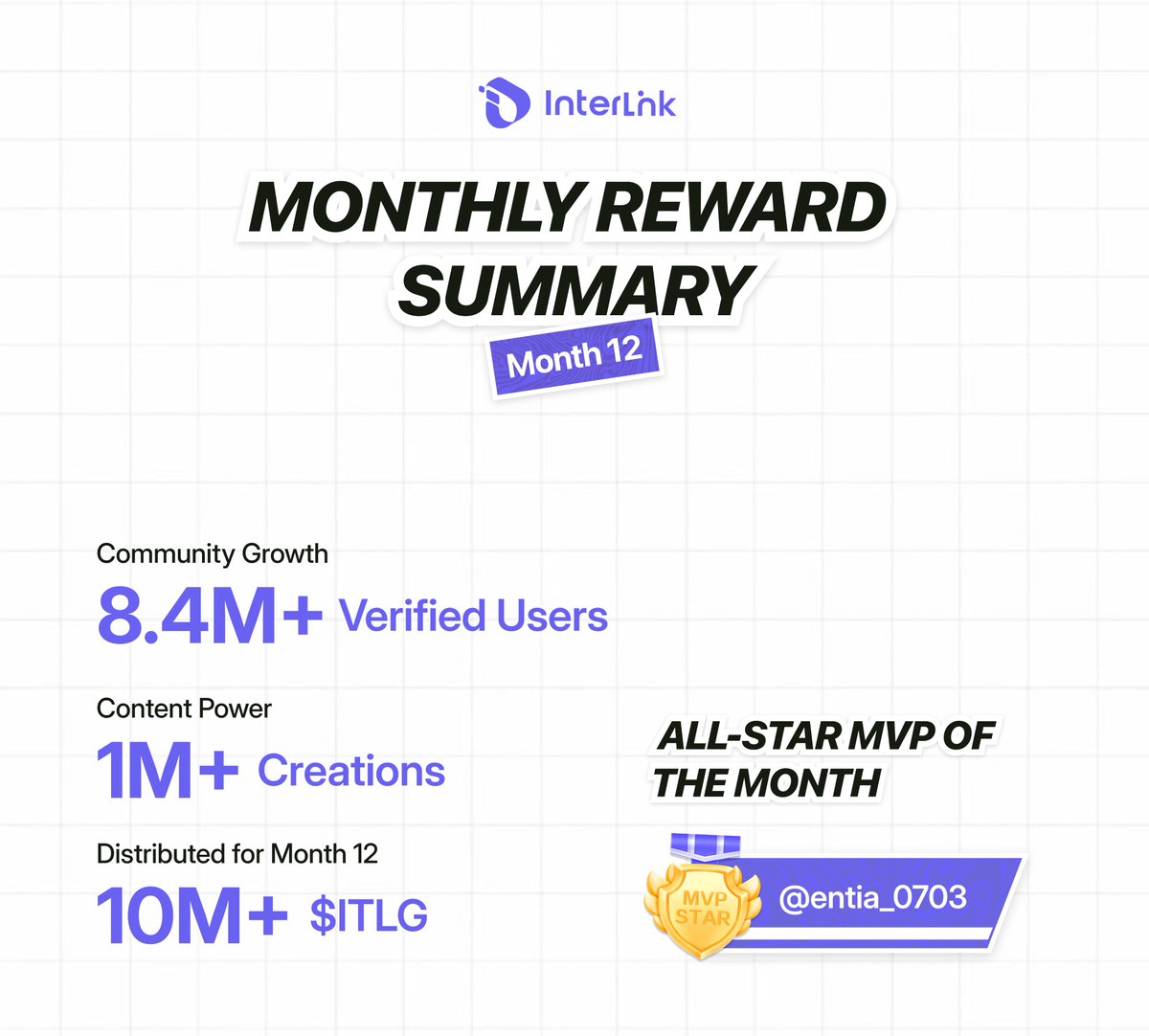
🔥 MVP Month 12 Voting is now OPEN 🔥 Ambassadors, it’s time to recognize the ones who truly made an impact. From 24 March to 23 April, many of you pushed the ecosystem forward with real contributions, consistency, and leadership. Now it’s your turn to decide: 🗳 Voting Rules: • There are 4 categories: All Star MVP, MVP Tier 1, MVP Tier 2, MVP Tier 3 • Each Ambassador has 1 vote per category → up to 4 votes total • Final results weight: 50% Ambassador + 50% Core Team • Voting is open for 24 hours from the official start time 🏆 Final Results: • All Star MVP: 1 winner • MVP Tier 1: 1 winner • MVP Tier 2: Top 5 • MVP Tier 3: Top 5 Every vote reflects the value we are building together as a community. 👇 Vote now and show your support! ambassador.interlinklabs.ai/en

FROM FREE MINING APP TO ONE OF THE WORLD'S LARGEST PAYMENT AND REAL-WORLD ASSET ECOSYSTEMS. THIS IS THE GOAL🌐 Every network that has ever reached global scale started somewhere that looked small. @inter_link started as a free mining app. That was never the destination. It was the mechanism for building something that has never existed before: a verified, human-centric network of millions of real people, ready to become the foundation of a new digital economy. That foundation is now being activated. The private mainnet phase marks the transition from network formation to network deployment. InterLink Chain is going live as purpose-built payment and real-world asset infrastructure. Every verified Human Node that has been mining, building referrals, and holding through this phase is not just a user. They are a participant in the earliest stage of what is being built to serve 1 billion people. The architecture was designed for real commerce, not crypto trading. Most chains are built around block times and probabilistic confirmation. InterLink Chain is built around the moment a customer taps to pay. Settlement is deterministic and permanent the instant it is committed, with no risk of reorganization, no waiting for enough confirmations, and no merchant uncertainty about whether a payment is actually done. At the protocol level, a completed transaction and a final transaction are the same thing. For businesses, this means B2B settlement between companies, subsidiaries, and vendors happens instantly on-chain instead of waiting days inside correspondent banking cycles. Cross-border transfers that traditionally cost $10 to $40 per transaction and take up to five business days are reduced by 60 to 80 percent in cost and settle in seconds. Travel Rule compliance is built natively into the protocol, not bolted on as an afterthought, making @inter_link one of the few chains enterprises can actually deploy in regulated payment environments. And transaction privacy ensures that only the parties involved in a payment see its details, a prerequisite for any business running sensitive commercial flows on a shared ledger. Beyond settlement, every business that tokenizes its revenue on InterLink Chain pairs its token with $ITL in protocol AMM pools. A portion of every customer transaction is automatically routed into those pools, creating liquidity backed by real economic activity rather than speculation. As transaction volume grows, so does the structural demand for $ITL. The two are mathematically linked at the protocol level. The product layer is expanding in every direction. 10,000+ payment points. A Visa card partnership. Thousands of dApps being built on the ecosystem. Institutions across four continents already holding the token as a treasury asset. A wallet that supports crypto and tokenized US equities. An SDK that lets developers build directly on the network. The free mining phase gave InterLink something no amount of venture capital can manufacture: a real, verified, globally distributed community of human participants. That community is now the user base of a payment network. The ecosystem they helped build is becoming one of the most consequential financial infrastructure plays in Web3. This is not a new chapter. This is what the whole story was always leading to. #InterLink #ITLG #ITL