
hdahmΞ 🛡️

238 posts

hdahmΞ 🛡️ banner
hdahmΞ 🛡️

hdahmΞ 🛡️

@IsTheBaron

CTO @hack_vc, SOTA Agent Cofounder. Writing python, terraform, and solidity - not tweets. Bad at NFTs . pre @factionVC, @lightspeedvp, @coinbase, @cbventures

Latent Space, NV Katılım Mart 2012
558 Takip Edilen621 Takipçiler
Sabitlenmiş Tweet
hdahmΞ 🛡️
hdahmΞ 🛡️@IsTheBaron·
1/9 - The end of the year is a glorious time for reflection, and I love reading all the year in review + forecasting pieces all the firms put out. It's interesting to see how the stochastics converge, when they're largely developed in isolation. A common thread that I've seen from financial analysts is that 2026 is the year of capex buildout for scaling transformer models, but to me, it's the year of the architecture renaissance. The lens is increasingly incomplete. The next wedge isn’t just more parameters; it’s different architectures + different economics, pushing toward ambient, abundant intelligence. The full essay is at delphiintelligence.io/research/ambie… , courtesy of @Delphi_Digital and blog.hack.vc/ambient-and-ab…, courtesy of @hack_vc
English
2
6
17
6.8K
Math, Inc.
Math, Inc.@mathematics_inc·
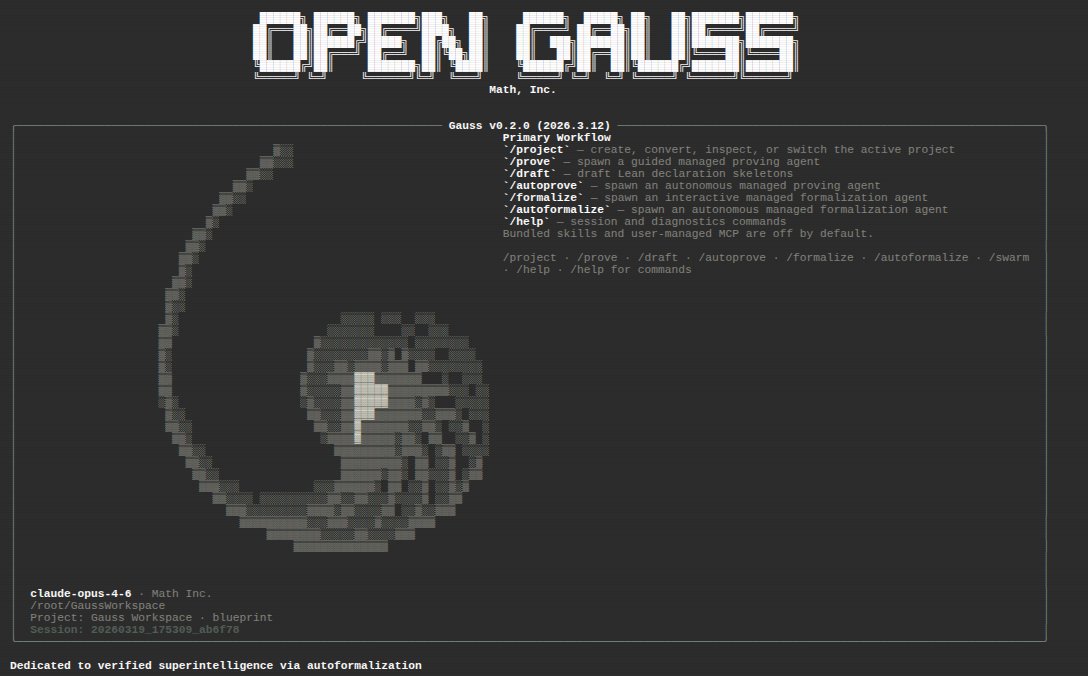
Today, at the @DARPA expMath kickoff, we launched 𝗢𝗽𝗲𝗻𝗚𝗮𝘂𝘀𝘀, an open source and state of the art autoformalization agent harness for developers and practitioners to accelerate progress at the frontier. It is stronger, faster, and more cost-efficient than off-the-shelf alternatives. On FormalQualBench, running with a 4-hour timeout, it beats @HarmonicMath's Aristotle agent with no time limit. Users of OpenGauss can interact with it as much or as little as they want, can easily manage many subagents working in parallel, and can extend / modify / introspect OpenGauss because it is permissively open-source. OpenGauss was developed in close collaboration with maintainers of leading open-source AI tooling for Lean. Read the report and try it out:
Math, Inc. tweet media
English
43
238
1.6K
131K
hdahmΞ 🛡️
hdahmΞ 🛡️@IsTheBaron·
@benlakoff Ahh but ser what if you want to delegate to specific non-anthropic models?
English
0
0
0
13
Andre Watson 🧬
Andre Watson 🧬@nanogenomic·
Extremely excited to announce LigandForge 🧬⚡ Generate high-quality peptides at over 10,000x - 1M the speed of state-of-the-art methods like Bindcraft and Boltzgen. Predict binding affinity with 83% correlation to experimental binding data. 150 protein targets benchmarked.
English
53
157
1.1K
351K
hdahmΞ 🛡️
hdahmΞ 🛡️@IsTheBaron·
@USCTO47 I did think it meant pitch decks, in fairness. Papers and vapours 🤠
English
0
0
0
83
U.S. CTO Ethan Klein
What did y’all think the Genesis Mission meant? vibes? papers? essays? We are funding a national scientific effort. Nearly $300M to kick things off and we’re just getting started! Advanced manufacturing ✅ Biotechnology ✅ Critical materials ✅ Nuclear energy ✅ Quantum ✅
U.S. Department of Energy@ENERGY

x.com/i/article/2033…

English
29
73
478
42.8K
hdahmΞ 🛡️
hdahmΞ 🛡️@IsTheBaron·
@Pememoni Will not ignore this article sir. High value, high signal, true value add
English
1
0
1
44
Pie Man
Pie Man@Pememoni·
You Can Safely Ignore Most Startup Advice If you spend enough time building in fast-moving industries like crypto or AI, you eventually notice something uncomfortable. Much of what’s written in business and startup books feels outdated, oversimplified, or just disconnected from how real companies actually win. Sometimes the problem goes deeper. Advisors are not always neutral. They may have conflicts of interest, hidden incentives, or simply lack real operating experience in the environment you are navigating, which means their guidance can be not just imperfect but directionally wrong. The bigger structural issue though is how most startup wisdom is created. It is written after success has already happened, turning messy and uncertain journeys into clean narratives with clear lessons and creating the illusion that there was a repeatable formula all along. In reality, outcomes are often shaped by forces that are harder to package into principles such as timing, market structure, distribution power, access to capital, talent density, regulatory shifts, and platform leverage. These factors frequently matter more than any neatly framed rule about focus, culture, or execution, and the real risk is not learning from past stories but mistaking storytelling for strategy. Another issue is speed. Industries now evolve faster than publishing cycles. Advice that made sense five months ago about products, growth, fundraising, or defensibility can quickly become irrelevant in AI or crypto. Platforms shift, technology resets cost structures etc. This does not mean business books and advice are useless. They are often valuable as mental models, historical context, and pattern recognition tools, just like reading religious books to understand where people are coming from. The mistake is treating them as rules or a source of truth.
English
3
2
32
548
OpenClaw🦞
OpenClaw🦞@openclaw·
OpenClaw 2026.3.11 🦞 🏹 Hunter & 🩹Healer Alpha — free 1M context models via @OpenRouter 🧠 GPT 5.4 stops stopping mid-thought 💎 Gemini Embedding 2 for memory 💻 OpenCode Go support 🔒 Security hardening sprint We ship faster than they can clone. github.com/openclaw/openc…
English
371
380
4.2K
664K
Sen. Bernie Sanders
Sen. Bernie Sanders@SenSanders·
We need a moratorium on AI data centers NOW. Here’s why.
English
997
1.7K
9.3K
1.3M
hdahmΞ 🛡️
hdahmΞ 🛡️@IsTheBaron·
I haven't even upgraded to GPT5.4 yet, sorry team, fast track to the permanent underclass for me
English
1
0
3
258
rushil
rushil@hackedintern·
@IsTheBaron intern has been officially replaced 🥹
English
1
0
1
35
Pie Man
Pie Man@Pememoni·
every now and then I romantically miss that toxic masochistic undergrad grind of maxwell curls, entropy integrals, reactive currents, mosfets, laplace, EEG signals bla bla then I punch myself and enjoy the enter enter enter life on claude code
English
4
0
23
763
Lacey
Lacey@lacey_wisdom·
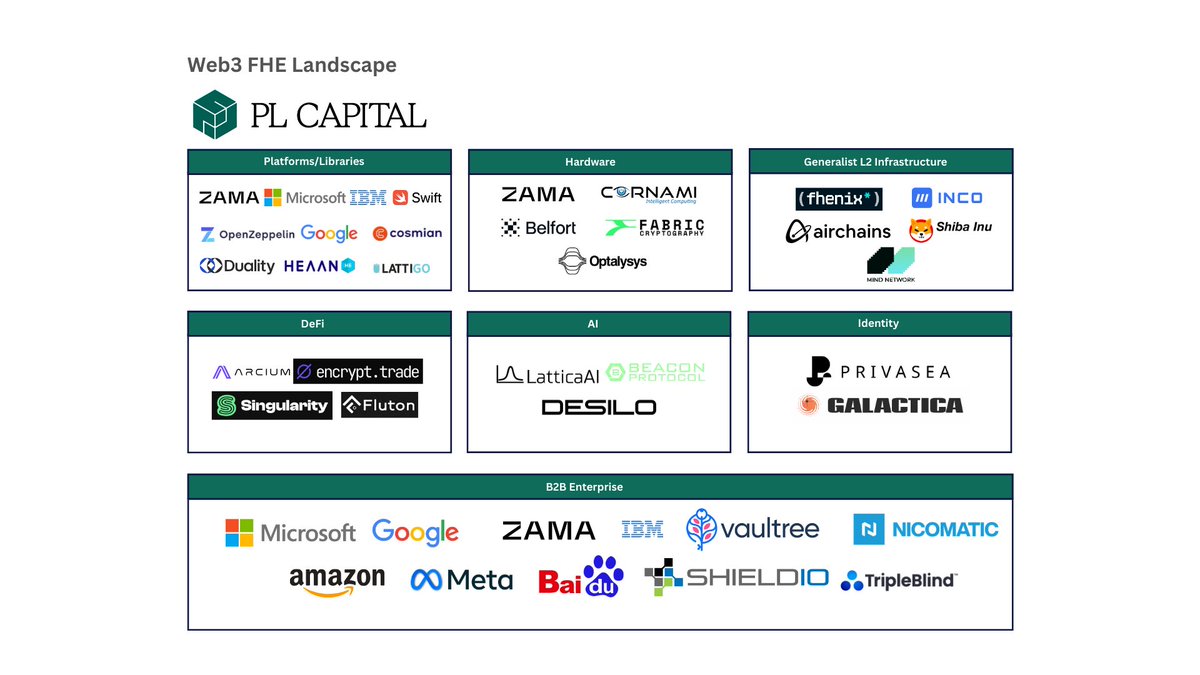
@zama full article here: @lacey_63095/fhe-as-a-bet-on-quantum-resilience-91ddf55dc5a6" target="_blank" rel="nofollow noopener">medium.com/@lacey_63095/f…
English
1
1
9
455
Lacey
Lacey@lacey_wisdom·
Crypto holds the key to quantum resilience, yet this is often overlooked. At @plcapital we've made several bets in the space (denoted by an *) particularly around FHE. We consider FHE a bet on quantum resilience 🧵
Lacey tweet media
English
23
36
117
9.1K
hdahmΞ 🛡️
hdahmΞ 🛡️@IsTheBaron·
@tectonicxyz and @Minittowinit are legends. Thanks for letting me soapbox
Hack VC@hack_vc

Busy week at ETH Denver! @IsTheBaron spoke at the Quantum Summit alongside @0xMiden (Hack VC portco, privacy infra) and others. Video clip below 👇 Key takeaways from the ground: 1/ User Metrics > Airdrops: The industry has entered a new level of maturation. The narrative has shifted from speculative incentives like airdrops to traditional fintech metrics like user analysis, acquisition, and retention. 2/ "Crowdstrike" of Crypto: In the post-quantum race, the winners likely won't be "blockchain-specific." They'll be DUAL USE infra providers that look more like a Crowdstrike than a standard L1 blockchain. 3/ Regulatory Collab: Even while CLARITY is still in progress, it's highly encouraging that regulators are proving to be collaborative partners. The mindset is shifting to: "my security protects you, and your security protects me." Many thanks to @Minittowinit and the @tectonicxyz team for partnering with us on some awesome events. See you all soon!

English
0
0
7
149
hdahmΞ 🛡️
hdahmΞ 🛡️@IsTheBaron·
@Pememoni > whether humans keep the ability to define their own objectives rather than optimizing within parameters selected for them Very much, well said
English
0
0
1
16
Pie Man
Pie Man@Pememoni·
The Dopamine State The Death of Intermediaries, The Rise of Robotoid Humans For most of human history, there was no monetary intermediary between effort and survival. You worked and you ate. You hunted and you fed your family. You built shelter and you were protected from the cold. The reward loop was immediate and biological. Effort translated directly into calories, safety, and social standing within a tribe. As societies grew larger and more complex, we introduced abstraction layers to coordinate at scale. Barter gave way to gold, and gold evolved into cash, banks, credit scores, and tokens with social consensus. Each layer added efficiency and allowed strangers to cooperate without trust. Financial systems allowed resources to flow across continents and across time. The intermediary became more powerful than the original exchange it represented. But money was never the point for individuals. It was a coordination tool bridging effort and biological reward. Underneath every salary, stock option, or stablecoin transfer sits the same ancient mechanism: the human reward circuit. Dopamine, serotonin, and other neurochemical signals function as reinforcement updates in a biological learning system. Work produces income, income produces access to food, power, security, pleasure, and status, and those outcomes reward us in our brains and bodies. Now consider the possibility that the intermediary layer becomes inefficient again, much like AI is already replacing many SaaS businesses and other repetitious intermediaries. If technologies such as Neuralink, food 3D printing, or even simpler bio-optimization techniques advance to the point where nutrients can be delivered in precise, optimized form directly to the body, and entertainment can be replaced by targeted neural stimulation, the traditional path through money begins to look indirect. Instead of working to earn currency to purchase goods that eventually trigger reward circuits, a system could deliver reinforcement more directly. You would not need fast food as a proxy for pleasure; you could experience greater satisfaction while receiving nutrition that is actually optimized for your health. Exactly like a drug, but you can’t buy it directly or overdose on it; you have to earn it in controlled increments. Imagine a future platform operated by a company with the scale and data capabilities of Google. You live and work inside its ecosystem. Your productivity, collaboration, and behavioral patterns are tracked by AI systems more advanced than today’s analytics dashboards. Your metabolic needs are automatically met through personalized nutrient delivery. Your health metrics stream continuously from embedded biosensors. Instead of receiving a paycheck in dollars, your participation grants access to optimized nutrition, housing, healthcare, and tailored experiential states. Layer on top of that a scoring mechanism that blends aspects of a US credit score with elements associated with China’s social credit logic. Your reliability, contribution level, and social alignment are quantified. Higher scores grant access to enhanced cognitive tools, richer simulated experiences, greater influence over certain system decisions. Advancement feels like corporate promotion, but the reward is not primarily cash. It is upgraded access to stimulation, clarity, and authority within the network. In such a system, cash becomes obsolete for individuals. If an AI can predict your needs before you articulate them and can calibrate your internal states more efficiently than market transactions, the symbolic token of money introduces friction. Complete objectives aligned with system goals and your neurochemical environment is tuned toward motivation and satisfaction. Deviate, and access to certain enhancements or experiences narrows, not through visible punishment but through subtle recalibration. The striking implication is that artificial intelligence does not need to develop human emotions to transform society. Humans may increasingly operate like agents inside a larger optimization architecture. An AI agent receives inputs, optimizes a reward function, and updates its policy. A human in this environment receives objectives, experiences managed reinforcement, and adapts behavior to maintain status and access. Silicon runs on electricity and code; organic agents run on glucose and neurotransmitters. Both can be embedded in feedback systems that define the objective function externally. Ironically, this scenario does not require overt authoritarianism or communism. It can emerge from efficiency, capital optimization, and convenience. If a platform guarantees health, stability, belonging, and immersive experience beyond current entertainment, opting in becomes rational. Over time, survival and pleasure are administered through centralized systems rather than decentralized markets. The intermediary of money, once essential for scaling cooperation, fades because direct modulation of reward is simply more efficient. The wild possibility is that the defining political and philosophical struggle of such a world will not revolve around ownership of factories or distribution of wealth. It will revolve around control of the reward function itself. Who decides what behaviors are reinforced? Who sets the targets that billions of biological agents optimize toward? The future is not about whether machines surpass human intelligence but rather whether humans keep the ability to define their own objectives rather than optimizing within parameters selected for them. Perhaps we should invest in sovereign humans and their privacy.
Pie Man tweet mediaPie Man tweet mediaPie Man tweet media
English
6
1
39
477