
Jeff
7K posts
Jeff
@JBVudu
mountain biker, hiker, camper, climber, nature enthusiast, craft beer fan & sasquatch eyewitness
Charlotte, NC Katılım Temmuz 2011
146 Takip Edilen220 Takipçiler

How convinced are you by Bigfoot footprint evidence? 👣🧐
#Bigfoot #Sasquatch
English



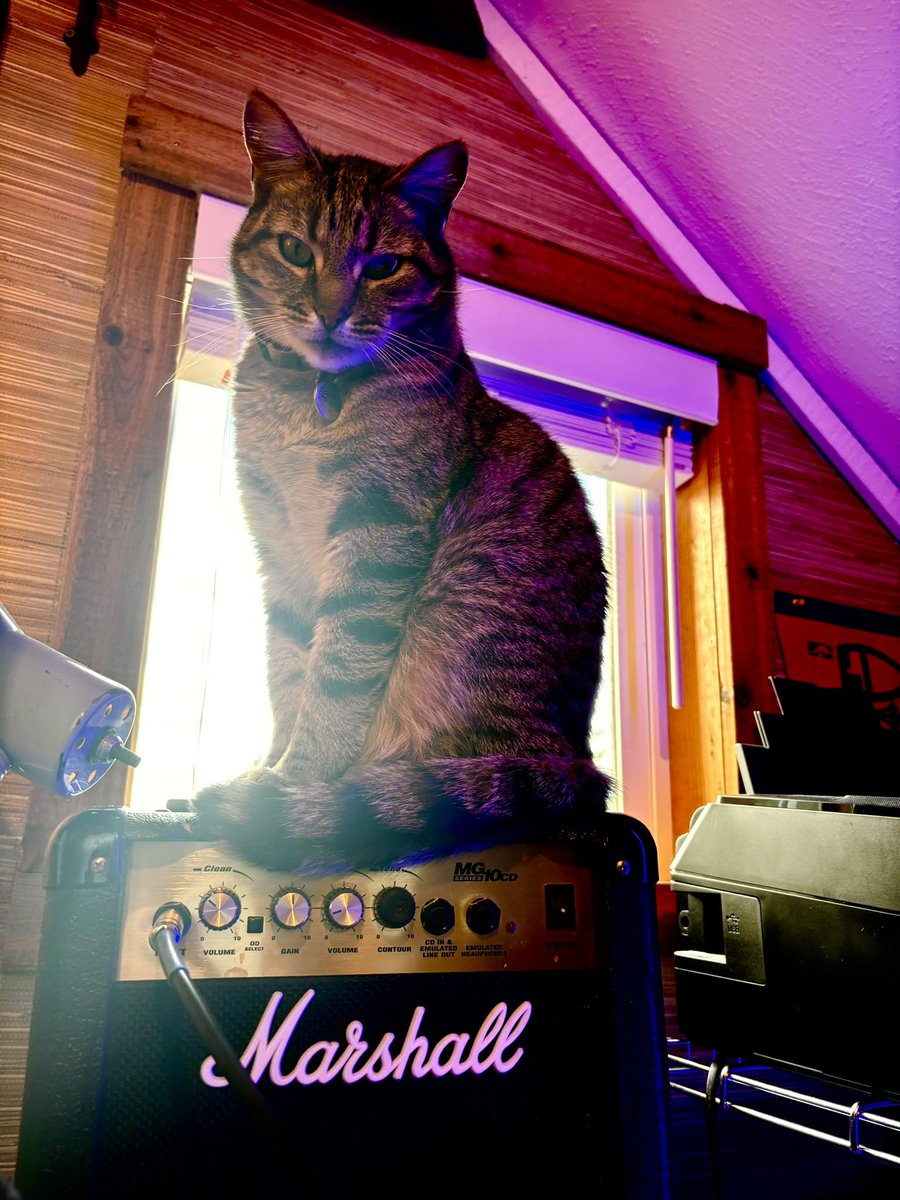
The Fender groups we belong to rarely if ever share shots of their rigs. However when they do I share as many as I can. I'm not biased against Fender by any stretch, but Fender guitars especially their flagship models all look the same to me anyway. At least with Gibson you get an extensive variety in top woods and finishes, ranging from high grade AAA flame figured Maple tops. plain tops, figured Birdseye, and unique colors in their Custom Colour Series. Their Custom Shop series allows for personalized wood selection, accommodating preferences for both wild flame and subtle, character filled tops which appeals to our followers and I. If you've seen one Stratocaster or Tele, you've seen them all. Not that they aren't awesome rigs mind you, but when it comes to esthetics they lack the character and beauty of a Les Paul that literally grabs you by the boo boo. 😉

Tommy Reavis@TomTomHokie
@UndercoverIndy Is all you like are Les Paul style guitars Raylene ? Just asking. It’s fine. I mostly like Fenders. I just notice you hardly ever show a strat, tele, jag, stang, jazz.m., etc. At least on my “timeline” or “feed” lol I’m just giving you a hard time Raylene SHOW SOME FENDERS!
English


@UndercoverIndy Good to know, especially since I’ve been a Malcolm & Angus fan since the early days + have seen them live 4 times. And just missed seeing Bon by 6 months😐.
English
On this date in 1955 Scottish/Australian Guitarist, Songwriter, Producer, and founding member of AC/DC in 1973, Angus McKinnon Young is born in Glasgow, Scotland.
Young has used Gibson SGs in various forms throughout his career. His original, and the basis for his current signature model, was a 1969/1971 SG Standard. 1 of his original SGs was given a lightning bolt fingerboard during a repair by luthier John Diggins, and remained his most prominent studio guitar. His primary stage guitar is a 1967 Ebony SG Standard. Diggins made at least one more SG for Young under his own "Jaydee" brand name.
At least 2 of his SGs, whether modified Gibson product or ground-up construction, circa 1977 and the Paris Let There Be Rock tapings featured on-board wireless going to his amplifiers, the circuitry installed in a cavity routed into the back of the body. This practice was discontinued due to the potential for electrical shorts due to sweat, and at least one of these guitars was repaired and used for the Rock or Bust tour.
Gibson made a custom SG for Young with lightning bolt inlays to replace the Jaydee SG. Young's '69/'71 SG has T Top Buckers. Another 1964 SG, which he used on the recording of Ballbreaker, has PAFs. All of these are vintage output Alnico II or V pups with matched coils typically reading 7.5k–7.8k DCR. Beginning in 2009, Young started fitting Seymour Duncan Buckers to all of his touring guitars. He uses Ernie Ball Super Slinkys .009-.042 and Fender "Extra Heavy" picks. =)

English

This song is 46 years old… and still a straight up BANGER.
English


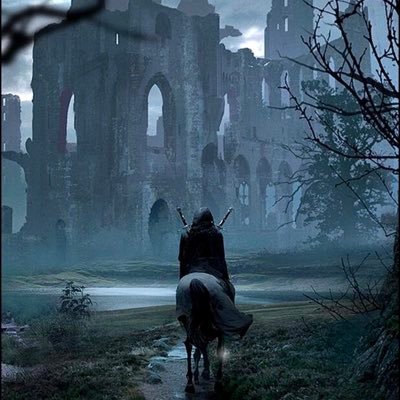
Raw Patterson-Gimlin footage, October 20, 1967, Bluff Creek, California.
No edits—what stands out to you when you watch it?
Date & Location: October 20, 1967, Bluff Creek (a tributary of the Klamath River), Del Norte County, Northern California (Six Rivers National Forest area).
Filmmakers: Roger Patterson (operating the camera) and Bob Gimlin (on horseback, rifle ready).
Camera: Cine-Kodak K-100, a 16mm hand-wound movie camera rented earlier that year. It had a variable speed dial (marked at 16, 24, 32, 48, 64 fps) with no click stops, allowing any speed in between. Patterson said he typically used 24 fps but didn’t check the setting in the moment.
Film Stock: Kodachrome II daylight-balanced color reversal film (rated ~25 ASA).
Length & Duration: The creature footage is ~23.85 feet of film (954 frames). At the common 16 fps playback, it runs 59.5 seconds. Some analyses (e.g., Grover Krantz) argue it was likely shot closer to 18 fps (making the event ~53 seconds). The camera’s actual speed when set to 16 fps could vary slightly due to mechanical tolerance.
Lens: Standard references point to the camera’s normal 25mm Ektar lens, though some detailed site recreations and analyses have debated a possible wider 15mm lens for matching the field of view.
#PattersonGimlin #PGF #Bigfoot
English

Prince dropping into the half splits in heels like it was nothing.
Who else could pull this off?
English

A giant sauropod walked here more than 150 million years ago and left 134 consecutive footprints still visible in the rock.
This is the West Gold Hill tracksite near Ouray, Colorado, home to the longest documented continuous sauropod trackway. Prehistory does not always survive as bones. Sometimes it survives as a path.
English
Jeff retweetledi


Jeff retweetledi


Jeff retweetledi


Jeff retweetledi



One Man, Elon Musk paid $44 billion for Twitter, walked in carrying a sink, and fired 75% of the staff within a week, yet the company kept running
He renamed it 𝕏, rewrote its content rules, and reinstated 65,000 banned accounts in 30 days
No one had a plan
It worked anyway
English

Armour of a cavalryman struck by a cannonball while serving Napoleon
English

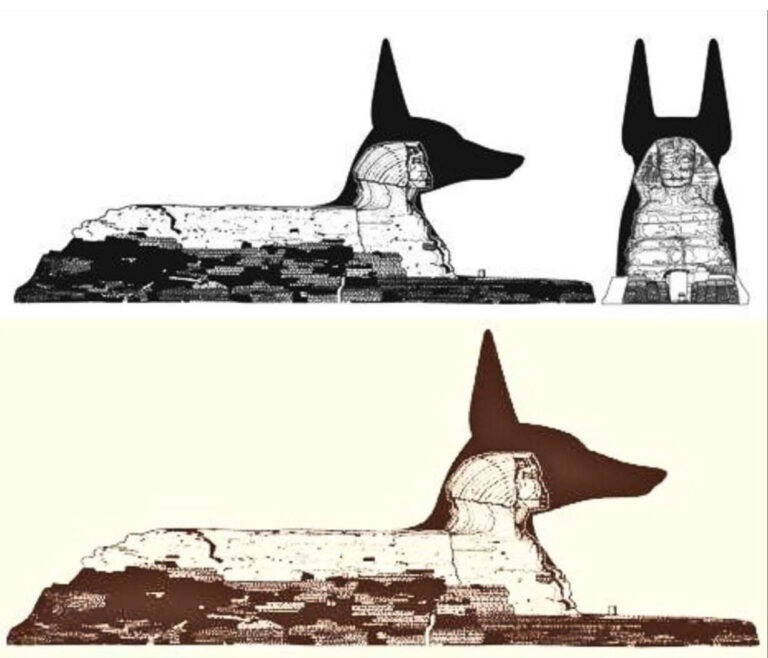
If a second Sphinx really is buried under 180 feet of solidified sand, think about what that actually means.
The Sphinx we know has been exposed for thousands of years of wind erosion, water damage, vandalism, military target practice, and multiple restorations.
The nose is gone. The body is weathered beyond recognition in places.
The head is disproportionately small compared to the body, which many researchers believe suggests it was recarved from something larger and older.
A buried twin may have none of that.
No erosion. No reshaping. No political restorations. Just the original form, exactly as it was built, sealed under sand.
We might finally see what the head originally looked like. We might see inscriptions or surface details that weathered off the original thousands of years ago.
We might get answers to questions the exposed Sphinx can no longer give us.
What if the best preserved monument in Egypt is the one nobody knew existed?
English