John Davis retweetledi
John Davis
2.5K posts

John Davis
@JDsoundbite
Half Buddhist, Half Marxist. Musician / public school teacher /union organizer. Working on new recordings with Folk Implosion, John Davis & The Cicadas.
Brooklyn, NY Katılım Eylül 2011
805 Takip Edilen340 Takipçiler
John Davis retweetledi


"As Wall Street goes, so goes the nation — and here's a look at the closing stocks..."
Gil-Scott Heron’s “‘B’ Movie” — live at the Wax Museum nightclub in DC, 1982.
#GilScottHeron #Reflections #JazzIsDead
English
John Davis retweetledi

The fact that Larry Graham is not number one on that list tells you everything you need to know.
Classic Guitar Rock 🎙@ClassicGuitarR1
How did A.I. do? #bassplayers #bassist #classicrock
English
John Davis retweetledi

The Indian state of Kerala has become the first in the country to eradicate extreme poverty – one year ahead of schedule – thanks to a “meticulously planned” programme led by the Communist Party of India (Marxist).
Chief minister Pinarayi Vijayan announced the accomplishment on 1 November. “This historic initiative was launched by involving people from all sections of society and incorporating ideas that emerged from their participation and feedback,” he said.
Kerala, home to more than 36 million people, was once among the poorest states in India but now has the country’s lowest poverty rate.
The Extreme Poverty Eradication Project (EPEP) began in 2021 with a massive door-knocking campaign to survey residents about their needs. It identified 64,006 households living in “extreme deprivation”.
Local assemblies then came up with targeted “micro plans” detailing the exact interventions required in their areas, looking at factors such as housing, healthcare, employment, land titles and pensions.
The Hindu newspaper said in an editorial that Kerala is “known for its exemplary record in social and human development, and for healthcare systems comparable to those of developed nations”. It described the EPEP’s success as “another milestone”.
“This resulted from a four-year, meticulously planned programme involving a gamut of agencies, spearheaded by the local self-government department, alongside extensive community participation,” it added.
In the late 1960s, Kerala expropriated private land and redistributed it to landless workers. This, an analysis by Progressive International stated, laid “the foundations for Kerala’s remarkable social indicators: near-universal literacy, one of the lowest infant mortality rates in the global south, and the highest life expectancy in India”.

English
John Davis retweetledi

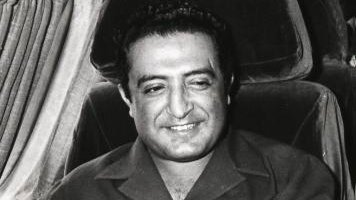
On this day in 1977, the president of North Yemen, Ibrahim Al-Hamdi, was assassinated with Saudi and possibly also US support.
He sought to implement equal rights for all Yemenis and became popular for socialist development policies that improved living standards and increased education.
His assassination occurred two days before he was scheduled to negotiate unification with South Yemen, which was a socialist country at the time.

English
John Davis retweetledi

The Nobel committee has awarded the Peace prize to Maria Machado, who has actively supported US sanctions against her own country.
A CEPR study found these sanctions killed 40,000 people in the first year, 2017-2018. They are illegal under international law, and violate the Geneva and Hague conventions.
This is not "peace", it is war.
Machado also supports Israel's Likud Party, which has been conducting a genocide for the past two years, also in violation of international law.
This year she spoke at a conference of European fascists, which openly called for a new Reconquista, referencing the ethnic cleansing of Spanish Muslims and Jews.
Giving peace prizes to people who support war crimes is Orwellian doublethink in the purest sense.
English

Top 40 Over 40.34: Cecil Taylor Live in Berlin 1988 johnhdavis.com/2023/07/13/top…
English
John Davis retweetledi

😢With a heavy heart, Pambazuka News received the news of the passing of Professor Ngũgĩ wa Thiong'o.
This sad event occurred on 28 May 2025.
Pumzika kwa amani na wazazi wetu.
Find the brief tribute at: tinyurl.com/PZ-Ngugi
A major light in the world of words is relocated.

English
John Davis retweetledi

SAHEL’S THREE MIGHTY SONS
Burkina Faso’s revolutionary-in-chief Ibrahim Traoré may be the man of the moment after Africans globally rallied to defend him against suspected US plots to remove his anti-imperialist government from power. But he isn’t leading the inspiring transformation that’s happening in West Africa by himself. Just as important are his Alliance of Sahel States allies: Mali’s Assimi Goïta and Niger’s Abdourahamane Tchiani. All three want to break free from neocolonialism and ensure Africa’s resources benefit its people. The trio seeks a liberated Africa and is united against foreign interference and exploitation. In this video, Africa Stream’s @Sannario_ shines a light on the lesser-known two of Africa’s heroic troika.
English

I just signed a @theactionnet petition: Stop Cut Backs and Price Increases to State Health Plan!. Sign here: actionnetwork.org/petitions/stop…
English
John Davis retweetledi

🇧🇫 MEET THE CAPTAIN WHO’S SHAKING THE WORLD: WHY IBRAHIM TRAORÉ IS SUDDENLY EVERYONE’S BUSINESS
A 37-year-old army captain in a small West African country kicks out foreign troops.
He takes back his country’s gold.
He refuses a presidential paycheck.
He tells the U.S. and France to stop treating Africa like a backyard project.
That’s Captain Ibrahim Traoré, and the country is Burkina Faso.
Never heard of it? You’re not alone.
It’s a landlocked nation in West Africa that used to be called Upper Volta—until a revolution changed the name to mean “Land of Honest People.”
Now, under Traoré, it’s making headlines again.
Since taking power in 2022, Traoré has been on a mission: take back control of Burkina Faso’s economy, reject old colonial rules, and stop relying on foreign troops to fight homegrown problems.
He nationalized the country’s gold reserves and started building the first refinery so Burkina Faso could stop shipping raw gold to Europe and start keeping the profits.
He’s launched farming programs, invested in factories, and helped boost food production by 18% in just one year.
He’s also living on his old army salary—no mansions, no yachts.
Sounds bold, right?
Not everyone agrees.
In April, U.S. General Michael Langley, head of AFRICOM (America’s military command in Africa), told Congress that Traoré was using Burkina Faso’s gold “to protect his junta.” No evidence. No details.
Just the kind of statement that has often come right before something worse.
Langley also described North Africa as “NATO’s southern flank,” which did not sit well with African nations tired of being seen as extensions of someone else’s empire.
For many Africans, it sounded familiar—too familiar. In 2011, Libyan leader Muammar Gadhafi was labeled a threat.
Western nations moved in. Libya has been in chaos ever since. So when they hear warnings about Traoré, people across Africa and the diaspora are asking: Is this Libya all over again?
That’s why on April 30, thousands of people marched in Burkina Faso, Ghana, Liberia, the U.S., the Caribbean, and Europe chanting “Hands Off Traoré!”—not because they think he’s perfect, but because they’ve seen this movie before.
First come the accusations, then the protests, then the “concerned” international statements, and then—boom—a coup, an assassination, or worse.
And yes, there have already been more than 20 coup attempts against Traoré since he took office.
One just a few weeks ago, which the government says came from neighboring Ivory Coast—coincidentally, the same country where U.S.-led military drills were happening at the time.
Even outside Burkina Faso, people are feeling the pressure.
In Nigeria, an activist named Kola Edokpayi planned a pro-Traoré rally. The police told him to cancel it. He did. The next day, secret police raided his office anyway and arrested him.
So what is Traoré really doing that’s got the West on edge?
He’s refusing to play by old colonial rules.
He’s rejecting the CFA franc, a currency still controlled by France.
He’s demanding better deals from mining companies.
He’s working to process African resources in Africa, instead of exporting them raw to be refined abroad.
He’s inspired by Thomas Sankara—the revolutionary icon who led Burkina Faso in the 1980s and was killed at 37 in a foreign-backed coup.
Traoré is also 37. The parallels are hard to miss.
But this time, there’s a difference.
This time, the world is watching.
From young organizers in Oakland to elders in Jamaica, from students in Accra to digital activists in Europe, people are drawing a line.
Not again.
Traoré may be new to global politics, but to many, he represents something old and powerful—freedom on Africa’s terms. Not given. Taken. Not imported. Built.
He’s not just a captain.
He’s become a symbol.
And right now, he’s one the world isn’t sure how to handle.
Source: Final Call News, Monthly Review, Business Insider Africa


English
John Davis retweetledi