@NopeSignal Your loss. The Mandalorian story has been nothing but entertaining and John Favreau is masterful director that brought you the MCU, The Orville, The Lion King and Jungle Books live films.
I really don't know what you haters want, but it doesn't seem to be movies anymore.
@Majesticallyill@MizzyMogs@CultureCrave@nielsen Again if you like the clone wars you like it. It’s just slop. If you can’t understand why or watch those episodes and don’t realize it’s kiddie slop that’s on you.
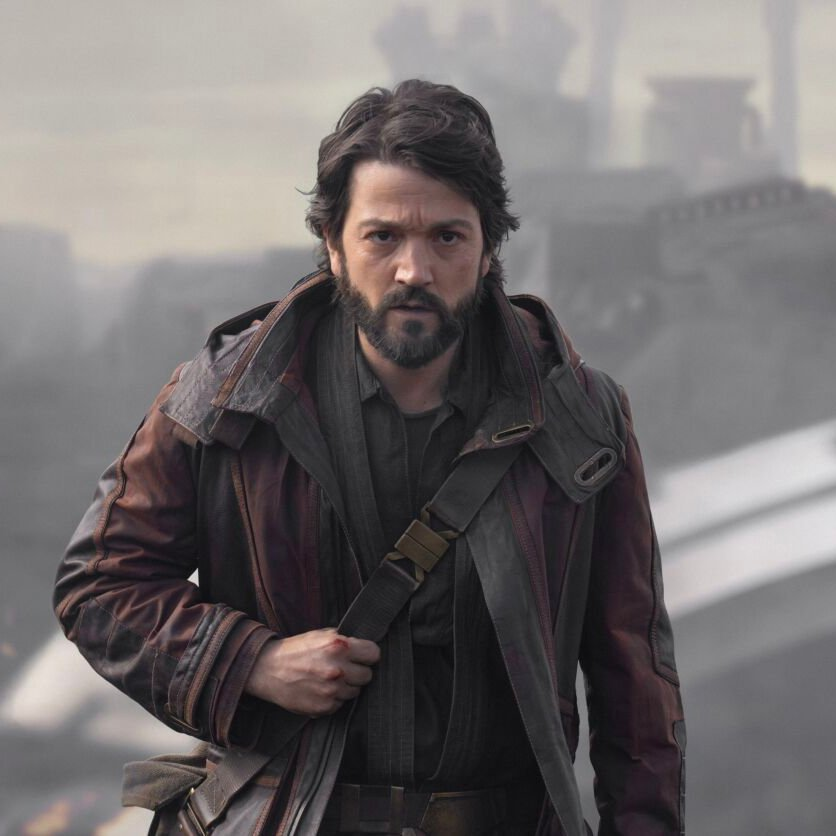
@JHDiymm@MizzyMogs@CultureCrave@nielsen 😆Jar Jar Binks was in about 0.1% of The Clone Wars episodes. You obviously haven't even watched it, which proves that you're just talking out of your ass. I watched every episode of Andor and all but the last 3 or 4 episodes were actually engaging.
Most-streamed Star Wars projects by generation 📺
• Gen Alpha (ages 2–13): 'The Mandalorian'
• Gen Z (ages 14–29): 'The Clone Wars'
• Millennials (ages 30–45): 'Andor'
• Gen X (ages 46–61): 'Andor'
• Baby Boomers (ages 62–80): 'The Mandalorian'
(via @nielsen)
@MizzyMogs@Majesticallyill@CultureCrave@nielsen I’m glad you have come to terms with it. I relented and watched what people said was the best arc in the show, the umbara one. The antagonist general starts off as a plausible character, a butcher like a WW1 general. Not explored, he’s actually a super duper bad guy.
@MrBananaBeanz@CultureCrave@nielsen The taste in question is a mustache twirling villain of the week failing at their evil plan, the good guys winning and the main characters proclaiming what they learned at the end of the episode. Sure.
@ZoieNolan4@emchtastic@CultureCrave@nielsen “Dark and mature” lmao the theme and message of every episode is browbeaten and literally explained by the characters. Characters explain their entire motivation behind every action in every episode. You can like it, but its kids show slop.
@YuliyaChuba@Ariel5618@Average_NY_Guy Fair enough, but that’s zero excuse for the UPA who actively participated in the holocaust being seen as Ukraines national heroes today. That’s disgusting.
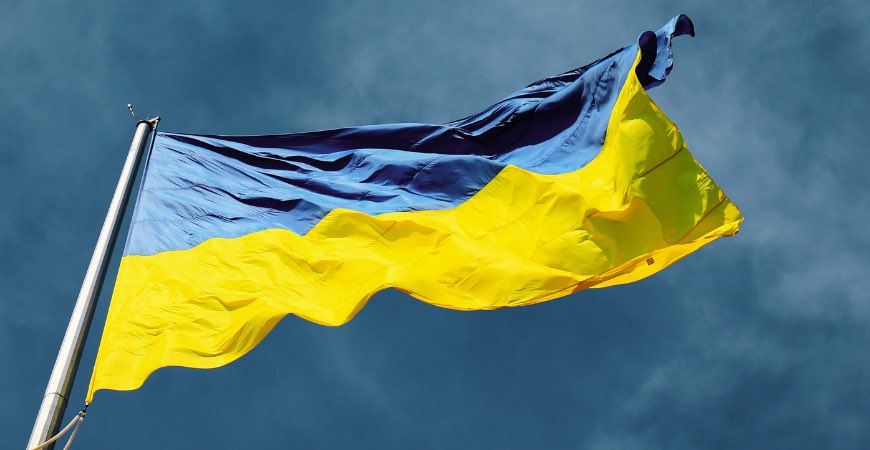
@Ariel5618@Average_NY_Guy Ukraine state did not exist in those time , Ukrainian territories were under russian colonial occupation and any free will were punished as violently as today in Donbas if not worse.
But you have to have critical mind to understand that which most have never developed
Ukraine has one of the darkest track records when it comes to Jews, and it goes back a long time. It didn’t start with the Holocaust. In the 1600s, during the Cossack uprisings under Bohdan Khmelnytsky, Jewish communities were wiped out one after the other. Tens of thousands were slaughtered. For Jews in Eastern Europe, these events became part of how they understood their place in the world.
But it didn’t stop there. Late 1800s into the early 1900s, pogrom after pogrom. It was not in just one city, or just one moment. Repeated waves of violence. Looting, killings, entire towns terrorized. Estimates run between 30,000 and 100,000 Jews murdered in those years, with some historians putting it even higher. When something repeats like that across decades, it’s not random anymore, it’s a pattern.
Then the Holocaust, and Ukraine became one of the main killing grounds. Around 1.5 million Jews were murdered there. It wasn’t in gas chambers for the most part, but face to face. Forests, pits, ravines. The “Holocaust by bullets.” The most known example is Babi Yar, where over 33,000 Jews were shot in two days. Two days. That scale is hard to even process.
And it wasn’t done by only the Germans. There was widespread local collaboration. Auxiliary police, nationalist groups, civilians helping identify Jews, round them up, sometimes taking part themselves. That fact gets people uncomfortable, but leaving it out doesn’t change what happened.
After the war, it didn’t disappear. Under Soviet rule it was pushed under the rug, but it stayed there. After independence, it shows up in different forms. Polls over the years have found a meaningful percentage of people still buying into the same old ideas about Jews and power, influence, money.
You also have the continued honoring of figures like Stepan Bandera. For many Ukrainians he’s a nationalist hero. For Jews and Poles, his movement is tied to collaboration and mass violence. Add to that far-right groups that use symbols and rhetoric straight out of the neo-Nazi playbook. They aren't a majority, but they exist, and they’re not exactly hiding.
Now to be fair, Ukraine today is not Nazi Germany. They elected Volodymyr Zelenskyy, who is Jewish. There are laws against antisemitism. You’re not seeing mass violence against Jews in the streets. But that doesn’t mean the deeper issue is gone. Attitudes don’t just vanish because laws change.
And when you zoom out, it’s not just history or fringe groups. Ukraine has consistently voted against Israel in the UN, including after October 7. You can argue politics, alignments, or legacy voting blocs, but it still shows where things tend to land in practice.
I traveled through Europe a few years ago, went to about 9 countries. Different places, different people, no issues. The one place where we got yelled at and even ran after a few times was Ukraine. That’s one experience, not a dataset.
But at a certain point, when the history is this long and the signals keep lining up, it stops feeling like coincidence.