James Isilay

113 posts

James Isilay banner
James Isilay

James Isilay

@JIsilay

Founder and CEO of @Cognism Also angel investing......

Zurich, Switzerland Katılım Kasım 2015
785 Takip Edilen900 Takipçiler
Sabitlenmiş Tweet
James Isilay
James Isilay@JIsilay·
We selected @cursor_ai for our engineering team last week after running a pilot program. We introduced this AI tool with three goals in mind: Automate repetitive tasks Accelerate development cycles Empower our team to focus on innovation The pilot achieved the following: 31% more issues resolved—less time on repetitive work, more time on creative problem-solving. 21% more pull requests (PRs) merged—quicker features, faster deliverability. 3% faster PR cycle time—a small win that we know can grow. Overall so far an 18% productivity boost for our engineering team. AI is not going to replace our human developers, but it is transforming how we approach the mundane development tasks. I wish these tools were around when I was a developer.... Strong recommendation for: cursor.com
English
1
0
3
446
James Isilay retweetledi
Karan Goel
Karan Goel@krandiash·
We're giving away an 11-page guide titled: “How to clone your voice and make an agent in <10 minutes” (Like we did for Elon and Karan). It can call support to complain on your behalf, make reservations, prank your friends, etc. You also get $100 in free credits so you can play with your voice AI. Retweet and comment "SONIC" below and we'll send you the step-by-step guide and $100 in credits.
English
544
314
482
87.8K
Karan Goel
Karan Goel@krandiash·
We've raised $100M from Kleiner Perkins, Index Ventures, Lightspeed, and NVIDIA. Today we're introducing Sonic-3 - the state-of-the-art model for realtime conversation. What makes Sonic-3 great: - Breakthrough naturalness - laughter and full emotional range - Lightning fast -
English
1.4K
1.2K
8.5K
4.9M
James Isilay
James Isilay@JIsilay·
@StartupArchive_ Great advice, I made the mistake of weighting the interviews more than the references in the past. Founders need a good playbook for reference checking.
English
0
0
0
126
Startup Archive
Startup Archive@StartupArchive_·
Airbnb founder Brian Chesky on how to interview and reference check new hires Brian’s first piece of advice comes from Steve Jobs: “Start with the results and work backwards to the people. Most people start with resumes. They start with brands — ‘Oh, this person worked at Google.’ But you should actually ask yourself: What products do I admire? And then who built those products?” With respect to actually interviewing them, Brian’s first tip is to ask follow-up questions: “Ask them to explain how they did something, and then the key is to ask two follow-ups. You never want the first answer. You always want the third answer. And if people don’t know what they’re talking about, they struggle. They might be able to follow-up, but the second follow-up, they become absent of details.” But more important than interviewing, Brian argues, is references: “I prioritize references over interviewing, especially with executives who have more experience BSing you than you have experience detecting their BS.” Brian recalls that Andreessen Horowitz would tell him to do 8 hours of reference checks per employee: “[That’s] probably over the top, but you should probably spend as much time referencing as you do hiring.” He also believes the CEO should interview and reference check new hires as long as possible. Brian interviewed the first 400 people at Airbnb, but he wishes he interviewed longer. And with respect to tactics for reference checks, Brian offers the following advice: “A lot of people are polite. They’re afraid of the feedback getting back. So the first thing to say when you start the call is that everything is off the record — and it should be off the record. It should never be attributed to them. The more it’s unattributed to them, the more honest they’re going to be.” On this topic, Brian recommends avoiding disqualifying questions: “A lot of people don’t want to say somebody sucks or is not good… Say, ‘Okay, separate from this topic, I just want to know who’s the best person you’ve ever worked with?’ Do they say the person’s name you just asked about? They usually tell the truth and if they don’t say that person’s name, they’re not the best, right?” And then ask for specifics: “They said they’re amazing — well why are they amazing? What would you point to? If they have no specifics, maybe they weren’t really good… Then ask questions like, ‘Okay, what do I need to watch out for if I were to hire them?’ or ‘What’s the one area of development you would give them?’ If you say that, they have to tell you something because they’ll feel like they’re not thoughtful enough…. And then you ask them at the end who else you should talk to: ‘Can you give me two more names?’ And then you use that to build a network.” Brian believes recruiting should be more like building a talent network than a sales pipeline.
English
5
33
422
36.2K
James Isilay
James Isilay@JIsilay·
@kimmonismus Highlights that it is not the content that matters but how it is curated and marketed.
English
0
0
1
42
Chubby♨️
Chubby♨️@kimmonismus·
I remember when AI music was the big thing last year. And all the big music companies were worried that they would soon go bankrupt. Surprisingly, nothing has changed so far. And even though AI musik is now so outstanding, it hasn't led to any upheaval in the music industry. What can we learn from this? The adaptation of AI, its truly revolutionary character and its transformative power on social conditions often takes longer than we think. In this respect, Sam Altman makes an important point when he says that even when AGI is officially released, it will initially have no impact on society, on the world. Things will continue as normal as before. We go to work, we live in families and we go shopping. The true revolutionary, transformative power of AI will take many years to realize. There probably won't be one day when we are surprised at what has happened, but it will be a gradual process. AI will increasingly determine our everyday lives and slowly change the way we live together. And at some point we will wake up and look back and say: now we live in a different world. But without there having been a Day X.
Suno@suno

I feel ✨cultured✨ Kelly created this brilliant music video with her song made with Suno. 📹: IG/kelly_boesch_ai_art

English
54
27
261
35.7K
James Isilay retweetledi
Startup Archive
Startup Archive@StartupArchive_·
Sam Altman on how to identify founders who can build $10 billion companies “It’s difficult to hear an idea at the very early stage and say: ‘Yeah, this idea has what it takes to be a $10 billion company.’ However, I think you can, with practice, identify founders that have a chance at creating one of those companies.’” The first four traits Sam looks for comes from gmail creator Paul Buchhiet: obsession, focus, frugality, and love. Next, Sam looks for intelligence: “You can give a founder an idea, but the problem is they need to come up with new ideas for the company basically every week… We tried an experiment at Y Combinator where we funded 20 teams of strong founders that didn’t have ideas but otherwise were really good, and they all failed. What we learned is that good founders have ideas all the time.” #6 is communication skills: “So much of your job as a founder is about communication—every time you hire someone, go to raise money, try to sell the product, and set a direction for the company. A huge amount of a founder’s job is being an evangelist for the company. If you don’t have strong communication skills or you don’t develop them quickly, you’re at a big disadvantage.” #7 is execution speed. How quickly can you generate a hypothesis, test it, and implement it? Sam observes that most slow-moving founders who went through Y Combinator didn’t go on to be successful: “A relentless cadence of execution is incredibly correlated with success.” #8 is the rate of improvement of the founder: “If you look at a founder who comes to meet you for a seed round and compare that founder to Brian Chesky, you will be disappointed 100% of the time. That’s the wrong comparison… You should look at the at the growth rate of the founder… Humans always underestimate exponential growth.” #9 is the right motivations: “There a lot of people who start a startup because they think it’s a way to get rich quickly, and unfortunately it’s just not. So startups have become the new default career trajectory for ambitious people… This does not work given the amount of pain you have to suffer for a startup… In our portfolio at YC, every time we thought a company was going to go really well and didn’t, the founder did not have a deep sense of mission.” Video source: @ycombinator (2018)
English
10
140
1K
110.2K
Ole Lehmann
Ole Lehmann@itsolelehmann·
I'm from Berlin. Afghanistan gets better tech than Europeans now. It's not a joke. It's the result of 30 years of suffocating regulation. And now, the EU's new AI Act is about to make it 10x worse. Here's the tragic story of how the EU is killing our tech future 🧵:
Ole Lehmann tweet mediaOle Lehmann tweet media
English
446
2K
10.8K
1M
James Isilay
James Isilay@JIsilay·
As an EU AI startup you now need to read, understand and implement 144 pages of the EU AI Act, if you manage data another 88 pages of GDPR. There is no allowance for size of company. Before you can build a solution for your target customer you need to build to the regulations. European start-ups have a major disadvantage against international competition. Founders I have recently spoken to are planning to build outside of the EU having been regulated away. At the minimum the EU should have a minimum company revenue threshold (>€100 million) to allow start-ups time to innovate. It is costing Europe jobs and pushing out the best talent.
Ole Lehmann@itsolelehmann

I'm from Berlin. Afghanistan gets better tech than Europeans now. It's not a joke. It's the result of 30 years of suffocating regulation. And now, the EU's new AI Act is about to make it 10x worse. Here's the tragic story of how the EU is killing our tech future 🧵:

English
0
1
3
459
James Isilay
James Isilay@JIsilay·
@elerianm Learning how to be present in the moment is such a beautiful gift. Also took me until 2024 to learn that mental discipline.
English
2
0
1
1.8K
Mohamed A. El-Erian
Mohamed A. El-Erian@elerianm·
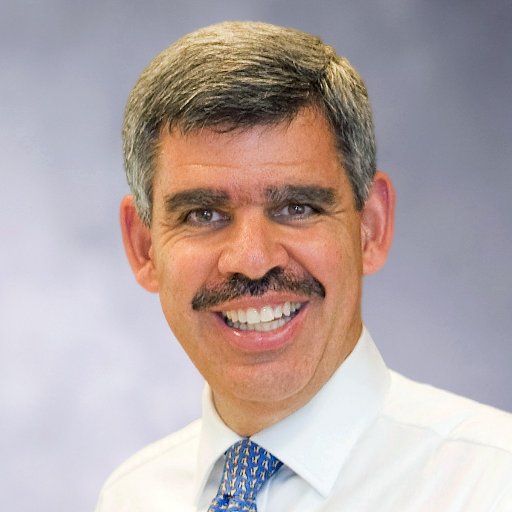
Look what popped up! In May 2013, after my 10-year-old daughter meticulously listed 22 things I had missed during that school year—from her first day of classes to her inaugural soccer match—she got her yearbook, pointed to a specific photo, and simply said, “Even when you are here, you are not here.” This moment became a turning point in my life, making me realize how absent I had been. I am deeply grateful to my daughter for that powerful wake-up call and for all the wonderful things that have followed.
Mohamed A. El-Erian tweet media
English
87
97
1.6K
105.6K
Javi Lopez ⛩️
Javi Lopez ⛩️@javilopen·
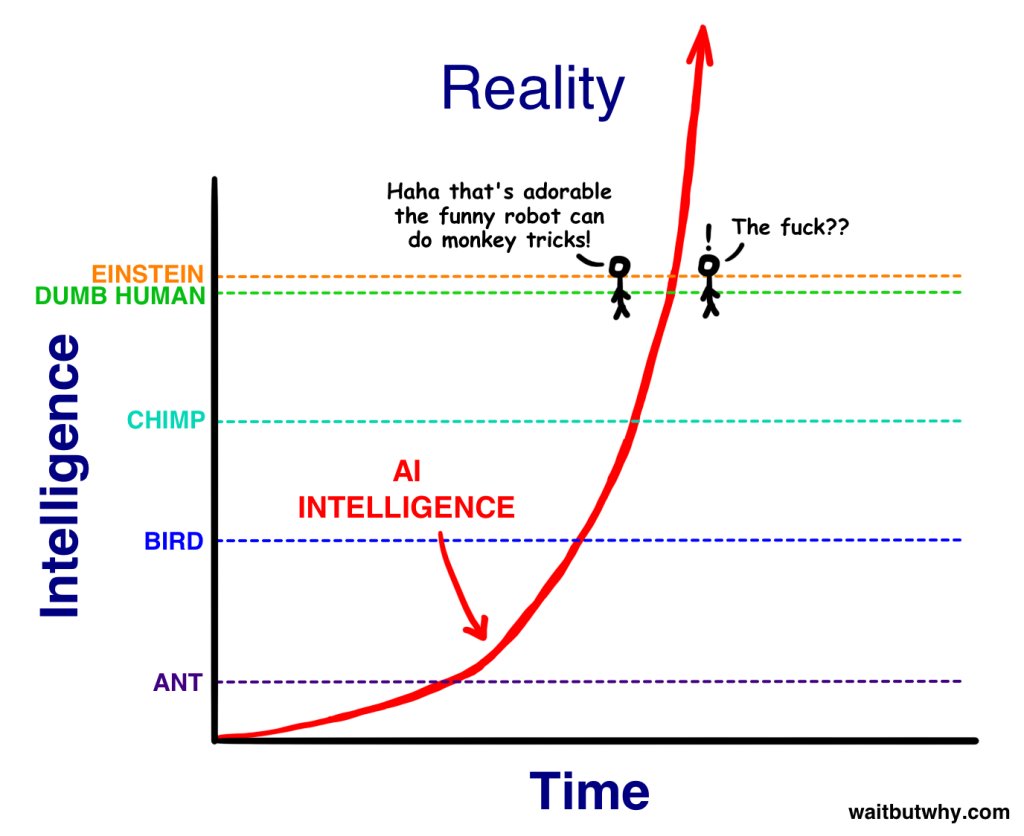
You are not ready for what's coming. We, humans, struggle to understand exponential growth. Everything will move so fast that a lot of chaos will inevitably arise in the coming years. It worries me.
Javi Lopez ⛩️ tweet mediaJavi Lopez ⛩️ tweet media
English
229
308
2.6K
398K
James Isilay retweetledi
Startup Archive
Startup Archive@StartupArchive_·
Mark Zuckerberg on the best advice Peter Thiel ever gave him “Peter was the person who told me this really pithy quote that, ‘In a world that’s changing so quickly, the biggest risk you can take is not taking any risk.’ And I really think that that is true.” Mark continues: “Whenever you get yourself into a position where you have to make some big shift in direction or do something, there are always people who are going to point to the downside risks of that decision — and locally they may be right. For any given decision you make, there’s upside and downside. But in aggregate, if you are stagnant and you don’t make those changes, then I think you’re guaranteed to fail and not catch up. So to some degree, I think it’s really right that, over time, the biggest risk you can take is to not take any risks.” Video source: @ycombinator (2016)
English
30
249
2.3K
250.4K
Wes Winder
Wes Winder@weswinder·
I’m creating an X group chat. For people serious about building apps with AI tools like bolt, lovable, cursor, etc The goal is to help each other get better and keep each other accountable. Leave a reply here if you want to be added. Let’s make 2025 the year of the builders!
English
1.1K
28
1.2K
131.6K
James Isilay
James Isilay@JIsilay·
Happy New Year! Wishing everyone a successful 2025.
English
0
0
3
128
James Isilay
James Isilay@JIsilay·
@lexfridman Peace for Ukraine in 2025, thank you for your work for peace.
English
0
0
0
20
Lex Fridman
Lex Fridman@lexfridman·
Still alive. Focused on pushing for peace. 2025 will be epic. Happy new year. I love you all ❤
English
1.3K
704
19.2K
796.1K
James Isilay retweetledi
Brandon Moore
Brandon Moore@PonderingMoore·
Acknowledging failures begins with defining boundaries. Establish your families expectations in writing. Every wise man knows his family’s happiness is his business. I'm giving away the exact same contract my family uses! I’ll send it to you! For free! Just Like+Comment "Family" Must be following (so I can DM)
Brandon Moore tweet media
English
29
6
35
3K
James Isilay
James Isilay@JIsilay·
Deeply believe this is how leadership should work, unfortunately it is not the norm. Typically CEO support gets the label micromanaging - lets just solve the critical issues and move the business forward.
Fernando Cao@thefernandocz

4. The "Musk Method" is revolutionizing leadership Andreessen has worked closely with Musk for years. His operating method is unlike any modern CEO: • Shows up weekly at each company • Identifies their biggest problem • Fixes it personally While others plan meetings about meetings...

English
0
0
3
136
James Isilay retweetledi
Fernando Cao
Fernando Cao@thefernandocz·
4. The "Musk Method" is revolutionizing leadership Andreessen has worked closely with Musk for years. His operating method is unlike any modern CEO: • Shows up weekly at each company • Identifies their biggest problem • Fixes it personally While others plan meetings about meetings...
English
5
43
437
69.5K
James Isilay retweetledi
Startup Archive
Startup Archive@StartupArchive_·
LinkedIn founder Reid Hoffman: Founders have no work-life balance “I actually think founders have no balance… If I ever hear a founder talking about how ‘this is how I have a balanced life’ and so forth, they’re not committed to winning… The really great founders are like: ‘I am going to literally pour everything into doing this. Now it only may be for a couple of years… But while I’m doing this, I am unbalanced at this thing.’ It’s not to say that you don’t take breaks or you don’t go on dates or whatever else. But you’re super focused on this because it’s really hard and there’s lots of ways to die.” Elon Musk emphasizes this as well: “If other people are putting in 40-hour work weeks, and you’re putting in 80 hour work weeks, you will achieve in 6 months what takes them a year to achieve, which will greatly improve your odds of success” Why make such extreme sacrifices? Well, as Paul Graham puts it in his essay How To Make Wealth: “Economically, you can think of a startup as a way to compress your whole working life into a few years. Instead of working at a low intensity for forty years, you work as hard as you possibly can for four.” In the early years, you will have to make lots of sacrifices and shouldn’t really expect much work-life balance if you want your startup to be successful. But you can view it as an opportunity to compress your whole working life into a few years. And hopefully excitement about what you’re building and the extremely-talented team you’re building it with make those long hours way more fun and rewarding than a normal 9-to-5 job. Video source: @ycombinator (2014)
English
12
88
633
67.9K
James Isilay retweetledi
Sebastian Völkl
Sebastian Völkl@basti_vkl·
this post was inspired by me not being able to try out Veo 2
Sebastian Völkl tweet media
English
1
1
34
3.8K