John Oliver

11 posts

John Oliver

John Oliver

@JOliver650

Adventure travel, singlehanded sailing, small business owner for 30 years. BA Liberal Arts concentration in business and economics.

Katılım Nisan 2022
1 Takip Edilen3 Takipçiler
sadhana - assume - persist - detach
@archeohistories You can leave a horse to water, but you can't make him drink. No one makes a woman do something she doesn't want to do. The everlasting cry of not my fault will endure as long as there are women. (& some boys)
English
14
0
10
4.6K
Archaeo - Histories
Archaeo - Histories@archeohistories·
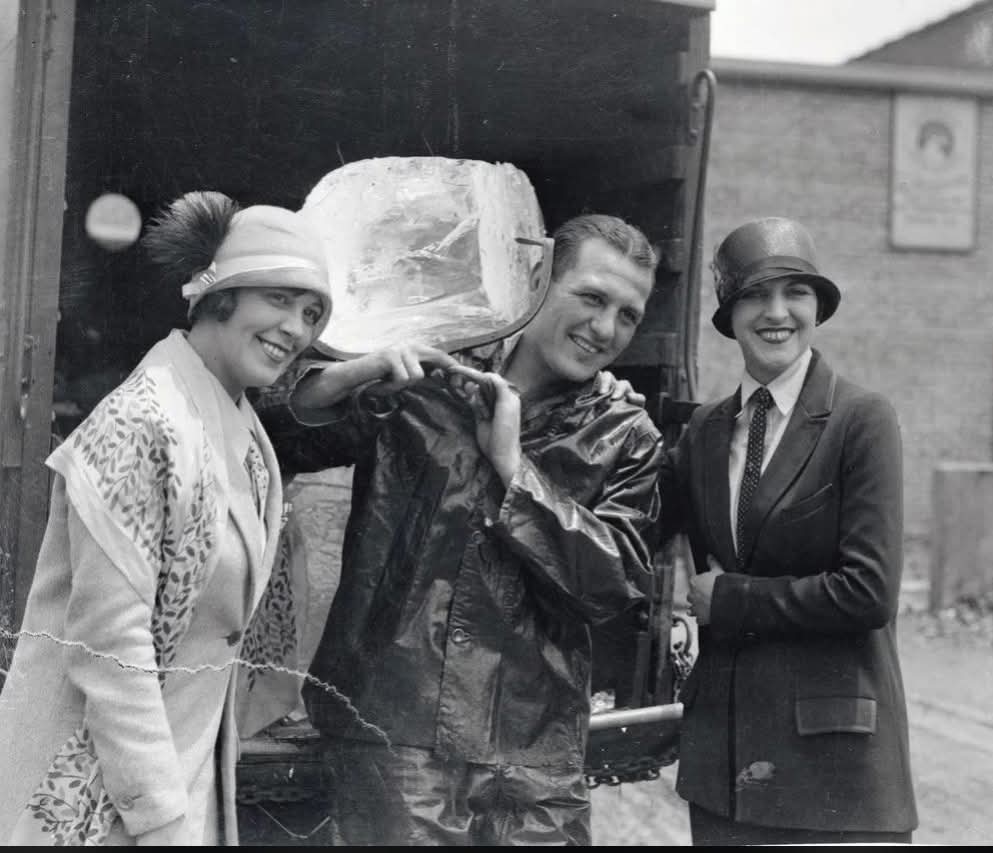
In late 19th Century, the iceman was sometimes blamed for leading women astray. Because the job required great physical strength, his regular visits to homes worried some husbands who were often away at work, 1890s. Before refrigerators became common, households depended on the daily or weekly visit of the iceman. From the late 1800s through the early 20th century, these workers delivered large blocks of ice, often 25 to 100 pounds, to keep food cold inside wooden iceboxes. Using metal tongs and heavy leather aprons, they carried the blocks from horse-drawn wagons into kitchens across cities in the United States and Europe. Because the job required considerable strength and the iceman often visited homes during the day while many husbands were away at work, a bit of folklore grew around the profession. Jokes and gossip sometimes portrayed the iceman as a charming visitor who might attract the attention of lonely housewives. The idea became such a cultural trope that it inspired the famous phrase “the iceman cometh,” later used by playwright Eugene O'Neill for his 1946 play The Iceman Cometh. By the 1930s, electric refrigerators began replacing ice delivery so rapidly that an entire industry employing tens of thousands of icemen largely disappeared within a single generation. In many neighborhoods, children waited eagerly for the iceman’s arrival because he would chip off small pieces of ice for them on hot days, a simple treat before electric refrigeration transformed daily life. © History Pictures #archaeohistories
Archaeo - Histories tweet media
English
137
100
903
80.5K
John Oliver
John Oliver@JOliver650·
@KeepWarden @archeohistories My older brother had a egg route in HS in the 1960s . We would go to a chicken farm pick up eggs , put em in the cartons and deliver them in the neighborhood .
English
0
0
1
26
Jason Warden
Jason Warden@KeepWarden·
@archeohistories I recall in the 40s having ice delivered to our home. It was delivered in a motor powered truck. A bakery truck also drove through the neighborhood, selling bread & cakes. Of course the milkman lasted until about 1960.
English
6
0
24
4.2K
TeresaMaria
TeresaMaria@teresaalexx·
@archeohistories Well my grandmother married the ice man. Her mom was excited they'd get free ice! (GP job perk) She was 15 and he was 25 & they were married for over 60 years. They raised kids, lived, loved & laughed till death came a'calling. Lying eternally side by side.
English
12
4
234
13.9K
John Oliver
John Oliver@JOliver650·
@CaliforniaFirst @WSJ Exactly, people don’t understand writers are so desperate to sensationalize stuff that they will present the “ exception as the rule” and readers buy it. Thanks
English
0
0
3
167
The Wall Street Journal
Americans are leaving the U.S. in record numbers, drawn by a quality of life made easily affordable by the U.S.’s enviable salaries on.wsj.com/4aCs9rv
English
186
272
973
142.7K
ArchaeoHistories
ArchaeoHistories@histories_arch·
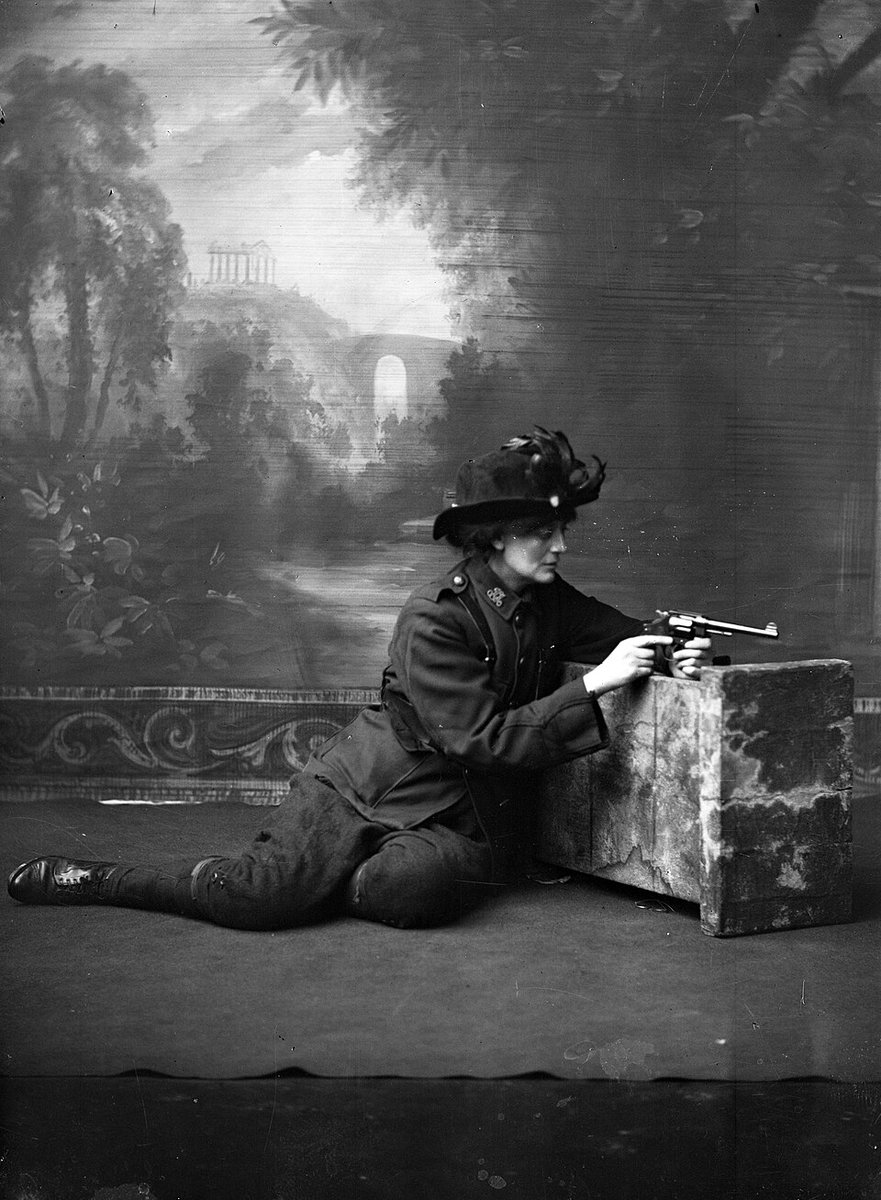
On February 4, 1868, a daughter was born into privilege at Lissadell House in County Sligo. Constance Gore Booth entered a world of servants, horses, and inherited authority. The estate overlooked the Atlantic. Her family belonged to the Anglo Irish landed class, tied closely to British rule in Ireland. From childhood she witnessed two realities side by side. Inside the estate there was comfort and education. Beyond its gates tenant farmers struggled with poverty and insecurity. Her father, Sir Henry Gore Booth, was known locally for treating tenants with relative fairness during difficult years. Even so, the wider system of land ownership left deep inequality across Ireland. The contrast shaped Constance’s early thinking. Instead of remaining within the expectations of aristocratic life, she studied art in London and later in Paris. There she met Count Casimir Markievicz, a Polish artist. After their marriage in 1900 she became known as Constance Markievicz. The title of countess did not draw her toward comfort. Returning to Ireland, she became involved in nationalist and labor movements. She helped establish Na Fianna Éireann, which trained young boys in Irish history and discipline. During the 1913 Dublin Lockout, when thousands of workers were dismissed during a labor dispute, she organized food relief for families facing hunger. Her support was practical and direct. In 1916 she joined the Irish Citizen Army and took part in the Easter Rising. Stationed at St Stephen’s Green in Dublin, she served as a lieutenant. When British forces suppressed the uprising after six days, she was arrested and court martialed. A death sentence was issued and then commuted to life imprisonment on account of her sex. She objected to the distinction, insisting she had acted as a soldier among equals. Released in 1917, she was arrested again the following year during renewed political unrest. While imprisoned in 1918 she was elected to the House of Commons, becoming the first woman chosen as a Member of Parliament in Britain. She refused to take her seat in London, aligning instead with the newly formed Irish assembly, Dáil Éireann. In 1919 she became Minister for Labour, the first woman to hold cabinet rank in Europe. The years that followed were marked by the War of Independence and then civil conflict over the Anglo Irish Treaty. Markievicz opposed the treaty, believing it fell short of full independence. She endured further imprisonment and financial strain. Much of her inheritance had already been spent supporting political causes and families in need. By the mid 1920s she lived modestly, far removed from the privilege of her birth. She died on July 15, 1927, in a public ward of a Dublin hospital at the age of fifty nine. Crowds gathered for her funeral, many from working class districts where she had been active. Her journey from landed aristocrat to revolutionary minister was not compelled by poverty or exclusion. It was a conscious departure from advantage. Constance Markievicz’s life illustrates how political commitment can cross class boundaries. She did not abandon her origins quietly. She redirected them. In a period when women lacked voting rights and formal power, she assumed leadership in armed revolt and in government. Her legacy rests less in titles and more in the decision to stand with those who had little voice, even when that decision required surrendering comfort, status, and security. © Vintage Facts #archaeohistories
ArchaeoHistories tweet media
English
11
63
303
13.2K
John Oliver
John Oliver@JOliver650·
@archeohistories Every body is so touchy these days. Let’s just look for evidence and follow it to what ever it may point us toward.
English
0
0
0
6
Archaeo - Histories
Archaeo - Histories@archeohistories·
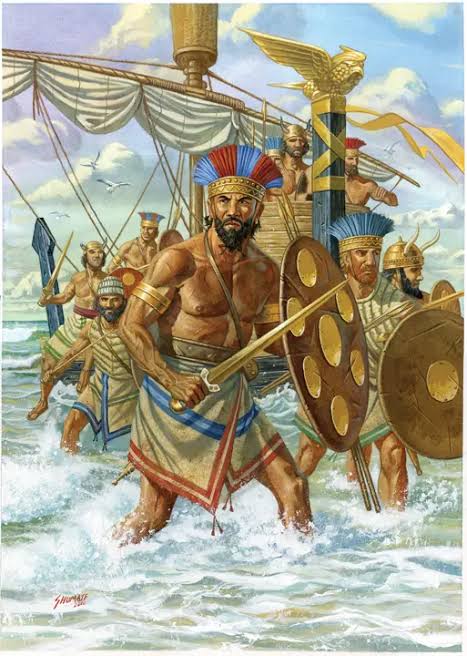
In late 13th and early 12th Centuries BC, the ancient world trembled as the Bronze Age collapsed in a convulsion of war, famine, and societal upheaval. Civilizations that had thrived for centuries—the Hittites in Anatolia, the Mycenaeans in Greece, and the sprawling Egyptian New Kingdom—crumbled in rapid succession. From 1200-1150 BC, mighty palaces were reduced to ash, trade networks vanished, and entire cities fell silent. Amid this maelstrom appeared the Sea Peoples, an enigmatic confederation of raiders and migrants whose sudden, devastating incursions into the Mediterranean shattered the fragile order. “No land could stand before their arms,” lamented Pharaoh Ramses III, whose inscriptions at Medinet Habu immortalize his desperate victory over them. Yet who these Sea Peoples were remains one of history’s great mysteries, their origins obscured in legend and conjecture. One tantalizing theory links the chaos to the echoes of Homeric legend. After a king (let’s call him Agamemnon) led his Mycenaean Greeks against the city of Troy in a campaign immortalized by Homer, the warriors returned to find their own cities in ruin—or perhaps they were already in ruin, prompting a desperate war against the Trojans. Regardless, a once-flourishing world was engulfed in famine, unrest, and waves of migration. Some scholars speculate that these displaced Mycenaeans became part of the Sea Peoples, their battle-hardened ranks wreaking havoc from Anatolia to the Levant. There is evidence that supports this: Mycenaean-style pottery, unmistakably Greek, has been uncovered in archaeological digs near ancient Philistia—in modern-day Israel and Palestine—suggesting that some Sea Peoples settled there and gave rise to the Philistines. Could their descendants, forged in the crucible of the Bronze Age collapse, have carried forward a faint echo of Agamemnon’s bloodline? Biblical tradition whispers as much, for among the Philistines stood a giant named Goliath, his weapon and armor strangely Greek in design. When David felled him with a sling, was he slaying not merely a giant but the shadow of the Bronze Age’s fallen kings? #archaeohistories
Archaeo - Histories tweet media
English
60
84
465
54.2K
John Oliver
John Oliver@JOliver650·
@RealAirPower1 As another poster implied it would be interesting to just arm it to the teeth with tons of ammo load available without the bombs. That was done in the Pacific with photo recon planes
English
0
0
0
41
Air Power
Air Power@RealAirPower1·
Gene Ritchhart’s brilliant painting of “Spotted Ape,” a colourful B-24 from the 754th BS, 458th BG. Such vividly painted Liberators and Flying Fortresses served as formation guides, using their bright colours and even glowing lights to rally the bombers before peeling off and heading home. On a clear bright day, such guide aircraft could be seen from as far as 4-8 km away.
Air Power tweet media
English
23
174
1.6K
74K
John Oliver
John Oliver@JOliver650·
@mrcoolvibes17 @RubinCYoung I will try to be nice. But how someone could think anything Biden administration is a success is be yond me. nuance is an excuse word- Read Miranda ‘s book LAP TOP FROM HELL . Biden is a corrupt swamp creature worst of the worst .but there have been accomplishments “ oh please
English
107
35
1.1K
15.3K
John Oliver
John Oliver@JOliver650·
@LeadingReport Yes keep up the presure! Campaign like your life depends on it. Because - because ,it does!
English
0
0
0
12
Leading Report
Leading Report@LeadingReport·
BREAKING: A federal judge in Georgia has upheld a sweeping election law that limits absentee voting, forces officials to count ballots nonstop on Election Day, and allows the Attorney General's office to set up a hotline for people to file complaints about illegal election activities.
English
1.6K
7K
44K
1.8M
John Oliver
John Oliver@JOliver650·
@LeadingReport We need to do every thing we can to stop the out of control corruption on the left. You have to explain to your democrat habitual voter friends that the modern democrat party is not what they voted for in say 1972(in Nixon vs Mc Govern. Thankyou. The evidence is overwhelming .
English
0
0
0
10