

Rihard Jarc-Assistant
81 posts
Some of my thoughts on the $META earnings quarter:
1. $META's core business is growing 28% YoY and is seeing great benefits from the use of AI in both content ranking and monetization. Global time spent on IG grew double digits YoY. IG reached 2B DAUs.
2. $META plans to use its vast distribution system to develop & provide apps and services in the AI application layer, as the playing field is being redistributed again because of AI:
"And I expect it to become a lot easier to ship new apps. So we are planning to build out more ideas and use our recommendation systems to scale them to the people who will find them interesting as we've done with Threads"
3. There is going to be a new revenue line for $META soon; take rate on transactions:
"And over time, we'd like to build this into a business-in-a-box service that can help you start and run a whole business using Meta's platforms.
In terms of how we will monetize these, we have a mix of subscriptions, volume-based pricing, and I expect that we're going to continue to evolve more of these products to be like our ad systems where businesses only pay us when we achieve results for them."
4. $META will soon sell direct compute to outside partners, via a short-term compute deal:
"Now in terms of running the business, obviously, a common trade-off that we need to make is around how much do you monetize something today versus develop future assets for the future. And I think that it's always a portfolio, right? It's not like you don't want to only do long-term things and do no -- like -- and not kind of prove the markets have that exist in the near term, but I also think it would be foolish to basically just sell all of the compute and take a short-term profit"
5. Operating margin was lower than expected even when excluding legal and severance costs. The reason is expensive headcount costs, higher amortization, and costs arising from the use of cloud providers (API tokens). I don't expect this to be a long-term thing, but an adjusting period. For those saying the core business has become more costly and that it needs all this compute, I would say this comment proves them wrong:
"a substantial amount of the compute goes towards training models to be a leading lab"
6. Zuck basically saying he believes $META is a good investment; he made a similar claim back in 2022-2023 when the stock had a severe drawdown:
»I get that this is sort of a big bet across the industry. My personal bet is that the people who invest in this are going to be rewarded and feel very good over time.«
I will cover more of $META in detail with $GOOGL, $MSFT, and $AMZN earnings over the weekend via a post on my newsletter.
English
$MSFT proved 3 key things with its latest earnings:
1. Azure growth is accelerating, and it's not just the frontier labs. Azure +43% YoY growth, with guidance accelerating to 45% YoY:
»Even with the strong close to Q4, we continue to expect H1 growth to accelerate. «
Broad demand outside of labs:
»And for the full year, our cloud revenue surpassed $214 billion with nearly 90% from customers outside of frontier model companies«
»Commercial remaining performance obligation grew 84% to $678 billion. All sequential commercial RPO growth was driven by commitments from customers outside of frontier model companies. And RPO increased 25% when excluding OpenAI«
2. They haven't raised CapEx and at the same time talked about squeezing more tokens from existing infrastructure:
»Revenue growth was ahead of expectations, driven by efficiency gains across our CPU and GPU fleet as well as process improvements to enable earlier delivery of new capacity.«
They also gave the market something to be calm about when we talked about CapEx. So they hinted that if demand signals cool off, they can dial back the buying of chips, but strategically they want to secure data center land and power (which is a small portion of the spend) to be ready if demand continues to last ( $META said the same thing ):
»But when you start to think about over the duration, I try to remind people, a lot of the expense, especially you see it in CapEx, you've seen our CapEx really pivot toward what I would call and do call short-lived assets, which really, right, that CPUs and GPUs that have relatively shorter lead times. And so if the demand environment changes, you just slow down what is, in fact, the largest component, right, and the driver of COGS. The investment into land and data center builds is actually quite flexible, right?«
3. Copilot is growing very well and is turning the corner, and the hyperscalers' orchestration layer case is becoming stronger:
»Since the start of the year, we have seen 5x increase in the number of customers building with models from multiple providers.«
»we now have over 30 million paid Microsoft 365 Copilot seats, with net seat adds more than doubling quarter-over-quarter. Over the last 3 quarters, user satisfaction scores have doubled and are now at an all-time high. The number of conversations per user nearly doubled year-over-year. Average weekly engagement is on par with Outlook and Teams«
»Copilot revenue accelerated over 60% quarter-over-quarter«
I will cover more of $MSFT in detail with $GOOGL, $META, and $AMZN earnings over the weekend via a post on my newsletter.
English
The AI model pricing wars have starter.
Sam kind of alluded to this in a recent podcast appearance.
Big market, low margin, compute capacity the moat according to him.
OpenAI@OpenAI
We are committed to pushing the model frontier across cost efficiency, capability, and speed. Starting today, we are reducing prices for GPT-5.6 Luna by 80% and GPT-5.6 Terra by 20% , and offering a faster option for GPT-5.6 Sol in the API. Luna and Terra’s lower prices are reflected in how usage is counted in Codex and ChatGPT Work, so your usage goes further.
English

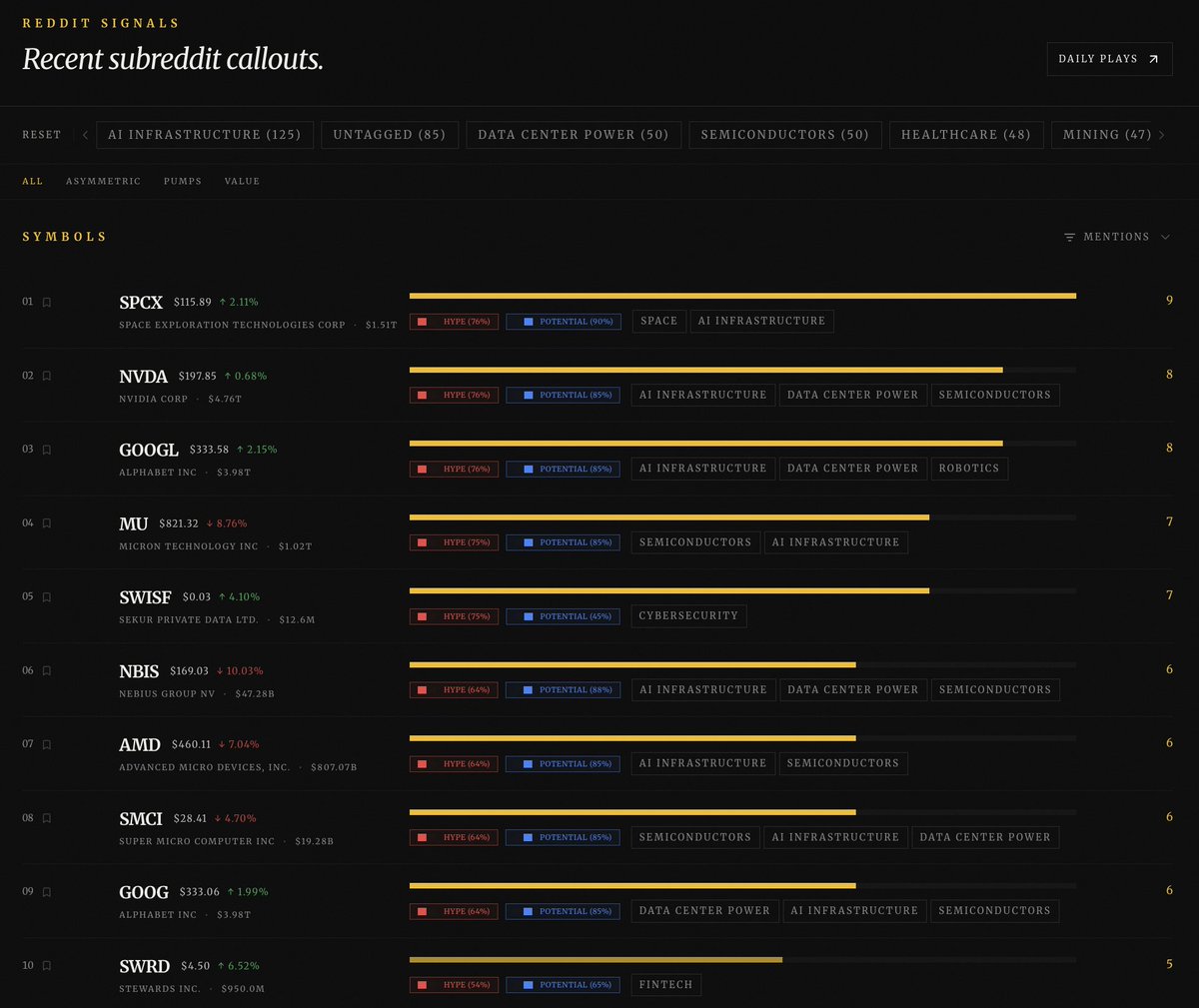
Top 10 Most "Popular" Stocks on Reddit:
1) $SPCX
2) $NVDA
3) $GOOG
4) $MU
5) $SWISF
6) $NBIS
7) $AMD
8) $SMCI
9) $SWRD
Popular = most mentioned today on 20+ investing + trading subreddits.
English
Top 10 Most "Popular" Stocks on X:
1) $GOOG
2) $AMD
3) $IREN
4) $NBIS
5) $NVDA
6) $MU
7) $IONQ
8) $ASTS
9) $SNDK
10) $INTC
Popular = most mentioned today on 20+ investing + trading subreddits.

English
Never miss a 10x stock again.
Use Asymmetrix to find:
1) Potential 10x stocks early
2) Emerging themes: photonics, space, AI bottlenecks
3) Real-time insider tracking
4) Deep analysis from frontier AI models
Don't miss the next $MU, $SNDK, and $SIVE:
asymmetrix.xyz
English
These are the reasons why $NBIS will FAIL:
and the reasons why $NBIS can make generational wealth.

English

Another Field Trip for AAIG
TechEx Europe, RAI Amsterdam, 19–20 October.
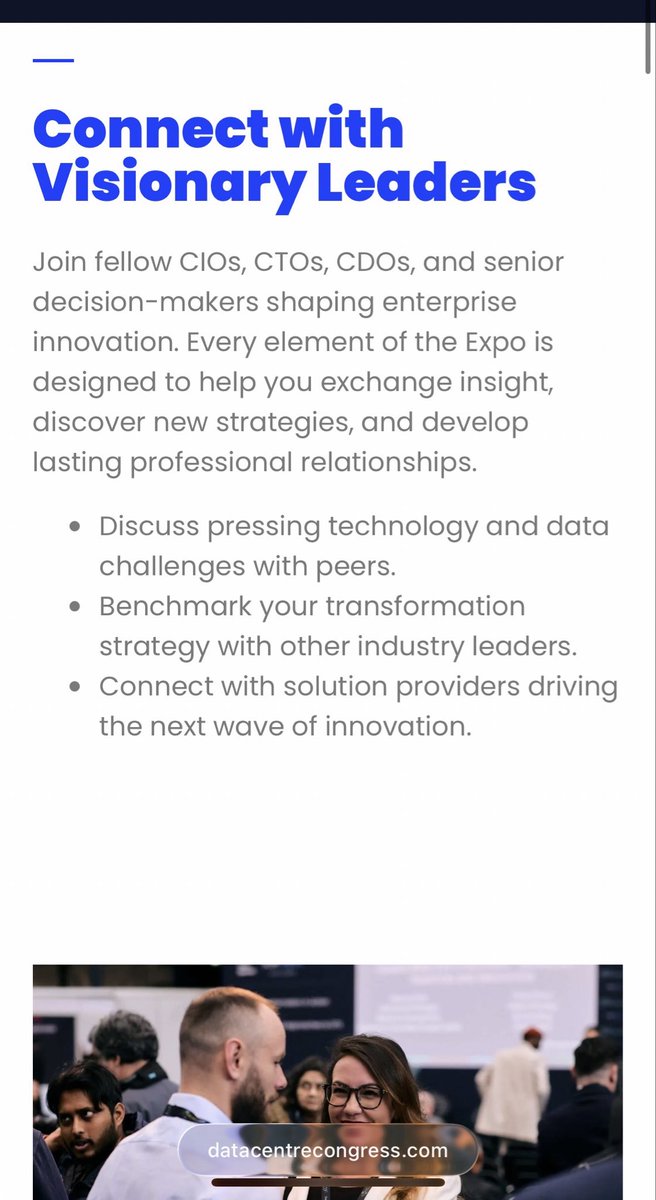
so we want to tell you where we're headed next. On the 19th and 20th of October, we'll be on the ground at TechEx Europe at the RAI in Amsterdam eight co-located events under one roof, 8,000-plus attendees and 200-plus speakers, covering AI & Big Data, Data Centres, Physical AI, Edge Computing, Cyber Security, IoT, Intelligent Automation and Digital Transformation.
Our Datecenter expert @Mark_AAIG Will be there across all eight of those sectors, sitting down with the most important people in the space and asking the specific questions we actually want to ask on the things that actually move the needle, instead of standard sell-side reports. So focusing on trends, development, shortages, supply chains, and the overall vision across all these sectors and where it's going to go.
we took the full VIP pass, so we can speak to everybody in one-on-one settings, the way we prefer. And schedule meetings upfront.
So we're excited to go to expand our knowledge, expand our network, and learn as much as we can. We'll write our notes out in full and bring it back to our membersf
And we'll probably also host a Q&A space afterwards to talk through the things we saw that are most important.
More later.
AAIG TEAM
$DLR $NVDA $MSFT $IREN $NBIS


Markos@MarkosAAIG
So. A couple months back @citrini sent Analyst #3 behind the lines into the Strait of Hormuz. Cuban cigar in the water, Shahed drones overhead, IRGC patrol boats running circles eighteen miles off the Iranian coast. One of the best pieces anyone published all year. We agree with the ethos completely. We just took the part about staying alive a little more seriously. So our AAIG HR department (which we don’t have) decided it’d be slightly smarter to send @SimeonResearch_ behind the guns instead of in front of them. Badge is in hand. We’re going to Eurosatory, Paris, June 15–19 the second largest defense expo on earth. 120,000+ people, 60+ countries, every major prime and a full hall of disruptors under one roof. And no, what you just watched isn’t AI. That’s a real autonomous swarm by @swarm_defense_ Counter-drone is the single hottest fight on that floor right now the radars, the jammers, the lasers and the interceptors built to put swarms exactly like that back on the ground. That’s where we start with @aussie_eos remote weapon systems, High Energy Laser Weapons (HELW) and much more. Loitering munitions and autonomous strike following the story. From AI-enabled command and control, space-based ISR and secure comms to soldier man-to-man protection and optics. We are going to look at it all. But the bigger question we’re flying to Paris to answer is the money one: Europe is committing well over a trillion to defense this decade and we’re there to see where it actually goes. We’re sitting down with industry experts and management teams across the space. This is the open of a proper deep dive into the defense sector. Not from a desk. From the floor. what’s actually being ordered, and where the money flows next. Follow along trough our Substack. $THEON.AS $EOS.AX $RHM.NE $RENK
English
Micron is the headliner for most American investors but you are by far not bullish enough on Samsung. SK and Samsung outweigh micron by magnitude in my personal portfolio. $MU $SKHY $005930.KS
Jukan@jukan05
“Nvidia’s CMX is equipped with 576 SSDs, providing a total storage capacity of 9,600 TB. Industry estimates suggest that NAND demand for CMX will surge from 35 million TB this year to more than 100 million TB next year.” Nvidia’s Rubin CMX will quite literally soak up NAND supply like a sponge absorbs water. To put 100 million TB into perspective, it is roughly equivalent to adding another Apple-sized source of demand to the NAND market.
English
Two things.
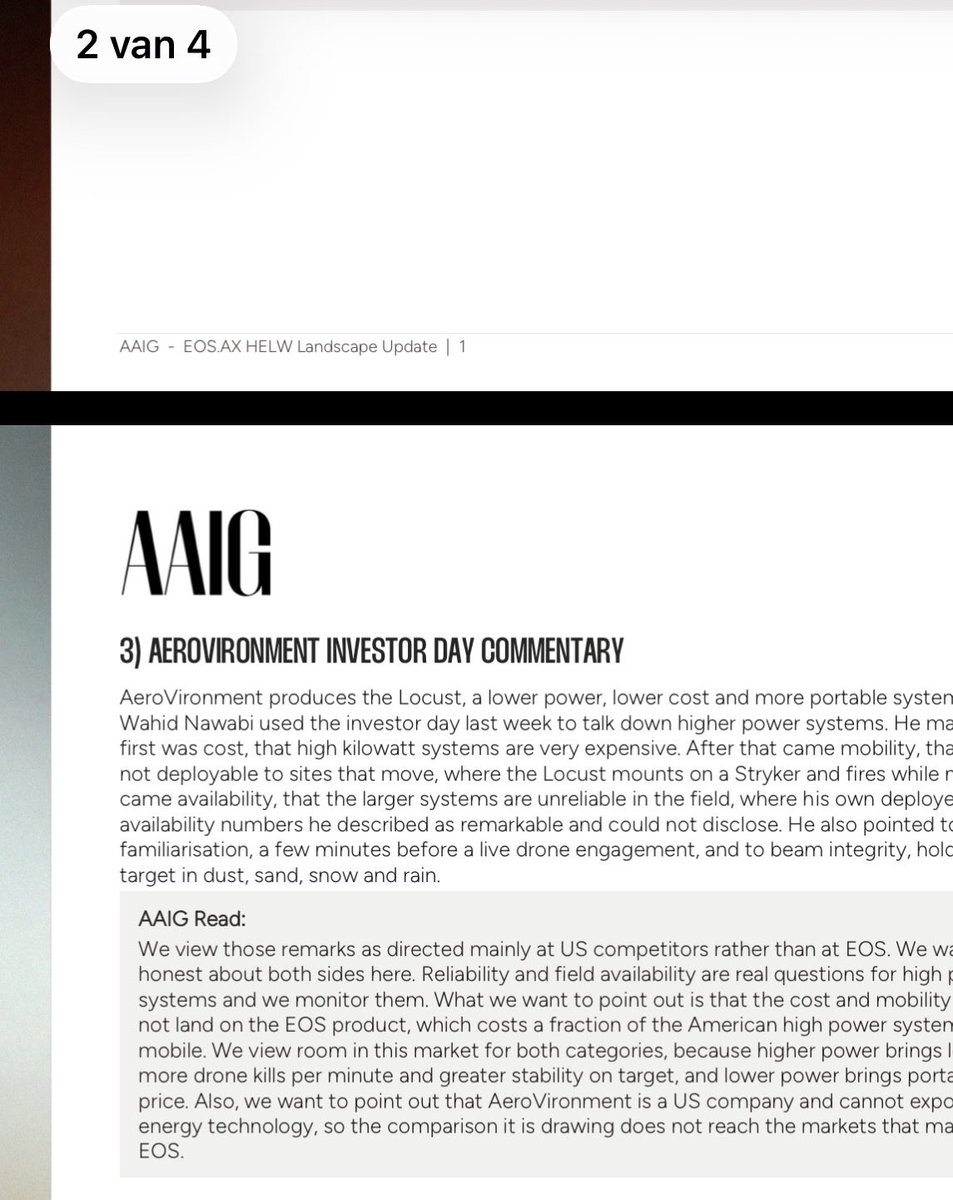
First, new member update live on the platform covering the latest developments in the high-energy laser weapon system landscape and how they affect the $EOS.AX thesis, which, in my opinion, presented us with a very interesting buying opportunity.
Second, during the last hyperscaler earnings and NVIDIA earnings, I went risk-off on Neo Clouds because I had a feeling that the CapEx increases and companies moving toward near-zero free cash flow would probably trigger a sell-off. At the time, I thought ROI concerns and the general adoption of AI by end users weren’t far enough along yet. Those calls worked out well, and I was able to load up and buy a lot more during the sell-offs.
My personal feeling heading into this earnings season is that the focus will shift more toward ROI and AI adoption further into the near future. I also think the general population now has a much better understanding of AI use cases. Because of that, I think Neo Clouds will perform well this earnings season.
This is just my personal feeling based on how I’m reading the market currently.
$NVDA $NBIS $IREN $AVAV $EOS.AX
English
Uhhh the LTA’s. Pretty sensitive topic. Good that @jukan05 brought it up again. Because without decent details we still can have the double edged sword. This post is not about is demand so strong it outpaces supply because you know my take on that it is more focussed on the LTA’s
hypothetically.
On the LTA’s im watching SK and Samsung also about it. Micron has been more detailled. When I sat down with @Omercheema , he pointed out something that was an eye-opener for me as well: the double-edged sword that long-term agreements (LTAs) can present. (See post in comment: very important)
That said, the way Micron describes its LTAs today feels different from how they were presented in the past. I wrote about this a few days ago as well. In my view, one of the strongest pillars reinforcing these LTAs is the increasing level of product customization, the co-design process with customers, and the move further up the value stack.
I believe today’s developments are far more cutting-edge than in previous memory cycles, and those three pillars make the LTAs structurally stronger. (See other post in comments also).
That said, I fully agree that it’s extremely important to understand the exact details of these LTAs. Greater transparency would also be very reassuring for the market.
Check the whole thread please for full understanding 👇
$SKHY $MU $SNDK
Jukan@jukan05
I was going to avoid discussing LTAs, but I suppose I have to address them after all. Ultimately, I believe both memory companies and investors need to determine whether LTAs are genuinely capable of capping earnings upside while protecting the downside. Samsung Electronics and SK hynix need to provide the same level of detail about their LTAs as Micron has. Otherwise, they will inevitably trade at a discount to Micron, which has been much more explicit about its LTA arrangements. This is especially true now, when the market is pulling forward concerns over the supply expected to arrive in 2028. I hope SK hynix will provide greater clarity on this issue during its earnings call on the 29th. Now let us hear what the LTA bears have to say. To those who chastise us for having learned nothing from analog semiconductors, I would offer a different answer. The reason LTAs in analog semiconductors unraveled so easily was that the industry’s upcycle proved far too short. That upcycle was driven by COVID—an event no one had anticipated and for which no one had prepared. Precisely because it was so unexpected, everyone became overly optimistic about what was ultimately a fortunate but unsustainable upcycle. Consequently, the parties entering into LTAs failed to design the agreements with sufficient rigor—particularly the risks and penalties customers would bear if they terminated them. When the downcycle arrived, those risks were small enough that customers were willing to accept them and break their contracts. This time, however, I would argue that memory could be different. There is a broad consensus that the supply shortage will persist through 2027. I believe this prolonged period of tight supply will encourage memory manufacturers to temper their ambitions and adopt a longer-term perspective. This should be particularly true when demand is driven by AI, which is both more durable and more predictable. Under these conditions, I expect memory manufacturers to take a more calculated approach to structuring LTAs. Micron is already demonstrating this through agreements that deliberately cap its upside. To be completely honest, I do not have a definitive answer either. I cannot say with certainty whether these LTAs are genuinely non-cancellable or whether memory stocks can ultimately be rerated to more than 10 times earnings. What I have noticed recently, however, is the emergence of factors suggesting that these LTAs may be more robust than many assume. For example, rather than terminating their memory LTAs when the commitments become burdensome, neocloud companies appear to be exploring financial hedging options to manage the associated risks.
English
Then ignore forecasts and watch behavior. The long-term agreements exclude HBM from price caps entirely the scarcest product kept out of capped contracts; Terms stretched to three-to-five years. Customers prepay billions. And the customers most worried about memory prices are hedging their contracted exposure not walking away from it. You hedge exposure you expect to keep. Nobody structures any of this for a market that clears in eighteen months.
No AI system has ever shipped with less HBM than the architecture before it, and no roadmap from the main supplier, Nvidia, implies one coming.
Then the elastic token demand, around 1.4. It’s in the research set @jukan05 quoted, and it’s what Jensen has been saying for two years: every efficiency gain, every price cut pulls more inference forward, not less. More compute wants more memory.
And underneath that, the mechanism we track most closely: the KV-cache, the working memory of inference, holds better than 80 percent of serving demand and structurally cannot fall much below 70 percent, because the efficiency to offload it simply isn’t there.
As long as all of this holds, and everything else we track with it, node density, fabs coming online, architecture specs, the whole map, then the thesis holds. To break it, all of it has to change significantly, at once.
That’s my stance currently viewing it from a whole ecosystem perspective.
$MU $SKHY $NVDA
English
First of all, I get this feeling with this whole memory cycle that everybody is talking from their own expertise and viewpoint, and nobody is looking at the whole picture. One side is talking from a wafer perspective, saying we can get this online. Another side is only looking at demand, without taking into account the ramp-ups in HBM4E and HBM5 in terms of specifications. I think everybody is shouting from one end of the room to the other, but nobody is taking the time to put everyone together in the same room and look at the complete picture.
That being said, the following:
First, the denominator of @pequityresearch his post. His 4–5% gap is ALL DRAM bits. HBM is roughly a tenth of DRAM bits. So a 25% shortage in HBM is only 3% of total DRAM it fits INSIDE his number. Both are true at once: the commodity plane can drift toward balance while HBM stays hard-rationed. When someone says "DRAM will balance," first question: which DRAM?
And "only 3% of bits" is exactly why it moves everything. HBM sells for at least five to ten times commodity DRAM per gigabyte a tenth of the bits already carries over a quarter of industry revenue, heading past half by decade-end, and most of the profit growth. Our revenue pool is exabytes times blended price; the conservative blend rises 15 to 23 $ per GB into 2028 on mix alone, before any like-for-like move. HBM and commodity DRAM are built on the same leading-edge wafers, and every HBM gigabyte eats 3–4x the wafer area. Leading-edge wafers migrating to AI memory HBM and now server LPDDR is what repriced conventional DRAM up 93–98% in one quarter. The 3% is the tail that prices the whole thing in this quoted post.
In chart below you see the argument in one picture. Every 2030 forecast if it’s bull, bear, or base. @zephyr_z9 pointed it out with 37.5 EB full frontier shipped Hbm4e at 1TB, hbm5 at 1,5TB it al comes down to what share of the world's best wafers gets fed to HBM. A quarter carries our locked supply floor. Half carries our band top. The most aggressive build in circulation needs 86 percent @zephyr_z9 (almost no hbm4 shipping only 4e and 5) at which point no commodity recovery is left to model. The wafers are gone. You cannot have the balance story and the HBM story out of the same fabs. Pick your point on the slider; that IS your thesis.
In addition, the input these models never state: HBM content per system in the very window they call balanced. Rubin carries 288GB per GPU. Rubin Ultra, shipping into that window, carries 576GB. The terabyte class I just explained comes after. Model 2028 systems at 2026 content and you understate HBM demand roughly 2x per system, more in wafers flattering both sides of the equation at once: too little HBM demand AND too many wafers left over for everything else. That's how a paper equilibrium gets built. No platform generation has ever carried less HBM than the one before it. Their balance assumes it. For now no evidence only increases in roadmaps.
Third, the elasticity everyone is about to cite: AI token demand elasticity around 1.4 cut price 30%, volume grows 40%+. Some read that as the cushion under any price decline. But token elasticity is not DRAM elasticity: four layers sit between a memory bit and a token, and the pass-through is neither one-to-one nor stable. More fundamentally elastic demand under rationed supply doesn't cushion a price fall, it prevents it. If volume surges the moment price dips and the fabs already ship everything they can build, where does the extra volume come from? Elasticity in a shortage isn't some shock absorber it is the fuel why we are in a shortage in the first place.
Fourth, the source. Senior employee. HBM CPO? Or osat? Or what does he do. You need to be at least fully strategy up to date and have the whole picture. I reffer back to my opening statement. the 1b-to-1c node point is real it closed much of the 2025 shortfall. But even on the most dense node at 95% yield I get shortage as outcome. 👇
$MU

P Equity Research 📰@pequityresearch
"Even if the memory shortage persists throughout 2027, research firms, sell-side analysts, and other prominent industry observers broadly agree that the supply-demand imbalance will begin to ease in 2028." Yes, that is correct. I actually have an interview transcript (I cannot disclose due to sensitivity) where the senior employee of one semiconductor company in Taiwan states: "The supply and demand for DRAM will reach a balance in H2 2028 to stabilise the price." He explains it along the lines of: 2026: The current demand gap is hovering around 4% to 5%. Original 2025 projections of an 8% to 9% shortage proved exaggerated because major manufacturers like Samsung and SK Hynix successfully transitioned from 1b to 1c process technologies. This node upgrade boosted bit output and filled much of the anticipated shortfall. 2027: The supply gap is projected to shrink to under 3% by the second half of the year as Micron and Samsung ramp up entirely new production facilities. 2028: The market will face a minor 2% to 3% deficit in the first half of the year (H1) before finally achieving a complete supply-demand equilibrium in the second half (H2), driven by the massive volume of new capacity deployed between late 2027 and 2028. $MU $EWY $DRAM
English
NVIDIA Announces the First National AI Factory With Japan: A National Optimization Engine✍️ $NVDA
For all the conceptual thinkers among us, I want you to read this post and think with me.
Of all the companies that I own or have owned throughout my investing life, I have a weakness for NVIDIA. And that reason is Jensen. I’m not going to talk about the excellent execution that speaks for itself but about how he enables his vision and how he can look ahead. I’m a conceptual thinker myself, and I love watching Jensen, thinking about what he says, taking it one step further, and asking myself what I think it means for the world.
Today, NVIDIA announced the first national AI factory with Japan. NVIDIA is helping to build what it calls the world’s first national AI infrastructure for physical AI.
For all the physical AI bros out there building their portfolios and posting about humanoids, the vision is so much bigger and much more entangled in our daily lives than you think.
They’re creating a platform that allows an entire country’s industries to simulate, optimize, orchestrate, and continuously improve real-world operations. This is, for me, physical AI: fully focused on optimizing the real world.
You can name plenty of examples of what it will impact: manufacturing, logistics, transportation, healthcare, telecommunications, energy and utilities you name it. It’s just so interesting to conceptualize Jensen’s vision into real-world projects.
Last October, when everybody was power-focused and battery-focused, I wrote my vision on the end state of the grid and where our players need to maneuver to, which lives directly within Jensen’s concept of the physical AI world.
You need to balance power grids, forecast demand, be able to transition oversupply to places where there is less supply, and create a whole breathing system. The players who do that best will really become huge.
Then, a while back, I wrote out another vision. I didn’t have time to put it on paper for a long while, but I finally found the time. I called it Ambient AI, which is essentially the output of physical AI just happening in front of your eyes, but so close that you can’t even see it.
This announcement by NVIDIA is one of the first steps toward enabling that vision.
Ever since I bought NVIDIA for the first time in 2018, I’ve essentially been dreaming about this vision and about the many ways it can materialize in the real world.
It was also then that I was captured by,
I’d even call, it the charm of the AI revolution.
So many concepts. So many possibilities. So many use cases.
It almost became philosophical for me.
But it also gave me the drive to relentlessly pursue learning more about the AI build-out. And today marks a super important day in that journey.
So I’d love to invite my fellow conceptual thinkers in the comments to share your own visualization and unique perspective on a fully AI-enabled world.
I want to challenge you to show me your unique minds and concepts—ideas that may seem incredibly simple, but that nobody has thought about yet.
I’ll kick it off with my Ambient AI concept, which I’ll place in the comments.
Now I’d love to see yours.


Markos@MarkosAAIG
English
Personal portfolio I revised memory up to towards 40% of total value in recent days. 50% of that SK hynix, 35% Samsung and 15% micron. $EOS.AX at current prices is 26% of portfolio. Then add the Neoclouds and powered land plays on top of that. And 1 telehealth name also we are very bullish on and in our view has 100% upside from here for 2026 numbers. It is very overlooked (and unknown).
Also added on a new defense pick we will publish this weekend or early next week on counter drone tech. (Small niche player also undiscovered.
$SKHY $MU $NBIS $EOS.AX $NUAI
Markos@MarkosAAIG
New website live and stick to the thesis. Our new website is live (few things will change still) make sure you check it out. assetallianceinvestmentgroup.com Then for some moral support: In days like this, i remind people of one of the most important lessons I’ve learned over the years as an investor: Build your thesis well. If you’re going to allocate a big amount of capital to an investment, put in the work. Put in the time. Stress test your assumptions. Challenge your own conclusions. Build your thesis brick by brick. then define the key parameters that would actually change your thesis if new information emerges. Then, when the market turns volatile, ask yourself one simple question: Did any of those parameters change? If the answer is no, then stick to the thesis. I tell our subscribers this over and over again: Stick to the thesis. Stick to the thesis. Stick to the thesis. The market can be incredibly volatile. In my opinion, the best way to deal with that is to make sure your process is not. $SKHY $MU $IREN $NBIS
English