

Javad Keypour
1.7K posts
Javad Keypour
@J_Keypour
University Lecturer @TallinnTech & Independent Analyst in EU #EnergyLaw, #Sustainability & #EnergySecurity | PhD
Katılım Temmuz 2023
145 Takip Edilen126 Takipçiler

I can’t believe I’ve managed to cover this for 40 days in a row…
Hamidreza Azizi@HamidRezaAz
#Iran War Update No. 39 (focus on Iranian strategic narrative): 🔹As Trump’s 8 p.m. EDT deadline approaches, Day 39 of the war is marked by a combination of maximal coercion and active mediation. Pakistan is publicly seeking a two-week extension, a temporary ceasefire, and the reopening of the Strait of Hormuz, while Washington has signaled awareness of the proposal. This suggests that even at peak escalation, some space may exist for last-minute bargaining. 🔹Iran’s refusal to accept a temporary pause should be read in this context. Tehran is signaling that it views interim ceasefires as mechanisms that erode its wartime leverage, which is why it continues to tie any settlement to guarantees, compensation, and a redefinition of maritime rules in Hormuz. In addition, there is no confidence in Iran that even an agreement with the Trump administration would restrain Israel’s actions against Iran. 🔹This makes the Pakistani initiative strategically important but structurally misaligned with Iran’s current logic. The proposal seeks to freeze escalation, whereas Tehran appears intent on using escalation, particularly in Hormuz, to shape the substance of any eventual settlement. Accordingly, some analysts in Iran argue that the Pakistani proposal, and Washington’s acknowledgment of it, may simply provide Trump with a way to extend the deadline and avoid the consequences of an uncontrollable escalation. 🔹Iranian discourse in recent hours has therefore treated mediation less as a sign of imminent compromise and more as evidence that U.S. pressure has not lead to compliance on schedule. This reinforces the perception that Washington is being drawn into negotiations under conditions shaped by Iran. 🔹At the same time, a notable shift is emerging within pro-government expert circles in Iran. While official messaging emphasizes strength and continuity, some analysts are expressing concern that Iranian retaliation has not yet generated sufficient deterrence, as evidenced by continued Israeli strikes and ongoing U.S. threats of escalation. 🔹In this view, Israel’s ongoing attacks on Iranian infrastructure are effectively implementing a gradual version of what Trump has threatened publicly. This has led to arguments that U.S. rhetoric may be serving to overshadow a slower, cumulative degradation campaign, reducing pressure for immediate large-scale escalation while achieving similar strategic effects over time. 🔹As a result, some within these circles are calling for more decisive Iranian action to restore deterrence credibility. The concern is that calibrated responses, while signaling capability, may not be imposing sufficient costs to alter adversary behavior. 🔹Trump’s threats are also generating unintended domestic effects inside Iran. Reports of civilians forming human chains around bridges, power plants, and other potential targets point to a form of national mobilization that extends beyond the state apparatus. 🔹This dynamic carries dual strategic implications. It raises the political cost for Tehran of accepting compromise under pressure, while simultaneously increasing the potential reputational and humanitarian cost for Washington if it proceeds with infrastructure strikes. Some hardline analysts have already warned that any ceasefire would be unacceptable to them, declaring that they would “keep the Strait of Hormuz closed with their blood.” 🔹Trump’s rhetoric is therefore being interpreted through a dual lens in Tehran: dangerous enough to warrant preparation, yet also indicative of constrained options. The prevailing inference is that if military pressure had already succeeded, such maximalist threats would not be necessary. 🔹Strikes on railways, bridges, and energy-related infrastructure reinforce this perception. Inside Iran, they are increasingly framed as evidence that the war has shifted toward societal pressure, further narrowing space for compromise and strengthening narratives of national resistance. 🔹Iranian messaging has sought to counter this by emphasizing resilience: rapid power restoration, uninterrupted fuel distribution, and continued state functionality. This points to an effort to demonstrate that infrastructure targeting will not translate into systemic breakdown – although concerns persist beneath the surface at both societal and state levels. 🔹The Strait of Hormuz continues to sit at the center of Iran’s strategy. Tehran is increasingly treating it not merely as a tool of disruption, but as a mechanism for restructuring regional economic and security arrangements, including regulated passage and potential transit fees. This is a key reason why accepting a ceasefire that quickly restores the strait to pre-war conditions is politically difficult for the Iranian leadership. 🔹Reports that shipping continues under Iranian-imposed conditions reinforce this point. The objective appears to be selective control, positioning Iran as a gatekeeper rather than a disruptor. In this context, Iranian state media consistently highlight instances of vessels transiting the strait with Iranian approval, underscoring both Iran’s strategic upper hand and the argument that the strait is not “closed,” thereby undermining the legitimacy of Trump’s threats. 🔹Meanwhile, at the regional level, Iranian strikes on GCC energy and industrial infrastructure can complicate mediation efforts and have heightened concerns among Iran’s neighbors about any settlement that might entrench Iran’s leverage over Hormuz. 🔹At the same time, Russia and China’s veto of a draft UN Security Council resolution presented by Bahrain strengthens Iran’s position, reinforcing the perception that international pressure has yet to coalesce into a framework capable of forcing concessions on Hormuz. 🔹Overall, the key development on Day 39 is that the U.S. deadline has not led to a clear turning point – yet. Instead, it has revealed a more complex dynamic in which coercion, gradual infrastructure degradation, domestic mobilization, and diplomatic maneuvering are unfolding simultaneously, with Iran continuing to act as though time pressure weighs more heavily on Washington than on Tehran.
English
Javad Keypour retweetledi

این جنگ، قبرستان ایده های وهم فروشانی بود که دروازه های نجات ملی را با یک عملیات گازانبری نشان میدادند. قبرستان توهمات کاریکاتوری شان از امر سیاسی و نشاندن پروپاگاندا به جای تحلیل سیاسی بود. حمله نقطه زنشان به تخریب پتروشیمی،دانشگاه، بیمارستان، راه آهن و جان شهروندان...تبدیل شد
فارسی
Javad Keypour retweetledi

با گرامیداشت جای خالی:
مردان دنا که پیکرهایشان در غربت ماند
کودکان میناب که قد نکشیدند
شهدای گمنام دفاع از وطن
جانبازانی که آگاهانه تن خود را سپر حفظ وجب به وجب این خاک کردند
با احترام ابدی به مردمی که، با دل خون، به ساحت وطن پشت نکردند و دستان خالی خود را دور #ایران حلقه کردند

فارسی
Javad Keypour retweetledi

China's teapots seek Iranian oil after prices fall, sources say reuters.com/business/energ…
English
Javad Keypour retweetledi
به سختی میتونم این توییت بعد از آتش بس رو بنویسم. این چهل روز شاید سخت ترین دوره زندگی سیاسی ام بود. چه چیزایی که ندیدیم. ریختن بمب اتم هم توجیه شد. جنگ طلبی شرافت ملی تعریف شد. باید به خیلی ها توضیح میدادیم چرا یک مخالف دیکتاتوری میتونه مخالف جنگ هم باشه. پاینده ایران.
فارسی
Javad Keypour retweetledi

تبریک به اون دسته از هموطنانی که برای اولین بار در چهل روز گذشته حالا نفس راحتی میکشند. امشب راحت بخوابید تا فردا تازه بفهمیم چها بر ما گذشت.
فارسی
Javad Keypour retweetledi

مدام داره بسته کمکی میاد! 😥🤬
Mohsen Milani@milanimohsen
کمک به مجتمع پتروشیمی فجر در ماهشهر رسید .
فارسی
Javad Keypour retweetledi
حتی در جنگ ۱۲ روزه هم نوشتم، غیر از سناریوی جنگ وجودی، بستن کامل تنگه #هرمز نه معقول و نه شدنیست؛ بشود هم نمیشود بسته نگهش داشت.
حالا در این جنگ وجودی، شاید بشه با زور بازش کرد، اما بعیده بشه با زور باز نگهش داشت.
پ.ن. حالا هی فحش بده، فک کن تا سهشنبه بازش کنن برات!
#ایران
فارسی
@SaharMaranlou بخصوص از اولین جلسه ای که توی این ماجرا تشکیل شد، منظورم جلسه شورای امنیت بعد از اولین «وعده صادق» هست در بهار ۱۴۰۳ و این اومد و با اون وضع افتضاح صحبت کرد و حتی از نظر محتوای صحبتش یه استناد حقوقی نداشت، سوالم اینه: تو رو کی فرستاده اونجا؟! چی در تو دیدن؟! (جواب معلومه البته).
فارسی

جان عزیزانتان اگر در وزارت امور خارجه هستید به آقای ایروانی بگویید به جای انگلیسی حرف زدن به فارسی صحبت کند. شما نماینده کشوری هستید که مورد تجاوز قرار گرفته است. صدای شما نگاه شما باید این خشم را نشان دهد. لازم نیست به انگلیسی صحبت کنید. الان حتی زبانی که صحبت می کنید می تواند استعمار زدایی کند.
فارسی
Javad Keypour retweetledi
کنیسه هموطنان عزیز یهودی مان هم از آسیب حملات مصون نماند. هنوز اینترنشنال نزده گفته میشود جلسه ای مهم از مقامات نظامی امنیتی در این کنیسه در حال برگزاری بوده؟
فارسی
@_ardavan @BBCArdalan نه ولی از بقیه انتظار دارم وقتی تو دو خط کامنت دو تا "؟!" و سه تا "!" هست متوجه شن که کامنت طعنه امیزه، حتما نباید 60 تا ایموجی بذارم که 😂
فارسی

He threatens to end a civilisation tonight, and then says, 'God bless the people of Iran', in one breath. He seems to think he's performing euthanasia on the people of Iran.

English
Javad Keypour retweetledi
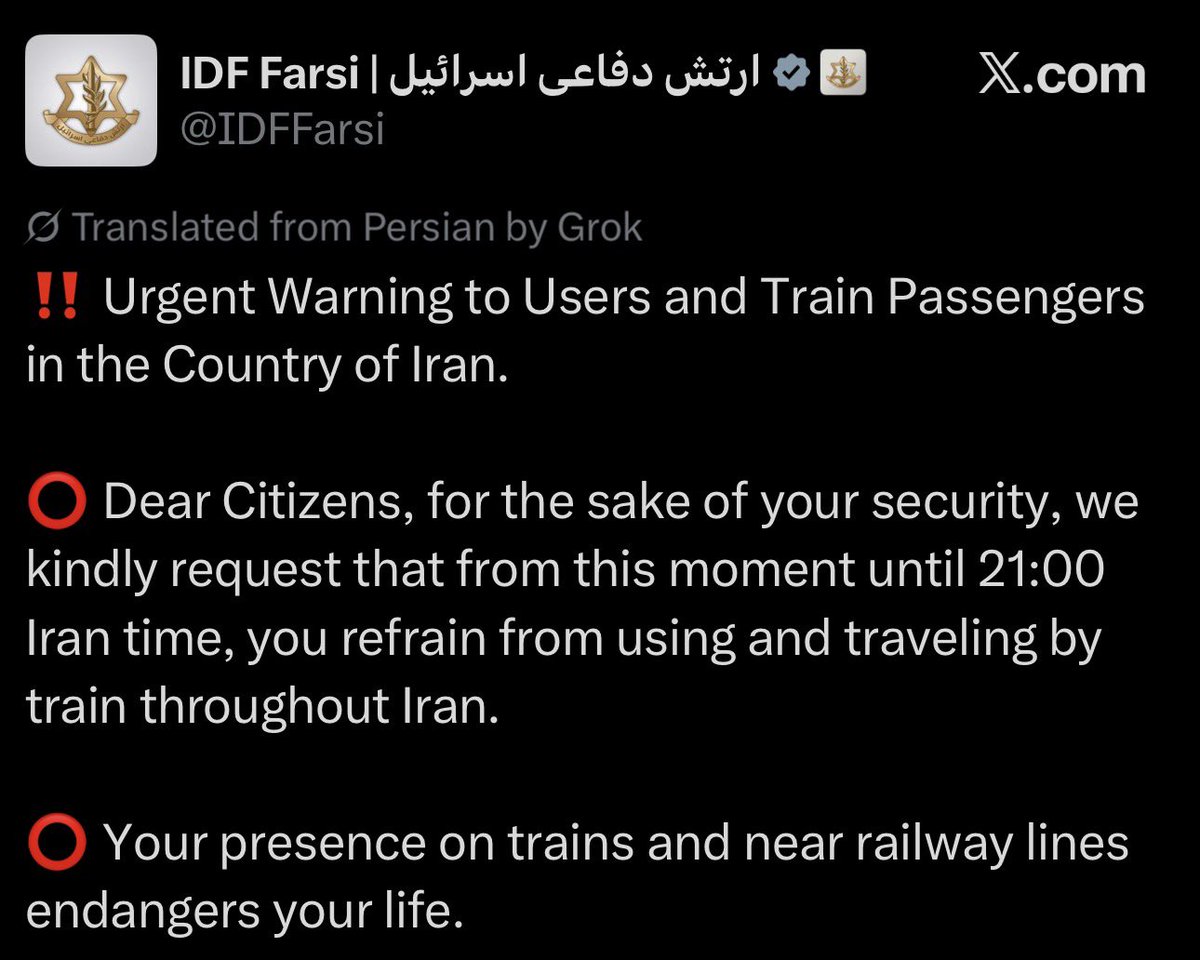
دقیقا. اسرائیل بخصوص از روزی که اولین حمله به ایستگاههای تقلیل فشار کاوه اصفهان انجام شد، ۲۴ مارس/۴ فروردین شروع شده و فقط شدتش داره مدام و تدریجی بالا میره.
#IranWar
#جنگ_ایران
Siavash Ardalan@BBCArdalan
ارتش اسرائیل گفته که میخواد به زیرساختهای راه آهن در ایران حمله کنه. همه حواسها به تهدیدات و ضرب الاجلهای آمریکاست ولی واقعیت اینه که اسرائیل داره هر روز ذره ذره زیرساختهای ایران رو تخریب میکنه.
فارسی
@JavierBlas And does the same Convention recommend attacking civilian infrastructure?!!
English

Iran is likely to deploy human shields to its bridges and power plants tonight. The use of civilians as human shields is banned under the Geneva Conventions (article 51).
Masoud Pezeshkian@drpezeshkian
بیش از ۱۴ میلیون ایرانی غیور تا این لحظه اعلام آمادگی کردهاند جان خود را برای دفاع از ایران فدا کنند. من نیز جانفدای ایران بودهام، هستم و خواهم بود. #جان_فدا
English
Javad Keypour retweetledi

Javad Keypour retweetledi
Iran amplifies global LNG shortage by blocking passage through Hormuz 🇮🇷🙅
⚠️ So far, Iran hasn't allowed a single LNG shipment to pass Hormuz since the war started over a month ago
🇶🇦 Two Qatar LNG cargoes were denied clearance through Hormuz on Monday, and had to u-turn

English
6/PRSها نه صرفاً یک هدف صرف، بلکه ابزار شناختاند: راهی برای فهمیدن اینکه چگونه میتوان با حداقل ضربه، حداکثر اختلال را ایجاد کرد.
این الگو نشان میدهد که #Iranwar در فاز زیرساختی کنونی آن احتمالا بیش از آنکه درباره تخریب باشد، درباره بهینهسازی اختلال آتی است.
فارسی
5/چه چیز سنجیده میشود؟
- دقت اطلاعات از شبکه
- زمان واکنش
- تابآوری سیستم
- رفتار اپراتورها
پس این حملات احتمالا بخشی از یک فرآیند «نقشهبرداری عملیاتی» هستند؛ شناخت نقاط ضعف برای استفاده در سناریوهای بزرگتر در آینده.
یعنی احتمالا نوعی
“probing attacks” یا حملات آزمون شبکه.
فارسی
1/حملات #اسرائیل به ایستگاههای تقلیل فشار گاز (PRS) #ایران، به ما چه میگوید؟ رشتو.
از منظر عملیاتی PRSها گرههای حیاتی شبکه توزیع گاز شهریاند. هدف قرار دادن آنها میتواند بدون تخریب گسترده، جریان گاز را در مقیاس شهری مختل کند: حداقل هزینه، حداکثر اثر.
فارسی