Sabitlenmiş Tweet
Culturepilgrim
6.5K posts

Culturepilgrim
@JacobKishere
SENSESPACE Podcast 🌎Medicine path rapper, alive in the apocalypse. Essays ‘Culturepilgrim’Substack & Rap on Spotify🔥Co-creator: The Resonant Man
Oaxaca Katılım Ekim 2014
738 Takip Edilen570 Takipçiler
Culturepilgrim retweetledi

'Do we not care about Jews as much as black people?'
@NickFerrariLBC gives us something to think about after @KemiBadenoch said that if black churches were being attacked, there would be a national emergency.
English


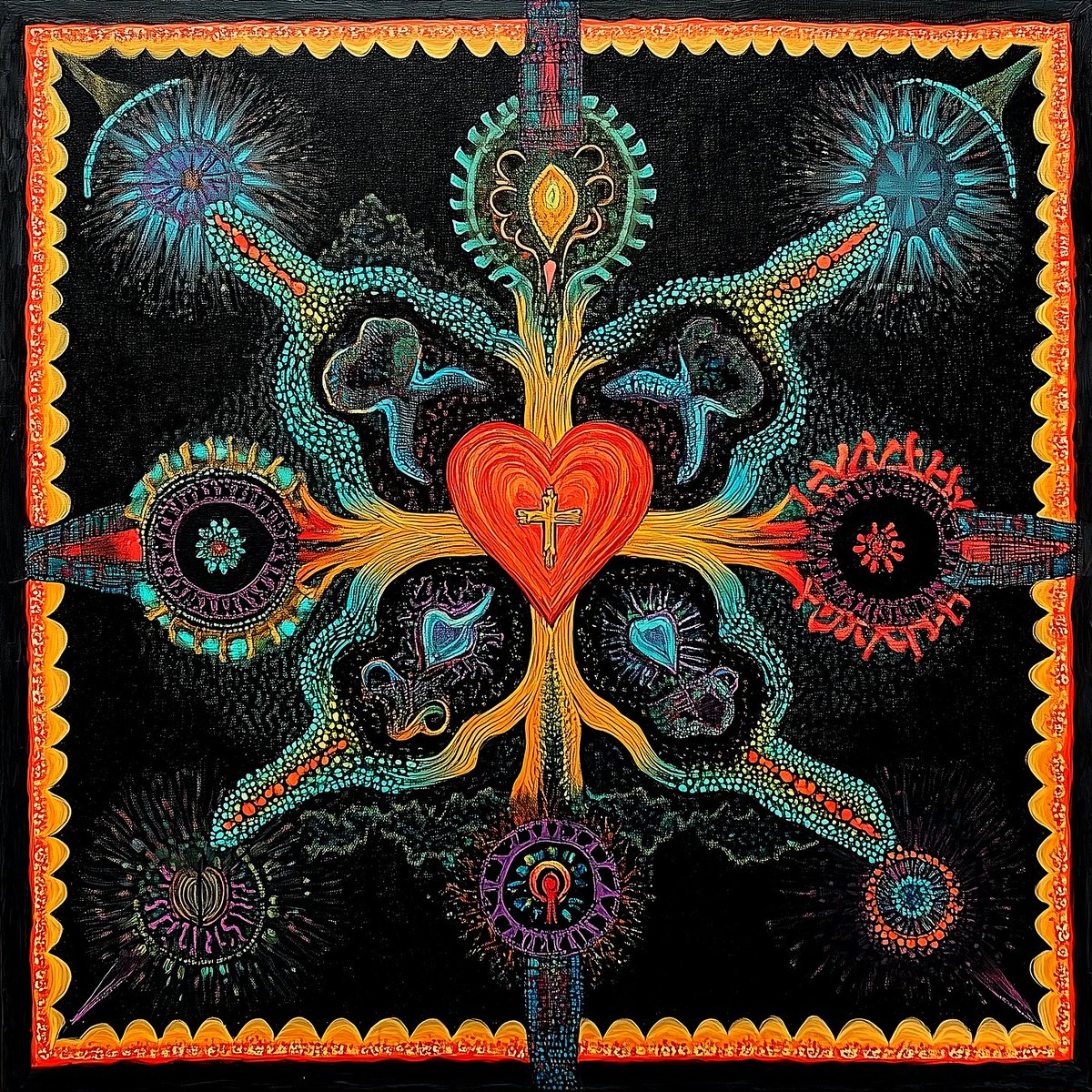
Incase you were waiting for a sacredly irreverant, heartful, christic ayahuasca rap medicine album we did that.
Christahuasca, my debut album in collaboration with @_jordan_bates drops today. Available on all major platforms.

English
Culturepilgrim retweetledi

@JacobKishere and I's new album just DROPPED today on my birthday, streaming now everywhere you listen to music !!
Christahuasca explores the synthesis of Christ, ayahuasca, personal heartful life, and other wisdom streams ❤️
open.spotify.com/album/3vRAcVyi…
English

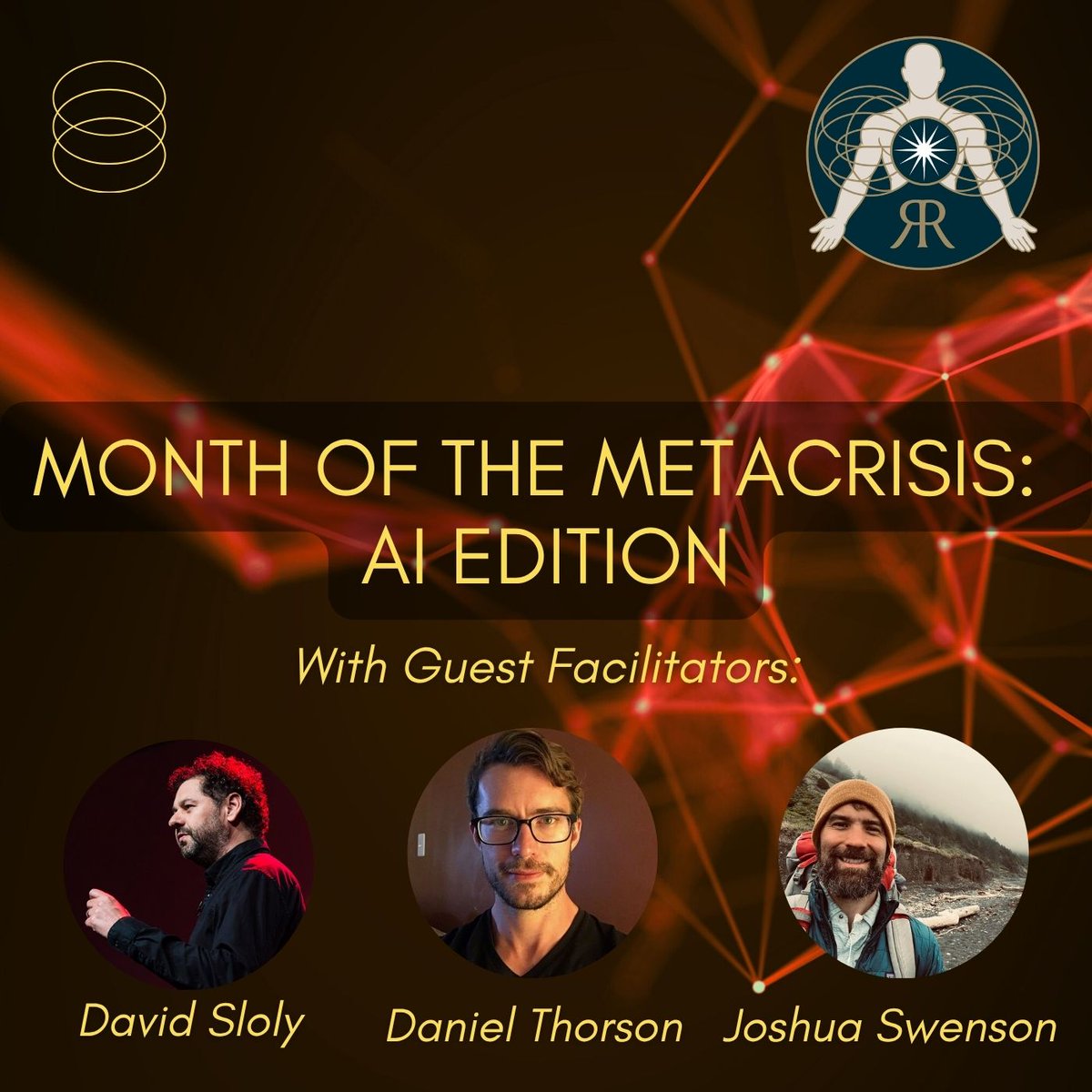
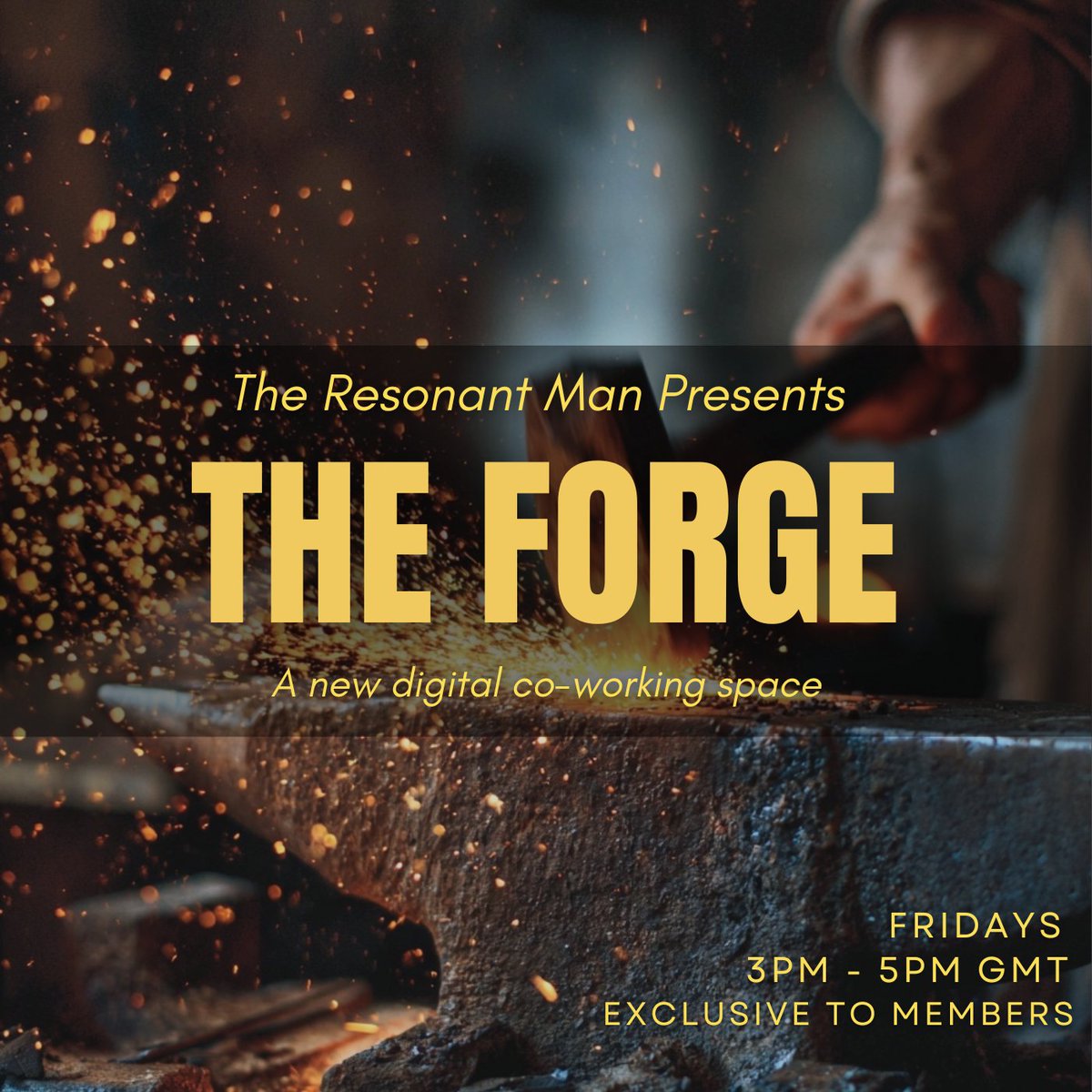
A deeply contemplative, embodied and creative exploration of AI throughout April with the Resonant Man with guest facilitator @dthorson and guest residents David Sloly and Joshua Swenson.
More at theresonantman.com/ai

English
Culturepilgrim retweetledi

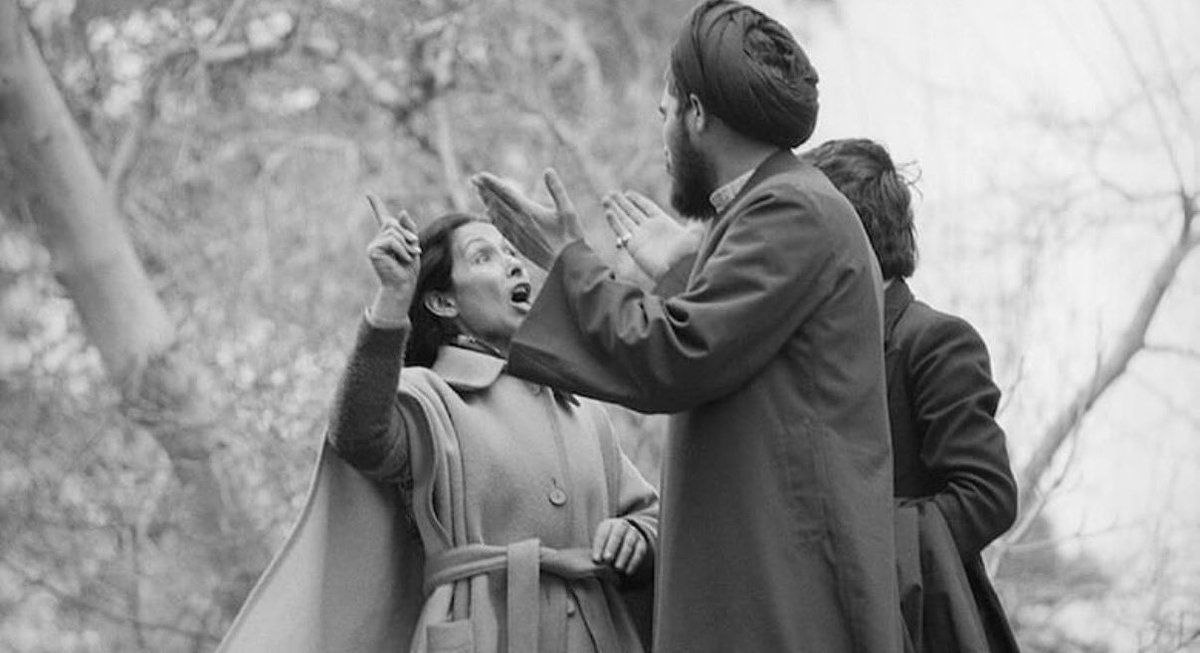
Islam has been so aggressively racialized in Western discourse that many people are no longer capable of looking at it as a religion, ideology, or governing system. Instead, it is treated as a kind of ethnic inheritance—something biologically fused to the people associated with it.
This distortion becomes especially obvious in the case of Iran. Iranian civilization did not begin with Islam, and Iranian identity is not reducible to any religion. Yet outsiders routinely speak as though “Iranian” and “Muslim” were naturally synonymous, as if a civilization thousands of years old can simply be collapsed into the religion of foreign people who conquered it after a single battle in 636.
That mistake has real consequences. Once Islam is racialized, criticism of Islam is misread as hatred of a people rather than criticism of a doctrine. Resistance to Islamist rule is then treated as identity confusion. Iranian rejection of the Islamic Republic becomes framed as alienation from “their own culture,” when in reality the opposite is often true: the rejection is rooted in the desire to recover what Islamist rule has spent decades degrading, erasing, or subordinating.
This is the point many people refuse to confront. Islam—especially in its politicized and totalizing forms—has long existed in tension with Iranian civilizational identity. It imposed itself upon an older language, older memory, and older cultural instincts, and demanded submission not only in matters of worship but in law, dress, speech, art, and the structure of public life. The Islamic Republic sharpened this tension by weaponizing Islam as an instrument of state power—turning it into the vocabulary of humiliation, the architecture of censorship, and the justification for violence.
For that reason, it should not surprise anyone that many Iranians are willing to risk their lives resisting Islamist rule. That willingness reflects clarity. People will fight the thing they know is suffocating their nation. They will resist the ideology that has turned beauty into guilt, joy into sin, dissent into heresy, and national life into a hostage chamber.
The Western inability to process this stems from deeply flawed intellectual categories. Christianity is treated as theology, liberalism as ideology, nationalism as doctrine, and Marxism as a political project—all open to criticism and blame. But Islam, within this framework, is treated as identity. Once that happens, criticism becomes taboo and the people living under Islamist regimes become analytically invisible. Their resistance cannot be understood because the framework itself is designed to shield the ideology from scrutiny.
That is why Iranian people so often break Western narratives. Their experience exposes the central error: Islam is not an ethnicity and it is not the inescapable essence of every society it has ruled. It can be rejected, criticized, and resisted—especially when fused to state power.
For many Iranians, Islam is not experienced as sentimental heritage but as conquest extended through law, punishment, and forced piety. It is remembered not as mere faith, but as a structure that has repeatedly demanded the shrinking of Iran into something narrower, sadder, uglier, and more obedient. That is why so many efforts to romanticize Islam as somehow organically identical with Iranian identity ring false, even obscene. They ask a civilization to treat the ideology that has governed and constrained it as the essence of its soul.
A serious analysis of Iran requires abandoning these fraudulent categories. Islam must be treated as what it is: a religion, a set of doctrines, and, in many contexts, a political program with concrete consequences for law, liberty, culture, and power. Once that happens, Iranian resistance becomes perfectly intelligible. The Western discourse that claims to value freedom, dissent, and decolonial analysis, yet suddenly goes blind when the object of critique is Islam.

English
Culturepilgrim retweetledi

@lady_valor_07 Find or create a high integrity mens/womens circle that support you while you progressively clarify lifestyle habits that are blocking you. Connect with God/Source. Let your innermost intuition guide you toward's what interests and calls you most and watch that evolve.
English
Culturepilgrim retweetledi

During the Iran–Iraq war (1980–1988), the Islamic Republic of Iran, with the support and blessing of the Supreme Leader, Ayatollah Khomeini, and the support of regime institutions, including state media, sent over 100,000 young boys to the battlefields.
These children were used in front-line roles, including mine-clearing operations and human-wave assaults.
Tens of thousands of children were killed during the Iran–Iraq war in one of the most horrific, shameful, and haunting chapters of Islamic Republic history.
While Saddam Hussein started the war by invading Iran, the war went on six years longer than it had to because Ayatollah Khomeini saw the war as an ideological battle, insisting that Saddam Hussein be toppled and that it be acknowledged that Hussein started the war.
Khomeini finally gave in in 1988 when he was told by his closest advisors that, after years and at least hundreds of thousands of Iranians dead, the Islamic Revolution was at risk.
Khomeini infamously referred to his consent to end the war as equivalent to drinking poison — after the war ended, the regime, due to a fatwa signed by Ayatollah Khomeini, executed over 10,000 political prisoners in a matter of months.
(Link to documentary in the post below)
English
Culturepilgrim retweetledi

“The regime has gone into full brutality mode. It’s only going to get worse.”
Iranian law demands the 800 protestors who’s executions were postponed be tortured before their deaths, says director of IRGC Research at @UANI, Kasra Arabi.
@KaitBorsay | @KasraAarabi | #TimesRadio
English
Culturepilgrim retweetledi

Two men guilty of plotting gun attack on mass gathering of Jewish people in Manchester area
bbc.in/3Y9j5mY
English