JaiKulki

15.6K posts

JaiKulki banner
JaiKulki

JaiKulki

@Jaikulki

GulbargaHuduga|CanaraBoysSchool|Cricket|Movies|Tweets &views are personal 🇮🇳Proud Indian|मेरे खयालों को क़ैद मंज़ूर नहीं,मेरे ख्वाबों को हक़ीक़त का ख़ौफ़ नहीं

Bengaluru South, India Katılım Aralık 2009
1.3K Takip Edilen323 Takipçiler
JaiKulki retweetledi

Taste of Cinema
Taste of Cinema@davidcinema·
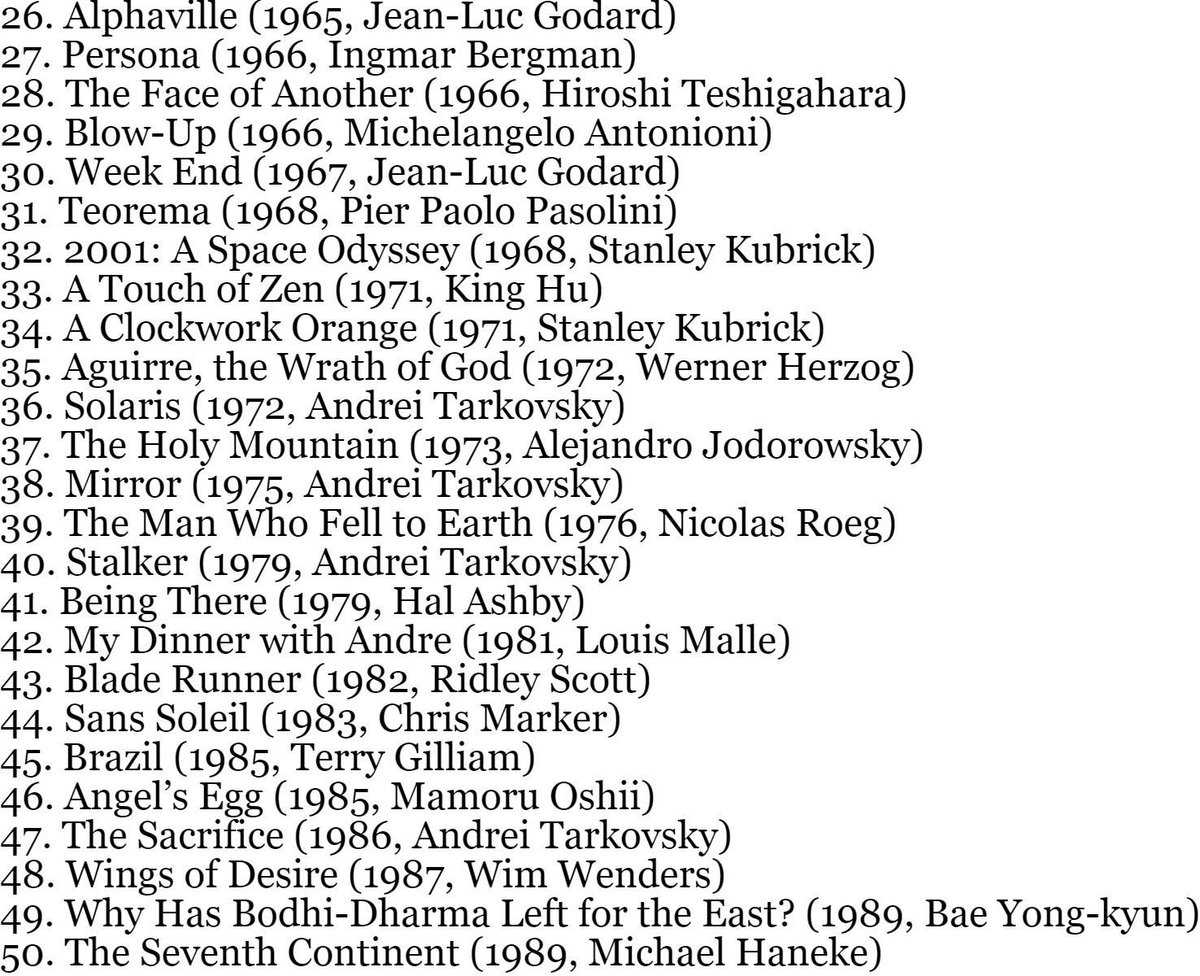
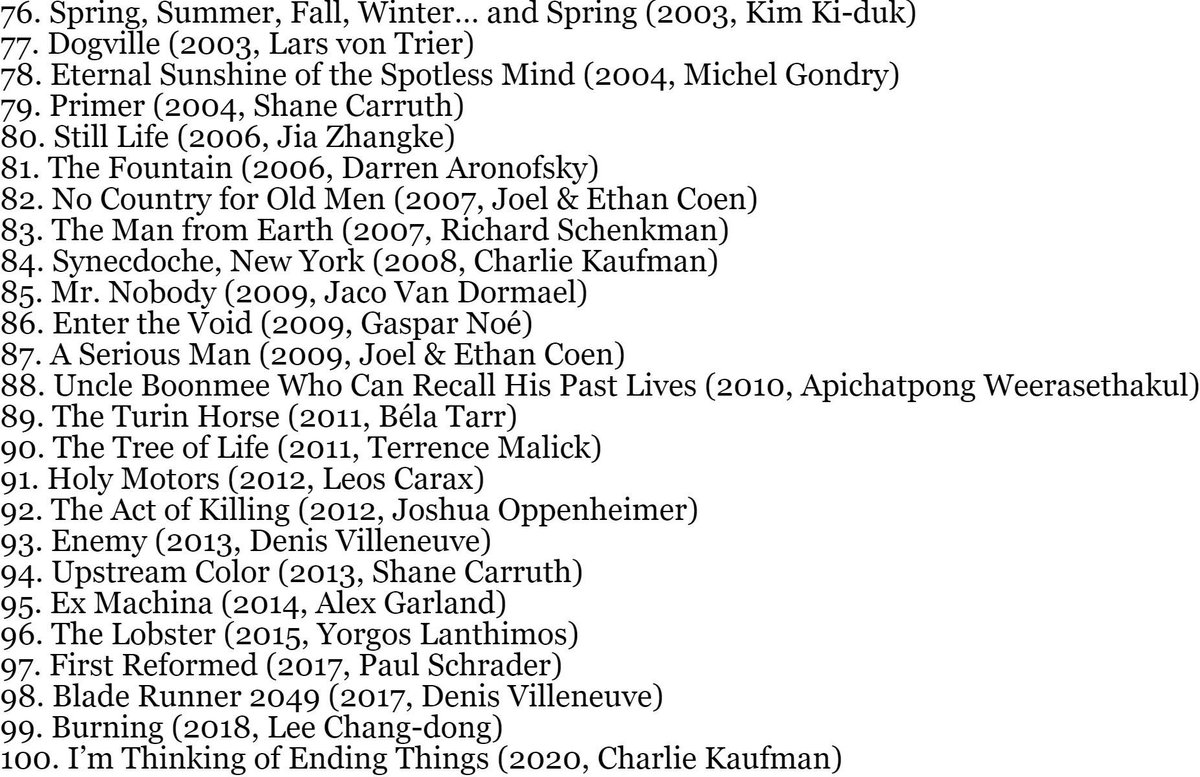
The 100 Best Philosophical Movies of All Time
Taste of Cinema tweet mediaTaste of Cinema tweet mediaTaste of Cinema tweet mediaTaste of Cinema tweet media
English
58
799
6.6K
237.6K
JaiKulki retweetledi
History इतिहास 🇺🇲🛕 🚀
Engineering students who visit Shivanasamudra hydroelectric plant are never told the significance of that plant and how India taught the world the long-distance transmission of electricity! It is this plant which made the steam power obsolete! This is to fix that gap in the knowledge. I wish I had been made aware of this in 1991 when I visited the site as an Engineering student. In June 1902, something occurred at a remote Indian waterfall that should have shocked the Western world. A transmission line, 92 miles long, carried 30,000 volts of electrical current through the jungle from Shivanasamudra Falls to the Kolar Gold Fields. It was the longest commercial high-voltage power line on Earth. Nothing comparable existed in America or Europe. The achievement emerged from the vision of K. Seshadri Iyer, Dewan of Mysore, and Major Alain Chartier Joly de Lotbiniere, a Canadian engineer in the Hindu kingdom's service. De Lotbiniere saw something others had missed: the Cauvery River's 400-foot drop could turn turbines and generate power sufficient to replace steam engines at Kolar's deep mines, where fuel costs had become prohibitive. Seshadri Iyer understood that a kingdom's survival depended on economic capacity, not military might alone. In 1898, he commissioned engineers to travel to Niagara Falls to study George Westinghouse's alternating current transmission system. When they returned, the plan crystallized. Mysore would not simply purchase foreign solutions. It would understand every component and build the system itself. The venture carried substantial risk. The capital was considerable for the 1890s. The technology was unproven. The line would stretch across malaria-infested terrain, requiring 5,000 laborers. The court skeptics outnumbered believers. Yet Seshadri Iyer proceeded with methodical confidence. Construction began in 1899. Generators came from General Electric in America. Turbines came from Escher Wyss in Switzerland. But the transmission system design and execution remained under Indian leadership. Civil engineers designed channels to divert the Cauvery's flow through penstocks. Electrical engineers stepped voltage upward to 30,000-35,000 volts using transformers, transmitted it across 92 miles of copper line, then stepped it downward at Kolar for mining machinery. The frequency selected was 25 cycles per second, not arbitrary but deliberate. Heavy rotary converters used in mining operated efficiently at lower frequencies than the 50 or 60 hertz that would eventually become standard globally. This reflected sophisticated understanding of end-user requirements. In June 1902, high-voltage power generated at Shivanasamudra flowed across 147 kilometers to the gold fields. For the first time, machines in one location could be powered by water falling in a completely separate location, separated by jungles and hills. The mining operations transformed. Deep extraction became economically viable. Steam dependence was broken. This distinction matters. The Shivanasamudra project was not Western technology imposed on an Indian kingdom. It was an Indian administration studying Niagara Falls, acquiring knowledge, and implementing a solution that exceeded what any Western nation had accomplished in this specific domain. Technologies were sourced globally. Vision and execution were profoundly local. The surplus power enabled Bangalore to become Asia's first city with meaningful electric street lighting in 1905. Nearly 100 streetlights appeared suddenly, not from gradual urban accumulation of infrastructure, but from a distant river harnessed with precision. Within a year, Bangalore had 861 streetlights and 1,639 domestic connections. The Shivanasamudra project reveals patterns that extend beyond technical accomplishment. It demonstrates that innovation does not flow exclusively from wealthy Western nations. A kingdom positioned as subordinate within the British Indian Empire could perceive a technological opportunity, acquire knowledge globally, and implement a solution exceeding established industrial powers. It shows that engineering excellence is not the monopoly of any nation or culture. And it illustrates what becomes possible when vision, resources, and technical competence align in common purpose. The subsequent obscuring of credit should not overshadow the original achievement. The Hindu kingdom of Mysore, through Seshadri Iyer's leadership and de Lotbiniere's engineering, seized a technological frontier and transformed the region's future. That accomplishment deserves recognition as evidence of what is possible when aspiration meets capability.
History इतिहास 🇺🇲🛕 🚀 tweet media
English
63
936
2.7K
179.9K
JaiKulki retweetledi
TheBetterPath
TheBetterPath@TheBetterPath_·
Fasting for 72 hours is the best medicine on Earth. It triggers your body to "eat up" tumors, inflammation, and toxins. It's literally a doctor within. Here's how to fast correctly (according to science):
English
14
165
1.1K
586.4K
JaiKulki retweetledi
Advit
Advit@advitwake·
Folks who subscribed to Apple TV for Pluribus and don't know what else to watch Please find my detailed ranking of all Apple TV+ shows I've watched as a day 1 subscriber since 2019 ☝🏽
Advit tweet mediaAdvit tweet mediaAdvit tweet media
English
91
82
1.5K
108.3K
JaiKulki retweetledi
Kiran Kumar S
Kiran Kumar S@KiranKS·
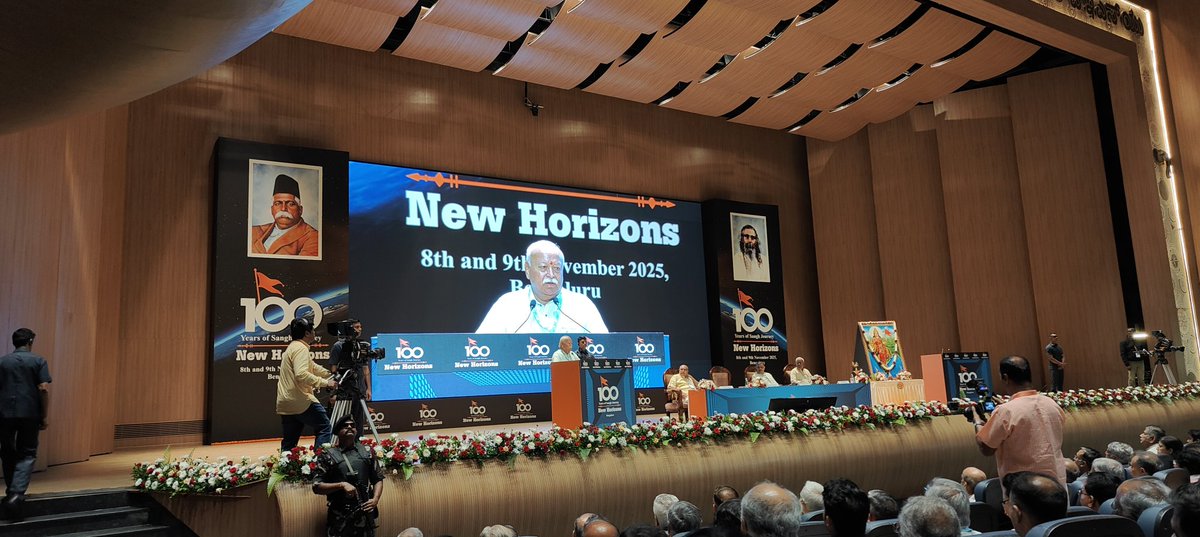
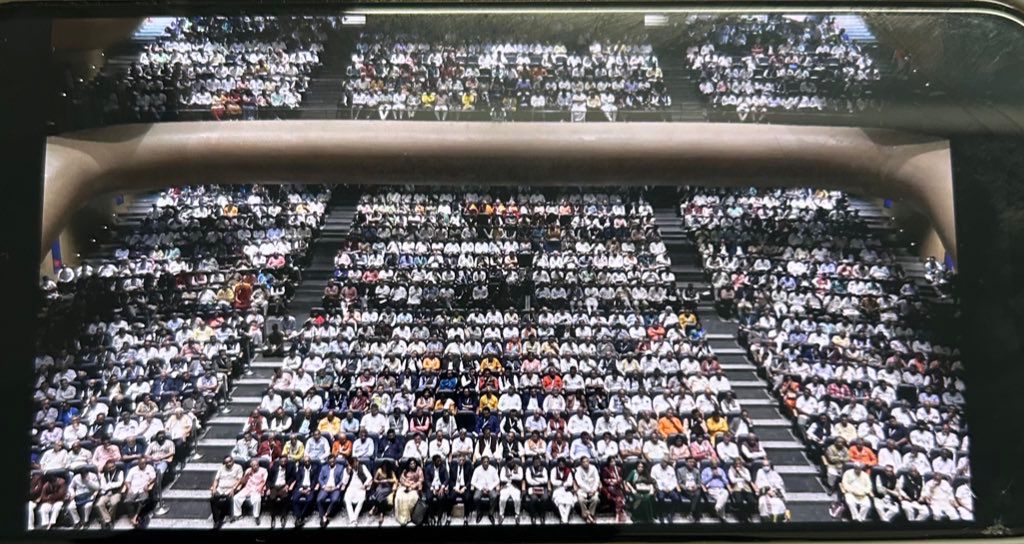
If you like RSS read this. If you don't, still read this. You will learn a lot! RSS Sarsanghchalak Mohan Bhagwat gave a 360 degree view of Sangh, its origin and vision over the past 100 years, in a packed auditorium in Bengaluru. The lines below are my interpretations, so if you want the exact words, please watch RSS youtube videos. 1) Comparing RSS to other organisations: Don't try it. RSS has no comparison. There is no organization in the world comparable to Sangh. RSS is totally unique. Hence those who analyze Sangh from outside, mostly make up wrong conclusions.  2) Social awakening is a must. You need social nayaks or leaders. Bharat can't become a Vishwaguru aping the successful like the US. Be yourself.  3) RSS did not get birth in reaction to anyone: Sangh was not born in reaction to anything or anyone. It was born as a compulsion to organize Hindu society.  4) Know your weaknesses: Why did the 1857 freedom war fail? The British were a miniscule of the total population. Also the fight was in our familiar terrain. It was fought in unity. Still it didn't succeed. Think.. 5) Congress was a safety value: In 1885, Congress was created as a safety value when revolutionaries were making more impact in the society against the British. 6) RSS started much before 1925 in the founder's mind: Dr. Hedgewar participated in all four paths of freedom fights that existed then. He lost both parents when he was just 11. He analysed the Revolutionary path, the Congress path, the Back to Roots paths, and more.. Finally decided that Sangh had to take a different route. 7) Bharat was there way before they started history written: When history as we know opened up, India as a nation or rashtra was already in its splendor.  8) You need both individual and national characters: Mirza Jai Singh had a great individual character. He did good pujas. But he helped Mughal Aurangzeb to destroy the Kashi Vishwanath temple. Because his national character was faulty. 9) There are four types of Hindus:  First type is - Proud of being a Hindu. Second is - I am a Hindu, but what is there to be proud of? Third is - Hindu inside the house, but outside pretend to be someone else.  The last type is a Hindu who has forgotten that their family was Hindu.  10) Experience versus Belief: Hindus experience. They don't believe. People follow your lifestyle. Not your preaching. 11) Dharma: Dharma is not religion. Sanskriti is not culture. Culture is cult.  12) Everyone in India respects Bharat Mata: Knowingly or unknowingly, every person respects Bharat mata. Hindus respect this sacred soil in umpteen ways. Muslim and Christians also use the soil of Bharat for their last rites.  13) Bharat has a mission - To give Dharma to the world. (Here Dharma is not religion). Dharma is the middle path.  Dharma is the property or aspect of all things. Dharma is duty.  Dharma is discipline.  Dharma is that which sustains.  14) Nature: As long as humans didn't have the means to exploit nature, they lived with nature.  15) India had a massive geographical advantage for thousands of years (like the US has now). It was so well protected and we were so rich and self sufficient, that we didn't bother to invade others. That made us succumb to barbaric invasions later. 16) Read about Raja Shibi who illustrated what is true Raja Dharma - Shibi was known for justice, compassion, and truthfulness. He sacrificed pieces of his own flesh from his thigh to a hawk (Indra in disguise) to save a dove (Agni in disguise) which had sought shelter.   Dr. Mohan Bhagwat helped the packed audience get a full picture of Sangh and its 100 years of journey. At the end, he declared that the Hindu society is yet to be fully organized. There is a lot more to do for RSS!
Kiran Kumar S tweet mediaKiran Kumar S tweet mediaKiran Kumar S tweet mediaKiran Kumar S tweet media
English
22
324
1K
30.2K
JaiKulki
JaiKulki@Jaikulki·
Mukul Dekhane@dekhane_mukul

“The Law of Common Sense” A law professor in Germany once handed his students a case study that looked deceptively simple. Two neighbours, the story went, were locked in a bitter dispute. One owned a row of apple trees whose heavy branches stretched over the fence. Every autumn, ripe apples tumbled down—straight into the neighbor’s garden, crushing her delicate tulips. The tulip owner demanded compensation for her ruined flowers. The apple grower insisted the apples were nature’s doing, not his fault. The students dove in eagerly. Half of them argued passionately for the tulip owner, citing sections of property law, civil codes, and precedents. The other half defended the orchard owner just as fiercely, pointing to natural law and ownership boundaries. The exam papers came back thick with logic, references, and Latin phrases. When the professor finally looked up from the stack, he didn’t smile or frown. He simply said: “Apples fall in autumn,Tulips bloom in spring.” The room fell silent. A few students shifted in their seats. One began to raise a hand in protest, but the professor continued gently: “Before you quote the law, use your eyes. Before you argue, use your mind. The law matters—but common sense comes first.” And with that, he gathered the papers and left the room—having given them a lesson no textbook could ever teach. 🍎🌷🍎🌷🍎🌷🍎🌷🍎🌷

QAM
0
0
0
174
JaiKulki retweetledi
DD News
DD News@DDNewslive·
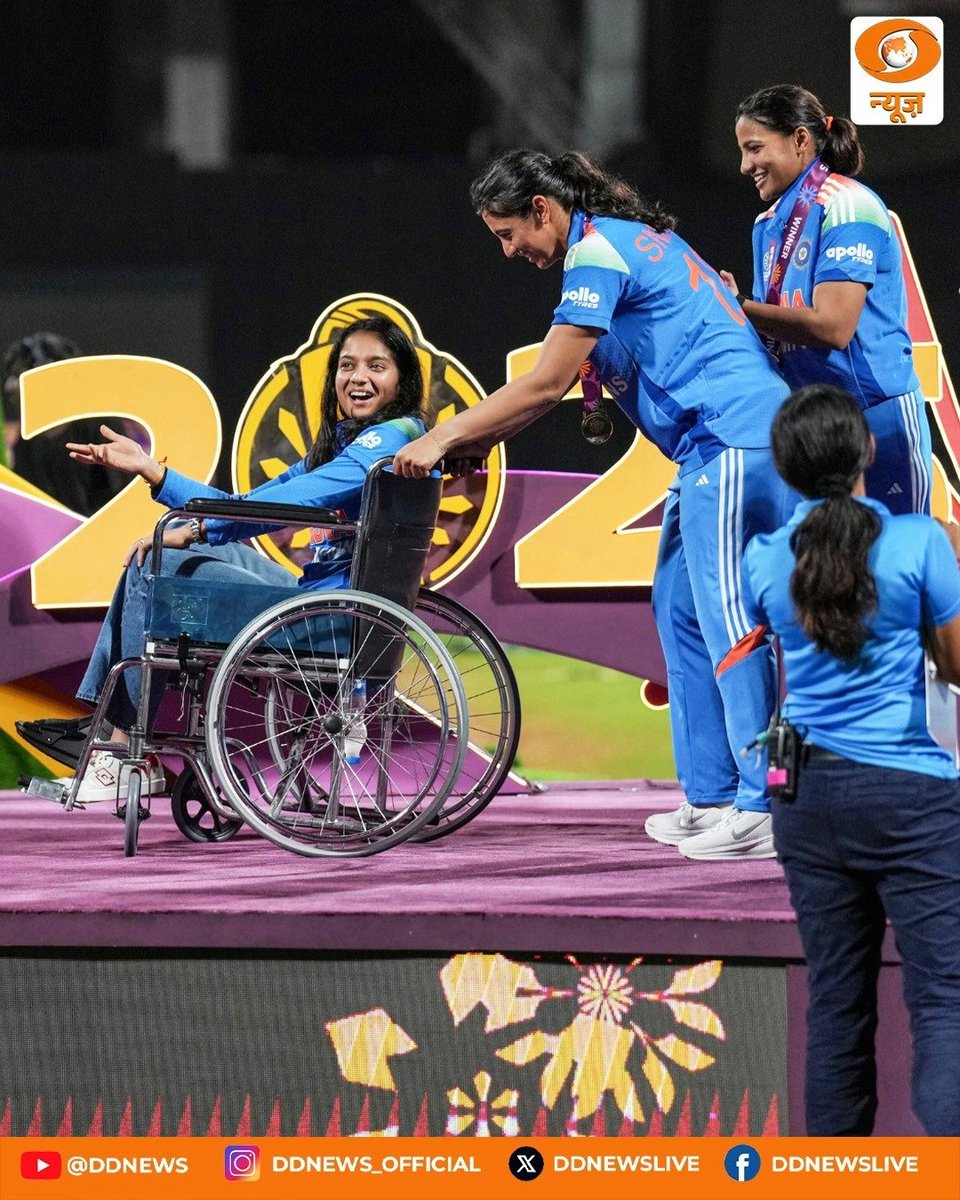
A MOMENT OF TEAM SPIRIT The True Heart of Champions Smriti Mandhana brings injured teammate Pratika Rawal onto the stage in a wheelchair to receive her winner's medal at the World Cup presentation ceremony. This gesture embodies the unity and grit of the Indian side. Beyond the trophy, this image is the definition of legacy. #TeamIndia | #WomenInBlue | #INDvSA | #Champions @BCCIWomen @mandhana_smriti @PratikaRawal64
DD News tweet media
English
18
493
6.6K
143.8K
JaiKulki
JaiKulki@Jaikulki·
This type of Banana is also grown in Kamlapur village Humnabad Tq, Bidar district Karnataka! It’s also GI Tagged!!
The Better India@thebetterindia

I wear a red coat but hide a pink surprise, Creamy as custard and sweet with raspberry ties. Born in Tamil Nadu, I wear a GI crown, Soft, fragrant, and loved in every town. In halwa, payasam, or baby bowls I gleam, A sweeter twist on your yellow dream. Can you guess my fruity name? #TamilNadu #GITag #EatLocal #SouthIndia #Bananas #India #RareFruits [Tamil Nadu, GI Tag, Indigenous Produce, Local Flavours, South India, Rare Fruits of India, Bananas of India]
English
0
0
0
47
bhatnaturally  🇮🇳
bhatnaturally  🇮🇳@bhatnaturally·
How is it that one community controls the trade of a category? Fruit shops in Udupi for example. Wonder what the logistics are
English
1
0
0
395
JaiKulki retweetledi
Shekar Iyer
Shekar Iyer@SHEKARSUSHEEL·
S. D. Burman (1 October 1906 – 31 October 1975). 50 years today. Half a century since his silence began — yet India still hums his tunes. Composer • Singer | Hindi • Bengali Born into the royal family of Tripura, Sachin Dev Burman carried rivers in his voice Contd...
Shekar Iyer tweet media
English
14
31
178
4.4K
JaiKulki
JaiKulki@Jaikulki·
It’s a good fortune that my roots are from Karnataka. Born in Bidar,brought up in Gulbarga,studied in Mangalore & now staying in Bangalore.Through the years,the rich & diverse culture of Karnataka has shaped the person I’m today. Grateful for everything.#KannadaRajyotsava
English
0
0
0
88
JaiKulki retweetledi
Parveen Kaswan, IFS
Parveen Kaswan, IFS@ParveenKaswan·
7 years jail term for Rhino poaching kingpin Rikoch. In a major achievement today one of the kingpin of rhino poaching group whom we arrested in March 2024 is convicted and awarded with 7 years punishment. Highest under Wildlife Protection Act. Will act as a strong deterrence. indiatoday.in/india-today-in…
Parveen Kaswan, IFS tweet media
English
78
244
1.6K
69.6K
JaiKulki
JaiKulki@Jaikulki·
Brilliant victory for India W as they storm into Finals of CWC 2025. Amazing win
English
0
0
0
22
JaiKulki retweetledi
Adarsh Hegde
Adarsh Hegde@adarshahgd·
Sri Sri Satyatmateertha Swamiji of Uttaradimath travelling in Driverless Car At RV College.Projected Funded by Wipro Engineering,Jointly Developed By Wipro,IISc & RV College Of Engineering Bengaluru...🙂👌👏 Superb Technology. 🤘 @anandmahindra @elonmusk @nikhilkamathcio .
English
58
356
3.5K
227K
JaiKulki retweetledi
Kamran
Kamran@CitizenKamran·
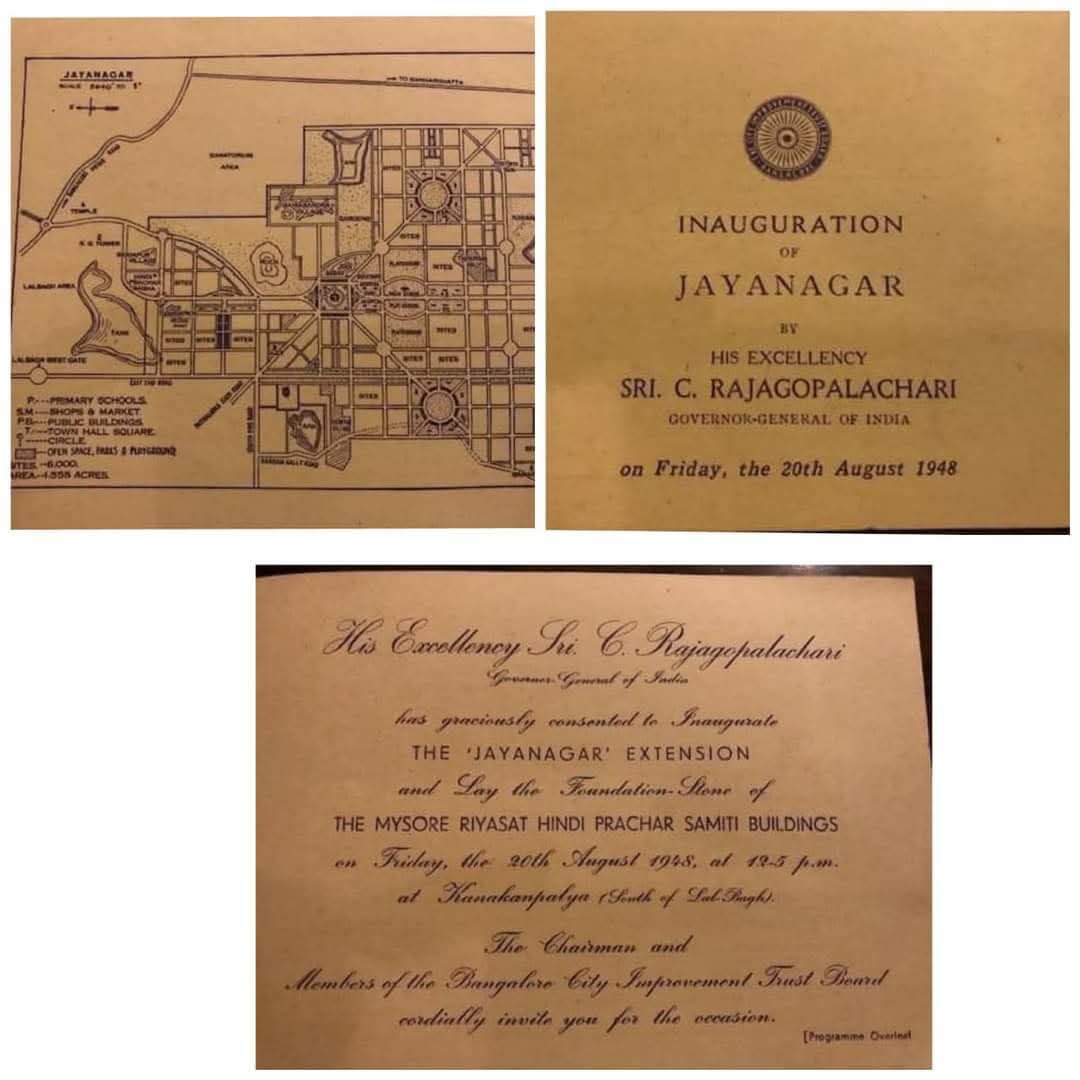
Invitation for the inauguration of the famous Jayanagar in Bengaluru in 1948 which was the largest layout at that time! Since then only minimal changes have been made to that plan till today. Jayanagar layout has its own association, BDA (Bangalore Development Authority) can't take decisions alone. All the parks are still there from that layout plan and the same plan we can see near the South end circle.
Kamran tweet media
English
21
121
1K
62.8K