James Drew

36.4K posts

James Drew

James Drew

@Jamesjdrew

Journalist, now @stlbizdrew. Ex @theolympian @thenewstribune #pnw @mariners @seahawks @seattlekraken @trailblazers

St. Louis Katılım Mayıs 2009
4K Takip Edilen3.7K Takipçiler
James Drew retweetledi
Ancient History Hub
Ancient History Hub@AncientHistorry·
205 years ago today, Napoleon Bonaparte died on a tiny British prison island in the middle of the South Atlantic. He was 51. He had ruled most of Europe. And he changed the world so thoroughly that you are still living inside the systems he built. Start with the obvious one. The Napoleonic Code. He commissioned it in 1800, sat in on the drafting sessions personally, argued with the lawyers, and pushed it through in four years. Equality before the law. Property rights. Religious freedom. The end of feudal privilege. It is still the basis of civil law in France, Belgium, the Netherlands, Italy, Spain, Portugal, most of Latin America, Quebec, Louisiana, and chunks of the Middle East and Africa. About a third of the planet writes contracts using rules a Corsican artillery officer wrote between battles. He sold Louisiana to Thomas Jefferson in 1803 for 15 million dollars. Roughly four cents an acre. It doubled the size of the United States overnight. Without that deal there is no St. Louis, no New Orleans as an American city, no Lewis and Clark, no Manifest Destiny. The American century starts with Napoleon needing cash for a war. He invaded Egypt in 1798 with an army and, weirdly, 167 scientists, mathematicians, and artists. They found the Rosetta Stone. That single slab is the reason we can read hieroglyphs at all. Egyptology as a field exists because Napoleon brought scholars to a war. He built the Bank of France, which still runs French monetary policy. He created the lycée system that still educates French teenagers. He shoved the metric system across Europe at sword-point until it stuck. He emancipated the Jews of every territory he conquered, tearing down ghetto walls in Rome, Venice, Frankfurt. He abolished serfdom in Poland. He standardized road networks, civil registries, and tax codes that European governments still operate from. And then there's the soldiering. He fought around 60 major battles and won most of them. Austerlitz, in 1805, against the combined Russian and Austrian empires, is still taught at West Point as one of the closest things to a tactically perfect battle ever fought. He was outnumbered, baited the enemy onto ground he had pre-selected, and broke them in a single afternoon. Three emperors took the field that morning. Only one walked off it on his own terms. He slept four hours a night. He read constantly, dictated letters to four secretaries at the same time, and personally signed off on everything from cavalry boot specs to the seating chart at the Comédie-Française. Wellington, the man who finally beat him at Waterloo, was asked decades later who the greatest general in history was. He answered without hesitating. "In this age, in past ages, in any age, Napoleon." He lost, in the end, because he could not stop. Russia in 1812 swallowed his army whole. Six hundred thousand men marched in. Maybe a tenth came back. He abdicated in 1814, escaped from Elba, ruled France again for 100 days, and lost it all for good in a wheat field in Belgium in June 1815. The British shipped him to St. Helena, a volcanic dot 1,200 miles off the African coast, and waited. He spent six years there dictating his memoirs, gardening, complaining about the dampness, and quietly rewriting his own legend so effectively that Europe spent the next century arguing about him. He died on May 5, 1821, during a storm so violent it ripped up the willow tree he liked to read under. His last words trailed off into fever. France. The army. Joséphine. Nineteen years later France brought him home. Two million people stood in the snow to watch the coffin go by. He was a tyrant. He was a reformer. He started wars that killed somewhere between three and six million people. He also wrote the rulebook that a third of humanity still lives under. Most people who try to conquer the world are forgotten inside a generation. Napoleon has been dead for 205 years and we are still arguing about him because we are still using his furniture.
Ancient History Hub tweet media
English
135
1.3K
5.2K
332.6K
James Drew retweetledi
The Beatles Legacy
The Beatles Legacy@TheBeatlesPMcC·
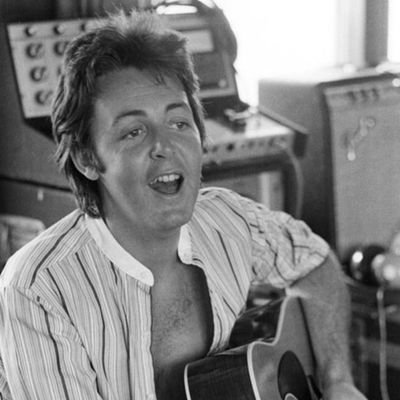
5 mai 1997, Paul McCartney publie un nouvel album. Il publie même un chef-d'œuvre. Après presque deux ans à travailler sur le projet Anthology des Beatles, Paul est de retour à la maison, il est surtout de retour en famille. Pour cet album, il fait aussi appel aux amis les plus proches, George Martin, Ringo Starr, Steve Miller et Jeff Lynne. Son fils James y démontre son petit talent naissant de guitariste. Et Linda est là, évidemment. Elle est déjà très malade. Ils ne se quitteront plus du tout jusqu'à ses derniers jours. A la mort de Lady Di, l'absence de McCartney avait beaucoup été commentée. Certains savaient, d'autres pas, Paul soutenait alors Linda dans le combat contre la maladie. Quoiqu'il en soit, l'album est plébiscité par le public comme par les critiques, c'est un succès commercial mondial. Il faut dire que cet album regorge de trésors pour la plupart méconnus du grand public aujourd'hui. Il n'est jamais trop tard pour les découvrir. "Heaven On A Sunday", Paul McCartney, 1997.
Français
6
38
276
18.6K
James Drew retweetledi
OldTimeHardball
OldTimeHardball@OleTimeHardball·
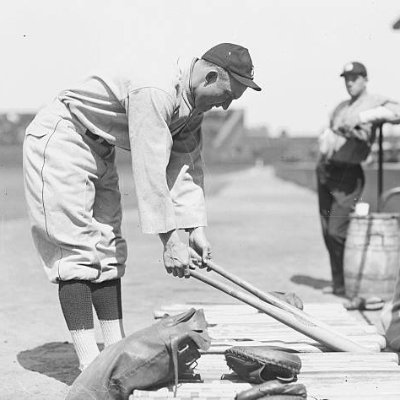
This was the proper way to start a day
OldTimeHardball tweet media
English
140
335
4K
90.6K
James Drew retweetledi
Brenna Greene
Brenna Greene@BrennaGreene_·
The Portland Fire are greeted with a standing ovation as they come onto the Moda Center court for the first time
English
15
29
544
27.8K
James Drew retweetledi
Seattle Mariners
Seattle Mariners@Mariners·
Rick Rizzs with a heartfelt nod to the @Yankees’ late, great John Sterling 💙
English
27
181
2.9K
115.8K