

Jamie

374 posts

Jamie banner
Jamie

Jamie

@JamieTerbeest

Katılım Eylül 2017
585 Takip Edilen161 Takipçiler
Jamie
Jamie@JamieTerbeest·
@ABC what a boaring job
English
0
0
3
672
ABC News
ABC News@ABC·
Video of a humanoid robot chasing wild boars out of a Warsaw neighborhood and into the woods — and then waving goodbye — has gone viral in Poland. abcnews.link/jGIt1Lm
English
306
882
5.1K
918.3K
Jamie retweetledi
Sterling Crispin 🕊️
Sterling Crispin 🕊️@sterlingcrispin·
Data centers are worse than you think, they enable fundamental evils such as: - cancer research - cures for diseases - climate change and renewable research - aiding people with disabilities - studying bias in criminal justice - urban planning and housing policy - netflix
English
63
191
1.6K
25.4K
Jamie
Jamie@JamieTerbeest·
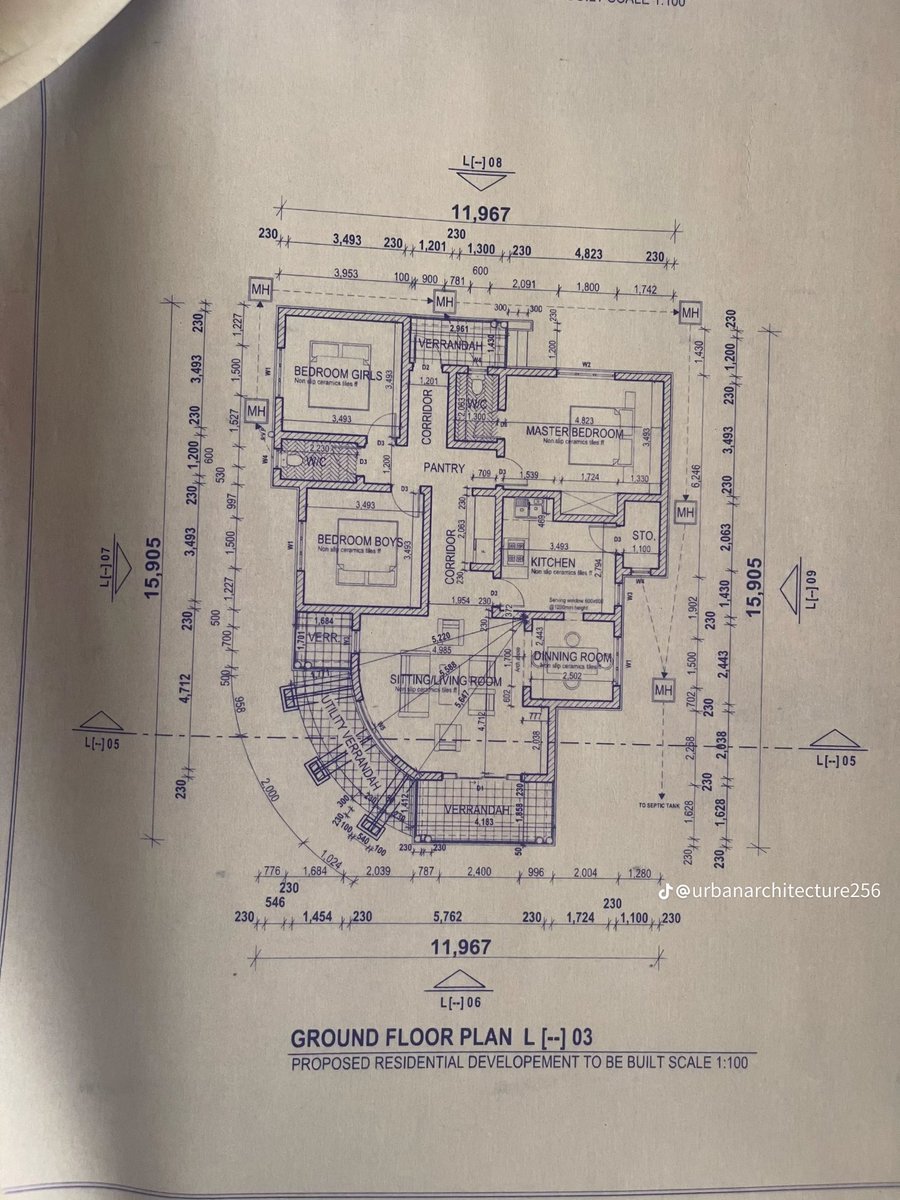
@Arcfunmi @grok @grok let’s see a finished side view of this house with beautiful lush landscaping
English
1
0
0
57.7K
Arcfunmi
Arcfunmi@Arcfunmi·
Hi @grok, render this floor plan.
Arcfunmi tweet media
English
101
150
2.9K
3.4M
Jamie
Jamie@JamieTerbeest·
@danpeguine I’m doing the exact same thing 😂 I need it to walk me through cloud deployment on a platform I’m not familiar with. I want to have it auto search docs site and learn everything prior to starting (maybe in a knowledge graph)
English
0
0
1
77
Jamie
Jamie@JamieTerbeest·
I made a neat tool called modelspec. It’s designed to identify the EXACT LLM you need for every use case. I scraped every conceivable site for every LLM ever made, stored in a FalkorDB knowledge graph, and connected to a down select tool. CLI tool included for automated LLM routing. I added a custom 3D viewer for fun. Check out the amazing gravity well feature! github.com/turbobeest/mod…
English
0
0
0
22
Jamie
Jamie@JamieTerbeest·
Interesting: there are real engineering reasons glass wins... Spectral transmission is only part of the story. Low-iron tempered glass transmits roughly 91–92% of light in the wavelengths silicon cells care about (about 350–1100 nm). That's excellent, but polycarbonate and many epoxies/acrylics can actually match or come close to that when new. The problem is what happens over 25+ years outdoors. Why glass wins: UV stability. This is the big one. Polycarbonate yellows badly under UV—you've probably seen old skylights or headlight lenses go cloudy and amber. That directly eats into transmission in the blue end of the spectrum, where silicon still harvests meaningful energy. Epoxies are even worse; most epoxy chemistries chalk, yellow, and embrittle under UV within a few years unless heavily stabilized, and stabilizers themselves can absorb useful light. Glass is essentially immune to UV degradation. Scratch and abrasion resistance. Wind-blown sand, hail, cleaning, bird grit—polymers scratch. Each micro-scratch scatters light and lowers transmission. Glass is much harder (Mohs ~6 vs. ~3 for polycarbonate). Moisture and oxygen barrier. Glass is effectively hermetic. Polymers let water vapor and oxygen diffuse through, which corrodes cell metallization, delaminates the encapsulant (EVA), and causes "snail trails" and power loss. A 25-year warranty is very hard to honor with a plastic front sheet. Dimensional stability and stiffness. A module needs a rigid front to protect the fragile silicon wafers from flexing. Glass is stiff and thermally stable; polycarbonate has ~10× the thermal expansion of silicon, which stresses solder joints through daily thermal cycling. Fire rating and soiling. Glass meets Class A fire ratings easily and sheds dust/water better because it's harder and more hydrophilic after weathering. Plastics tend to hold a static charge and accumulate dirt. Cost at scale. Low-iron solar glass is genuinely cheap—roughly $3–6/m² in bulk. Optical-grade UV-stabilized polycarbonate is several times that, and good UV-stable epoxy topcoats add cost on top of whatever substrate they're protecting. Where polymers are used: Flexible and lightweight modules (marine, RV, backpacks, some BIPV) use fluoropolymer front sheets like ETFE or PVDF. ETFE in particular has excellent UV stability and transmission, and it's what you'll find on curved or flexible panels where glass isn't practical. But it's expensive and softer than glass, so it's a niche rather than a replacement. Epoxies specifically are almost never used as the outer layer on any serious outdoor panel—they're a UV disaster.
English
0
0
0
6
Jamie
Jamie@JamieTerbeest·
@mattyxb the amount of microplastic that resides in that dude’s bloodstream…
English
0
0
0
2.1K
Unnecessary Inventions
Unnecessary Inventions@mattyxb·
I 3D printed my own suitcase to try and make traveling a little more tolerable.
English
261
1.7K
22K
1.5M
Jamie
Jamie@JamieTerbeest·
@iannuttall if we knew what we were doing it wouldn’t be called research
English
0
0
0
103
Ian Nuttall
Ian Nuttall@iannuttall·
I just removed all useEffect's from keep.md does this make me a real dev?
English
6
0
16
3.8K
Jamie
Jamie@JamieTerbeest·
@andyreed thanks for being strait with me
English
0
0
13
1.1K
tweet davidson
tweet davidson@andyreed·
if you’re a pm and i send you this, it means i’m blocked from shipping
tweet davidson tweet media
English
47
240
4.4K
193K
Jamie
Jamie@JamieTerbeest·
@iannuttall fine, take my $ already 😂
English
1
0
0
129
Ian Nuttall
Ian Nuttall@iannuttall·
In the latest version of Keep.md you can now: - Upload PDFs, images, HTML, Word, Excel, CSV and have them converted to markdown - Build your own Hacker News feeds with discussion and source both in markdown - Easily setup iOS shortcut for sharing from mobile
English
5
1
36
3.8K
Jamie
Jamie@JamieTerbeest·
spacex launch over narragansett
Jamie tweet media
English
0
0
3
147
Jamie
Jamie@JamieTerbeest·
@JessePeltan autopilot should have been called co-pilot FSD should have been called autopilot
English
0
0
4
114
Jesse Peltan
Jesse Peltan@JessePeltan·
FSD should have a personal name.
English
25
0
33
7.8K
Jamie
Jamie@JamieTerbeest·
@koylanai it’s fine to be a skeptic, but if we knew what we were doing it wouldn’t be called research
English
0
0
0
11
Muratcan Koylan
Muratcan Koylan@koylanai·
The core argument is that single skill files have depth limits. A context engineering skill covering prompt design, multi-agent coordination, evaluation frameworks, and memory systems cannot fit in one SKILL[.]md. Instead, build a network of interconnected markdown files. Concepts reference other concepts in non-linear ways, and a flat file cannot capture those relationships. I like the semantic linking idea; embedded prose conveys the semantic context for why two concepts relate, not just that they do. But it's a bit overkill, no? Skill graphs already exist. If you have skills that reference other skills, share data layers and auto-load dependencies, you already have a graph. I think we need a benchmark to test whether graph traversal prevents the agent from loading too much context compared with tree graphs. It's already known that when you generate Skills with AI and use more than 4-5 of them, the AI quality actually deteriorates. Every graph traversal hop costs tokens. The agent reads the index, follows a link, reads that file, follows another link, reads another file. Each hop burns context window on navigation instead of task completion. Until I see that Skill graphs perform better, I work with hierarchical progressive disclosure with explicit routing because trees have clear routing. - A lightweight routing file tells the agent which module to load. - Module-level instructions scope the task. - Data files load only when needed. - Two hops max. Predictable token cost. - The agent never sees content module data during a network task, never loads persona context when it only needs a code template. Skill graphs might work well in the future in deep domain exploration where the agent needs to reason across concepts rather than execute a procedure. Tasks where understanding relationships between ideas is the point, not following steps.
Heinrich@arscontexta

x.com/i/article/2023…

English
17
13
188
26.2K
Tesla Optimus
Tesla Optimus@Tesla_Optimus·
Model S & X will live on through me
English
1.3K
2.3K
23.7K
2.8M
Ryan Mather
Ryan Mather@Flomerboy·
@bcherny Is there a leaderboard for must useful MCPs? I’m only using Figma and playwright, wondering if im missing any very useful ones
English
11
0
27
5.4K
Boris Cherny
Boris Cherny@bcherny·
Super excited about this launch -- every Claude Code user just got way more context, better instruction following, and the ability to plug in even more tools
Thariq@trq212

x.com/i/article/2011…

English
153
272
5.6K
594.9K
Alex Lieberman
Alex Lieberman@businessbarista·
I want to start a community dedicated to Claude Code. It’s become the gateway drug to coding and experiencing the power of AI for tons of people. This will be a space for people to share killer use cases, agentic workflows, proven prompts, and connect with other CC obsessives. Comment “Claude” if you want to join.
English
7.1K
206
6.3K
620.5K
Elliott
Elliott@EllSvenkeson·
@ugly_cowboy @kimmonismus Avoid the junk and make it cheap enough that, when it finally does break from what’s unavoidable, you can replace it. Wash, rinse, repeat.
English
2
0
0
14
Chubby♨️
Chubby♨️@kimmonismus·
The more I read about Project Suncatcher (Google) or Starcloud, the more convinced I am that we will have data centers in space sooner than we expect. The advantages are simply astounding, and the risks negligible. Advantages: - 24/7 solar energy (Reduced costs - Abundant solar energy without batteries and radiative cooling; global data center power consumption more than doubles by 2030) - Radiative cooling - Low ambient temperatures reduce the need for active cooling. - Rapidly deployable to gigawatt scale (No lengthy construction of buildings and infrastructure) - Targeted point-to-point links: Minimal interference, minimal eavesdropping, minimal noise (satellite to satellite!) - Minimal battery storage required (reduces the cost of putting compute into space). The challenges are the dangers of rocket launch and intense cosmic radiation.
Chubby♨️ tweet media
English
94
58
707
80.9K